General Hold Harmless Agreement
About this form
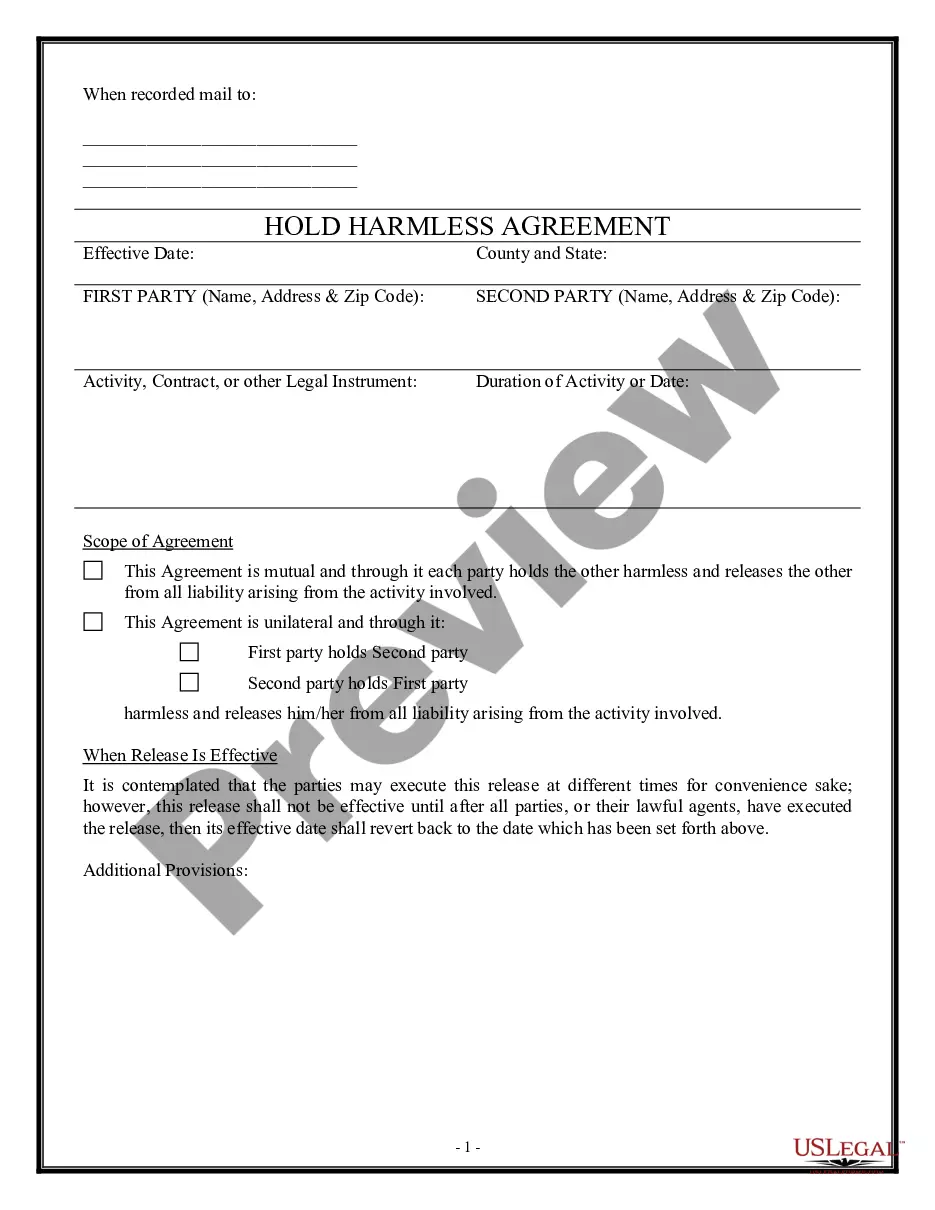
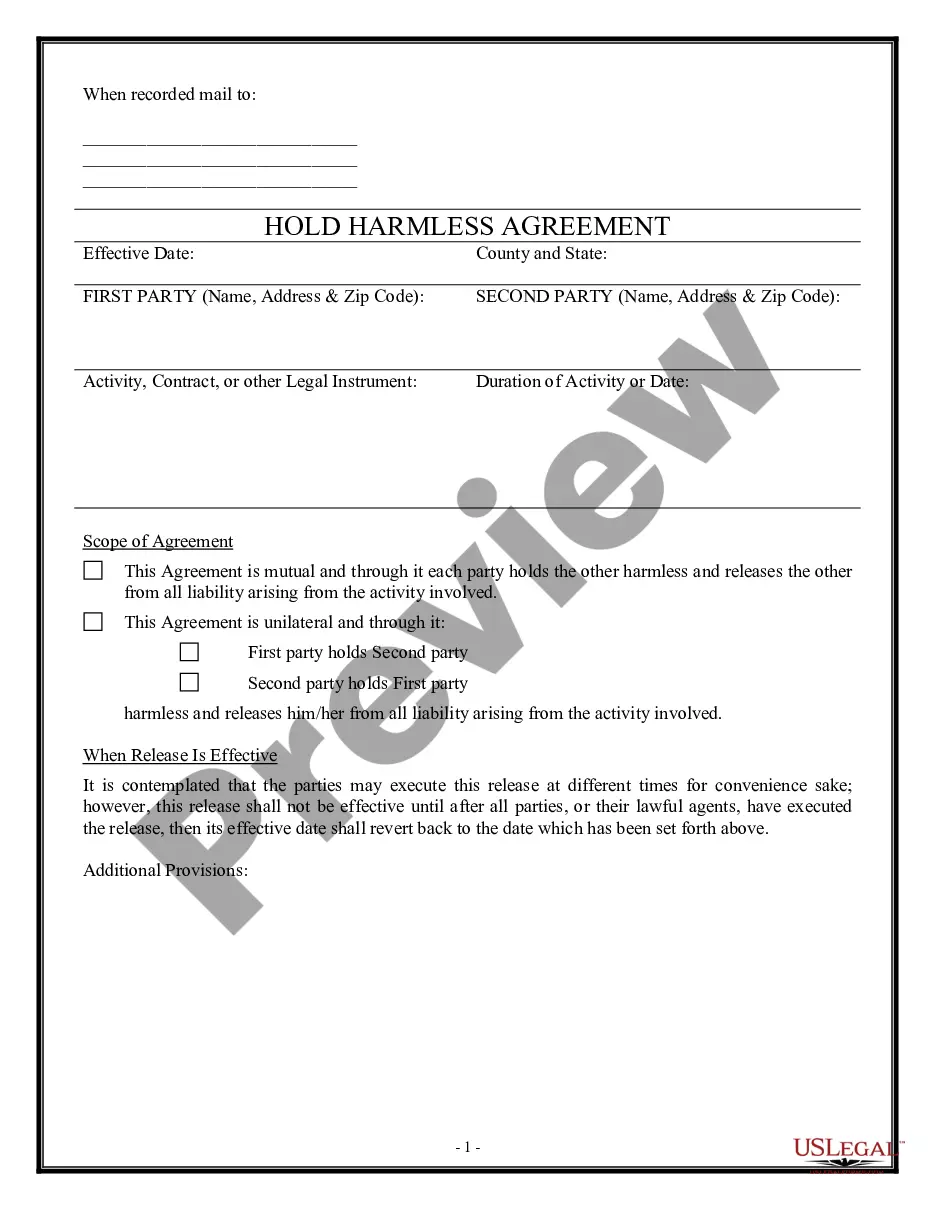
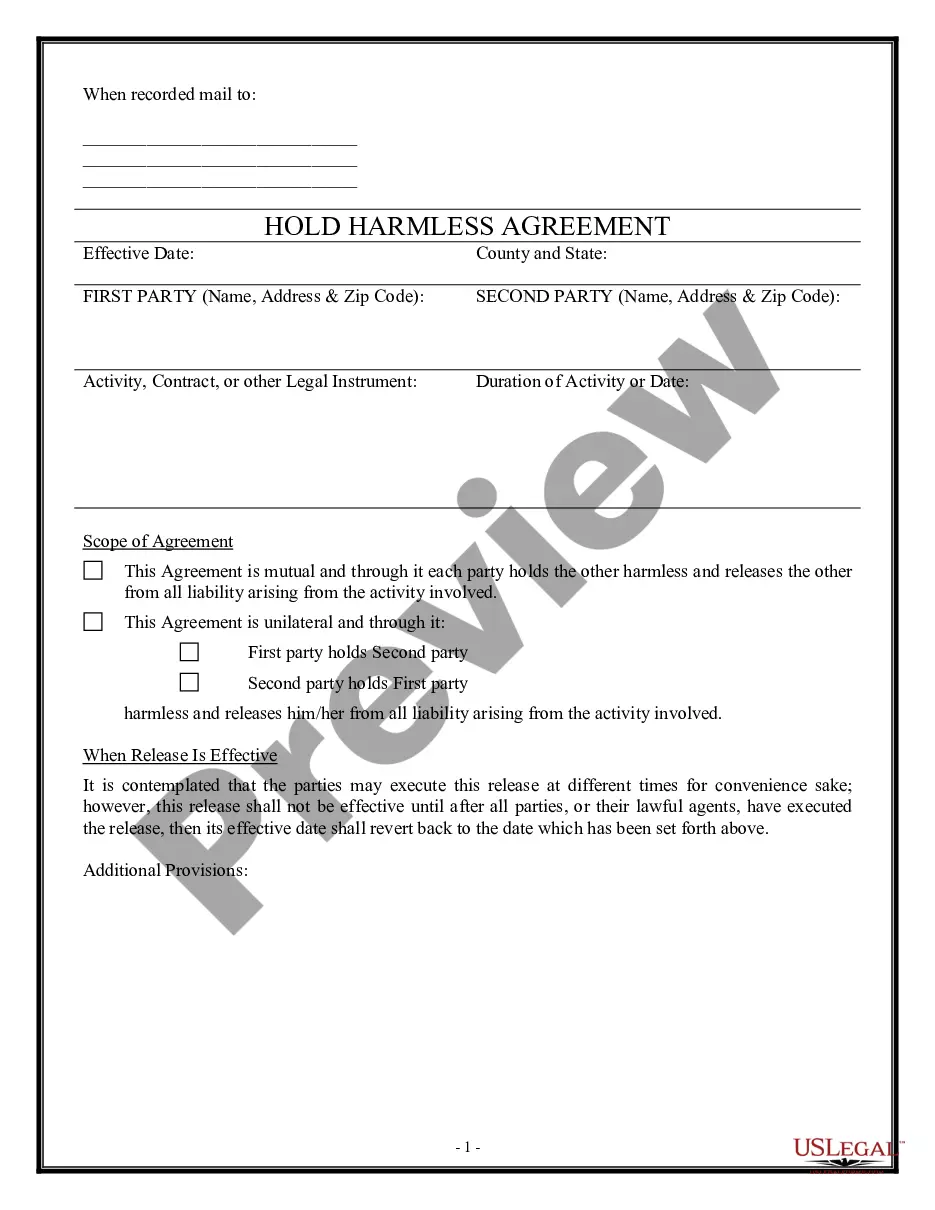
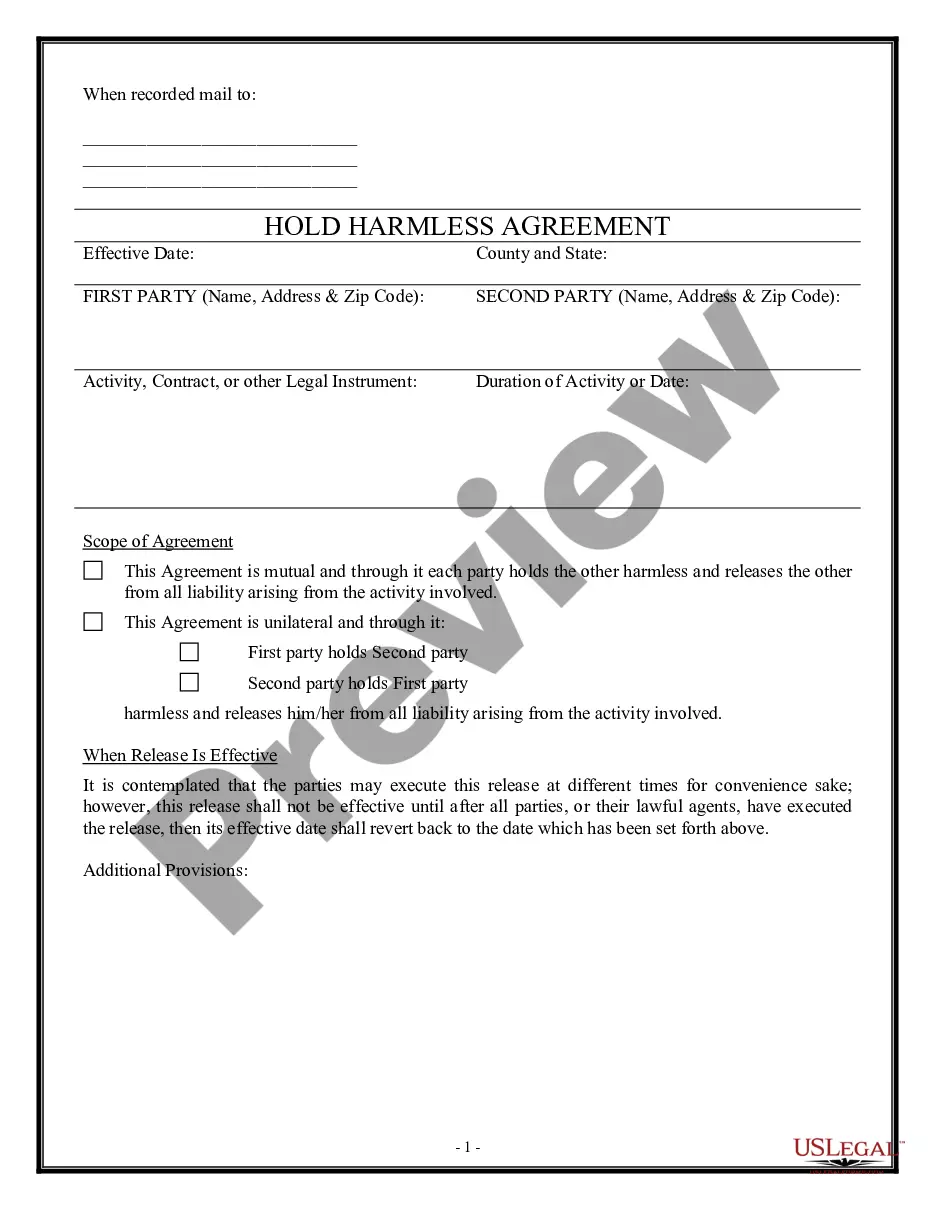
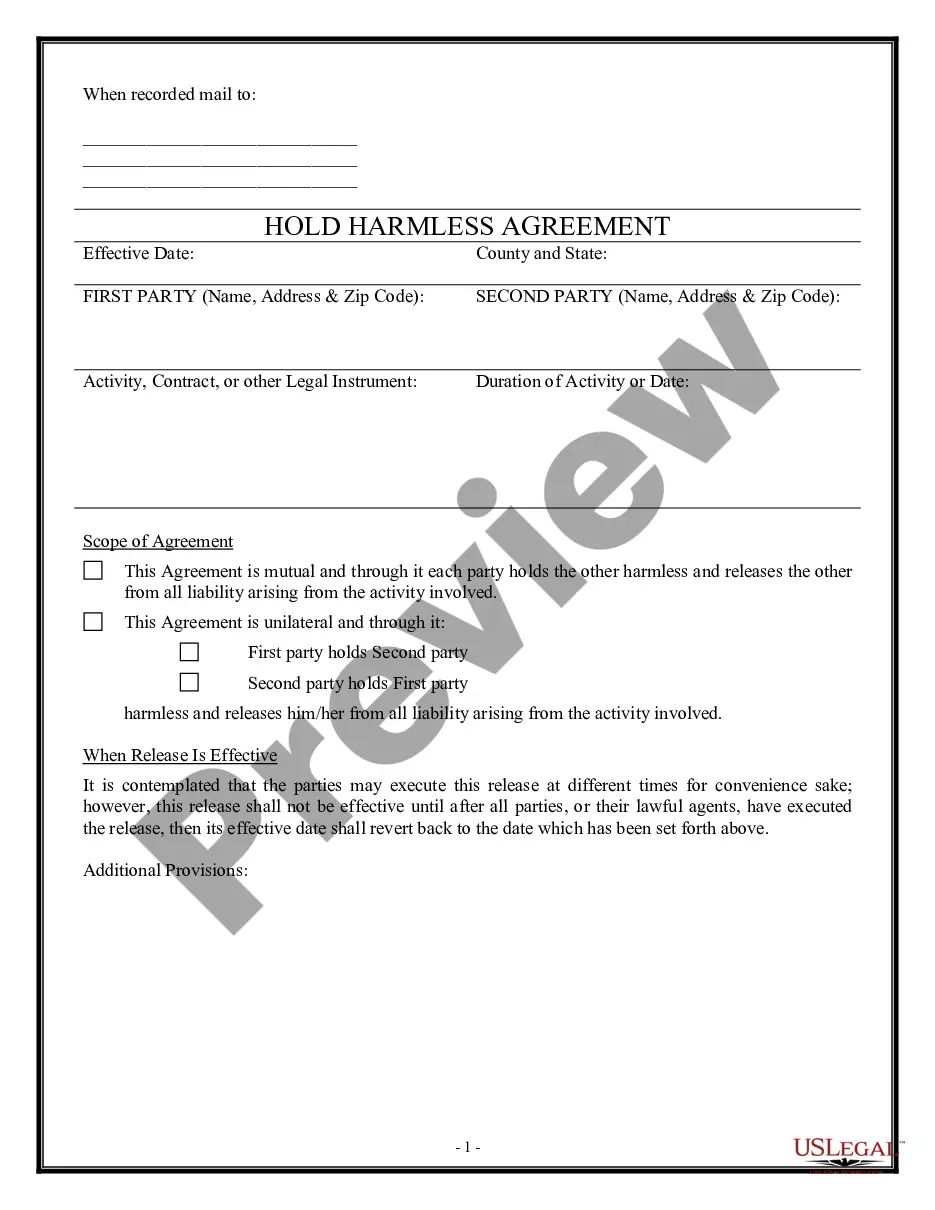
A General Hold Harmless Agreement is a legal document in which one party agrees to hold another party harmless from any liability or claims arising from specific activities or actions. This agreement can help protect individuals or businesses from legal claims related to risks associated with certain activities. Unlike other liability waivers, this form is mutual, ensuring both parties agree to release each other from liability, fostering a clearer understanding of accountability in shared activities.
Form components explained
- Identification of the parties involved in the agreement.
- Clear statements indicating the mutual hold harmless obligations of both parties.
- Details regarding the specific activity or event the agreement pertains to.
- Effective date of the release from liability.
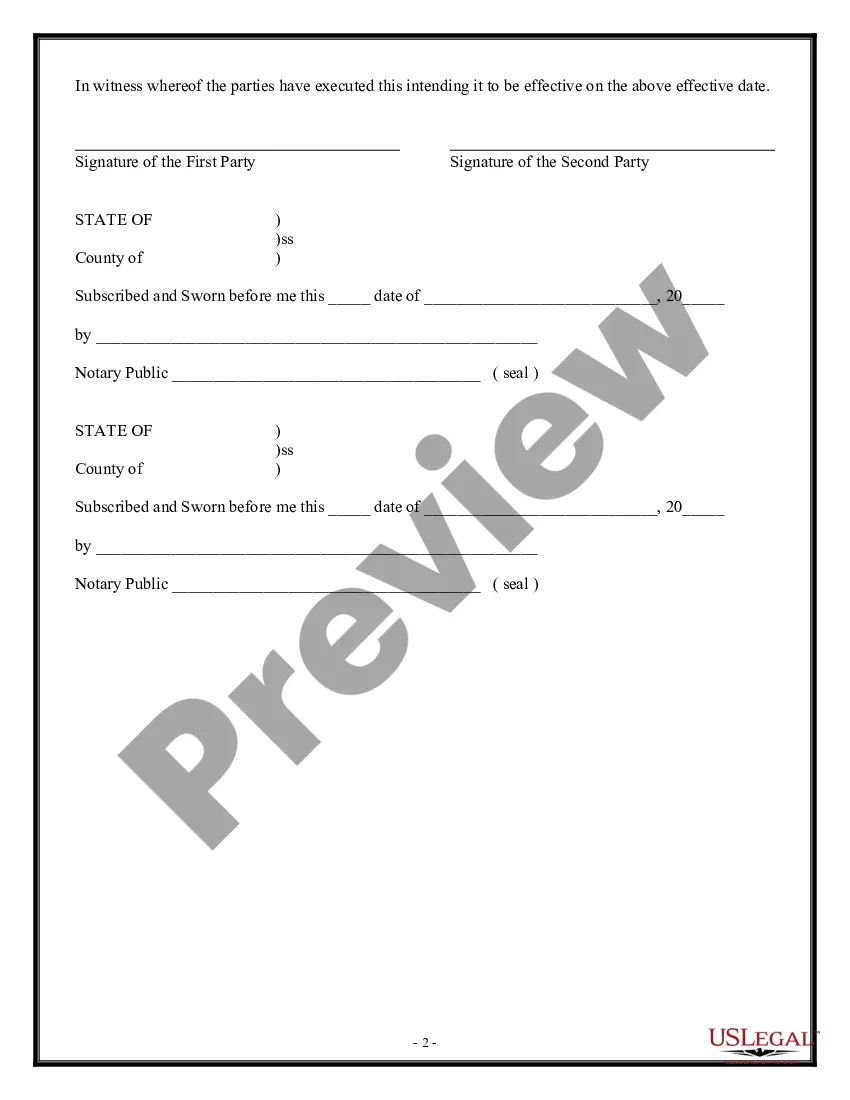
- Signature lines for both parties to acknowledge their agreement.
- Space for notarization, if required.
When this form is needed
This form is commonly used in situations where one party might assume risks associated with activities involving another party, such as renting property, organizing events, or collaborating on projects. It is ideal for scenarios where both parties want to mitigate potential legal liability arising from claims or lawsuits due to unforeseen incidents related to the shared activity.
Who needs this form
- Event organizers looking to protect themselves from liability related to events.
- Landlords wanting to clarify liability issues with tenants.
- Contractors and subcontractors engaging in joint projects.
- Individuals entering into agreements for shared activities that carry inherent risks.
How to prepare this document
- Identify the parties involved and provide their full names and addresses.
- Clearly describe the activity or event for which the hold harmless agreement is being established.
- Specify the date on which the agreement becomes effective.
- Both parties should sign the form to acknowledge their agreement to the terms.
- Consider having the agreement notarized to enhance its legal validity.
Notarization guidance
This form does not typically require notarization unless specified by local law. However, notarizing the document can provide an extra layer of legal protection and validity for the agreement.
Common mistakes to avoid
- Failing to clearly identify both parties involved in the agreement.
- Not specifying the activities or risks covered by the agreement.
- Omitting signatures or dates, which may invalidate the agreement.
- Neglecting to check for state-specific requirements that may affect enforceability.
Benefits of using this form online
- Convenient access to a customizable legal template, allowing for quick completion.
- Editable document that can be tailored to specific needs and scenarios.
- Reliability of forms drafted by licensed attorneys to ensure legal compliance.
Legal use & context
- The Hold Harmless Agreement is enforceable in a court of law if properly completed and signed.
- Parties must clearly understand the risks involved in the activities covered by the agreement.
- State laws may impact the enforceability of these agreements, particularly concerning liability limitations.
Summary of main points
- The General Hold Harmless Agreement serves to protect parties from liability in shared activities.
- It is crucial to clearly define the involved parties and the activities covered.
- Both parties must sign, and notarization is typically required for validity.
Form popularity
FAQ
A Release of Liability, or 'Hold Harmless Agreement', is a legal document that indemnifies an individual or business entity from legal and/or financial responsibility.If the release is being signed after the event took place, such as a car accident, the releasor may be paid money to sign such an agreement.
The date of the agreement. The name of the person held harmless or protected, with their address. The name of the other party to the agreement, with their address. Details about the activity or event the agreement is about, such as horseback riding or country club membership.
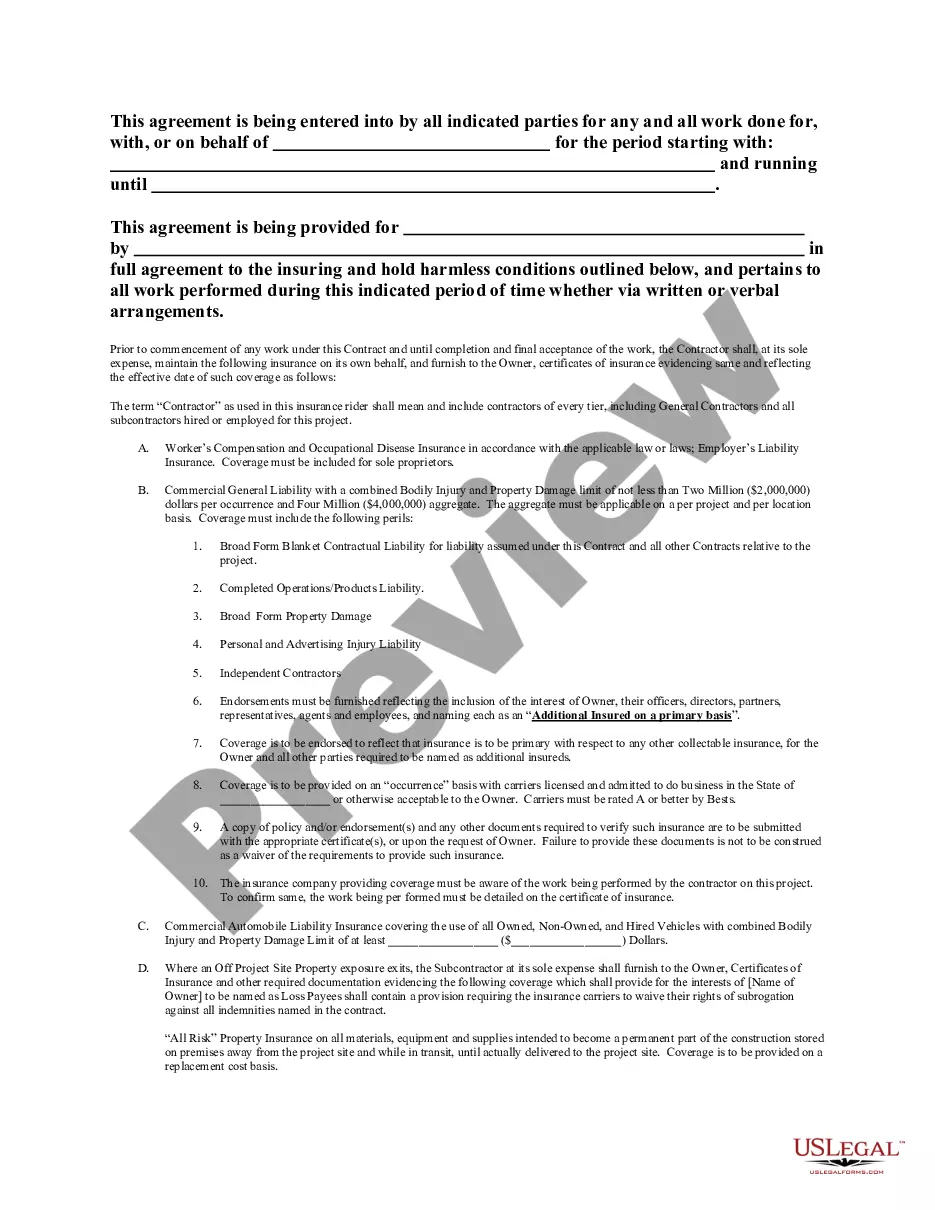
By signing a broad form hold harmless agreement you are possibly exposing your company to uninsurable risk. Contractual Liability Coverage for sole or gross negligent acts of your client is excluded is y most liability policies.As with all contracts, it is best to have legal counsel review prior to signing.
A Hold Harmless Agreement is a legal agreement that states that one party will not hold another party liable for risk, often physical risk or damage. The Hold Harmless Clause can be one-way (unilateral) or two-way (reciprocal) agreements and can be signed before or after an activity takes place.
In a mutual or reciprocal agreement, the parties agree to hold each other harmless. Often found in oil and gas operations, the mutual hold harmless means that each party agrees to pay for damage to their own property and injury to their own personnel, including any consequential losses.
Executing Your Hold Harmless Agreement Once the hold harmless agreement has been completed, simply have all parties sign and date to complete the document. Although not required, it is always a good idea to have the document notarized for extra protection.
An indemnification or hold harmless clause may be included so the other party to the contract is reimbursed against loss or damage should a legal dispute ensue with respect to the contract or agreement.A hold harmless agreement is also called a save harmless agreement.
Essentially, a hold harmless clause gives the recipient of that clause (the recipient) the benefit of being held harmless or not be legally bothered by the other contracting party or any other party claiming against the recipient.