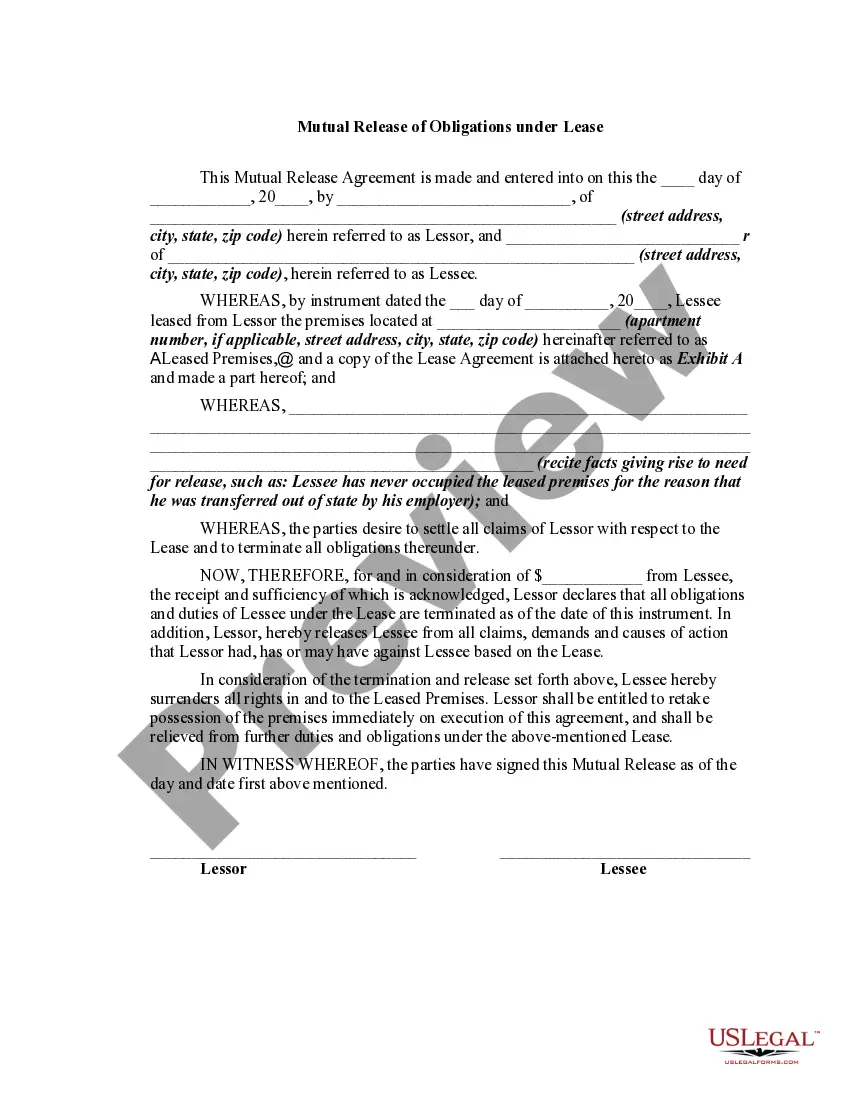
Florida Owner's or Seller's Affidavit of No Liens
What this document covers
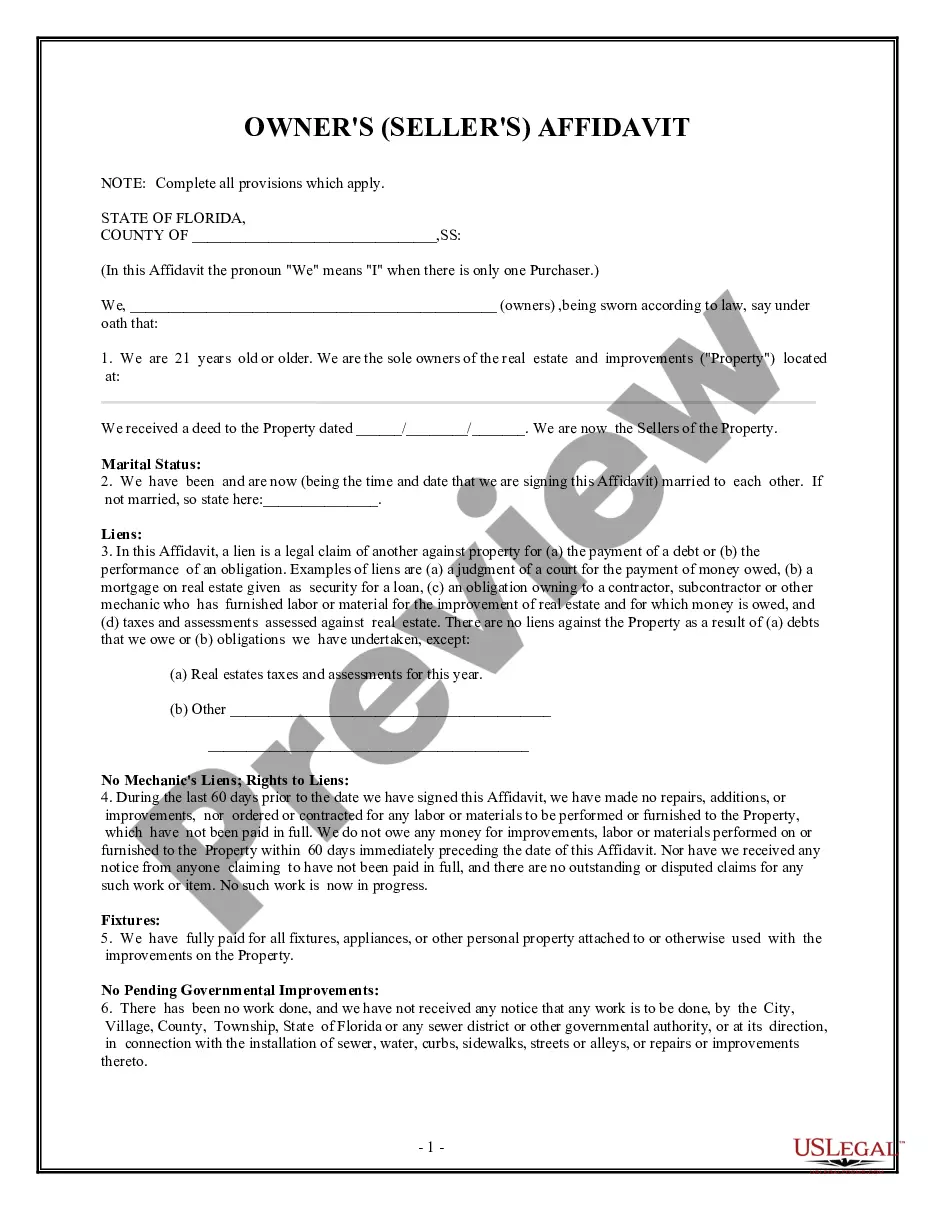
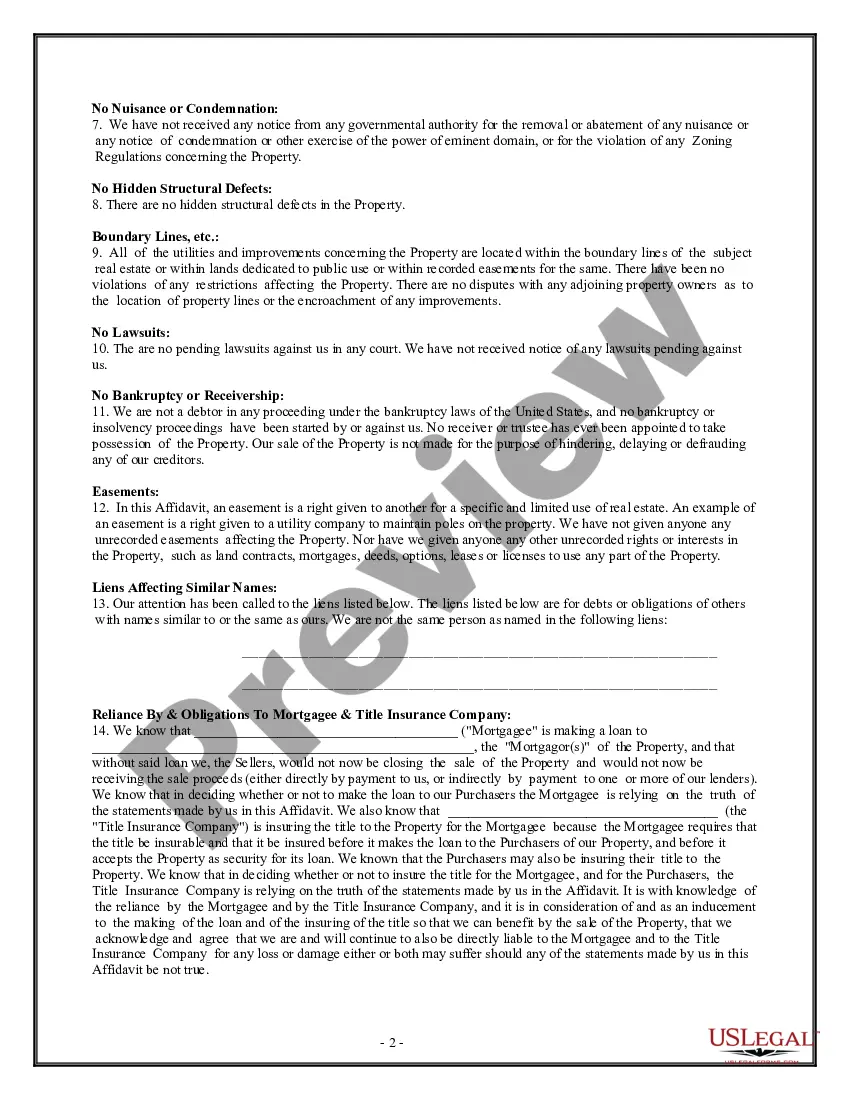
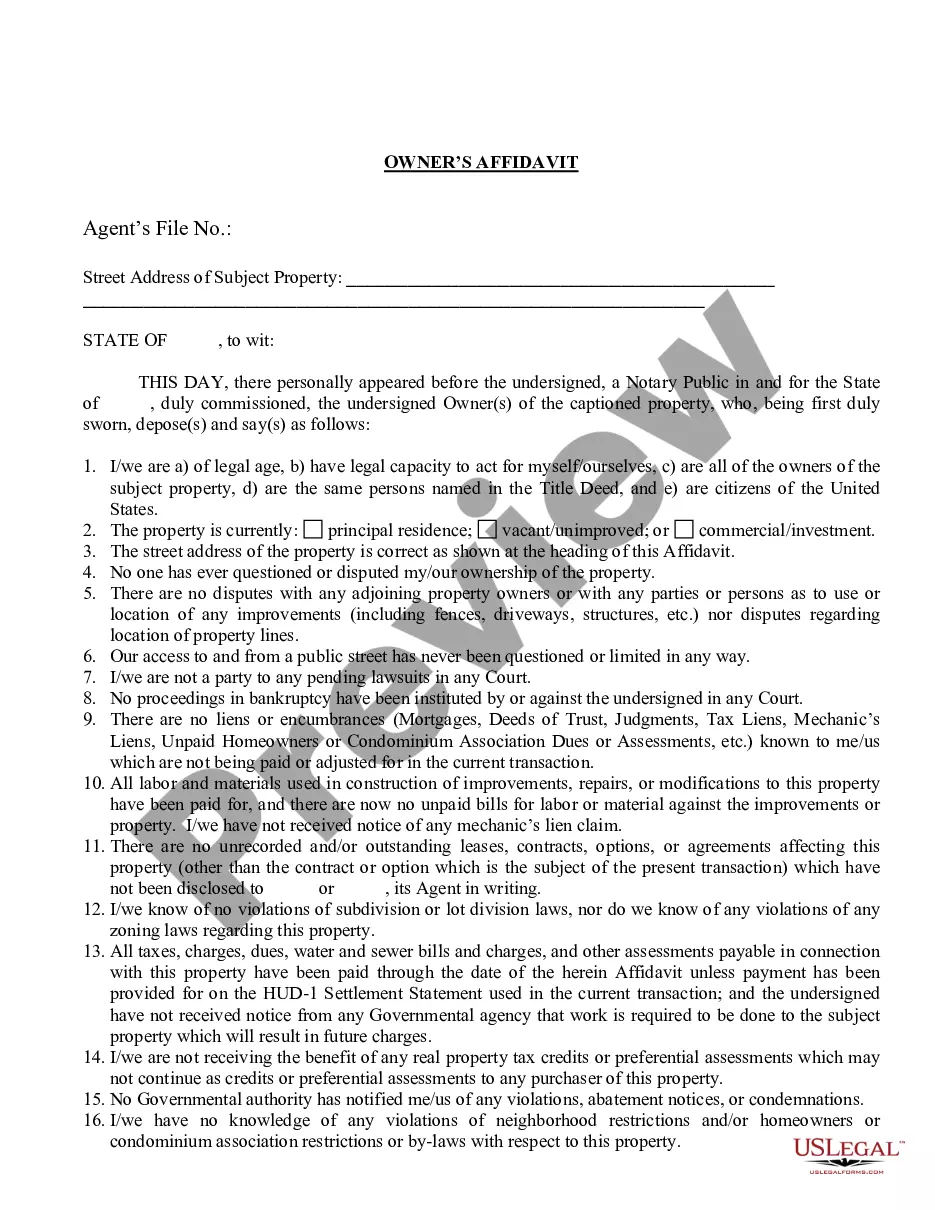
The Owner's or Seller's Affidavit of No Liens is a legal document used by sellers to affirm that the property they are selling is free of any liens. This form certifies ownership of the property and assures that no unpaid debts or obligations exist related to it. It distinguishes itself from other real estate forms by including specific declarations about liens, potential claims, and the condition of the property at the time of sale.
Main sections of this form
- Statement of ownership and legal age.
- Declaration of marital status and joint ownership.
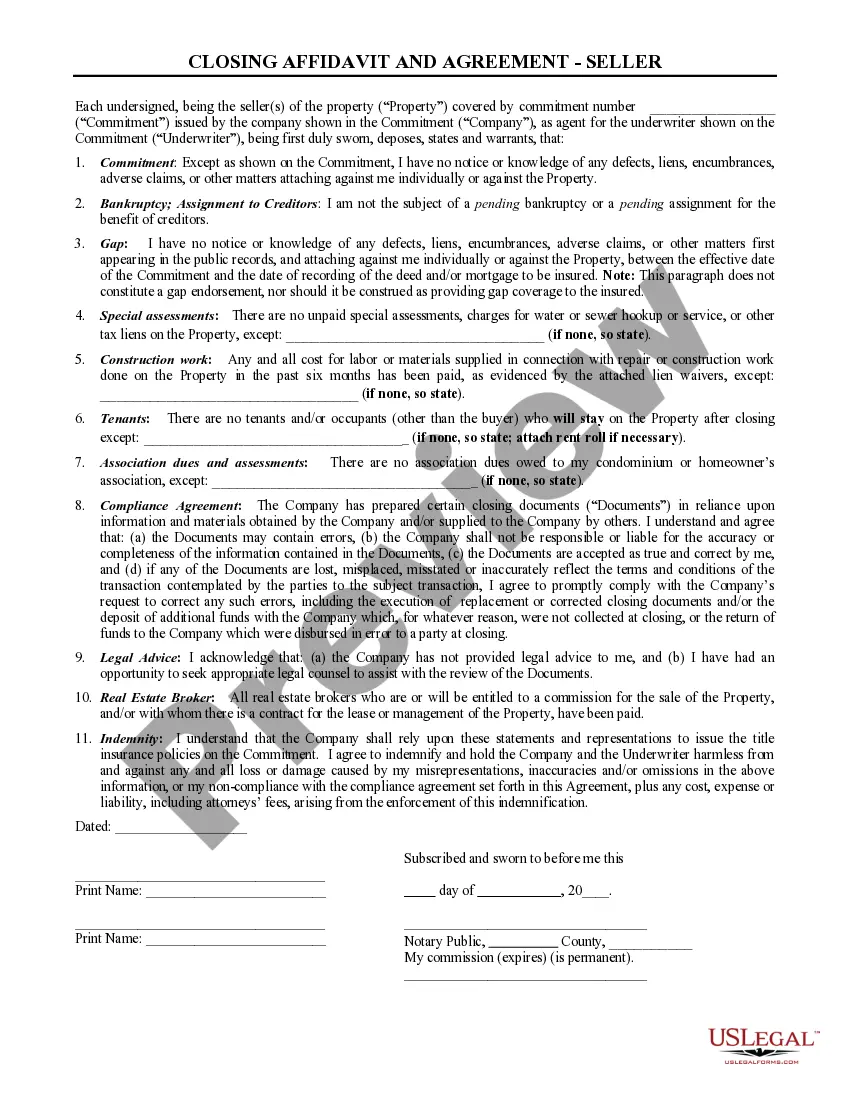
- Affirmation of no existing liens, including taxes and mechanic's liens.
- Disclosure of any known easements or legal restrictions.
- Confirmation of no pending lawsuits or bankruptcy proceedings.
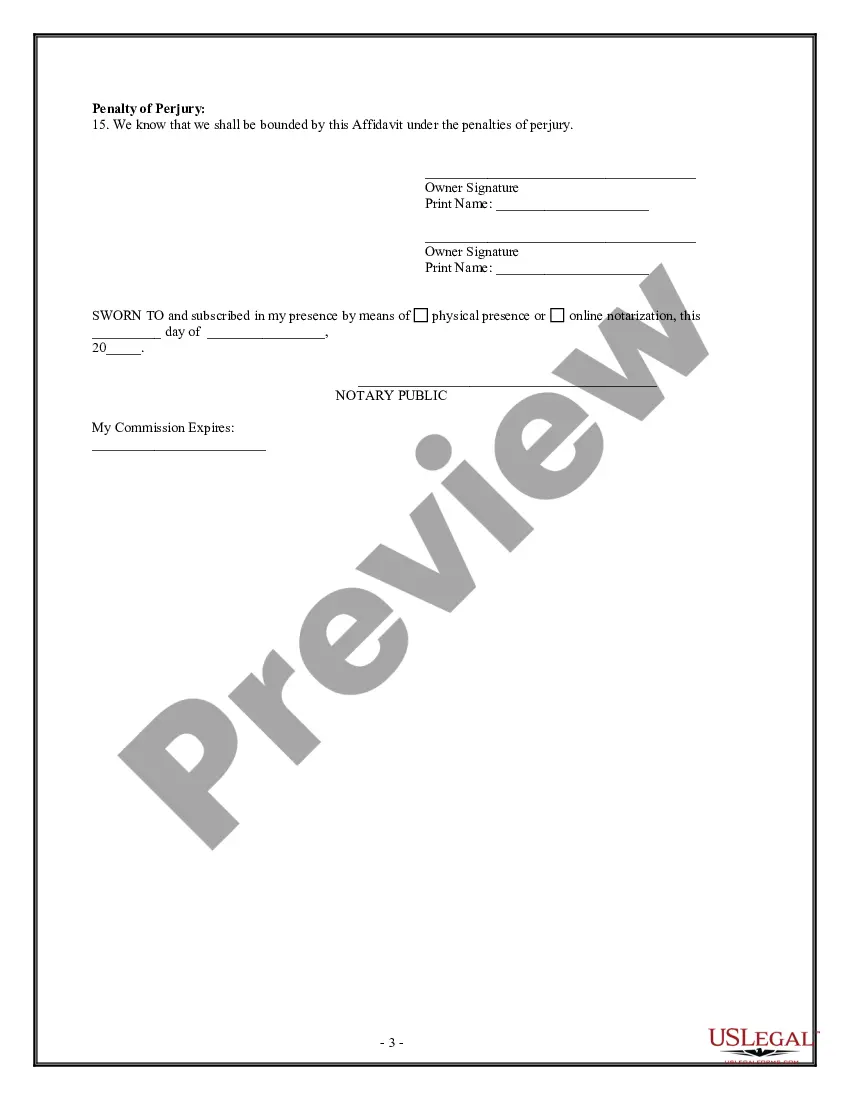
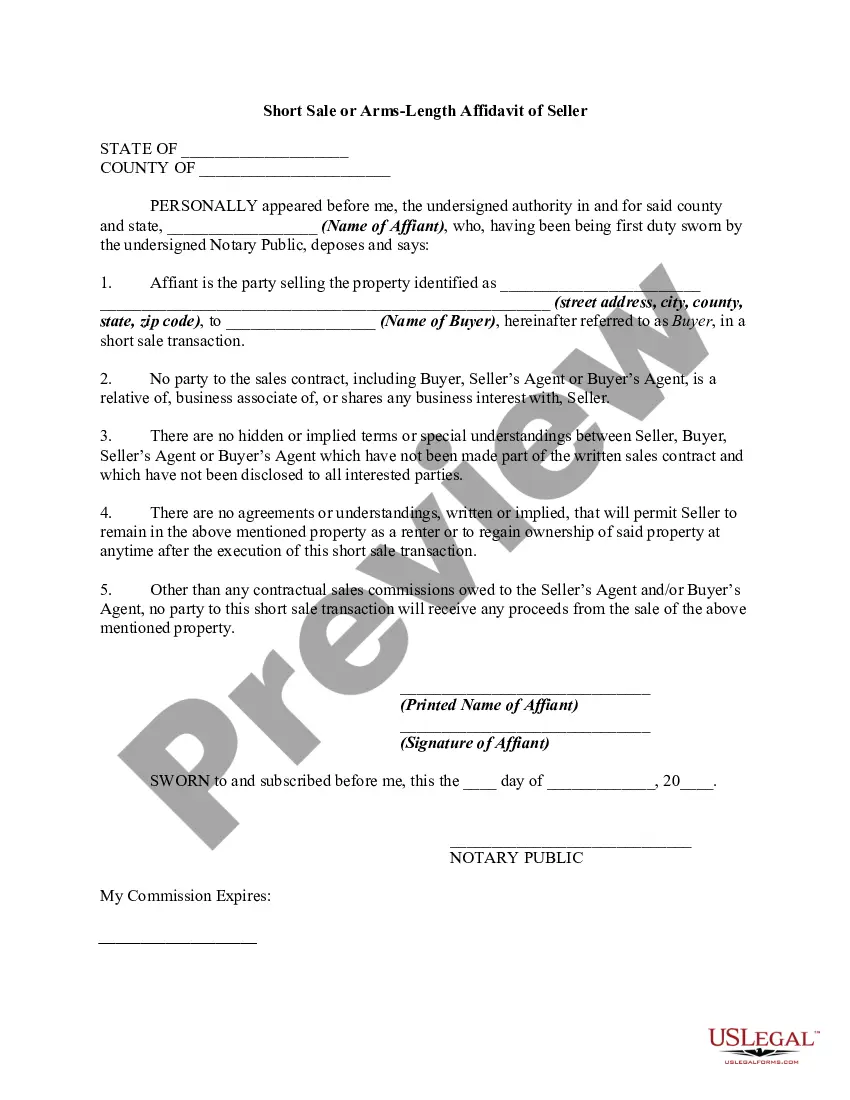
- Signature verification and notarization requirement.

When to use this document
This affidavit is typically used at the closing of a real estate transaction. Sellers should complete and sign this document to verify that they own the property and ensure it is free from liens. It is essential when transferring property ownership to protect the interests of both the seller and the buyer by confirming that no financial claims exist against the property.
Who should use this form
- Property sellers wishing to confirm the absence of liens.
- Married couples selling jointly owned property.
- Individuals involved in a real estate transaction requiring reliable documentation of property conditions.
- Real estate agents and attorneys facilitating property sales.
How to prepare this document
- Identify and enter the names of all owners involved in the property sale.
- Specify the property location and details, including deed information.
- Complete sections regarding liens, claims, and property conditions.
- Obtain signatures from all owners and have the document notarized.
- Ensure all statements are accurate before submitting to the appropriate parties.
Does this form need to be notarized?
This form needs to be notarized to ensure legal validity. US Legal Forms provides secure online notarization powered by Notarize, allowing you to complete the process through a verified video call, available anytime.
Get your form ready online
Our built-in tools help you complete, sign, share, and store your documents in one place.
Make edits, fill in missing information, and update formatting in US Legal Forms—just like you would in MS Word.
Download a copy, print it, send it by email, or mail it via USPS—whatever works best for your next step.
Sign and collect signatures with our SignNow integration. Send to multiple recipients, set reminders, and more. Go Premium to unlock E-Sign.
If this form requires notarization, complete it online through a secure video call—no need to meet a notary in person or wait for an appointment.
We protect your documents and personal data by following strict security and privacy standards.

Make edits, fill in missing information, and update formatting in US Legal Forms—just like you would in MS Word.

Download a copy, print it, send it by email, or mail it via USPS—whatever works best for your next step.

Sign and collect signatures with our SignNow integration. Send to multiple recipients, set reminders, and more. Go Premium to unlock E-Sign.

If this form requires notarization, complete it online through a secure video call—no need to meet a notary in person or wait for an appointment.

We protect your documents and personal data by following strict security and privacy standards.
Common mistakes to avoid
- Failing to accurately disclose existing liens or claims.
- Omitting required signatures or notarization.
- Not providing complete property information.
- Leaving sections blank that must be filled out.
Advantages of online completion
- Convenience of downloading and completing the form at your own pace.
- Editability allows for easy modifications to fit specific needs.
- Reliable templates drafted by licensed attorneys ensure legal validity.
Looking for another form?
Form popularity
FAQ
An Owner Affidavit is a document used by title and closing agencies to ensure that the current owner of a property is in ownership of the property free and clear of any encumbrances.The Owner Affidavit places the seller on the hook for any claims that may arise that are not covered by the title insurance policy.
The affidavit is a sworn statement of fact that specifies the seller of a property holds the title to it. In other words, it's proof that the seller owns the property. It also attests that certain other facts about the property are correctas sworn to by the seller and duly notarized.
In the sentence, the person writing the statement must state that he or she is stating that the information is accurate. (Example: I, Jane Doe, solemnly swear that the contents of this document are true and correct, and that I agree to abide by the terms in this affidavit.)
Address of the property; Full names of the owner and the transferee, who will receive the property; Personal details of both parties; All costs the new proprietor assumes.