Hawaii Living Trust for Individual, Who is Single, Divorced or Widow (or Widower) with Children
About this form
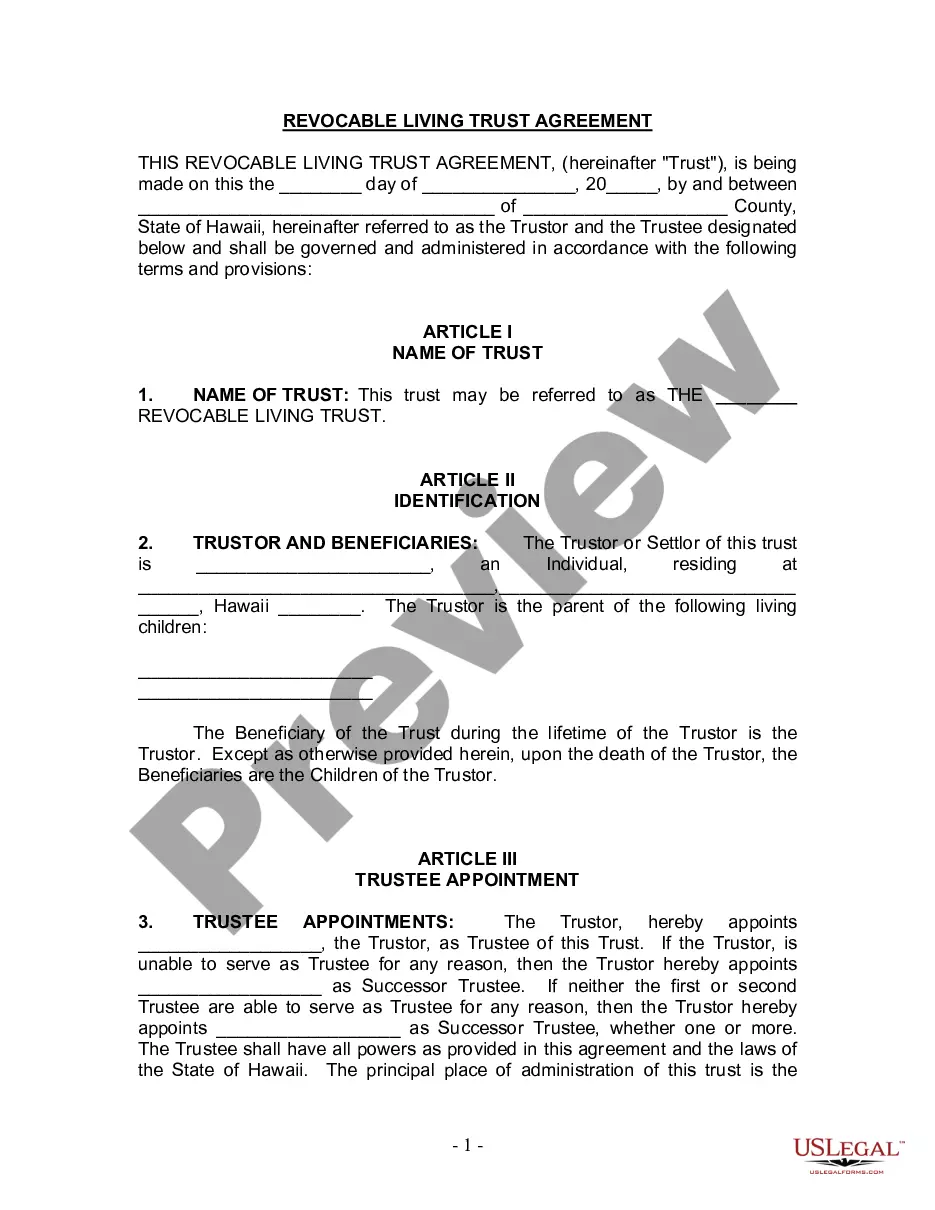
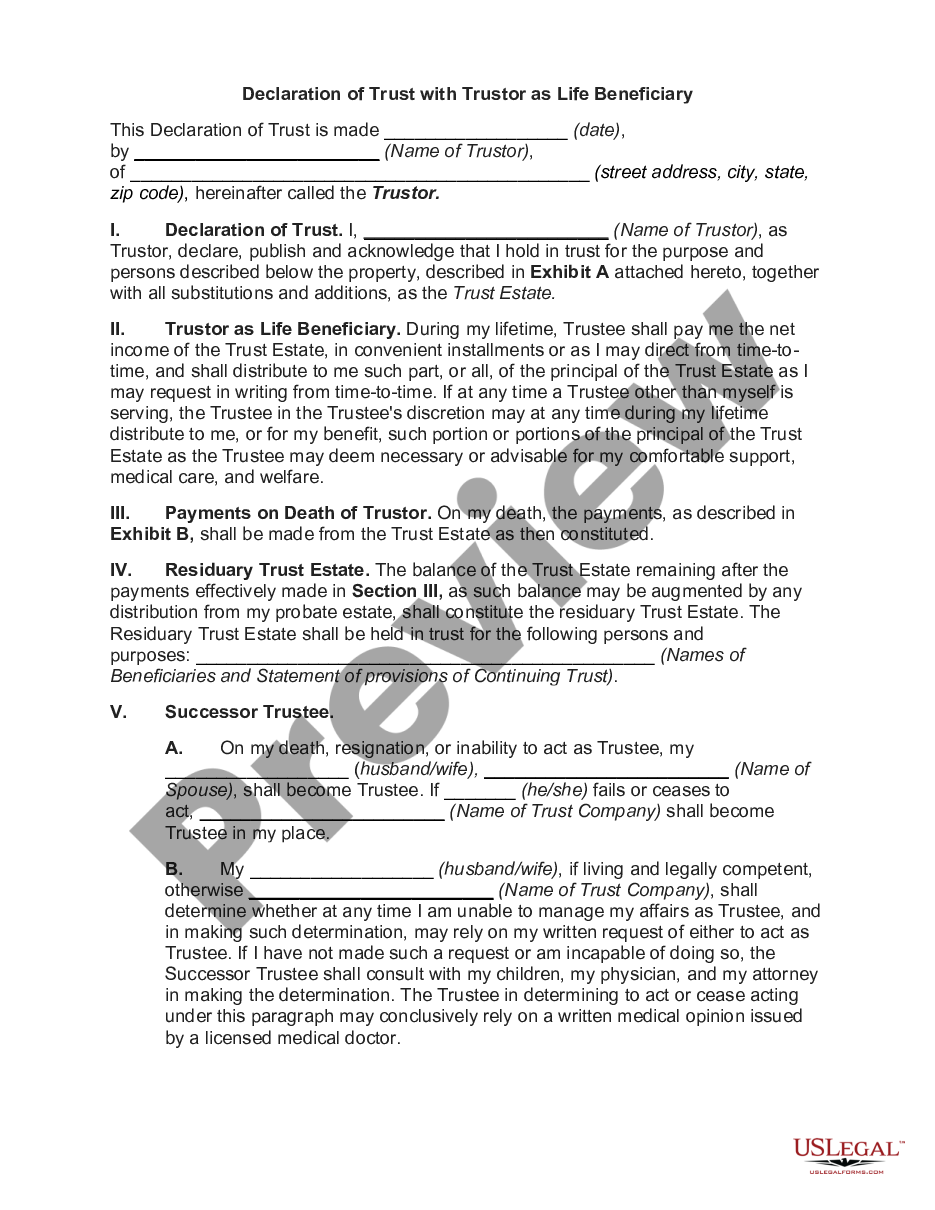
This Living Trust is designed for individuals who are single, divorced, or widowed and have children. It allows you to establish a trust during your lifetime that holds and manages your assets for the benefit of your children. Unlike a will, which must go through probate after your passing, a living trust facilitates a quicker and more private transfer of your assets upon your death, as they pass directly to your beneficiaries according to the terms set forth in the trust agreement.
Key parts of this document
- Name of the trust, which designates it as the Revocable Living Trust.
- Identification of the Trustor, who creates the trust and is often the initial trustee.
- Designated beneficiaries, typically the Trustor's children.
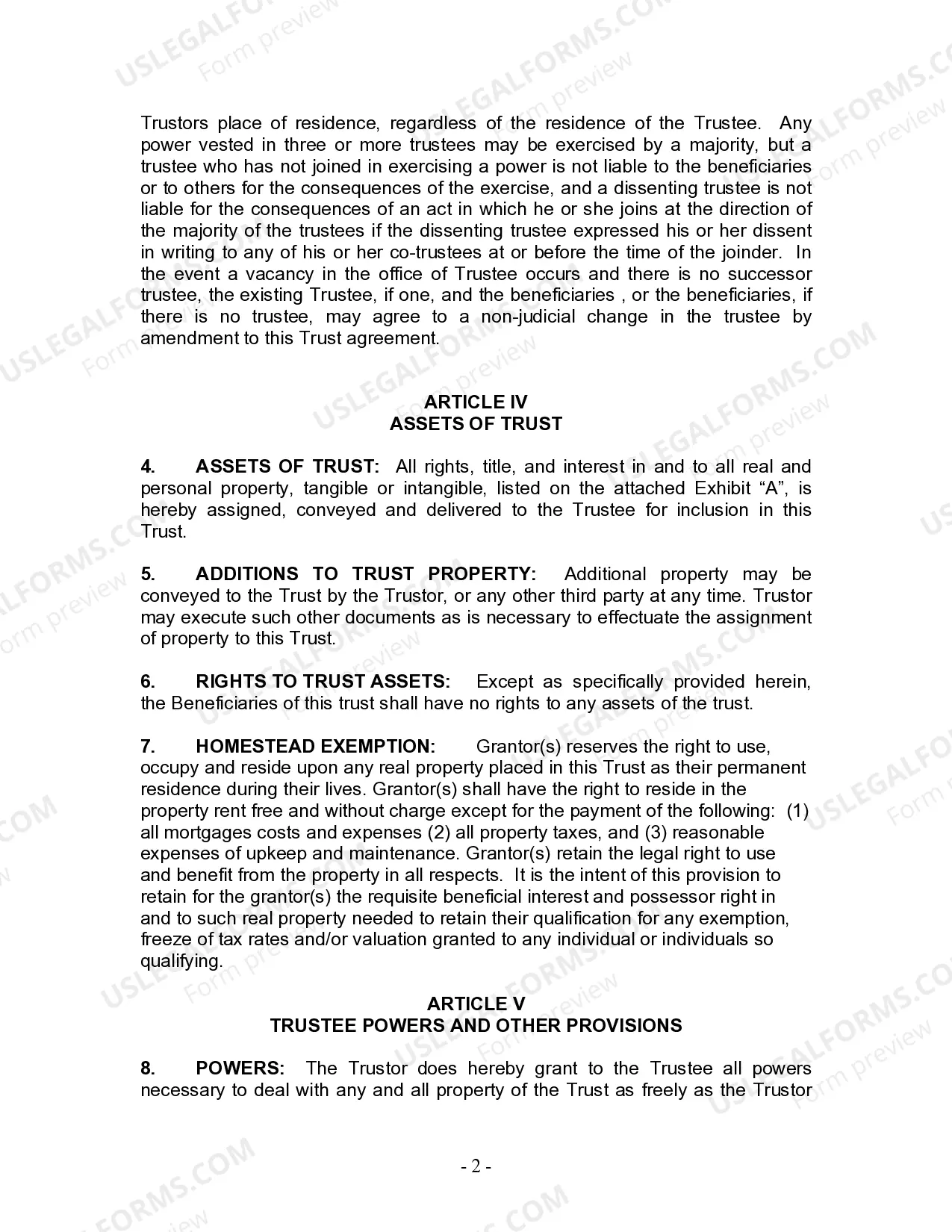
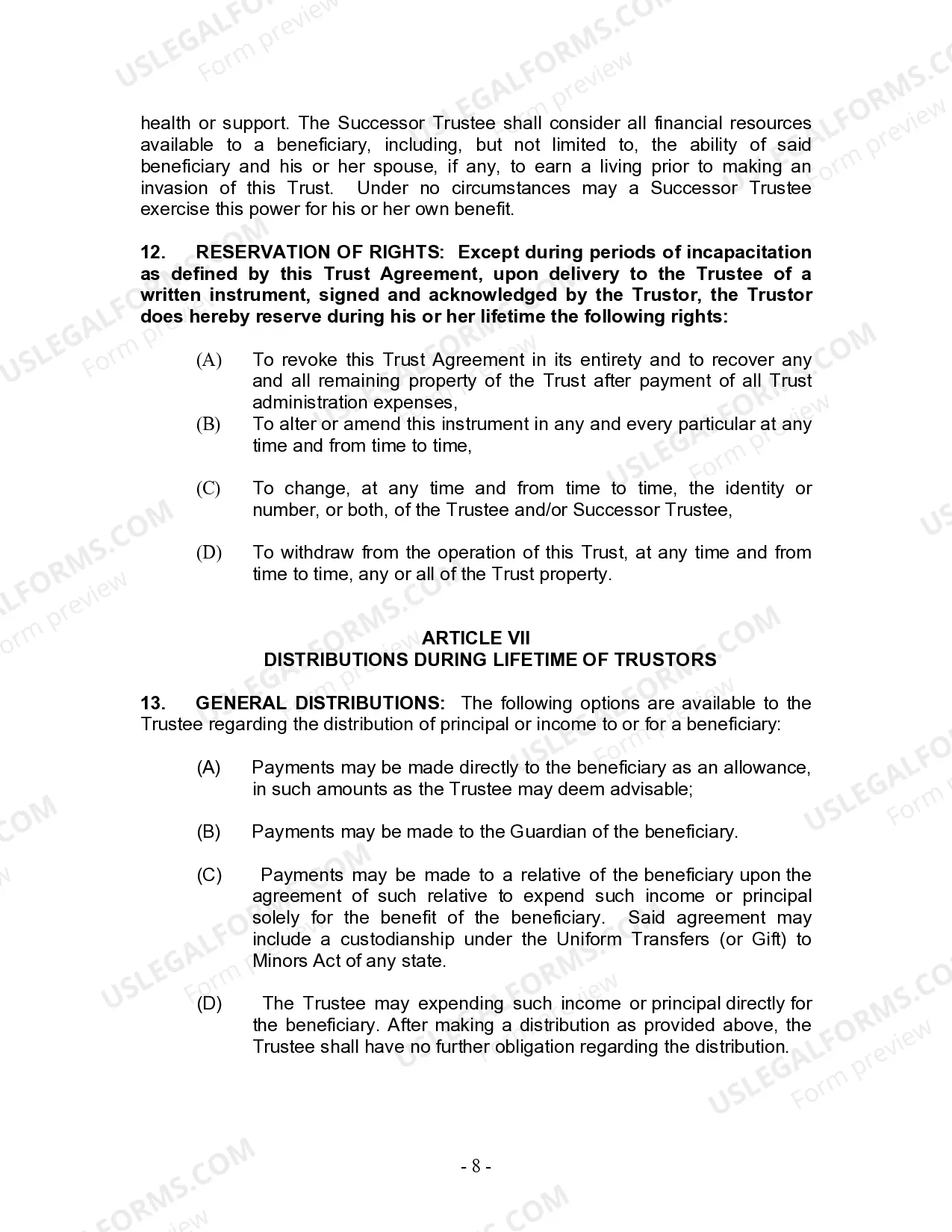
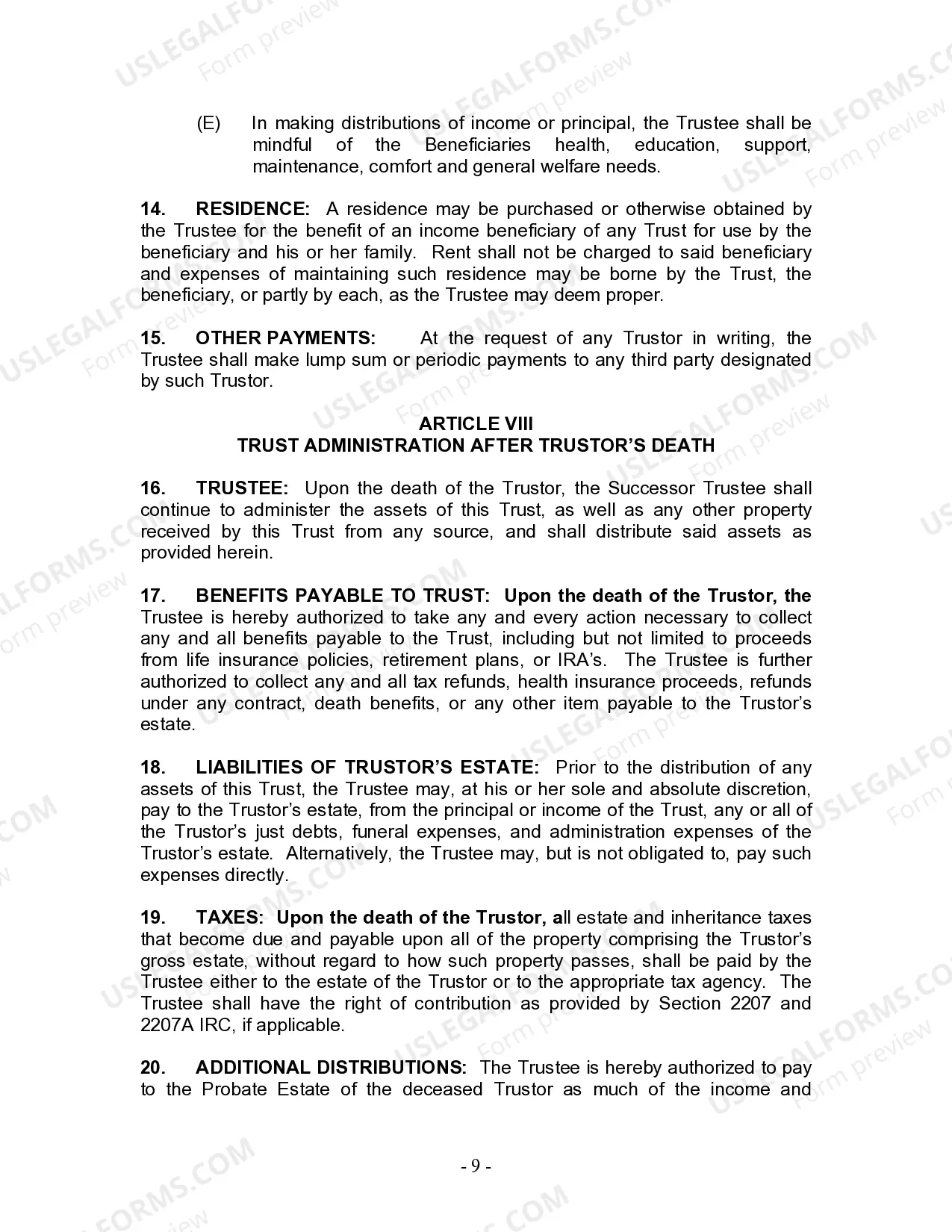
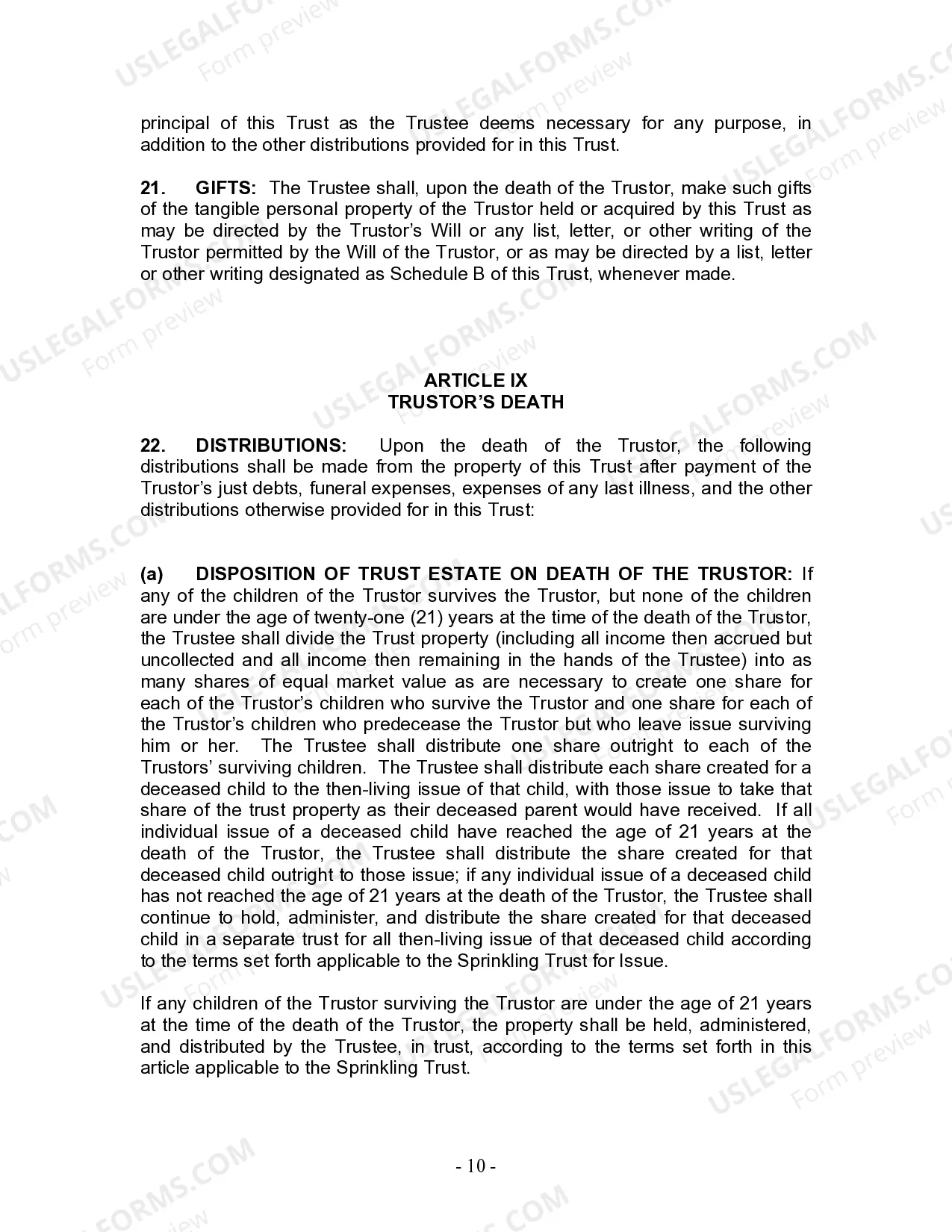
- Article outlining trustee powers and responsibilities, allowing for the management and distribution of trust assets.
- Instructions for asset management during the Trustor's lifetime and the distribution terms upon their death.





Common use cases
This Living Trust may be useful when you want to ensure your children receive your assets efficiently after your death. It is particularly relevant if you want to avoid the lengthy probate process, maintain privacy regarding your estate, or have specific wishes for how your assets should be managed and distributed. This form is also beneficial if you wish to retain control over your assets while you are alive.
Intended users of this form
- Individuals who are single, divorced, or widowed and have children.
- Parents wanting to ensure that their assets are managed for the benefit of their children.
- Anyone looking to avoid probate and streamline the transfer of assets after death.
- Individuals seeking to maintain control over their assets during their lifetime while outlining clear distribution guidelines for their children.
Instructions for completing this form
- Identify the Trustor by entering their full name and address.
- Designate a Trustee, who will manage the trust, typically the Trustor themselves.
- List all children of the Trustor as beneficiaries to ensure they inherit the trust assets.
- Specify the assets to include in the trust by completing the attached schedule or Exhibit A.
- Sign and date the trust agreement in the presence of a notary public.
Does this document require notarization?
To make this form legally binding, it must be notarized. Our online notarization service, powered by Notarize, lets you verify and sign documents remotely through an encrypted video session.
Get your form ready online
Our built-in tools help you complete, sign, share, and store your documents in one place.
Make edits, fill in missing information, and update formatting in US Legal Forms—just like you would in MS Word.
Download a copy, print it, send it by email, or mail it via USPS—whatever works best for your next step.
Sign and collect signatures with our SignNow integration. Send to multiple recipients, set reminders, and more. Go Premium to unlock E-Sign.
If this form requires notarization, complete it online through a secure video call—no need to meet a notary in person or wait for an appointment.
We protect your documents and personal data by following strict security and privacy standards.

Make edits, fill in missing information, and update formatting in US Legal Forms—just like you would in MS Word.

Download a copy, print it, send it by email, or mail it via USPS—whatever works best for your next step.

Sign and collect signatures with our SignNow integration. Send to multiple recipients, set reminders, and more. Go Premium to unlock E-Sign.

If this form requires notarization, complete it online through a secure video call—no need to meet a notary in person or wait for an appointment.

We protect your documents and personal data by following strict security and privacy standards.
Common mistakes
- Failing to adequately list all intended assets in the trust.
- Not updating the trust when family circumstances change, such as divorce or the birth of additional children.
- Omitting to name a successor trustee, which can lead to complications in managing the trust upon the Trustor's incapacity or death.
- Not keeping the trust document in a safe yet accessible location for the beneficiaries.
Advantages of online completion
- Convenient access to legal documents at any time.
- Easy editing and personalization to fit your needs.
- Secure storage of your trust document for peace of mind.
- Reliable templates drafted by licensed attorneys ensuring legal compliance.
Quick recap
- A living trust provides a way to manage and distribute your assets during your lifetime and after your death.
- This form is specifically tailored for individuals who are single, divorced, or widow/widower with children.
- Using a living trust can help avoid probate and simplify the transfer of assets.
- Completing this form online is convenient and can be done efficiently while ensuring legal compliance.
Looking for another form?
Form popularity
FAQ
After your spouse dies, it is crucial not to make hasty decisions regarding the estate, especially concerning a Hawaii Living Trust for Individual, Who is Single, Divorced or Widow (or Widower) with Children. Avoid rushing into financial commitments or selling assets without understanding your situation and obligations. Consulting with a legal expert, like those available on the UsLegalForms platform, can provide guidance, ensuring you handle the estate with care and clarity.
When one spouse passes away, the provisions of a Hawaii Living Trust for Individual, Who is Single, Divorced or Widow (or Widower) with Children dictate that the remaining assets are easily transferred to the surviving spouse or designated beneficiaries. This process avoids the lengthy probate court procedures, providing a quicker resolution. Essentially, the trust remains effective, ensuring that family needs are prioritized and financial matters are managed smoothly.
When one spouse dies, a Hawaii Living Trust for Individual, Who is Single, Divorced or Widow (or Widower) with Children typically allows the surviving spouse to manage the trust's assets without going through probate. The trust becomes effective immediately, and the surviving spouse can access the funds or property as specified in the trust document. This arrangement simplifies matters for the grieving spouse, facilitating financial stability during a challenging time.
During a divorce, a trust can help protect assets and ensure that they are distributed according to your wishes. If you have a Hawaii Living Trust for Individual, Who is Single, Divorced or Widow (or Widower) with Children, the terms of the trust can dictate how your assets are divided, preventing misunderstandings. This can provide peace of mind during a challenging transition, and resources like uslegalforms can assist you in revising your trust accordingly.
A marital trust is designed to benefit a surviving spouse, allowing them to access trust assets for their lifetime. In contrast, a survivor's trust typically benefits the children of the trustor once both parents pass away. For those creating a Hawaii Living Trust for Individual, Who is Single, Divorced or Widow (or Widower) with Children, understanding this distinction can help in effectively planning for your family's future. Using platforms like uslegalforms can simplify the process of setting up these trusts.
Yes, divorce can significantly impact a Hawaii Living Trust for Individuals, who are Single, Divorced, or Widowed with Children. When you go through a divorce, the terms and beneficiaries of your living trust may require updates to reflect your new circumstances. It's important to review and potentially amend your living trust to ensure your children and other intended beneficiaries are properly protected. The USLegalForms platform offers resources to help you navigate these changes effectively.
In the case of a Hawaii Living Trust for Individual, Who is Single, Divorced or Widow (or Widower) with Children, if one spouse passes away, the trust continues to operate. The surviving spouse retains control over the assets held in the trust. This can simplify the transfer of ownership and help avoid probate, ensuring your children are supported without unnecessary delays. Using our platform, uslegalforms, can help you navigate these complexities with ease.