Idaho Dissolution Package to Dissolve Corporation
About this form
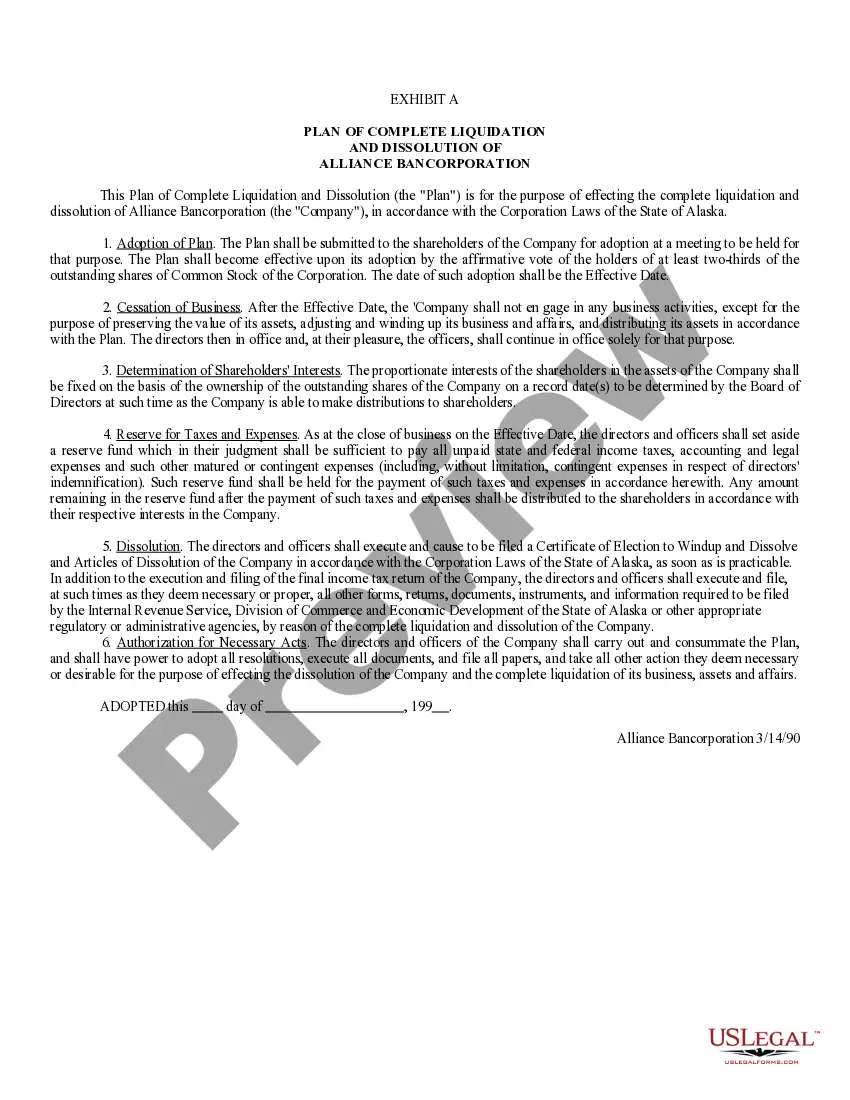
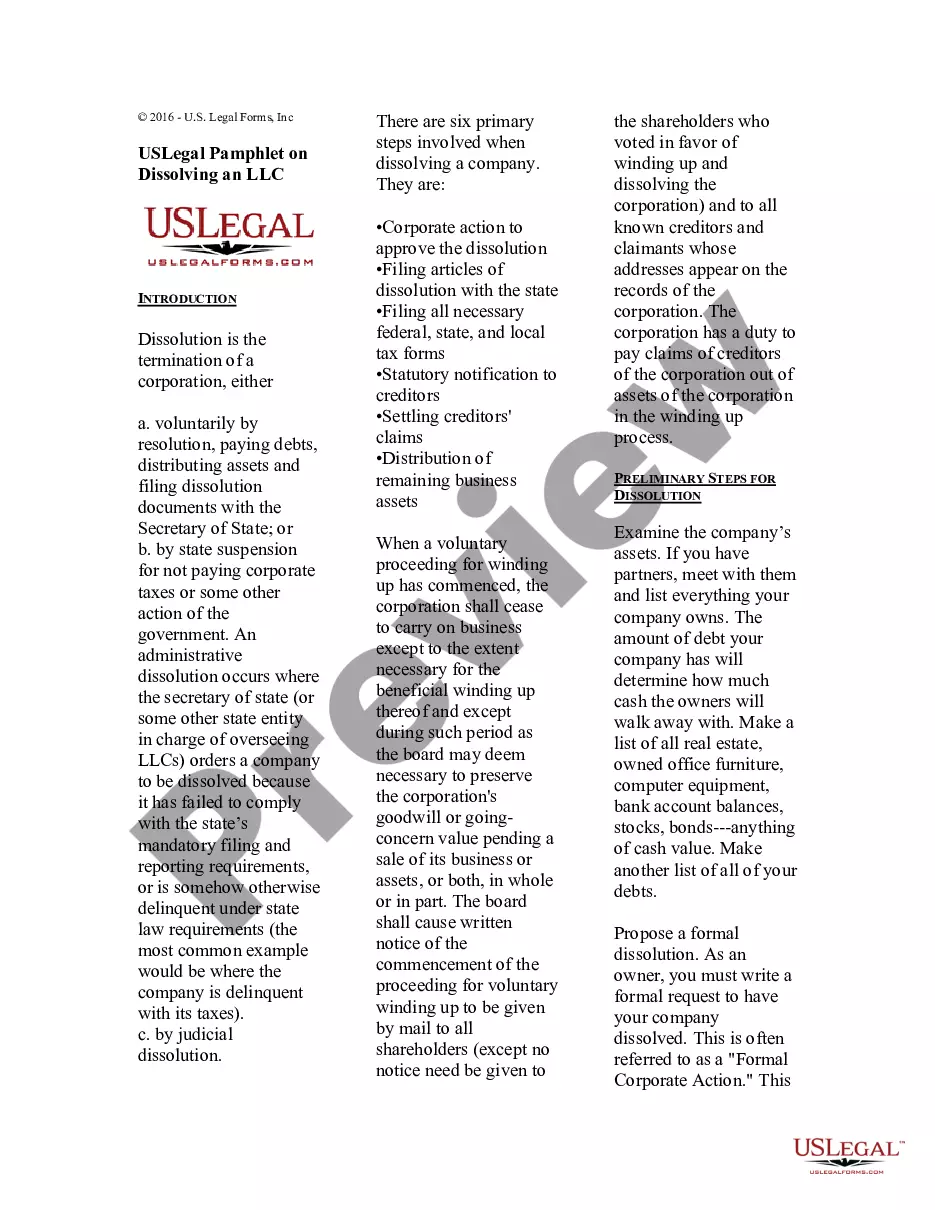
The Idaho Dissolution Package to Dissolve Corporation is a comprehensive set of documents designed to facilitate the voluntary dissolution of a corporation in Idaho. This package includes essential forms, step-by-step instructions, and informational materials tailored specifically for Idaho's legal requirements. This form package is ideal for corporations that have decided to cease operations and wish to officially dissolve their business entity according to state law.
Key parts of this document
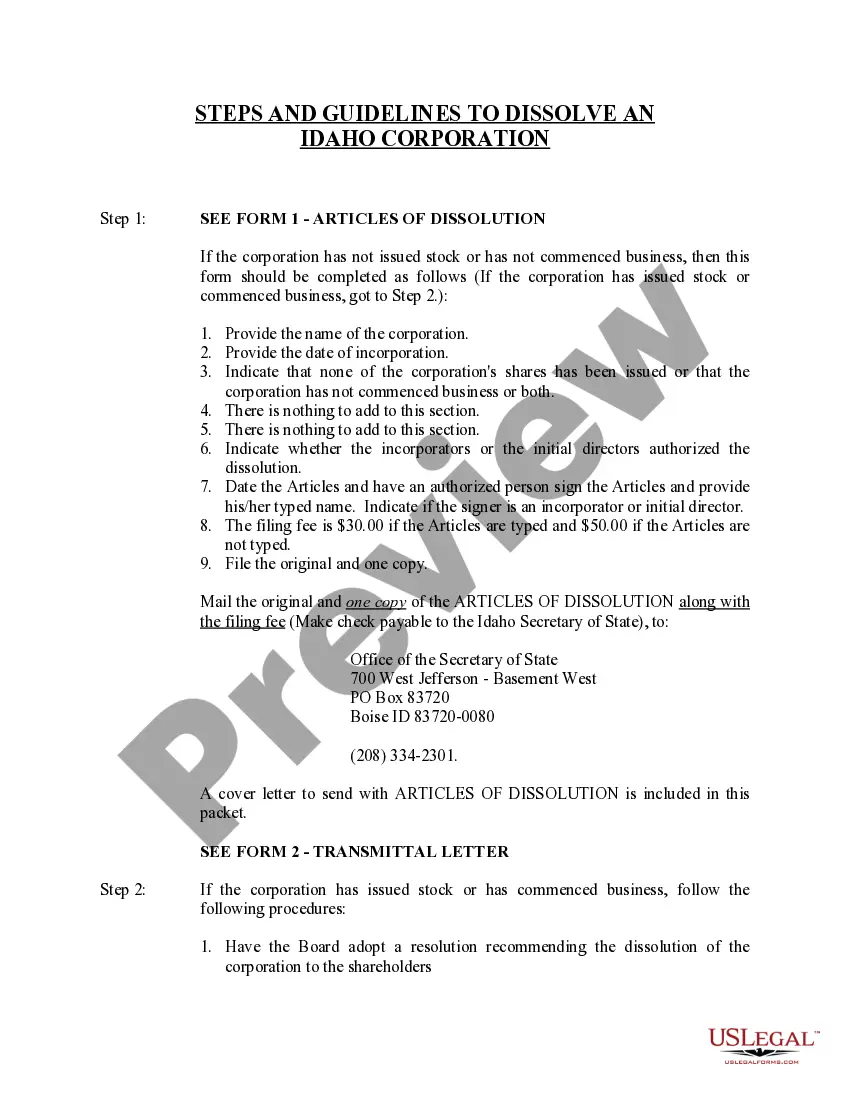
- Articles of Dissolution: Required document detailing the dissolution and corporation information.
- Transmittal Letter: Accompanies the Articles when submitted to the Secretary of State.
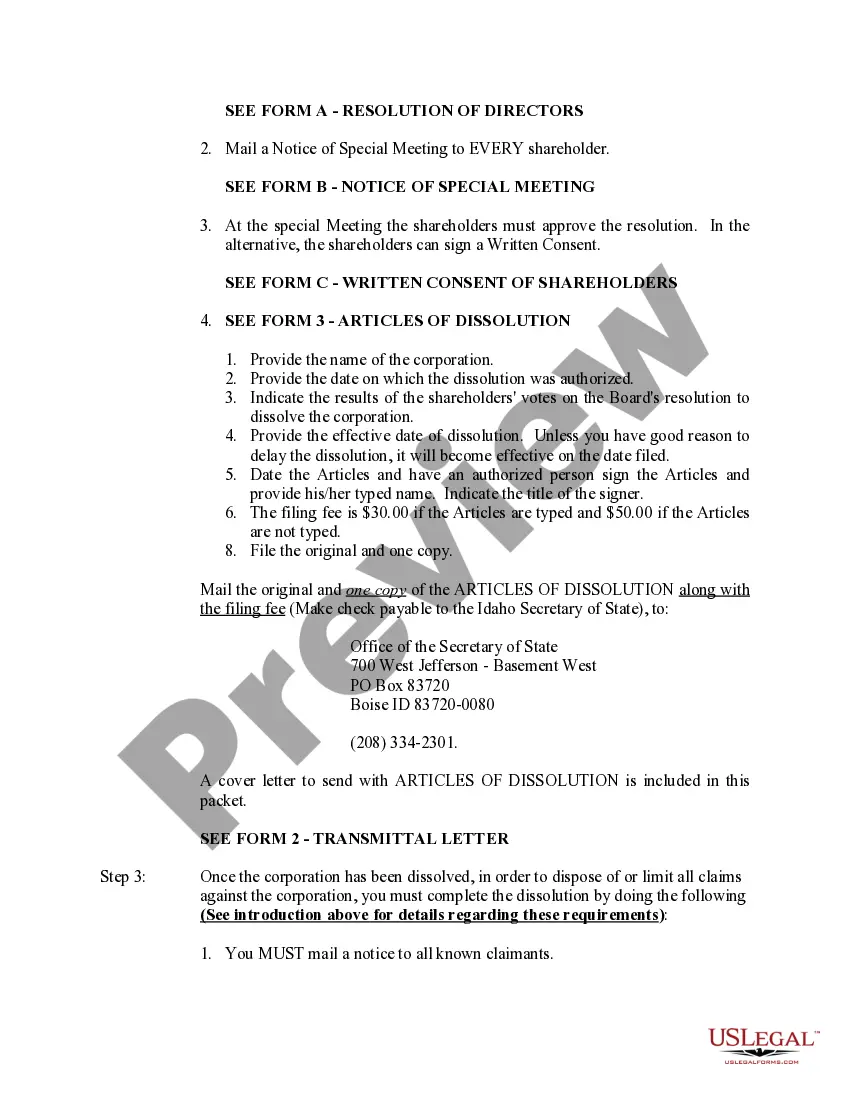
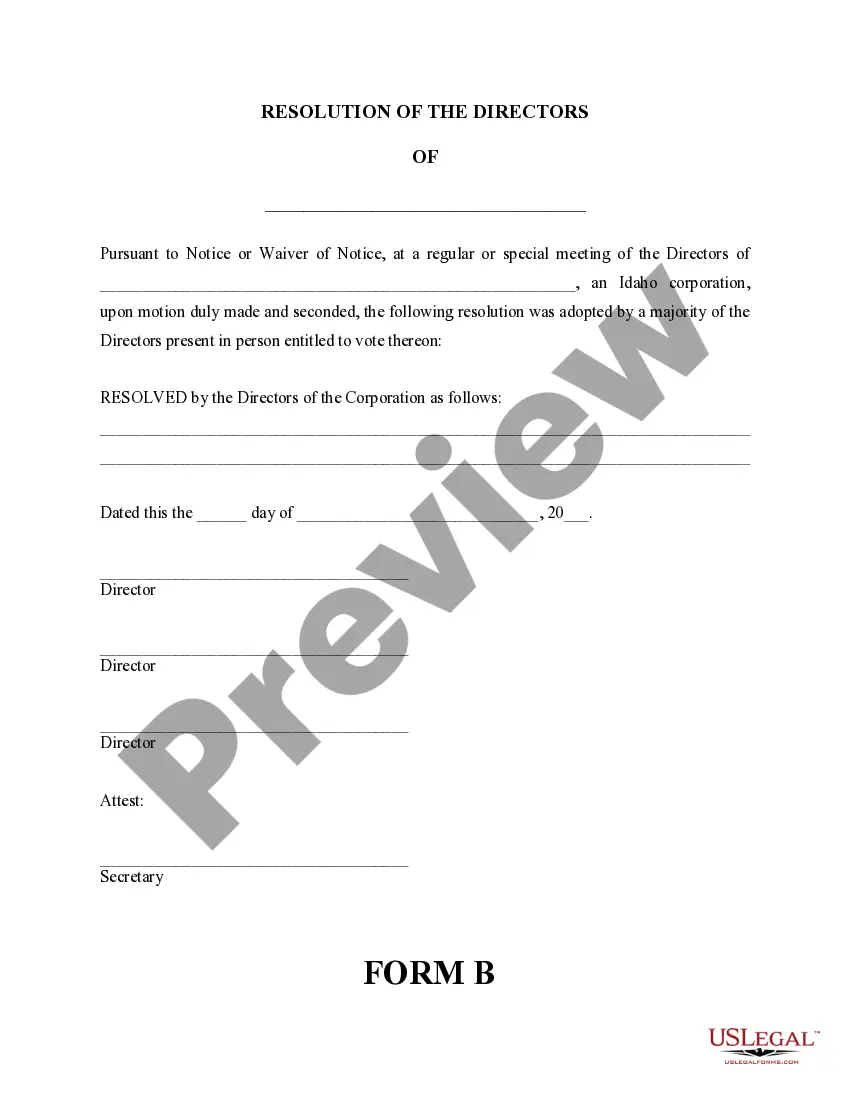
- Resolution of Directors: Document for recommending dissolution to shareholders.
- Notice of Special Meeting: Notifies shareholders of a meeting to discuss the dissolution.
- Written Consent of Shareholders: Option for shareholders to agree to dissolution without a meeting.
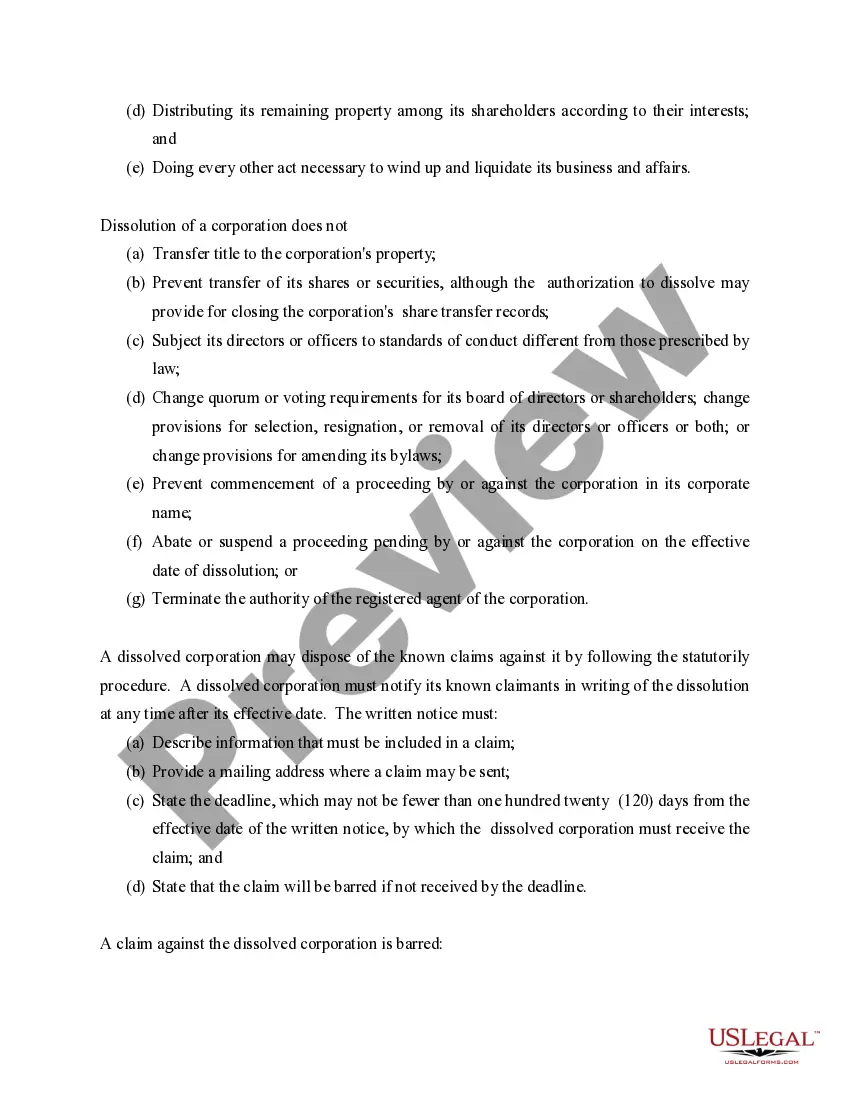
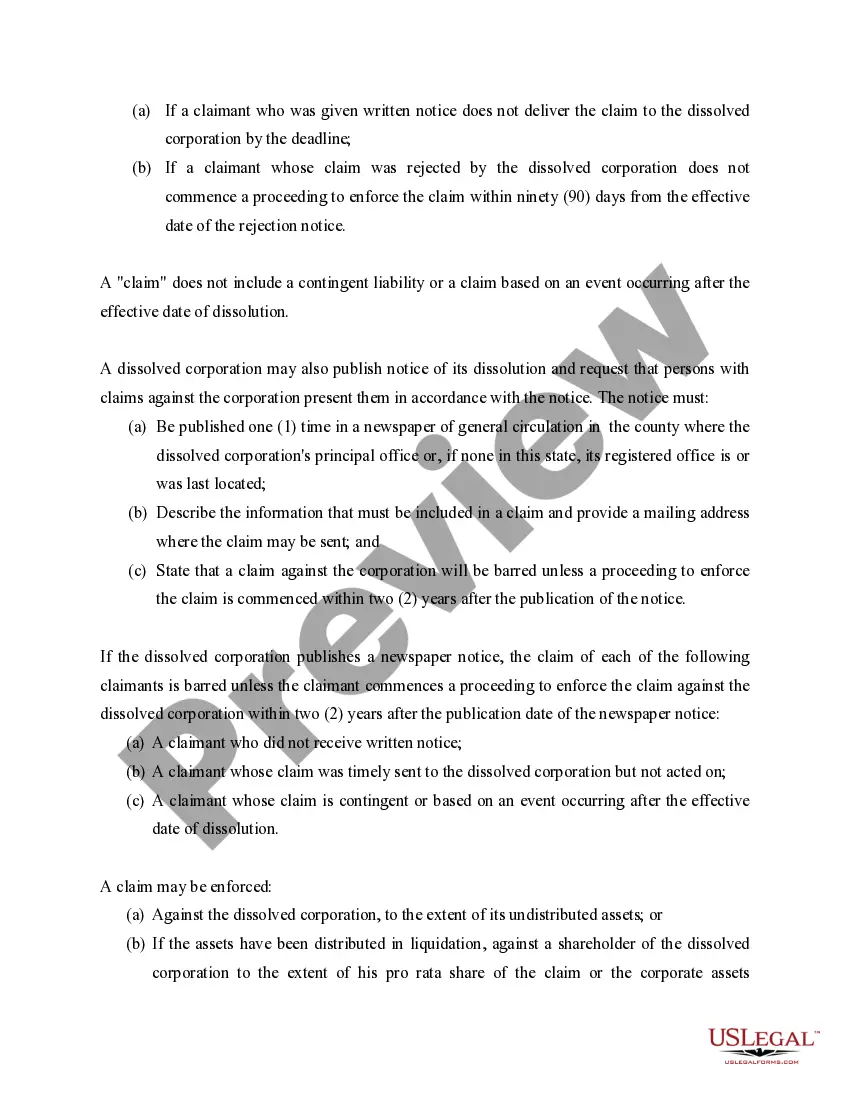
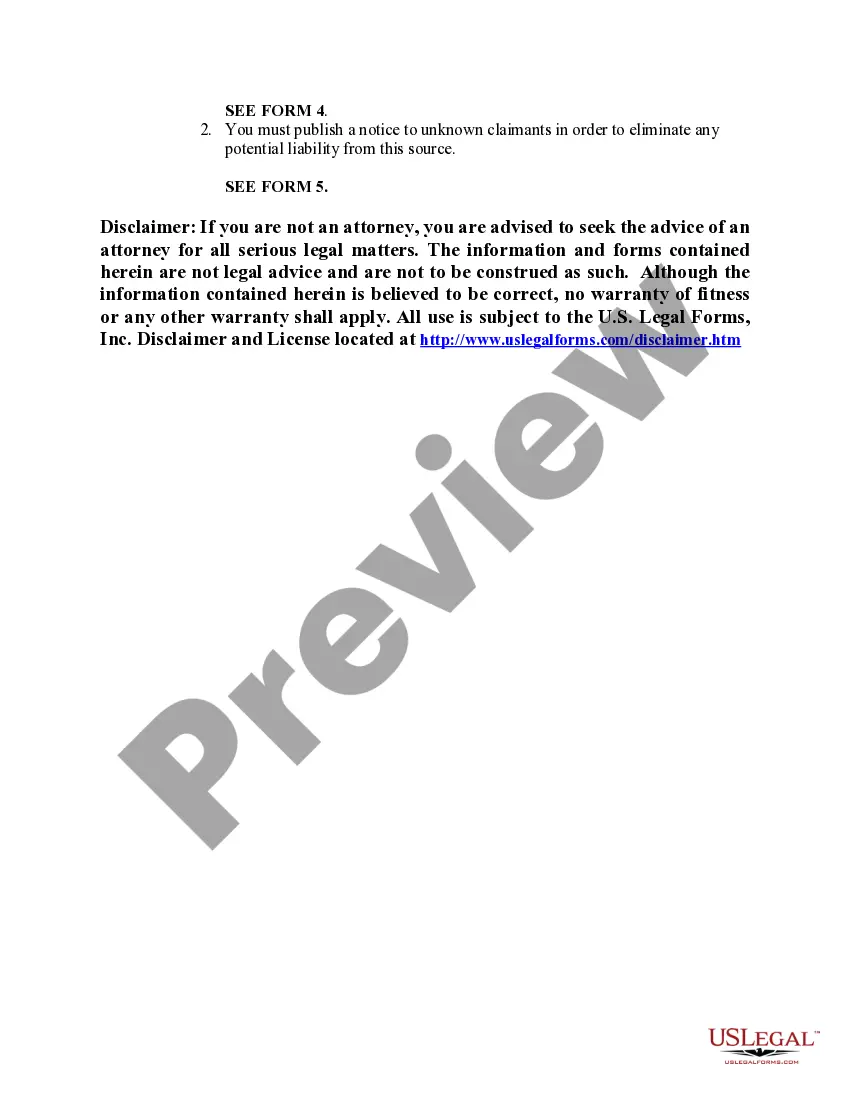
- Notices to Claimants: Communication required to inform known and unknown claimants of dissolution.



Situations where this form applies
This form package should be used when a corporation in Idaho has completed its business operations and the owners decide to dissolve the corporation voluntarily. It is appropriate in scenarios such as financial difficulties, shifts in business direction, or when the business is no longer viable. Using this package streamlines the process of dissolution to ensure compliance with state laws.
Who can use this document
- Corporation officials or directors responsible for the decision to dissolve the company.
- Shareholders who need to withdraw involvement in a corporation that is no longer operational.
- Businesses that have completed dissolution and need to comply with Idaho state requirements.
How to complete this form
- Complete the Articles of Dissolution with your corporation's name, incorporation date, and a statement regarding shares issued or business commenced.
- Gather the necessary approvals from your board of directors and shareholders, as required.
- Prepare the Transmittal Letter to accompany your filing with the Secretary of State.
- Submit the Articles of Dissolution and Transmittal Letter, along with the required filing fee, to the Idaho Secretary of State.
- Send notices to all known claimants regarding the dissolution of the corporation to limit potential liabilities.
- Publish a notice in a local newspaper for unknown claimants, if necessary, to ensure full compliance with the dissolution process.
Notarization requirements for this form
This form does not typically require notarization unless specified by local law. Make sure to follow any specific instructions included in your package regarding notarization of certain documents.
Get your form ready online
Our built-in tools help you complete, sign, share, and store your documents in one place.
Make edits, fill in missing information, and update formatting in US Legal Forms—just like you would in MS Word.
Download a copy, print it, send it by email, or mail it via USPS—whatever works best for your next step.
Sign and collect signatures with our SignNow integration. Send to multiple recipients, set reminders, and more. Go Premium to unlock E-Sign.
If this form requires notarization, complete it online through a secure video call—no need to meet a notary in person or wait for an appointment.
We protect your documents and personal data by following strict security and privacy standards.

Make edits, fill in missing information, and update formatting in US Legal Forms—just like you would in MS Word.

Download a copy, print it, send it by email, or mail it via USPS—whatever works best for your next step.

Sign and collect signatures with our SignNow integration. Send to multiple recipients, set reminders, and more. Go Premium to unlock E-Sign.

If this form requires notarization, complete it online through a secure video call—no need to meet a notary in person or wait for an appointment.

We protect your documents and personal data by following strict security and privacy standards.
Avoid these common issues
- Failing to notify all shareholders and claimants about the dissolution process.
- Forgetting to obtain the required shareholder approval before submitting Articles of Dissolution.
- Not adhering to the filing deadlines specified in the notice to claimants.
Benefits of using this form online
- Convenience of accessing all required documents in one package.
- Editable templates allow for quick customization to your corporation's specific details.
- Guidance through the dissolution process ensures compliance with Idaho regulations.
Legal use & context
- This form serves as an official request for dissolution and must be filed with the appropriate state authority.
- Failure to complete the dissolution process correctly can result in ongoing liabilities for the corporation.
- Legal claims must be addressed as specified in the Idaho Code to protect against future liability.
Summary of main points
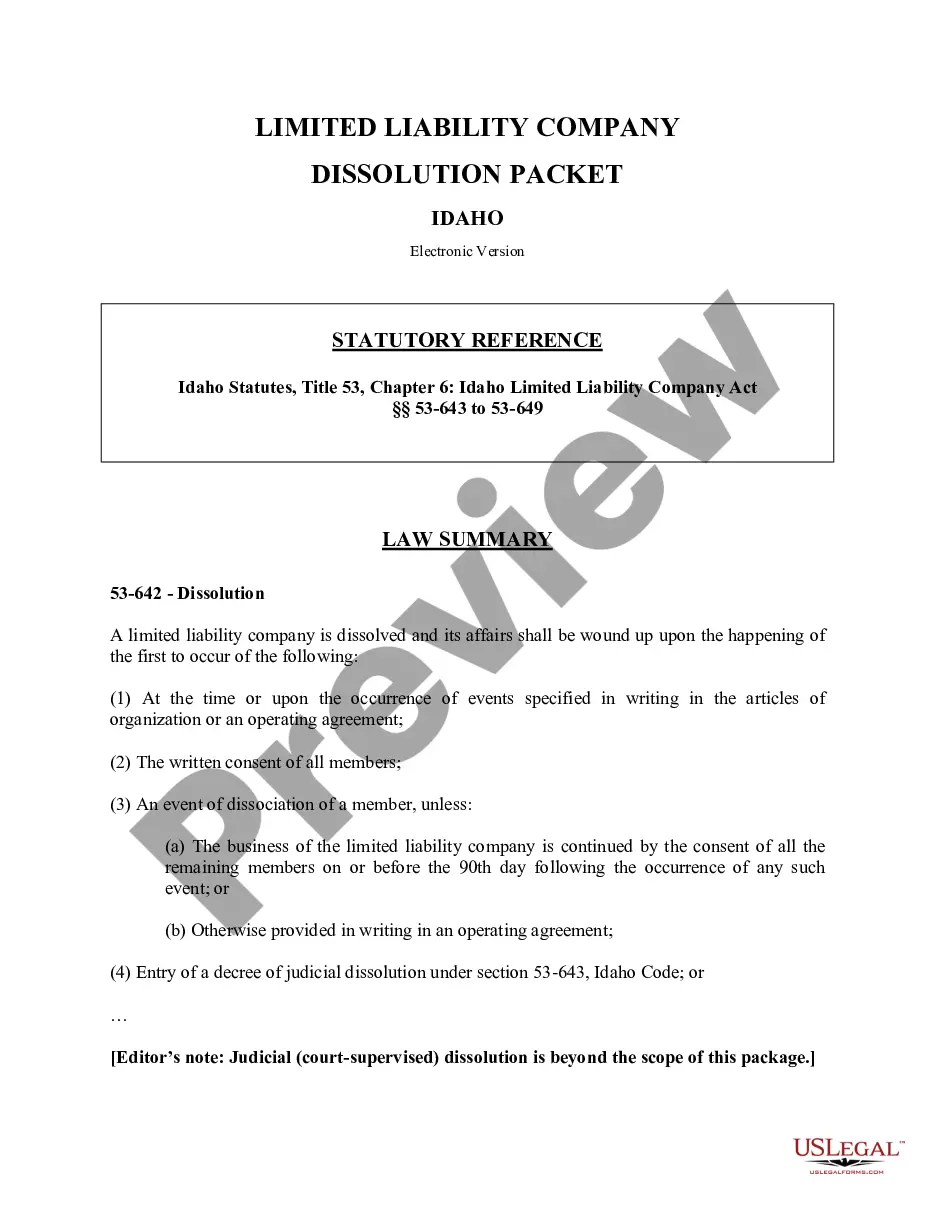
- The Idaho Dissolution Package provides all necessary documents for voluntarily dissolving a corporation in Idaho.
- Compliance with state regulations is critical to avoid future liabilities.
- Proper notification to shareholders and claimants is essential for a smooth dissolution process.
Looking for another form?
Form popularity
FAQ
Dissolve the Legal Entity (LLC or Corporation) with the State. An LLC or Corporation needs to be officially dissolved. Pay Any Outstanding Bills. You need to satisfy any company debts before closing the business. Cancel Any Business Licenses or Permits. File Your Final Federal and State Tax Returns.
When a corporation is dissolved, it no longer legally exists and, in most cases, its debts disappear as well. State laws usually give additional time beyond the dissolution for creditors to file suits for failure to pay any corporate debts or for the wrongful distribution of corporate assets.
You must file Form 966, Corporate Dissolution or Liquidation, if you adopt a resolution or plan to dissolve the corporation or liquidate any of its stock. You must also file your corporation's final income tax return.
Contact an attorney and an accountant. Secretary of State: File the appropriate form to terminate the business registration. Regional SBDC office locations. When a business closes, state tax permits and sales tax permits need to be cancelled, withholding accounts closed and a final tax return filed.
Definition. The ending of a corporation, either voluntarily by filing a notice of dissolution with the Secretary of State or as ordered by a court after a vote of the shareholders, or involuntarily through government action as a result of failure to pay taxes.
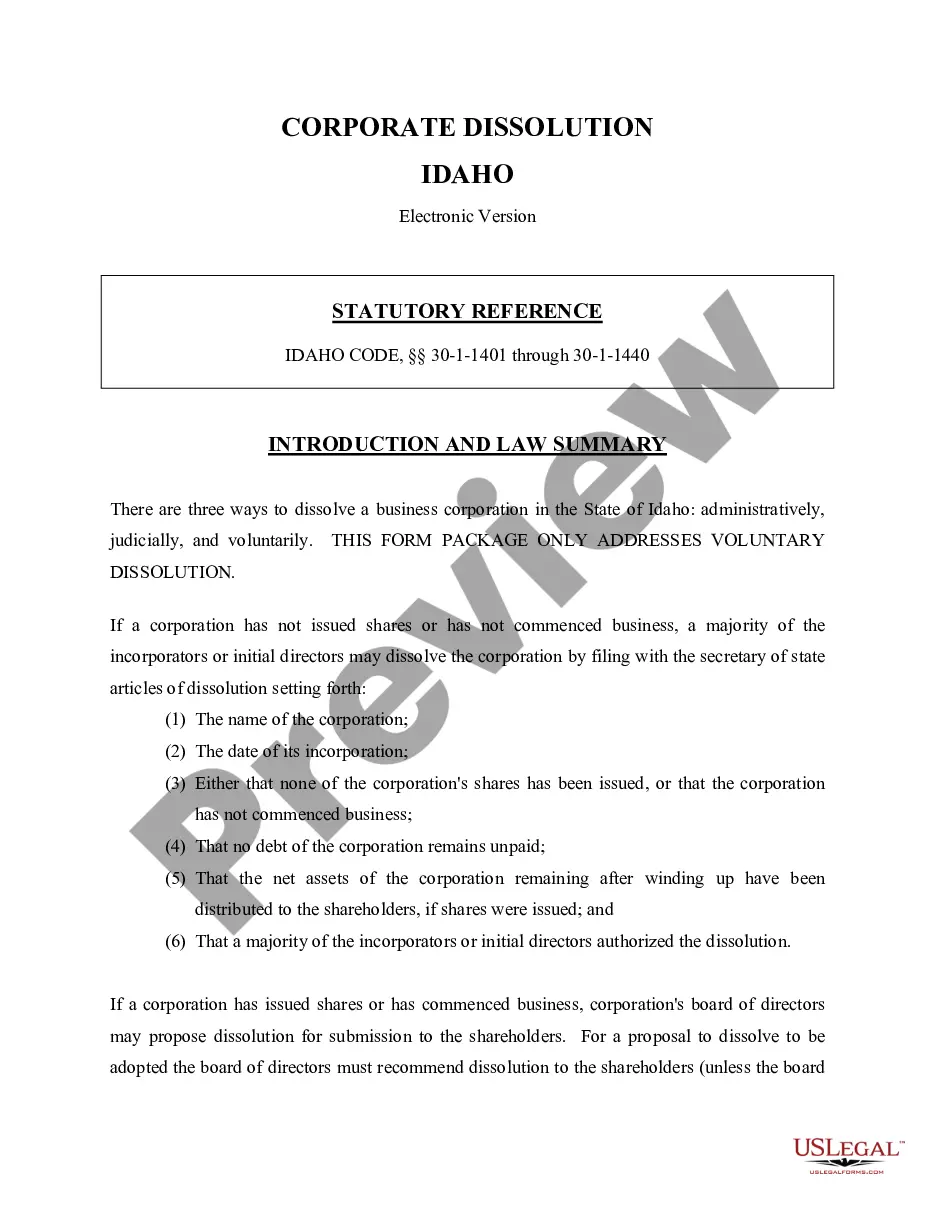
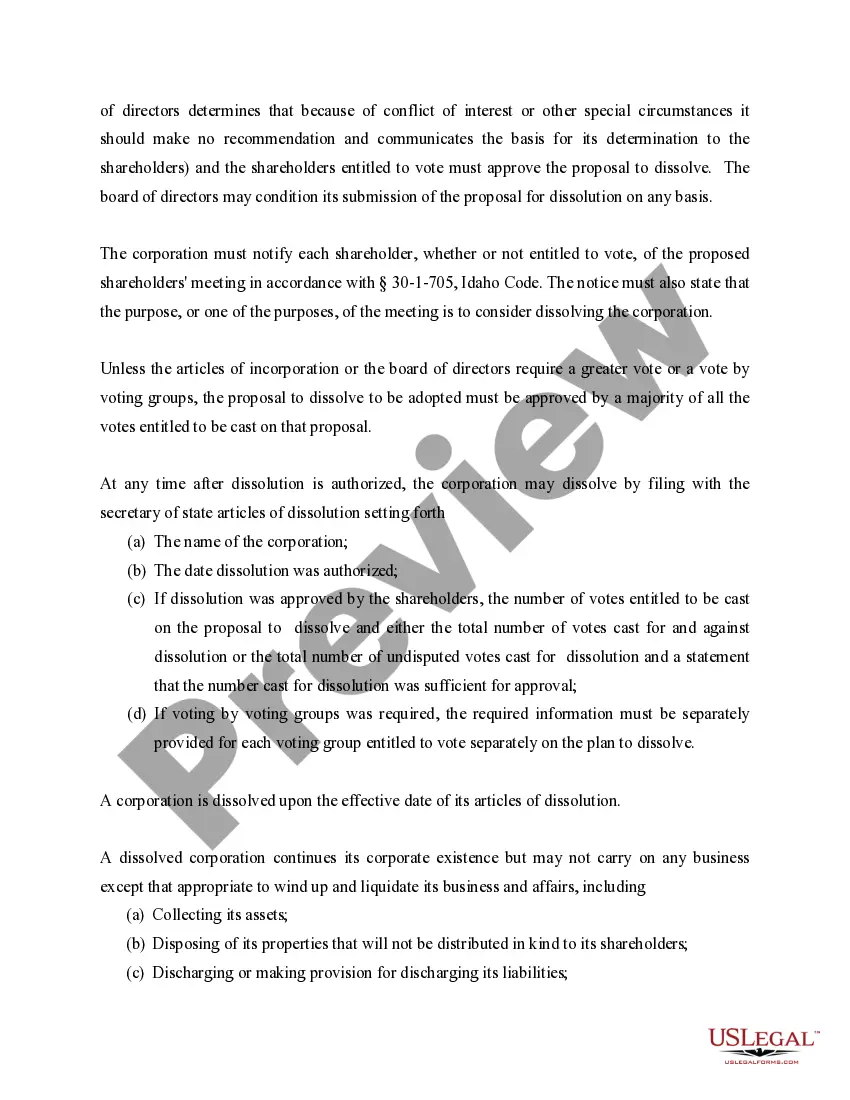
Hold a board of directors meeting and formally move to dissolve your corporation. File the Articles of Dissolution (in duplicate) with the Idaho Secretary of State. Fulfill all tax obligations with the state of Idaho, as well as with the IRS.
Failing to dissolve the corporation allows third parties to continue to sue the corporation as if it is still in operation. A judgment might mean that shareholders use the money received from distributed assets when the corporation closed down to satisfy judgments against the corporation.