Idaho Written Revocation of Will
Understanding this form
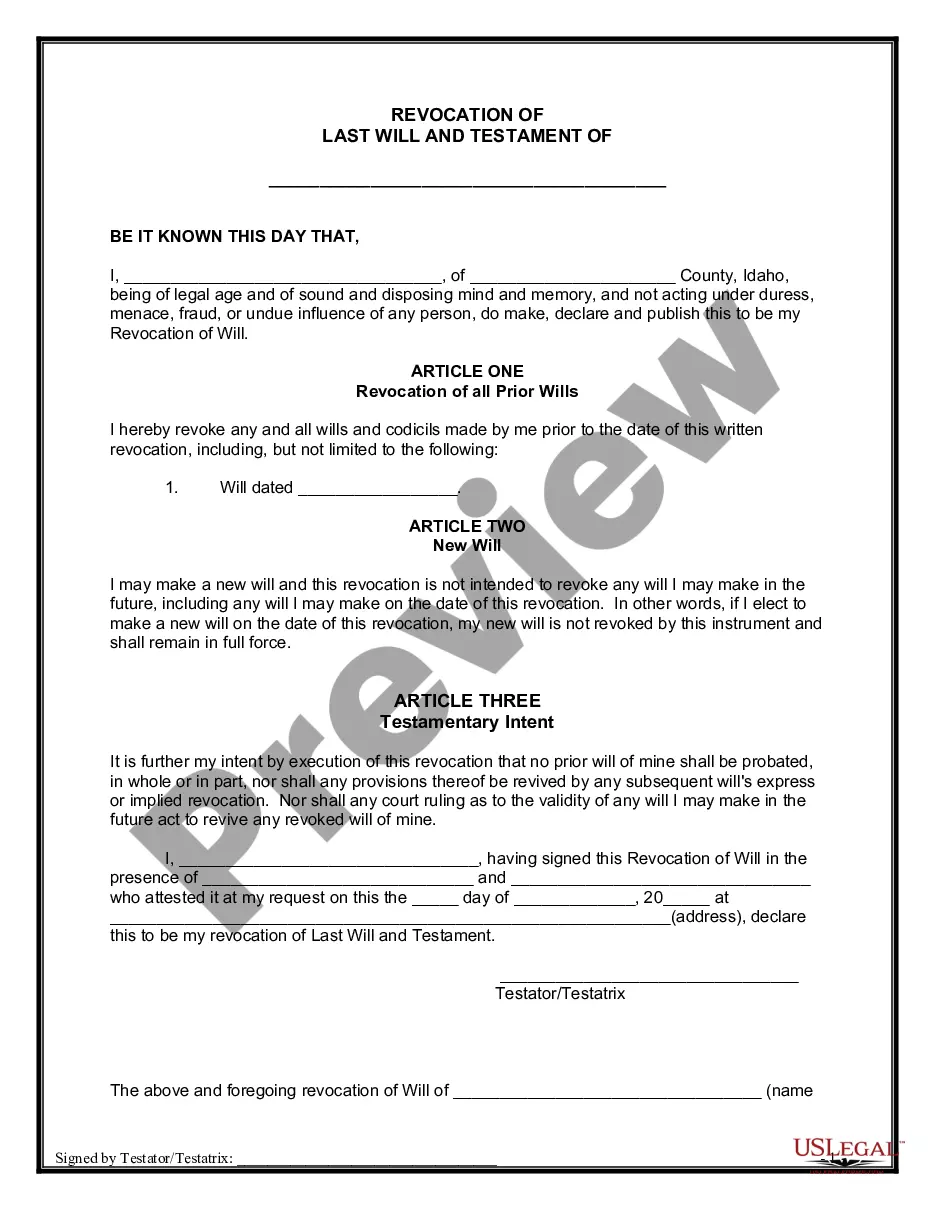
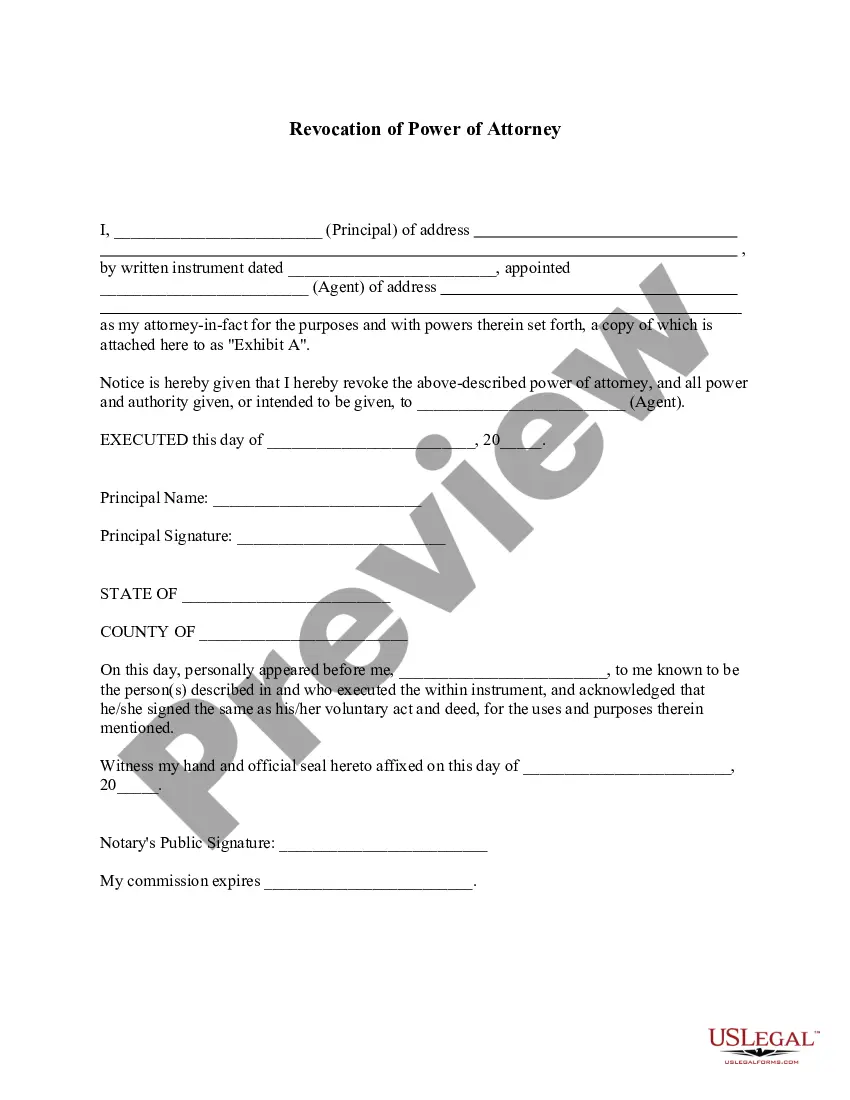
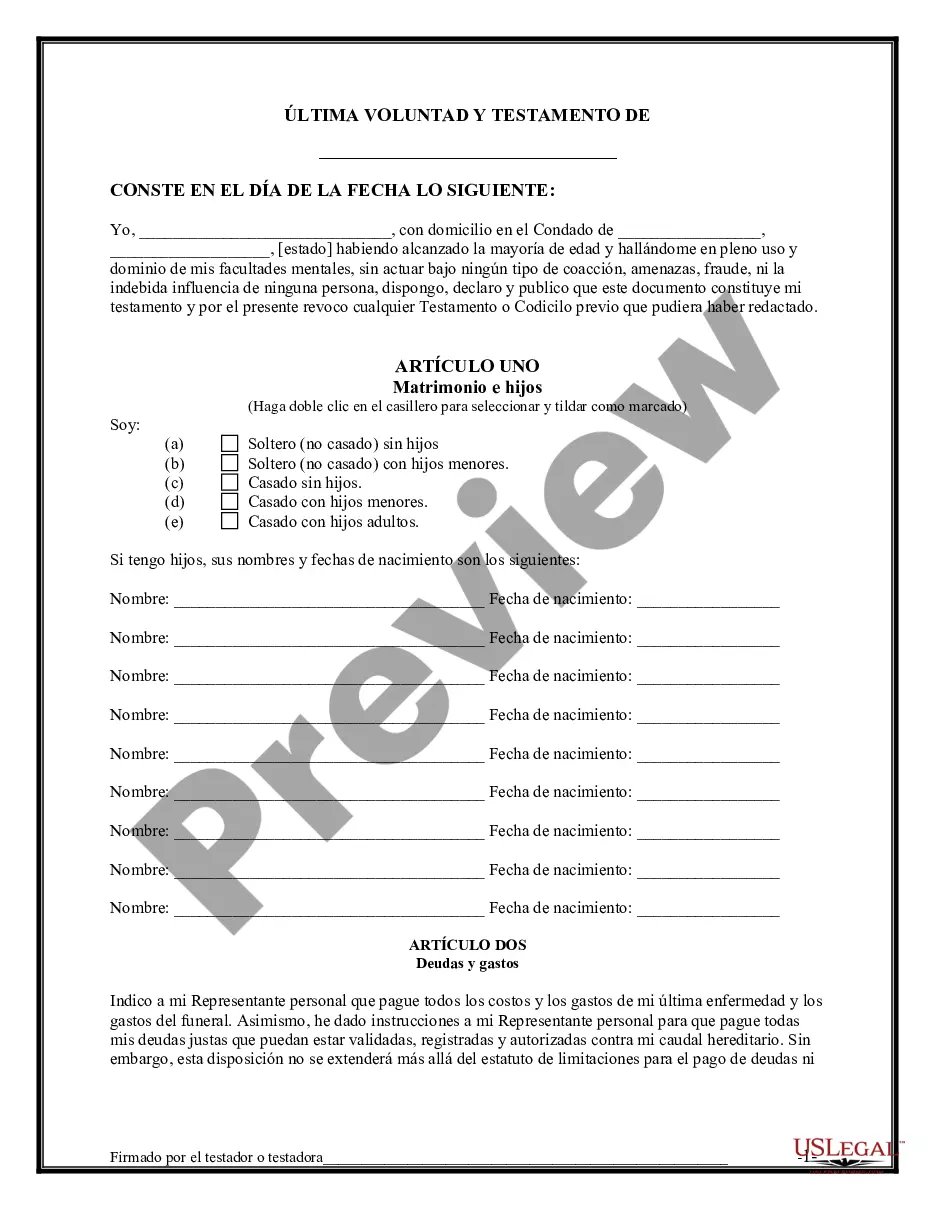
The Written Revocation of Will form is a legal document used to invalidate a previous last will and testament. This form serves as a separate instrument for revocation, ensuring clarity in your wishes, especially if a new will does not include a revocation clause. Unlike other forms that may implicitly revoke a prior will, this form specifically states your intent to prevent any earlier wills from being probated, safeguarding your estate according to your current preferences.
Key components of this form
- Identification of the testator/testatrix, including name and county.
- Article 1: A clause that revokes all previous wills and codicils.
- Article 2: A provision stating that future wills will not be affected by this revocation.
- Article 3: A clear declaration of intent that prior wills are not to be probated.
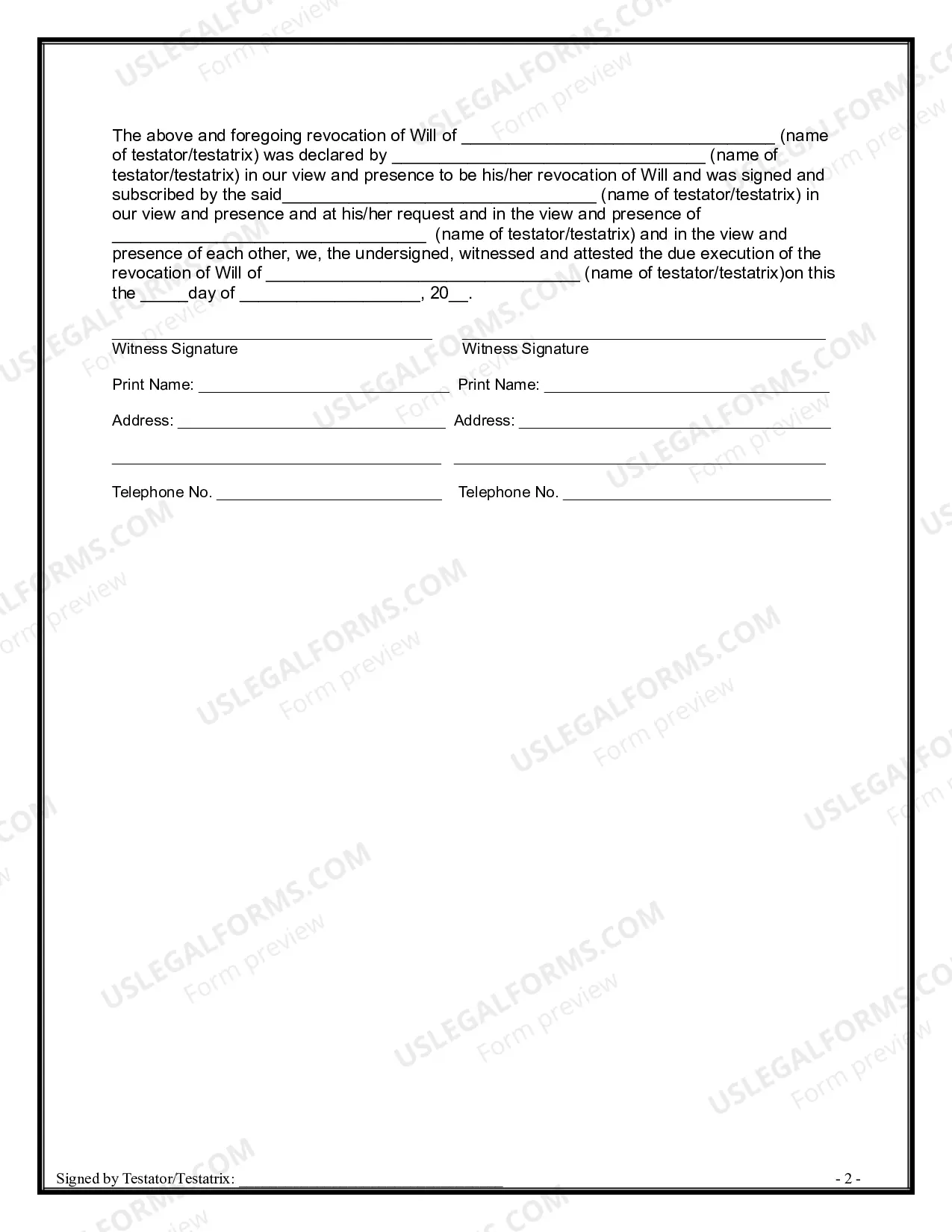
- Signature section for the testator/testatrix and witnesses.
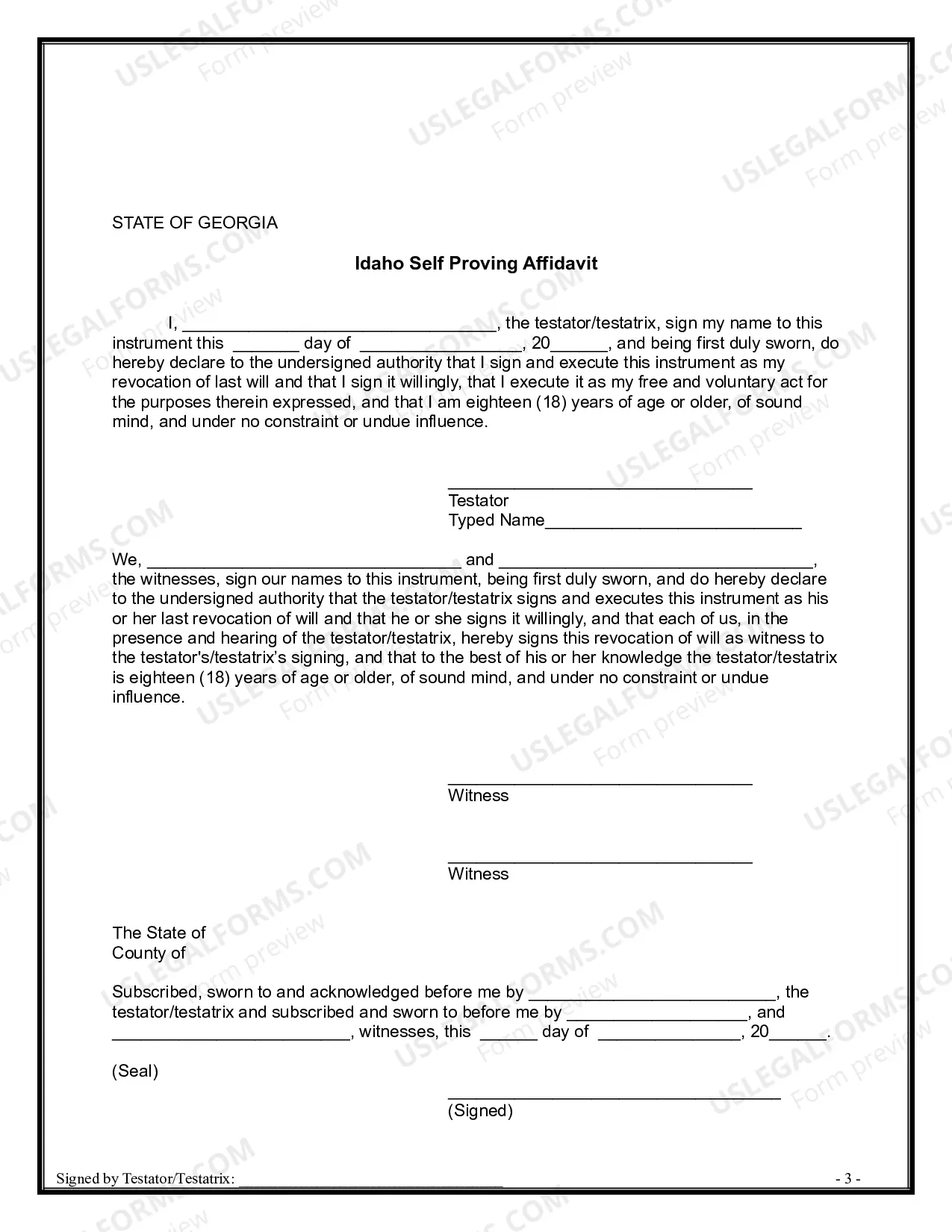
- A self-proving affidavit for notarization, if required.

When to use this document
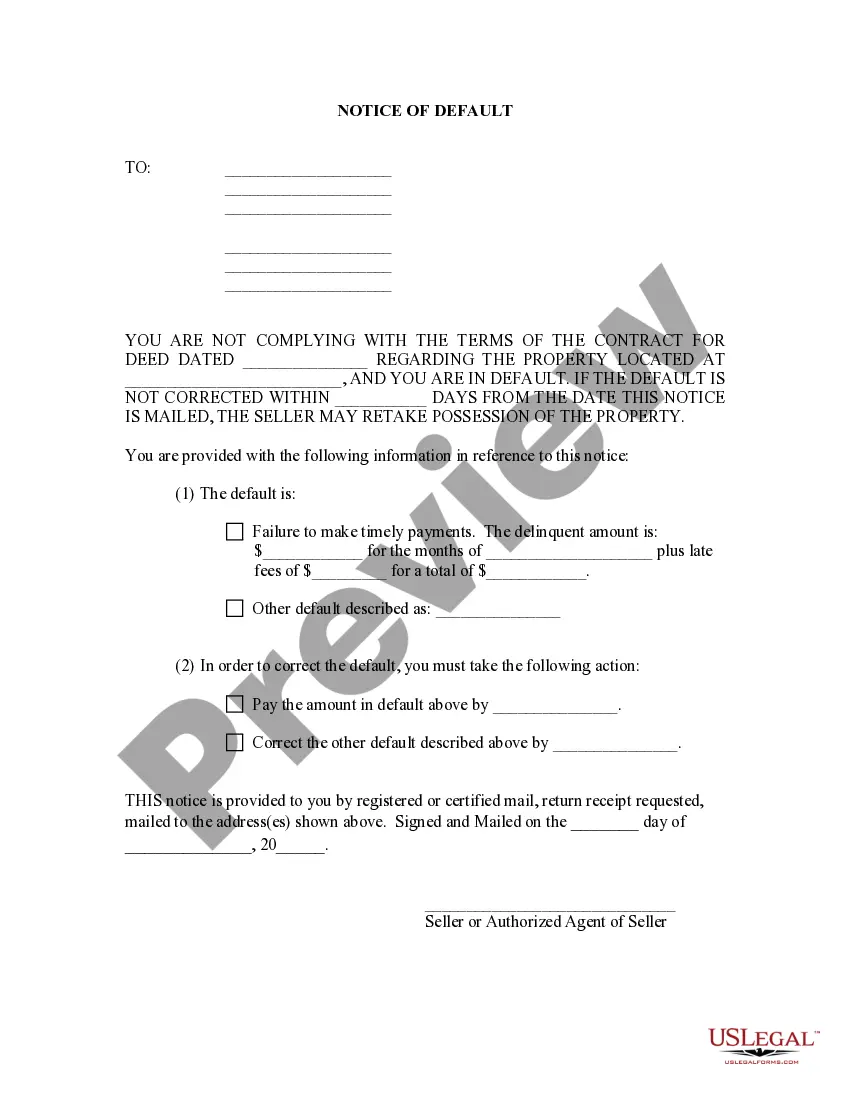
This form should be used when you want to formally revoke a previous will or codicil. If you decide that your earlier will no longer reflects your wishes, this document provides a clear and legal method to ensure that the old will cannot be probated. Situations may include changes in personal circumstances, the passing of heirs, or the creation of new family dynamics that prompt a reassessment of your estate plans.
Who can use this document
- Individuals who have created a prior will and want to ensure it is no longer valid.
- Testators looking to clarify their estate planning wishes, especially in complex familial situations.
- Anyone preparing to draft a new will and wishing to avoid potential conflicts regarding prior wills.
- People in multi-state scenarios wanting a clear revocation of prior wills.
How to complete this form
- Identify the testator/testatrix by providing their full name and county.
- State the date of the last will you wish to revoke.
- Sign the revocation document in the presence of at least two witnesses.
- Ensure witnesses sign the document, affirming they observed the testator's signature.
- Complete the self-proving affidavit, if required, and have it notarized.
Does this document require notarization?
This form must be notarized to be legally valid. US Legal Forms provides secure online notarization powered by Notarize, allowing you to complete the process through a verified video call.
Get your form ready online
Our built-in tools help you complete, sign, share, and store your documents in one place.
Make edits, fill in missing information, and update formatting in US Legal Forms—just like you would in MS Word.
Download a copy, print it, send it by email, or mail it via USPS—whatever works best for your next step.
Sign and collect signatures with our SignNow integration. Send to multiple recipients, set reminders, and more. Go Premium to unlock E-Sign.
If this form requires notarization, complete it online through a secure video call—no need to meet a notary in person or wait for an appointment.
We protect your documents and personal data by following strict security and privacy standards.

Make edits, fill in missing information, and update formatting in US Legal Forms—just like you would in MS Word.

Download a copy, print it, send it by email, or mail it via USPS—whatever works best for your next step.

Sign and collect signatures with our SignNow integration. Send to multiple recipients, set reminders, and more. Go Premium to unlock E-Sign.

If this form requires notarization, complete it online through a secure video call—no need to meet a notary in person or wait for an appointment.

We protect your documents and personal data by following strict security and privacy standards.
Common mistakes to avoid
- Failing to sign the document in front of the required witnesses.
- Not specifying all earlier wills that are being revoked.
- Using outdated forms that might not comply with current state law.
- Neglecting to have the document notarized when required by state law.
Why use this form online
- Convenience of downloading and completing the form from home.
- Editability to customize the document to fit individual needs.
- Access to professionally drafted templates ensuring legal compliance.
- Time-saving by avoiding long consultations with a lawyer for basic revocation needs.
Legal use & context
- The Written Revocation of Will serves as a formal declaration to prevent prior wills from being probated.
- Using this form provides clear documentation of your current wishes regarding your estate.
- This revocation must comply with state-specific legal requirements to be enforceable.
Main things to remember
- The Written Revocation of Will is essential for invalidating prior wills.
- Proper execution, including signatures and notarization, is crucial for validity.
- This form helps ensure your estate wishes are respected by removing conflicting prior wills.
- Using this form online offers convenience and legal assurance.
Looking for another form?
Form popularity
FAQ
A Will can either be destroyed directly by the Testator or by the Testator giving directions to a third party in their presence.Wills are also revoked by marriage or civil partnership, but interestingly a Will is not revoked by divorce.
The Court Assistance Office provides information on basic estate planning and wills. These documents can be found on CourtSelfHelp.idaho.gov.
Wills Law in Idaho: Overview In the state of Idaho, testators must have their wills signed by at least two witnesses who either witnessed the actual signing, or the testator's own acknowledgment of the signing.Valid if signature and material provisions are in handwriting of testator; does not need witnesses.
Once a will is probated it is a matter of public record in the county where the decedent was living at the time of their death.
Idaho law recognizes handwritten wills, referred to as holographic wills. Material provisions of the will and the signature must be in the handwriting of the person making the will.
There are four main requirements to the formation of a valid will: The will must have been executed with testamentary intent;The will must have been executed free of fraud, duress, undue influence or mistake; and. The will must have been duly executed through a proper ceremony.
No, in Idaho, you do not need to notarize your will to make it legal. However, Idaho allows you to make your will "self-proving" and you'll need to go to a notary if you want to do that. A self-proving will speeds up probate because the court can accept the will without contacting the witnesses who signed it.
It must be in writing. Generally, of course, wills are composed on a computer and printed out. The person who made it must have signed and dated it. A will must be signed and dated by the person who made it. Two adult witnesses must have signed it. Witnesses are crucial.
Contact the executor or anyone that you think may have possession of the Will and request a copy. Contact the executor's solicitors to request a copy of the Will. Contact the NSW Supreme Court probate registry to find out if the Court has a copy of the Will in their records.