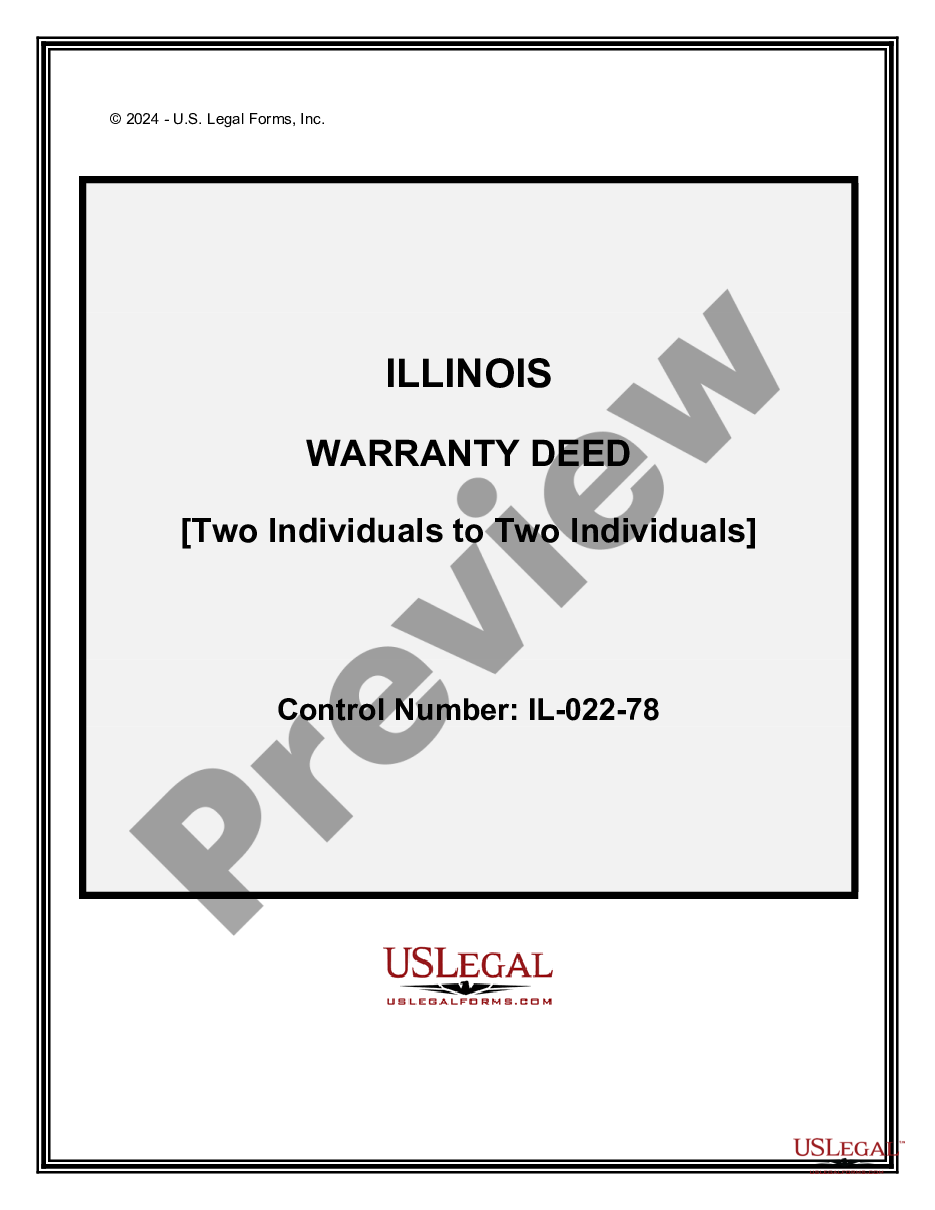
Illinois Warranty Deed - Two Individuals to Two Individuals
What is this form?
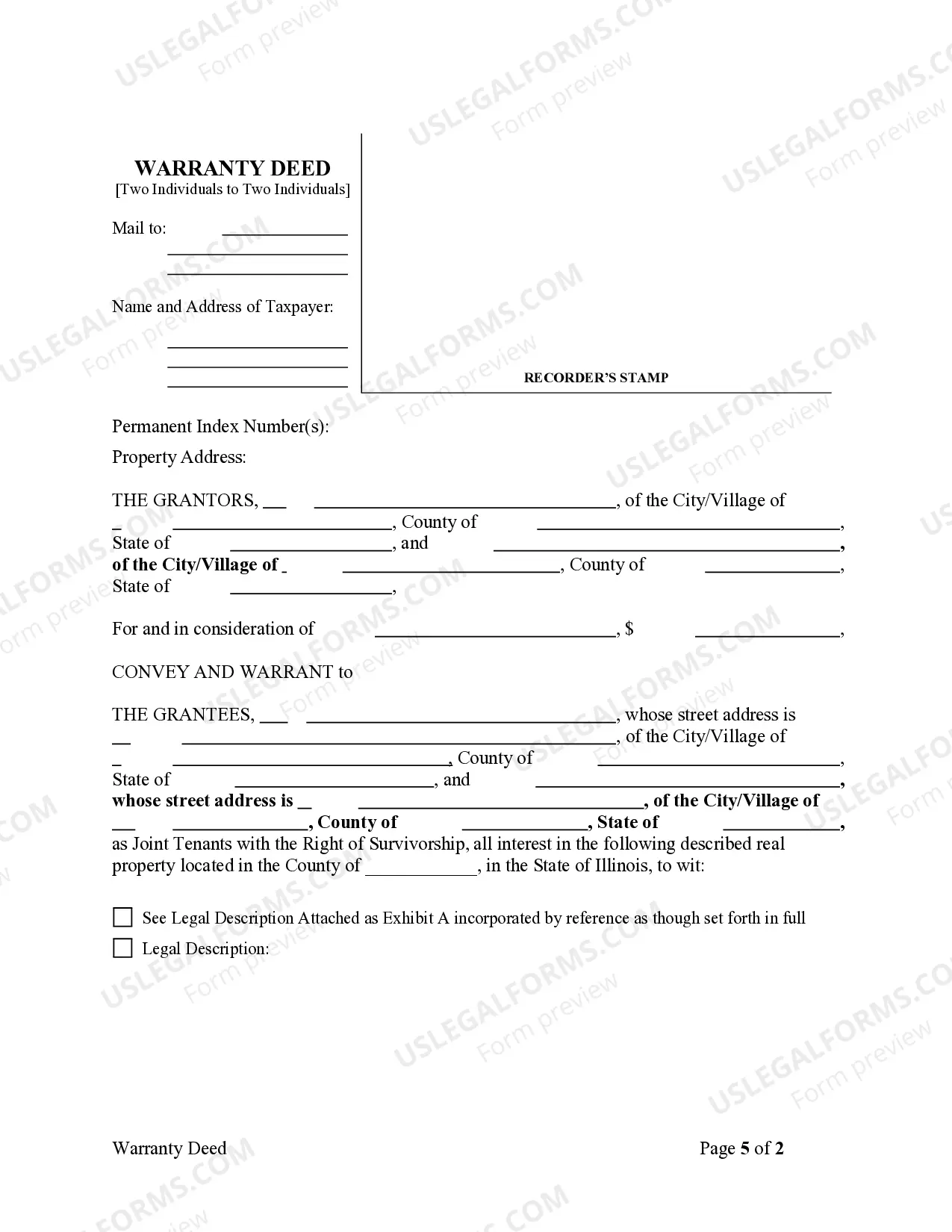
The Warranty Deed - Two Individuals to Two Individuals is a legal document that facilitates the transfer of property between two individuals (grantors) to another two individuals (grantees). Unlike other deeds, this warranty deed provides a full warranty of title, ensuring the grantees that the property is free from claims. This form allows the property to be held in different ways, including as joint tenants or tenants in common, depending on the preference of the grantees.
Key components of this form
- Grantor and grantee identification sections.
- Description of the property being transferred.
- Declaration of the type of tenancy (joint or common).
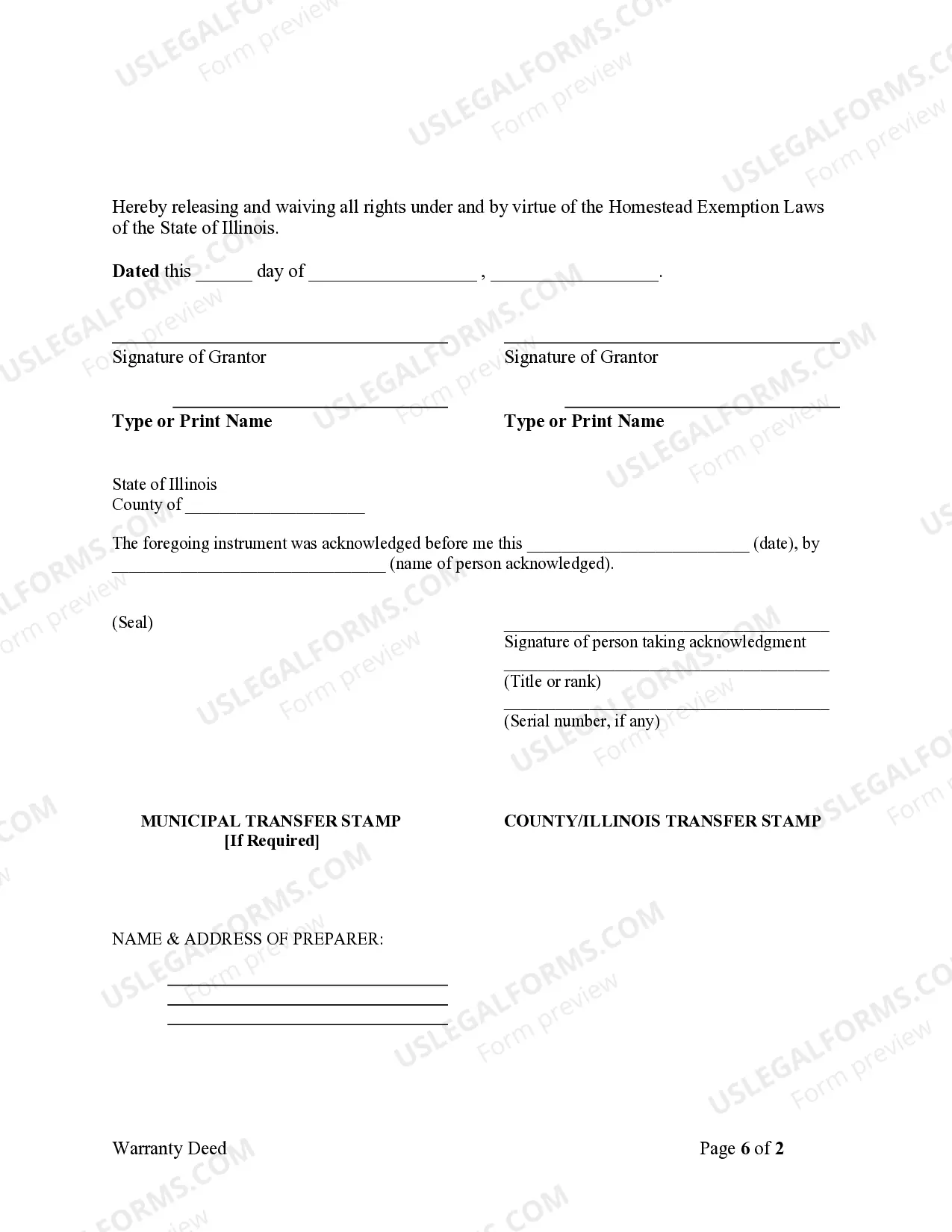
- Legal compliance statement with state laws.
- Signatures of both grantors to validate the deed.







Situations where this form applies
This form is essential when two individuals wish to transfer ownership of real estate to another set of two individuals. It can be used in situations such as sales of family property, gifts between friends or relatives, or reorganizations of property ownership among business partners. Using a warranty deed ensures all parties are protected regarding the title status of the property.
Who needs this form
This warranty deed is suitable for:
- Individuals looking to transfer property ownership with guaranteed title.
- Couples wanting to joint manage their real estate assets.
- Business partners sharing property in a legally recognized manner.
- Anyone involved in gifting or selling property between individuals.
Instructions for completing this form
- Identify the full names and addresses of the grantors and grantees.
- Provide a detailed description of the property being transferred.
- Select the tenancy type (e.g., joint tenancy, tenants in common).
- Sign and date the document in the presence of a notary public, if required.
- File the completed warranty deed with the appropriate county office to ensure it is recorded.
Notarization requirements for this form
This form needs to be notarized to ensure legal validity. US Legal Forms provides secure online notarization powered by Notarize, allowing you to complete the process through a verified video call, available anytime.
Get your form ready online
Our built-in tools help you complete, sign, share, and store your documents in one place.
Make edits, fill in missing information, and update formatting in US Legal Forms—just like you would in MS Word.
Download a copy, print it, send it by email, or mail it via USPS—whatever works best for your next step.
Sign and collect signatures with our SignNow integration. Send to multiple recipients, set reminders, and more. Go Premium to unlock E-Sign.
If this form requires notarization, complete it online through a secure video call—no need to meet a notary in person or wait for an appointment.
We protect your documents and personal data by following strict security and privacy standards.

Make edits, fill in missing information, and update formatting in US Legal Forms—just like you would in MS Word.

Download a copy, print it, send it by email, or mail it via USPS—whatever works best for your next step.

Sign and collect signatures with our SignNow integration. Send to multiple recipients, set reminders, and more. Go Premium to unlock E-Sign.

If this form requires notarization, complete it online through a secure video call—no need to meet a notary in person or wait for an appointment.

We protect your documents and personal data by following strict security and privacy standards.
Common mistakes to avoid
- Failing to include a proper legal description of the property.
- Not specifying the type of tenancy chosen by the grantees.
- Omitting one or both grantor signatures.
- Not verifying local filing requirements before submission.
Benefits of completing this form online
- Convenient access to professionally drafted legal forms at any time.
- Edit and customize the form easily using your computer.
- Immediate downloads help to expedite the property transfer process.
- Forms are compliant with legal standards, ensuring reliability and validity.
Looking for another form?
Form popularity
FAQ
In general, one person cannot sell a house with two names on the title without the approval of the other owner. An Illinois Warranty Deed - Two Individuals to Two Individuals establishes shared ownership, meaning both parties must participate in any sale transaction. To avoid complications, both owners should clearly communicate and reach an agreement before proceeding.
A deed that conveys an interest in your real estate ownership (adds someone on) has the legal effect of giving that additional person the same bundle of rights to which you are entitled. Once the conveyance happens, it cannot be undone except with that other additional owner's consent.
Discuss the terms of the deed with the new owners. Hire a real estate attorney to prepare the deed. Review the deed. Sign the deed in front of a notary public, with witnesses present. File the deed on public record.
No law forbids adding someone to your mortgaged home's deed or in signing your home over to others through one. Mortgage lenders understand deeds, though, and use loan due-on-sale clauses to prevent unauthorized property sales or transfers.
Yes you can. This is called a transfer of equity but you will need the permission of your lender. If you are not married or in a civil partnership you may wish to consider creating a deed of trust and a living together agreement which we can explain to you.
Think about IHT implications potentially exempt transfer Be aware of the rules on gifts with reservation of benefit You will no longer be the legal owner of the property. Risk from outside parties. Don't forget capital gains tax.
It is possible to be named on the title deed of a home without being on the mortgage. However, doing so assumes risks of ownership because the title is not free and clear of liens and possible other encumbrances.If a mortgage exists, it's best to work with the lender to make sure everyone on the title is protected.
Signing over the interest in the property, whether land or house, can be done in several ways. However, the most common instruments of transfer of property between family members are the quitclaim deed, the gift deed or the transfer on death (TOD) deed.
One of the most common ways property owners add spouses to real estate titles is by using quitclaim deeds. Once completed and filed, quitclaim deed forms effectually transfer a share of ownership from the owners, or grantors, to their spouses, or the grantees.
In Illinois, a special warranty deed transfers title in fee simple to the grantee with warranties and covenants of title that are limited to only the acts of the grantor or that result from the acts of the grantor and is the form of deed customarily used in commercial real estate transactions.