Louisiana Letter from Tenant to Landlord with Demand that landlord remove garbage and vermin from premises
Description
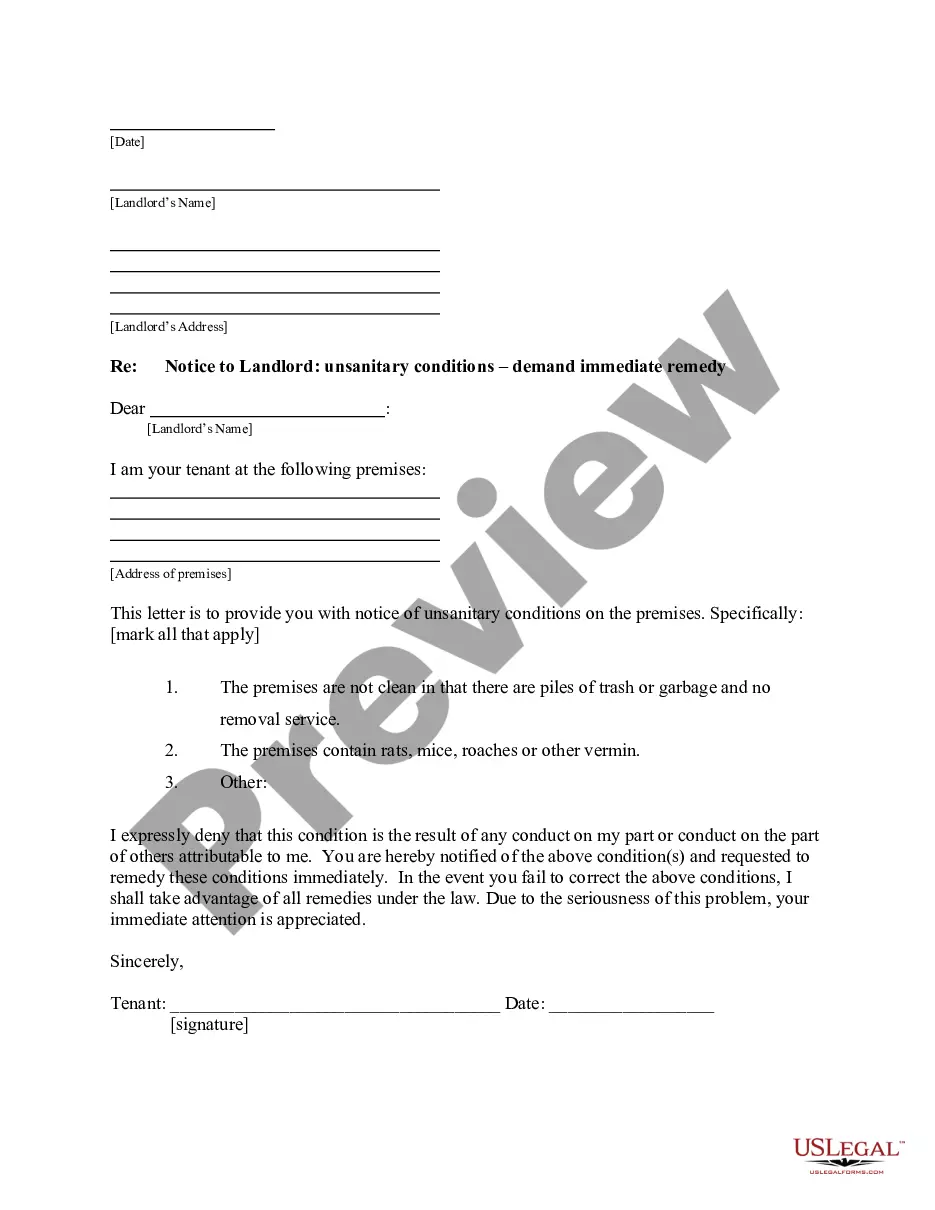
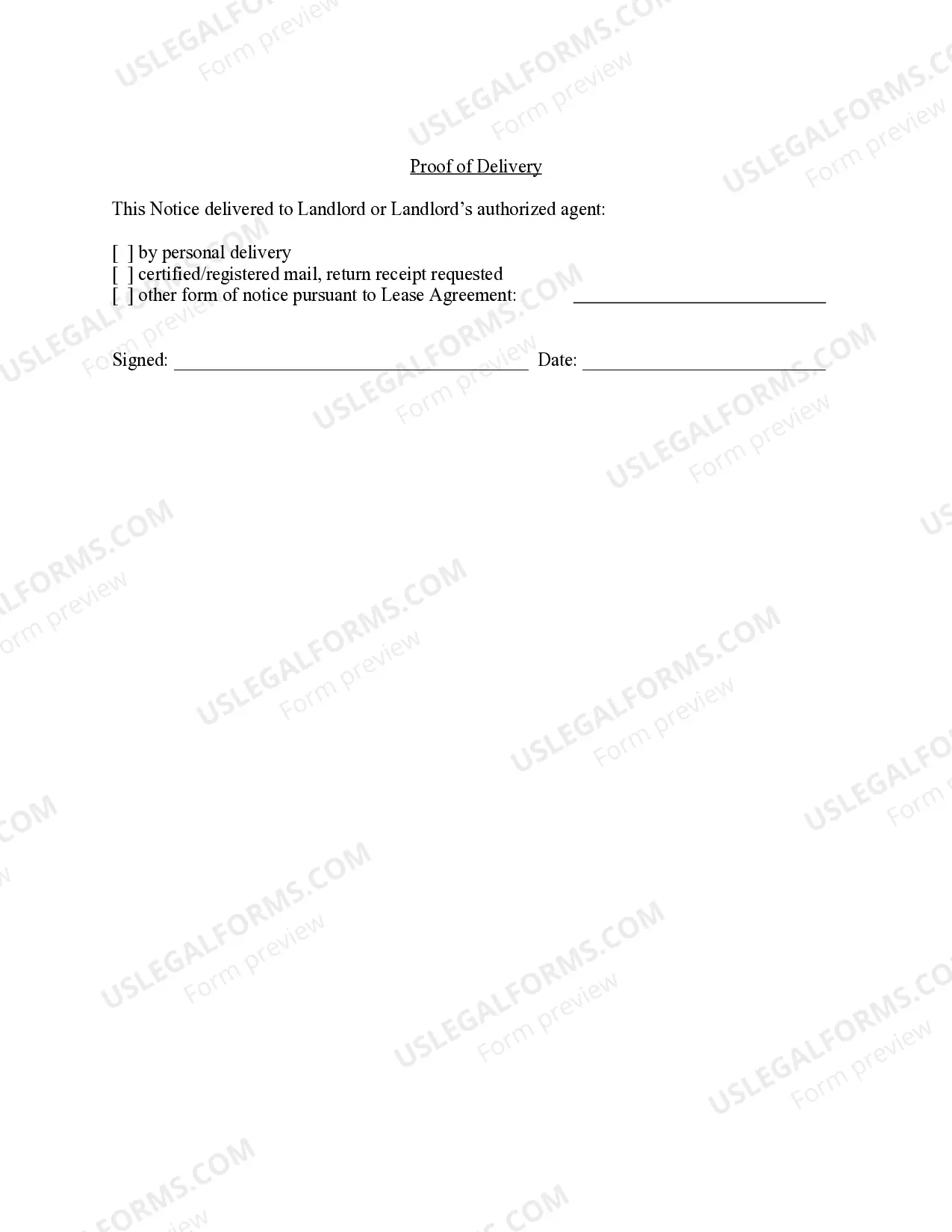

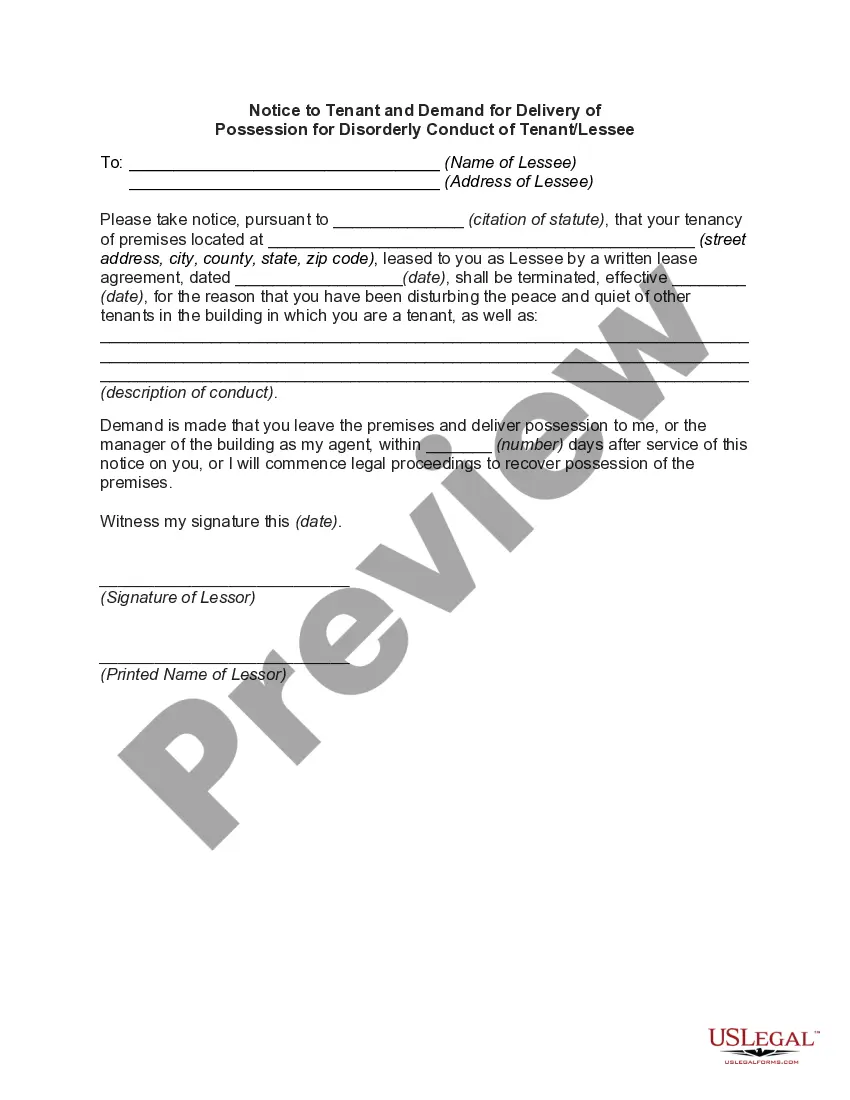
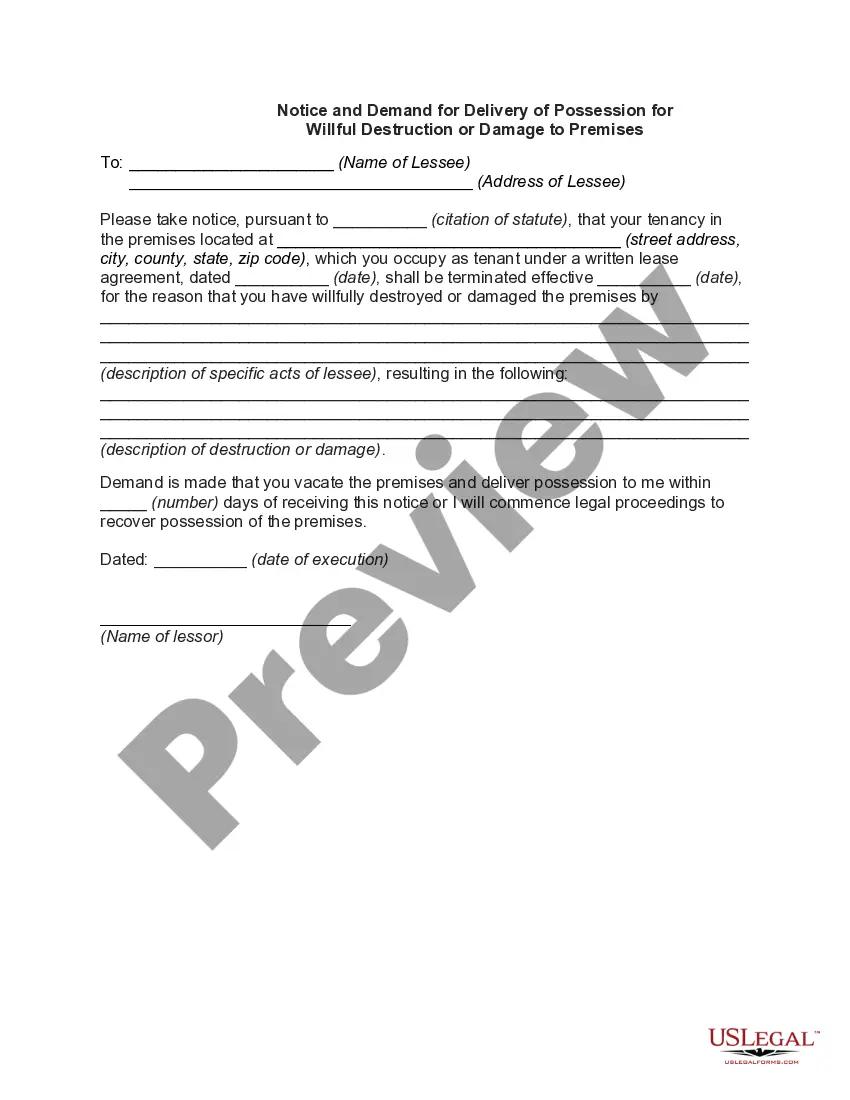
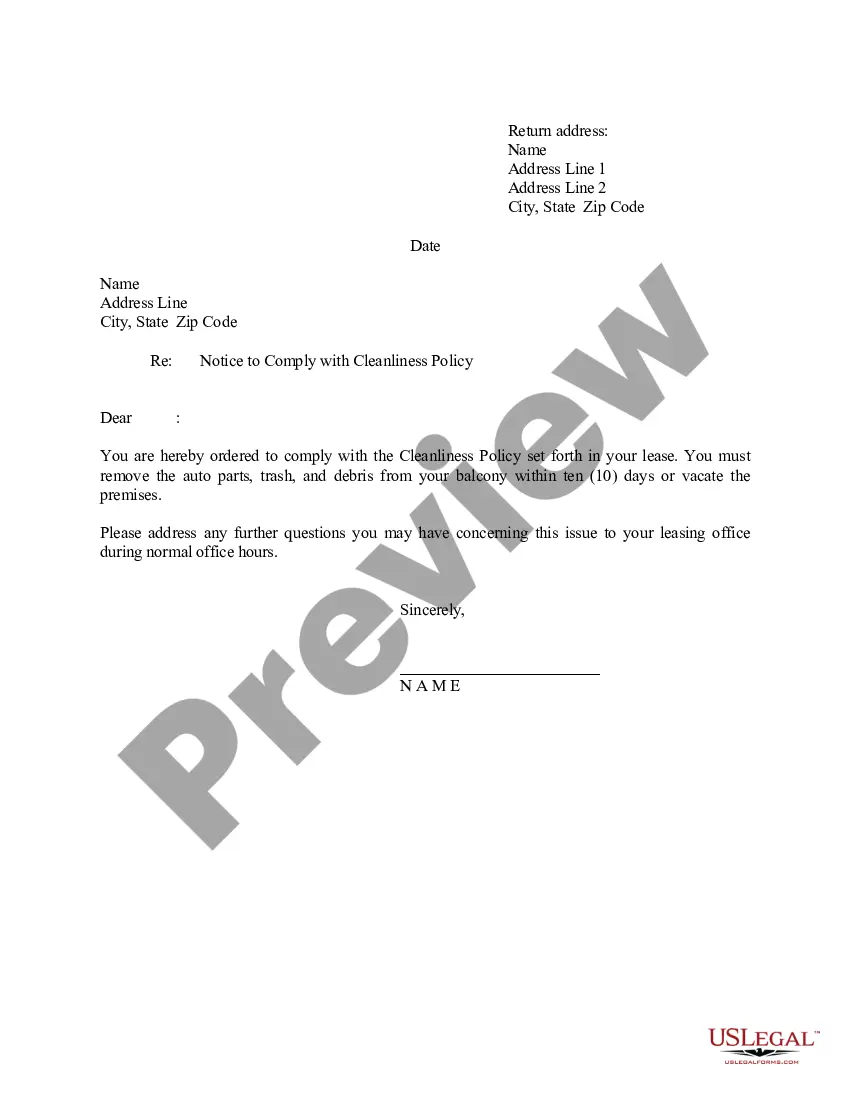
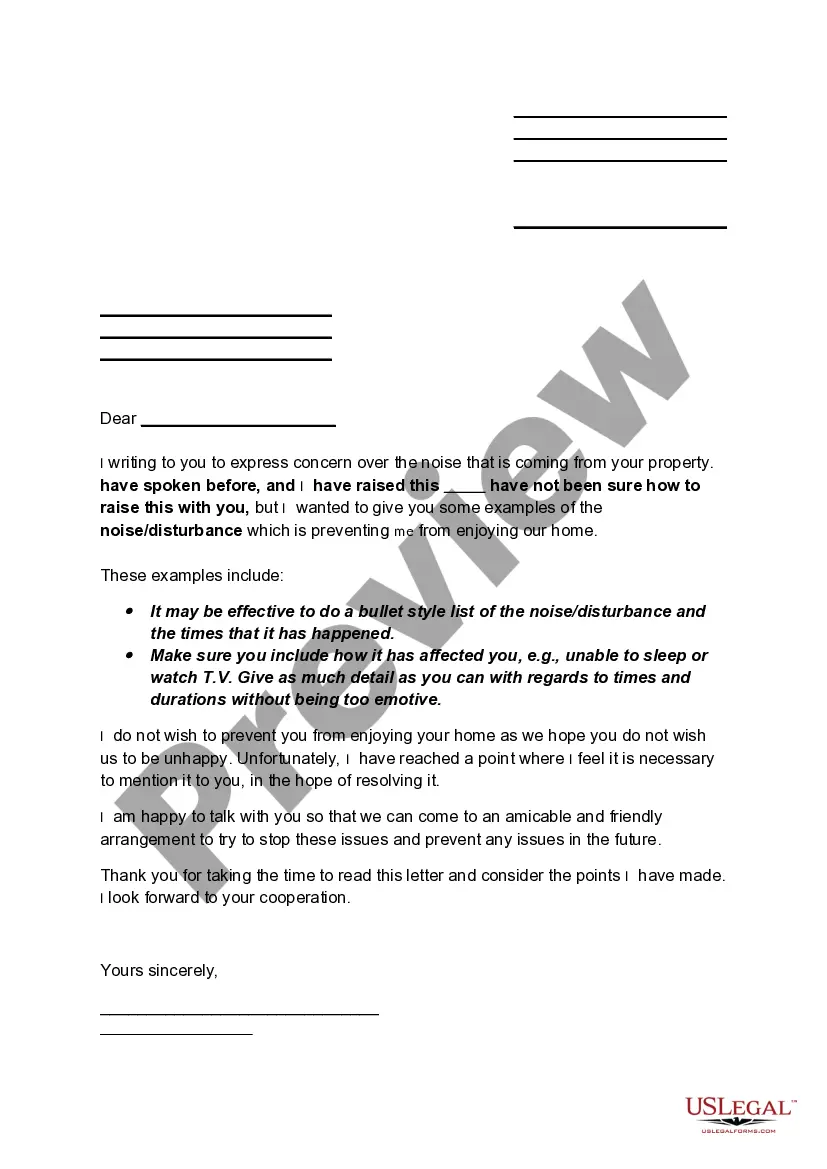
How to fill out Louisiana Letter From Tenant To Landlord With Demand That Landlord Remove Garbage And Vermin From Premises?
In pursuit of Louisiana Letter from Tenant to Landlord demanding the landlord eliminate waste and pests from the property templates and completing them can be a significant challenge.
To conserve time, expenses, and effort, utilize US Legal Forms and locate the appropriate template specifically for your state in just a few clicks.
Our legal experts prepare all documents, so you only need to complete them. It is genuinely that straightforward.
Click Buy Now if you found what you’re looking for. Select your plan on the pricing page and set up an account. Choose whether you’d like to pay with a card or via PayPal. Download the template in your preferred file format. You can print the Louisiana Letter from Tenant to Landlord requesting the landlord eliminate waste and pests from the property form or fill it out using any online editor. There's no need to worry about making mistakes since your template can be used and submitted, and printed as many times as you wish. Explore US Legal Forms and gain access to over 85,000 state-specific legal and tax documents.
- Log in to your account and return to the form's page to save the document.
- Your downloaded samples are kept in My documents and are accessible at all times for future use.
- If you haven’t registered yet, you need to sign up.
- Review our detailed instructions on how to obtain the Louisiana Letter from Tenant to Landlord requesting the landlord remove waste and pests from the property template in minutes.
- To receive a qualified form, verify its validity for your state.
- Examine the sample using the Preview feature (if it’s available).
- If there’s a description, read it to understand the details.
Form popularity
FAQ
If you think your landlord is violating the Fair Housing Act, you can get that landlord in trouble by filing a complaint at HUD.gov. Your remedy for breach of quiet enjoyment is to terminate the lease and move or sue in small claims court.
If you're seeking damages for emotional distress caused by a landlord's discrimination, or punitive damages for especially blatant and intentional discrimination, a lawsuit may well be your best bet. Understand what's involved in suing your landlord. You may file a lawsuit in either federal or state court.
A landlord cannot evict a tenant without an adequately obtained eviction notice and sufficient time. A landlord cannot retaliate against a tenant for a complaint. A landlord cannot forego completing necessary repairs or force a tenant to do their own repairs.A landlord cannot remove a tenant's personal belongings.
The landlord had a duty to reasonably maintain the property; The landlord knew or should have known of the dangerous condition; The landlord breached their duty by failing to repair/fix the dangerous condition;
If your landlord breaches the warranty of habitability or the warranty of quiet enjoyment, you may be able to sue her to recover monetary damages.In some states, such as California and Arizona, you may be able to seek emotional distress damages if the landlord's actions were particularly egregious.
Uninhabitable conditions can include dangerous ones, such as holes in the floor, unsafe or exposed wiring, or non-working air conditioning in dangerously hot summer months. Gross infestations of roaches, fleas or other pests are also uninhabitable conditions.
Know your state's landlord/tenant laws. Read and respond to the court summons. Try to work out a settlement. Consider legal counsel. Show up for court. Look sharp and provide evidence.
Benefits of Suing Your Landlord Filing a lawsuit does have some potential advantages for tenants. Could Motivate a Landlord to Settle Outside of Court: Notifying your landlord of your intention to sue him or her could motivate your landlord to do everything in their power to avoid actually going to court.
In California, habitability includes the following specific warranties: A dwelling also may be considered uninhabitable (unlivable) if it substantially lacks any of the following: Effective waterproofing and weather protection of roof and exterior walls, including unbroken windows and doors.