Maine Owner's or Seller's Affidavit of No Liens
Overview of this form
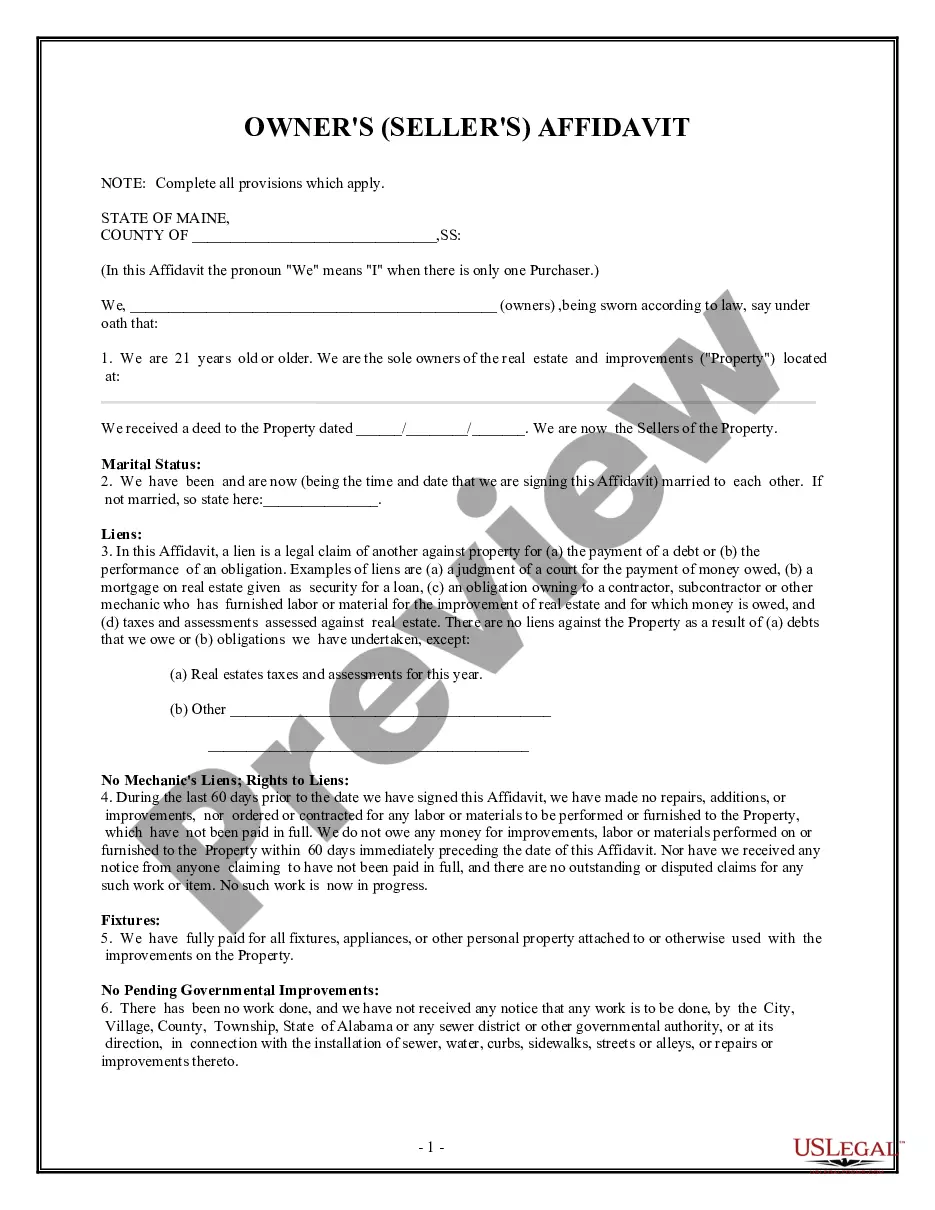
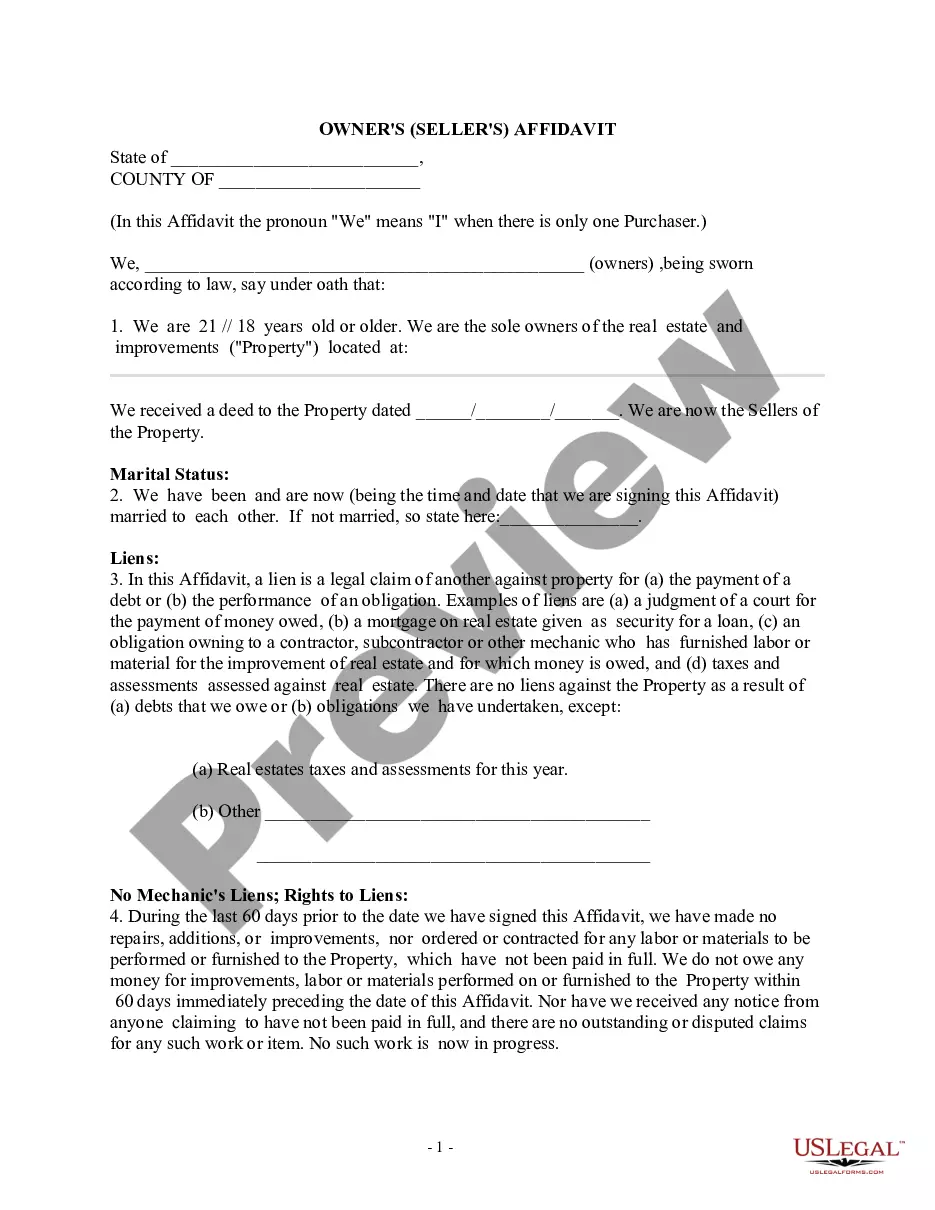
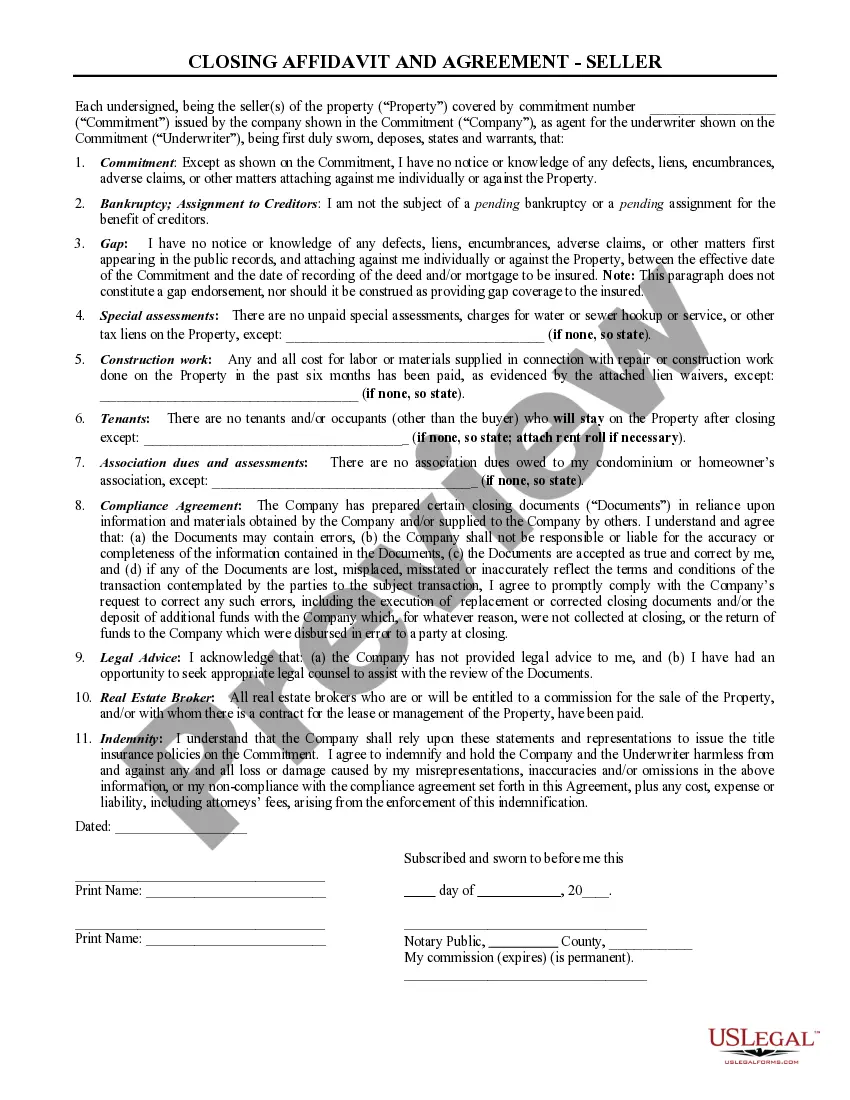
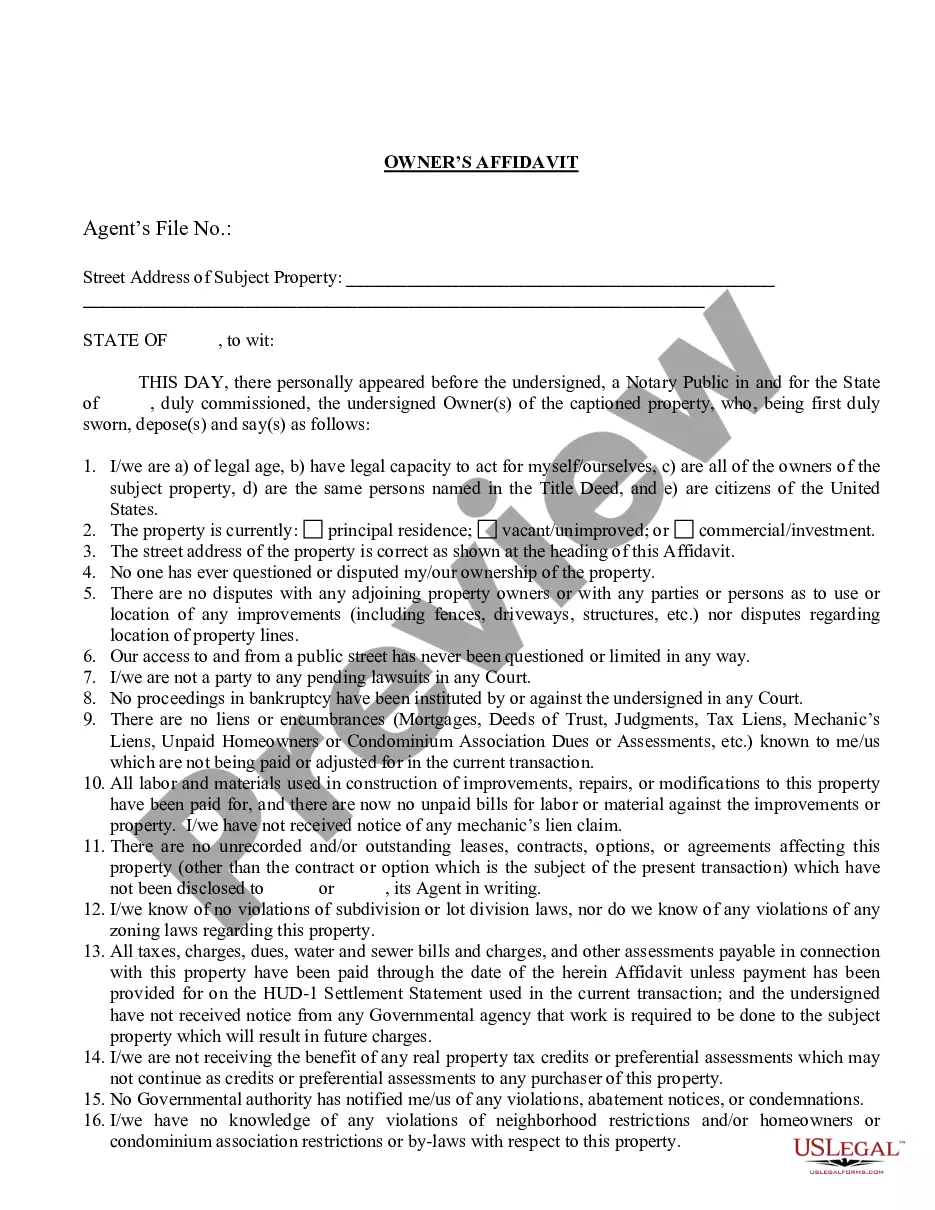
The Owner's Affidavit of No Liens is a legal document that sellers use to declare the absence of liens on the property they are selling. It serves as a sworn statement that confirms the seller's ownership and the lack of any legal claims against the property, ensuring a clear title transfer during the real estate closing process. This affidavit is essential for protecting the buyer from any undisclosed liabilities and differentiates itself from other property transfer documents by focusing specifically on outstanding debts and liens that could affect ownership.
Key components of this form
- Seller's confirmation of ownership and age.
- Marriage status declaration of the sellers.
- Disclosure of any existing liens, including taxes and assessments.
- Certification that no mechanic liens are outstanding.
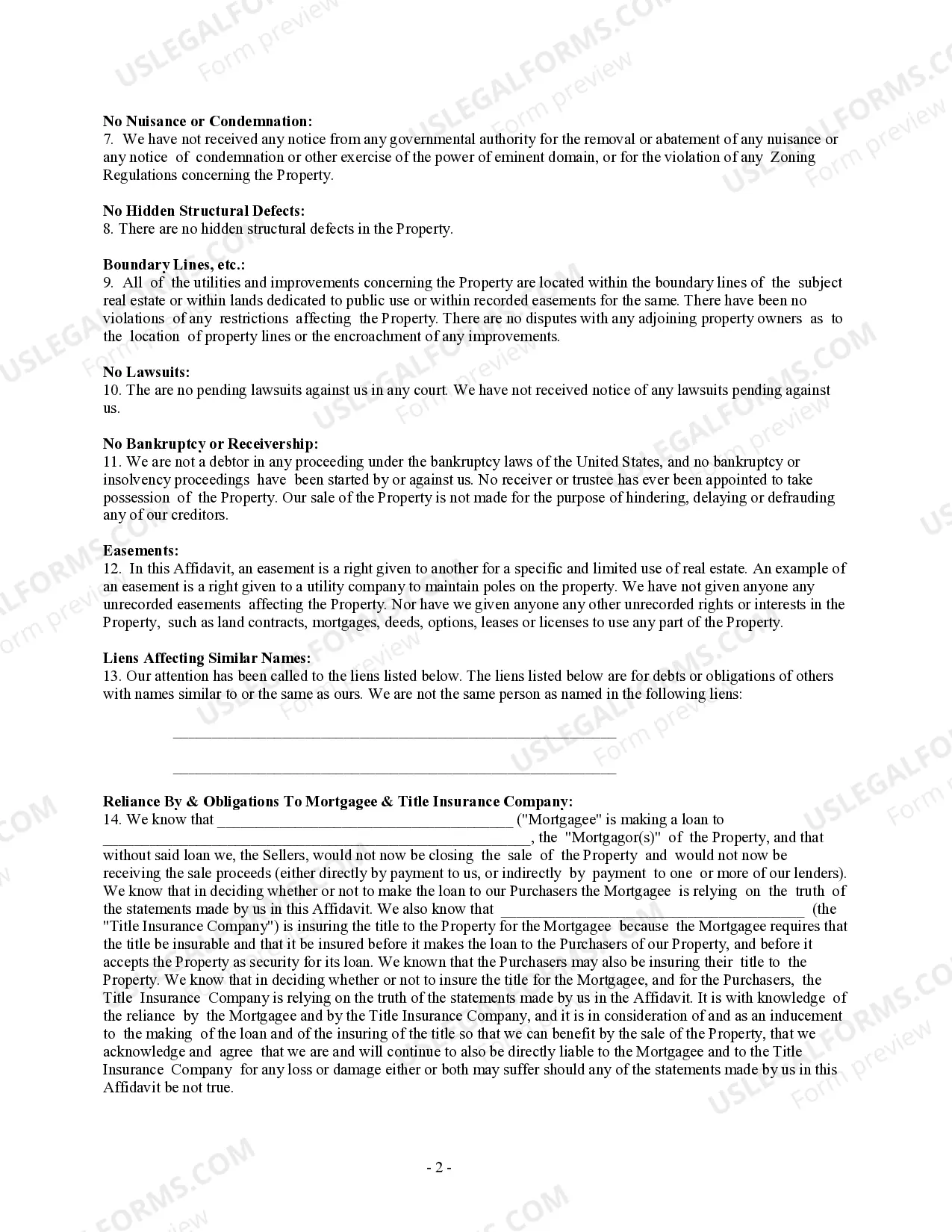
- Statement regarding no pending governmental improvements or lawsuits.
- Assurances concerning easements and structural defects.
Situations where this form applies
You should use the Owner's Affidavit of No Liens when selling real estate to confirm that the property is free from liens and other claims that could obstruct the sale. This document is typically required at the closing of a real estate transaction to ensure that the buyer is protected from unforeseen obligations tied to the property. It is essential for transactions involving residential homes, commercial properties, or any real estate where title transfer occurs.
Who can use this document
- Individuals or parties selling real estate without any existing liens.
- Couples who are married and co-own a property being sold.
- Real estate agents representing the sellers.
- Anyone involved in real estate transactions who needs to certify property status.
How to prepare this document
- Identify the sellers and specify property details, including the address.
- Enter the date when the deed was received for the property.
- Disclose any known liens, taxes, or assessments affecting the property.
- Provide details regarding marital status and absence of mechanic liens.
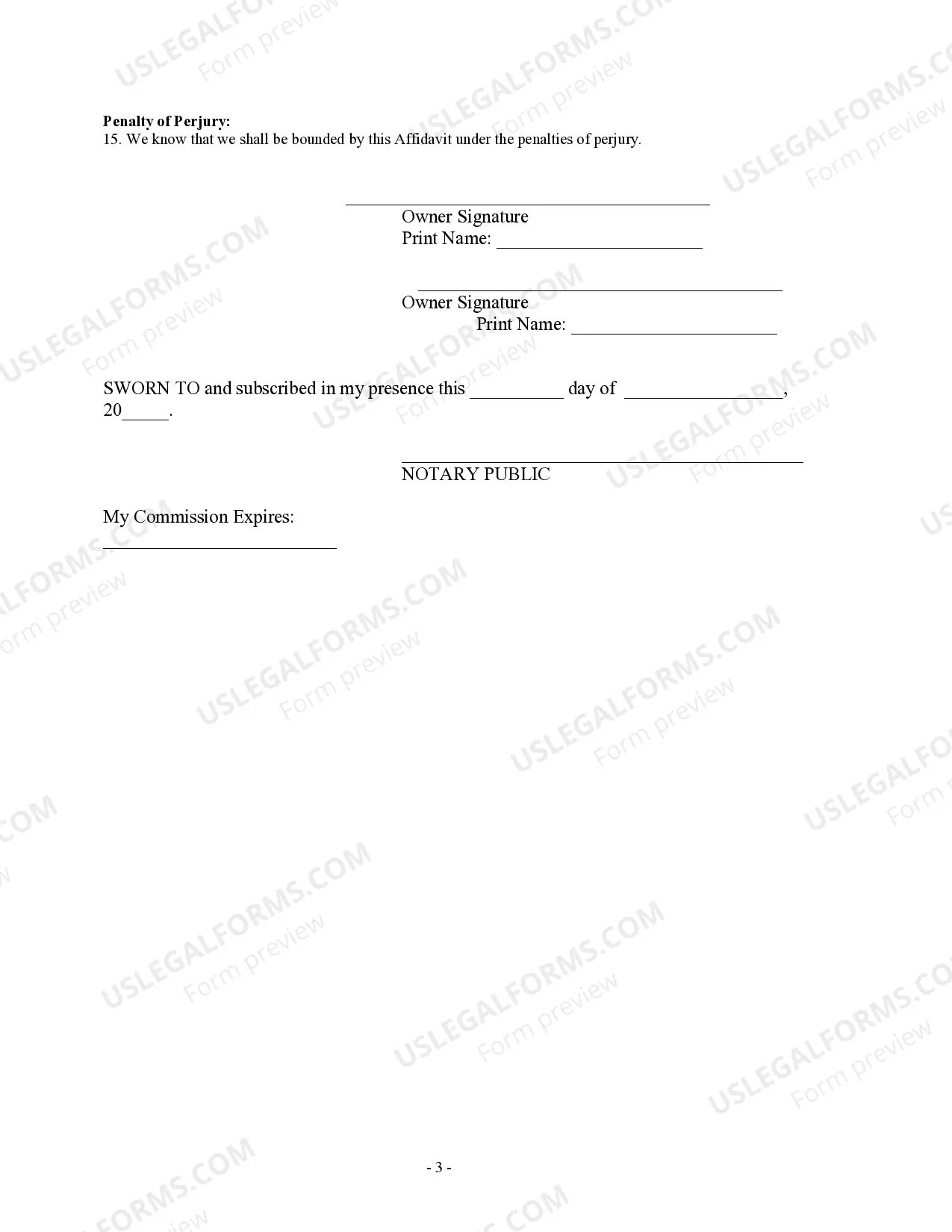
- Sign the affidavit in front of a notary public to validate the document.
Notarization requirements for this form
Yes, this form must be notarized to be legally valid. Notarization verifies the identity of the signers and the authenticity of the signatures, providing an added layer of security to the document. US Legal Forms offers an integrated online notarization service, allowing you to complete this step easily via a secure video call.
Get your form ready online
Our built-in tools help you complete, sign, share, and store your documents in one place.
Make edits, fill in missing information, and update formatting in US Legal Forms—just like you would in MS Word.
Download a copy, print it, send it by email, or mail it via USPS—whatever works best for your next step.
Sign and collect signatures with our SignNow integration. Send to multiple recipients, set reminders, and more. Go Premium to unlock E-Sign.
If this form requires notarization, complete it online through a secure video call—no need to meet a notary in person or wait for an appointment.
We protect your documents and personal data by following strict security and privacy standards.

Make edits, fill in missing information, and update formatting in US Legal Forms—just like you would in MS Word.

Download a copy, print it, send it by email, or mail it via USPS—whatever works best for your next step.

Sign and collect signatures with our SignNow integration. Send to multiple recipients, set reminders, and more. Go Premium to unlock E-Sign.

If this form requires notarization, complete it online through a secure video call—no need to meet a notary in person or wait for an appointment.

We protect your documents and personal data by following strict security and privacy standards.
Common mistakes to avoid
- Failing to disclose existing liens, taxes, or assessments.
- Not having the affidavit notarized, which can invalidate the document.
- Leaving sections blank or providing incomplete information.
- Using incorrect or outdated property details.
Advantages of online completion
- Convenience of downloading and filling out the form at your own pace.
- Editability enables users to customize the document according to their specific circumstances.
- Access to templates vetted by licensed attorneys for legal accuracy.
Understanding the legal context of this affidavit is important. It serves as a formal declaration regarding the ownership and lien status of the property, which protects the interests of both the buyer and lenders in the transaction. Failure to accurately complete or provide this affidavit could lead to legal disputes down the line.
Quick recap
- The Owner's or Seller's Affidavit of No Liens confirms the absence of liens on the property being sold.
- Sellers must complete this form accurately and have it notarized during the closing process.
- This affidavit is critical for protecting the interests of buyers and financial institutions involved in the sale.
Looking for another form?
Form popularity
FAQ
However, the title does not prove ownership.Title insurance protects the buyer of property or the lender for the property against unknown defects in the title.
Most states now have additional tools available for free property title searches. You can find these on your state government sites under "county assessor." You will have to select your county, and you can then search through the listed properties.
In most states, you can typically search by address with the county recorder, clerk, or assessor's office online. The search for liens is free, though you may have to pay a small fee for a copy of the report, which will vary by county.
The title search performed in the prelim title discovers whether or not there are any liens against the title, which would typically be placed by a lender on the property. They also may have you sign a document stating that there are no liens that are not recorded. If there are not, just sign it. Bingo.
The general warranty deed is the standard instrument for home sales. Your notarized warranty deed is proof of ownership, and that the grantor transferred complete and clear title to you. A quitclaim deed also proves full land ownershipif the person who conveyed the interest to you had full ownership.
A statement showing that your balance is paid in full. Your canceled promissory note. A certificate of satisfaction. Your canceled mortgage or deed of trust.
Things Not Covered in Your Title Policy Any defects created after the issuance of the policy, or defects that you create. Issues arising as the result of failing to pay your mortgage. Issues arising as the result of failing to obey the law or certain covenants. Specific taxes and assessments.
Title insurance is an insurance policy that protects you, the home owner, against challenges to the ownership of your home or from problems related to the title to your home. The policy provides coverage against losses due to title defects, even if the defects existed before you purchased your home.
An Owner Affidavit is a document used by title and closing agencies to ensure that the current owner of a property is in ownership of the property free and clear of any encumbrances.The Owner Affidavit places the seller on the hook for any claims that may arise that are not covered by the title insurance policy.