Michigan Quitclaim Deed - One Individual to Four Individuals
About this form
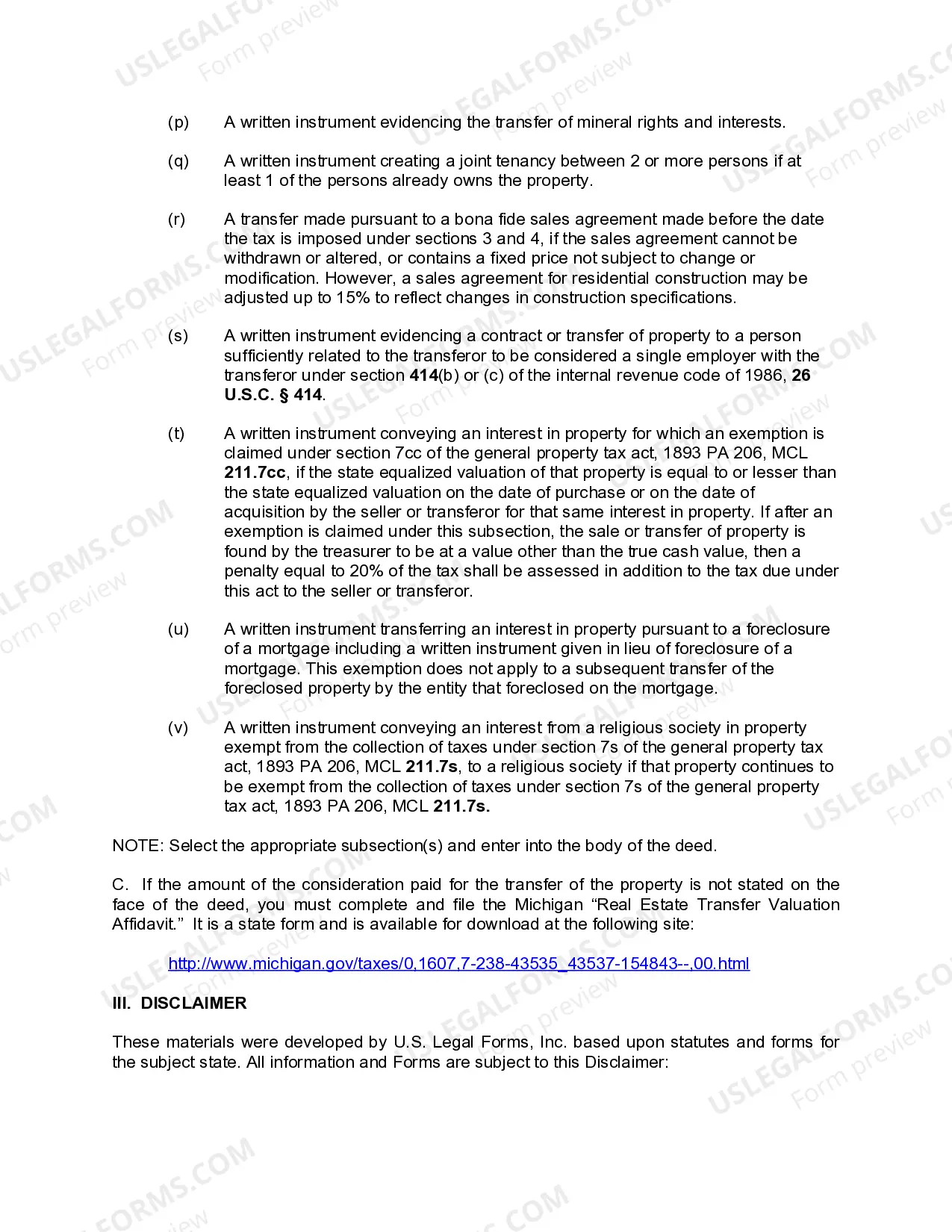
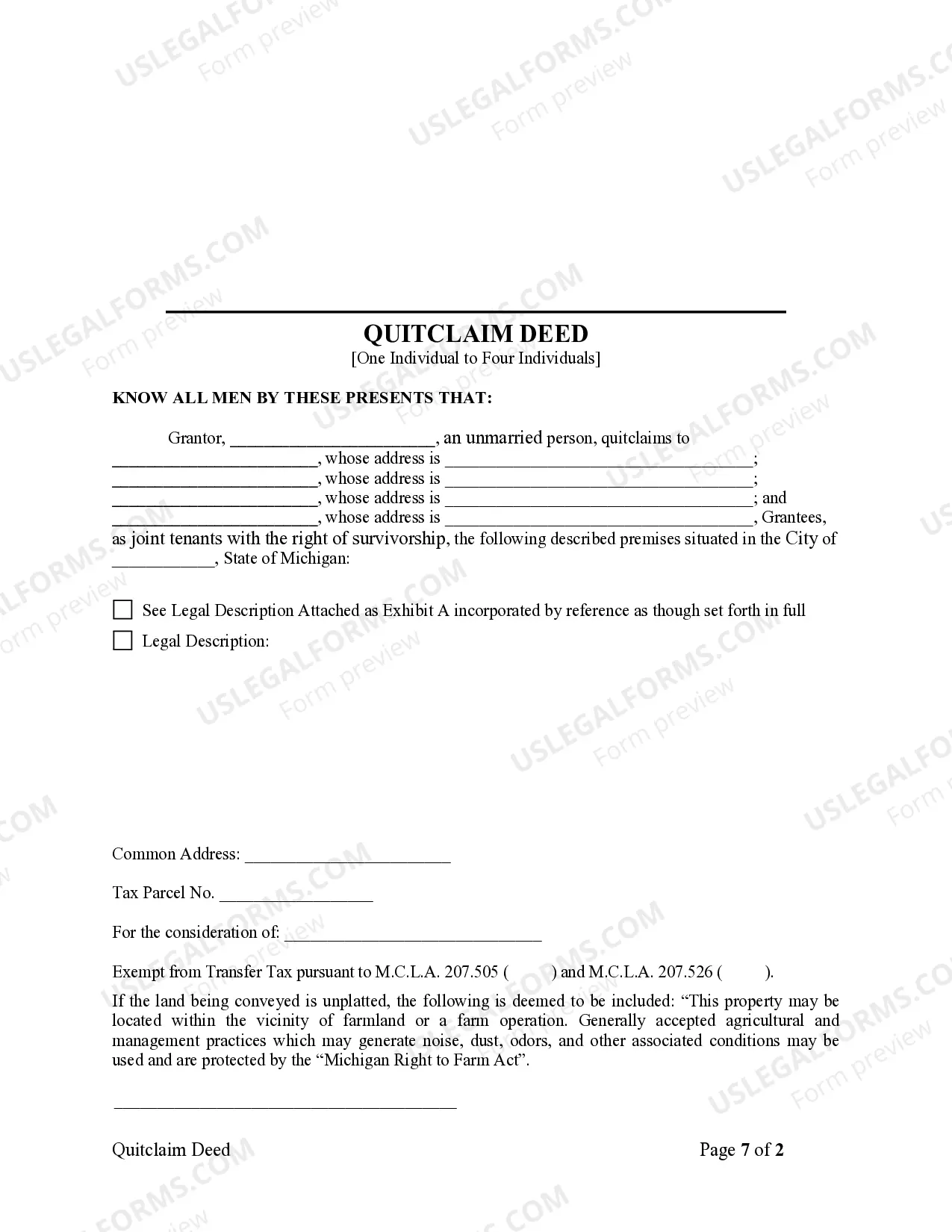
This form is a Quitclaim Deed designed to transfer property from one individual to four individuals. It allows the grantees to hold the property as tenants in common or as joint tenants with the right of survivorship. Unlike warranty deeds, a quitclaim deed does not guarantee that the grantor holds clear title to the property; instead, it simply conveys whatever interest the grantor may have. This distinction makes the quitclaim deed a straightforward option for property transfers without the complexities of warranties.
Form components explained
- Identification of the grantor (the individual transferring the property).
- Identification of the grantees (four individuals receiving the property).
- Specification of the ownership type: tenants in common or joint tenants with the right of survivorship.
- Description of the property being transferred.
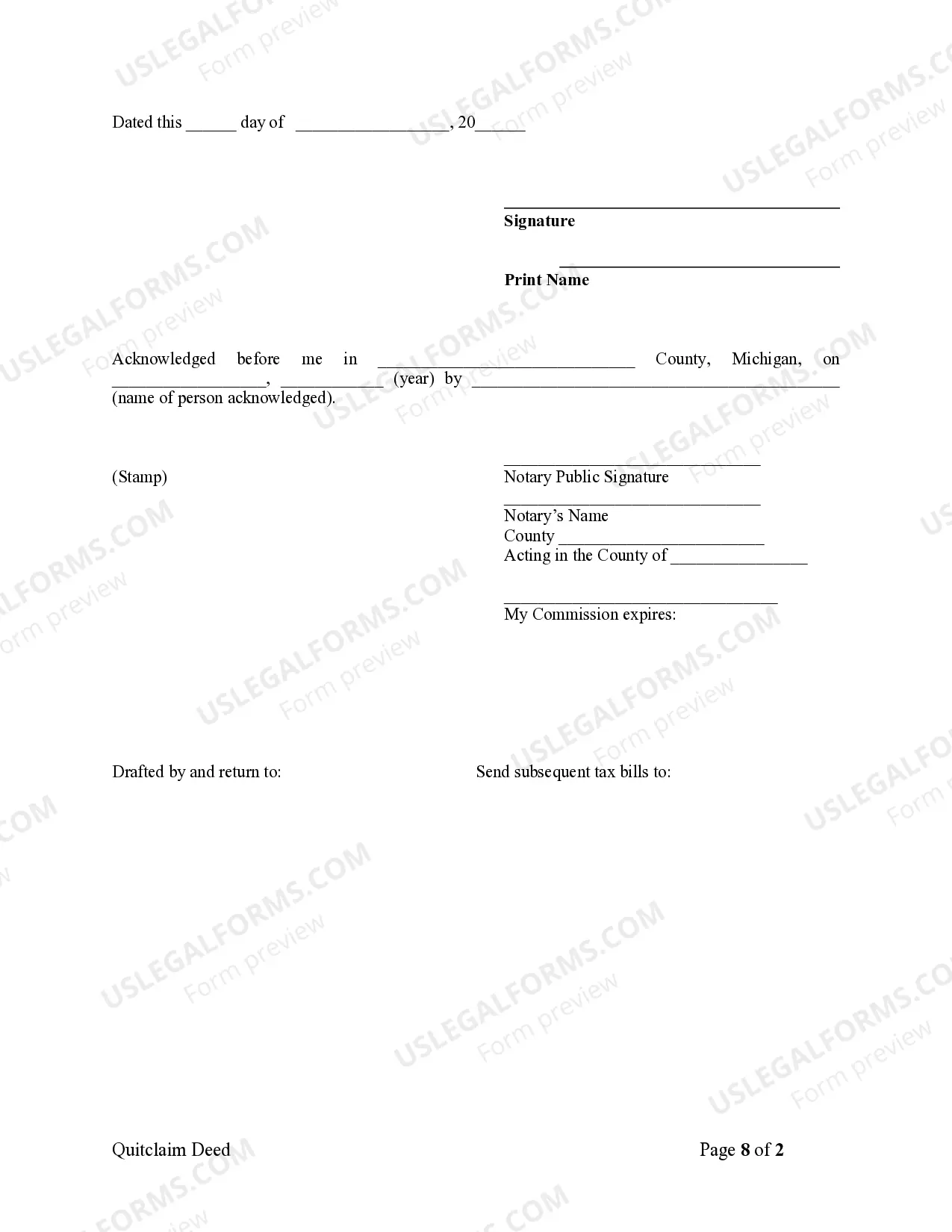
- Signatures of the grantor and date of execution.





When to use this form
This quitclaim deed is used when an individual wishes to transfer their interest in real property to four other individuals. It is commonly utilized in estate planning situations, divorce settlements, or when family members wish to share property ownership without guaranteeing title clarity. Situations that necessitate quick transfers of property or correcting title issues also warrant the use of this form.
Who needs this form
- Individual grantors looking to transfer property to multiple individuals.
- Individuals involved in family transactions, such as transfers among relatives.
- Anyone seeking a simple method to convey property rights without warranty.
- Individuals involved in legal proceedings that require the transfer of property interests.
How to prepare this document
- Identify the parties: Enter the name of the grantor and the four grantees.
- Specify the ownership type: Indicate whether the grantees will hold the property as tenants in common or as joint tenants with right of survivorship.
- Describe the property: Provide a detailed description of the property being transferred.
- Include the date of transfer: Enter the date the deed is executed.
- Sign the form: The grantor must sign the deed to validate the transfer.
Does this form need to be notarized?
Notarization is required for this form to take effect. Our online notarization service, powered by Notarize, lets you verify and sign documents remotely through an encrypted video session, available 24/7.
Common mistakes
- Failing to accurately describe the property, leading to potential disputes.
- Not specifying the type of ownership clearly, which may affect rights of survivorship.
- Overlooking the requirement for signatures, which invalidates the deed.
- Neglecting to check for state-specific filing requirements, which may incur additional fees.
Benefits of completing this form online
- Convenience of downloading and completing the form at your own pace.
- Ability to fill in form fields digitally for clarity and accuracy.
- Access to professionally drafted templates that comply with legal requirements.
- Ensures timely transfers, helping avoid delays that might arise from printing and mailing physical copies.


Form popularity
FAQ
But you might be wondering if an owner can transfer a deed to another person without a real estate lawyer. The answer is yes. Parties to a transaction are always free to prepare their own deeds.A quitclaim deed, for example, is far simpler than a warranty deed.
A person who signs a quitclaim deed to transfer property they do not own results in no title at all being transferred since there is no actual ownership interest. The quitclaim deed only transfers the type of title you own.
Quitclaim deeds are most often used to transfer property between family members. Examples include when an owner gets married and wants to add a spouse's name to the title or deed, or when the owners get divorced and one spouse's name is removed from the title or deed.
Yes, you can use a Quitclaim Deed to transfer a gift of property to someone. You must still include consideration when filing your Quitclaim Deed with the County Recorder's Office to show that title has been transferred, so you would use $10.00 as the consideration for the property.
In Michigan, a quit claim deed must be signed by a witness, in addition to the notary, to make it legal.After all required signatures are collected and notarized, file the document with your local register of deeds to complete the transaction.
Once you sign a quitclaim deed and it has been filed and recorded with the County Clerks Office, the title has been officially transferred and cannot be easily reversed. In order to reverse this type of transfer, it would require your spouse to cooperate and assist in adding your name back to the title.
The drawback, quite simply, is that quitclaim deeds offer the grantee/recipient no protection or guarantees whatsoever about the property or their ownership of it. Maybe the grantor did not own the property at all, or maybe they only had partial ownership.
Signing: § 565.201 requires that the grantor sign the document in front of a notary public. Recording: All quitclaim deeds in Michigan must be filed with the Michigan Register of Deeds in the county where the property is located.