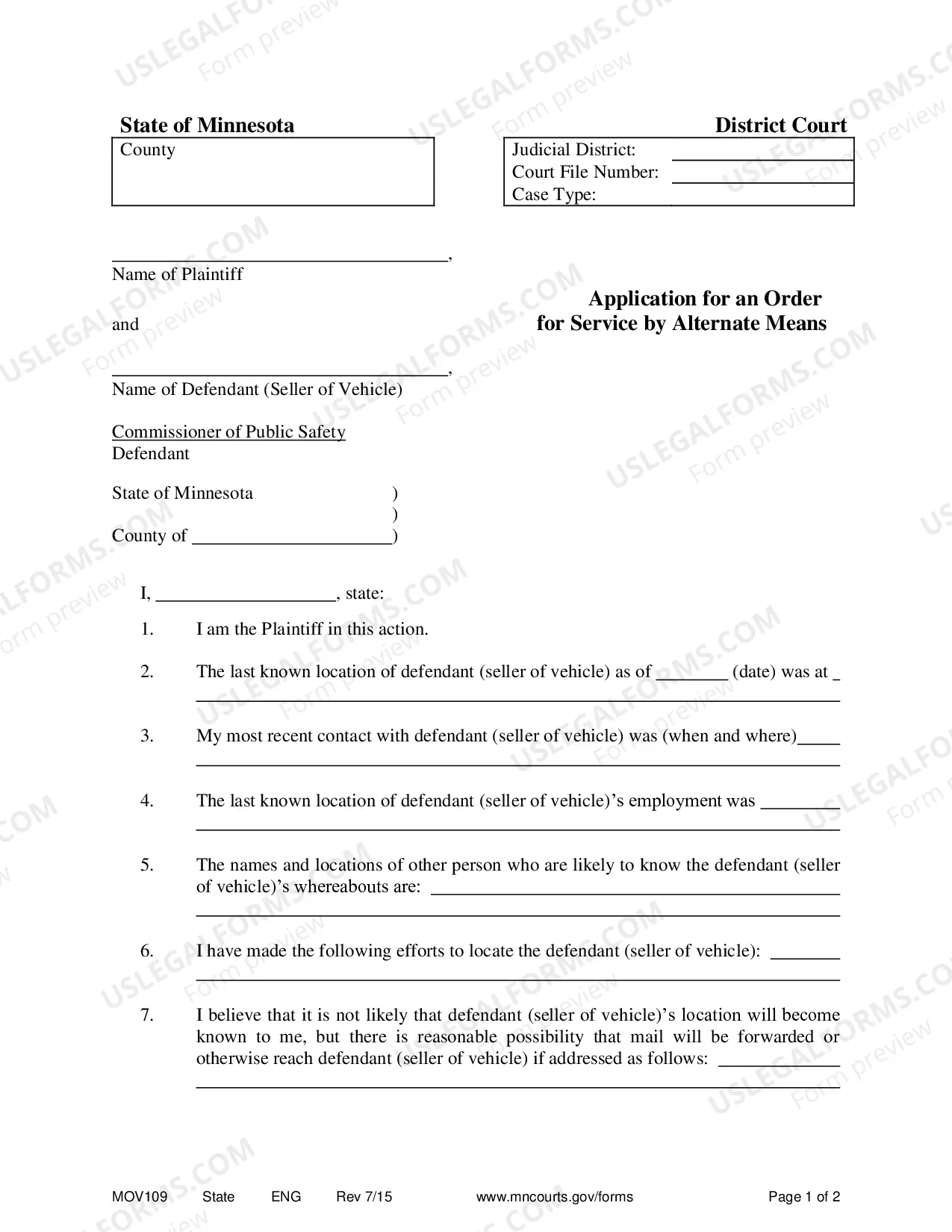
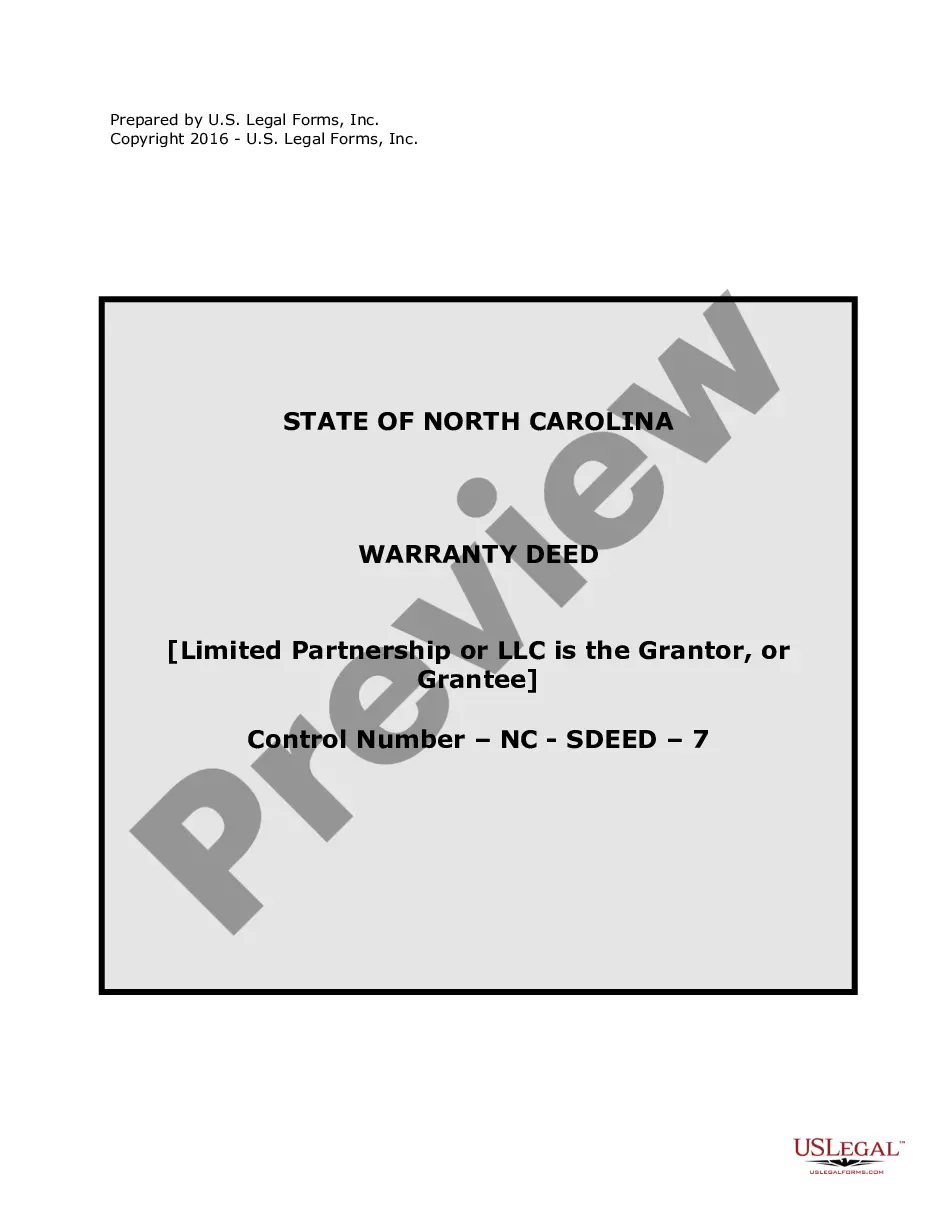
North Carolina Warranty Deed from Limited Partnership or LLC is the Grantor, or Grantee
Understanding this form
The Warranty Deed from Limited Partnership or LLC is a legal document that facilitates the transfer of property ownership where either the grantor or the grantee is a limited partnership or a limited liability company (LLC). This form establishes a warranty, guaranteeing that the property is free from any encumbrances or claims, except as disclosed. It is important to note that this deed differs from other types of deeds, such as quitclaim deeds, in the level of assurance it provides regarding property title.
Key parts of this document
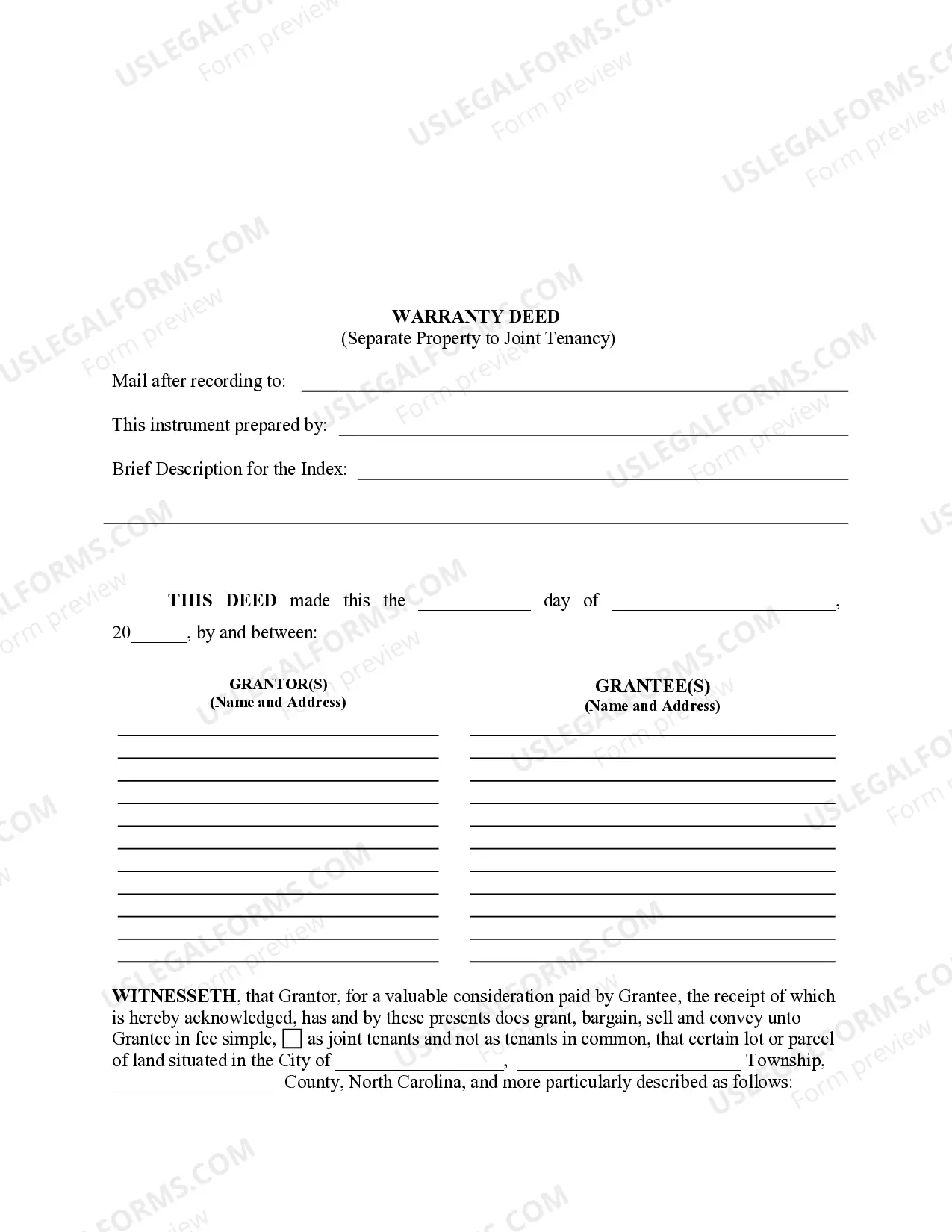
- Grantor and Grantee Information: Names and addresses of the parties involved in the transaction.
- Property Description: A clear description of the property being transferred, including address and identification details.
- Execution Date: The date on which the deed is signed.
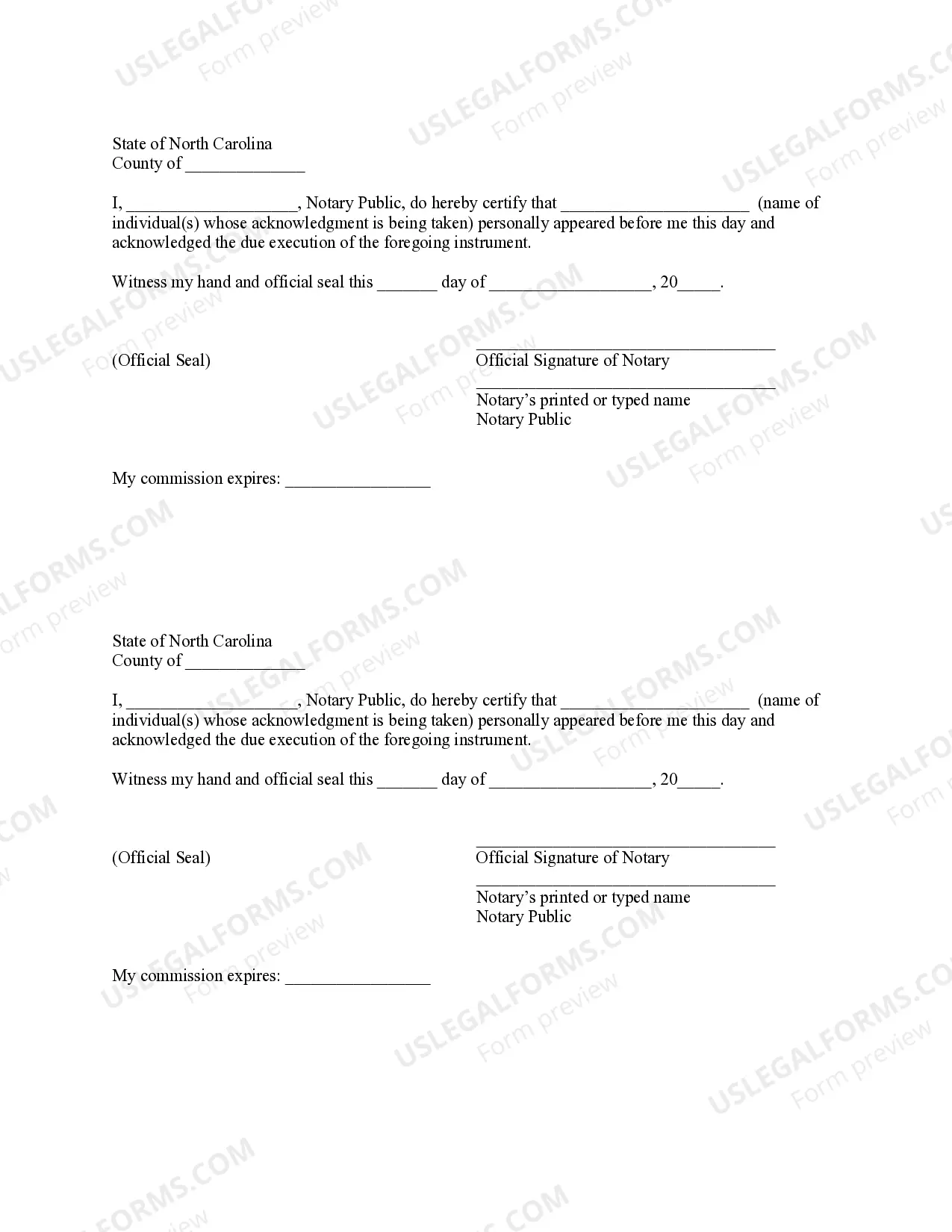
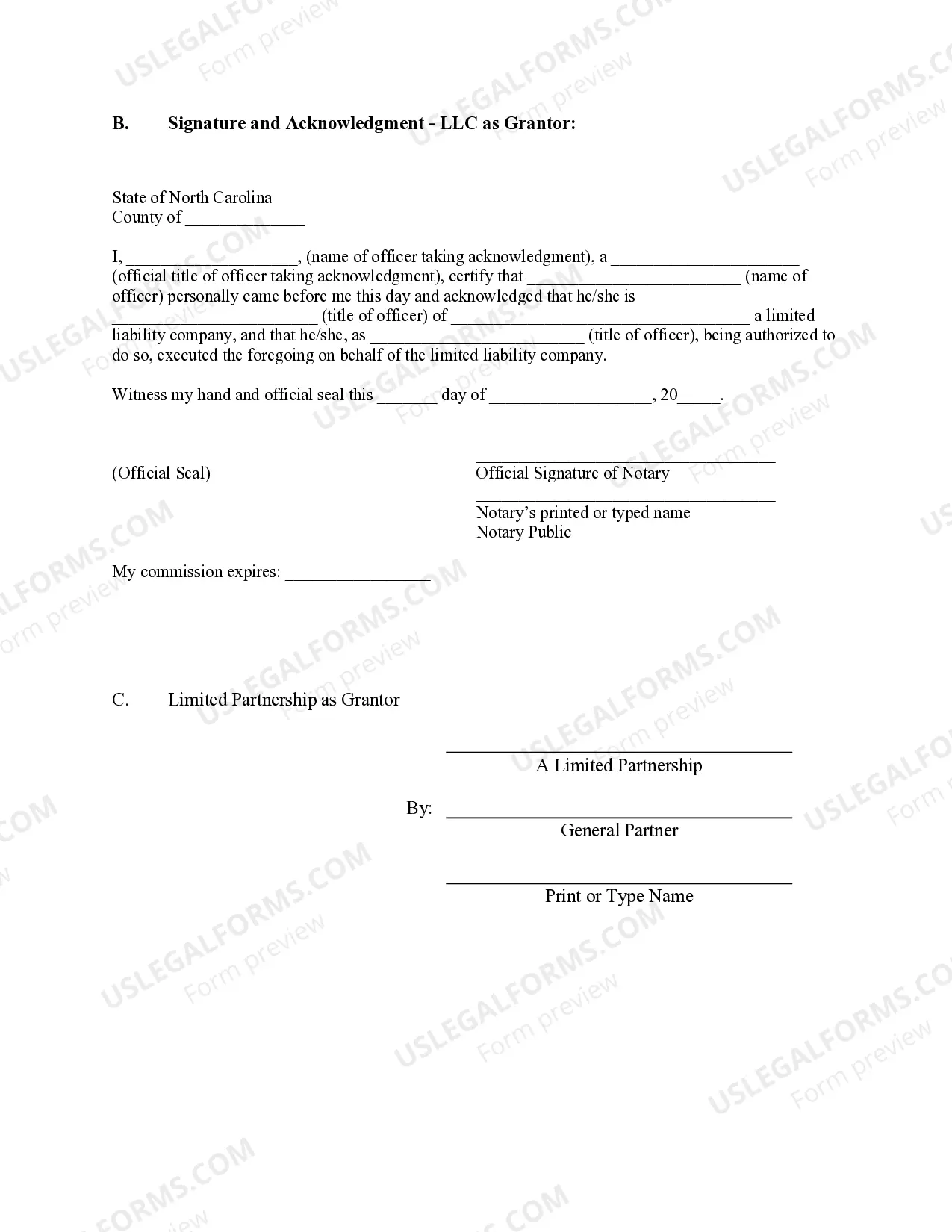
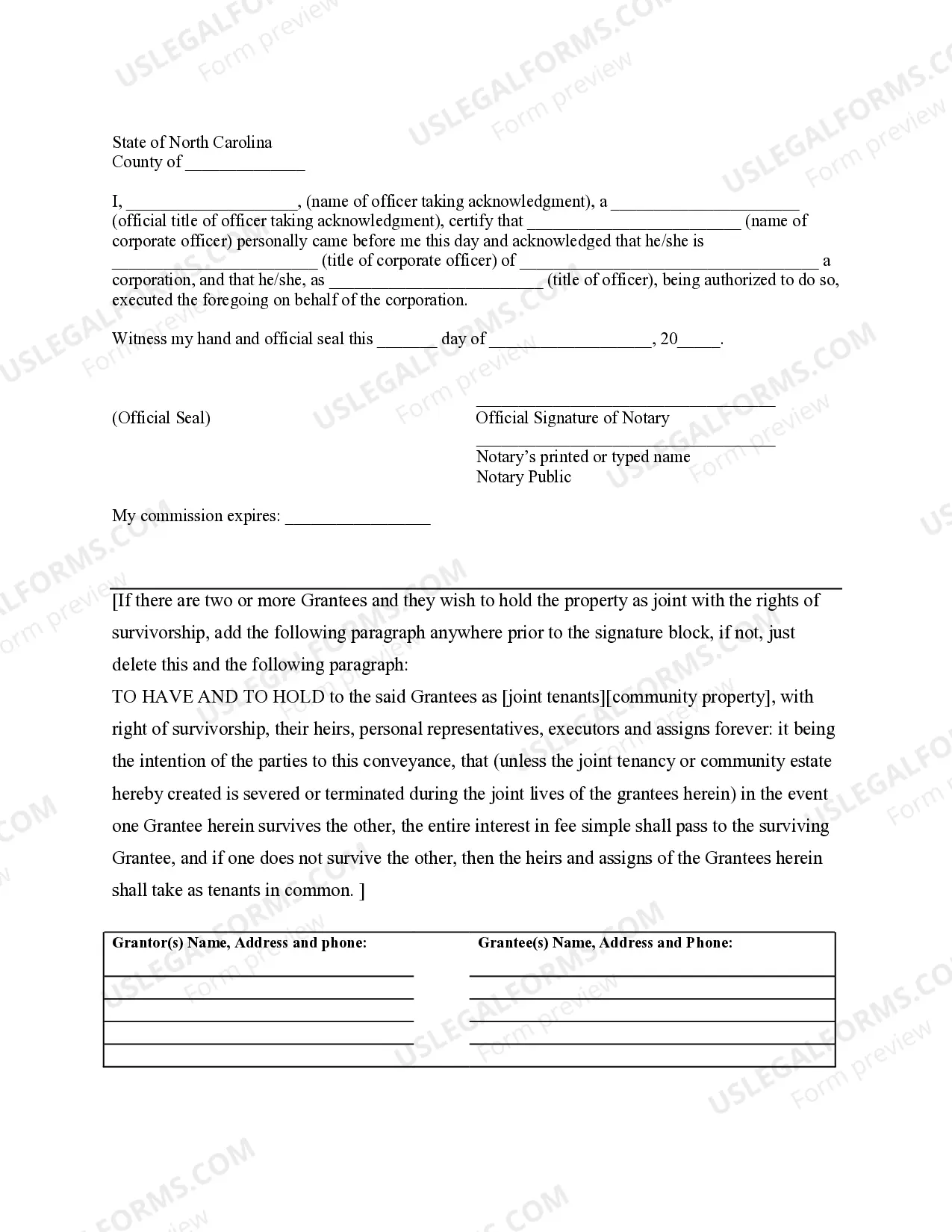
- Notary Section: Space for a notary public to certify the signing of the deed.
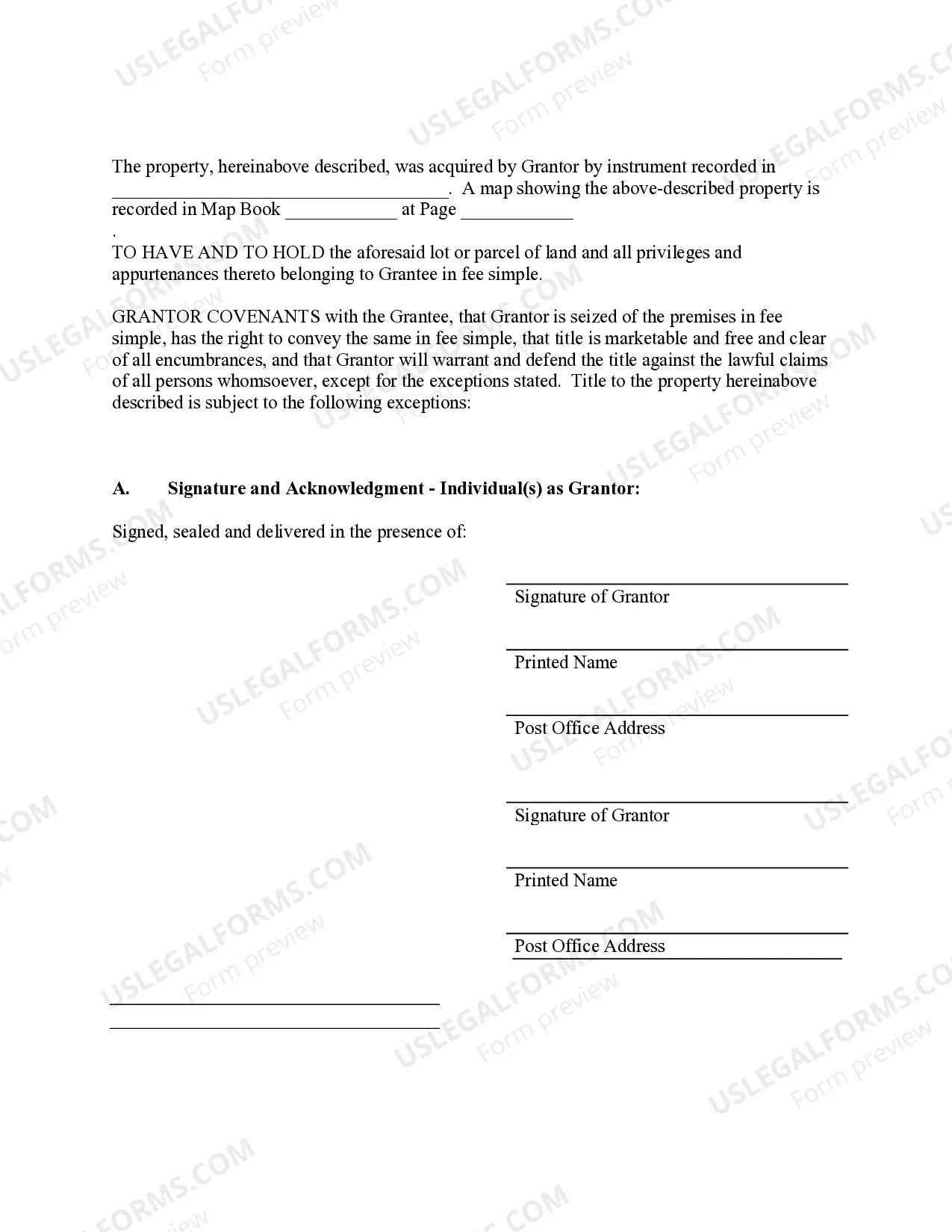
- Signature Lines: Areas for signatures of grantor(s) and potentially witnesses, if required.




When to use this document
This form should be used when a limited partnership or LLC is either transferring its interest in a property or receiving property ownership. Common scenarios include real estate transactions, mergers, or changes in ownership structure where an LLC or limited partnership is involved. It is essential to use this warranty deed to ensure legal title is conveyed with assurances against any hidden claims.
Intended users of this form
- Limited partnerships or LLCs engaging in property transactions.
- Property owners looking to transfer their ownership to a partnership or LLC.
- Real estate attorneys or agents assisting clients in property conveyance.
- Individuals involved in business partnerships holding real estate assets.
Completing this form step by step
- Identify the grantor and grantee by providing their full names and addresses.
- Specify the property details clearly, including a complete legal description.
- Enter the date of execution to indicate when the transfer takes place.
- Have the grantor sign the deed in the designated area.
- Ensure a notary public certifies the signing by filling in the notarization section.
Notarization guidance
This document requires notarization to meet legal standards. US Legal Forms provides secure online notarization powered by Notarize, allowing you to complete the process through a verified video call, available 24/7.
Get your form ready online
Our built-in tools help you complete, sign, share, and store your documents in one place.
Make edits, fill in missing information, and update formatting in US Legal Forms—just like you would in MS Word.
Download a copy, print it, send it by email, or mail it via USPS—whatever works best for your next step.
Sign and collect signatures with our SignNow integration. Send to multiple recipients, set reminders, and more. Go Premium to unlock E-Sign.
If this form requires notarization, complete it online through a secure video call—no need to meet a notary in person or wait for an appointment.
We protect your documents and personal data by following strict security and privacy standards.

Make edits, fill in missing information, and update formatting in US Legal Forms—just like you would in MS Word.

Download a copy, print it, send it by email, or mail it via USPS—whatever works best for your next step.

Sign and collect signatures with our SignNow integration. Send to multiple recipients, set reminders, and more. Go Premium to unlock E-Sign.

If this form requires notarization, complete it online through a secure video call—no need to meet a notary in person or wait for an appointment.

We protect your documents and personal data by following strict security and privacy standards.
Typical mistakes to avoid
- Failing to provide a complete and accurate property description.
- Not having the deed notarized, if required for legal validity.
- Incorrectly filling out the names of the grantor and grantee.
- Omitting the execution date, which is crucial for documenting the transaction.
Why complete this form online
- Convenient access to legal forms from any location, at any time.
- Ability to complete the form electronically, reducing errors.
- Instant download and print options streamline the process.
- Forms are prepared by licensed attorneys to ensure legal compliance.
Looking for another form?
Form popularity
FAQ
In any real estate transaction, the grantor is the party transferring the property, while the grantee is the recipient. For a North Carolina Warranty Deed from Limited Partnership or LLC, the grantor might be the LLC or limited partnership, and the grantee would be the individual or entity acquiring the property. Understanding these roles is essential for a successful transaction.
An example of a grantee could be a person purchasing a home from a limited partnership. In the context of a North Carolina Warranty Deed from Limited Partnership or LLC, the grantee is the buyer who benefits from the property transfer. This role is vital for establishing legal ownership and property rights.
The grantee of a warranty deed is the party that receives ownership rights to the property. In a North Carolina Warranty Deed from Limited Partnership or LLC, this could involve individuals or corporate entities. Clearly identifying the grantee helps ensure a smooth transfer of property ownership.
The title on a warranty deed will reflect the grantee, who is now the legal owner of the property. In the case of a North Carolina Warranty Deed from Limited Partnership or LLC, it is crucial to accurately state the grantee's name to avoid any future disputes. Proper documentation guarantees that the title is clear and marketable.
A warranty deed is typically drafted by a qualified attorney or a legal professional knowledgeable about real estate transactions. In a North Carolina Warranty Deed from Limited Partnership or LLC scenario, legal expertise ensures that all necessary details are included. This helps protect the rights of both the grantor and the grantee.
The grantee on a deed is the person or organization that receives the property. In cases involving a North Carolina Warranty Deed from Limited Partnership or LLC, this could be a buyer or an investment group. It is important to clearly identify the grantee to ensure proper title transfer and legal standing.
In the context of a North Carolina Warranty Deed from Limited Partnership or LLC, the grantee refers to the individual or entity receiving the property. This party benefits from the transfer of ownership and holds the rights to the property after the deed is executed. Understanding the role of the grantee is essential for any transaction involving real estate.
To complete a deed transfer in North Carolina, begin by drafting a warranty deed that includes all required elements, such as the legal description and signatures. Next, have the deed executed and notarized, then file it with the county register of deeds. This process is essential for a North Carolina Warranty Deed from Limited Partnership or LLC to be legally binding. For ease and accuracy, consider using uslegalforms to guide you through each step.
The grantor on a warranty deed is the individual or entity transferring ownership of the property, such as a Limited Partnership or LLC in North Carolina. This party guarantees that they have the legal right to transfer the property and will defend the title against any claims. Understanding the role of the grantor is key when executing a North Carolina Warranty Deed from Limited Partnership or LLC. Uslegalforms can assist you in preparing the necessary documentation.
The requirements for a warranty deed include a clear identification of the parties involved, a detailed legal description of the property, and the grantor’s signature. It must also be delivered to the grantee and accepted by them to be valid. For a North Carolina Warranty Deed from Limited Partnership or LLC, following these guidelines is essential for a smooth transaction. Uslegalforms can provide you with the necessary tools to meet these requirements.