North Dakota UCC1 Financing Statement
Understanding this form
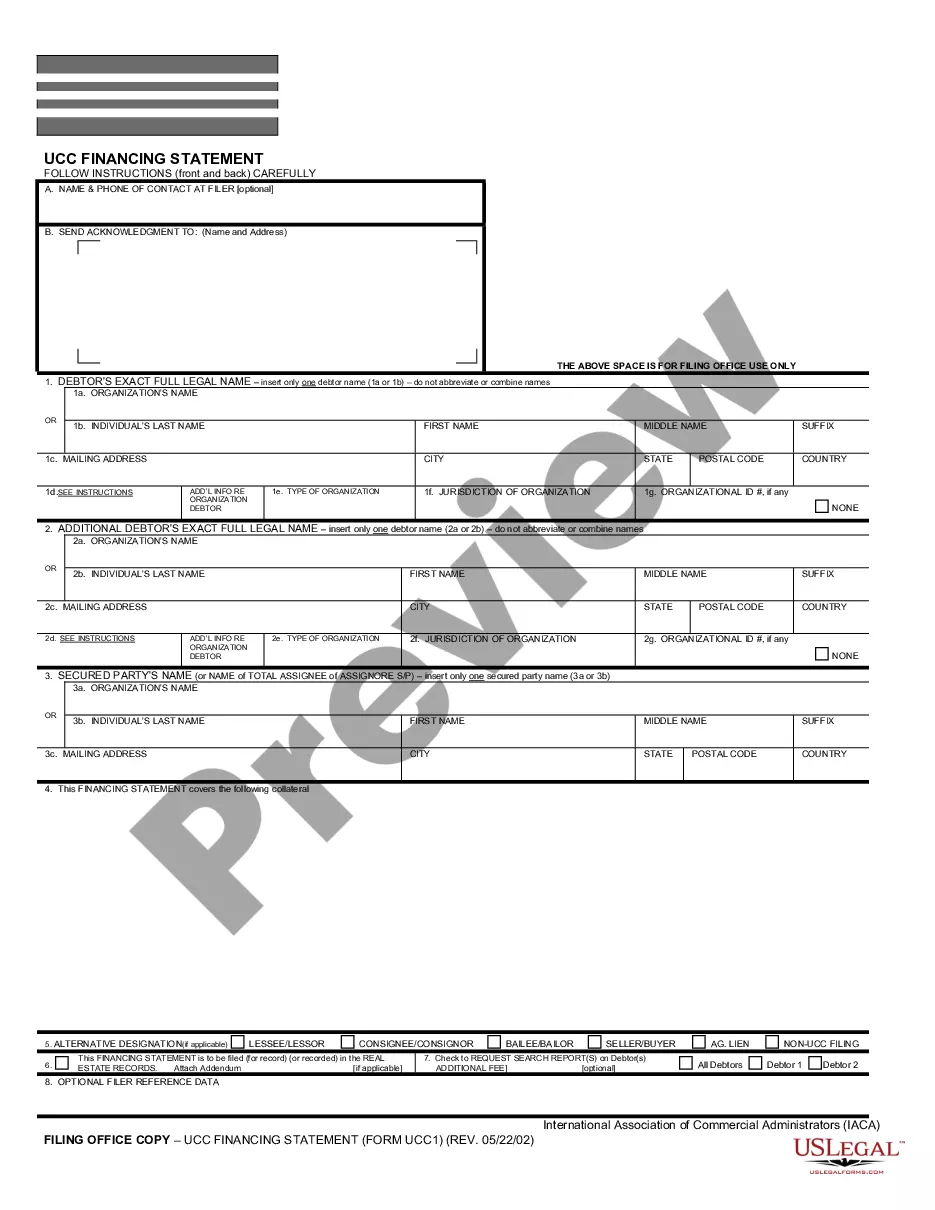
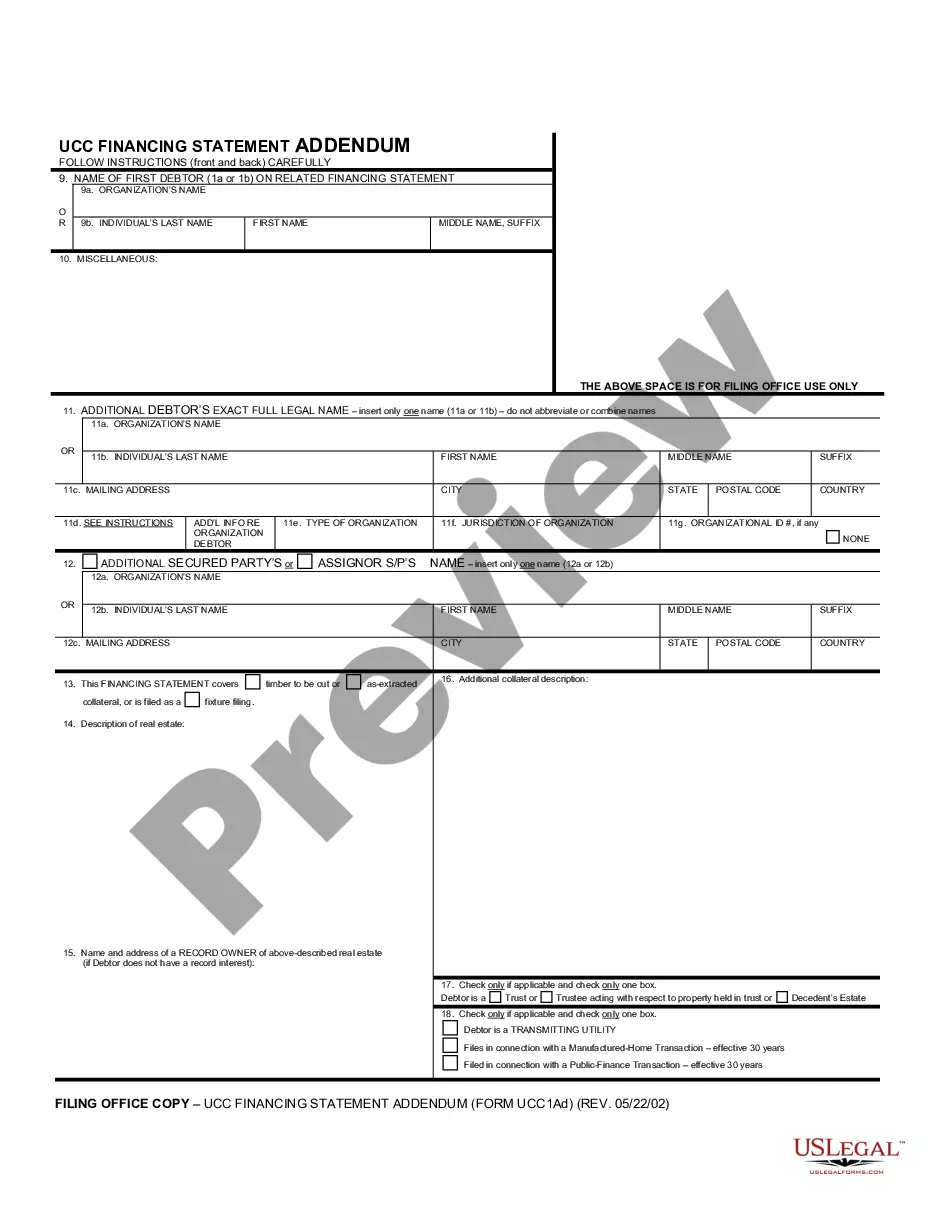
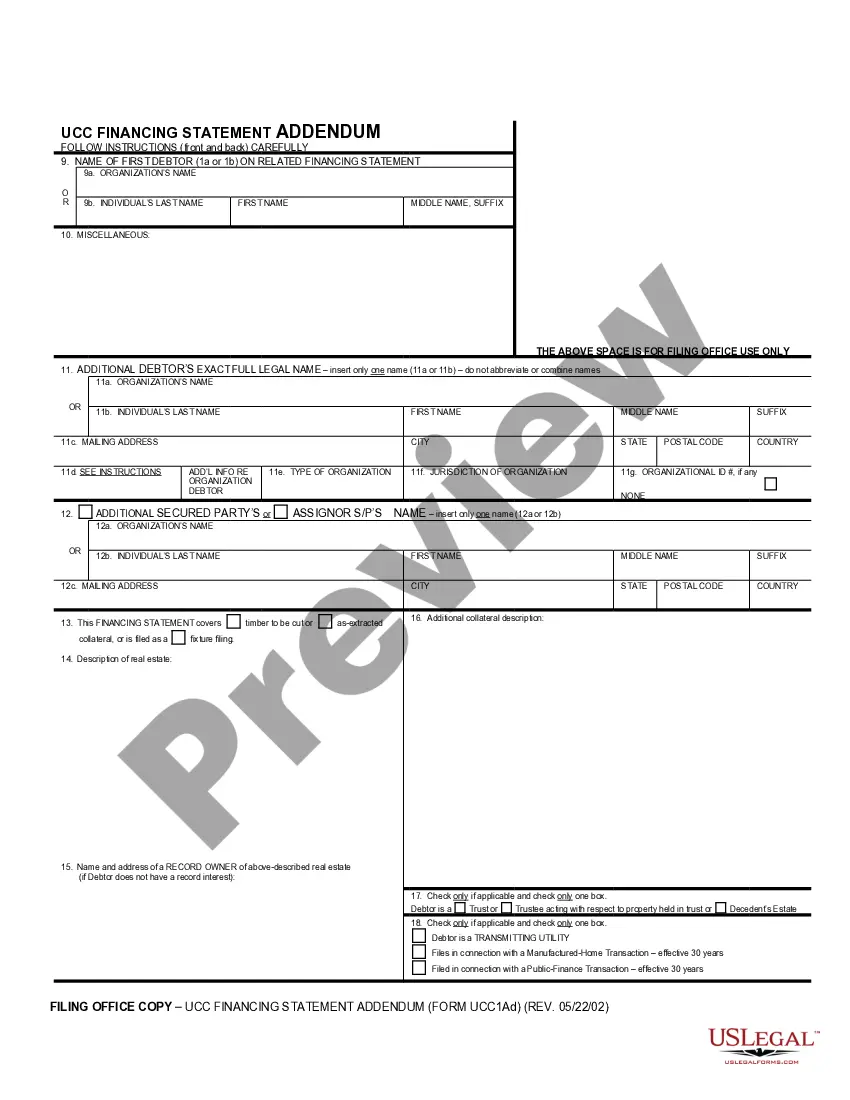
The North Dakota UCC1 Financing Statement is a legal document used to secure a creditor's interest in a debtor's collateral. This form operates under the Uniform Commercial Code (UCC) to provide notice to third parties about a secured interest in specified collateral, differentiating it from other types of financing statements by its specific application in North Dakota. It is essential for establishing the priority of claims regarding the collateral in question.
Key parts of this document
- Debtor name and address: Accurate identification of the debtor is crucial.
- Collateral description: Specifies the assets secured by the financing statement.
- Secured party information: Identifies the creditor or entity securing the interest.
- Acknowledgment request: Option to receive confirmation of filing.
- Search request option: Allows requests for search reports related to the debtor.
When this form is needed
This form should be used when a lender or secured party wants to establish a legal claim on a debtor's collateral, particularly when extending credit or loans. It is vital during business transactions involving equipment, inventory, or other valuable assets that may serve as collateral for financing. Filing this statement helps protect the secured party's right to the collateral against competing claims.
Who needs this form
This form is intended for:
- Banks and financial institutions providing secured loans.
- Business owners entering into loan agreements with collateral.
- Individuals or entities seeking to secure interests in another party's property.
- Attorneys assisting clients with financing arrangements.
How to complete this form
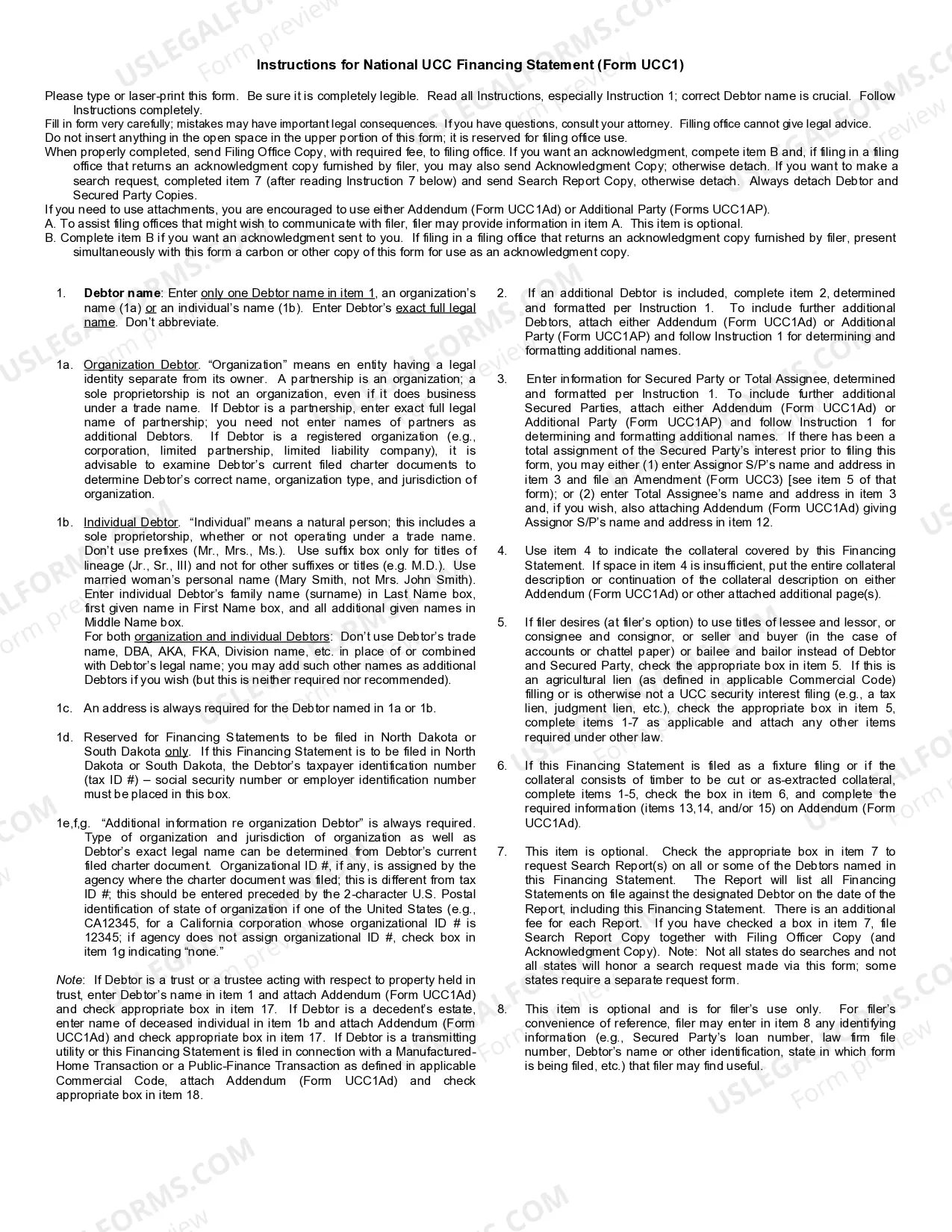
- Identify the debtor: Enter the full legal name and address of the debtor.
- Specify the collateral: Accurately describe the collateral to be secured.
- Enter secured party details: Include the name and address of the secured party.
- Request acknowledgment (if needed): Complete the optional acknowledgment section for confirmation.
- Submit the completed form: File with the appropriate office along with the required fee.
Is notarization required?
This form does not typically require notarization unless specified by local law. Always check local requirements to ensure compliance.
Get your form ready online
Our built-in tools help you complete, sign, share, and store your documents in one place.
Make edits, fill in missing information, and update formatting in US Legal Forms—just like you would in MS Word.
Download a copy, print it, send it by email, or mail it via USPS—whatever works best for your next step.
Sign and collect signatures with our SignNow integration. Send to multiple recipients, set reminders, and more. Go Premium to unlock E-Sign.
If this form requires notarization, complete it online through a secure video call—no need to meet a notary in person or wait for an appointment.
We protect your documents and personal data by following strict security and privacy standards.

Make edits, fill in missing information, and update formatting in US Legal Forms—just like you would in MS Word.

Download a copy, print it, send it by email, or mail it via USPS—whatever works best for your next step.

Sign and collect signatures with our SignNow integration. Send to multiple recipients, set reminders, and more. Go Premium to unlock E-Sign.

If this form requires notarization, complete it online through a secure video call—no need to meet a notary in person or wait for an appointment.

We protect your documents and personal data by following strict security and privacy standards.
Common mistakes
- Not including the debtor's exact legal name and address.
- Incorrectly describing the collateral or leaving it blank.
- Forgetting to attach additional pages if more space is needed.
- Neglecting to check for existing liens or security interests against the debtor.
Advantages of online completion
- Convenience: Access and complete the form from anywhere at any time.
- Editability: Easily make changes as needed before finalizing.
- Time-saving: Instant downloads reduce waiting times for paper forms.
- Reliable: Forms are drafted to comply with current legal standards.
Legal use & context
- The UCC1 Financing Statement establishes a secured interest in collateral under UCC provisions.
- Filing the statement creates constructive notice to other creditors.
- It may be challenged in court if not filed correctly, leading to potential loss of priority.
What to keep in mind
- The North Dakota UCC1 Financing Statement is essential for securing a creditor's interest in collateral.
- Accurate completion of the form is critical to avoid legal pitfalls.
- Consult legal guidance if you have questions about completing the form.
Looking for another form?
Form popularity
FAQ
A UCC filing is a legal notice a lender files with the secretary of state when they have a security interest against one of your assets. It gives notice that the lender has an interest, or lien, against the asset being used by you to secure the financing. The term UCC filing comes from the uniform commercial code.
The financing statement is generally filed with the office of the state secretary of state, in the state where the debtor is located - for an individual, the state where the debtor resides, for most kinds of business organizations the state of incorporation or organization.
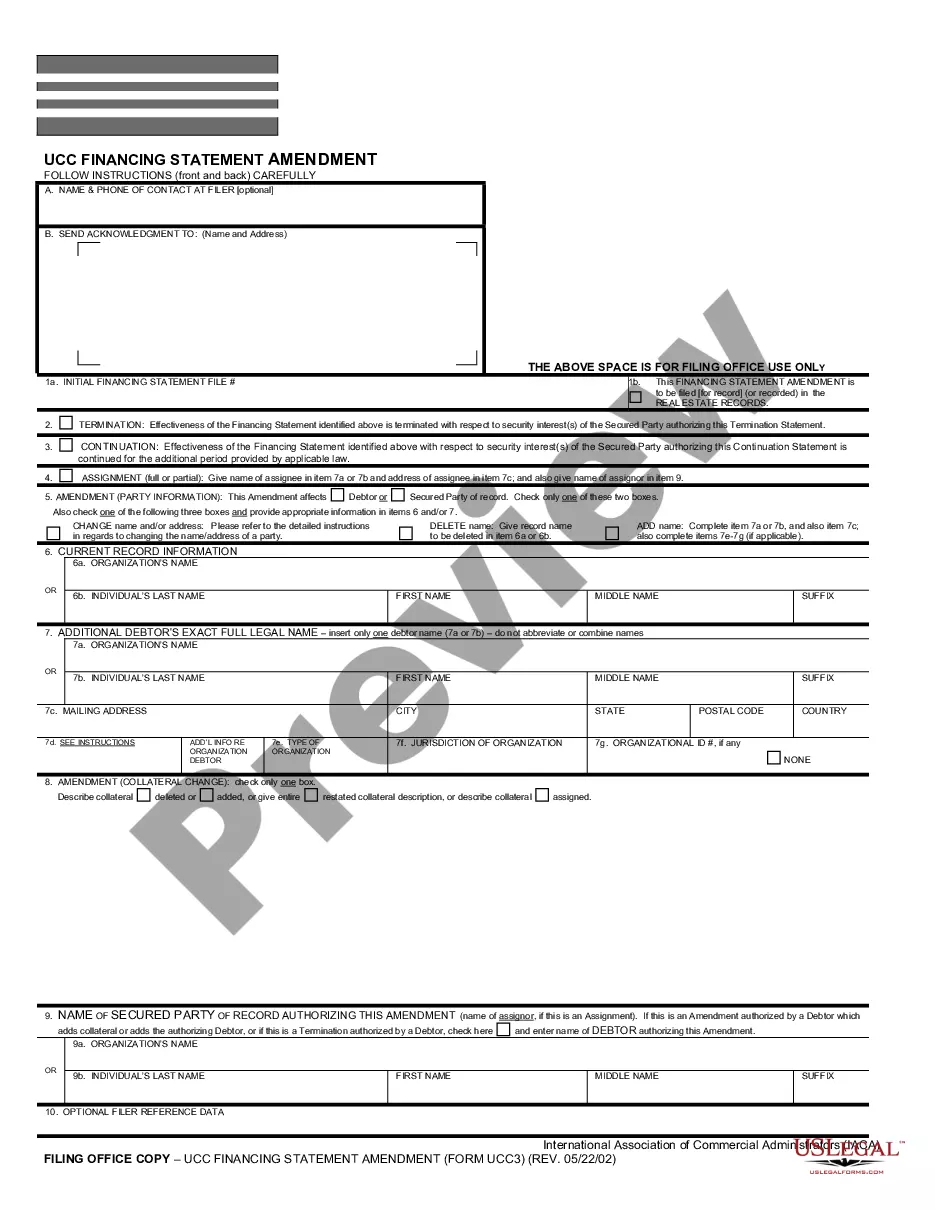
Why file a UCC-3 form? The UCC-3 is the Swiss-Army-Knife of forms. Unlike a UCC 1, a UCC 3 can be used for multiple purposes. The actions one can take are Amendment, Assignment, Continuation, and Termination.
Section 9-503 of the UCC provides various, more specific rules regarding the sufficiency of a debtor's name on a financing statement.However, unlike with a security agreement, on a financing statement it is acceptable to use a supergeneric description of collateral.
UCC-1 Financing Statements do not have to be signed by either the Debtor or Secured Party; however, they must be authorized.Although the UCC-1 Financing Statement does not require signatures, any attachment such as the legal description or special terms and conditions may require the signature of the Debtor.
It should be noted that UCC financing statements filed now generally do not contain a grant of the security interest and generally are not signed or otherwise authenticated by the Debtor and therefore would not satisfy the requirement of a security agreement.
You should file a UCC-1 Financing Statement with the secretary of state's office in the state where the debtor is incorporated or located. If the collateral is real property, then you should also file a UCC-1 with the county recorder's office in the county where the debtor's real property is located.
If you're approved for a small-business loan, a lender might file a UCC financing statement or a UCC-1 filing. This is just a legal form that allows for the lender to announce lien on a secured loan. This allows for the lender to seize, foreclose or even sell the underlying collateral if you fail to repay your loan.