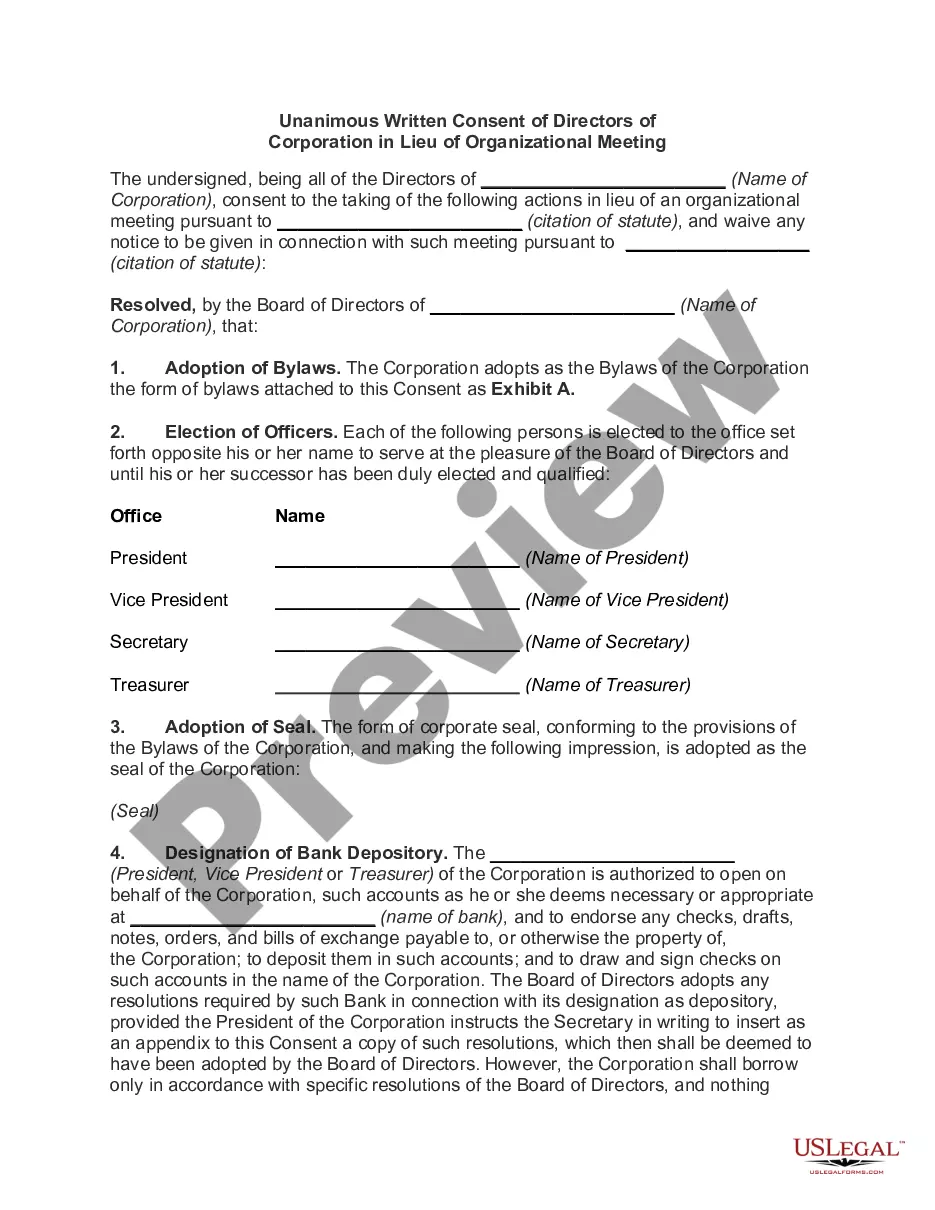
New York Satisfaction of Judgment
About this form
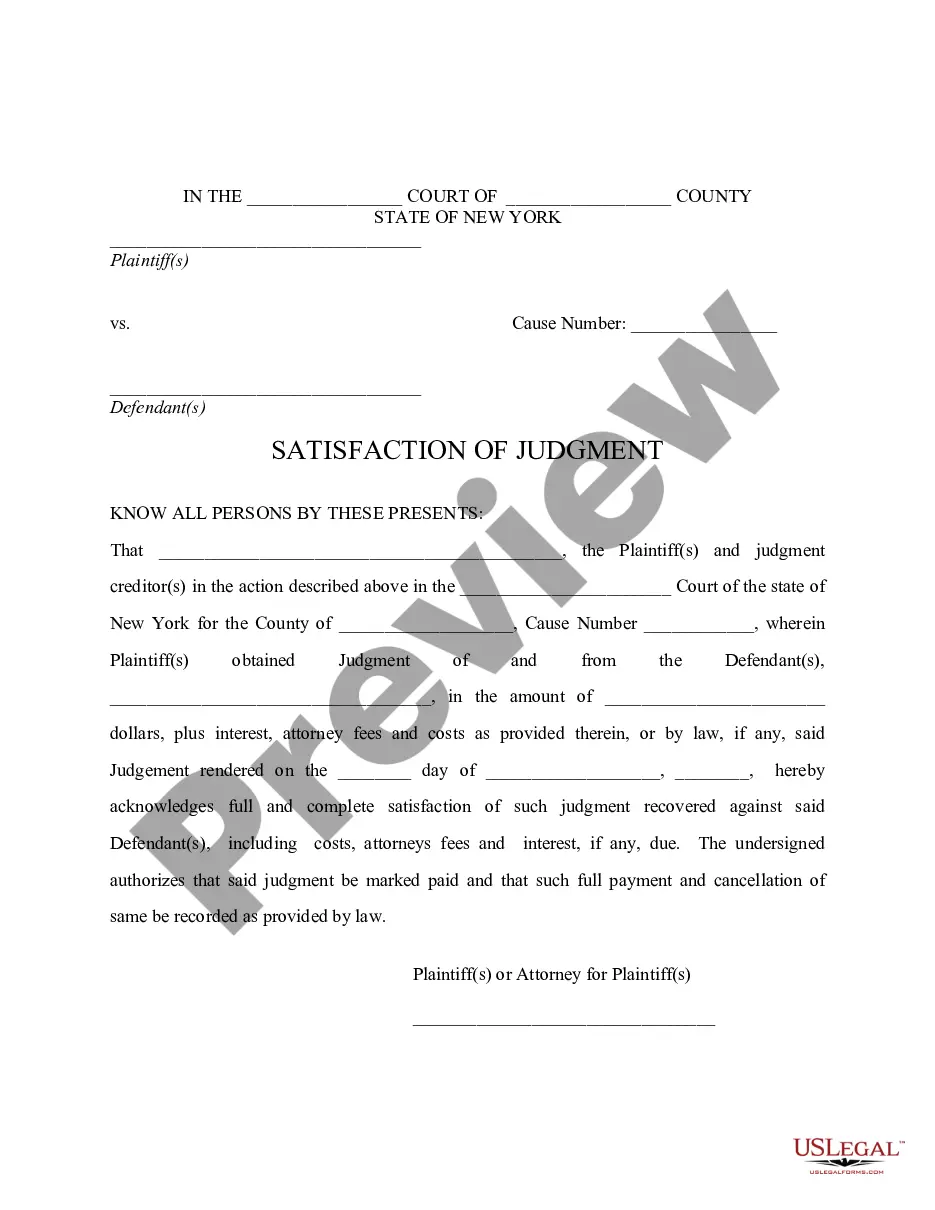
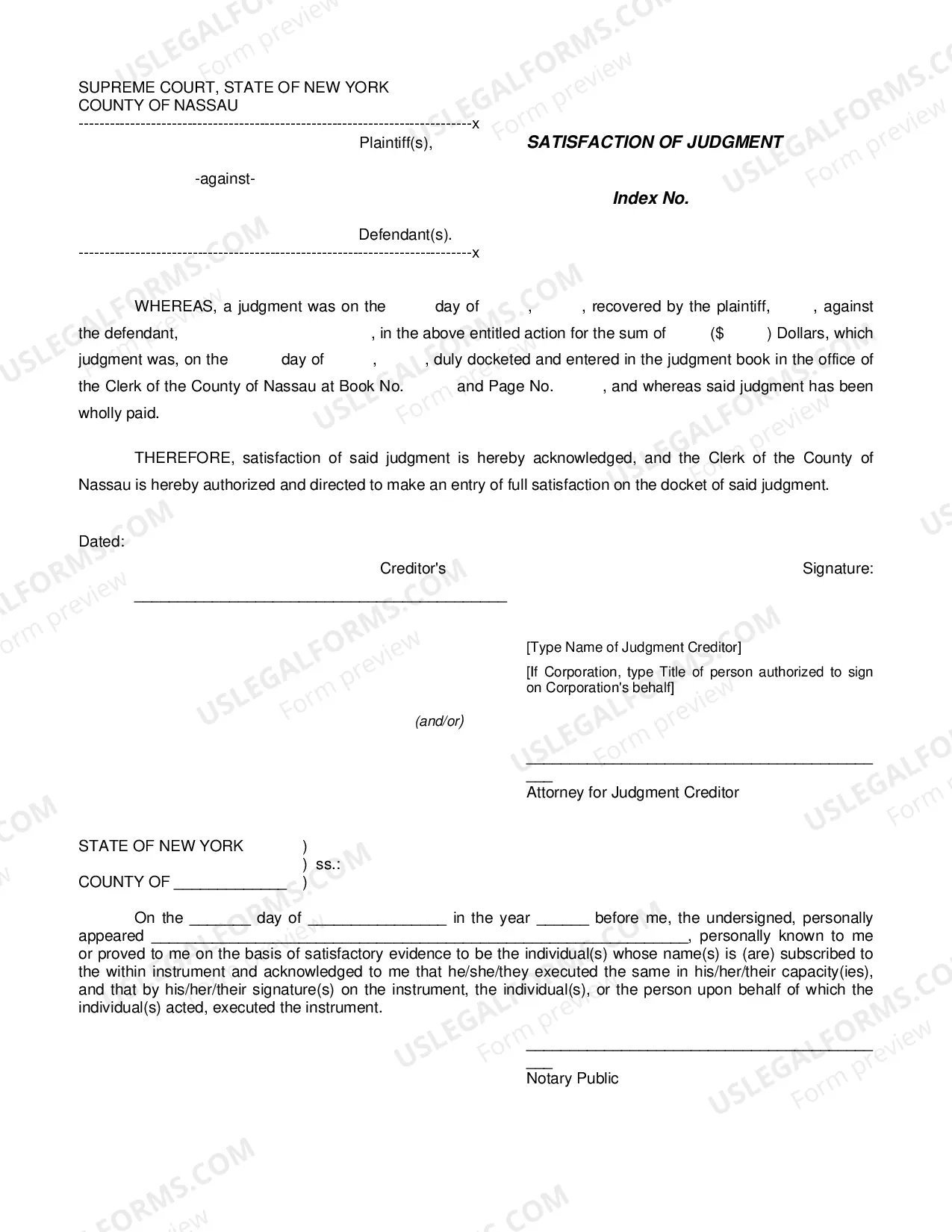
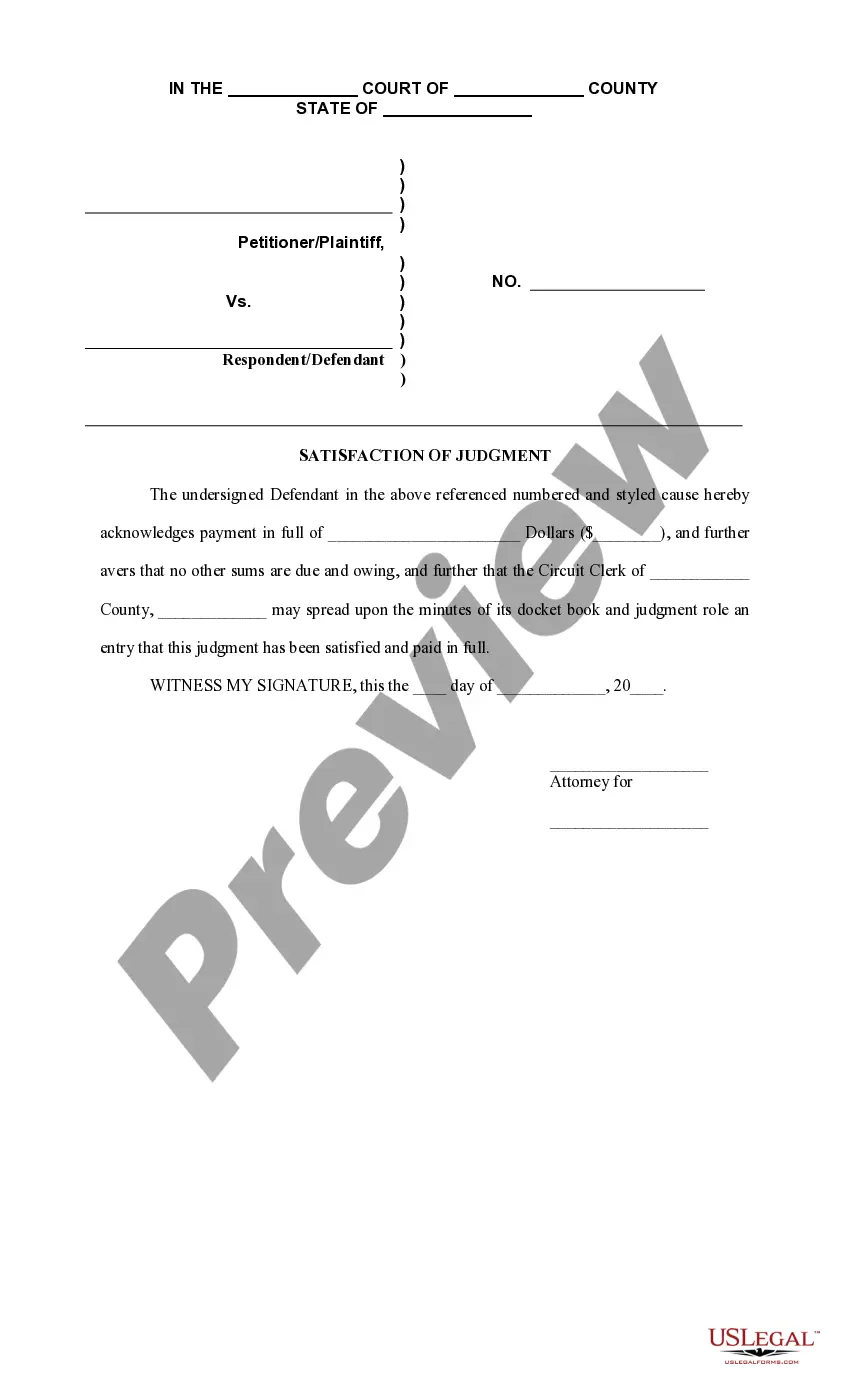
The New York Satisfaction of Judgment is a legal document that confirms a judgment has been fully paid, including all associated fees, costs, and interest. This form serves as an official acknowledgment for both the judgment creditor and the court, indicating that the creditor has received full payment and directs that the judgment be marked as satisfied. This form is essential for those who have successfully cleared a monetary judgment against them, differentiating it from other similar legal forms by providing formal closure to a debt or obligation.
What’s included in this form
- Identification of the court, county, and parties involved in the judgment.
- Details of the original judgment, including cause number, amount, and date.
- A declaration of full satisfaction by the plaintiff or their attorney.
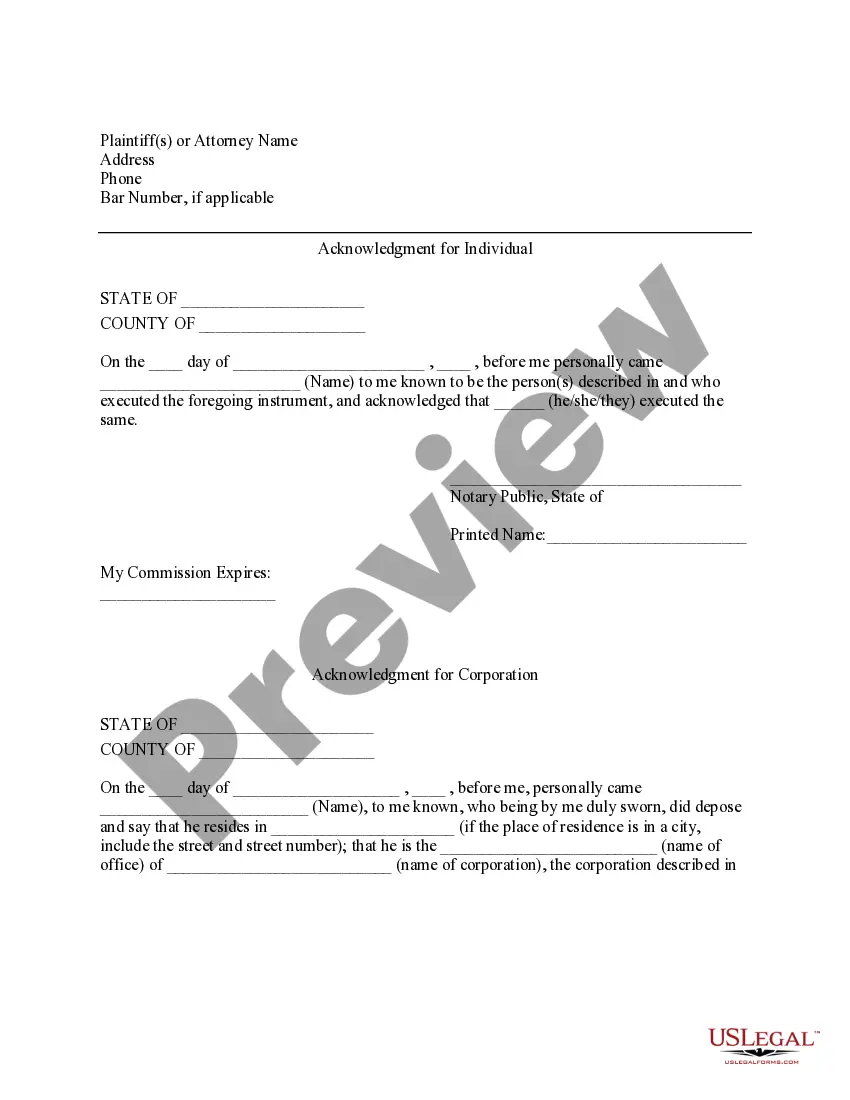
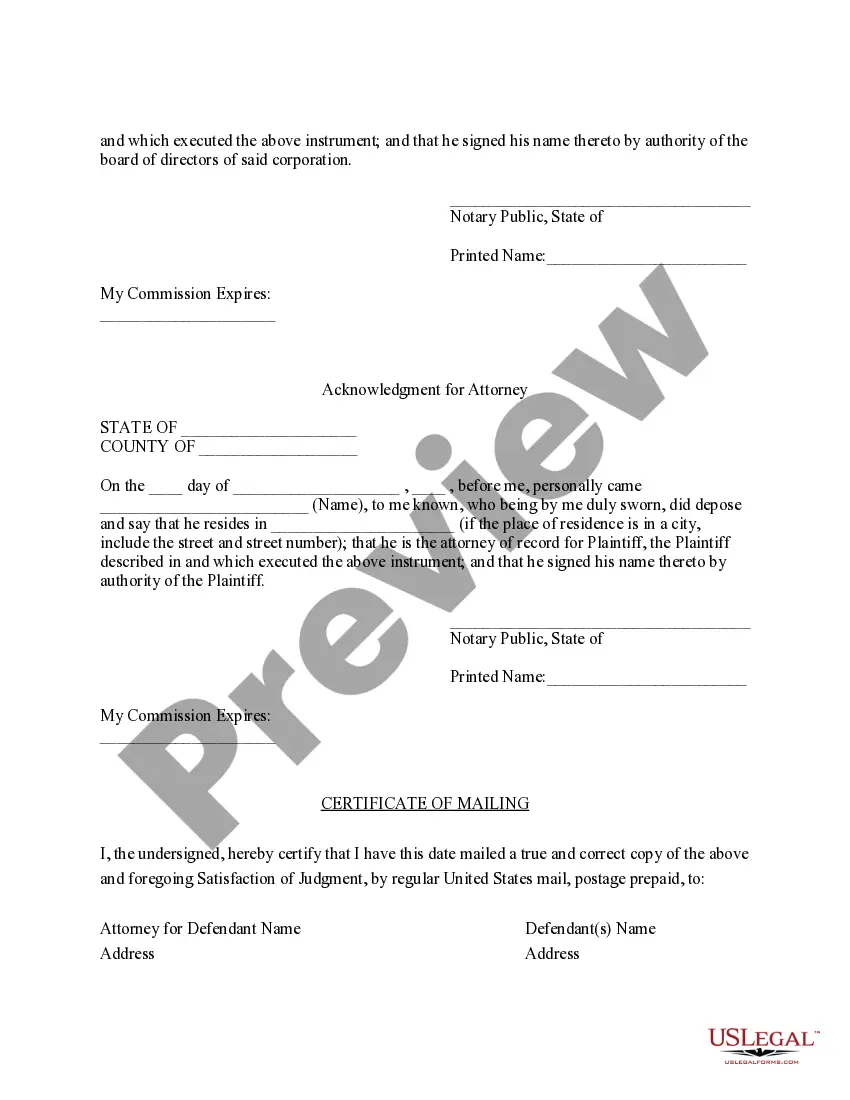
- Notarial acknowledgment for individual, corporation, or attorney.
- Certification of mailing to the defendantâs attorney or to the defendant directly.
- Signature of the plaintiff or their attorney, along with their contact information.

When to use this form
Use the New York Satisfaction of Judgment once you have paid off your judgment in full. This form is applicable after a court has awarded a monetary judgment against you, and you have settled the debt completely. Submitting this form to the court provides official notice that your obligation has been fulfilled and prevents any future complications relating to the judgment.
Who needs this form
- Individuals who have had a judgment entered against them in New York courts.
- Creditors who need to acknowledge that a judgment has been satisfied.
- Attorneys representing clients related to a judgment repayment.
- Business owners whose company has settled a judgment debt.
Completing this form step by step
- Identify and enter the name of the court and the county where the judgment was rendered.
- Fill in the names of the plaintiff(s) and defendant(s), along with the cause number of the original judgment.
- Specify the amount of the judgment, including any interest or additional costs.
- Sign the document as the plaintiff or the attorney for the plaintiff, ensuring that all relevant details are included.
- Have the document notarized as required, based on the type of signer (individual, corporate, or attorney).
- Mail a certified copy of the completed form to the defendantâs attorney or to the defendant directly.
Does this document require notarization?
Yes, this form must be notarized to be legally valid. The notarization confirms the identity of the signer and the authenticity of the document. US Legal Forms offers integrated online notarization services, which are available 24/7. This allows you to complete the notarization process securely through a video call, with no need to travel.
Get your form ready online
Our built-in tools help you complete, sign, share, and store your documents in one place.
Make edits, fill in missing information, and update formatting in US Legal Forms—just like you would in MS Word.
Download a copy, print it, send it by email, or mail it via USPS—whatever works best for your next step.
Sign and collect signatures with our SignNow integration. Send to multiple recipients, set reminders, and more. Go Premium to unlock E-Sign.
If this form requires notarization, complete it online through a secure video call—no need to meet a notary in person or wait for an appointment.
We protect your documents and personal data by following strict security and privacy standards.

Make edits, fill in missing information, and update formatting in US Legal Forms—just like you would in MS Word.

Download a copy, print it, send it by email, or mail it via USPS—whatever works best for your next step.

Sign and collect signatures with our SignNow integration. Send to multiple recipients, set reminders, and more. Go Premium to unlock E-Sign.

If this form requires notarization, complete it online through a secure video call—no need to meet a notary in person or wait for an appointment.

We protect your documents and personal data by following strict security and privacy standards.
Common mistakes
- Failing to include all required information about the judgment.
- Not obtaining the necessary notarization for the document.
- Omitting the mailing certification or not sending it to the correct party.
- Using outdated forms that do not comply with current legal standards.
Advantages of online completion
- Convenience of downloading the form instantly from your own home.
- Editability allows you to fill in important details accurately and at your own pace.
- Access to forms drafted by licensed attorneys ensures legal compliance.
- No need for in-person visits, saving you time and travel costs.
Main things to remember
- The New York Satisfaction of Judgment confirms that a judgment has been fully paid.
- It is essential for both parties to officially recognize that the debt has been settled.
- The form requires notarization and proper mailing to the other partyâs attorney.
Looking for another form?
Form popularity
FAQ
The New York Satisfaction of Judgment is a court document that confirms a monetary judgment has been fully paid, including fees, costs, and interest. It serves as an official acknowledgment for the court and the parties that the debt is satisfied and directs the judgment to be marked as such, providing formal closure.
After full payment, file the New York Satisfaction of Judgment with the court. The form includes a declaration of full satisfaction by the plaintiff or their attorney, a notarial acknowledgment when appropriate, certification of mailing to the defendant’s attorney or the defendant, and the plaintiff's signature with contact information. Once the court processes it, the judgment is marked satisfied.
The form’s purpose is to certify satisfaction and direct the court to mark the judgment as satisfied; it does not address removing the record. Removing or expunging the judgment may involve separate procedures or credit-report considerations. Consult a licensed attorney for options.
The declaration of full satisfaction must be signed by the plaintiff or their attorney, with their contact information. A notarial acknowledgment is required for individuals, corporations, or attorneys, and the form also calls for certification of mailing to the defendant’s attorney or the defendant.
Identification of the court, county, and parties involved, plus details of the original judgment such as the cause number, amount, and date must be included on the form.
This form specifically confirms full satisfaction, directs the court to mark the judgment as satisfied, and includes a notarial acknowledgment and certification of mailing to the defendant or their attorney, providing formal closure that other forms may not include.