Oregon Agreement for Delayed or Partial Rent Payments
What is this form?
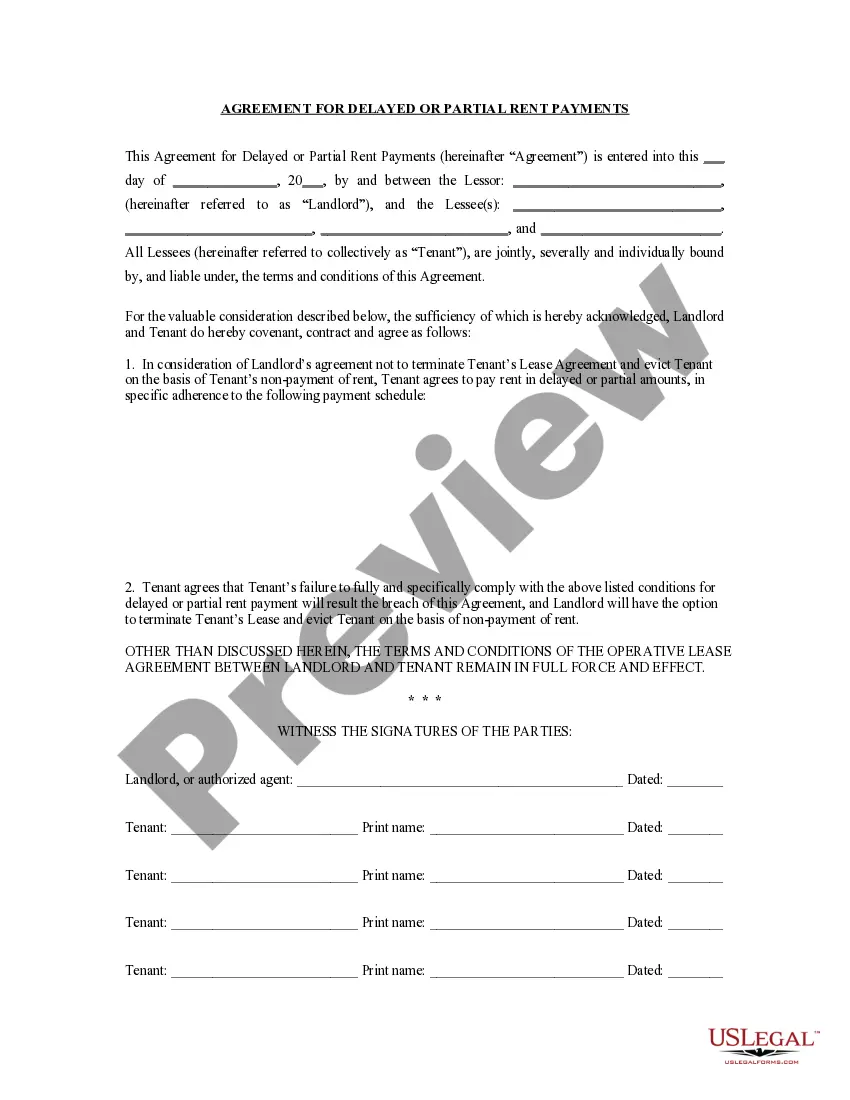
The Agreement for Delayed or Partial Rent Payments is a legal document that establishes an understanding between a landlord and a tenant regarding late or partial rent payments. This agreement outlines specific deadlines and conditions for when the tenant can make rent payments outside the normal schedule. It serves as a protective measure for both parties, allowing the tenant to avoid eviction while providing the landlord with assurance of eventual payment. This form is particularly useful in circumstances where the tenant faces financial difficulties but wishes to maintain their lease agreement.
Form components explained
- Date of agreement to record when the terms are set.
- Identification of all parties involved, including landlord and tenant names.
- Specific terms of the delayed or partial payment, including amounts and deadlines.
- Statement affirming that the original lease agreement remains in force.
- Signature lines for all parties to indicate agreement and consent.

When to use this form
This form is applicable in situations where a tenant is temporarily unable to pay rent in full and needs an agreement from the landlord to defer or make partial payments. For instance, if a tenant has lost a job or faces unexpected expenses, they can use this form to communicate with the landlord and outline a plan for paying rent over time. It helps to ensure both parties are clear about the terms and reduces potential misunderstandings.
Who should use this form
- Landlords seeking to formalize payment arrangements with tenants falling behind on rent.
- Tenants who need flexibility in their payment schedule due to financial hardships.
- Property managers handling leasing arrangements and tenant relations.
How to prepare this document
- Identify the date when the agreement is being signed.
- Fill in the names of the landlord and all tenants involved.
- Specify the payment schedule, including any amounts due and deadlines for each payment.
- Ensure to include a statement confirming the original lease agreement remains valid.
- Have all parties sign and date the document to finalize the agreement.
Does this form need to be notarized?
Notarization is generally not required for this form. However, certain states or situations might demand it. You can complete notarization online through US Legal Forms, powered by Notarize, using a verified video call available anytime.
Get your form ready online
Our built-in tools help you complete, sign, share, and store your documents in one place.
Make edits, fill in missing information, and update formatting in US Legal Forms—just like you would in MS Word.
Download a copy, print it, send it by email, or mail it via USPS—whatever works best for your next step.
Sign and collect signatures with our SignNow integration. Send to multiple recipients, set reminders, and more. Go Premium to unlock E-Sign.
If this form requires notarization, complete it online through a secure video call—no need to meet a notary in person or wait for an appointment.
We protect your documents and personal data by following strict security and privacy standards.

Make edits, fill in missing information, and update formatting in US Legal Forms—just like you would in MS Word.

Download a copy, print it, send it by email, or mail it via USPS—whatever works best for your next step.

Sign and collect signatures with our SignNow integration. Send to multiple recipients, set reminders, and more. Go Premium to unlock E-Sign.

If this form requires notarization, complete it online through a secure video call—no need to meet a notary in person or wait for an appointment.

We protect your documents and personal data by following strict security and privacy standards.
Common mistakes to avoid
- Failing to include all tenants or their signatures, which can complicate enforcement.
- Not clearly specifying payment terms, leading to confusion later.
- Incorrectly assuming this agreement overrides the lease agreement terms.
Benefits of completing this form online
- Convenient access to legal templates that can be easily customized.
- Immediate download to expedite the process of reaching an agreement.
- Streamlined completion with clear instructions to ensure compliance.
Looking for another form?
Form popularity
FAQ
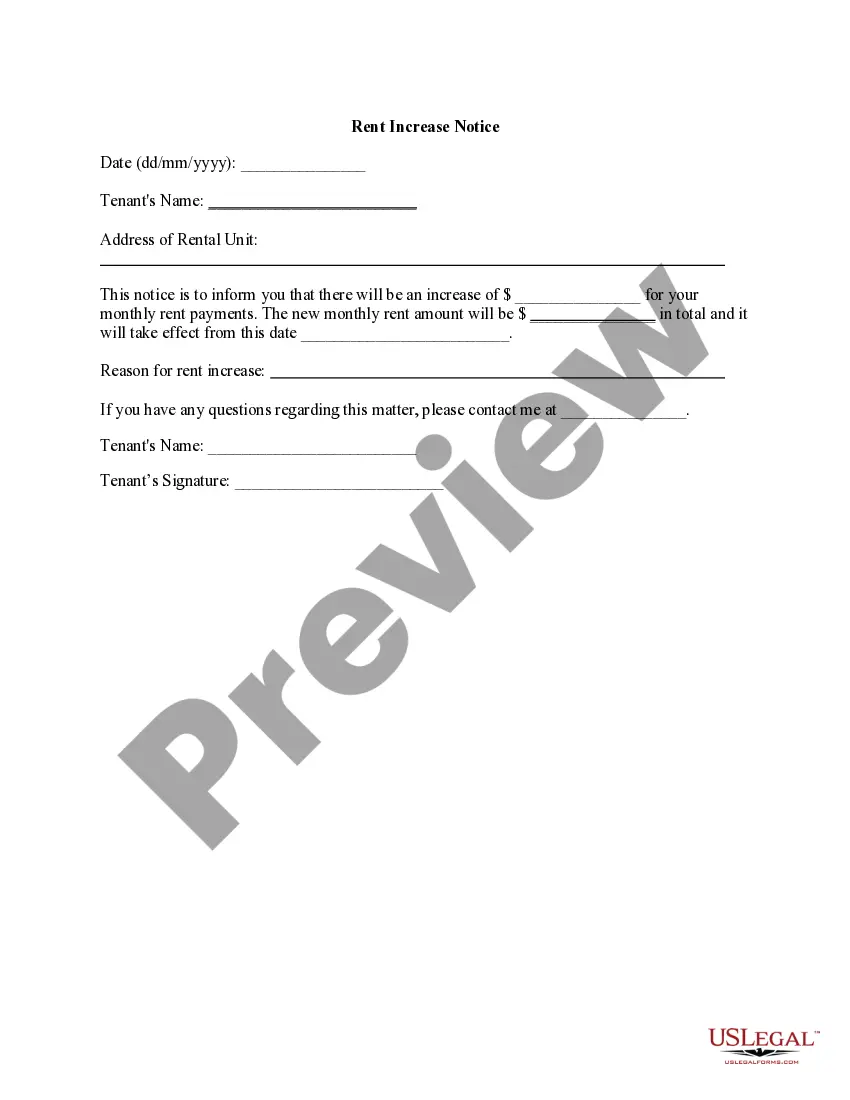
For 2020, the maximum rent increase is 9.9%. Between tenants, there is no limit to how much the rent can go up (except if a short-term tenant was just evicted from the unit, a provision that discourages a revolving door of tenants for rent increases.)
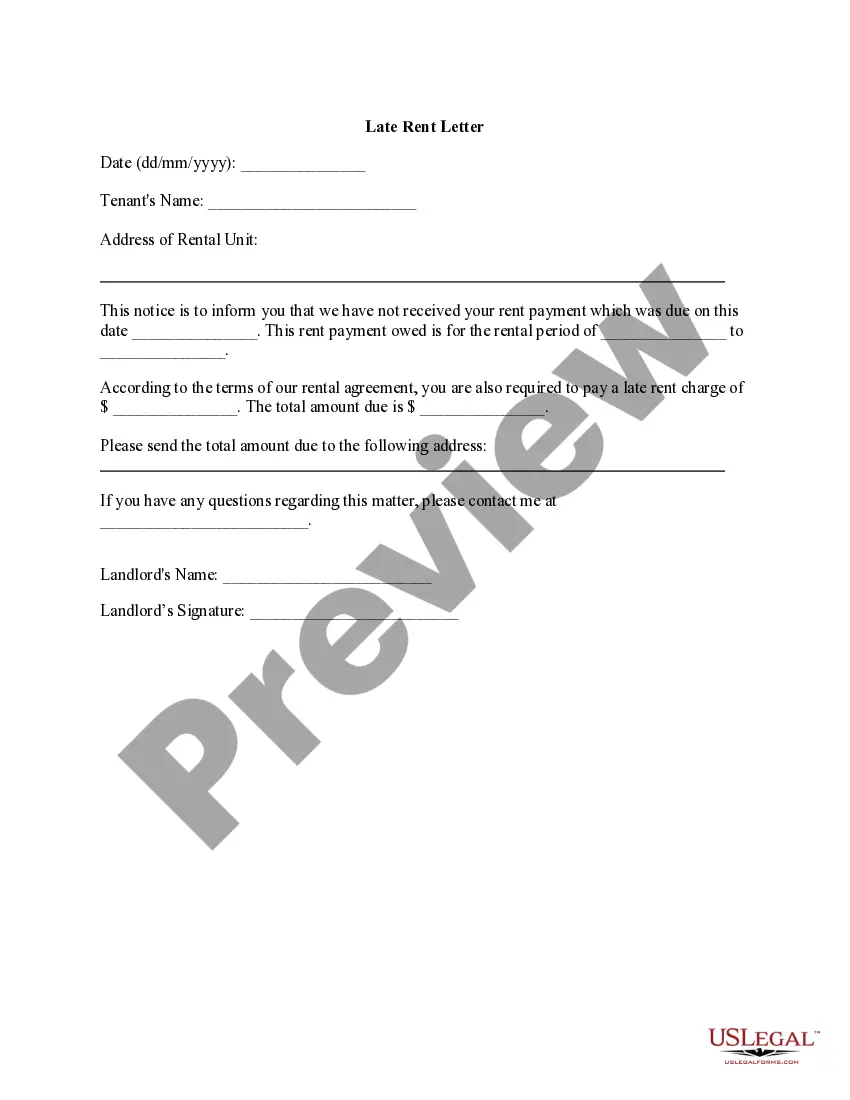
Clearly Outline Your Late Rent Procedure in the Lease. Late Rent Fees. Find Out Why Your Tenant's Rent is Late. Refer Your Tenant to Rent Assistance Programs. Make Rent Easier by Having Tenants Pay Rent Online.
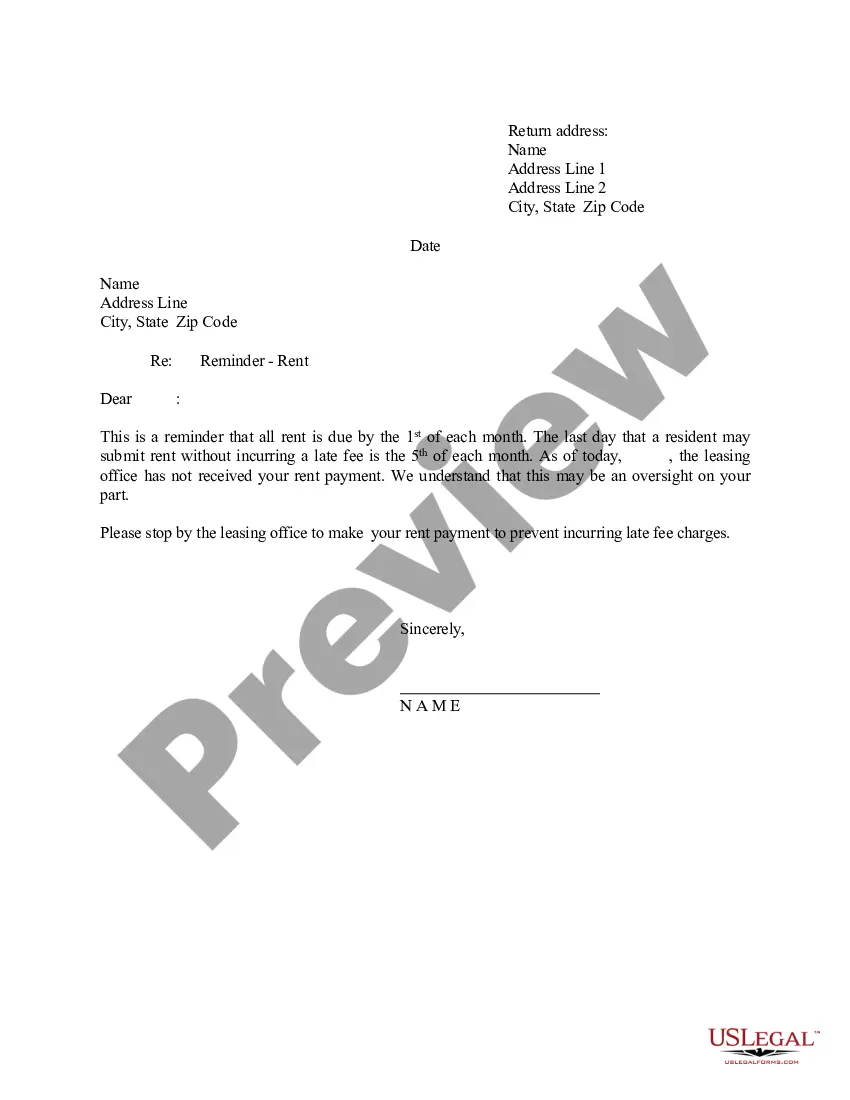
Grace periods are quite common, usually varying between three and five days. Grace periods provide tenants extra time to pay rent before the landlord can legally charge a late fee.
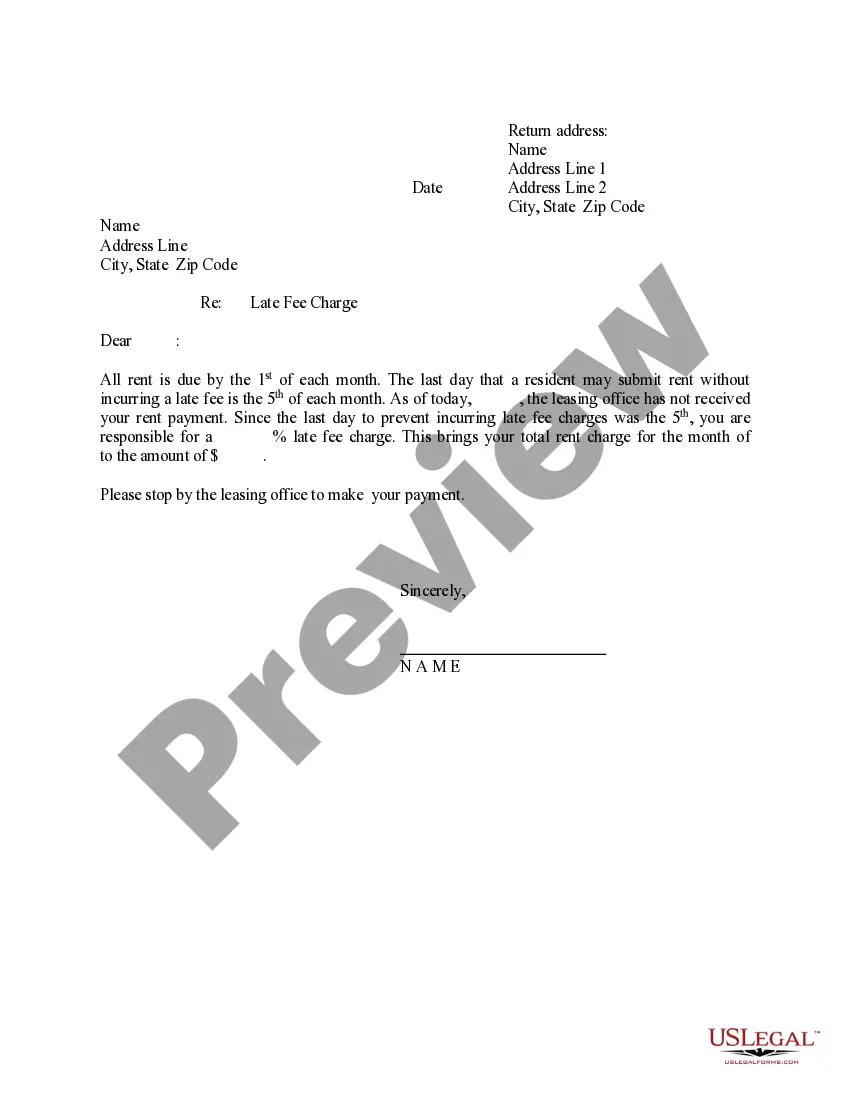
Late fees Most rental agreements include a late fee clause. You might have to pay a late fee if you're even a few minutes past the due date. Or, you might have a grace period of a day or two.If you pay on the second, you won't have to pay a late fee, but your payment may still be flagged as a late payment.
Grace periods are quite common, usually varying between three and five days. Grace periods provide tenants extra time to pay rent before the landlord can legally charge a late fee.
Late fees add up and missing a rent payment can significantly impact your credit score. By law, your rent is due on the date that's specified in your lease. There's usually a grace period of five days, so if you pay your bill just a few days late, you probably don't need to worry about it.
Although landlords won't fine tenants during 'grace periods', the payment of the rent is still considered legally delinquent. Normally, rent should be paid on or before the established due date. This is a clause that is included in all lease agreements.
The most your landlord can charge as a late fee is 5% of your monthly rent. For example, if your monthly rent is $1,000, the landlord can charge you up to $50 as a late fee. If you receive a rent subsidy, you may not pay all of your rent yourself.