Oregon Warning of Default on Commercial Lease
Overview of this form
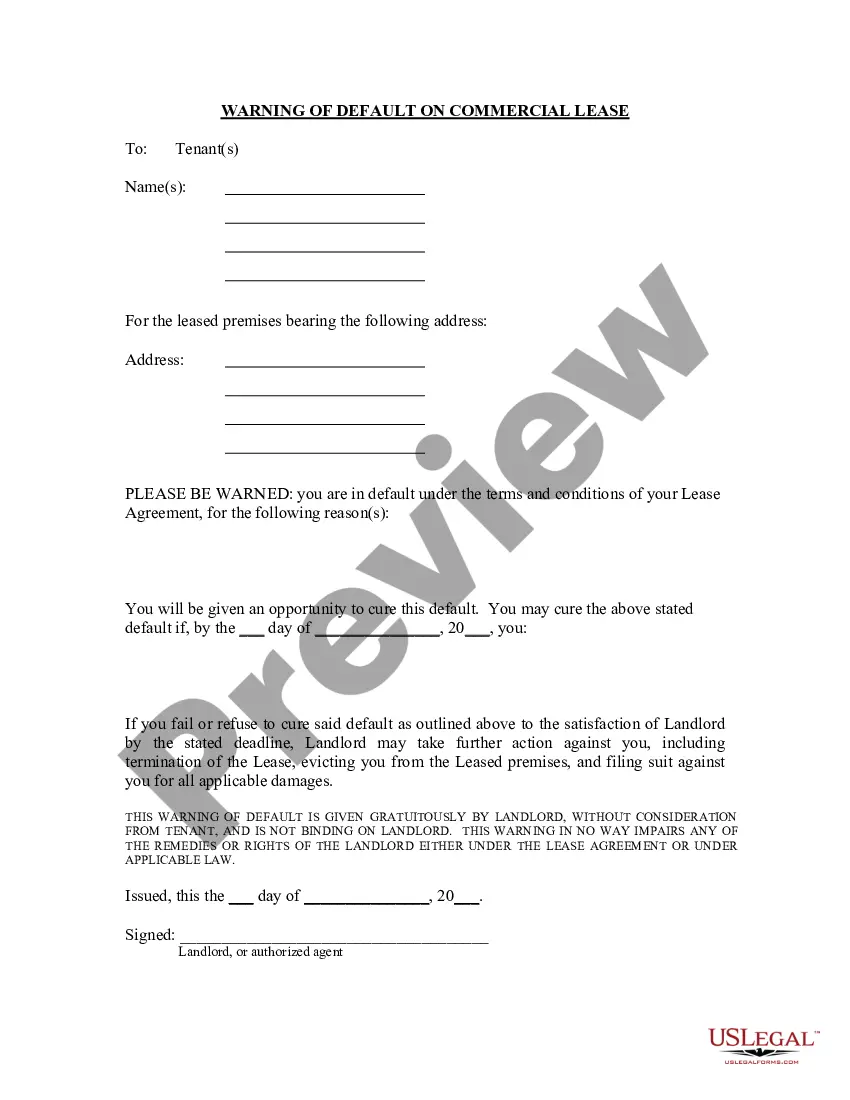
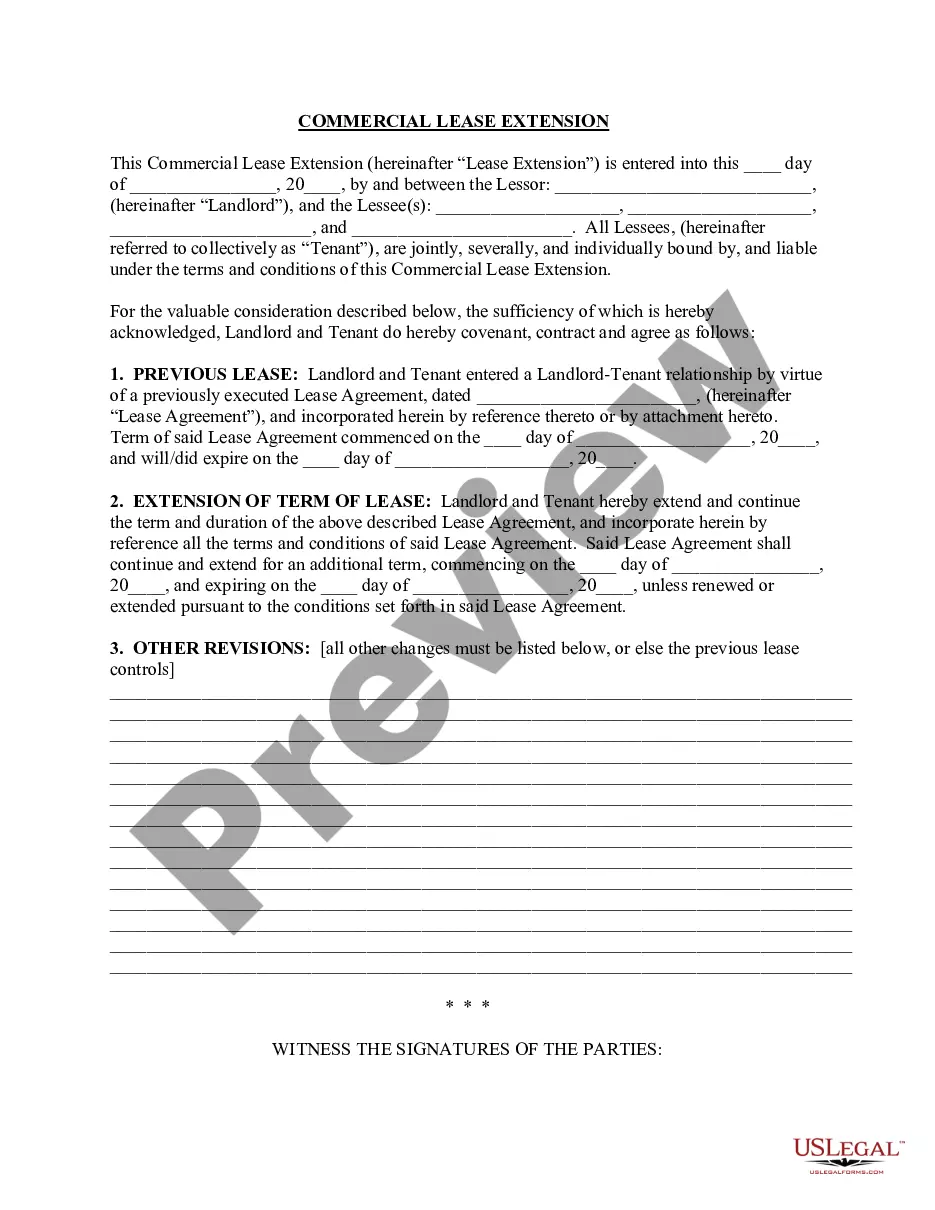
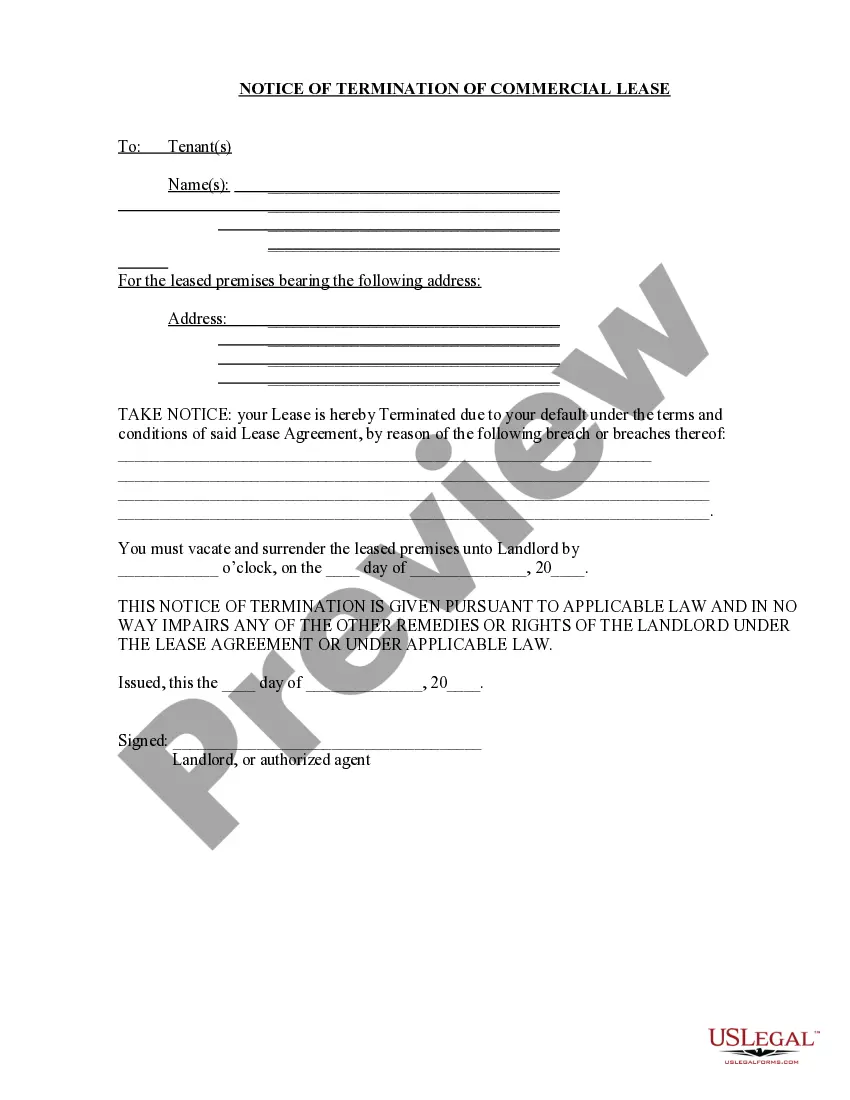
The Warning of Default on Commercial Lease is a formal letter issued by a landlord to inform a tenant that they are at risk of being declared in default under their lease agreement. This form serves as a notification that specific conditions, such as late rent payments, must be addressed promptly to avoid further legal action. Unlike other notices, the Warning of Default emphasizes the potential consequences of failing to comply with lease terms, specifically concerning rent payments and financial obligations.
Key parts of this document
- Warning statement notifying the tenant of potential default.
- Space to fill in the date of issue for legal documentation.
- Signature line for the landlord or authorized agent to validate the notice.
- Clarification that the warning is not legally binding on the landlord.
- Reference to the rights and remedies available to the landlord under the lease and applicable law.

Common use cases
This form should be used when a landlord suspects that a tenant has failed to meet the terms of their commercial lease agreement, especially regarding timely rent payments. It acts as a formal warning before taking further action, such as pursuing eviction or utilizing a security deposit. This is an essential step in landlord-tenant relations to ensure the tenant is aware of their obligations and the potential consequences of not addressing any defaults.
Who this form is for
- Landlords managing commercial properties who need to address tenant defaults.
- Property management companies acting on behalf of landlords.
- Legal professionals assisting landlords in the pre-eviction process.
How to prepare this document
- Fill in the date the warning is issued.
- Clearly state the tenant's name and address for proper identification.
- Specify the reasons for the warning, such as the nature of the default (e.g., overdue rent).
- Include the signature of the landlord or authorized agent to make the notice official.
- Keep a copy of the warning for your records and ensure proper delivery to the tenant.
Does this form need to be notarized?
This form does not typically require notarization unless specified by local law. However, it is essential to verify local regulations in your area to ensure compliance.
Get your form ready online
Our built-in tools help you complete, sign, share, and store your documents in one place.
Make edits, fill in missing information, and update formatting in US Legal Forms—just like you would in MS Word.
Download a copy, print it, send it by email, or mail it via USPS—whatever works best for your next step.
Sign and collect signatures with our SignNow integration. Send to multiple recipients, set reminders, and more. Go Premium to unlock E-Sign.
If this form requires notarization, complete it online through a secure video call—no need to meet a notary in person or wait for an appointment.
We protect your documents and personal data by following strict security and privacy standards.

Make edits, fill in missing information, and update formatting in US Legal Forms—just like you would in MS Word.

Download a copy, print it, send it by email, or mail it via USPS—whatever works best for your next step.

Sign and collect signatures with our SignNow integration. Send to multiple recipients, set reminders, and more. Go Premium to unlock E-Sign.

If this form requires notarization, complete it online through a secure video call—no need to meet a notary in person or wait for an appointment.

We protect your documents and personal data by following strict security and privacy standards.
Common mistakes
- Failing to provide a clear description of the default situation.
- Not dating the warning notice, which can lead to confusion on timelines.
- Ignoring state laws regarding the method of delivery to the tenant.
- Omitting the landlord's signature, rendering the notice unofficial.
Benefits of using this form online
- Conveniently download and customize the form to meet your specific situation.
- Edit the document as needed before finalizing it for delivery.
- Access forms drafted by licensed attorneys, ensuring legal compliance.
- Quick access can help improve response times with tenants.
Legal use & context
- The Warning of Default on Commercial Lease helps establish a record of communication between landlord and tenant regarding defaults.
- This notice can be used as evidence if eviction proceedings are necessary later.
- It keeps landlords compliant with notice requirements before taking legal action.
Main things to remember
- The Warning of Default on Commercial Lease alerts tenants to potential lease violations.
- Use this form to maintain the formal landlord-tenant communication procedure.
- Understanding and following legal processes helps prevent unnecessary eviction actions.
Looking for another form?
Form popularity
FAQ
A lease is automatically void when it is against the law, such as a lease for an illegal purpose. In other circumstances, like fraud or duress, a lease can be declared void at the request of one party but not the other.
If the landlord accepts a surrender (whether impliedly or deliberately), the tenant will be released from liability for paying rent and performing lease covenants in the future. The tenant will still be liable for rent already due and any other existing breaches.
Unless your lease says otherwise simply breaking it is not an option. This is known as "unilateral breach" and typical penalties can include: Paying the rent - One way or another, if you walk away from your lease and no one else rents the apartment then you will owe the landlord this money.
Paying the remainder of the rent still owed on the lease in full; Paying a specified amount of liquidated damages as outlined in the contract terms; Paying an additional amount of punitive damages, dependent on local state laws; and/or.
Surrender the Lease. One option for getting out of your commercial lease early is to approach your landlord and request to surrender the lease. Early Termination Clause. Some lease agreements will contain an early termination clause (commonly called a break clause). Assignment of Lease. Subletting the Premises. Licensing.
For example, the lease may provide that in case of default, the landlord can recover late fees and interest. If the lease is a net lease, it may provide for the landlord to recover such things as property taxes, insurance, utilities, maintenance and repairs.
One option for getting out of your commercial lease early is to approach your landlord and request to surrender the lease. A surrender of lease is when both you and the landlord agree to end the lease.However, if the landlord agrees to surrender your lease, you will often have to pay their legal costs.
Don't just walk away A lease is a binding contract.Under the law in some states (e.g., New York), there's acceleration of payments, meaning the landlord can immediate demand all the rent due under the remainder of the lease. In any state, a landlord can sue for damages (the unpaid rent, legal fees, etc.).