Pennsylvania Warranty Deed from Corporation to Individual
What this document covers
The Warranty Deed from Corporation to Individual is a legal document used to transfer property ownership from a corporation (the Grantor) to an individual (the Grantee). This type of warranty deed ensures that the property is conveyed with a guarantee of clear title, meaning the Grantor promises that the property is free from any encumbrances, unless stated otherwise. This form is distinct from other types of deeds, such as quitclaim deeds, as it includes warranties that protect the Grantee's rights to the property.
Key parts of this document
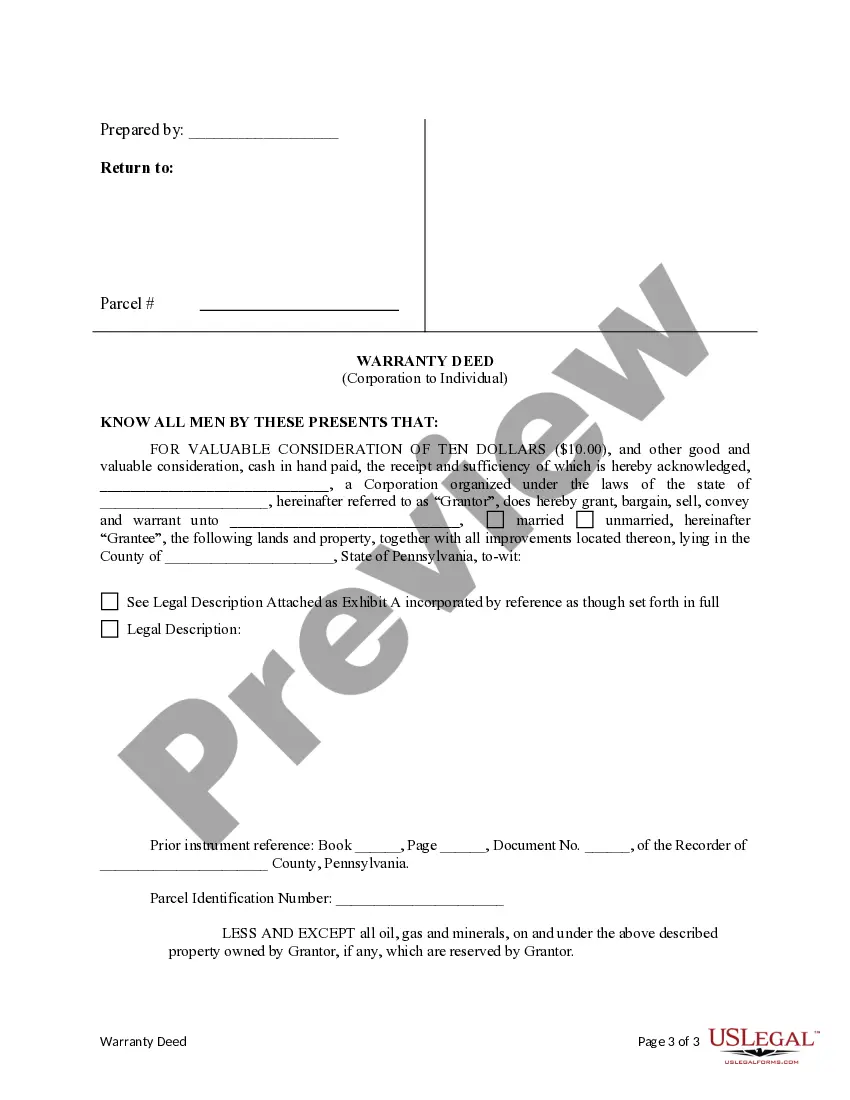
- Identification of the Grantor (corporation) and Grantee (individual).
- Description of the property being transferred.
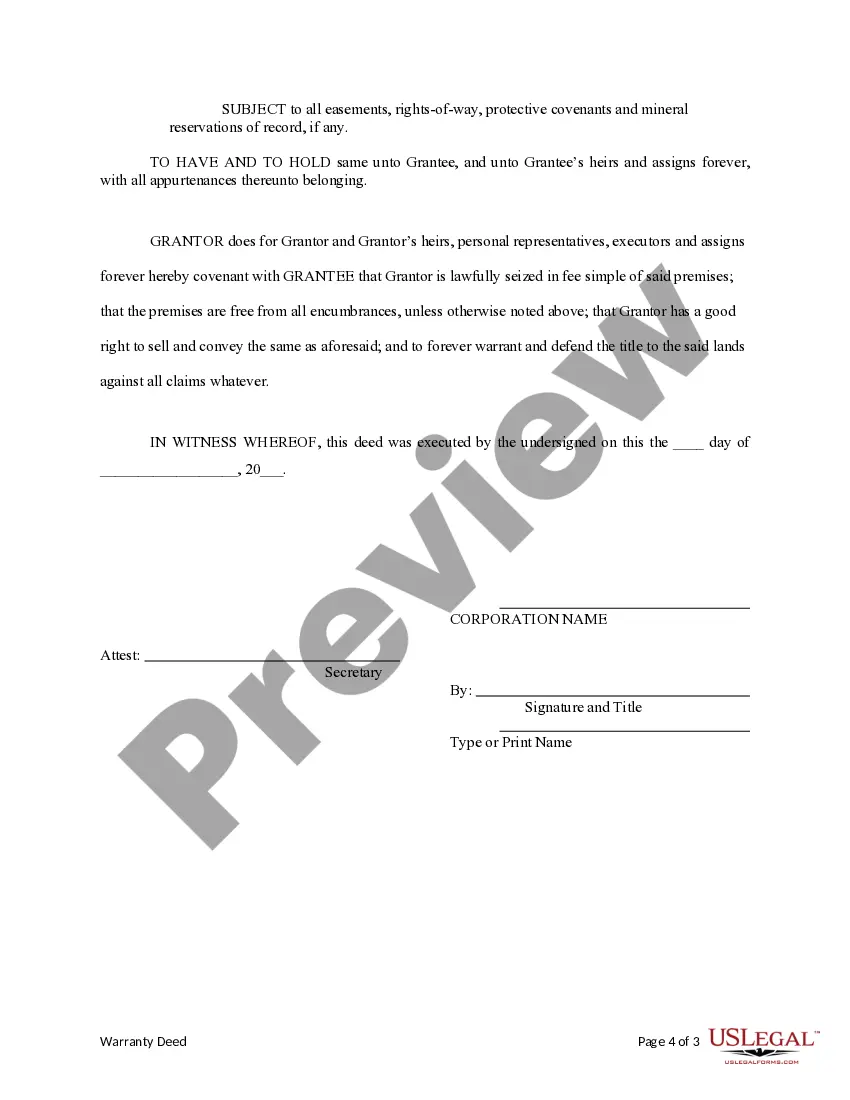
- Clause reserving oil, gas, and mineral rights, if applicable.
- Covenant of seizin, ensuring the Grantor has the right to sell the property.
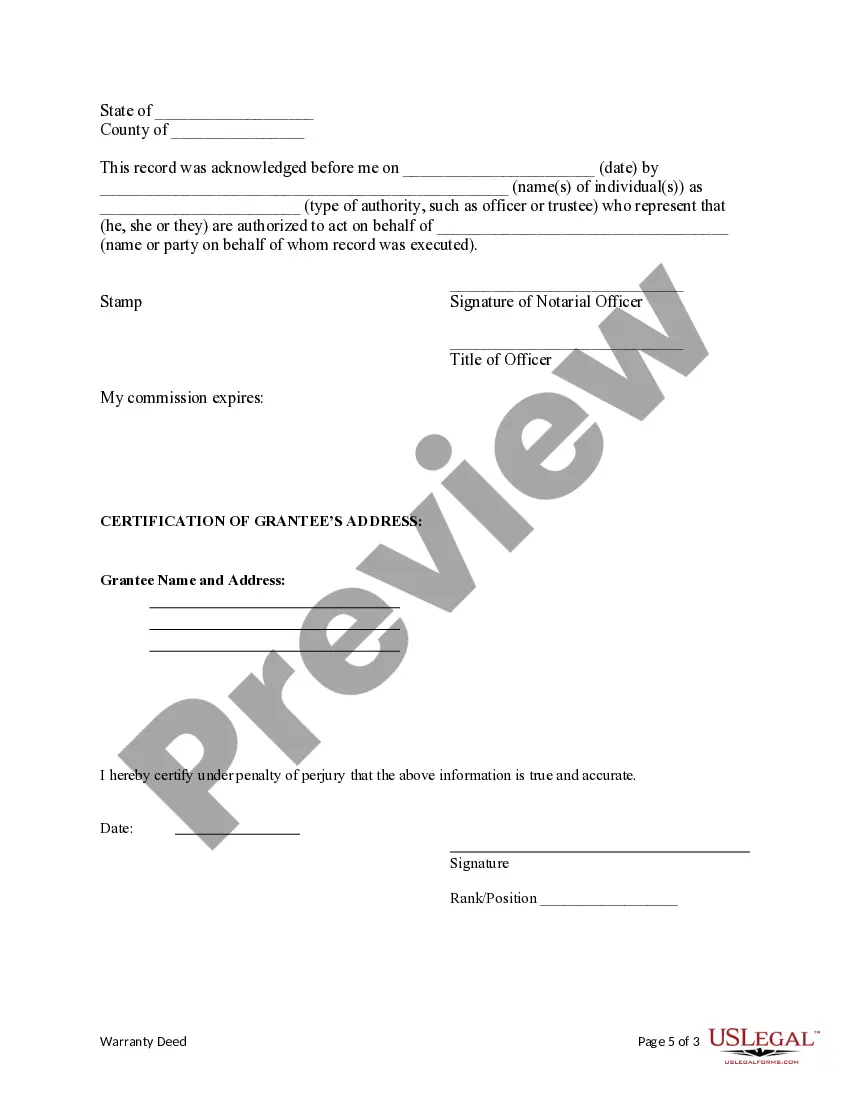
- Signatures of the Grantor with the date of execution.
- Legal description of the property attached as Exhibit A.



When this form is needed
This form should be used when a corporation intends to transfer its property to an individual. Common scenarios include real estate transactions where a business is selling a property or a corporation is giving property as part of a distribution to a shareholder. It can also be applicable in estate planning situations where corporate assets are being moved to an individual for ease of management or ownership.
Who needs this form
This form is ideal for the following individuals or entities:
- Corporations looking to transfer property ownership to an individual.
- Individuals receiving property from a corporation.
- Real estate professionals involved in transactions between corporations and individuals.
- Legal representatives handling property transfers on behalf of a corporation.
How to complete this form
- Identify the Grantor (corporation) and Grantee (individual) with full legal names.
- Provide a detailed description of the property being transferred.
- Specify any reserved rights, such as oil, gas, and mineral rights, if applicable.
- Enter the date of execution and ensure all required signatures are obtained.
- Attach the legal property description as Exhibit A, if necessary.
Does this form need to be notarized?
This form must be notarized to be legally valid. US Legal Forms provides secure online notarization powered by Notarize, allowing you to complete the process through a verified video call.
Get your form ready online
Our built-in tools help you complete, sign, share, and store your documents in one place.
Make edits, fill in missing information, and update formatting in US Legal Forms—just like you would in MS Word.
Download a copy, print it, send it by email, or mail it via USPS—whatever works best for your next step.
Sign and collect signatures with our SignNow integration. Send to multiple recipients, set reminders, and more. Go Premium to unlock E-Sign.
If this form requires notarization, complete it online through a secure video call—no need to meet a notary in person or wait for an appointment.
We protect your documents and personal data by following strict security and privacy standards.

Make edits, fill in missing information, and update formatting in US Legal Forms—just like you would in MS Word.

Download a copy, print it, send it by email, or mail it via USPS—whatever works best for your next step.

Sign and collect signatures with our SignNow integration. Send to multiple recipients, set reminders, and more. Go Premium to unlock E-Sign.

If this form requires notarization, complete it online through a secure video call—no need to meet a notary in person or wait for an appointment.

We protect your documents and personal data by following strict security and privacy standards.
Avoid these common issues
- Failing to provide a complete and accurate legal description of the property.
- Not specifying any exceptions to the warranty, such as reserved mineral rights.
- Omitting the date of execution or signatures from the Grantor.
- Using the form without verifying compliance with local laws.
Why complete this form online
- Convenient access to legal forms at any time from your computer.
- Editability allows for easy adjustments to meet specific needs.
- Reliability, with forms drafted by licensed attorneys to ensure compliance with legal standards.
Summary of main points
- The Warranty Deed from Corporation to Individual ensures a legal property transfer from a corporation to an individual.
- Key components include identification of parties, property description, and reservation clauses.
- This form is specific to the laws of Pennsylvania and should follow local guidelines.
- Ensure all details are complete to avoid common mistakes that may invalidate the deed.
Looking for another form?
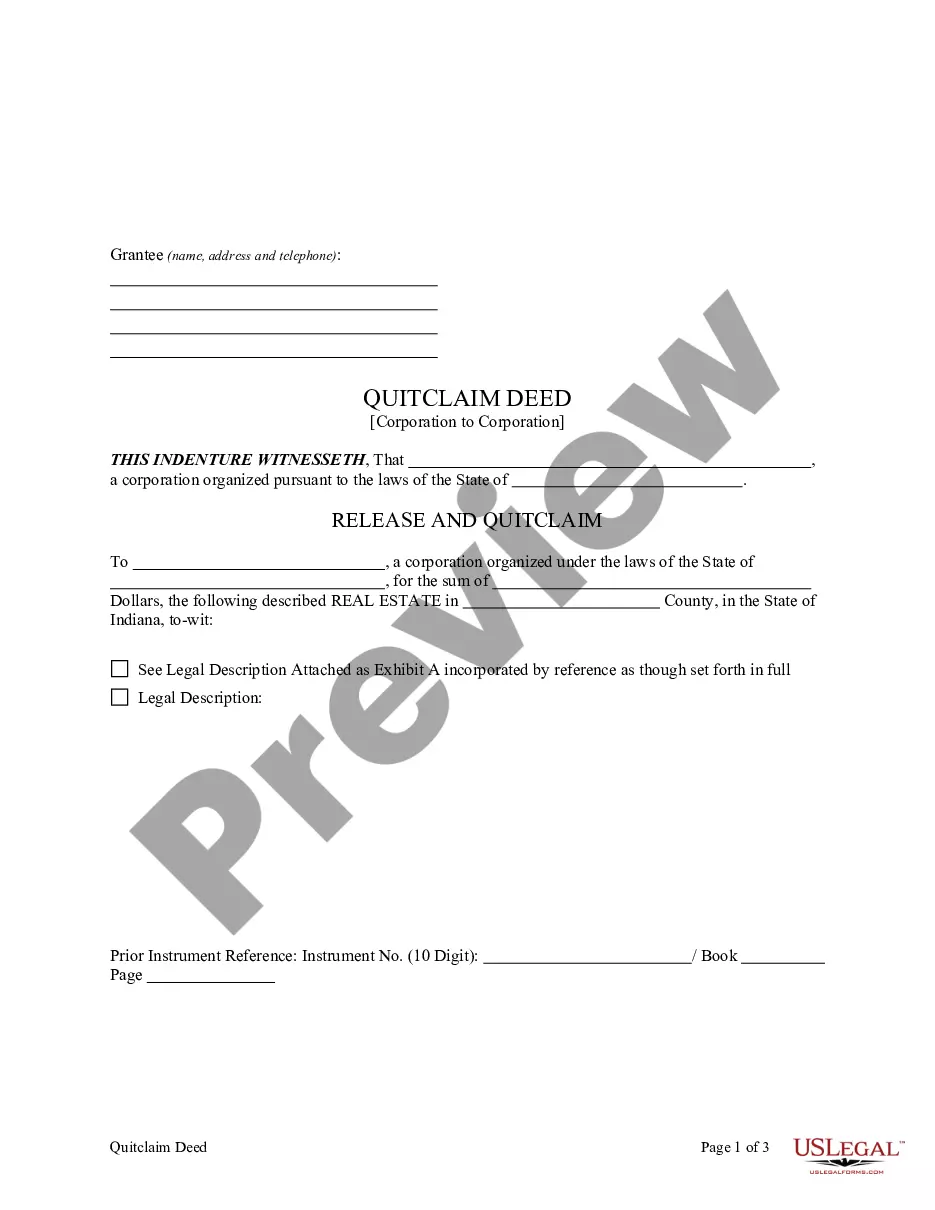
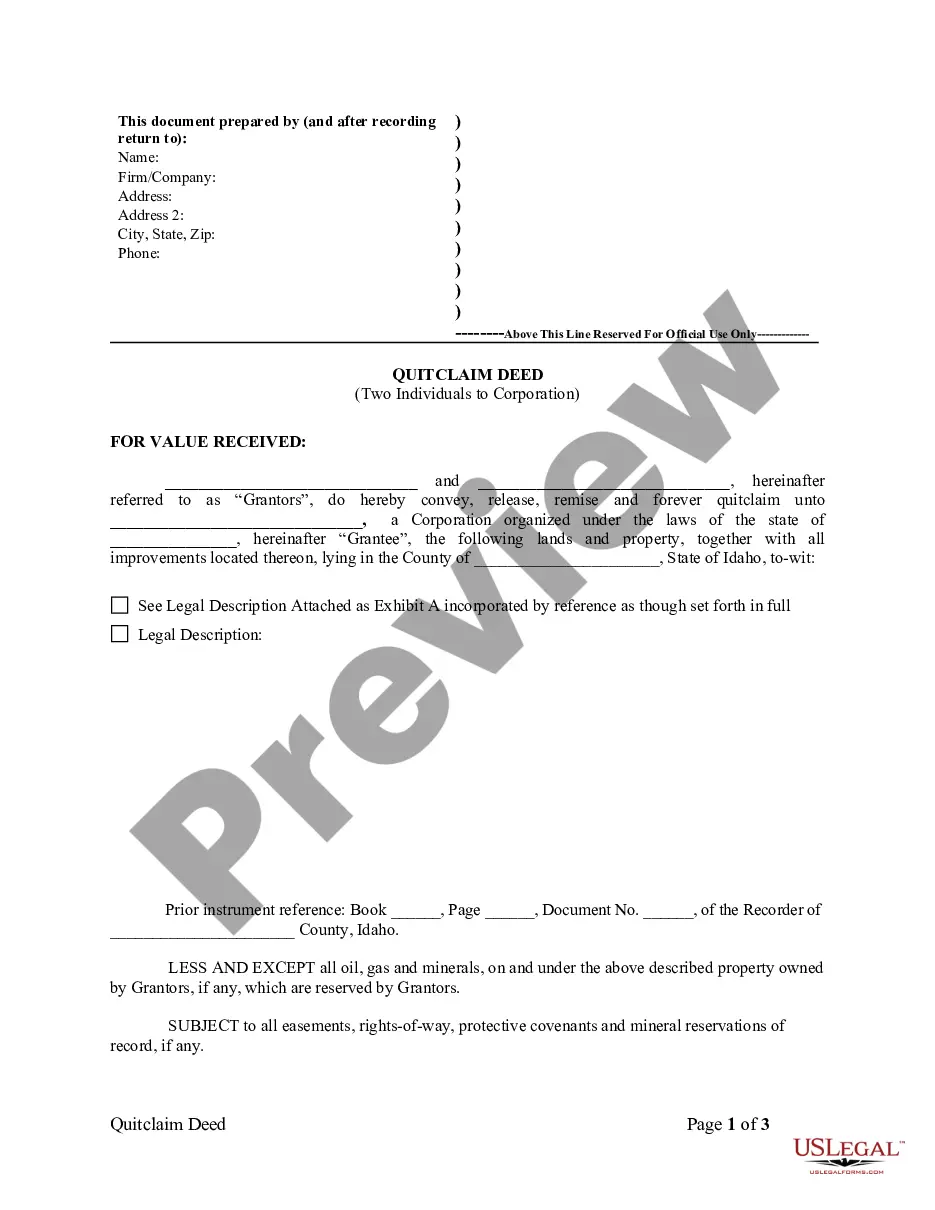
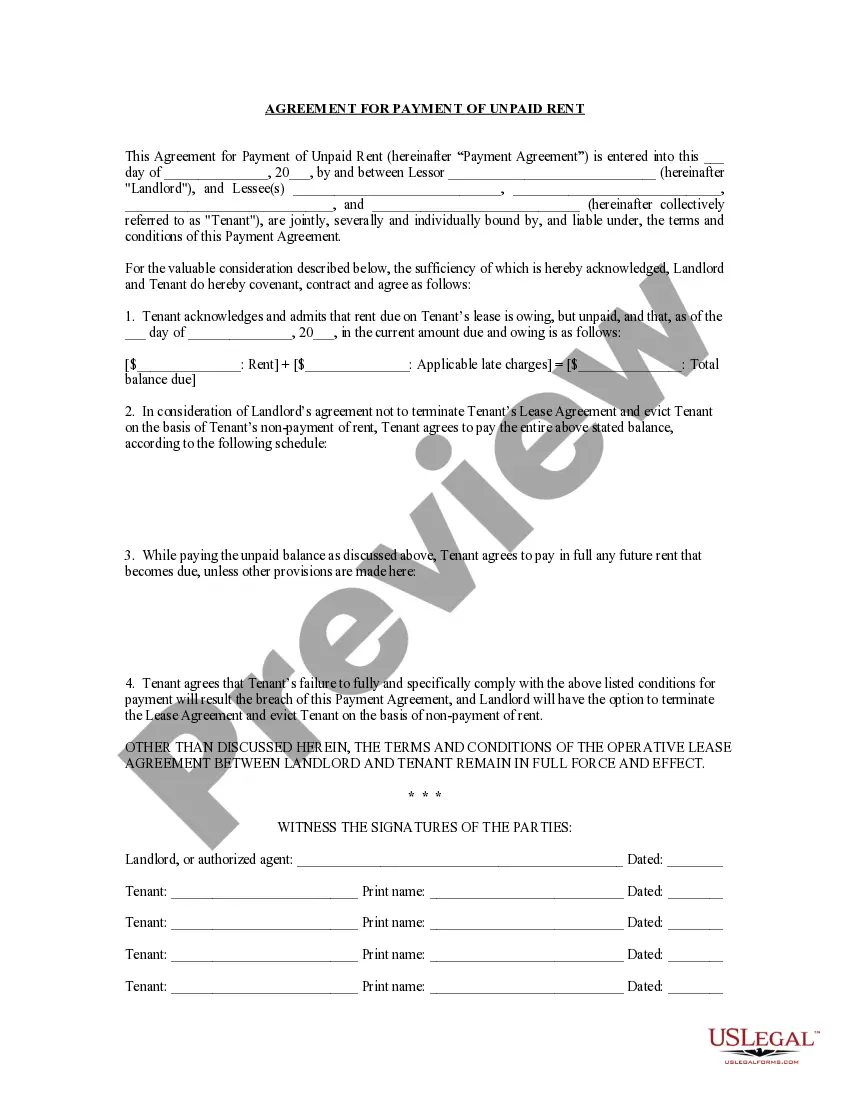
Form popularity
FAQ
Pennsylvania realty transfer tax is imposed at a rate of 1 percent on the value of real estate (including contracted-for improvements to property) transferred by deed, instrument, long-term lease or other writing.
Retrieve your original deed. Get the appropriate deed form. Draft the deed. Sign the deed before a notary. Record the deed with the county recorder. Obtain the new original deed.
To transfer property in Pennsylvania, you'll need to prepare and execute a deed and record it in the county where the property is located. If the transfer was in exchange for money, you'll have to pay transfer tax.
If you give your house to your children, the tax basis will be $150,000.PA INHERITANCE TAX ISSUES: In Pennsylvania, there is no gift tax. However, to avoid PA Inheritance Taxes (the rate is 4.5% for assets passed to children or grandchildren), you must live at least one year from the time the gift was made.
To transfer property in Pennsylvania, you'll need to prepare and execute a deed and record it in the county where the property is located. If the transfer was in exchange for money, you'll have to pay transfer tax.
The State of Pennsylvania charges 1% of the sales price and the municipality and school district USUALLY charge 1% between them for a total of 2% (i.e. 2% X 100,000 = $2,000). By custom, the buyer and seller split the cost. 1% to buyer, 1% to seller; however payment is dictated by the sales contract.
The name and address of the seller (called the grantor) The name and address of the buyer (called the grantee) A legal description of the property (found on the previous deed) A statement that the grantor is transferring the property to the grantee.
A: A "special warranty" deed is the type of deed used most frequently in Pennsylvania real estate sales. It essentially represents that the seller did nothing to weaken the status of title from the time that he/she received it.A "quit-claim" deed is a deed that contains no warranties at all.