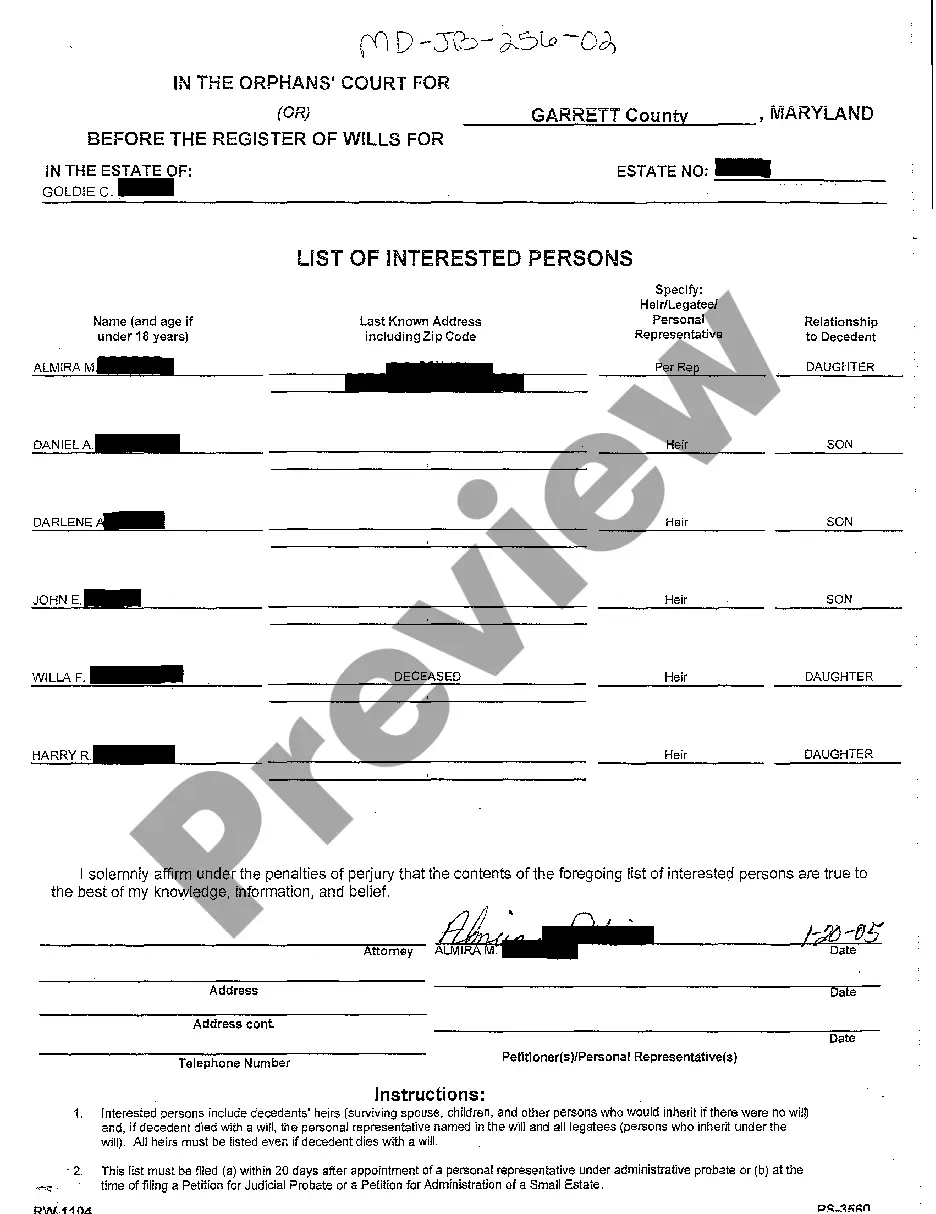
Pennsylvania Owner's or Seller's Affidavit of No Liens
Understanding this form
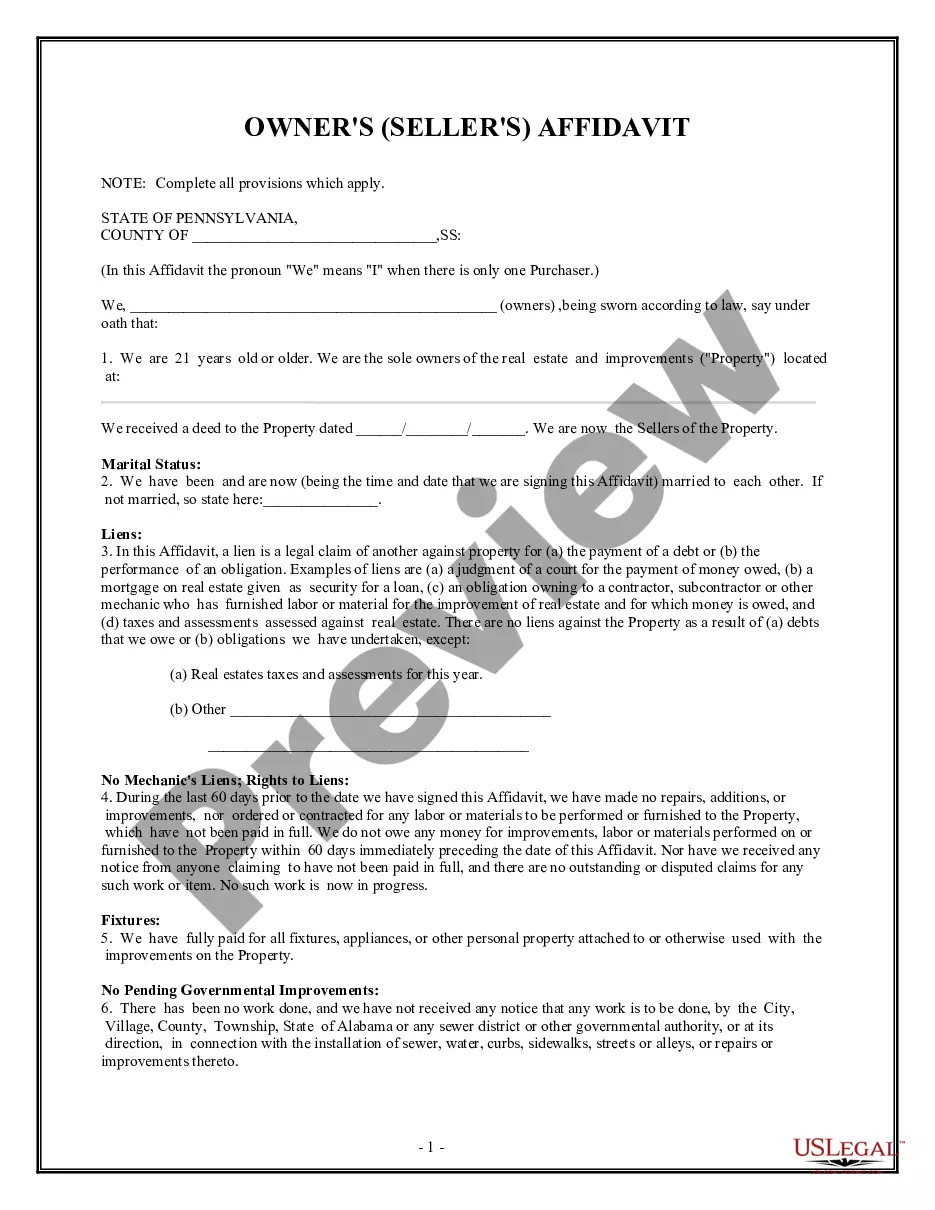
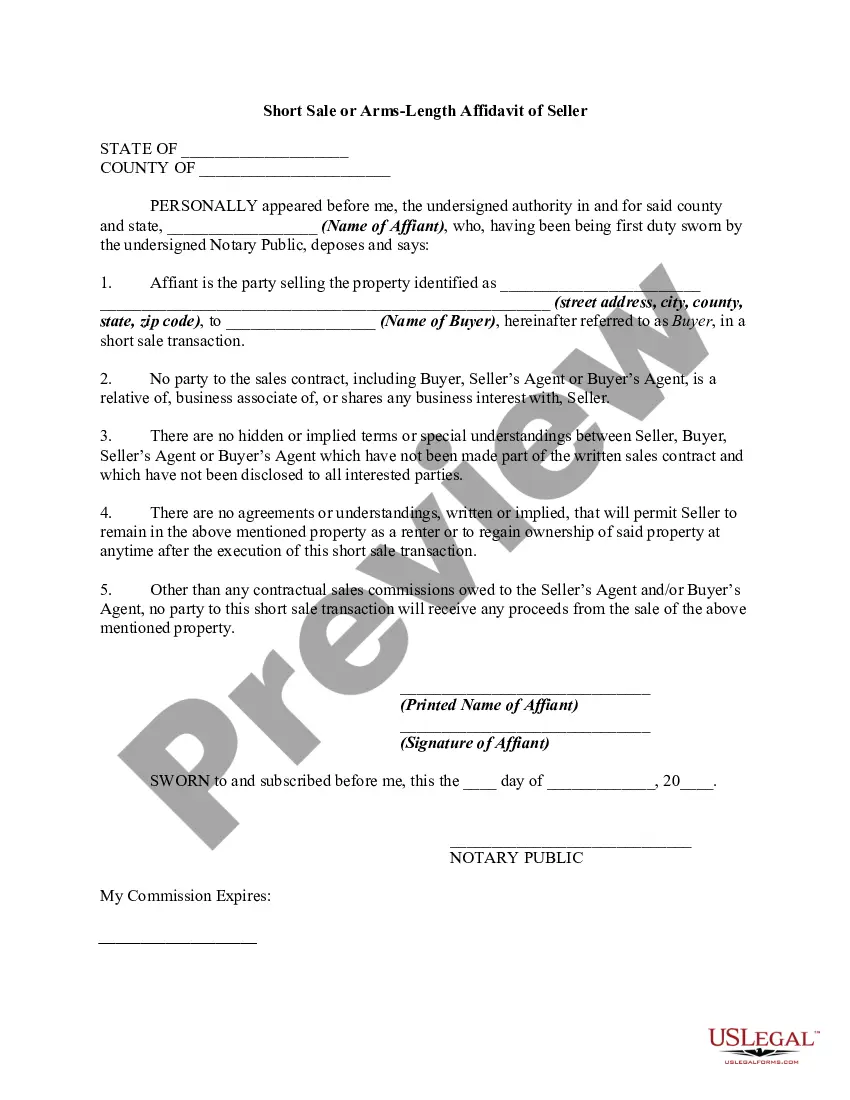
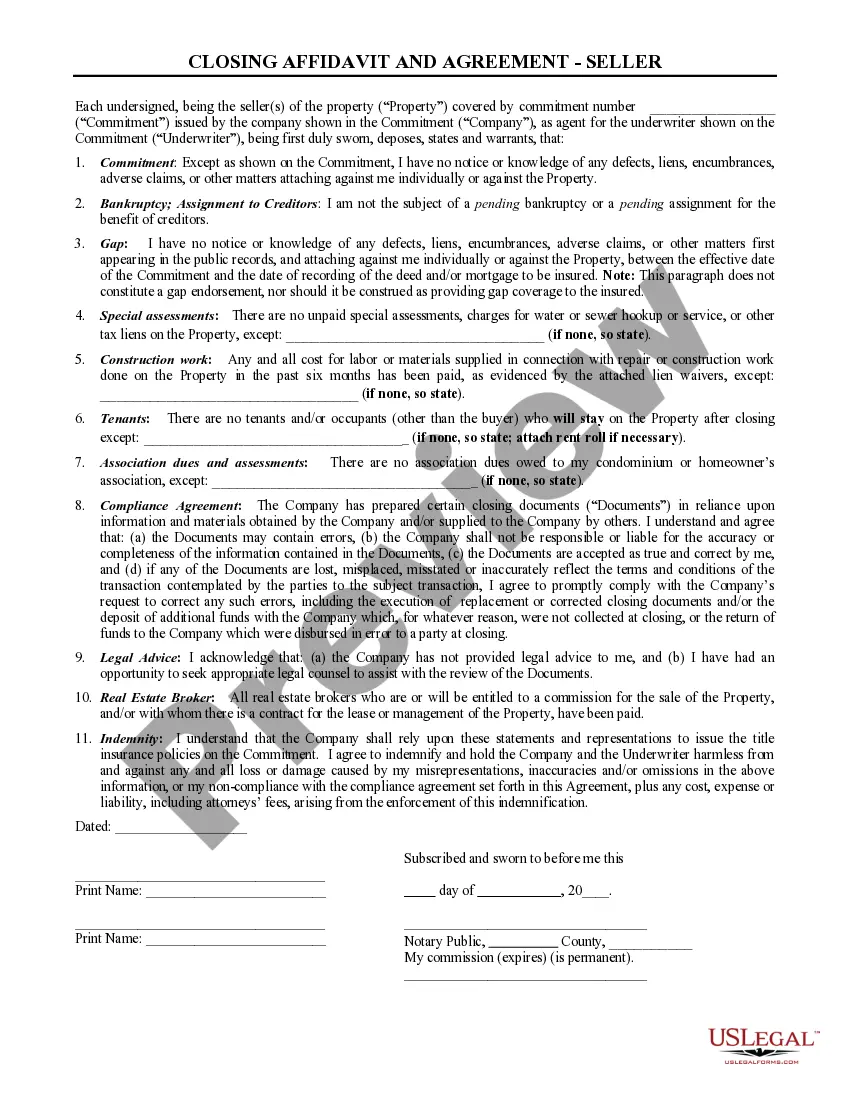
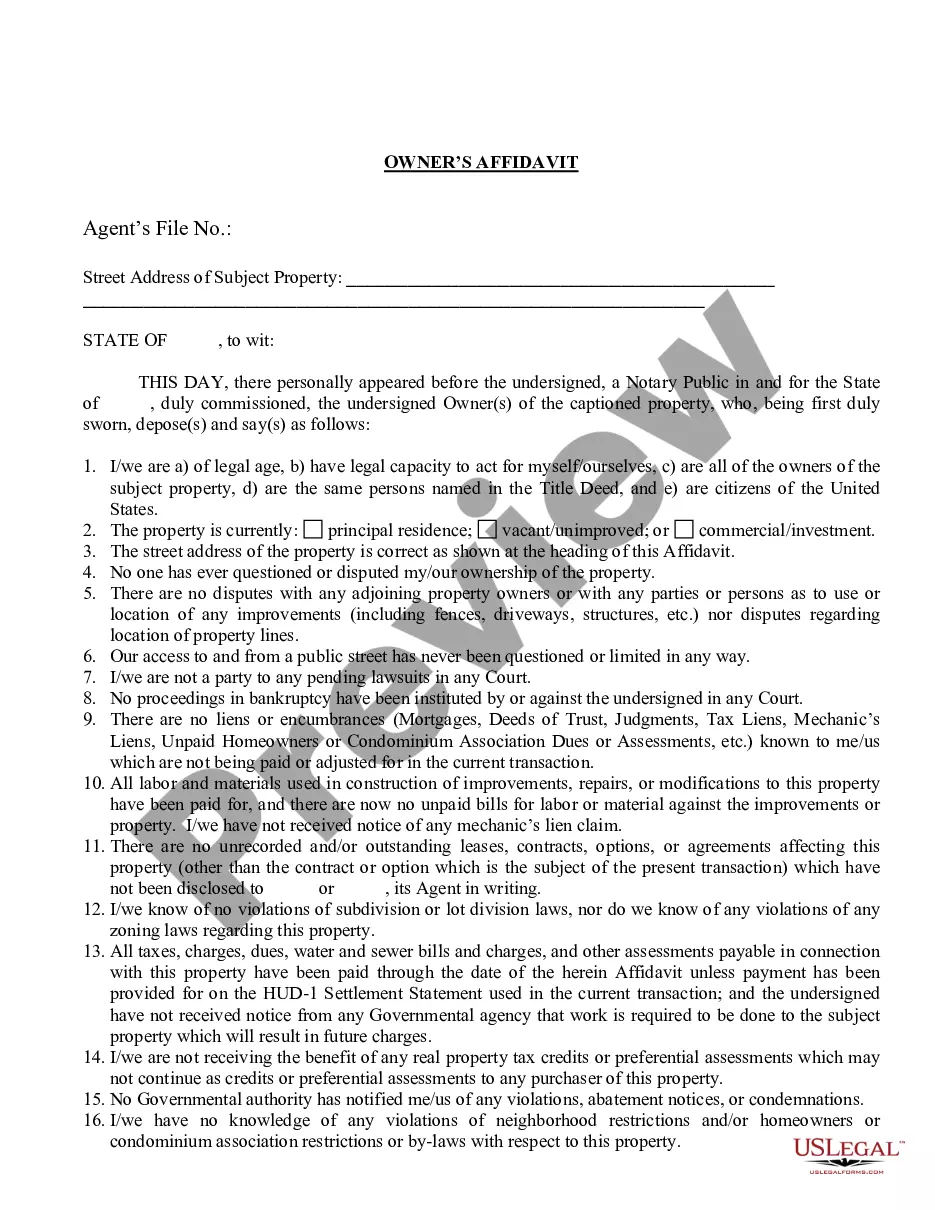
The Owner's or Seller's Affidavit of No Liens is a legal document that sellers use during the closing of a real estate transaction. This affidavit certifies that the sellers are the rightful owners of the property, confirms there are no outstanding liens, and provides assurances regarding any debts or obligations associated with the property. Unlike other forms, this affidavit is specifically intended to provide a clear verification of the property's status at the time of sale.
Main sections of this form
- Identification of the owners and property details.
- Certification of age and ownership of the property.
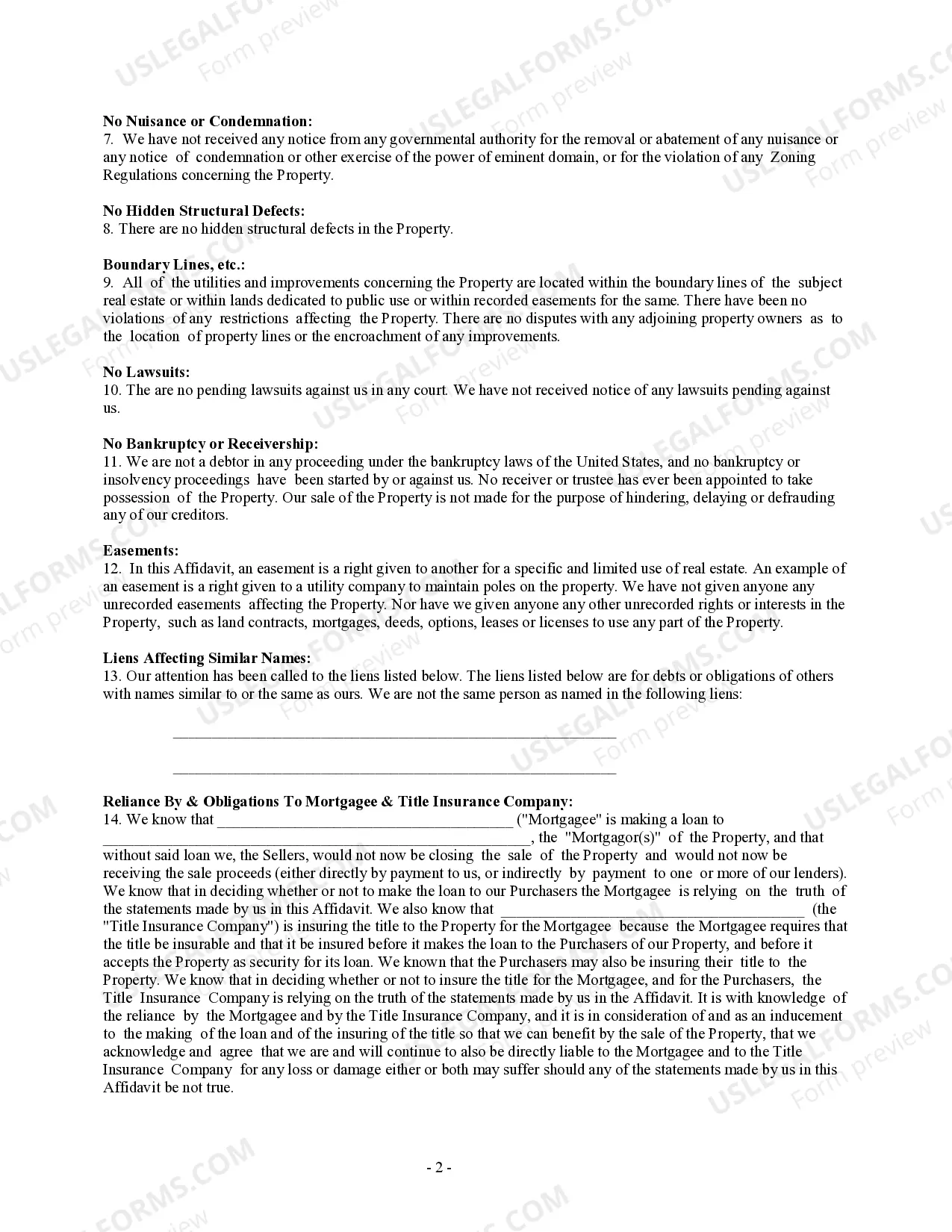
- Disclosure of any existing liens or claims against the property.
- Confirmation that no mechanic liens exist within the last 60 days.
- Statement regarding any pending improvements or governmental work affecting the property.
- A declaration about the absence of lawsuits or bankruptcy proceedings involving the sellers.

Situations where this form applies
This affidavit should be used at the closing of a real estate sale to ensure that the buyer receives a property that is free of liens. It is crucial when sellers want to confirm their ownership and the absence of any legal claims against the property, providing peace of mind to both the buyer and the involved lenders or title companies.
Who can use this document
- Property sellers or owners transferring ownership of real estate.
- Individuals involved in real estate transactions who need to certify the status of their property.
- Real estate agents who facilitate property sales.
How to prepare this document
- Identify the sellers and include their names and property details.
- Specify the date of the property deed and verify ownership status.
- Disclose any existing liens or obligations, avoiding any misrepresentation.
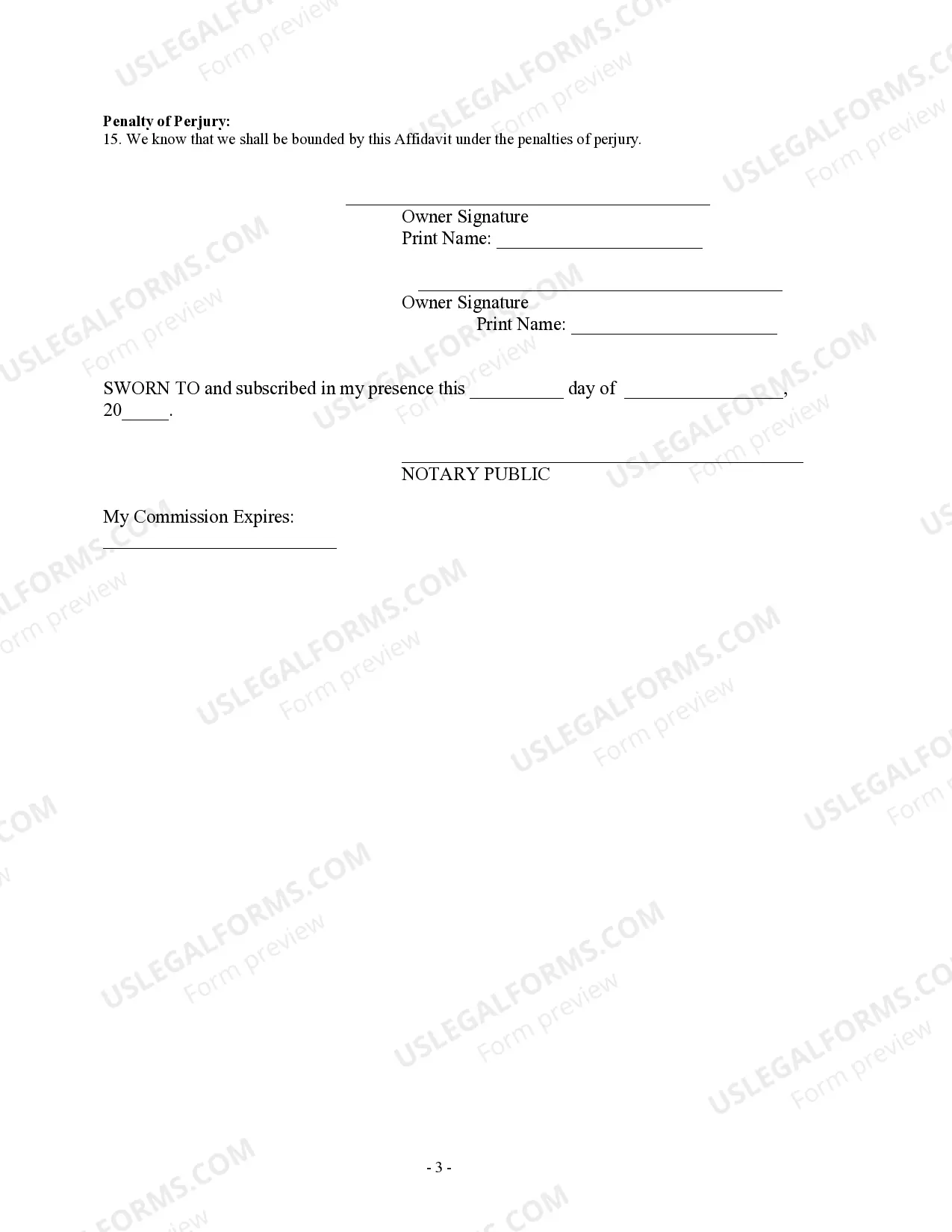
- Sign the affidavit in the presence of a notary public.
- Ensure all information provided is accurate and complete to avoid legal issues.
Notarization guidance
This document requires notarization to meet legal standards. US Legal Forms provides secure online notarization powered by Notarize, allowing you to complete the process through a verified video call, available 24/7.
Get your form ready online
Our built-in tools help you complete, sign, share, and store your documents in one place.
Make edits, fill in missing information, and update formatting in US Legal Forms—just like you would in MS Word.
Download a copy, print it, send it by email, or mail it via USPS—whatever works best for your next step.
Sign and collect signatures with our SignNow integration. Send to multiple recipients, set reminders, and more. Go Premium to unlock E-Sign.
If this form requires notarization, complete it online through a secure video call—no need to meet a notary in person or wait for an appointment.
We protect your documents and personal data by following strict security and privacy standards.

Make edits, fill in missing information, and update formatting in US Legal Forms—just like you would in MS Word.

Download a copy, print it, send it by email, or mail it via USPS—whatever works best for your next step.

Sign and collect signatures with our SignNow integration. Send to multiple recipients, set reminders, and more. Go Premium to unlock E-Sign.

If this form requires notarization, complete it online through a secure video call—no need to meet a notary in person or wait for an appointment.

We protect your documents and personal data by following strict security and privacy standards.
Typical mistakes to avoid
- Failing to complete all required sections of the affidavit.
- Providing inaccurate information about existing liens or obligations.
- Not having the affidavit notarized, if required by law.
- Signing the document without reviewing all content thoroughly.
Why use this form online
- Convenient access and instant download of the affidavit.
- Edit the document to fit your specific needs before finalizing.
- Reliable templates drafted by licensed attorneys ensure compliance with legal standards.
What to keep in mind
- The affidavit serves as a critical verification tool for real estate transactions.
- It confirms the absence of liens and legal issues that might affect the property.
- Proper completion and notarization are essential for legal enforceability.
- Consulting legal professionals is recommended to ensure compliance with state laws.
Looking for another form?
Form popularity
FAQ
Although affidavits are considered legal documents, anyone can draft one. As long as it is signed, witnessed, and notarized correctly, it will be valid. That means that you do not have to use a lawyer to create an affidavit.
Verification means a signed, written statement of fact supported by oath or affirmation or made subject to the penalties of 18 Pa. C.S. § 4904 (relating to unsworn falsification to authorities). If verification is required, notarization is not necessary.
I ____ (Applicant Name as per id proof), residing at _______(Address as per address proof) do solemnly affirm and stated as under: I am _____ and my name _______, appearing on the enclosed ID proof, is single name. My father's name is ________________.
Title the affidavit. First, you'll need to title your affidavit. Craft a statement of identity. The very next section of your affidavit is what's known as a statement of identity. Write a statement of truth. State the facts. Reiterate your statement of truth. Sign and notarize.
Although affidavits are considered legal documents, anyone can draft one. As long as it is signed, witnessed, and notarized correctly, it will be valid. That means that you do not have to use a lawyer to create an affidavit.
This is where an affidavit comes handy. It is a document that contains facts and information you believe to be true and becomes legal when you sign it in the presence of a legal authority known as a notary or an oaths commissioner.
Affidavits are mainly used in Court proceedings. They are a written alternative to a person attending Court to give oral evidence in the witness box. Affidavits can be used to evidence, or prove, a number of things. For example, they are often used for people to tell their 'story' to the Court.
Step 2: Write the purpose of the Affidavit or the Heading. Step 3: Write the name of the parties in case of an affidavit being filled in Court or Write the name of the Deponent in case of other affidavits. Step 4: Write the complete address of the deponent.
In the sentence, the person writing the statement must state that he or she is stating that the information is accurate. (Example: I, Jane Doe, solemnly swear that the contents of this document are true and correct, and that I agree to abide by the terms in this affidavit.)