South Dakota Agreement for Payment of Unpaid Rent
Overview of this form
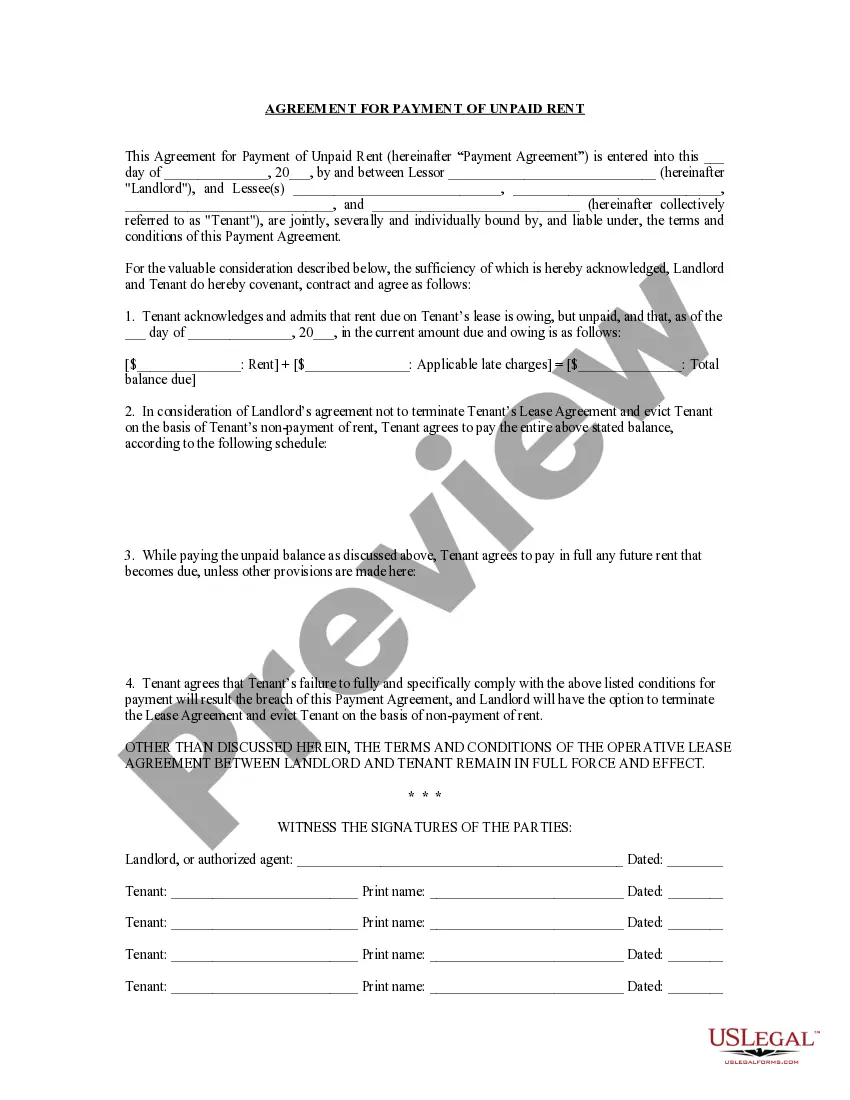
The Agreement for Payment of Unpaid Rent is a legal document designed to facilitate an agreement between landlords and tenants regarding overdue rent payments. This form outlines a structured repayment plan, ensuring that tenants can pay their overdue rent while landlords agree to avoid eviction. Unlike standard lease agreements, this Payment Agreement specifically addresses past due amounts and establishes clear terms for repayment that comply with state law.
What’s included in this form
- Identification of parties involved: Includes spaces for landlord and tenant names.
- Details of unpaid rent: Specifies the amount of unpaid rent, including applicable late charges.
- Agreement terms: Outlines the repayment schedule and obligations of both parties.
- Signature section: Provides space for all parties to sign and date the agreement.
- Retention of original lease: Clarifies that original lease terms remain in effect.

Situations where this form applies
This agreement is beneficial in situations where a tenant has fallen behind on rent payments, and the landlord wishes to arrange a structured repayment plan without resorting to eviction. Use this form when you need a formal understanding on how overdue rent will be settled, particularly if both parties prefer to maintain the rental relationship while resolving payment issues.
Who this form is for
- Landlords who want to negotiate a payment plan for overdue rent.
- Tenants who are unable to pay their rent on time and seek to avoid eviction.
- Property managers acting on behalf of landlords in managing overdue rent situations.
Steps to complete this form
- Identify the involved parties by filling in the landlord and tenant names.
- Specify the date the agreement is entered into.
- Detail the total amount of unpaid rent, including any late charges.
- Outline the repayment terms, including any deadlines for payments.
- Have all parties sign and date the agreement to validate it.
Does this form need to be notarized?
This form does not typically require notarization unless specified by local law. However, having the agreement notarized can add an extra layer of authenticity and may be beneficial in certain legal contexts.
Get your form ready online
Our built-in tools help you complete, sign, share, and store your documents in one place.
Make edits, fill in missing information, and update formatting in US Legal Forms—just like you would in MS Word.
Download a copy, print it, send it by email, or mail it via USPS—whatever works best for your next step.
Sign and collect signatures with our SignNow integration. Send to multiple recipients, set reminders, and more. Go Premium to unlock E-Sign.
If this form requires notarization, complete it online through a secure video call—no need to meet a notary in person or wait for an appointment.
We protect your documents and personal data by following strict security and privacy standards.

Make edits, fill in missing information, and update formatting in US Legal Forms—just like you would in MS Word.

Download a copy, print it, send it by email, or mail it via USPS—whatever works best for your next step.

Sign and collect signatures with our SignNow integration. Send to multiple recipients, set reminders, and more. Go Premium to unlock E-Sign.

If this form requires notarization, complete it online through a secure video call—no need to meet a notary in person or wait for an appointment.

We protect your documents and personal data by following strict security and privacy standards.
Avoid these common issues
- Failing to include all tenant names if multiple individuals are involved.
- Not specifying the complete amount of unpaid rent and late charges.
- Leaving out repayment deadlines, which can lead to disputes later.
- Not obtaining signatures from all involved parties, making the agreement unenforceable.
Why use this form online
- Convenient access to download and fill out the form at any time.
- Editable fields allow for personalized adjustments to meet specific needs.
- Reliability of professionally drafted documents ensures legal compliance.
- Time-saving compared to drafting a new agreement from scratch.
Legal use & context
- This agreement is legally binding, protecting both landlord and tenant rights.
- It provides a clear framework for repayment, which can help avoid future disputes.
What to keep in mind
- This Agreement for Payment of Unpaid Rent facilitates a structured payment plan for overdue rent.
- All parties must understand and agree to the terms to avoid legal issues.
- Using this form online improves convenience and efficiency for both landlords and tenants.
Looking for another form?


Form popularity
FAQ
State the purpose of the letter. In the first paragraph, explain that you are writing to verify that the tenants live on your property. Also include the address where they live. For example, you can write, I am writing to confirm that Mr.
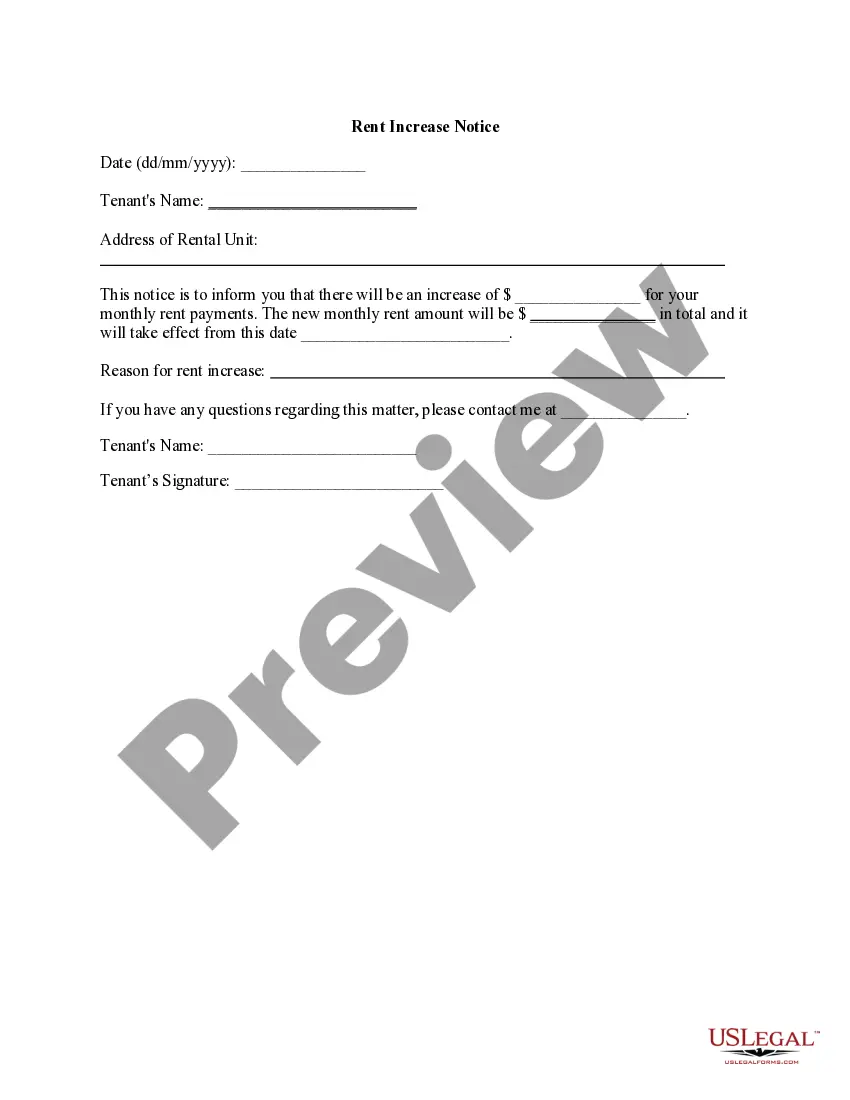
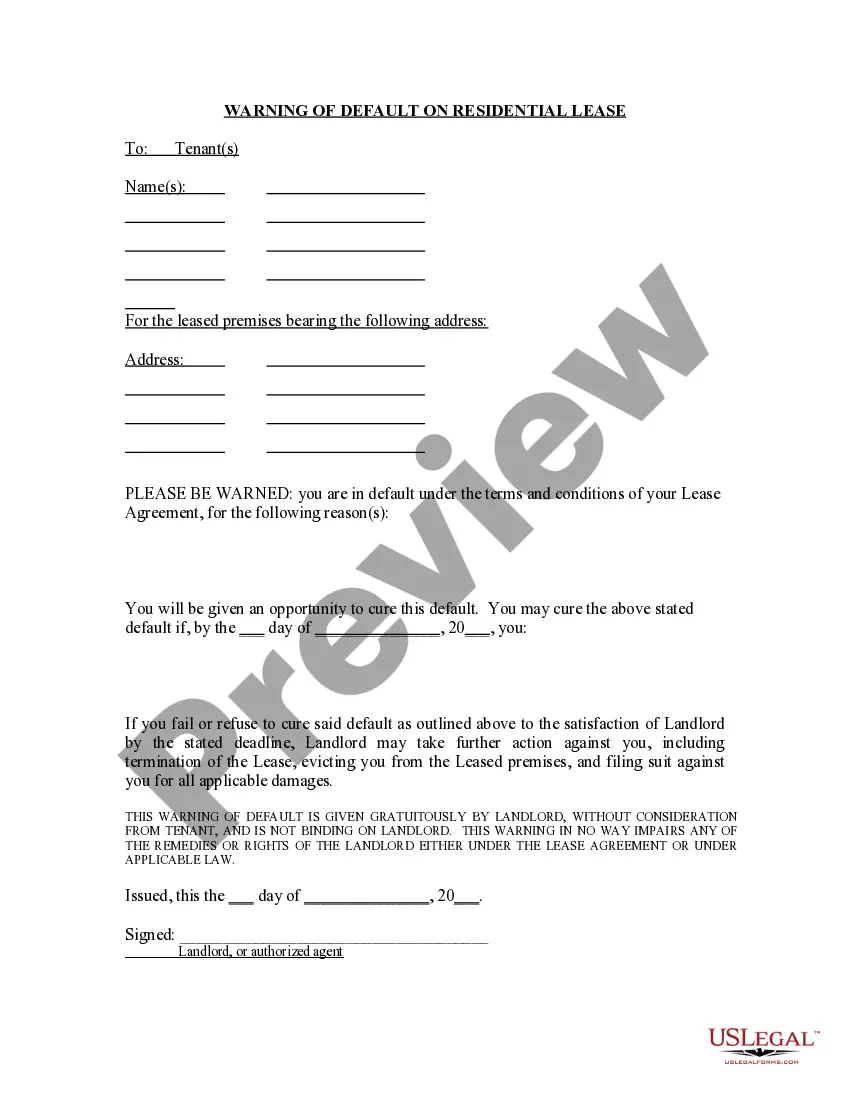
Step 1: Check Your Lease Documents and Payment Records. Step 2: Send a Late Rent Notice. Step 3: Make a Phone Call. Step 4: Send a Pay or Quit Notice. Step 5: Take Legal Action.
Landlords should make sure they have records of the tenant's rent payments. These records should include the moving-in date, the amount of rent they paid and whether they paid on time. The letter should include the length of time the tenant has lived in the property and when the lease expires.
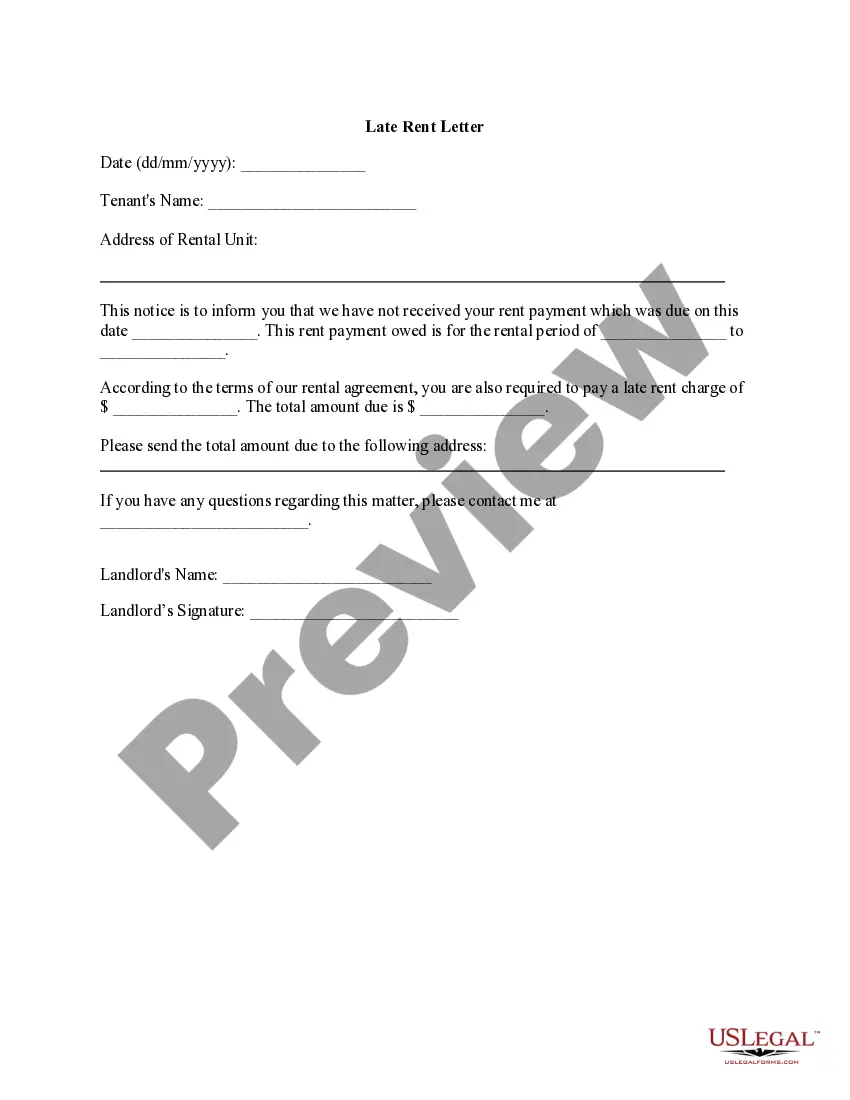
Date. Tenant name. Rent amount due. Rent due date. Rental period. Property address. Landlord name. Paid by.
The date the payment was received. The tenant's full name. The full name of anyone else who made the payment on behalf of the tenant. The name of the landlord or property manager receiving the payment. The rental property address and unit number.
Your landlord is entitled to deduct any unpaid rent from your deposit. If you owe more than the value of your deposit your landlord may take court action to get the extra money back. You may decide to withhold the last month's rent in case the landlord refuses to return the deposit. This is not advisable.
Written rent receipts are usually acceptable as long as they include the date, amount of rent you paid and the name and signature of the person receiving your rent. If you don't have a rental agreement, you can use these documents to show your history as a renter.
When your tenant still can't pay... Let them leave, if they simply can't pay it may be your best option. Simply let them break their contract (if you're still within the fixed term period) and leave your property. Then you can get a new tenant in and not waste any more time.
Know the Law and Document the Landlord-Tenant Relationship. Before Filing a Lawsuit, Negotiate with the Tenant. Give the Tenant a Formal Eviction Notice. File an Eviction Complaint with the Court. Get Ready for the Eviction Hearing. Evict the Tenant.