Virginia Water and Sewer Easement Agreement
Understanding this form
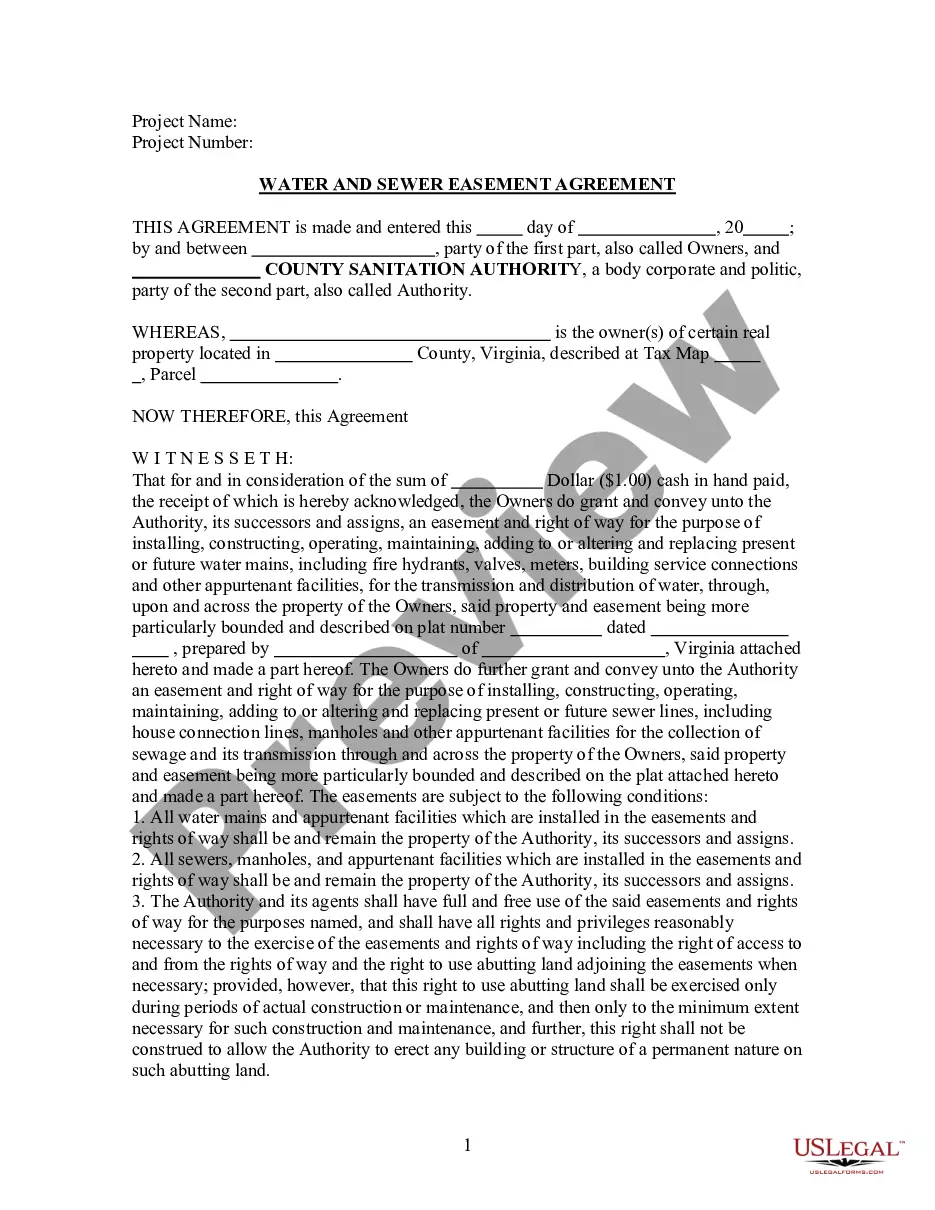
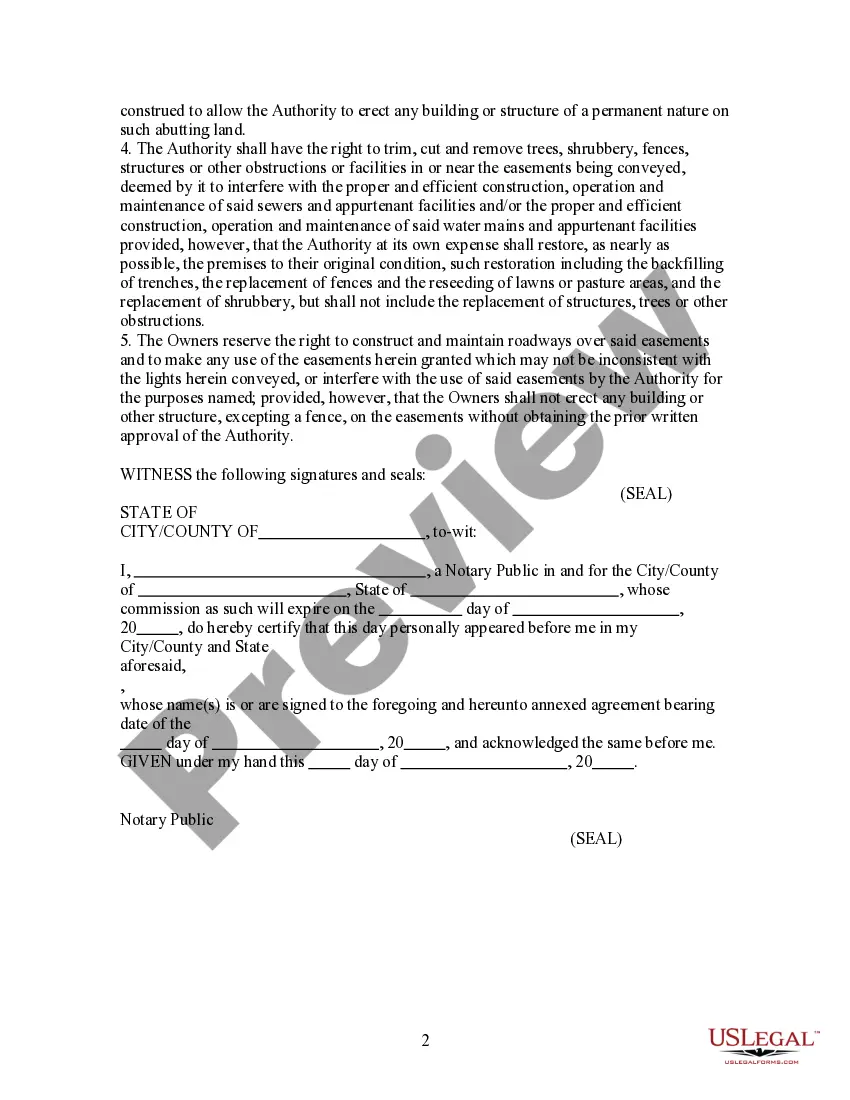
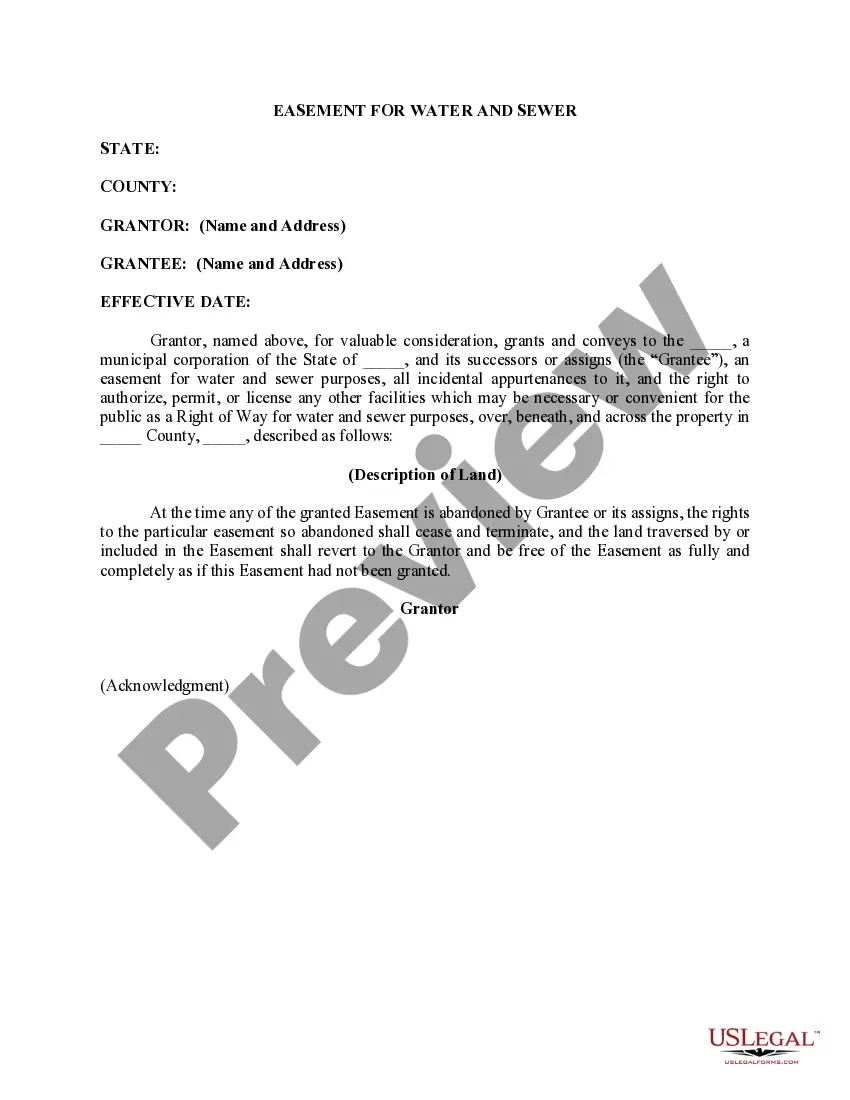
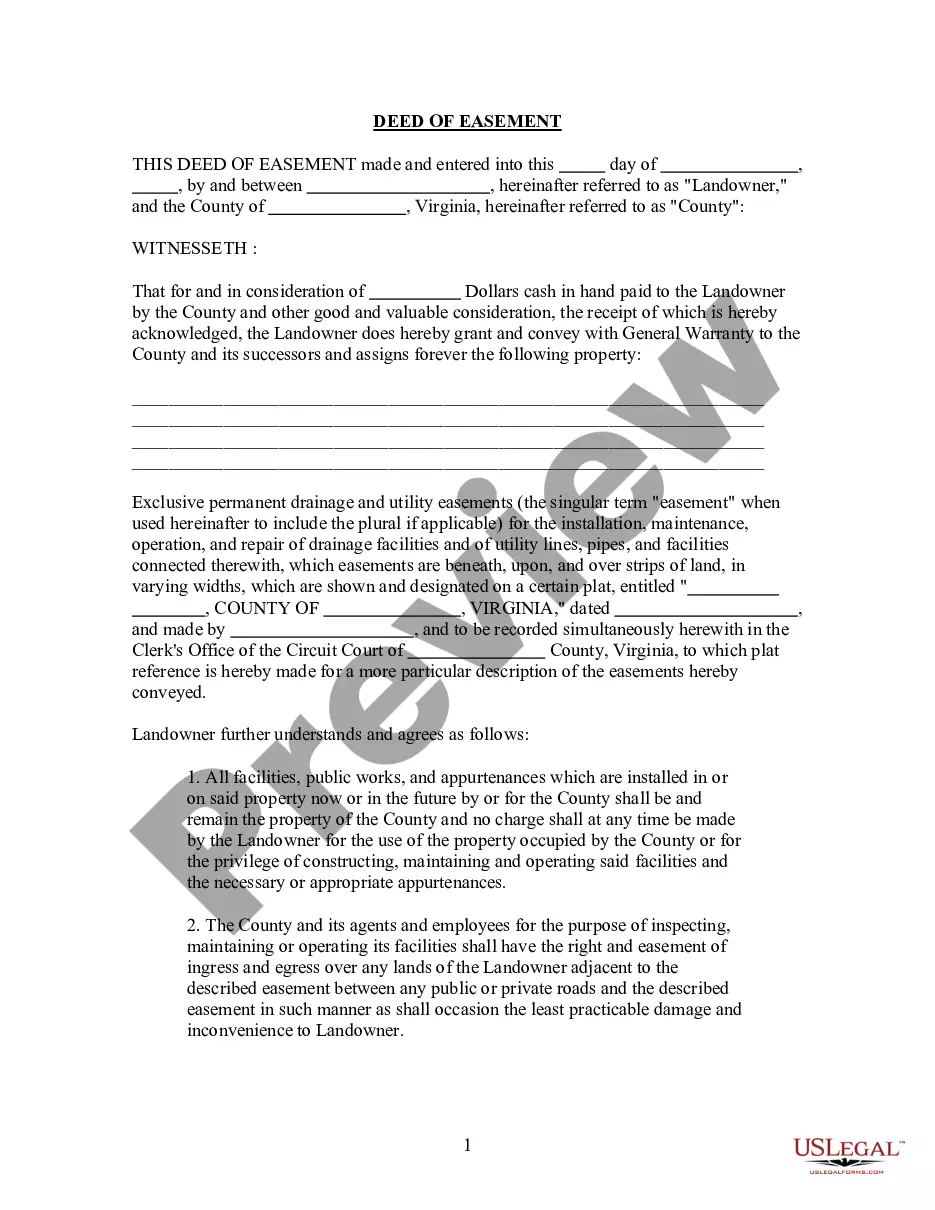
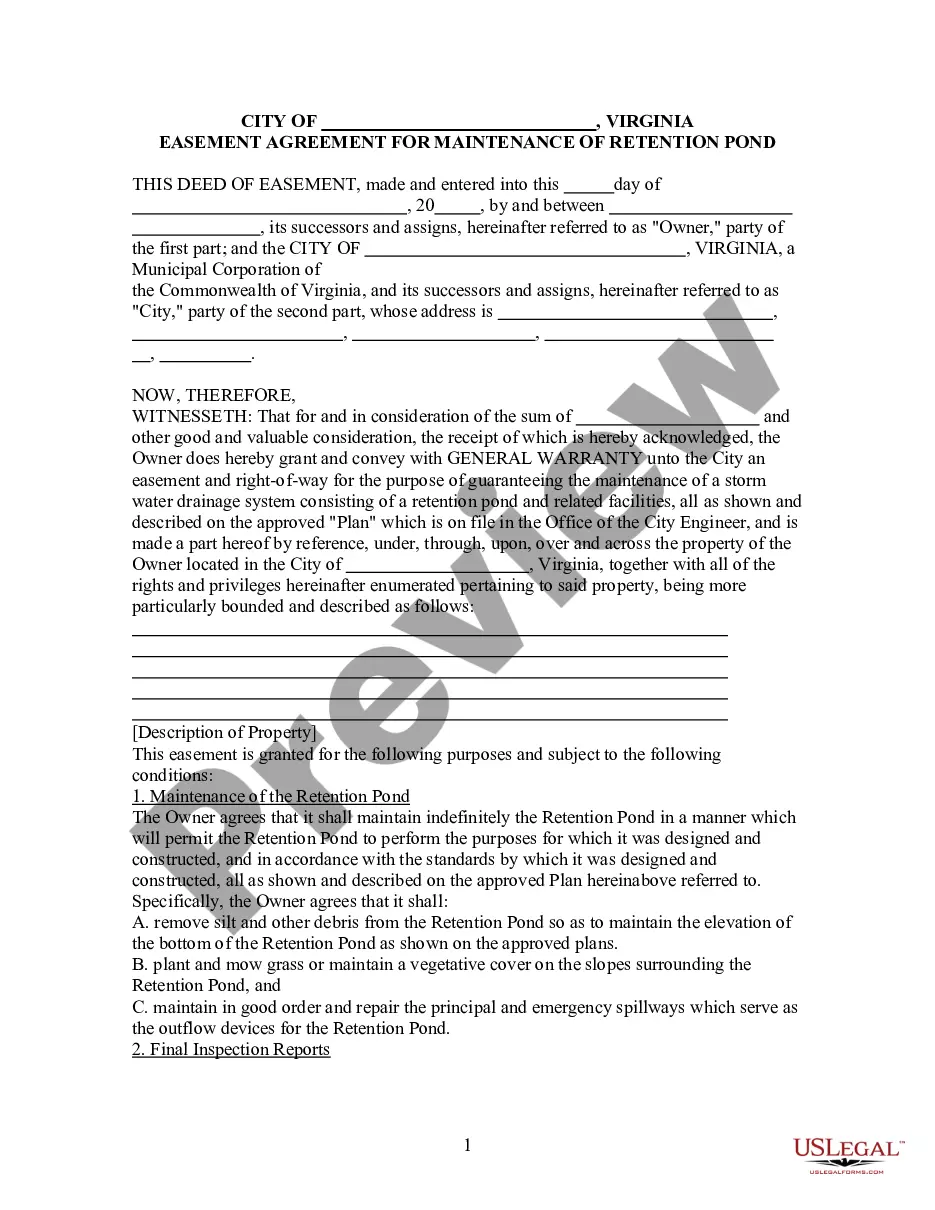
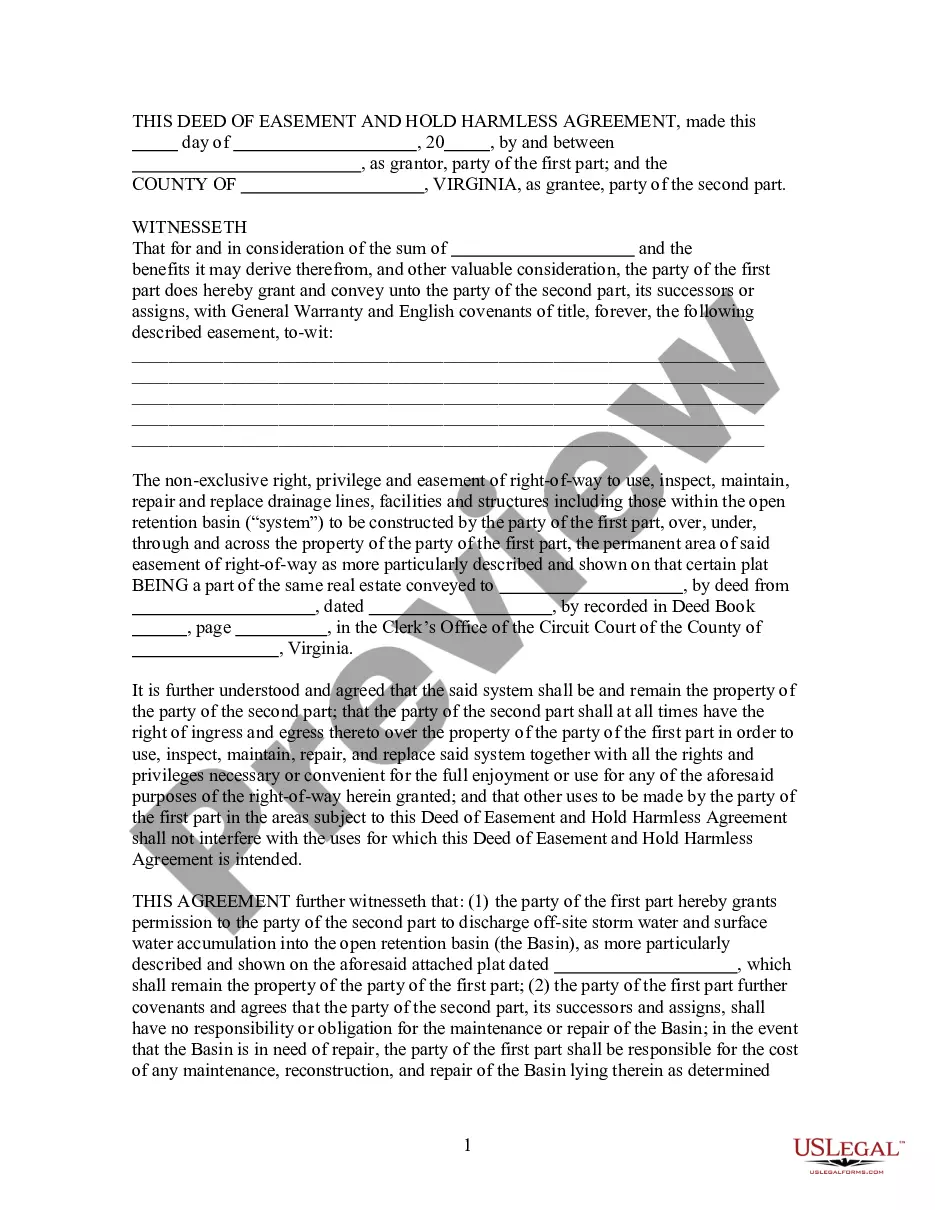
The Water and Sewer Easement Agreement is a legal document that grants permission for utility authorities to install, maintain, and operate water and sewer facilities on private property. This agreement allows the utility company to access the property for necessary construction and maintenance activities, distinguishing it from general property easements by focusing specifically on water and sewer infrastructure needs.
Key components of this form
- Identification of property and parties involved
- Rights granted to the Authority for use of the easements
- Provisions for the maintenance and ownership of facilities
- Obligations of the Authority regarding restoration after use
- Restrictions on additional structures by the property owners
Situations where this form applies
This form is used when property owners need to allow a utility company the right to access their land for the installation or maintenance of water and sewer lines. It is commonly needed during construction projects, regional infrastructure upgrades, or when establishing service connections for residential or commercial properties.
Who needs this form
- Property owners granting easements to utility authorities
- Utility companies seeking legal access to install or maintain services
- Land developers who need to integrate water and sewer lines into a new project
Completing this form step by step
- Identify the parties involved, including property owners and the utility authority.
- Describe the specific property where the easement will be granted.
- Detail the rights being granted to the utility authority for maintenance and installation purposes.
- Specify any restoration obligations required after the utility's use of the property.
- Have all parties sign and date the agreement to make it legally binding.
Notarization requirements for this form
This document requires notarization to meet legal standards. US Legal Forms provides secure online notarization powered by Notarize, allowing you to complete the process through a verified video call, available 24/7.
Get your form ready online
Our built-in tools help you complete, sign, share, and store your documents in one place.
Make edits, fill in missing information, and update formatting in US Legal Forms—just like you would in MS Word.
Download a copy, print it, send it by email, or mail it via USPS—whatever works best for your next step.
Sign and collect signatures with our SignNow integration. Send to multiple recipients, set reminders, and more. Go Premium to unlock E-Sign.
If this form requires notarization, complete it online through a secure video call—no need to meet a notary in person or wait for an appointment.
We protect your documents and personal data by following strict security and privacy standards.

Make edits, fill in missing information, and update formatting in US Legal Forms—just like you would in MS Word.

Download a copy, print it, send it by email, or mail it via USPS—whatever works best for your next step.

Sign and collect signatures with our SignNow integration. Send to multiple recipients, set reminders, and more. Go Premium to unlock E-Sign.

If this form requires notarization, complete it online through a secure video call—no need to meet a notary in person or wait for an appointment.

We protect your documents and personal data by following strict security and privacy standards.
Common mistakes
- Failing to accurately describe the property involved in the easement.
- Not including clear terms regarding restoration after maintenance work.
- Neglecting to obtain all necessary signatures before executing the agreement.
Why complete this form online
- Convenient access to legal templates from anywhere at any time.
- Editability allows users to customize the form to their specific needs.
- Reliability of professionally drafted forms ensures legal compliance.
Legal use & context
- This form creates a legal right for the utility to access the property, which can be enforced in court if necessary.
- Failure to comply with the stipulations outlined in the form may lead to disputes between the property owner and the utility authority.
- The easement remains attached to the property and binds future owners, making it a crucial document for property transactions.
Summary of main points
- The Water and Sewer Easement Agreement enables utility operations while protecting property rights.
- Accurate completion ensures the agreement is enforceable and meets legal standards.
- Consultation with legal professionals may enhance clarity and compliance.
Looking for another form?
Form popularity
FAQ
Easements can be created in a variety of ways. They can be created by an express grant, by implication, by necessity, and by adverse possession.
Express Grant by Instrument. An express grant by written instrument is the most common source of an easement. Implied. The owner of a large tract of land splits up the land with one or more parcels that do not abut a public highway or road. Necessity. Dedication.
The bottom line is that developers and builders who are presented with utility company easement forms should not just sign them, but think about the kinds of issues they can present. It is easier to negotiate these concessions up front before the lines go in, than to ask the utility company to amend its easement later.
Enter into an agreement with the easement holder to terminate the easement. Buy the adjoining property. Explore legal remedies to limit or terminate the easement.
When one of the owners of either the dominant estate which an easement benefits or the servient estate over which the easement runs becomes the owner of both properties, then there is a unity of the two titles, and since an owner does not need an easement over the owner's own property, according to Florida law, the
An easement may be created by means of an appropriate dealing registered in NSW LRS or by the inclusion in a Section 88B instrument lodged with a new deposited plan.
Rights of way (similar to the driveway example, but also including walkways or pathways); Public utilities, such as gas, electricity or water and sewer mains; Parking areas; Access to light and air; and. Shared walls.
Pursuant to s89(8) Conveyancing Act 1919 an easement may only be modified by Order of the Supreme Court. An extra fee is payable for a plan annexed to the dealing.For an easement in gross the dominant tenement panel must be completed with the name of the relevant statutory authority or the words 'easement in gross'.
When termed as a utility easement, it means a utility company's right to access and control the portion of another person's land that is located near utility facilities and structures (i.e. utility poles, transformers, overhead or underground electrical lines).