Vermont Warranty Deed from two Individuals to LLC
What is this form?
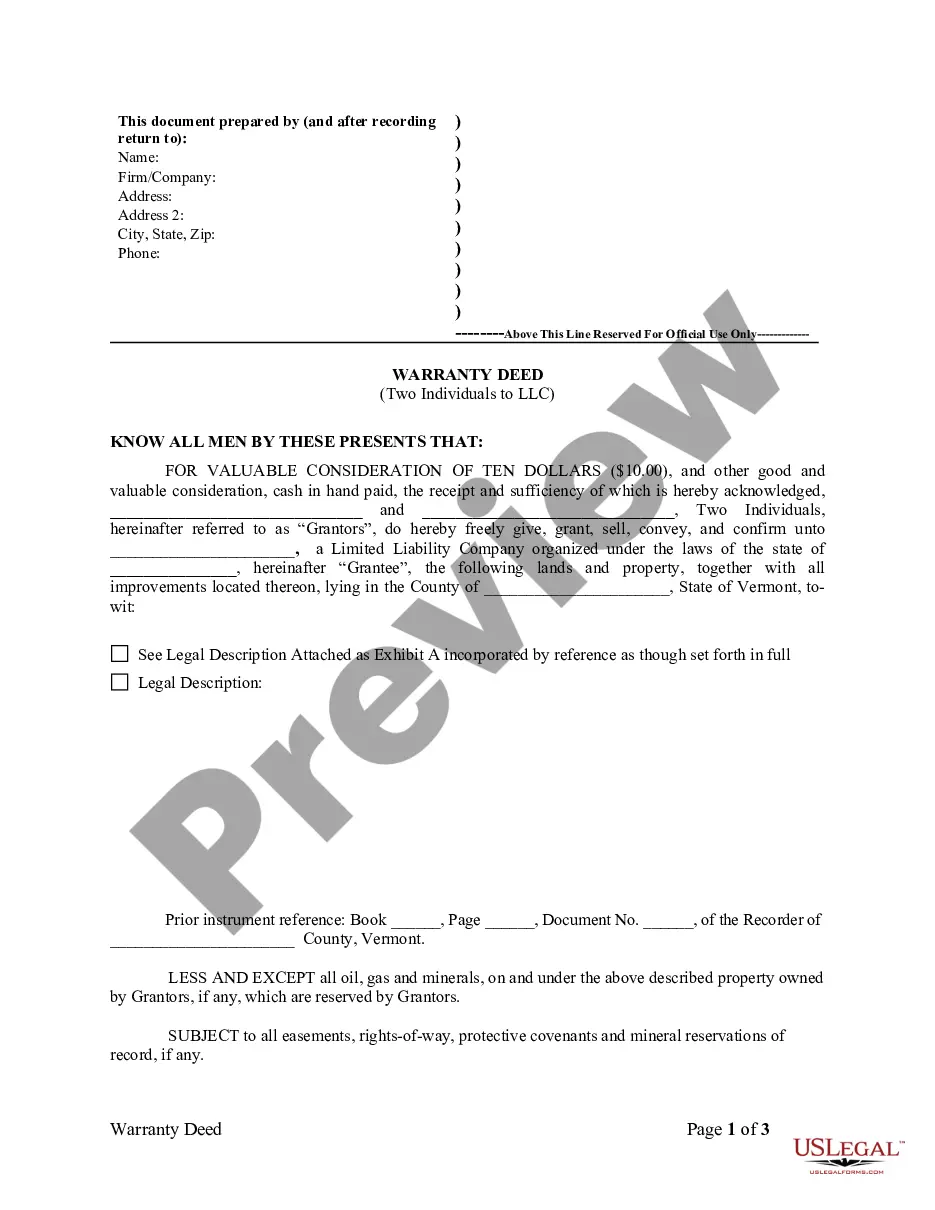
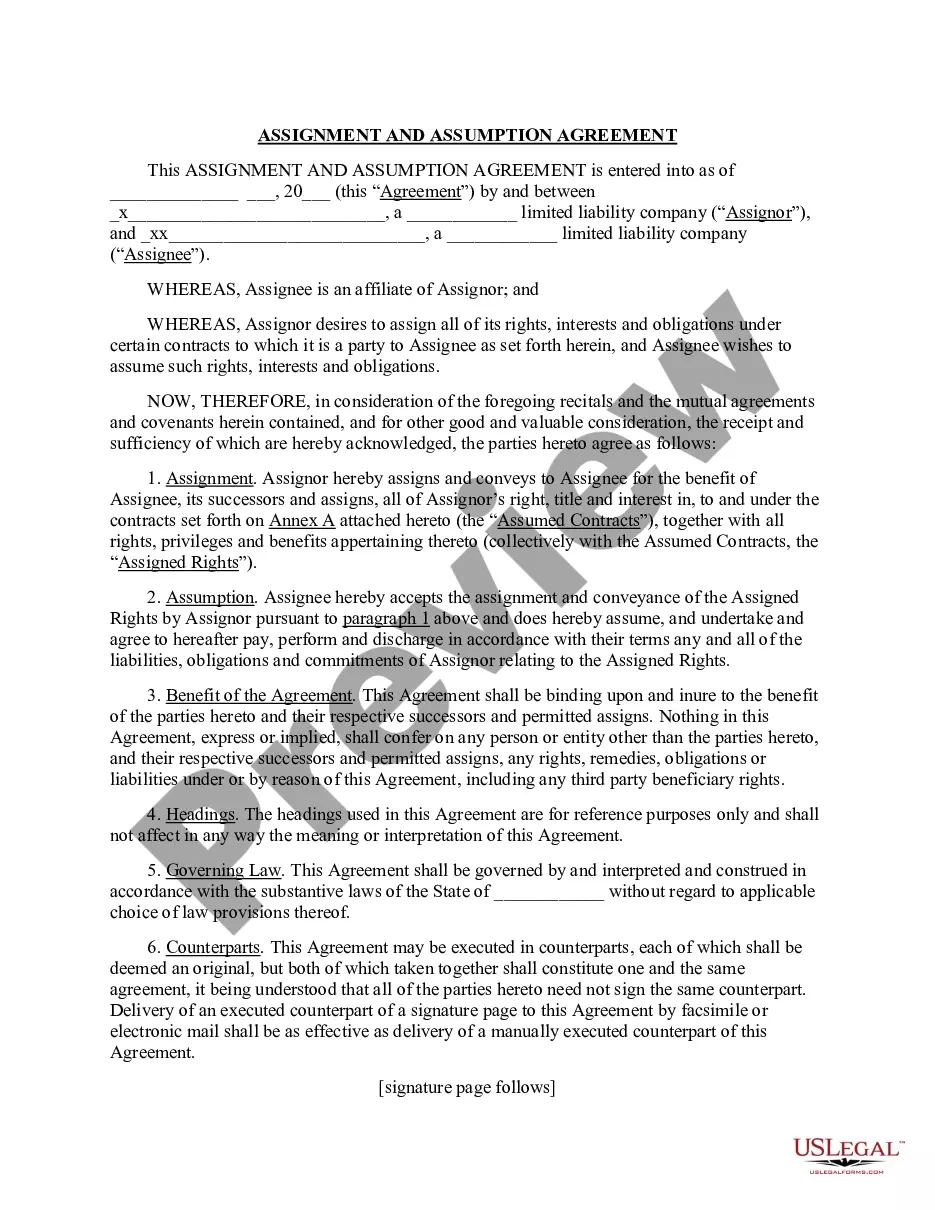
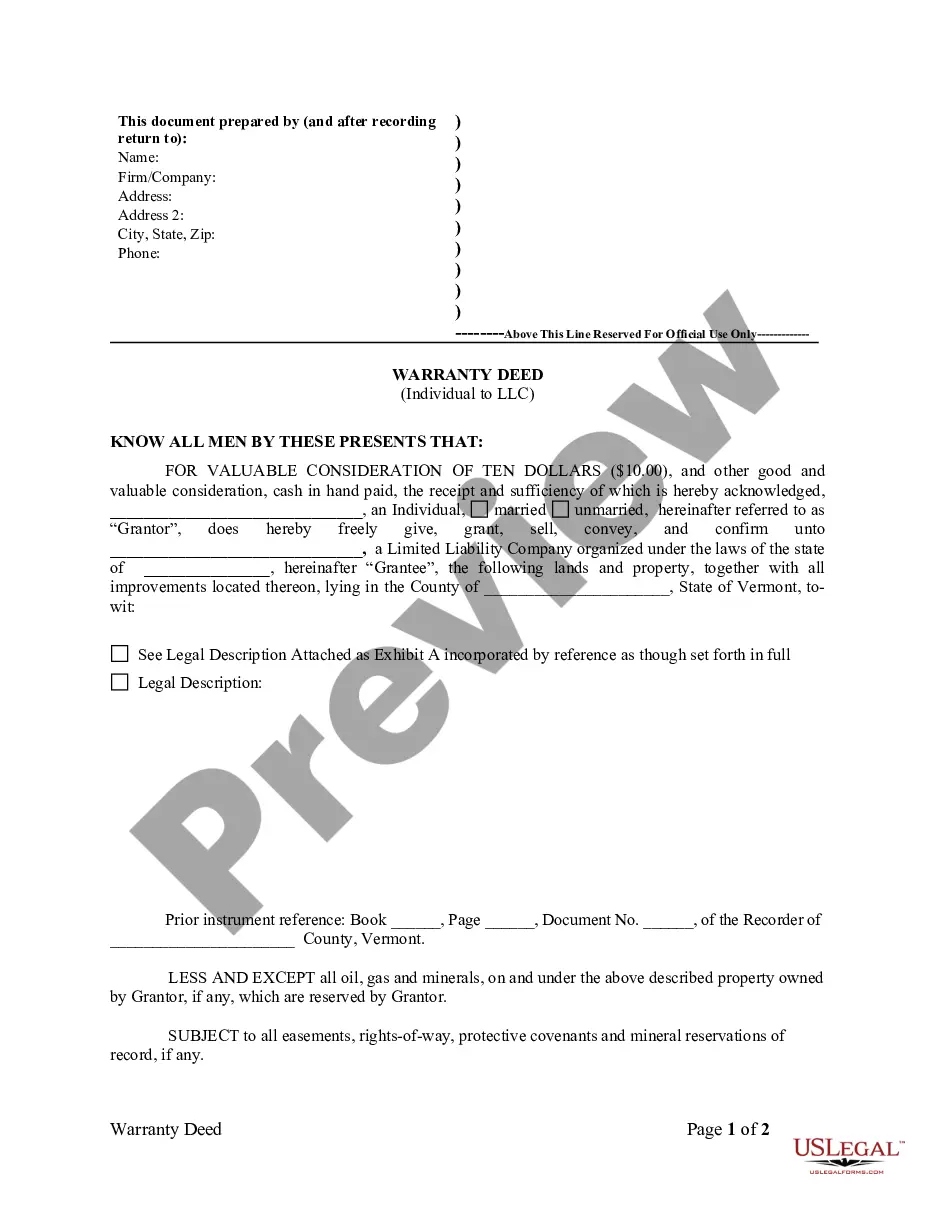
The Warranty Deed from two Individuals to LLC is a legal document that allows two individuals (the grantors) to transfer property ownership to a limited liability company (the grantee). This form ensures that the property is conveyed without encumbrances, except for any expressly stated exclusions such as oil, gas, and mineral rights. Unlike other deed types, this warranty deed provides a guarantee of the title, making it suitable for formal property transfers where the grantors affirm their legal right to sell the property.
Key components of this form
- Names and details of the grantors and grantee
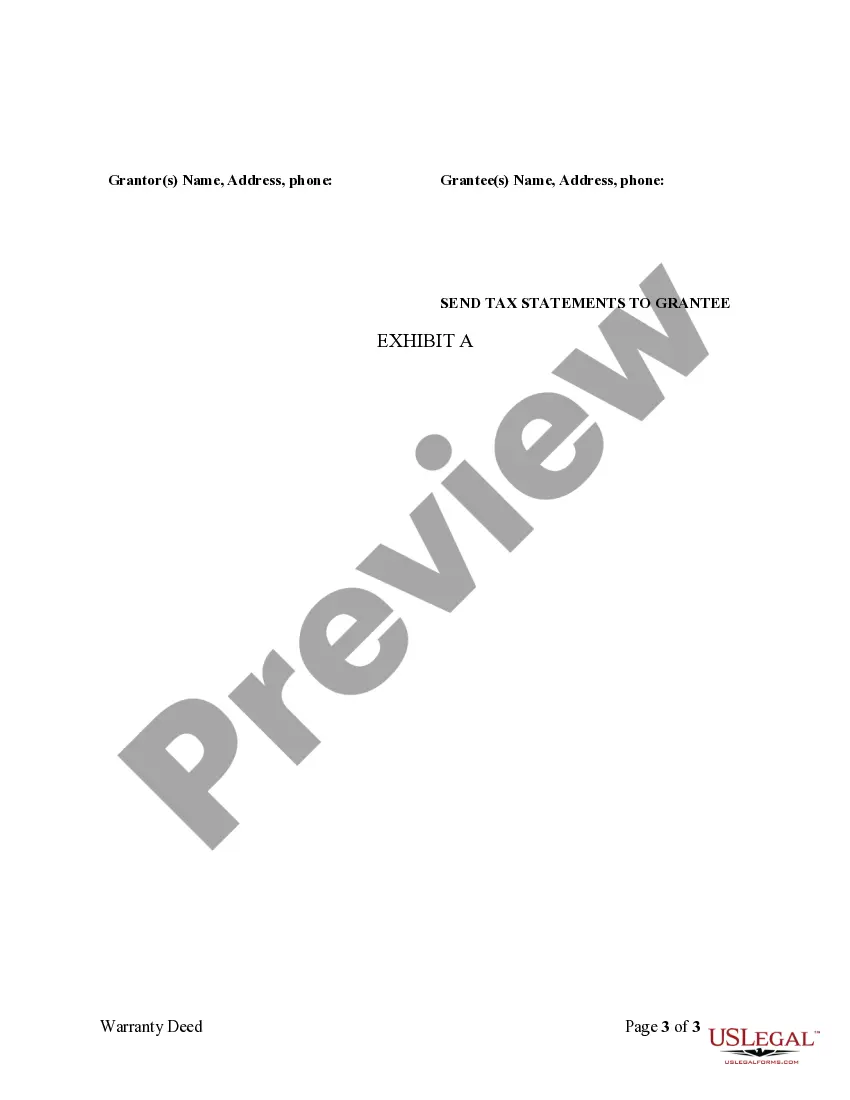
- Legal description of the property being transferred
- Clauses detailing the reservation of rights, such as mineral rights
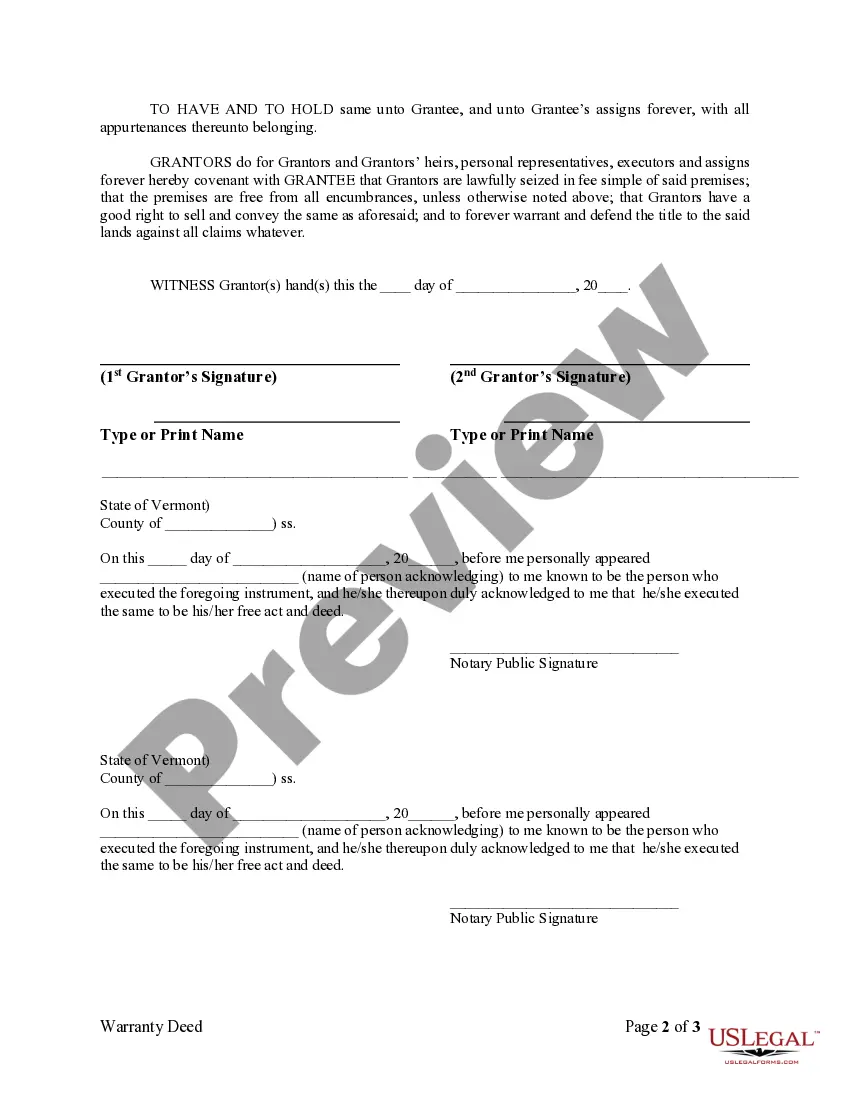
- Covenant of title from grantors to the grantee
- Signatures of grantors and acknowledgment by a notary public




Common use cases
This form is typically used when two individuals wish to convey their jointly owned property to a limited liability company. Situations may include transferring business-related real estate to the LLC for liability protection, estate planning, or simplifying property management. It is an effective way to formalize ownership while providing legal assurances regarding the title of the property.
Who this form is for
- Individuals who co-own real estate and want to transfer ownership to an LLC
- Business owners seeking to protect their personal assets by placing property in an LLC
- Individuals involved in estate planning that includes the transfer of property to a business entity
How to prepare this document
- Identify the grantors by entering their full names and contact information.
- Specify the grantee by providing the name and details of the limited liability company.
- Clearly describe the property being conveyed, making sure to include the legal description.
- Fill in the date of the agreement and ensure all grantors sign in the presence of a notary.
- Provide any specific reservations, such as mineral rights, in the appropriate section.
Notarization guidance
Yes, this form must be notarized to be legally valid. Notarization verifies the identity of the grantors and their consent to the deed. US Legal Forms offers integrated online notarization available 24/7 through secure video calls, ensuring that your document can be notarized without the need for travel.
Get your form ready online
Our built-in tools help you complete, sign, share, and store your documents in one place.
Make edits, fill in missing information, and update formatting in US Legal Forms—just like you would in MS Word.
Download a copy, print it, send it by email, or mail it via USPS—whatever works best for your next step.
Sign and collect signatures with our SignNow integration. Send to multiple recipients, set reminders, and more. Go Premium to unlock E-Sign.
If this form requires notarization, complete it online through a secure video call—no need to meet a notary in person or wait for an appointment.
We protect your documents and personal data by following strict security and privacy standards.

Make edits, fill in missing information, and update formatting in US Legal Forms—just like you would in MS Word.

Download a copy, print it, send it by email, or mail it via USPS—whatever works best for your next step.

Sign and collect signatures with our SignNow integration. Send to multiple recipients, set reminders, and more. Go Premium to unlock E-Sign.

If this form requires notarization, complete it online through a secure video call—no need to meet a notary in person or wait for an appointment.

We protect your documents and personal data by following strict security and privacy standards.
Avoid these common issues
- Neglecting to include complete and accurate legal descriptions of the property.
- Failing to have the document notarized, if required by state law.
- Not providing all necessary signatures from both grantors.
- Excluding important reservation clauses without proper legal advice.
Why use this form online
- Convenient access to a legally compliant warranty deed ready for download.
- Edit and customize the form easily to fit specific property transfer needs.
- Reliability of forms drafted by licensed attorneys ensuring legal accuracy.
Looking for another form?
Form popularity
FAQ
Contrary to normal expectations, the Deed DOES NOT have to be recorded to be effective or to show delivery, and because of that, the Deed DOES NOT have to be signed in front of a Notary Public. However, if you plan to record it, then it does have to be notarized as that is a County Recorder requirement.
Yes you can. This is called a transfer of equity but you will need the permission of your lender. If you are not married or in a civil partnership you may wish to consider creating a deed of trust and a living together agreement which we can explain to you.
It is possible to be named on the title deed of a home without being on the mortgage. However, doing so assumes risks of ownership because the title is not free and clear of liens and possible other encumbrances. Free and clear means that no one else has rights to the title above the owner.
Retrieve your original deed. Get the appropriate deed form. Draft the deed. Sign the deed before a notary. Record the deed with the county recorder. Obtain the new original deed.
Adding someone to your house deed requires the filing of a legal form known as a quitclaim deed. When executed and notarized, the quitclaim deed legally overrides the current deed to your home. By filing the quitclaim deed, you can add someone to the title of your home, in effect transferring a share of ownership.
Adding someone to your house deed requires the filing of a legal form known as a quitclaim deed. When executed and notarized, the quitclaim deed legally overrides the current deed to your home. By filing the quitclaim deed, you can add someone to the title of your home, in effect transferring a share of ownership.
If you've recently married and already own a home or other real estate, you may want to add your new spouse to the deed for your property so the two of you own it jointly. To add a spouse to a deed, all you have to do is literally fill out, sign and record a new deed in your county recorder's office.
To add a co-owner, the bank would have to create a new home loan agreement, which must be registered after paying the due stamp duty and registration charges. The bank would also insist on making the co-owner a co-borrower in the home loan applicable.