Wisconsin Satisfaction of Judgment
Understanding this form
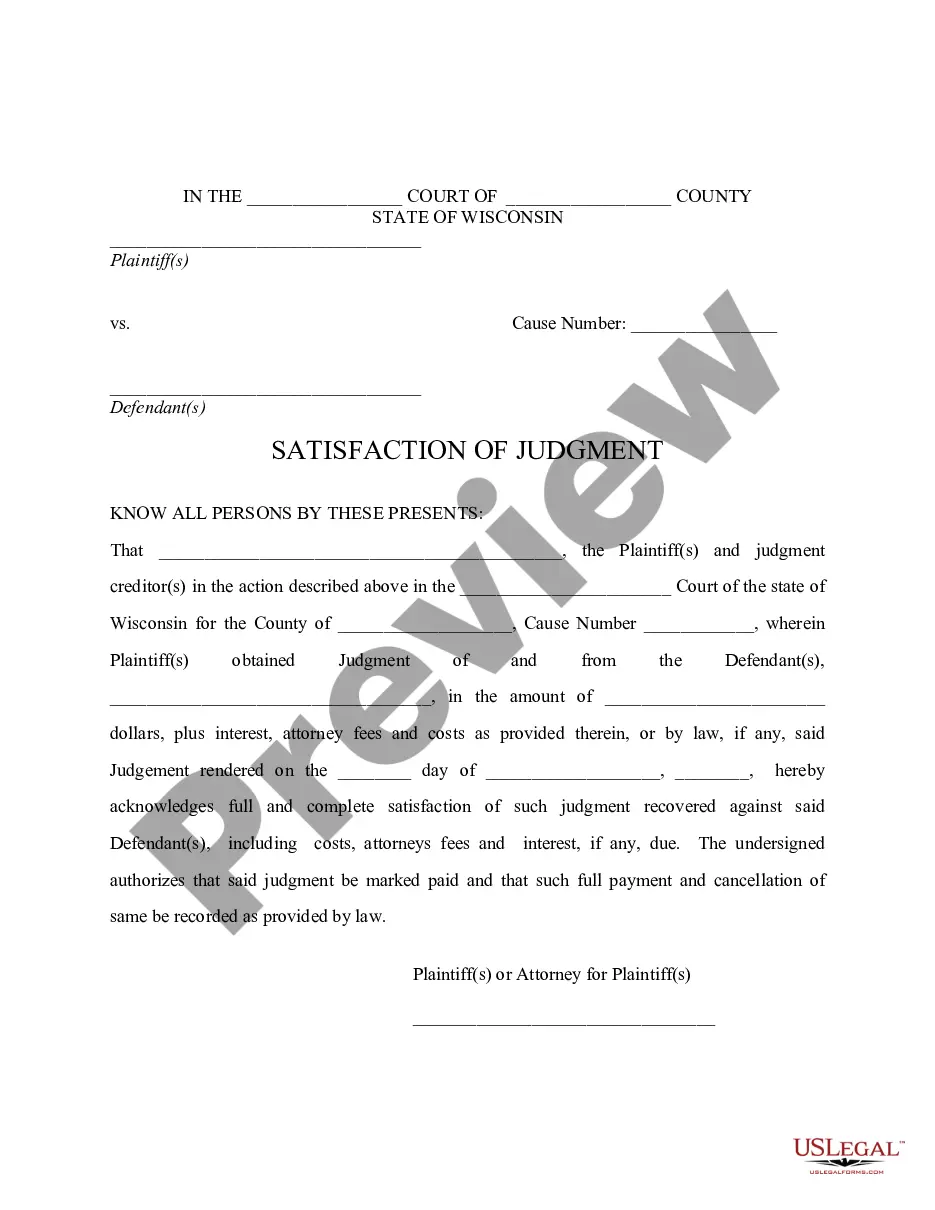
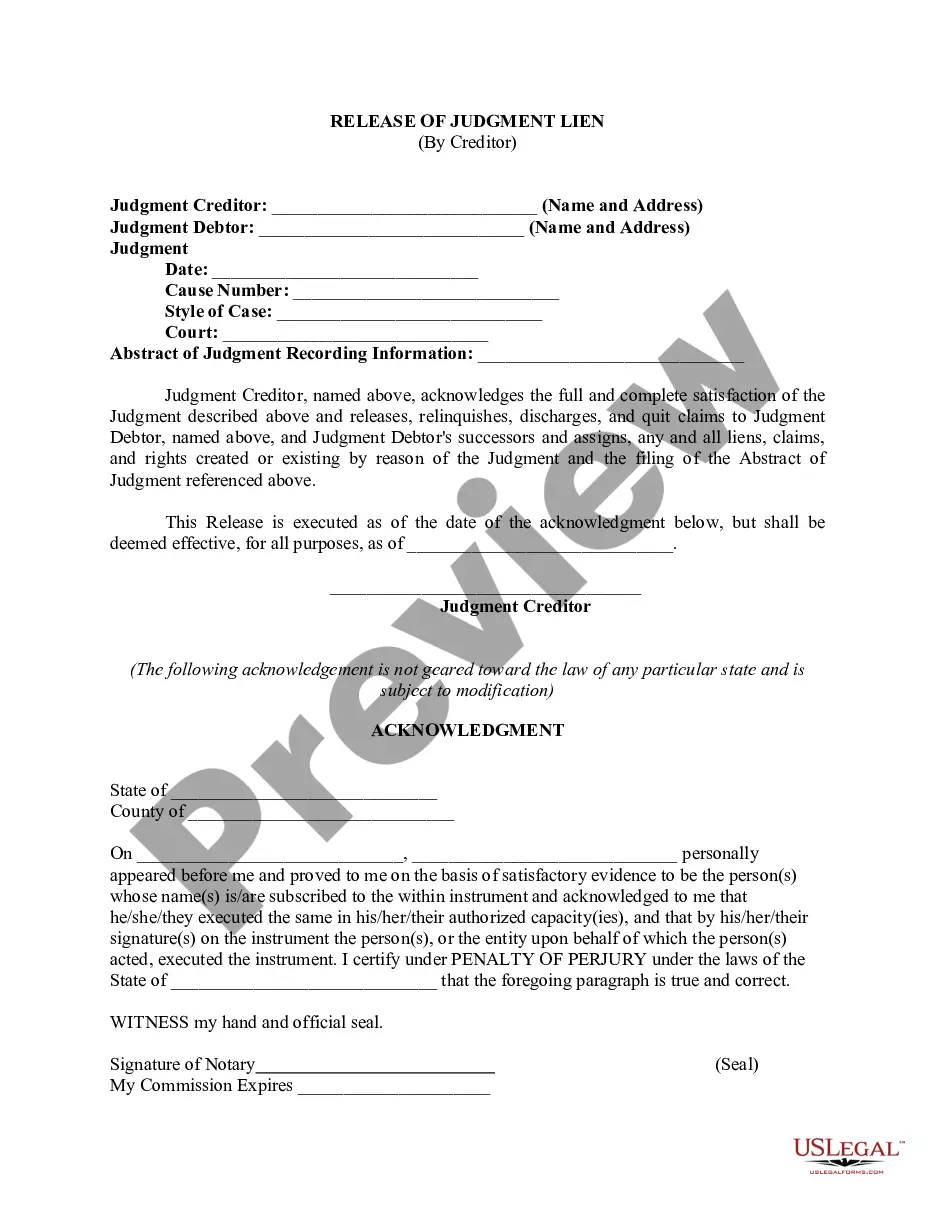
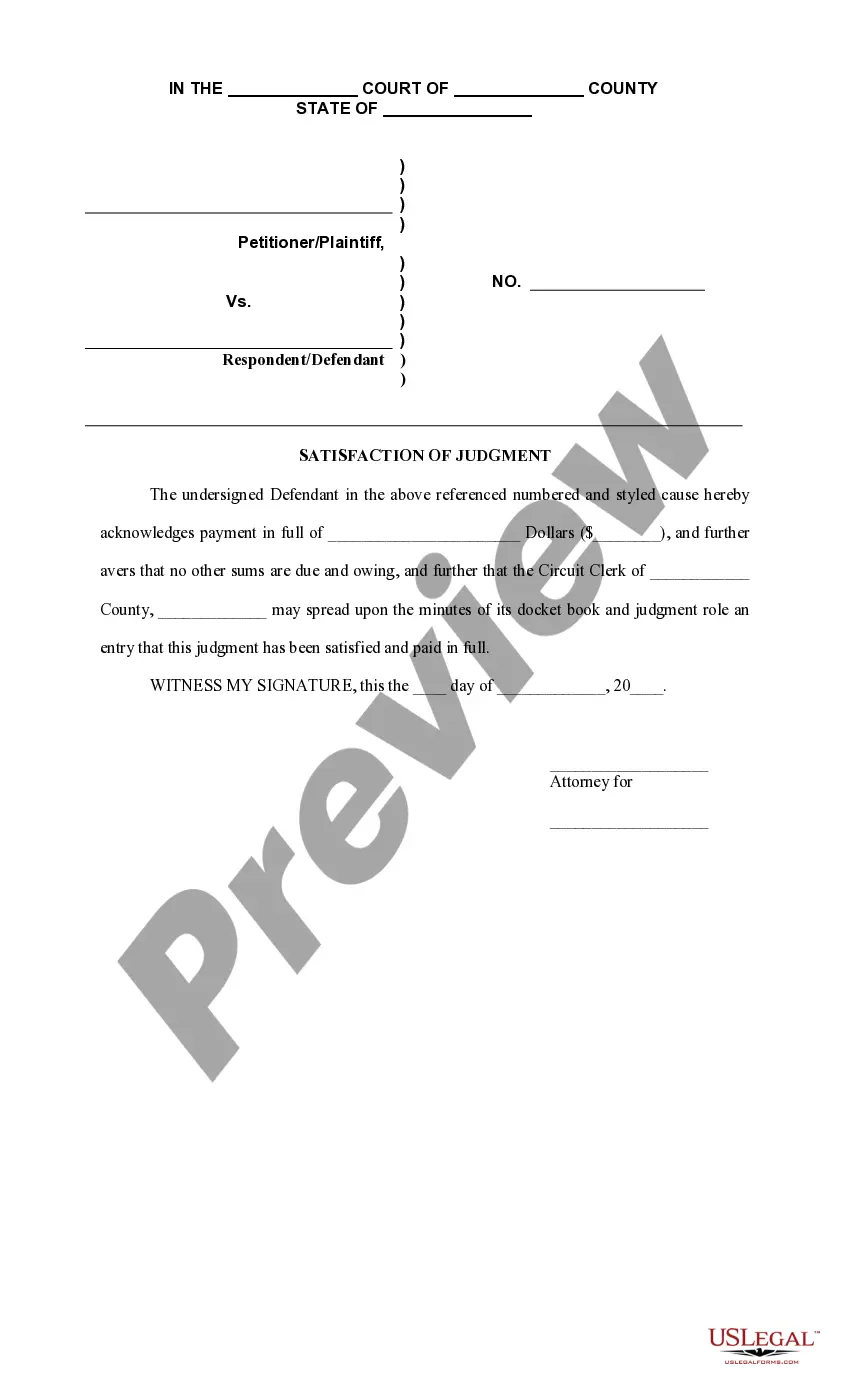
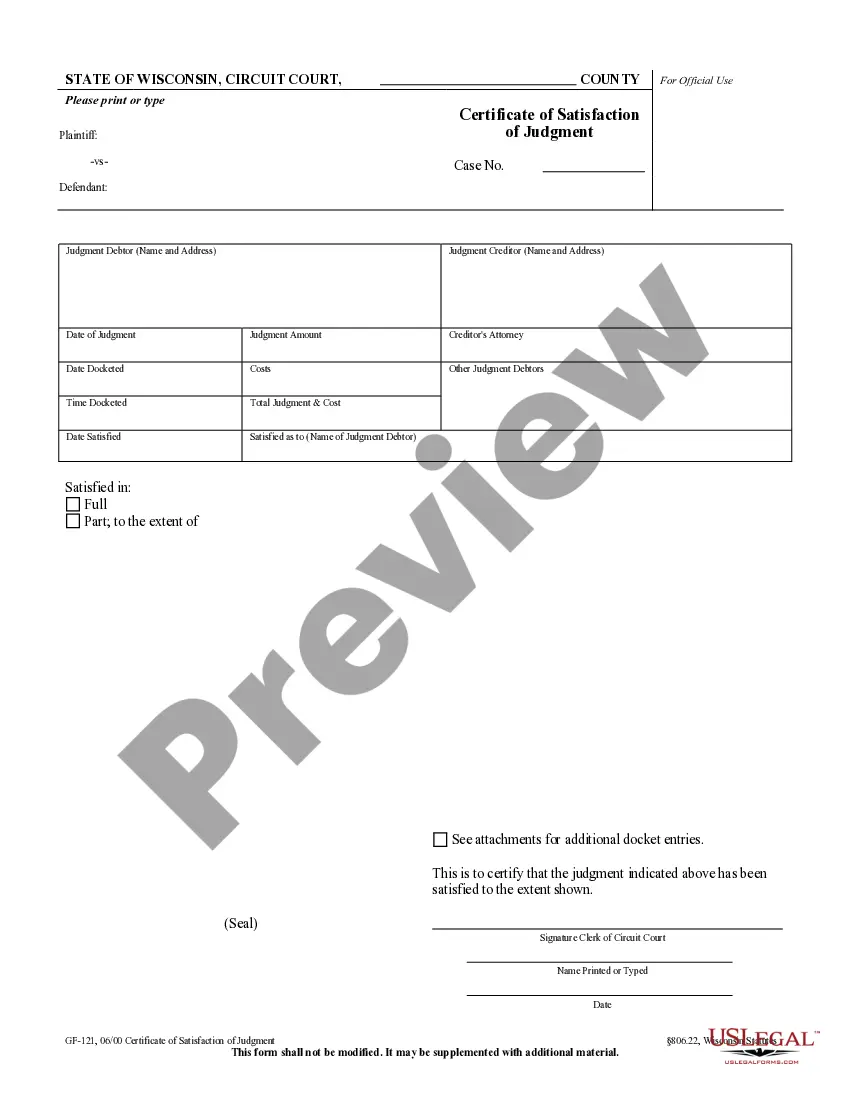
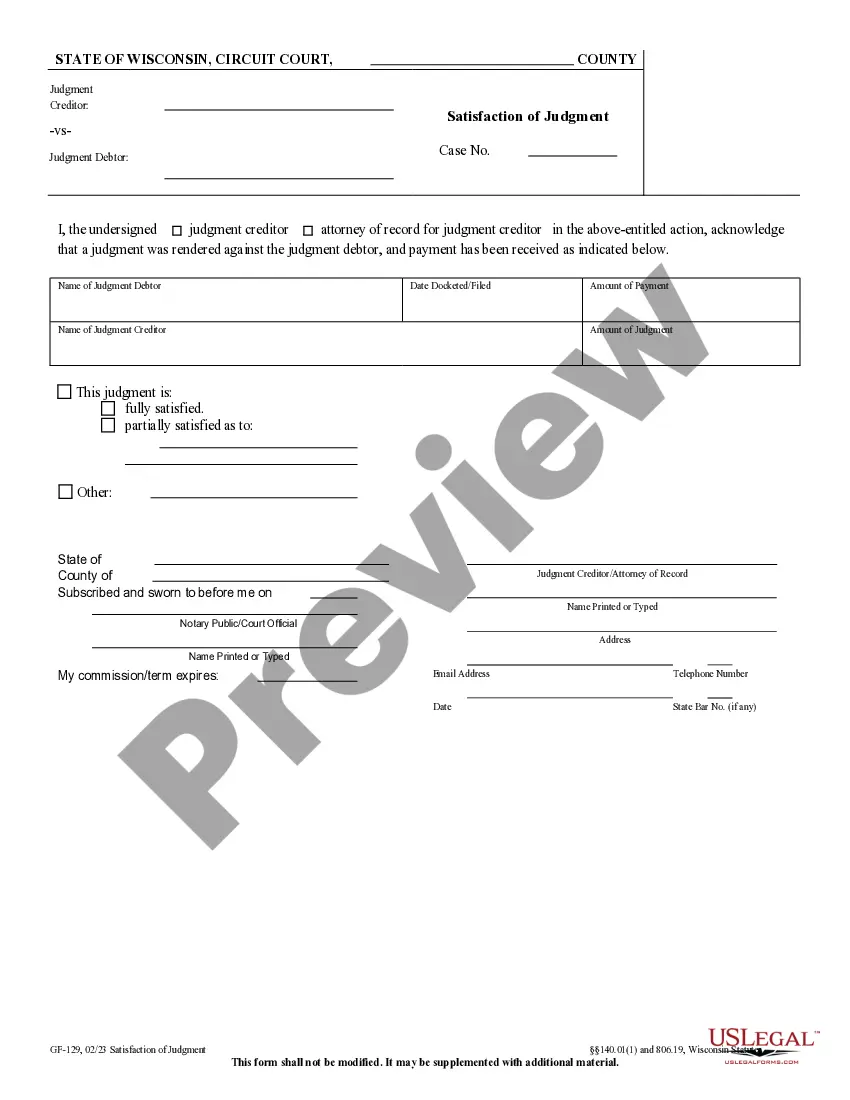
The Wisconsin Satisfaction of Judgment form is a legal document used to acknowledge that a judgment debt has been fully paid. This form is filed by the judgment creditor to officially release the debtor from the judgment obligation. It differs from other related forms as it specifically certifies the complete satisfaction of the debt, thus allowing the debtor to regain their financial standing.
Main sections of this form
- Identification of the court, county, and cause number.
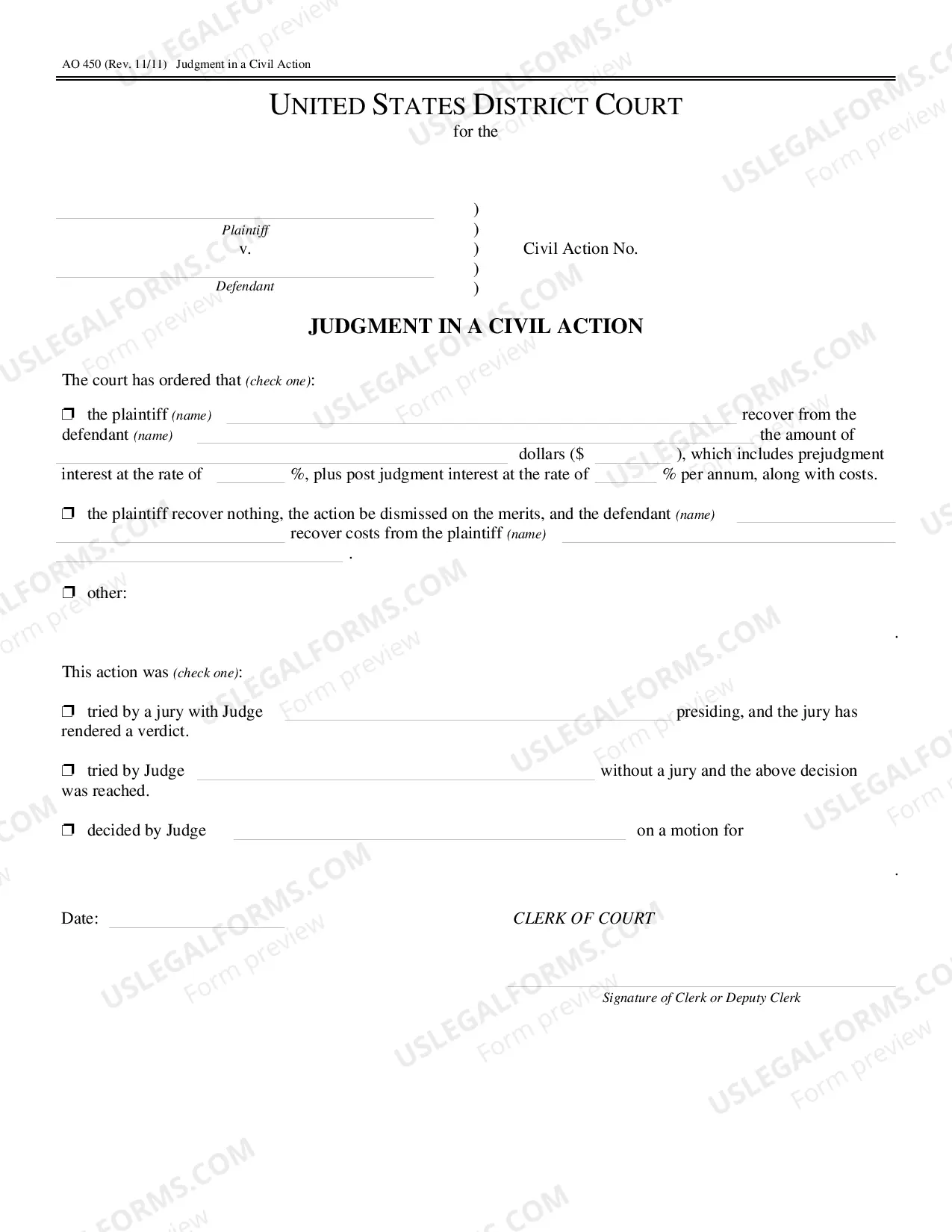
- Name of the plaintiff(s) and the judgment creditor(s).
- Name of the defendant(s) against whom the judgment was issued.
- Details of the judgment amount, including applicable interest, attorney fees, and costs.
- Signature of the plaintiff(s) or their attorney, along with their contact details.
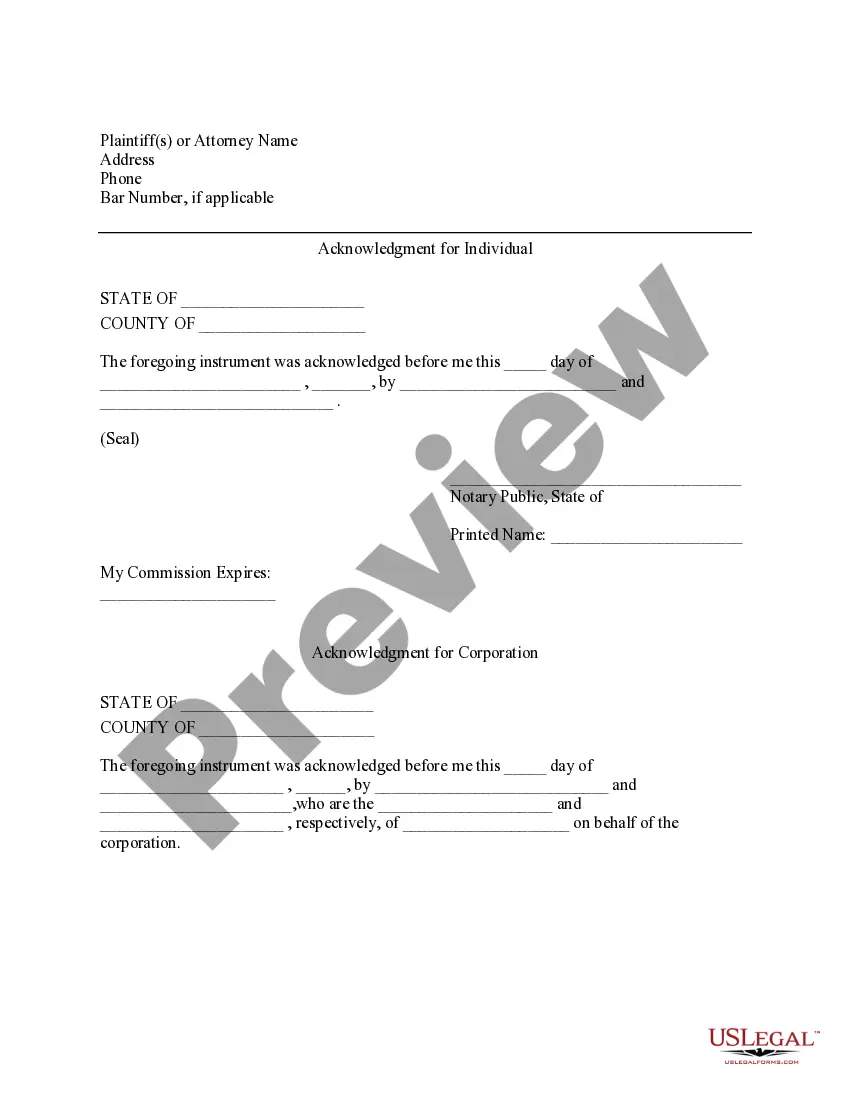
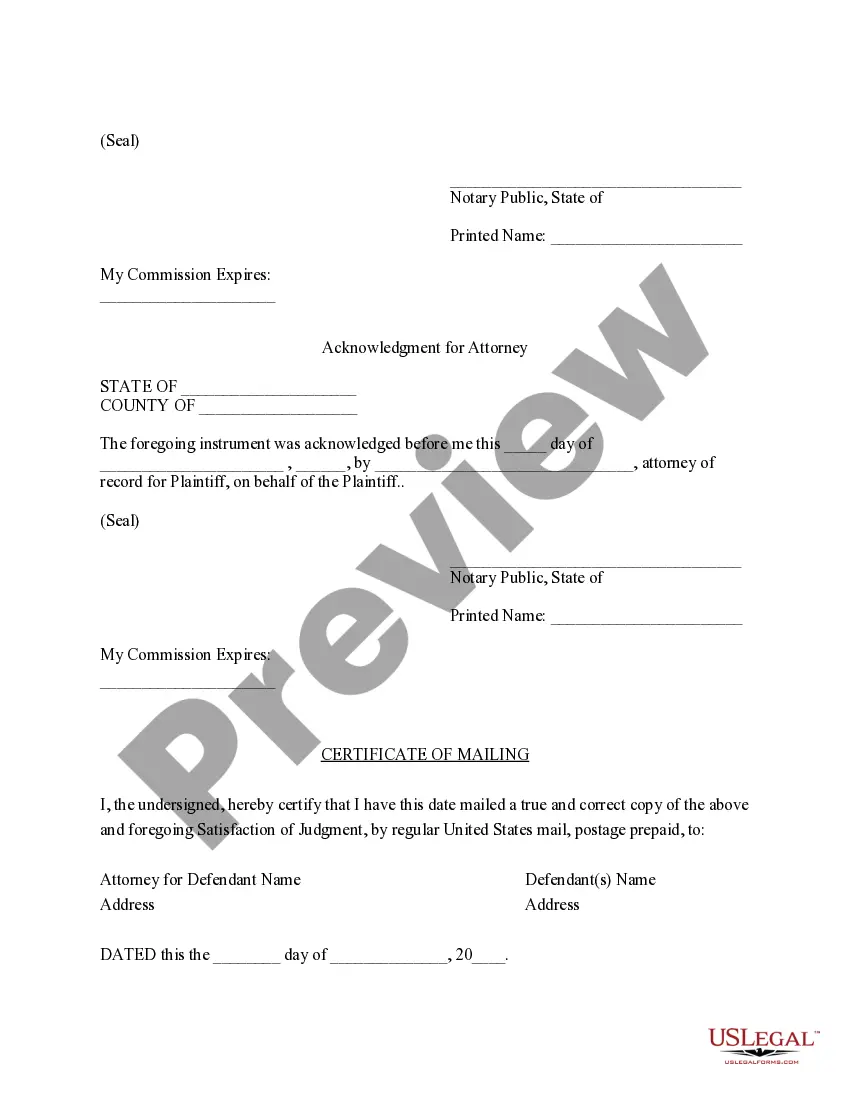
- Acknowledgment sections for notarization, applicable for individuals, corporations, or attorneys.


When to use this document
This form should be used once a judgment debtor has fulfilled their payment obligations as set forth by the court. It serves as proof of payment and formally releases the debtor from further liability under the judgment. Typical scenarios include paying off a court-ordered debt, settling a personal injury claim, or resolving a dispute that resulted in a court judgment.
Who this form is for
This form is intended for:
- Creditors or plaintiffs who have received a court judgment against a debtor.
- Debtors who have paid their judgment and want to ensure their financial standing is restored.
- Attorneys representing either party in a judgment case.
Instructions for completing this form
- Fill in the name of the court and county where the judgment was filed.
- Enter the cause number related to the judgment.
- Provide the names of the plaintiff(s) and defendant(s) involved in the case.
- Specify the total amount of the judgment, including any additional costs and interest.
- Ensure that the form is signed by the plaintiff or their attorney, and include their contact information.
- Complete the acknowledgment section for notarization once the form is filled out.
Notarization requirements for this form
Yes, this form must be notarized to be legally valid. Notarization provides an official record of the documentâs execution and helps prevent fraud. US Legal Forms offers integrated online notarization services, making the process convenient with secure video calls, available twenty-four hours a day, ensuring legal equivalency without the need to travel.
Get your form ready online
Our built-in tools help you complete, sign, share, and store your documents in one place.
Make edits, fill in missing information, and update formatting in US Legal Forms—just like you would in MS Word.
Download a copy, print it, send it by email, or mail it via USPS—whatever works best for your next step.
Sign and collect signatures with our SignNow integration. Send to multiple recipients, set reminders, and more. Go Premium to unlock E-Sign.
If this form requires notarization, complete it online through a secure video call—no need to meet a notary in person or wait for an appointment.
We protect your documents and personal data by following strict security and privacy standards.

Make edits, fill in missing information, and update formatting in US Legal Forms—just like you would in MS Word.

Download a copy, print it, send it by email, or mail it via USPS—whatever works best for your next step.

Sign and collect signatures with our SignNow integration. Send to multiple recipients, set reminders, and more. Go Premium to unlock E-Sign.

If this form requires notarization, complete it online through a secure video call—no need to meet a notary in person or wait for an appointment.

We protect your documents and personal data by following strict security and privacy standards.
Typical mistakes to avoid
- Failing to complete all fields accurately, such as missing names or amounts.
- Not having the form signed by the appropriate party.
- Forgetting to notarize the form, especially if required.
- Submitting the form without verifying local court requirements.
Benefits of using this form online
- Convenience of downloading and filling out the form from home.
- Editable fields allow for easy customization based on specific circumstances.
- Access to professionally drafted forms ensures legal compliance and accuracy.
What to keep in mind
- The Wisconsin Satisfaction of Judgment formally documents the payment of a judgment debt.
- Ensure all requirements are met, including court information and notarization.
- Use this form to release the debtor from further obligations related to the judgment.
- Be mindful to properly file and mail copies as required by local regulations.
Looking for another form?
Form popularity
FAQ
Paying down or paying off the amount associated with the judgment will have no impact on the credit score.Even though a satisfied judgment does not have a positive impact on score, a lender may consider it a good sign of willingness to pay and may override the score and grant the credit Matt may seek in the future.
A court form that the judgment creditor must fill out, sign, and file with the court when the judgment is fully paid. If no liens exist, the back of the Notice of Entry of Judgment can be signed and filed with the court. (See judgment creditor, judgment .)
You may ask your judgment creditor to file a satisfaction of judgment form. The length of time gives to the creditor to file the form varies from state to state, but it is usually between 14 and 30 days after your request.
While a vacated judgment is typically the best-case scenario, the unfortunate truth is most legitimate judgments satisfied or not aren't going away anytime soon. In fact, judgments will generally remain on your credit report for seven years from the judgment date (the day the judgment was filed) before expiring.
Judgments are no longer factored into credit scores, though they are still public record and can still impact your ability to qualify for credit or loans.If a civil judgment is still on your credit report, file a dispute with the appropriate credit reporting agencies to have it removed.
Once a judgment is paid, whether in installments or a lump sum, a judgment creditor (the person who won the case) must acknowledge that the judgment has been paid by filing a Satisfaction of Judgment form with the court clerk.
The Satisfaction of Judgment form should be signed by the judgment creditor when the judgment is paid, and then filed with the court clerk. Don't forget to do this; otherwise, you may have to track down the other party later.
A Satisfaction of Judgment is a document signed by one party acknowledge receipt of the payment. The Satisfaction of Judgment is then filed with the court. This is beneficial to the paying party for multiple reasons. One, the court is put on notice that the debt has been satisfied.
If the judgment creditor does not immediately file an Acknowledgement of Satisfaction of Judgment (EJ-100) when the judgment is satisfied, the judgment debtor may make a formal written demand for the creditor to do so. The judgment creditor has 15 days after receiving the debtor's request to serve the acknowledgement.
Request the court to validate the judgment. Verify information provided from the court. Dispute any inaccuracies found. Consider professional help.