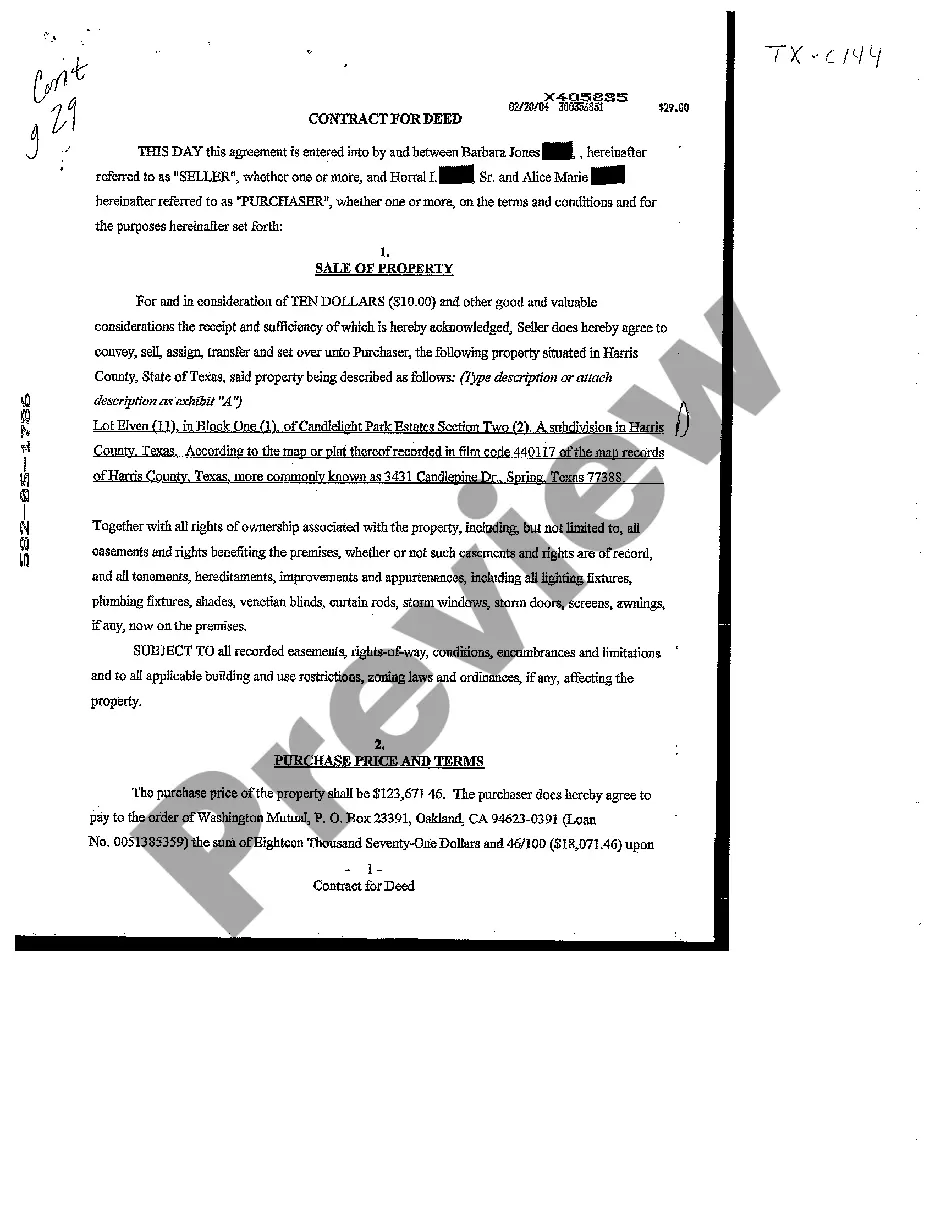
Wisconsin Assignment of Mortgage by Individual Mortgage Holder
About this form
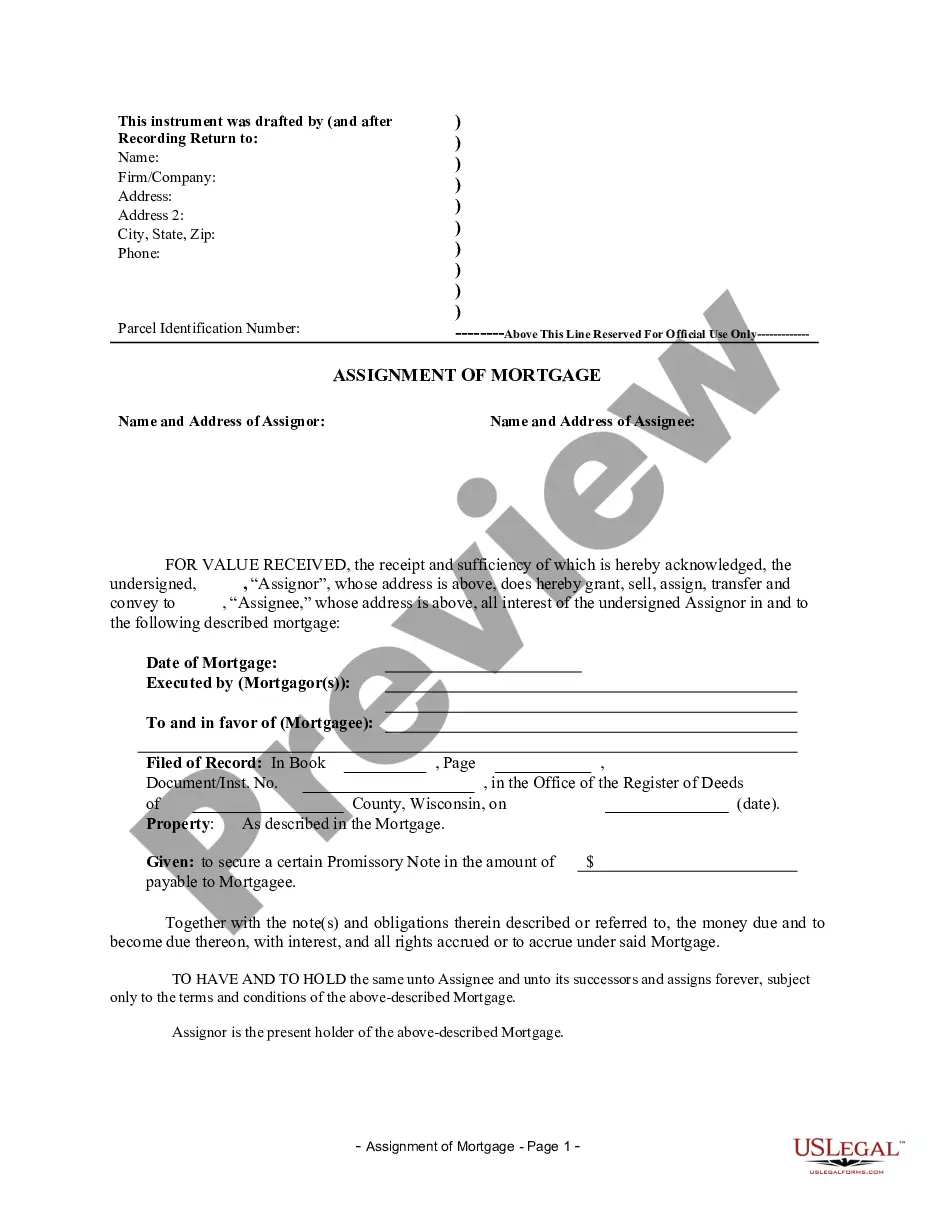
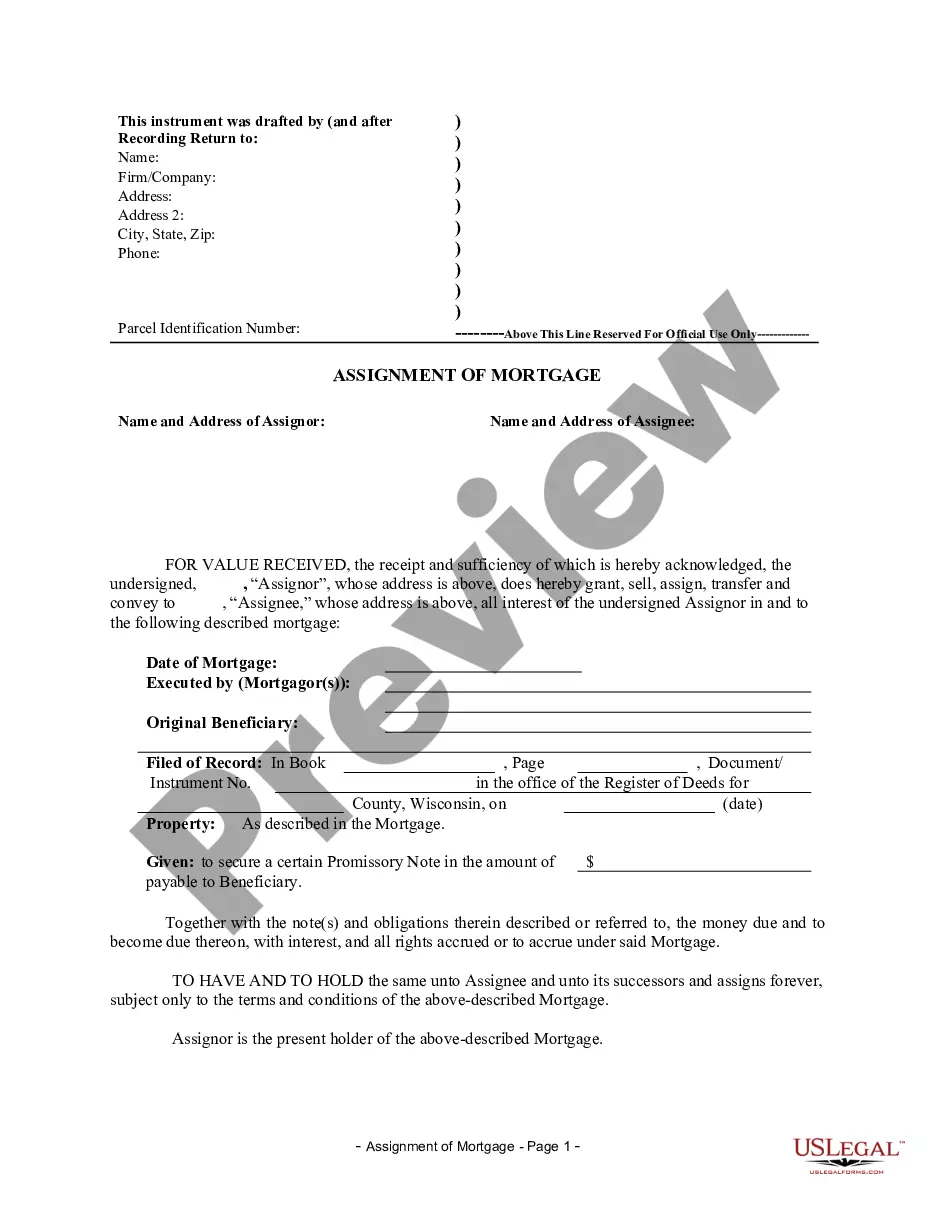
The Assignment of Mortgage by Individual Mortgage Holder is a legal document used when the holder of a mortgage, known as the Assignor, transfers their interest in the mortgage to another party, known as the Assignee. This form is essential for recording the change in ownership of the mortgage and clarifies the rights and obligations associated with it. Unlike similar forms, this assignment specifically addresses cases where the mortgage holder is an individual rather than an entity.
Key components of this form
- Date of execution
- Names of Mortgagor(s) and Mortgagee
- Description of the property as per the original mortgage
- Reference to the Promissory Note secured by the mortgage
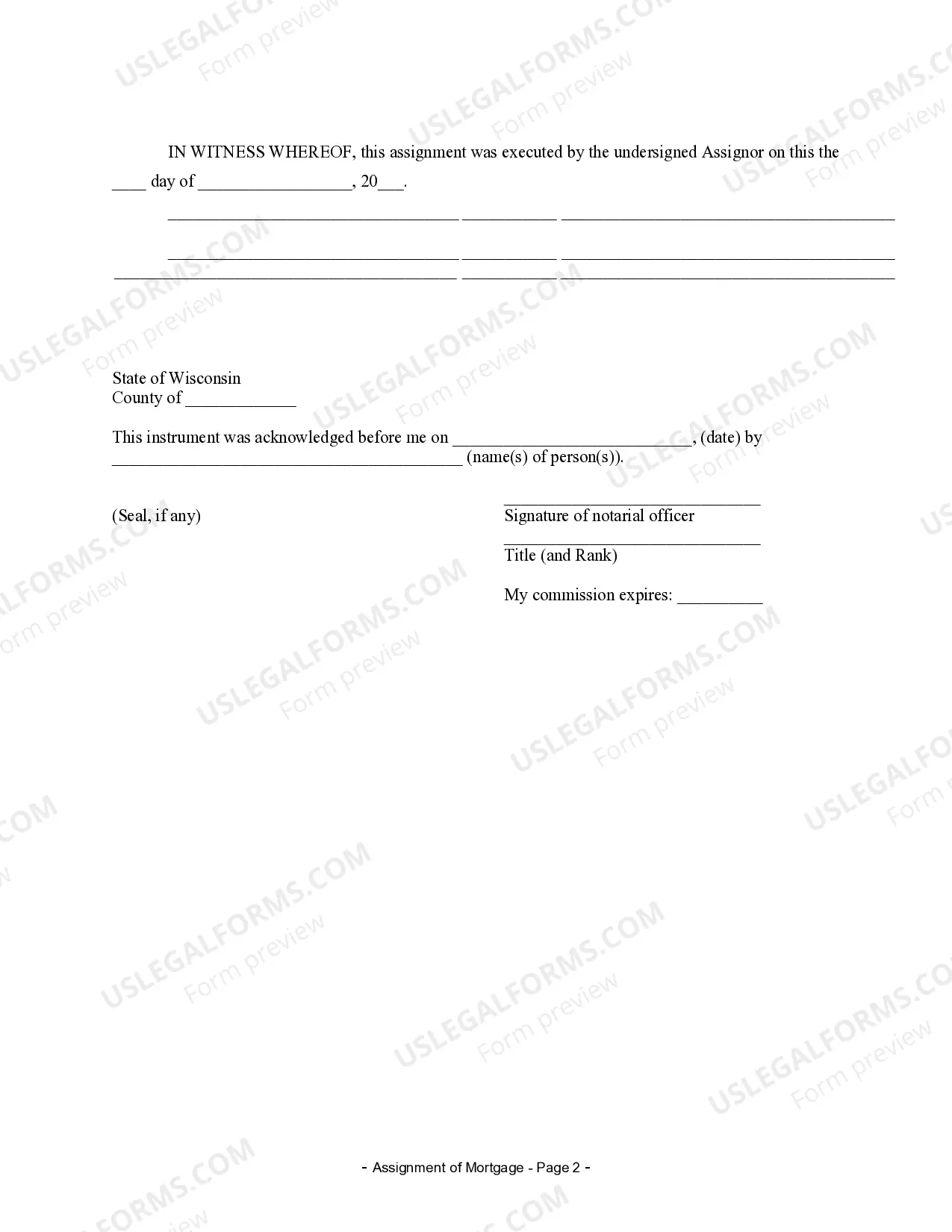
- Signature of the Assignor, including printed name
- Notary acknowledgment section
When to use this form
This form is typically used when an individual mortgage holder wants to sell or transfer their interest in a property secured by a mortgage. It may be necessary during a sale, refinancing, or when transferring ownership to another individual or entity. Using this assignment form ensures that the new holder's rights are clearly established and recognized.
Who this form is for
- Individuals who currently hold a mortgage and are seeking to assign their rights
- Buyers or investors acquiring the mortgage from the original holder
- Real estate professionals facilitating the transfer of mortgage interests
Completing this form step by step
- Identify and enter the date of the mortgage assignment.
- Specify the names of the Mortgagor(s) and Mortgagee accurately.
- Clearly describe the property as referenced in the original mortgage.
- Detail the terms of the Promissory Note being secured by the mortgage.
- Sign the document and print your name as the Assignor.
- Have the document notarized to validate the assignment.
Notarization requirements for this form
This form needs to be notarized to ensure legal validity. US Legal Forms provides secure online notarization powered by Notarize, allowing you to complete the process through a verified video call, available anytime.
Get your form ready online
Our built-in tools help you complete, sign, share, and store your documents in one place.
Make edits, fill in missing information, and update formatting in US Legal Forms—just like you would in MS Word.
Download a copy, print it, send it by email, or mail it via USPS—whatever works best for your next step.
Sign and collect signatures with our SignNow integration. Send to multiple recipients, set reminders, and more. Go Premium to unlock E-Sign.
If this form requires notarization, complete it online through a secure video call—no need to meet a notary in person or wait for an appointment.
We protect your documents and personal data by following strict security and privacy standards.

Make edits, fill in missing information, and update formatting in US Legal Forms—just like you would in MS Word.

Download a copy, print it, send it by email, or mail it via USPS—whatever works best for your next step.

Sign and collect signatures with our SignNow integration. Send to multiple recipients, set reminders, and more. Go Premium to unlock E-Sign.

If this form requires notarization, complete it online through a secure video call—no need to meet a notary in person or wait for an appointment.

We protect your documents and personal data by following strict security and privacy standards.
Common mistakes
- Failing to include the correct names of all parties involved.
- Omitting the property description which could lead to disputes.
- Not having the document notarized, which may invalidate the assignment.
- Incorrectly referencing the original mortgage or Promissory Note.
Benefits of using this form online
- Easy to download and complete at your convenience.
- Edit and customize the form to meet your specific situation.
- Ensures accuracy with templates drafted by licensed attorneys.
Looking for another form?
Form popularity
FAQ
South Carolina. Florida. Louisiana. Arkansas. New Mexico. Kansas. North Dakota. Wisconsin.
An assignment of mortgage gives the loan seller's rights under the mortgage, including the right to foreclose if the borrower doesn't make payments, to the new owner of the loan.
An assignment transfers all of the original mortgagee's interest under the mortgage or deed of trust to the new bank. Generally, the mortgage or deed of trust is recorded shortly after the mortgagors sign it and, if the mortgage is subsequently transferred, each assignment is to be recorded in the county land records.
When a borrower prepays their mortgage or makes the final mortgage payment, a satisfaction of mortgage document must be prepared, signed, and filed by the financial institution in ownership of the mortgage. The satisfaction of mortgage document is created by a lending institution and their legal counsel.
Banks often sell and buy mortgages from each other as a way to liquidate assets and improve their credit ratings. When the original lender sells the debt to another bank or an investor, a mortgage assignment is created and recorded in the public record and the promissory note is endorsed.
In title theory states, the borrower does not actually keep title to the property during the loan term.Foreclosure proceedings in a lien theory state may be more difficult for the lender than in a title theory state, due to the fact that the buyer is holding title to the land and not the lender.
In lien theory states, the buyer, who is also the borrower, will hold the deed to the real estate property for the life of the mortgage.The mortgage agreement serves as the lender's lien on the property until the loan is paid back completely, but the buyer holds the title to the property instead of the lender.
The Mortgage Satisfaction Act (2013 Wisconsin Act 66), enacted in December 2013, governs satisfaction procedures, including required payoff statements and penalties for secured lenders who do not timely submit a satisfaction of mortgage for recording.
A mortgagee is a lender: specifically, an entity that lends money to a borrower for the purpose of purchasing real estate. In a mortgage transaction, the lender serves as the mortgagee and the borrower is known as the mortgagor.