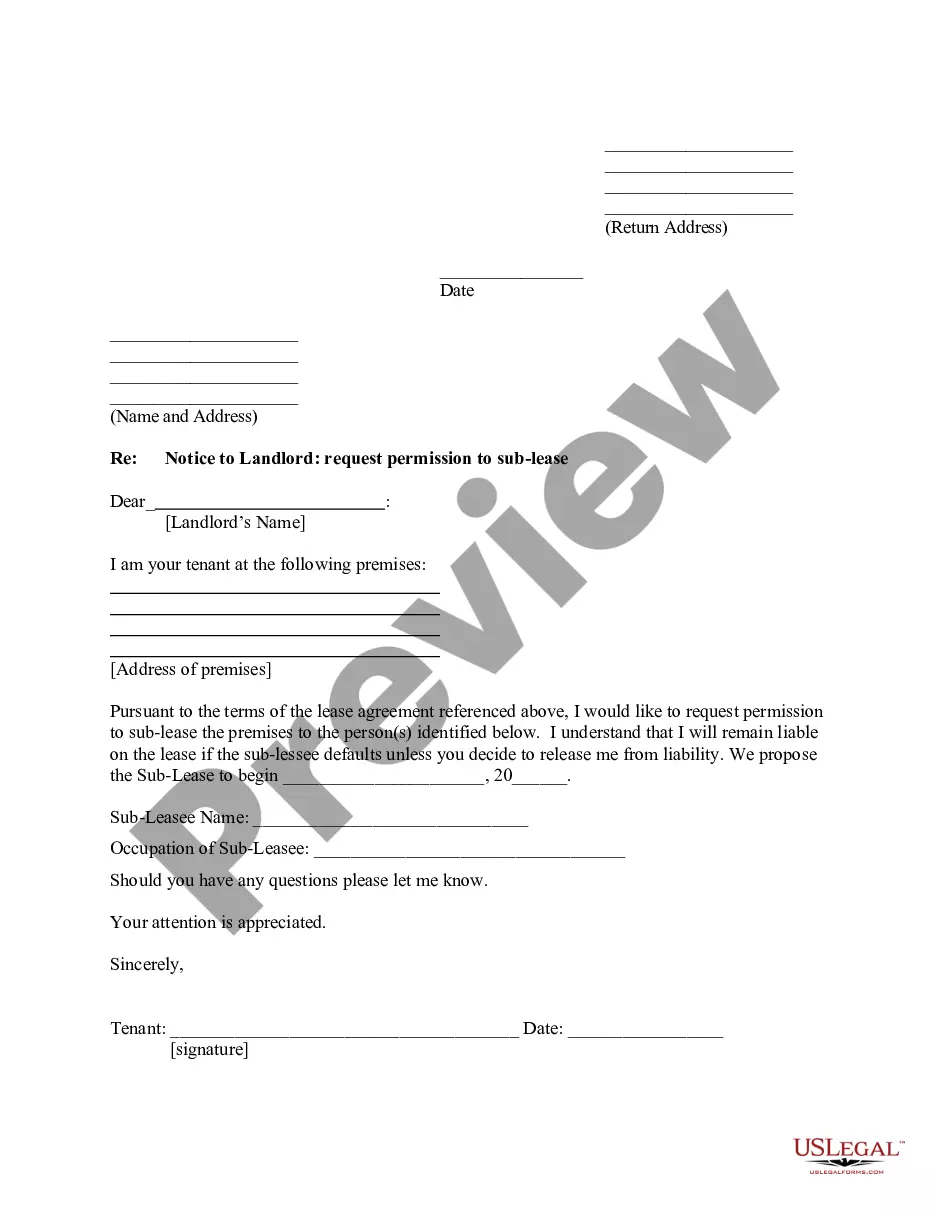
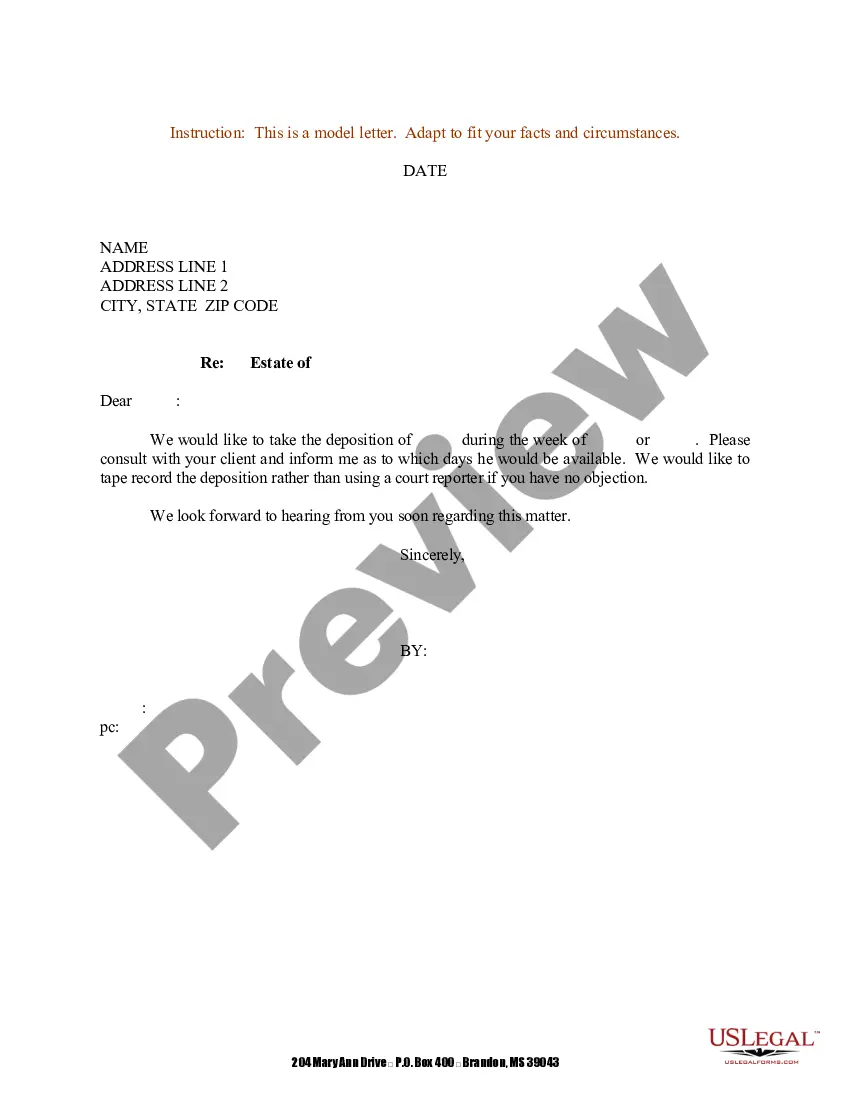
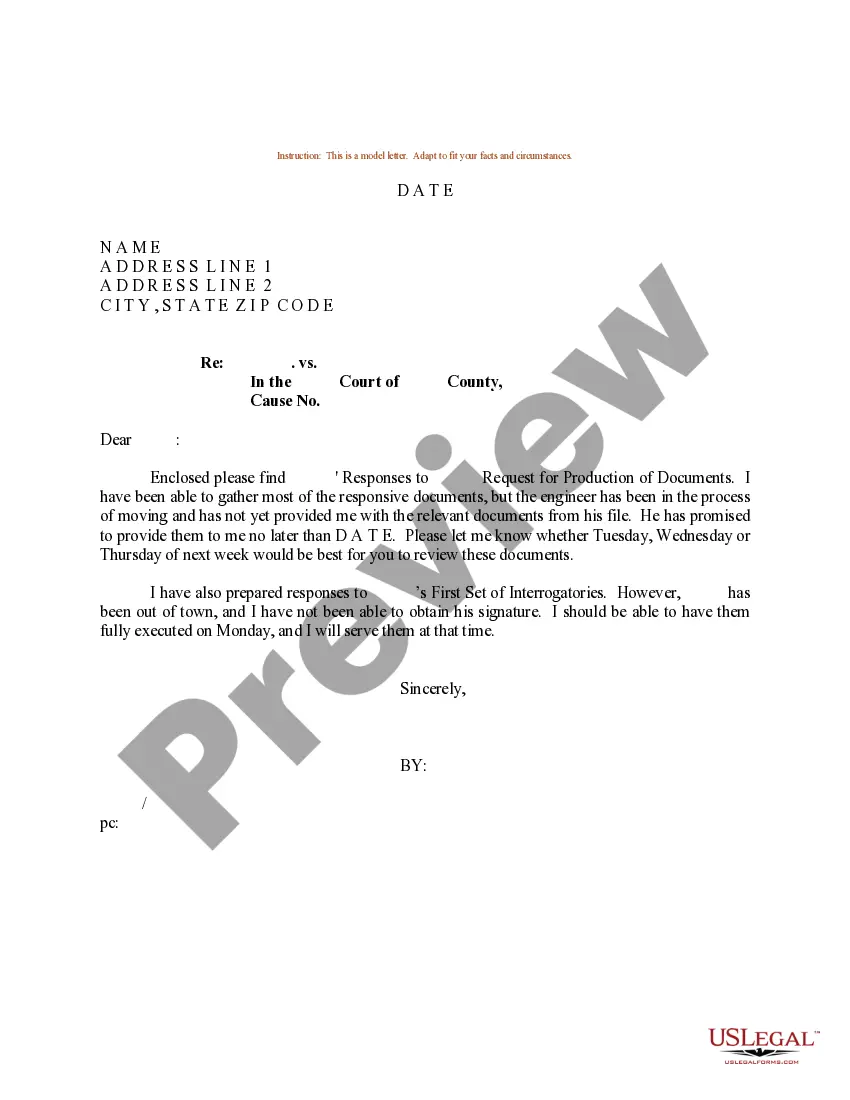
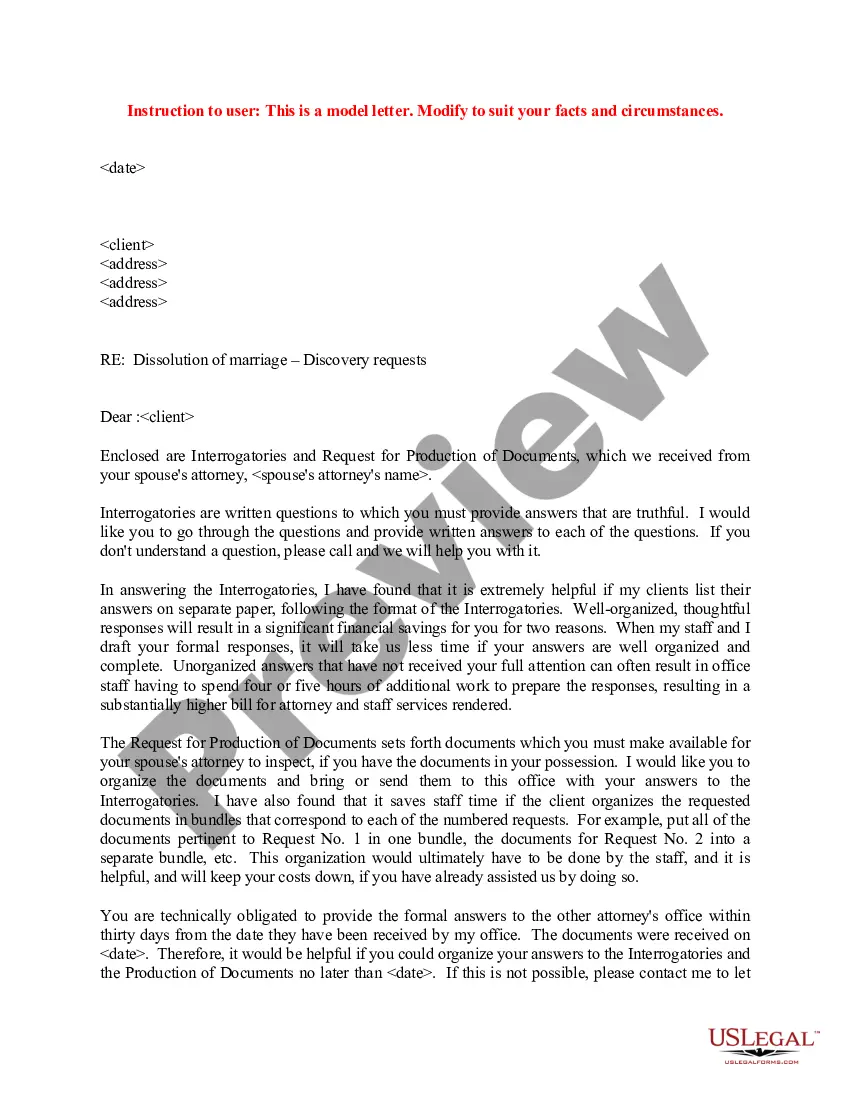
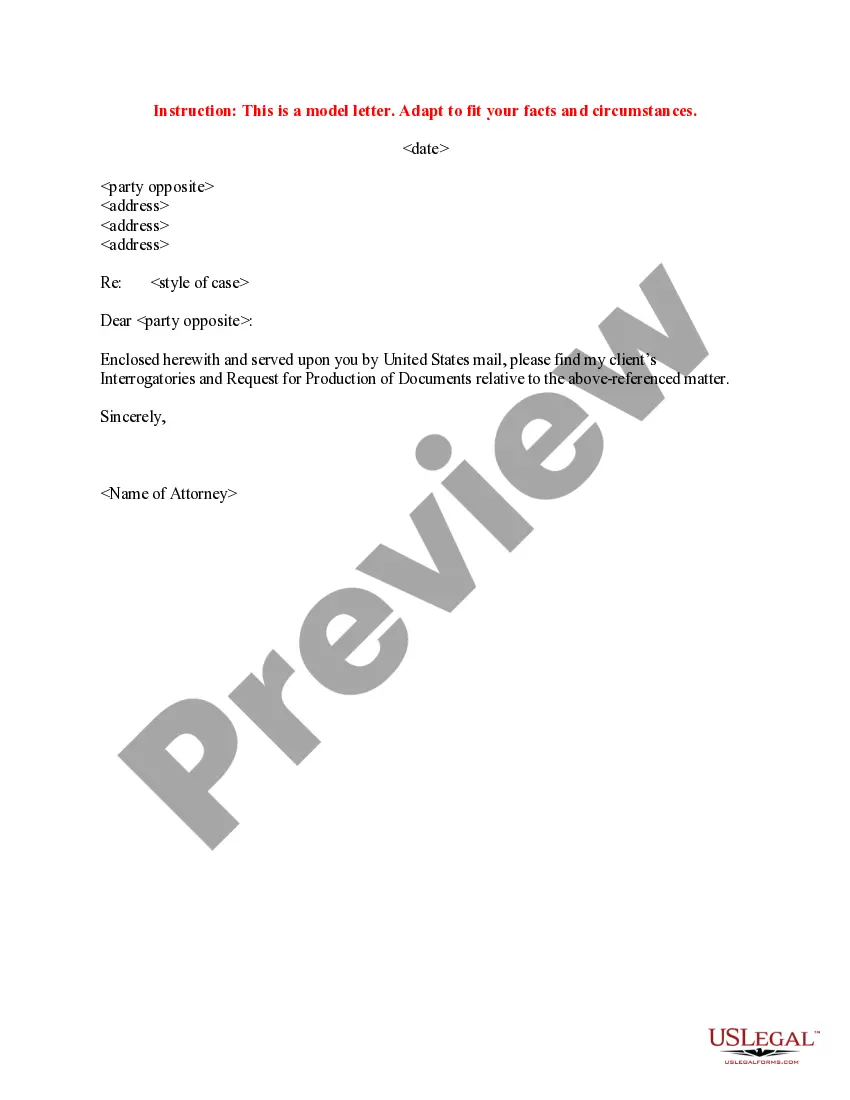
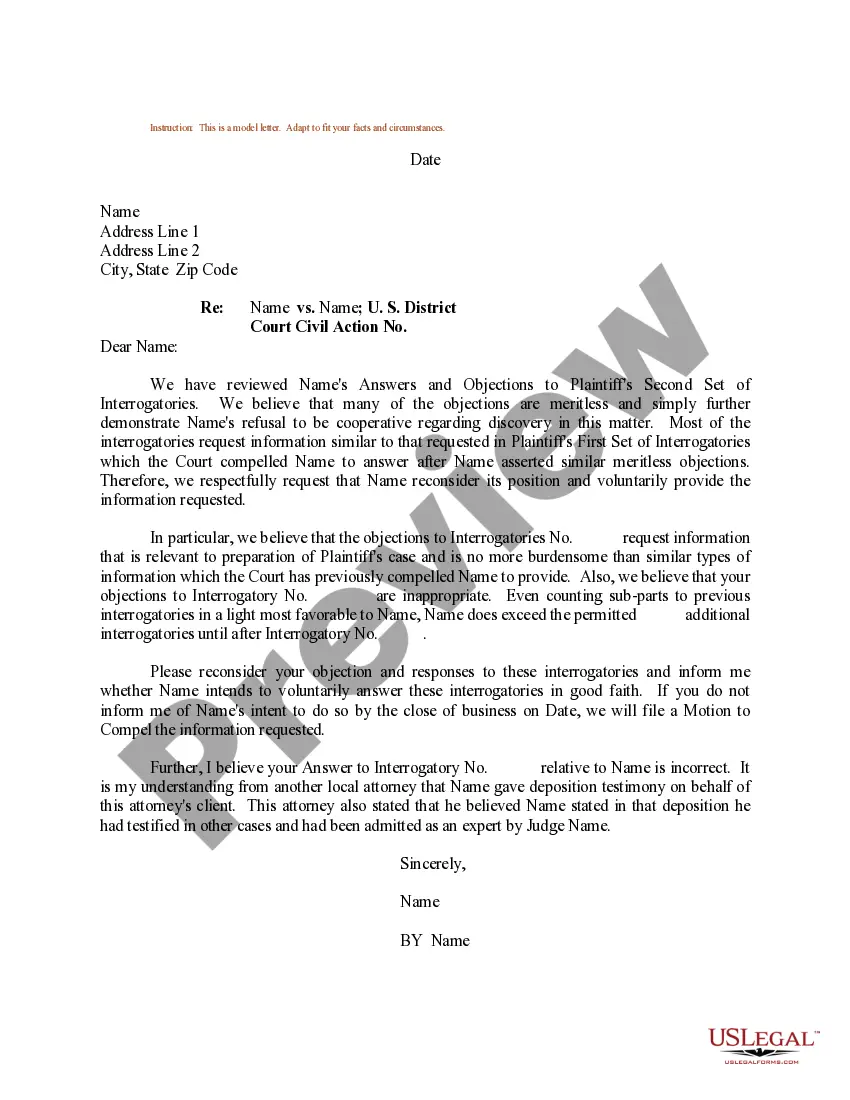
This form is a sample letter in Word format covering the subject matter of the title of the form.
Alaska Sample Letter Requesting Answers to Discovery Material
Category:
State:
Multi-State
Control #:
US-0009LTR
Format:
Word;
Rich Text
Instant download
Description
How to fill out Sample Letter Requesting Answers To Discovery Material?
It is feasible to invest hours online looking for the legal document template that meets the state and federal requirements you require.
US Legal Forms offers a vast array of legal forms that are evaluated by experts.
You can easily acquire or print the Alaska Sample Letter Requesting Answers to Discovery Material from our service.
If available, utilize the Review button to check the document template as well. If you wish to find another version of the form, use the Search field to locate the template that fits your needs and requirements. Once you have found the template you desire, click Get now to proceed. Select the pricing plan you prefer, enter your credentials, and register for an account on US Legal Forms. Complete the transaction. You can use your Visa or Mastercard or PayPal account to purchase the legal form. Choose the format of the document and download it to your device. Make adjustments to your document if necessary. You can complete, revise, sign, and print the Alaska Sample Letter Requesting Answers to Discovery Material. Download and print numerous document templates using the US Legal Forms website, which provides the largest collection of legal forms. Utilize professional and state-specific templates to address your business or personal needs.
- If you already have a US Legal Forms account, you can Log In and click the Download button.
- After that, you can complete, modify, print, or sign the Alaska Sample Letter Requesting Answers to Discovery Material.
- Every legal document template you purchase is yours for years.
- To obtain another copy of any purchased form, visit the My documents tab and click the appropriate button.
- If you are using the US Legal Forms website for the first time, follow the simple steps below.
- First, ensure you have selected the correct document template for the state/city of your preference.
- Review the form description to make sure you have chosen the right template.
Form popularity
FAQ
A discovery request letter is a formal document sent to the opposing party asking for specific information or documents relevant to a case. This letter is crucial for obtaining evidence that can support your legal arguments. To streamline this process, consider using an Alaska Sample Letter Requesting Answers to Discovery Material, which provides a clear framework for your request and helps ensure compliance with legal standards.
In Alaska, Rule 45 governs the use of subpoenas in civil proceedings. It allows parties to request documents and information from witnesses, promoting transparency in the discovery process. An Alaska Sample Letter Requesting Answers to Discovery Material can be a valuable tool in drafting your requests, ensuring you gather the necessary evidence to support your case.
Civil Rule 45.1 in Alaska provides specific guidelines for the issuance and service of subpoenas within civil cases. This rule aims to streamline the discovery process while protecting the rights of individuals. For parties navigating this process, using an Alaska Sample Letter Requesting Answers to Discovery Material can help facilitate clear communication and ensure compliance with legal requirements.
Rule 45 of the Rules of Court outlines the procedures for issuing subpoenas to compel the production of documents, objects, or testimony. This rule ensures that all parties have access to necessary information during the discovery phase of litigation. If you need assistance, consider using an Alaska Sample Letter Requesting Answers to Discovery Material to formally request information from the opposing party.
Discovery is how you gather the evidence you will need to prove your case as plaintiff, or defeat the plaintiff's case as a defendant. You use discovery to find out things like: What the other side plans to say about an issue in your case. What facts or witnesses support their side.
Discovery, in the law of common law jurisdictions, is a pre-trial procedure in a lawsuit in which each party, through the law of civil procedure, can obtain evidence from the other party or parties by means of discovery devices such as interrogatories, requests for production of documents, requests for admissions and ...
Discovery is the formal process by which the parties to a case in court exchange information about the case. This includes information about the witnesses and evidence to be presented at trial. Its purpose is to make the parties aware of the evidence which may be presented at trial.
Discovery is the formal process by which the parties to a case in court exchange information about the case. This includes information about the witnesses and evidence to be presented at trial. Its purpose is to make the parties aware of the evidence which may be presented at trial.
The three forms of discovery are: Written - This form of discovery takes place on paper. ... Document Production - This form of discovery involves an exchange of documents. ... Oral - Sometimes known as depositions, this form of discovery allows parties to gain sworn statements from involved individuals.