Alabama Clerk's Deed
What is this form?
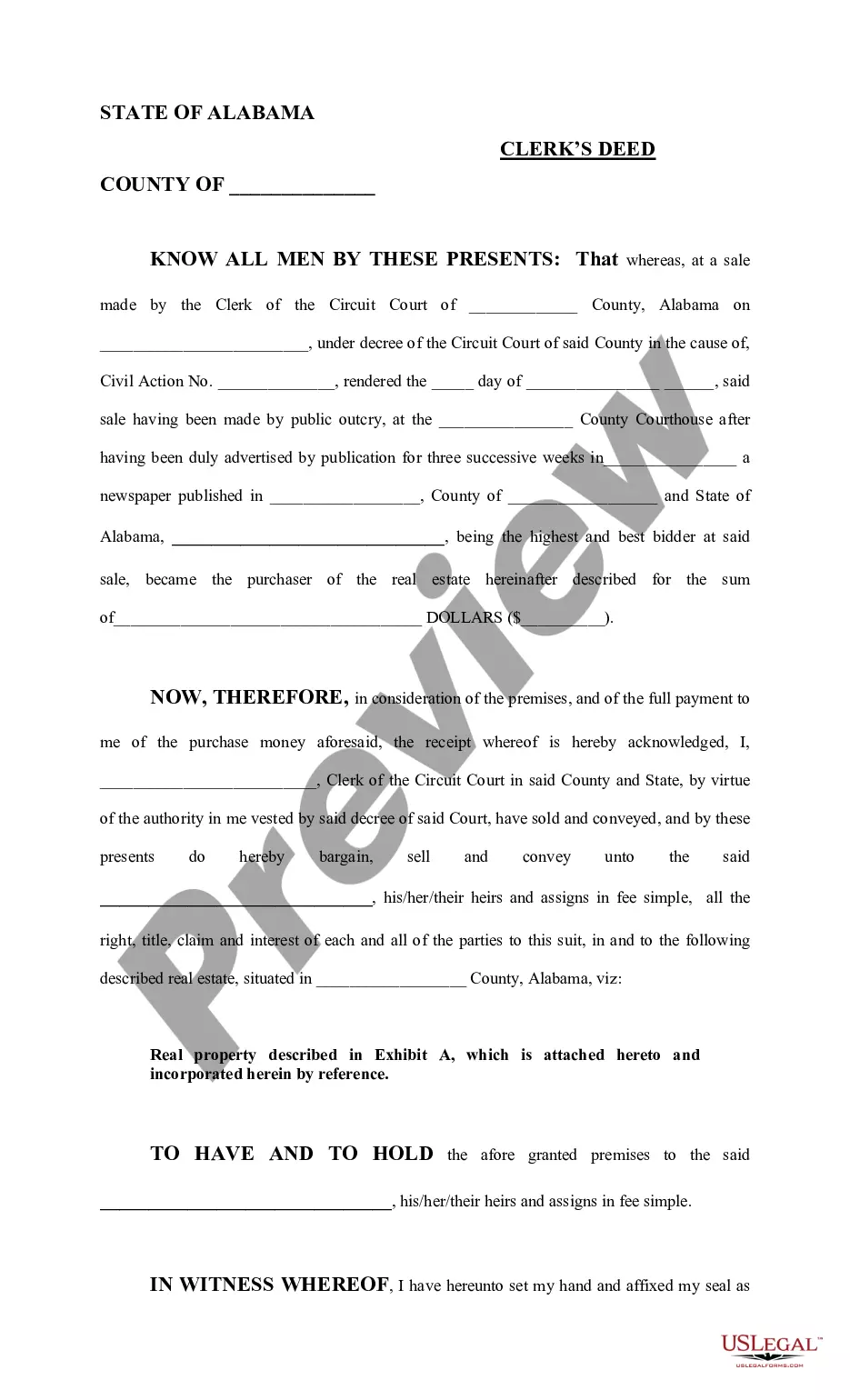
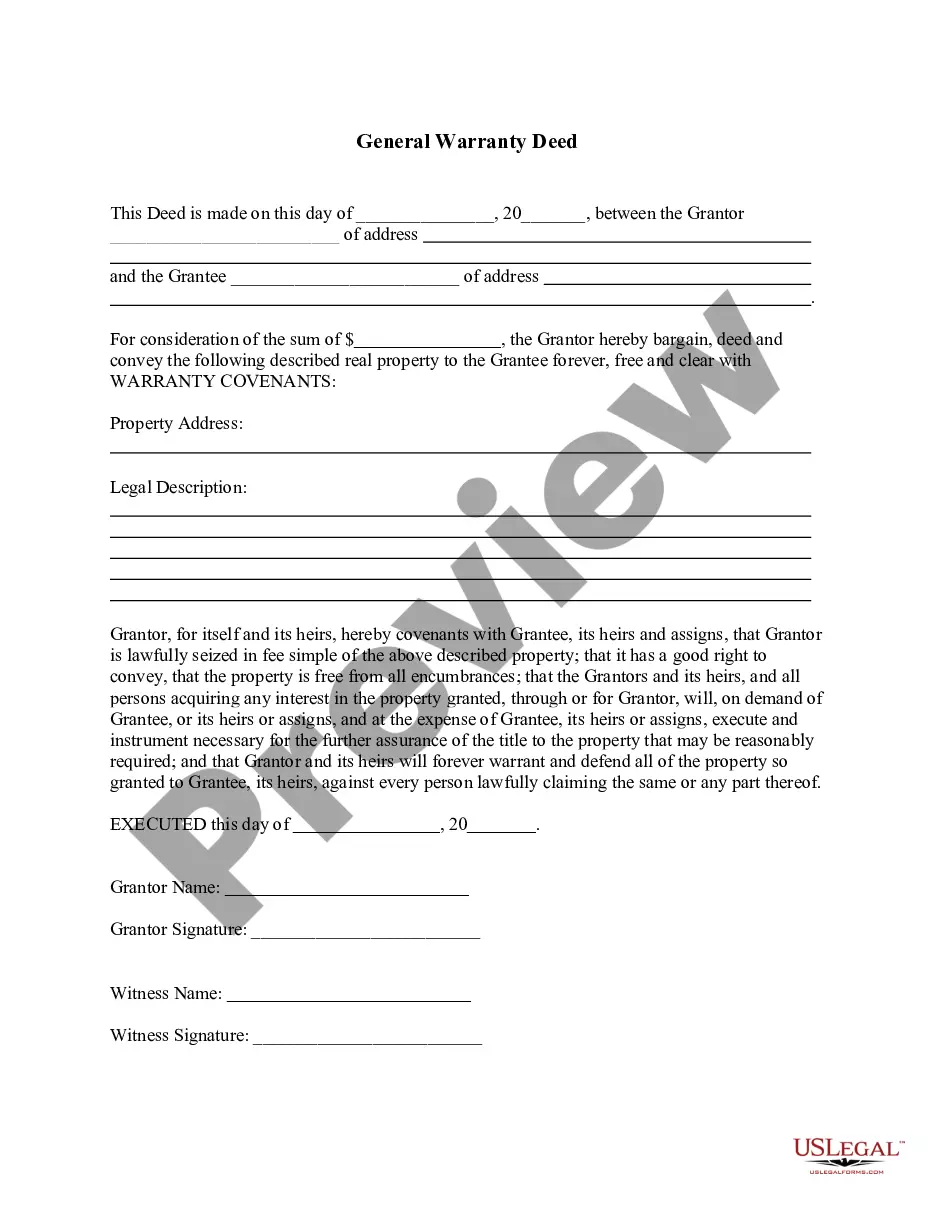
The Clerk's Deed is a legal document utilized to officially transfer property following a public sale conducted by the circuit clerk. This form is distinct from general property deeds, as it specifically pertains to property sold during a public auction, typically mandated by court rules. It serves to formalize the new ownership and includes necessary details about the sale and property description.
Key components of this form
- Information about the sale, including the date and court decree number.
- Buyerâs name and contact details.
- Description of the property being conveyed.
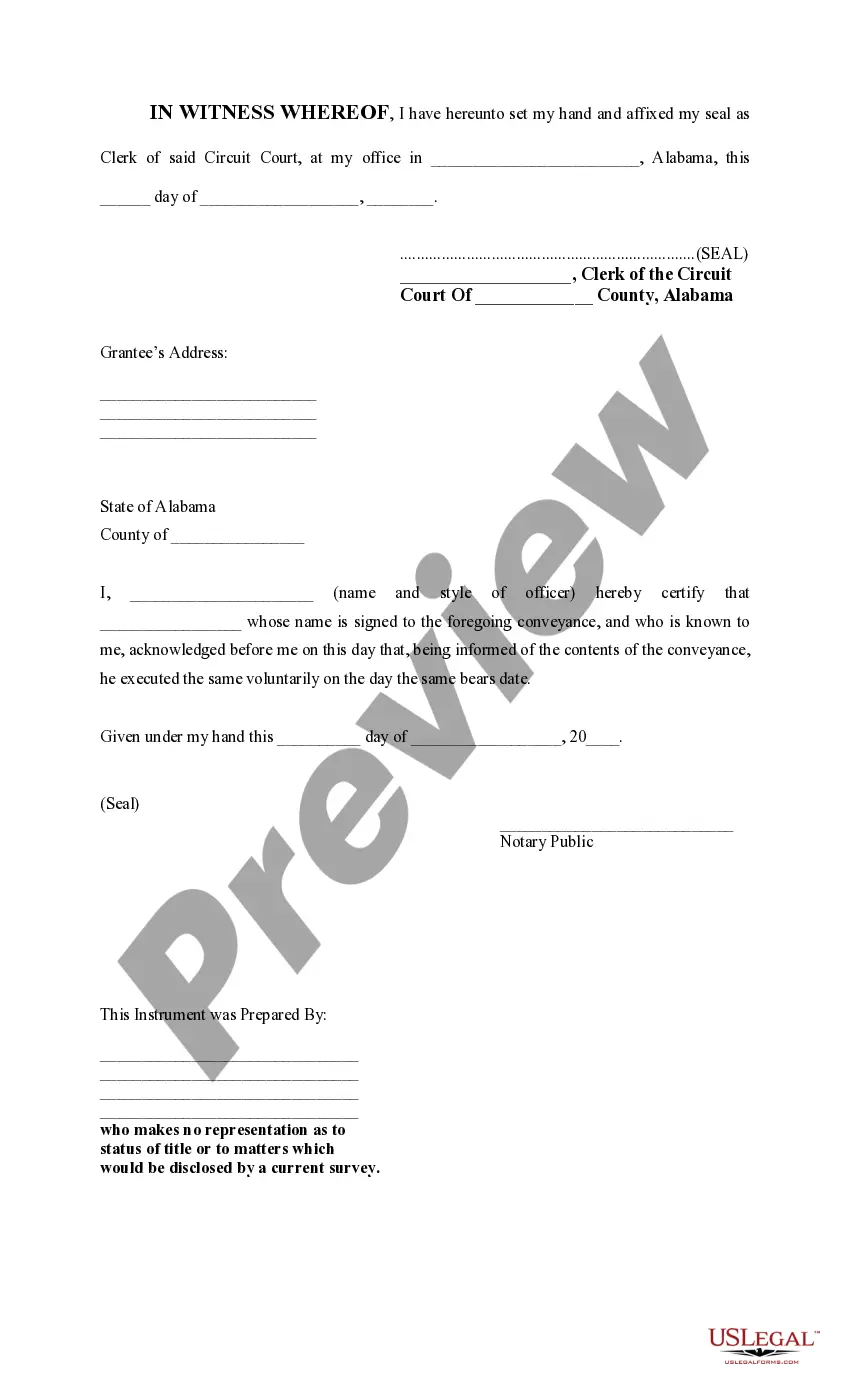
- Clerk's signature and official seal, verifying the transaction.
- Notary acknowledgment, if required.

Situations where this form applies
You should use the Clerk's Deed when you are purchasing real estate at a public auction that has been conducted by the circuit court. This form helps in transferring ownership legally and ensures that all legal obligations are met, especially in cases where property is sold to settle financial claims or liens.
Who needs this form
This form is intended for:
- Individuals or entities who have successfully bid on property at a public auction.
- Circuit clerks who need to document the transfer of property.
- Real estate professionals handling auction sales.
Instructions for completing this form
- Identify the relevant court and county where the sale occurred.
- Enter the date of the auction and the accompanying court decree number.
- Provide the name of the successful bidder and their contact information.
- Describe the property being transferred, making sure to include any specific details or exhibits.
- Have the clerk sign the document and affix their official seal.
- Complete the notary section if notarization is required.
Does this document require notarization?
Yes, this form must be notarized to be legally valid. Notarization ensures that the signatures are authentic and that the parties involved have willingly executed the document. US Legal Forms offers integrated online notarization services that operate 24/7, ensuring secure and convenient access without the need for travel.
Get your form ready online
Our built-in tools help you complete, sign, share, and store your documents in one place.
Make edits, fill in missing information, and update formatting in US Legal Forms—just like you would in MS Word.
Download a copy, print it, send it by email, or mail it via USPS—whatever works best for your next step.
Sign and collect signatures with our SignNow integration. Send to multiple recipients, set reminders, and more. Go Premium to unlock E-Sign.
If this form requires notarization, complete it online through a secure video call—no need to meet a notary in person or wait for an appointment.
We protect your documents and personal data by following strict security and privacy standards.

Make edits, fill in missing information, and update formatting in US Legal Forms—just like you would in MS Word.

Download a copy, print it, send it by email, or mail it via USPS—whatever works best for your next step.

Sign and collect signatures with our SignNow integration. Send to multiple recipients, set reminders, and more. Go Premium to unlock E-Sign.

If this form requires notarization, complete it online through a secure video call—no need to meet a notary in person or wait for an appointment.

We protect your documents and personal data by following strict security and privacy standards.
Mistakes to watch out for
- Failing to include all required information about the property and the sale.
- Not obtaining the clerk's signature or seal on the form.
- Leaving out the notary acknowledgment when it is necessary.
Benefits of completing this form online
- Convenient access to a legally compliant Clerk's Deed form.
- Editable templates allow for customization to fit your specific transaction.
- Reliability of having a document reviewed by licensed attorneys.
What to keep in mind
- The Clerk's Deed is essential for officially transferring property sold at a public auction.
- This legal document requires specific details about the auction and property.
- Notarization is necessary for validation of the deed.
Looking for another form?
Form popularity
FAQ
The Alabama Clerk's Deed is a legal document used to officially transfer property after a circuit court conducts a public sale. This form records sale details, the buyer’s name and contact, and a description of the property, and includes the clerk’s signature and official seal; a notary acknowledgment may be required. It is intended for bidders, circuit clerks, and real estate professionals handling auction sales.
A Clerk's Deed in Alabama is a deed used to transfer ownership after a circuit court conducts a public auction. It documents the sale, identifies the buyer, describes the property, and carries the clerk’s signature and official seal, with a notary acknowledgment if required.
The Clerk's Deed is executed by the circuit clerk and bears the clerk's official seal. A notary acknowledgment may be required depending on local requirements. The form includes space for the clerk's signature and seal, and, if necessary, a notary acknowledgment to confirm the deed's execution.
The Clerk's Deed must include information about the sale, such as the sale date and court decree number. It also records the buyer’s name and contact and a description of the property being conveyed, ensuring the transfer matches the circuit court’s auction terms.
A notary acknowledgment may be required for the Clerk's Deed, depending on the circumstances and local practice. The form notes 'Notary acknowledgment, if required.' Buyers and bidders should check with the circuit clerk or an attorney to confirm the requirement.
Unlike a generic warranty or quitclaim deed, the Alabama Clerk's Deed is specifically used to transfer property after a circuit court conducts a public auction. It requires the clerk’s signature and official seal and may include a notary acknowledgment, reflecting its origin in court-ordered sale rather than private transfer.