Alabama Alias Summons
What this document covers
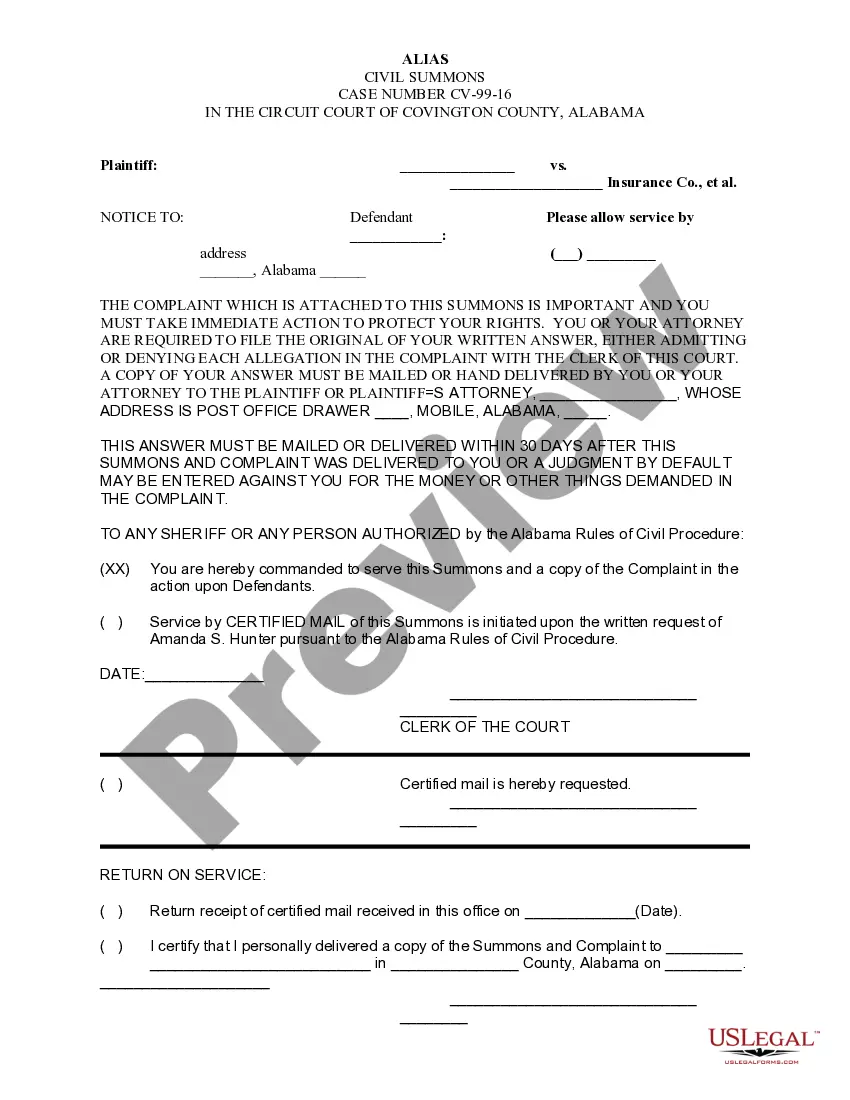
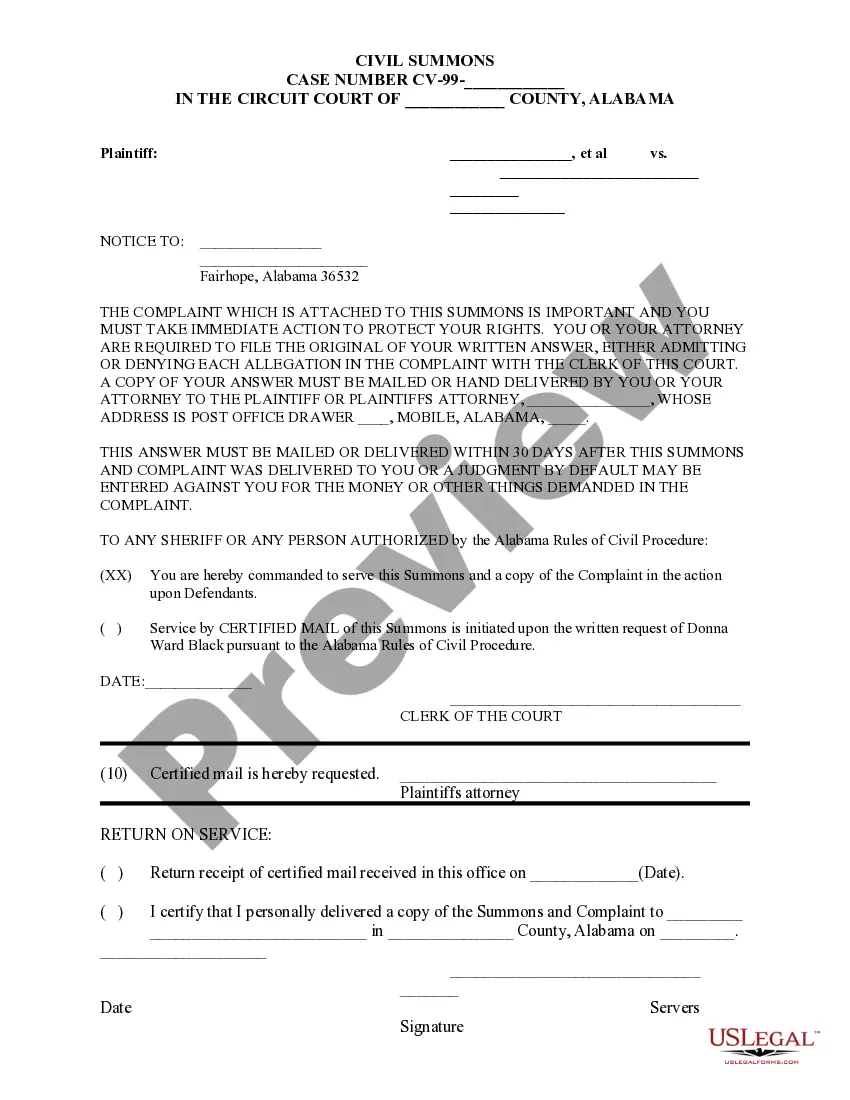
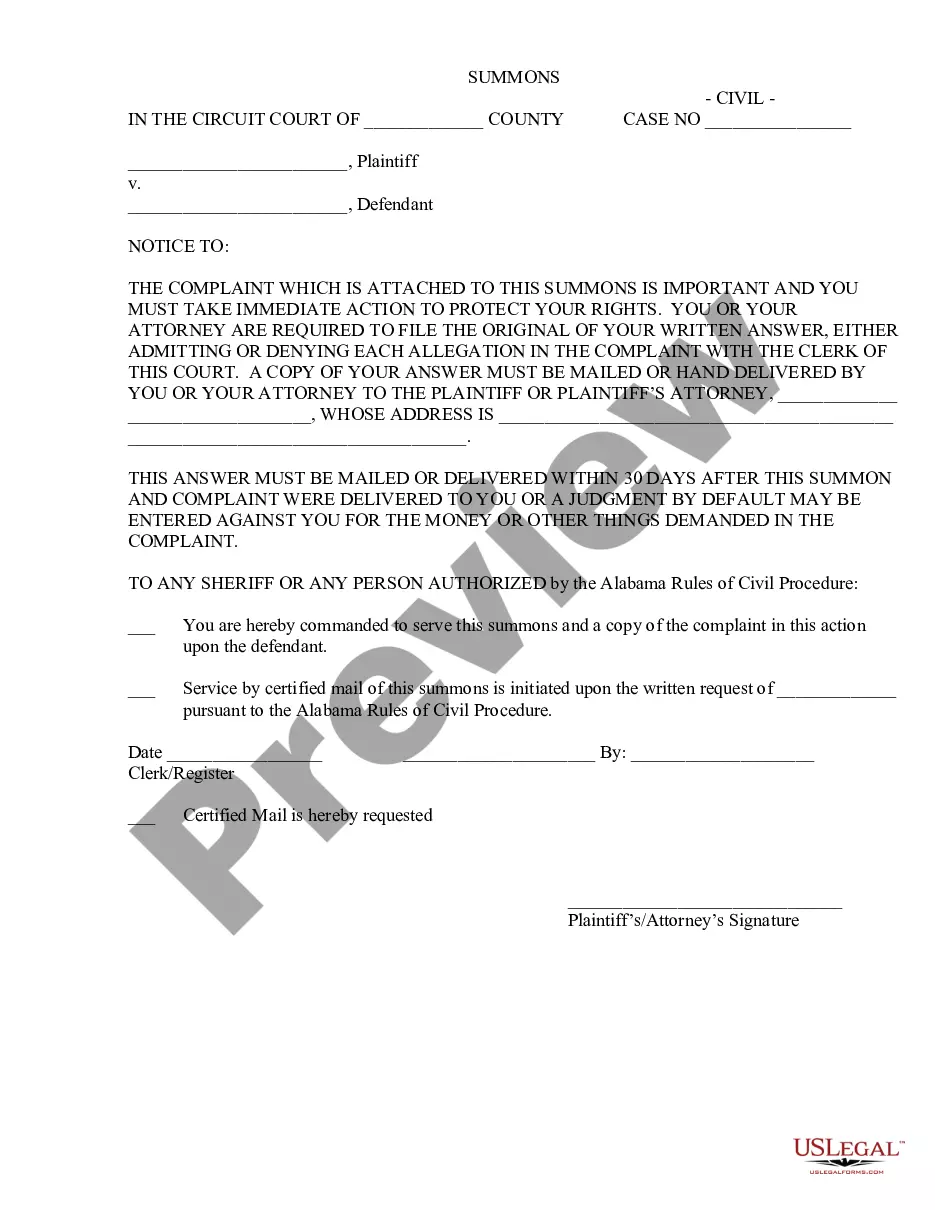
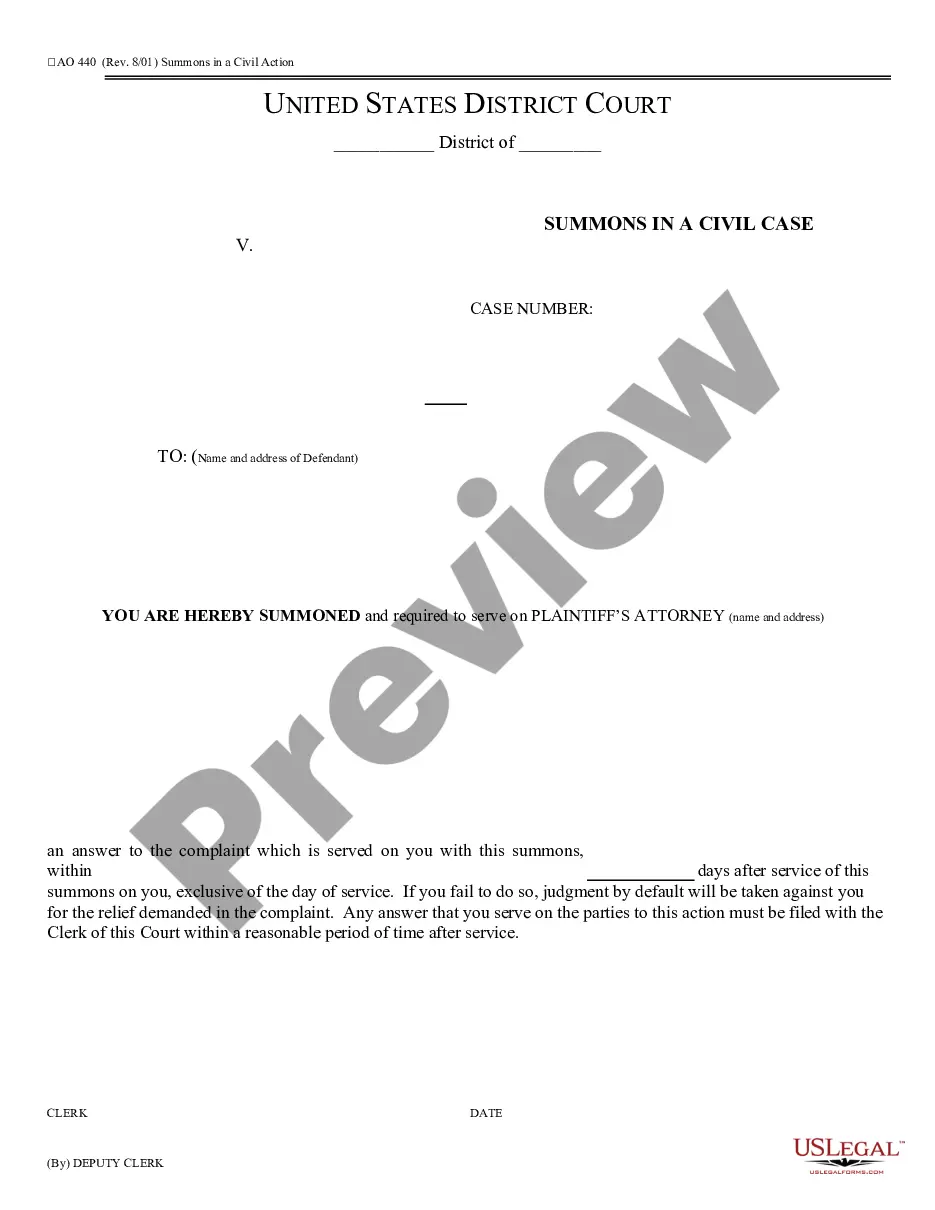
The alias summons is a legal document issued by a court to notify a defendant of a lawsuit filed against them. Its main purpose is to compel the defendant to respond to the attached complaint within a specified time frame. The alias summons serves as an alternative when a previous summons could not be served, ensuring the defendant is still made aware of the legal proceedings. Unlike other types of summons, the alias summons emphasizes the urgency of the response to protect the defendantâs rights.
Form components explained
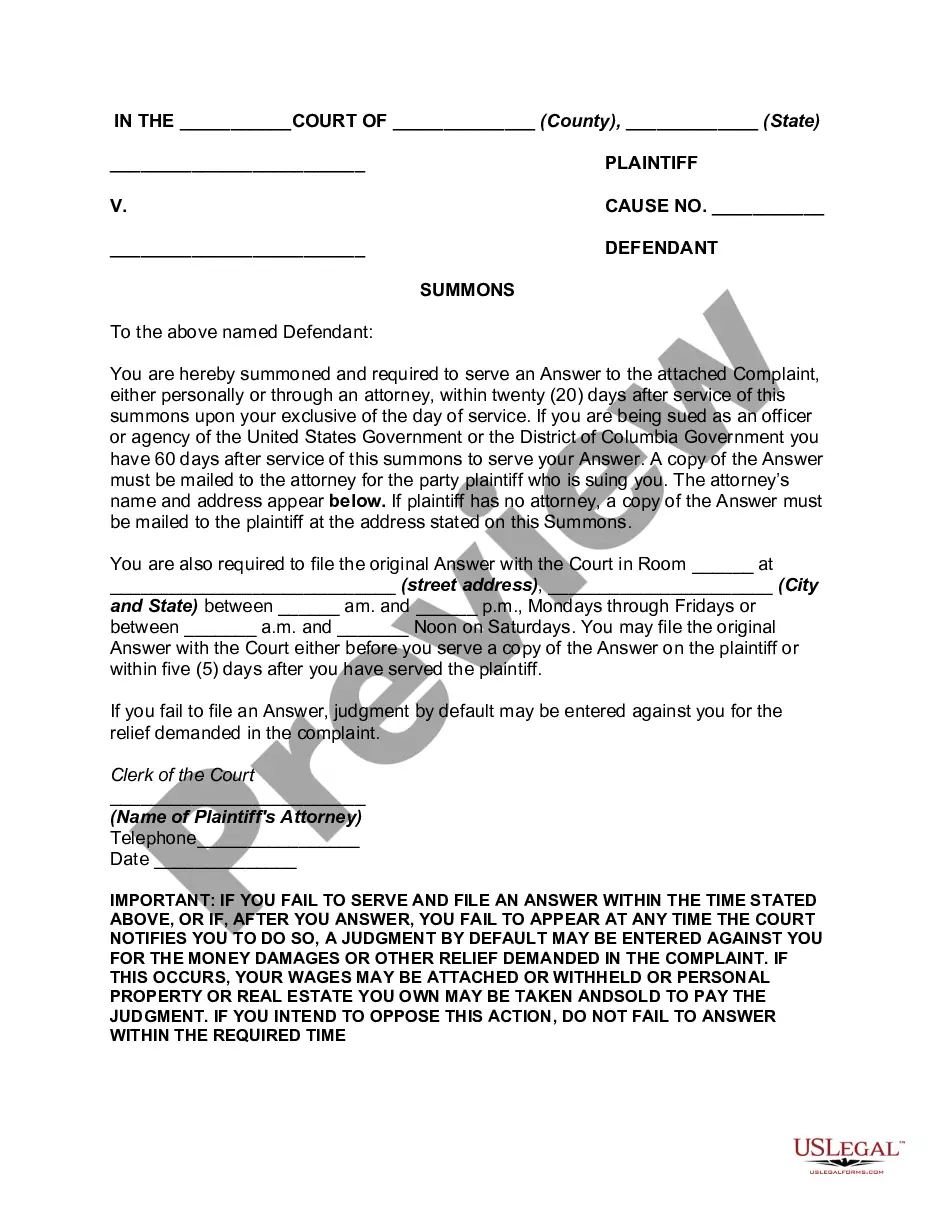
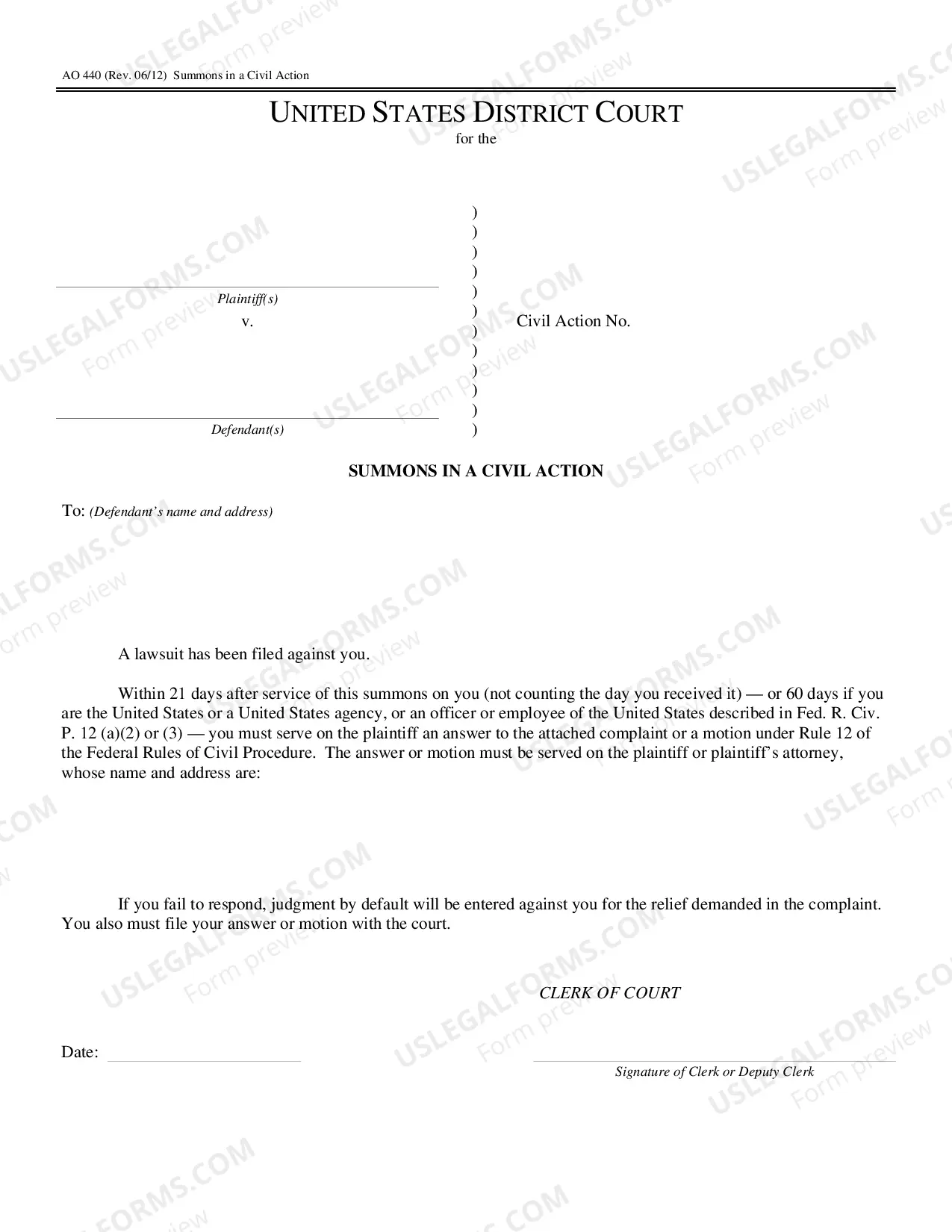
- Case number to identify the specific lawsuit.
- Name and address of the plaintiff and defendant.
- Instructions to the defendant regarding filing a written answer.
- A notice of the deadline (typically 30 days) to respond to the complaint.
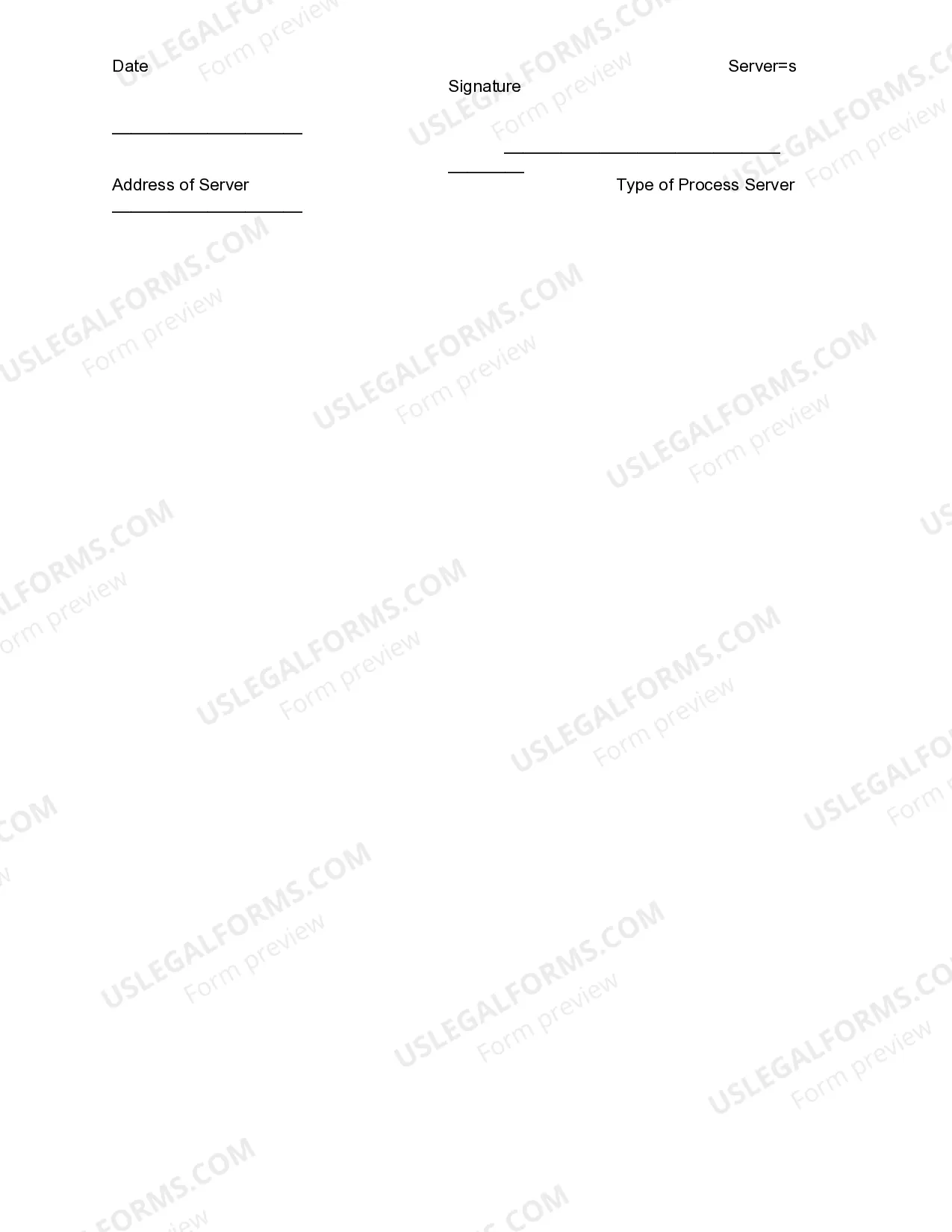
- Signature and seal of the court clerk.
When to use this document
This form should be used when a plaintiff needs to notify a defendant of a lawsuit that requires a response. It is particularly applicable when the original summons was not successfully delivered to the defendant. The alias summons is essential to ensure the defendant is aware of the new legal action and the importance of taking timely action to protect their interests.
Who can use this document
This form is intended for:
- Plaintiffs seeking to inform defendants about ongoing lawsuits.
- Attorneys representing plaintiffs or defendants in civil court.
- Individuals wanting to ensure compliance with court procedures when the original summons is not effective.
Steps to complete this form
To complete the alias summons:
- Enter the case number at the top of the form.
- Fill in the names and addresses of the plaintiff and defendant.
- Attach the relevant complaint document to the summons.
- Specify how the summons will be served (e.g., personal delivery or certified mail).
- Have the court clerk sign and date the document before serving it to the defendant.
Notarization requirements for this form
This form does not typically require notarization unless specified by local law. Users can be assured that the form is valid as long as it meets the filing requirements set by the court.
Get your form ready online
Our built-in tools help you complete, sign, share, and store your documents in one place.
Make edits, fill in missing information, and update formatting in US Legal Forms—just like you would in MS Word.
Download a copy, print it, send it by email, or mail it via USPS—whatever works best for your next step.
Sign and collect signatures with our SignNow integration. Send to multiple recipients, set reminders, and more. Go Premium to unlock E-Sign.
If this form requires notarization, complete it online through a secure video call—no need to meet a notary in person or wait for an appointment.
We protect your documents and personal data by following strict security and privacy standards.

Make edits, fill in missing information, and update formatting in US Legal Forms—just like you would in MS Word.

Download a copy, print it, send it by email, or mail it via USPS—whatever works best for your next step.

Sign and collect signatures with our SignNow integration. Send to multiple recipients, set reminders, and more. Go Premium to unlock E-Sign.

If this form requires notarization, complete it online through a secure video call—no need to meet a notary in person or wait for an appointment.

We protect your documents and personal data by following strict security and privacy standards.
Mistakes to watch out for
- Forgetting to attach the complaint document to the summons.
- Incorrectly addressing the summons to the defendant.
- Missing the signature and seal of the court clerk.
- Failing to serve the summons within the time limits set by the court.
Why complete this form online
- Conveniently downloadable and customizable to fit your specific case.
- Designed by licensed attorneys to ensure legal accuracy.
- Saves time by providing a ready-to-use legal form without the need for complex legal drafting.
- The alias summons is enforceable in a civil court, provided it follows the state's regulations.
- Defendants must respond within the specified time frame to avoid default judgment.
- Failure to properly serve the alias summons may result in delays or dismissal of the case.
What to keep in mind
- An alias summons is essential for notifying defendants when initial attempts to serve failed.
- Timely response to this summons is critical to protect legal rights.
- Ensure all information is accurate and complete to avoid delays in the legal process.
Looking for another form?

Form popularity
FAQ
The Alabama Alias Summons is a court-issued notice used when the original summons could not be served, to ensure the defendant learns of a lawsuit and must respond to the attached complaint within a set deadline. It includes the case number, the names and addresses of the plaintiff and defendant, instructions to file a written answer, and the court clerk’s signature and seal, highlighting the urgency to act.
After an alias summons is issued, the defendant receives notice of the lawsuit and is reminded to respond to the attached complaint by the stated deadline, typically 30 days. The document lists the case number, the parties’ names and addresses, and instructions to file a written answer, all bearing the court clerk’s signature and seal.
A standard summons is the initial notice in a civil case, while an alias summons is used when the original summons could not be served. An alias summons re-notifies the defendant and preserves the deadline to respond to the complaint, while including the case number, party details, filing instructions, and the clerk’s seal.
The alias process begins when the original summons cannot be served. The court issues an alias summons containing the case number, names and addresses, instructions to file a written answer, and a deadline to respond (usually 30 days). The alias summons must be signed and sealed by the court clerk and served on the defendant to trigger a response.
An alias summons in Alabama is a court-issued notice used when the original summons could not be served, to ensure the defendant is informed of the lawsuit and must respond to the attached complaint within a set period. It includes the case number, names and addresses, instructions to file a written answer, and the signature and seal of the court clerk.
The Alabama Alias Summons differs in when it is used: it is issued when the original summons could not be served, and it re-notifies the defendant to compel a timely response. It still includes the same core elements—case number, parties’ names and addresses, instructions to file a written answer, and a deadline—plus the court clerk’s signature and seal to show formal authority.