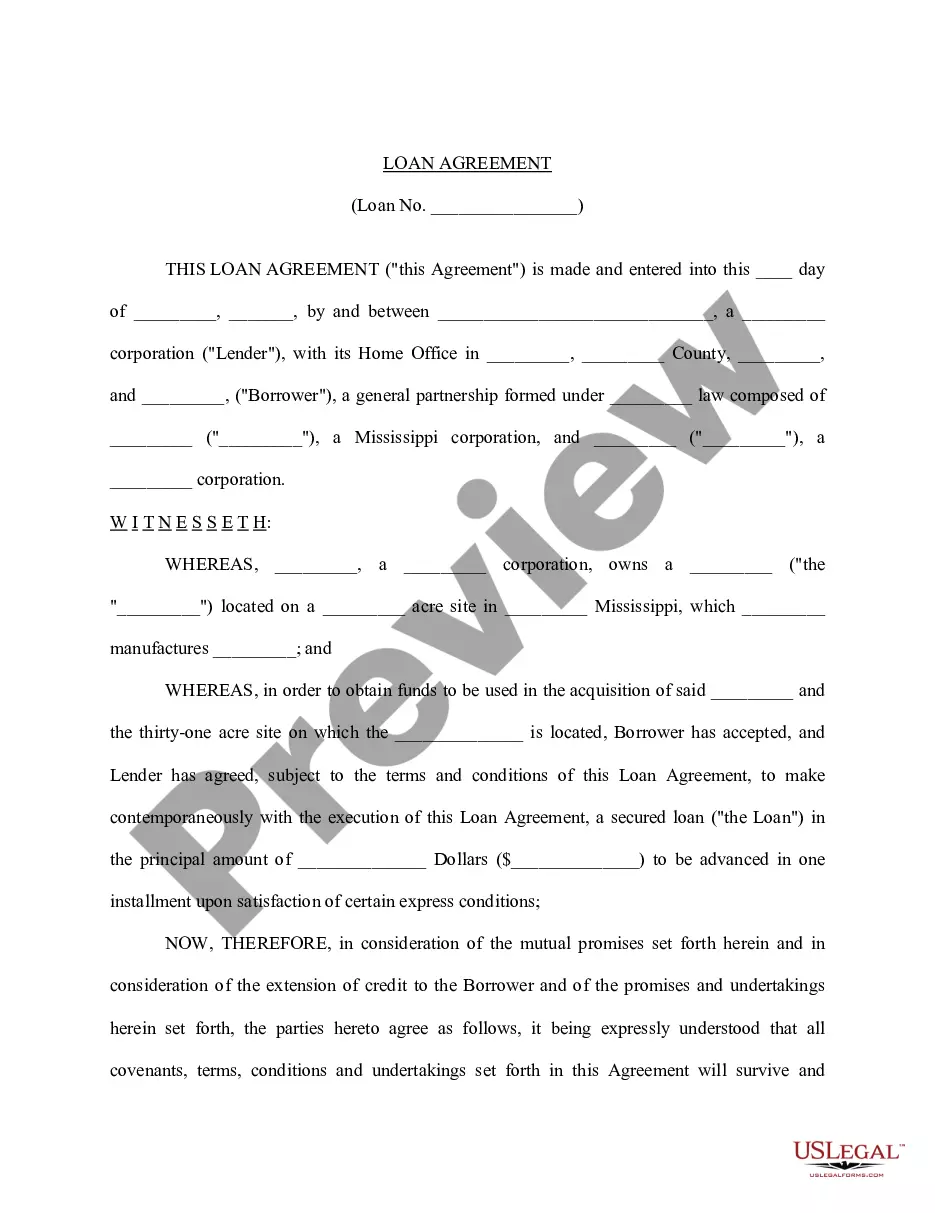
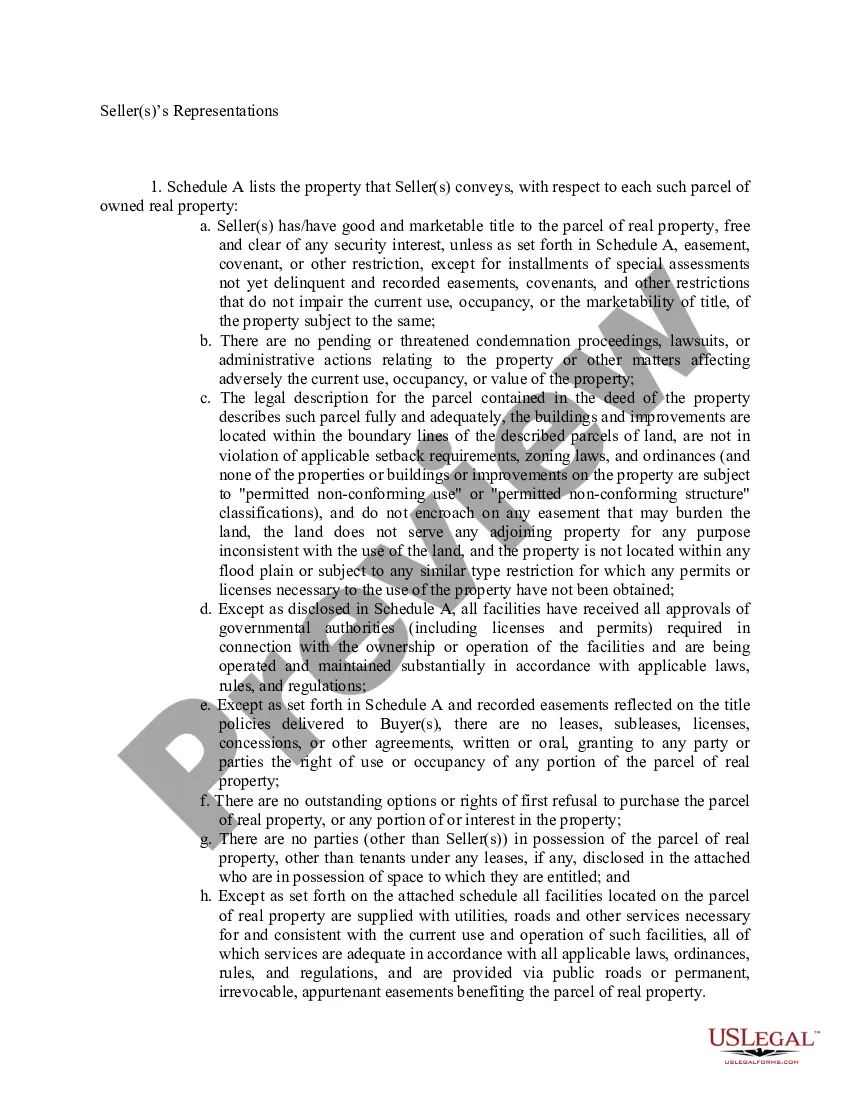
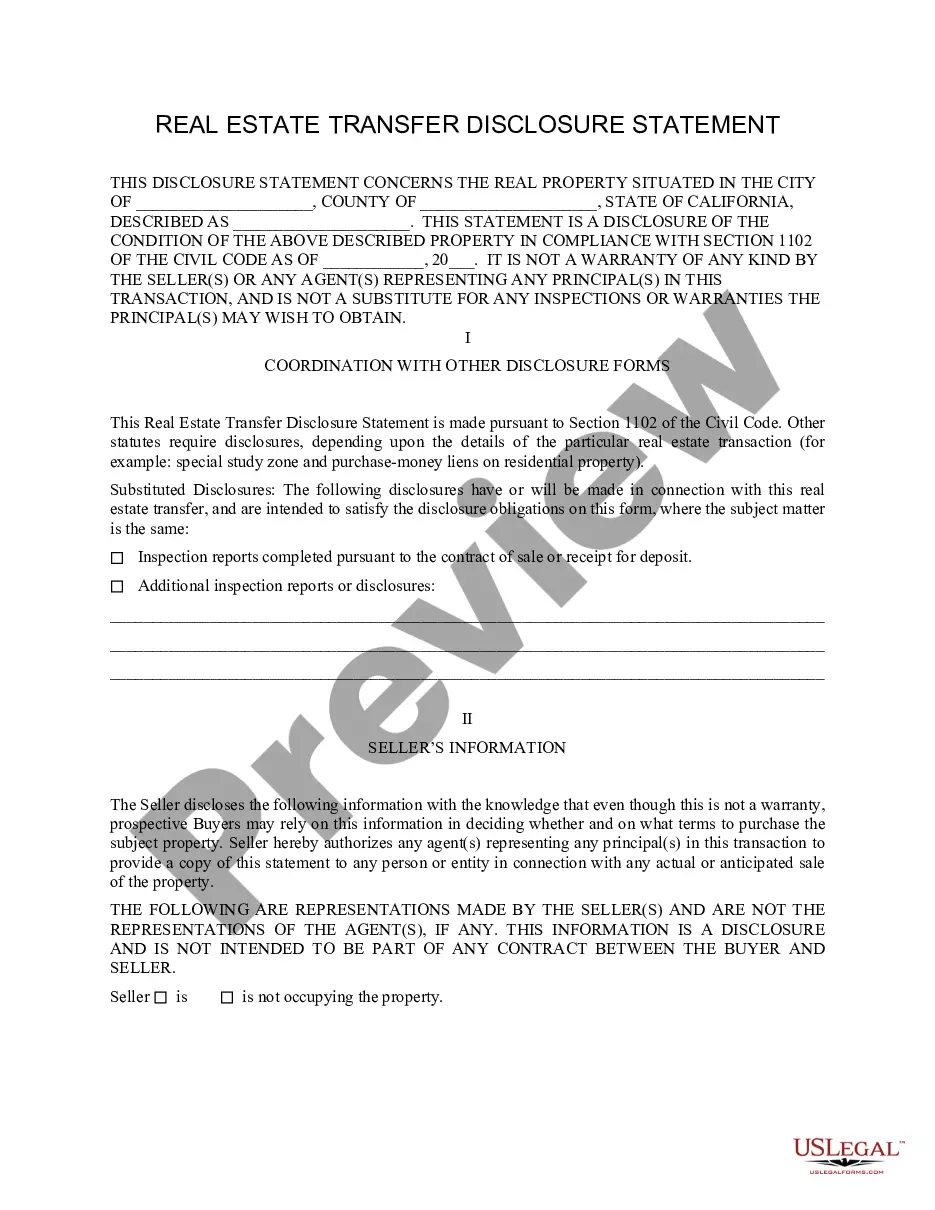
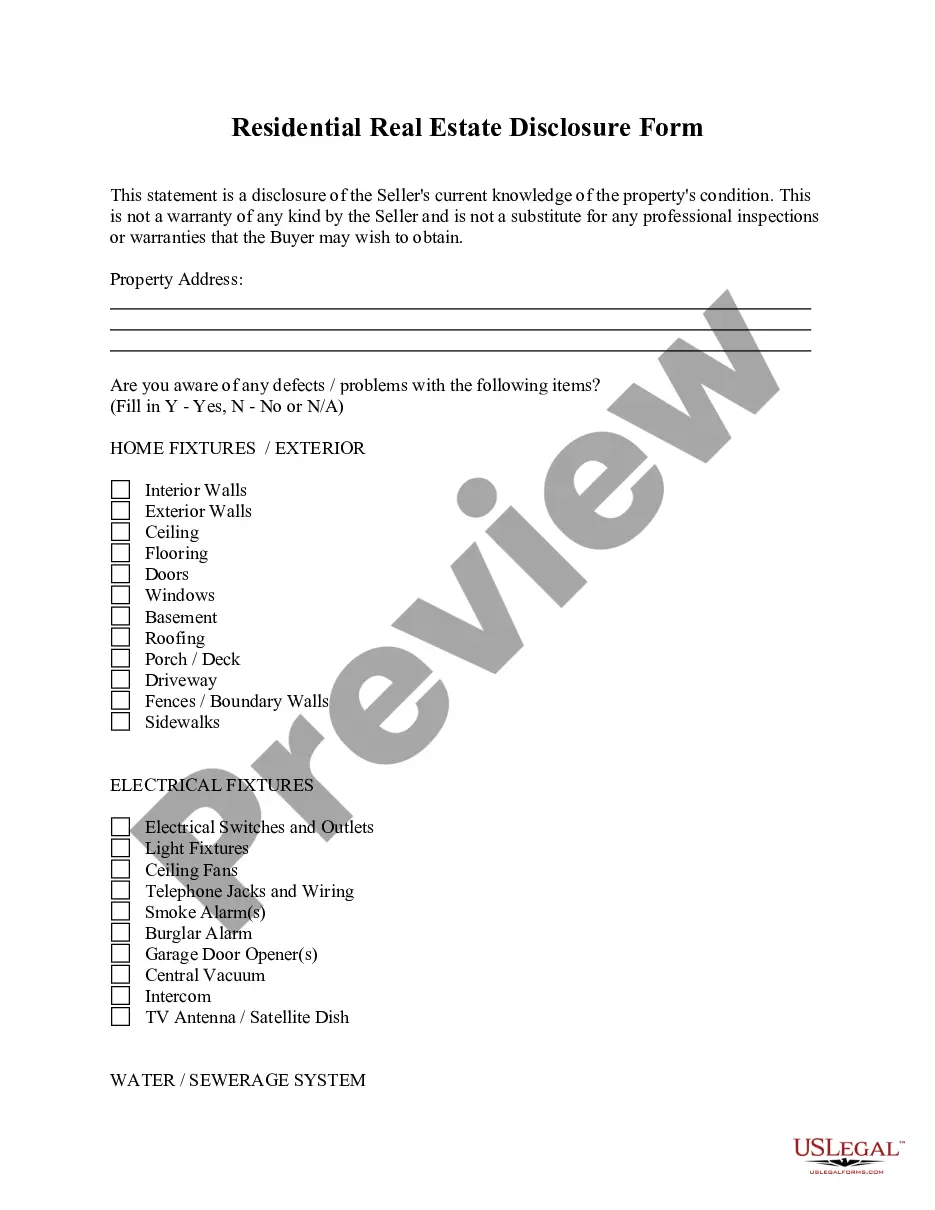
This form is a Seller's Disclosure Statement. This disclosure statement concerns the condition of property described in the document. The seller acknowledges that the information contained in the form is true and accurate.
Alabama Seller's Real Estate Disclosure Statement
Instant download
Description
Free preview
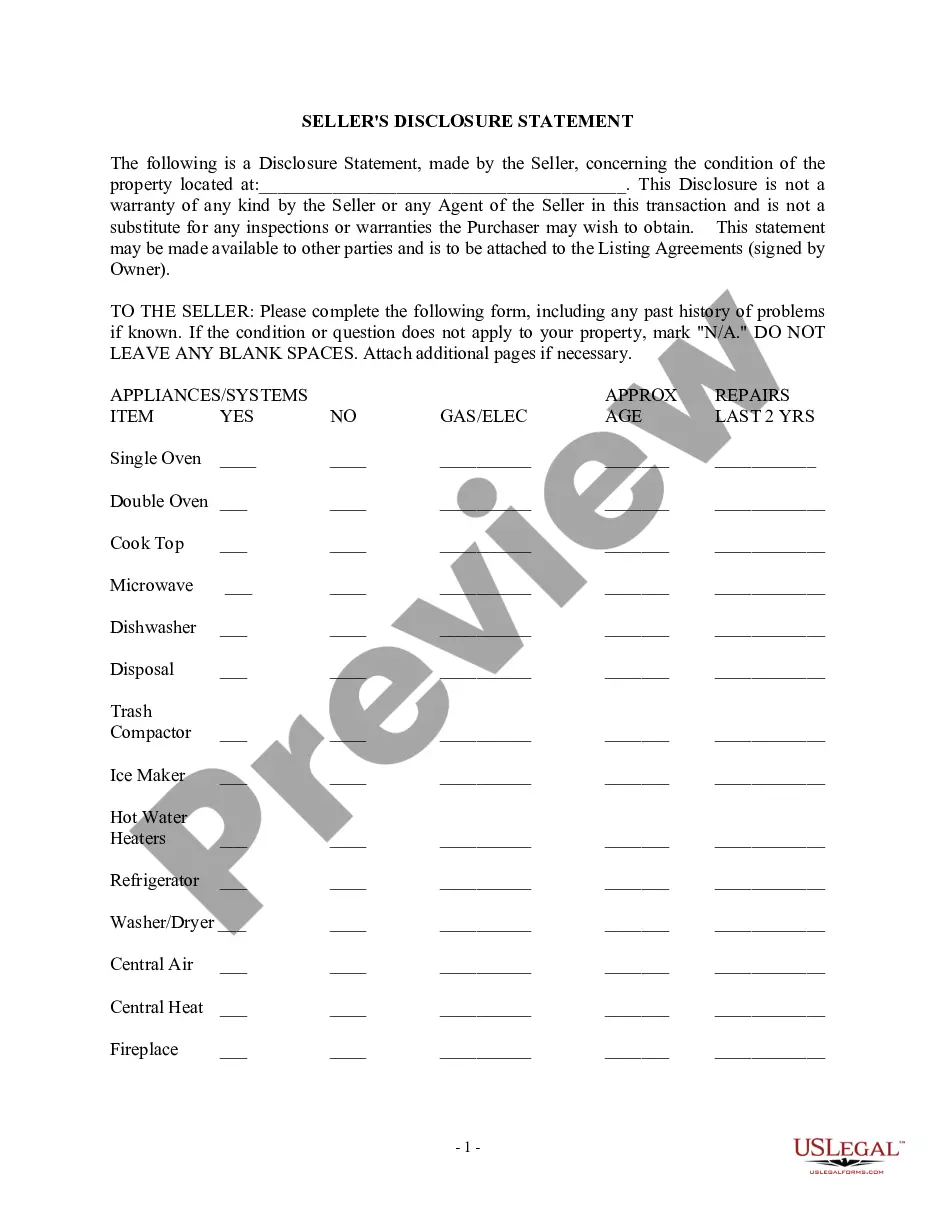
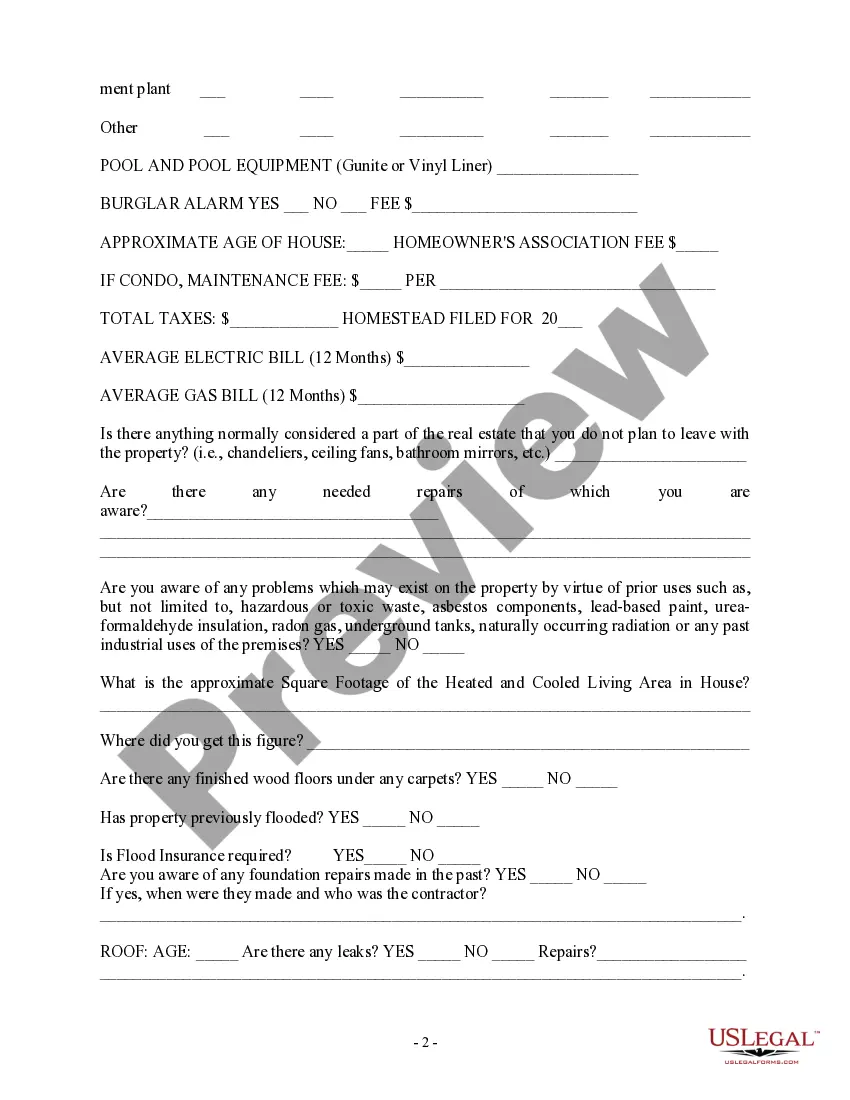
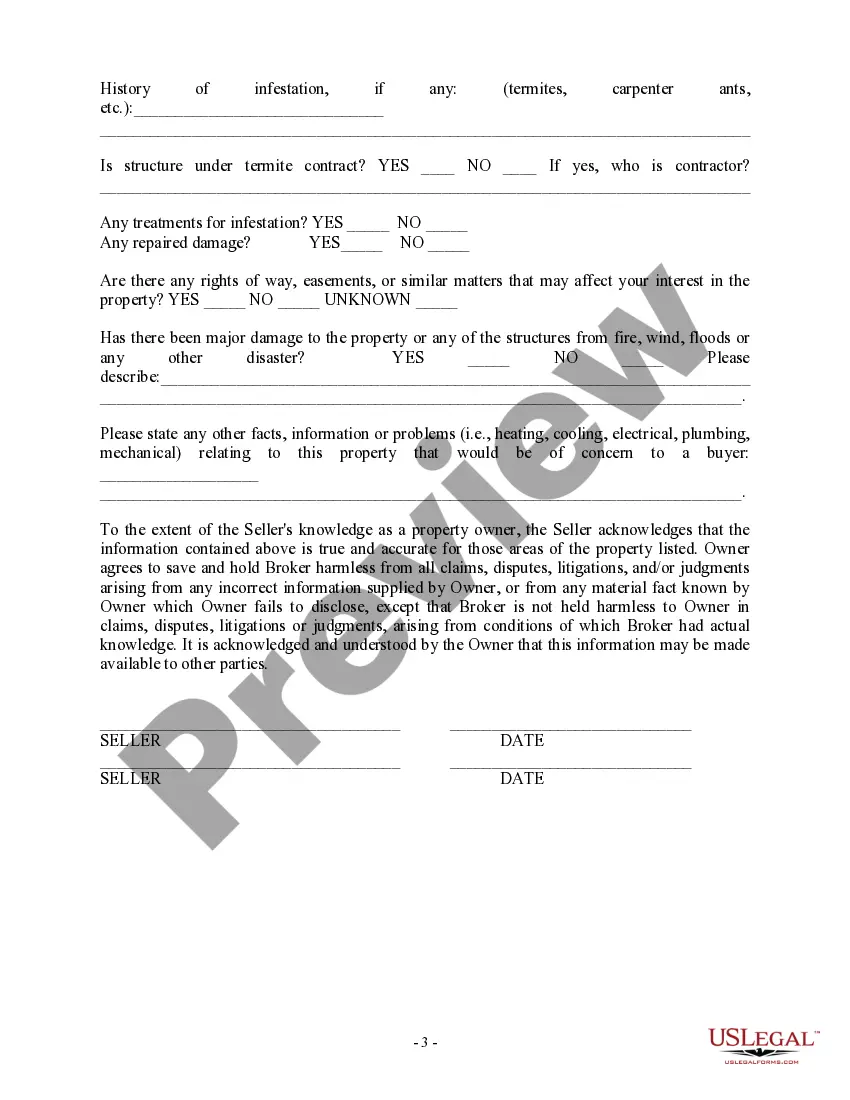



How to fill out Seller's Real Estate Disclosure Statement?
US Legal Forms - one of the largest repositories of legal documents in the United States - provides a diverse selection of legal form templates that you can download or print.
By using the website, you can access thousands of forms for business and personal purposes, categorized by types, states, or keywords. You can obtain the most current versions of forms such as the Alabama Seller's Real Estate Disclosure Statement within minutes.
If you have an account, Log In to access Alabama Seller's Real Estate Disclosure Statement from your US Legal Forms library. The Download button will appear on each form you view. You can access all previously saved forms from the My documents tab of your account.
Select the file format and download the form to your device.
Make modifications. Fill out, edit, print, and sign the saved Alabama Seller's Real Estate Disclosure Statement. Each template you add to your account does not expire and belongs to you indefinitely. Therefore, if you wish to download or print another copy, simply go to the My documents section and click on the form you need.
- Ensure you have selected the appropriate form for your city/region.
- Click the Review button to verify the form`s details.
- Read the form's description to confirm you have chosen the correct form.
- If the form does not suit your requirements, use the Search field at the top of the screen to find one that does.
- If you are satisfied with the form, confirm your choice by clicking the Get now button. Then, select the payment plan you prefer and provide your information to register for an account.
- Complete the transaction. Use a credit card or PayPal account to finalize your purchase.
Form popularity
FAQ
Unlike in many other U.S. states, Alabama law employs a rule known as caveat emptor for the sale of used residential property. Caveat emptor is Latin for "let the buyer beware," which means that the seller has no actual duty to advise the buyer of issues with the property's physical condition during the sale.
Caveat Emptor does not apply to the sale of new homes. In the Cashion case the buyer of a used home sued the seller and the listing agent after the buyer discovered that the basement leaked.
Alabama Buyers Shouldn't Rely on Seller DisclosureAlabama is one of the three caveat emptor states. Alabama law requires all buyers of used real estate to inspect or have inspected all aspects of real property prior to closing on the sale.
The Alabama Supreme Court has held caveat emptor (buyer beware) to be the law in Alabama when selling existing homes. Everyone should be on notice that there is no warranty which comes with the sale of a used home. Buyers have a chance to inspect the property and should assume the responsibility of a purchase.
Unlike in many other U.S. states, Alabama law employs a rule known as caveat emptor for the sale of used residential property. Caveat emptor is Latin for "let the buyer beware," which means that the seller has no actual duty to advise the buyer of issues with the property's physical condition during the sale.
A Seller's Disclosure is a legal document that requires sellers to provide previously undisclosed details about the property's condition that prospective buyers may find unfavorable. This document is also known as a property disclosure, and it's important for both those buying a house and for those selling a house.
Alabama law provides that a seller or seller's agent has a duty to disclose information about used real estate in three scenarios 1) Defects affecting health and safety, 2) where a fiduciary relationship exists, and 3) upon specific inquiry by the buyer.
In Alabama, a seller can get out of a real estate contract if the buyer's contingencies are not metthese include financial, appraisal, inspection, insurance or home sale contingencies agreed to in the contract. Sellers might have additional exit opportunities with unique situations also such as an estate sale.
Unlike in many other U.S. states, Alabama law employs a rule known as caveat emptor for the sale of used residential property. Caveat emptor is Latin for "let the buyer beware," which means that the seller has no actual duty to advise the buyer of issues with the property's physical condition during the sale.
Alabama law states a death on the property is not a material fact that must be disclosed. In addition, Alabama is a buyer-beware stateit's the buyer's duty to discover anything about the property that doesn't directly affect health and safety.