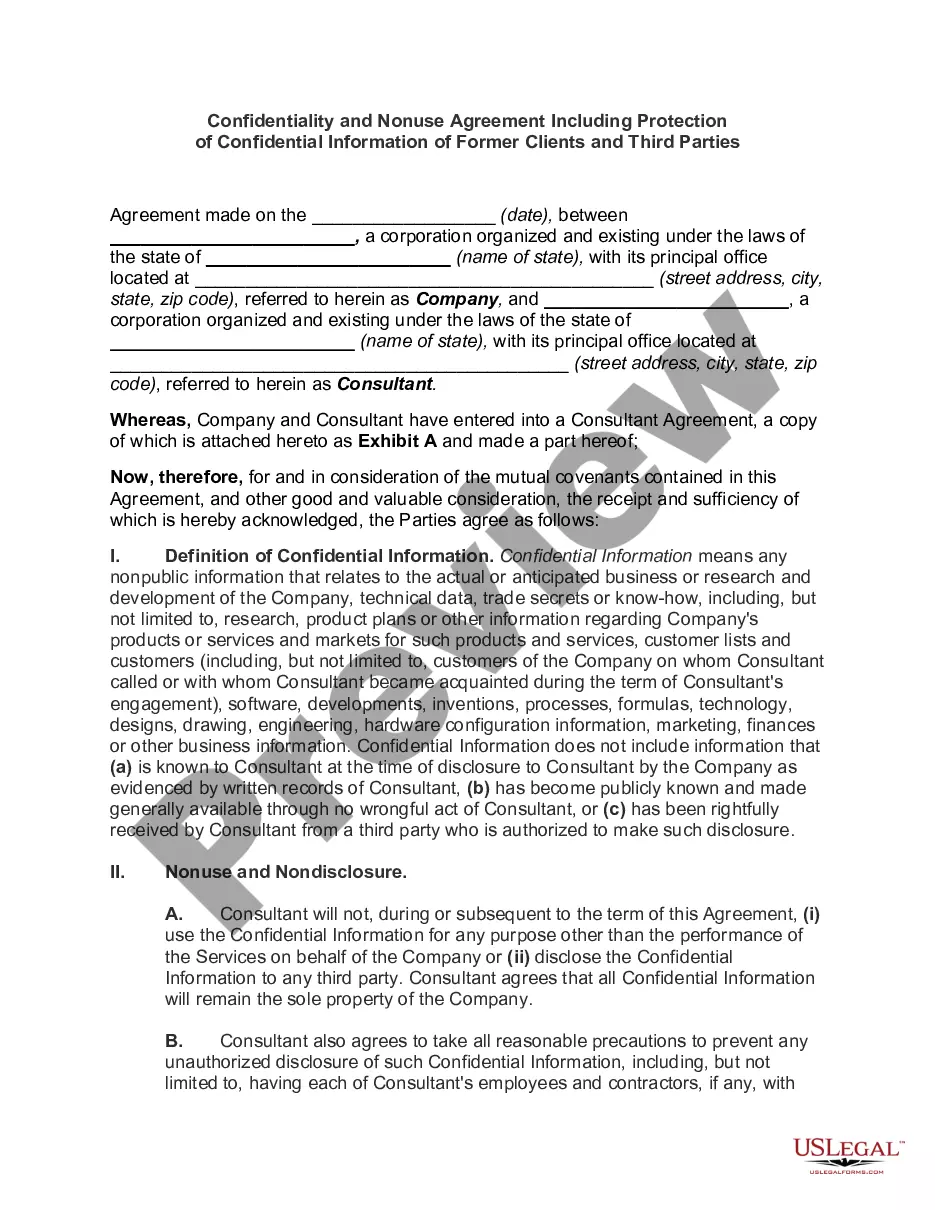
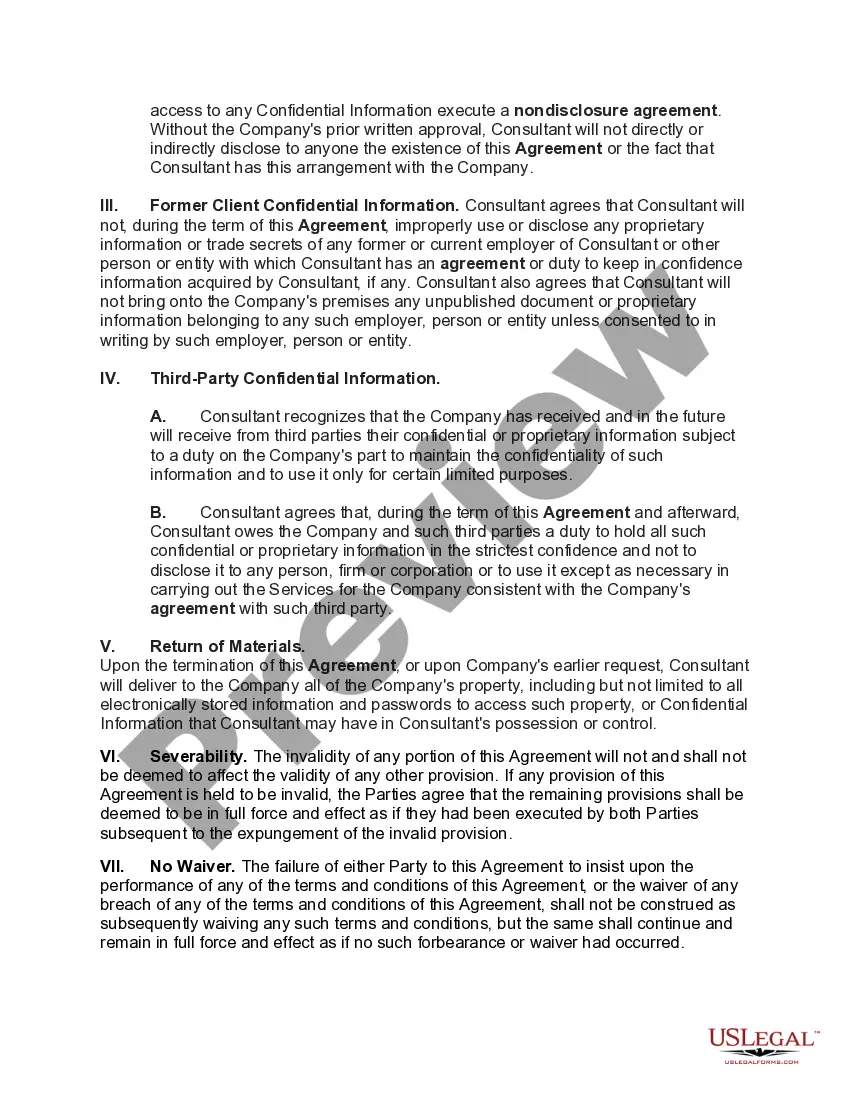
Alabama Confidentiality and Nonuse Agreement Including Protection of Confidential Information of Former Clients and Third Parties
Description
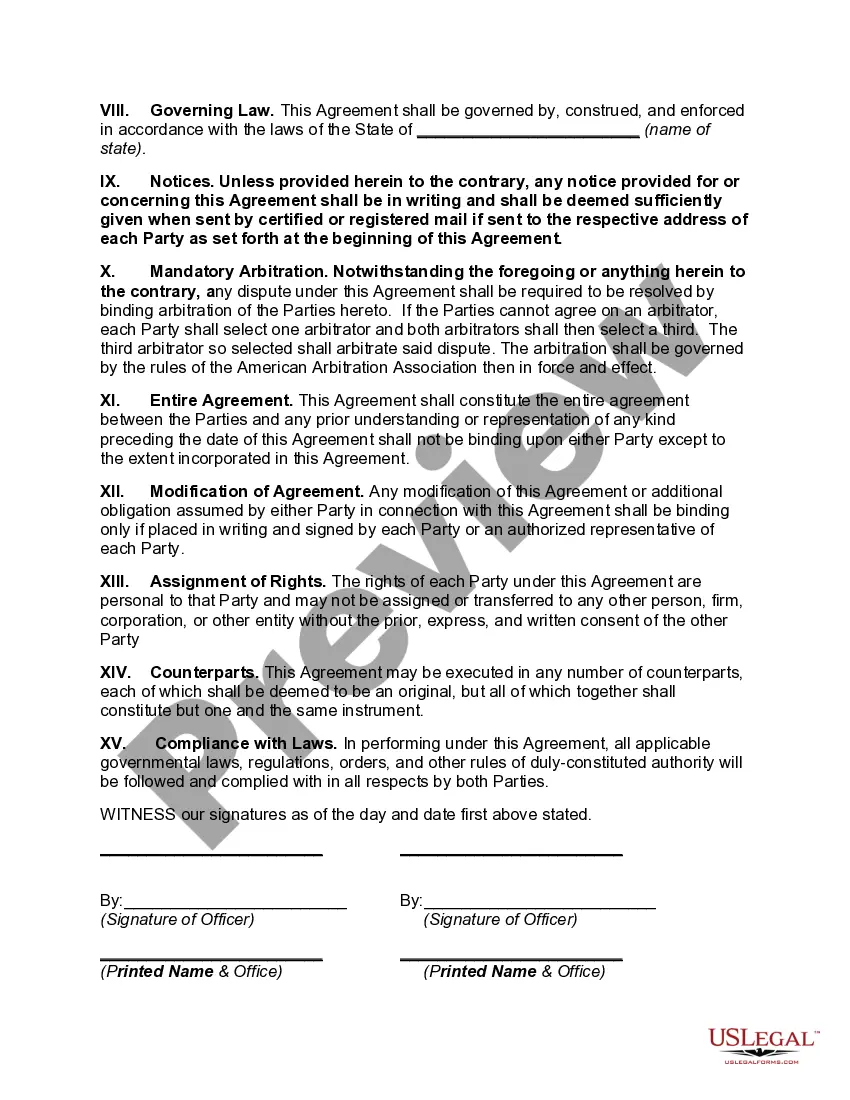
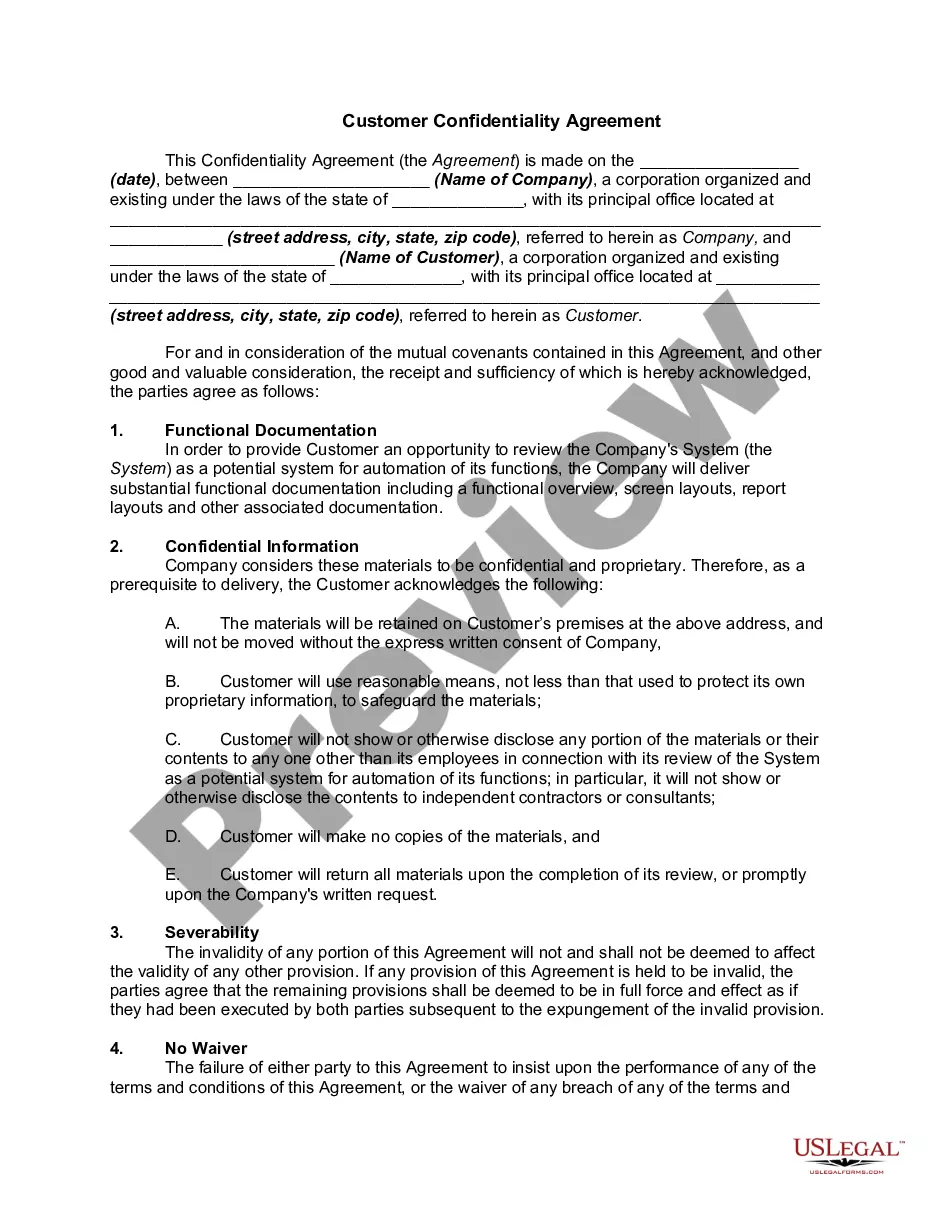
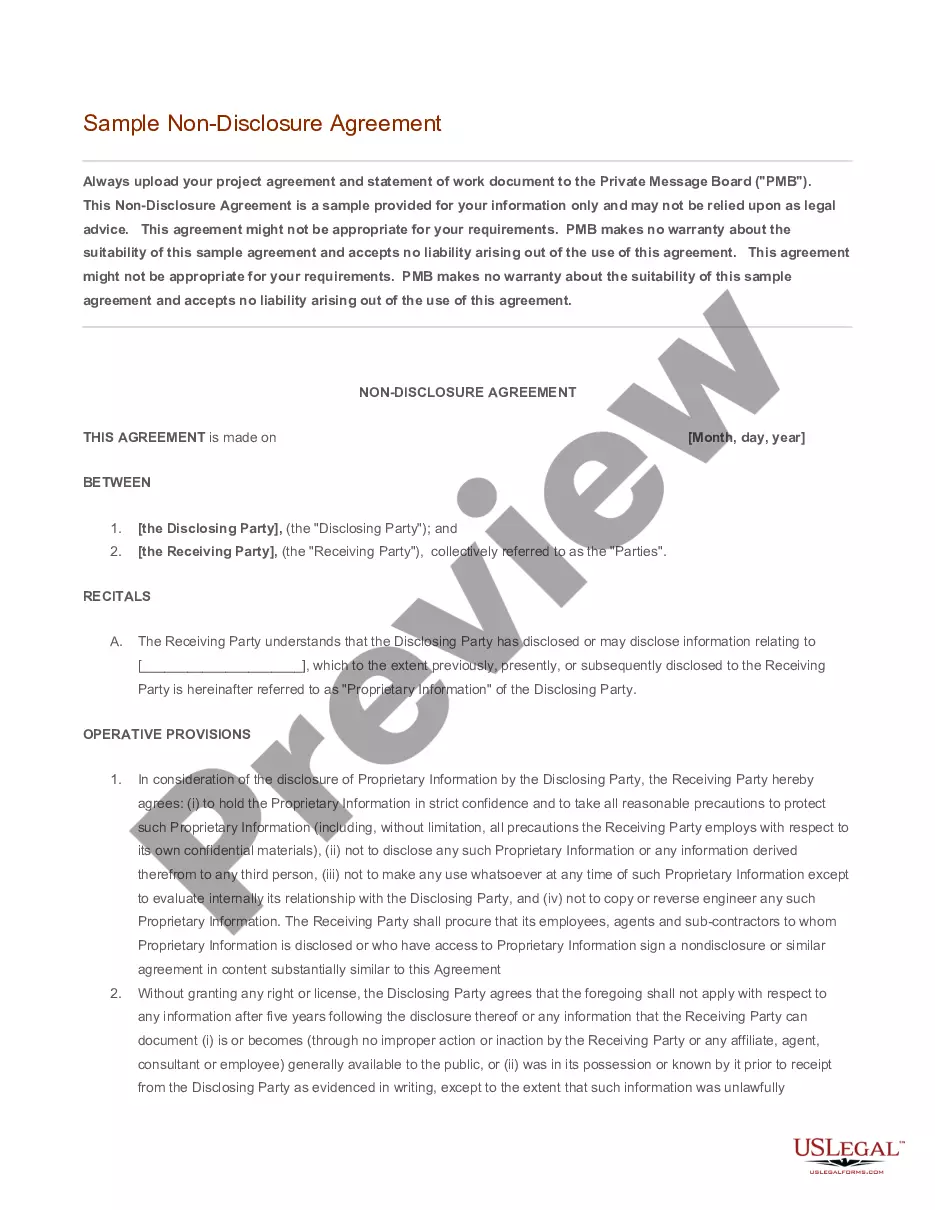
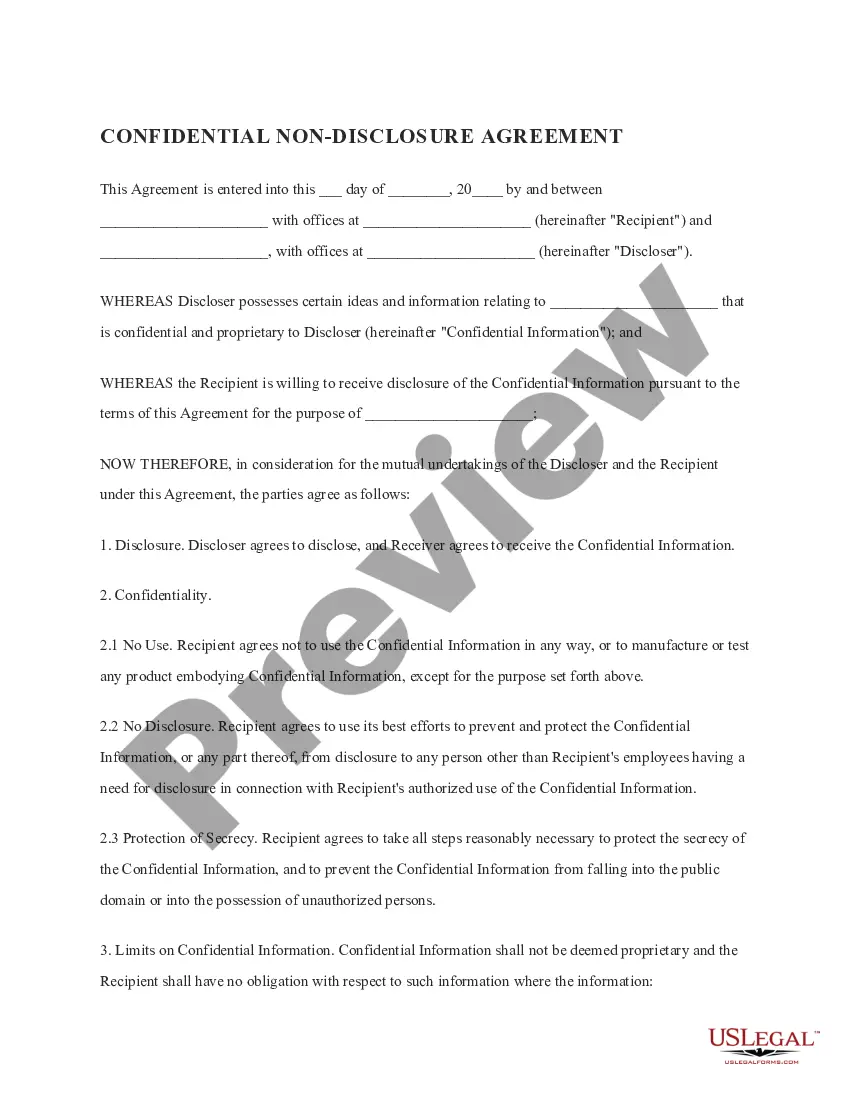
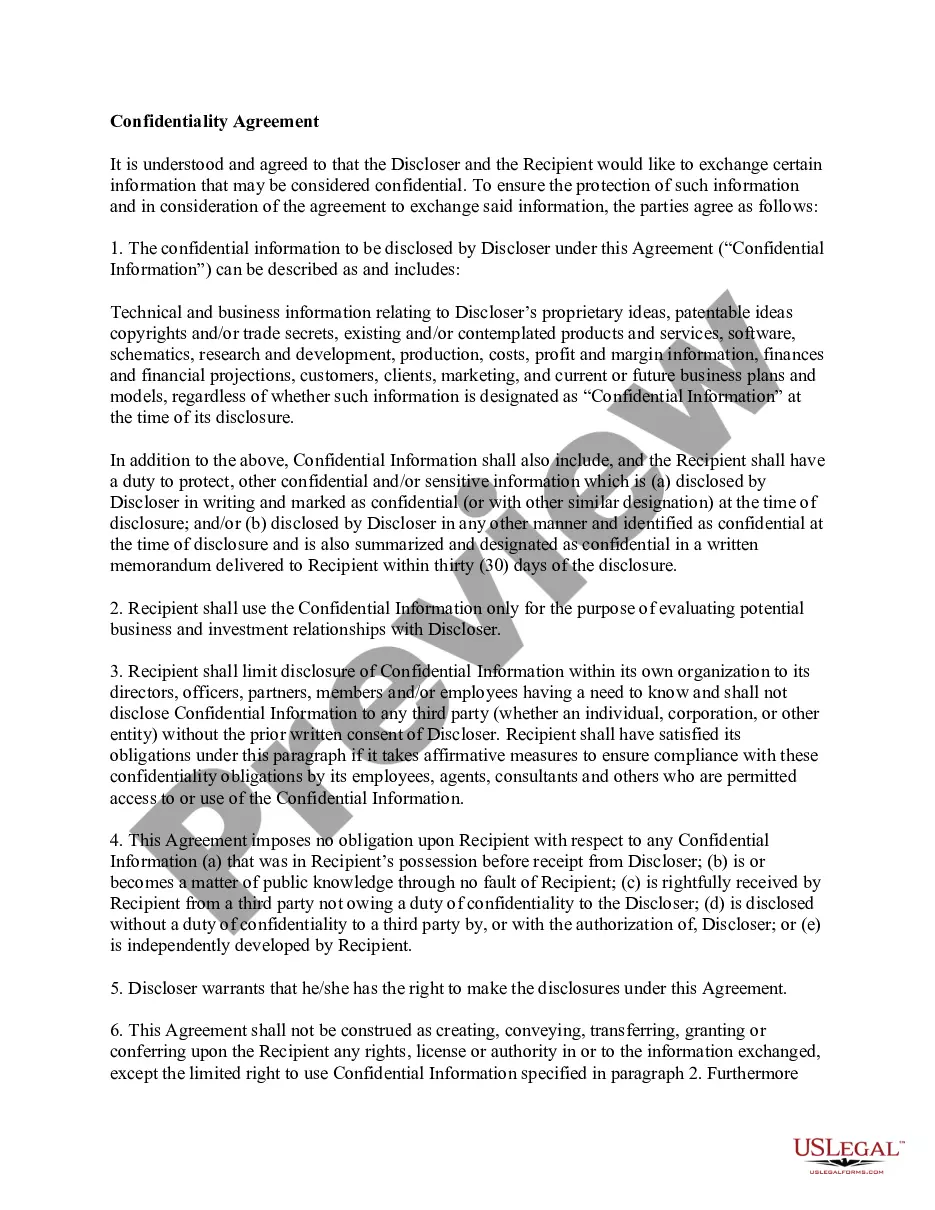


How to fill out Confidentiality And Nonuse Agreement Including Protection Of Confidential Information Of Former Clients And Third Parties?
If you desire to be thorough, download, or print genuine document templates, utilize US Legal Forms, the largest collection of lawful forms available online.
Take advantage of the site’s user-friendly and efficient search to locate the documents you require. Numerous templates for business and personal purposes are organized by categories and states, or by keywords.
Utilize US Legal Forms to find the Alabama Confidentiality and Nonuse Agreement Including Protection of Confidential Information of Former Clients and Third Parties in just a few clicks.
Every legal document template you purchase is yours forever. You have access to every form you downloaded within your account. Click the My documents section to choose a form to print or download again.
Complete and download, and print the Alabama Confidentiality and Nonuse Agreement Including Protection of Confidential Information of Former Clients and Third Parties with US Legal Forms. There are thousands of professional and state-specific forms you can use for your business or personal needs.
- If you are currently a US Legal Forms customer, Log In to your account and click the Download button to obtain the Alabama Confidentiality and Nonuse Agreement Including Protection of Confidential Information of Former Clients and Third Parties.
- You can also access forms you previously downloaded within the My documents section of your account.
- If you are using US Legal Forms for the first time, follow the instructions outlined below.
- Step 1. Make sure you have chosen the form for your specific city/state.
- Step 2. Use the Review option to examine the form’s details. Be sure to read the information.
- Step 3. If you are not satisfied with the form, utilize the Search bar at the top of the screen to find alternative versions of the legal form template.
- Step 4. Once you have found the form you need, click the Get now button. Choose your preferred pricing plan and enter your credentials to create an account.
- Step 5. Complete the transaction. You can use your credit card or PayPal account to finalize the purchase.
- Step 6. Select the format of the legal form and download it onto your device.
- Step 7. Fill out, revise, and print or sign the Alabama Confidentiality and Nonuse Agreement Including Protection of Confidential Information of Former Clients and Third Parties.
Form popularity
FAQ
Confidentiality laws in Alabama include statutes and legal principles that govern the protection of sensitive information. These laws may apply to various sectors, including healthcare, finance, and legal practices. Understanding these laws is crucial for creating enforceable agreements. An Alabama Confidentiality and Nonuse Agreement Including Protection of Confidential Information of Former Clients and Third Parties can help you navigate these regulations and safeguard your interests.
way confidentiality agreement, also known as a mutual nondisclosure agreement, is a contract where both parties agree to protect each other's confidential information. This type of agreement establishes mutual trust and ensures that sensitive information is secure on both sides. Such agreements are particularly useful in business partnerships. To create a solid foundation, consider using an Alabama Confidentiality and Nonuse Agreement Including Protection of Confidential Information of Former Clients and Third Parties.
Different types of confidentiality agreements include unilateral agreements, mutual agreements, and implied agreements. A unilateral agreement involves one party sharing confidential information, while a mutual agreement involves both parties sharing sensitive information. Implied agreements arise through conduct or relationship contexts. Adopting an Alabama Confidentiality and Nonuse Agreement Including Protection of Confidential Information of Former Clients and Third Parties can help you select the right type for your situation.
The two types of legally binding confidentiality agreements are non-disclosure agreements (NDAs) and confidentiality agreements (CAs). Non-disclosure agreements are usually focused on preventing the sharing of sensitive information, while confidentiality agreements may cover a broader range of confidentiality obligations. Depending on your needs, creating an effective Alabama Confidentiality and Nonuse Agreement Including Protection of Confidential Information of Former Clients and Third Parties is essential for legal protection.
The two primary types of confidentiality are either contractual confidentiality or legal confidentiality. Contractual confidentiality arises from agreements that specify the terms for protecting confidential information. Legal confidentiality is often mandated by laws applicable to certain professions or industries, such as healthcare or legal services. Understanding these types aids in crafting an appropriate Alabama Confidentiality and Nonuse Agreement Including Protection of Confidential Information of Former Clients and Third Parties.
To write a confidentiality clause in a contract, begin by clearly defining what constitutes confidential information. Specify the obligations of the parties involved regarding handling, sharing, and protecting that information. Include the duration of confidentiality and outline any exceptions. Utilizing an Alabama Confidentiality and Nonuse Agreement Including Protection of Confidential Information of Former Clients and Third Parties can help ensure legal effectiveness and clarity.
The confidentiality clause for third parties is a section in an agreement that addresses how sensitive information will be treated when involving external parties. This clause aims to safeguard confidential information from being disclosed to unauthorized entities, maintaining the integrity of the agreement. By employing an Alabama Confidentiality and Nonuse Agreement Including Protection of Confidential Information of Former Clients and Third Parties, you can set robust provisions for handling third-party disclosures.
disclosure of confidential information agreement is a contract designed to protect sensitive data from unauthorized sharing. This agreement ensures that parties involved understand their responsibility to keep specific information secure and private. When you implement an Alabama Confidentiality and Nonuse Agreement Including Protection of Confidential Information of Former Clients and Third Parties, you establish a clear understanding of the types of information that must be kept confidential.
Signing an NDA is an important step in protecting sensitive information. It creates a legal obligation for you and others to keep specific information confidential, and breaking this agreement can lead to legal consequences. Therefore, you should carefully consider the implications of an Alabama Confidentiality and Nonuse Agreement Including Protection of Confidential Information of Former Clients and Third Parties before signing, as it speaks to the seriousness of your commitment to confidentiality.
A confidentiality agreement can be broken under specific circumstances, such as if the information is no longer deemed confidential, if both parties mutually agree to terminate the agreement, or if a legal obligation compels disclosure. It is crucial to understand the terms outlined in your agreement for guidance. By using an Alabama Confidentiality and Nonuse Agreement Including Protection of Confidential Information of Former Clients and Third Parties, you can have clear terms regarding when and how the agreement may be broken.