Arkansas Quitclaim Deed from Individual to LLC
Overview of this form
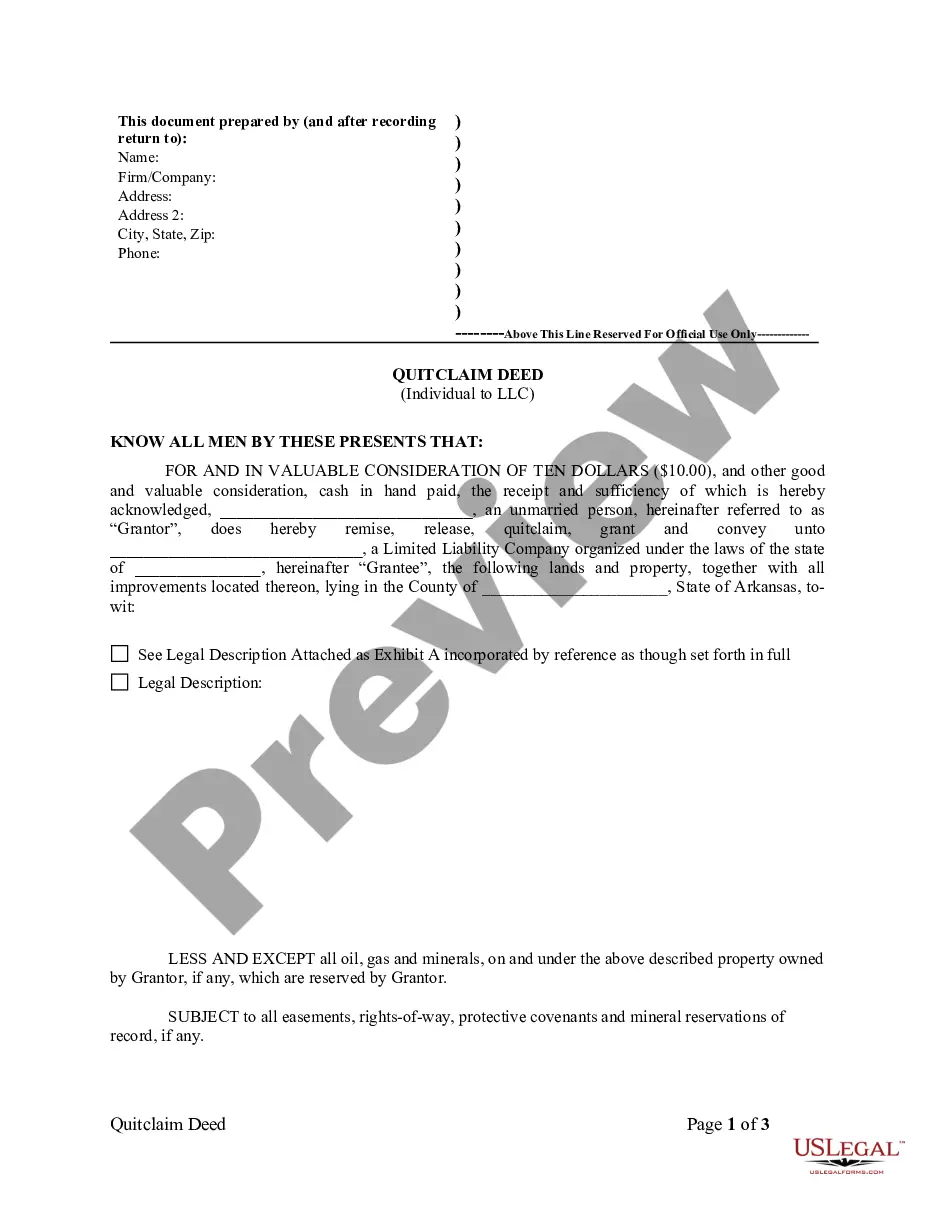
The Quitclaim Deed from Individual to LLC is a legal document used to transfer ownership of real property from an individual to a limited liability company (LLC). This form allows the grantor, the individual, to convey all rights and interests in the property, while the grantee, the LLC, receives the property without any warranties or guarantees. Unlike other types of deeds, a quitclaim deed does not provide any assurances regarding the title, making it essential for both parties to understand their implications.
Key components of this form
- Identifying the grantor (individual) and grantee (LLC).
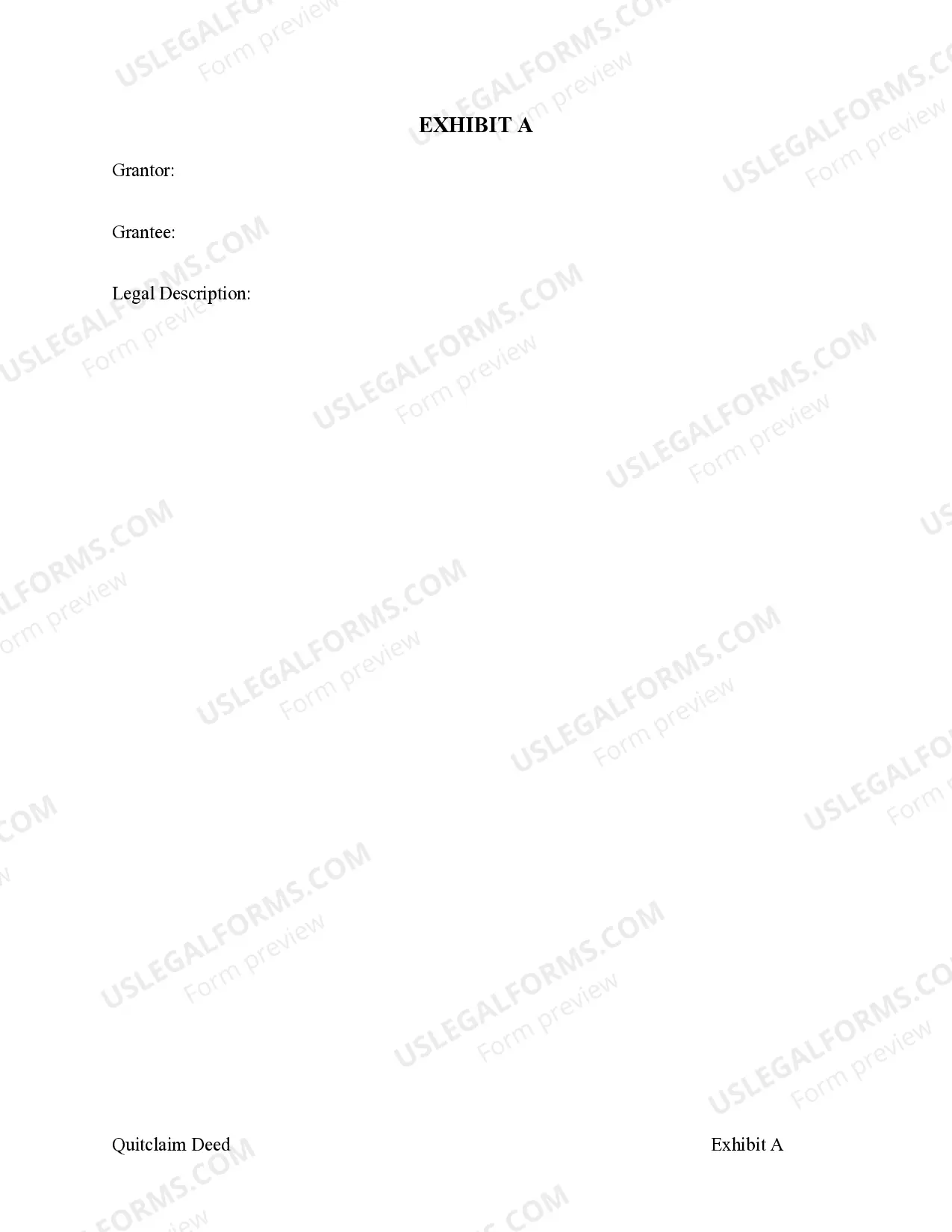
- Description of the property being transferred, often detailed in an attached legal description.
- Clause reserving any oil, gas, and mineral rights to the grantor, if applicable.
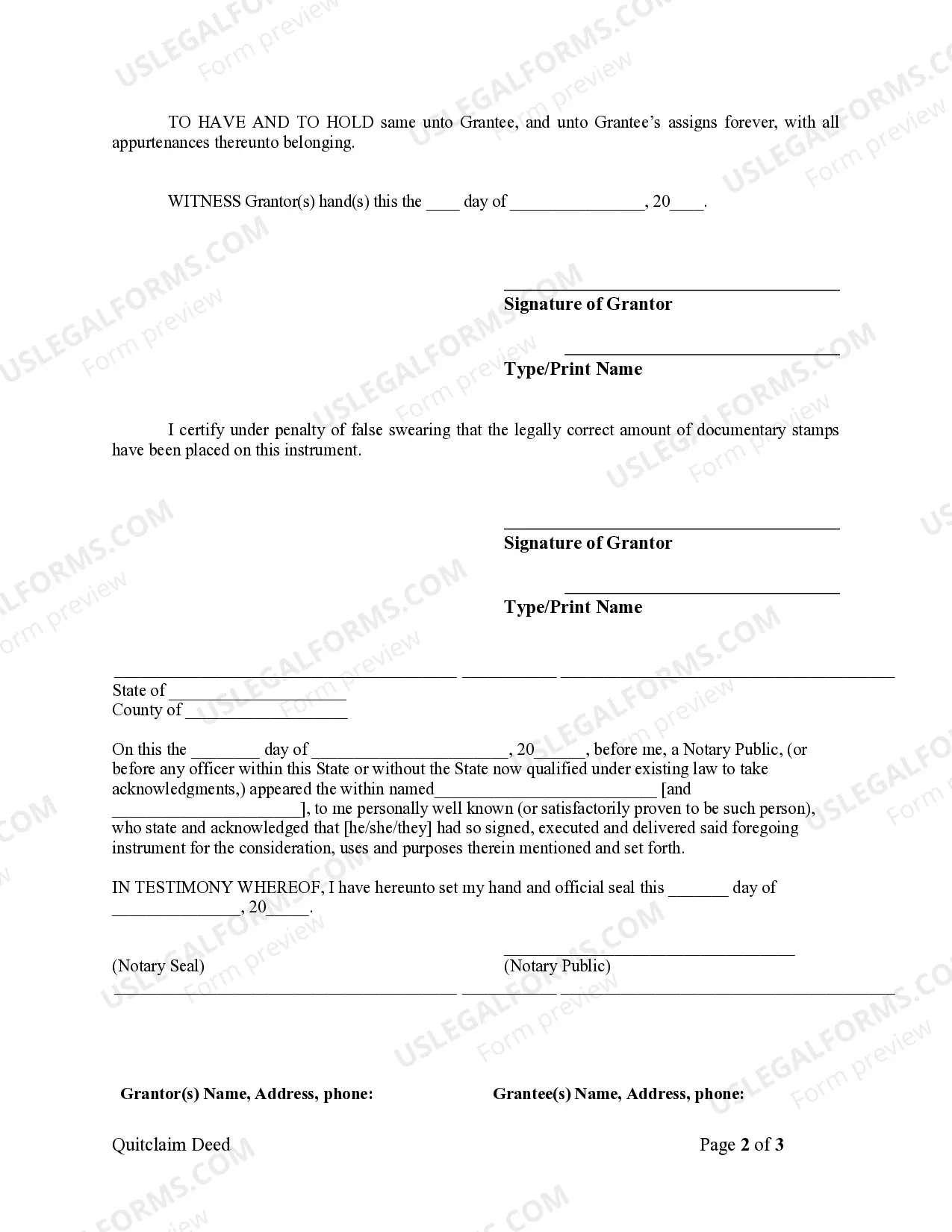
- Signature lines for the grantor, indicating acceptance of the terms.
- Date of execution to establish when the transfer occurs.





When this form is needed
This quitclaim deed is typically used when an individual wants to transfer property ownership to a limited liability company. Situations may include business-related real estate transactions, estate planning where property is moved to a business entity, or simplifying the management of investment properties held under an LLC. It is particularly useful when the parties agree on the property transfer without the need for a warranty of title.
Who needs this form
- Individuals who own real estate and wish to transfer it to their LLC.
- Business owners seeking to consolidate property management under an LLC.
- Real estate investors transferring investment properties into an LLC for liability protection.
- Heirs or estate administrators transferring inherited property into an LLC.
How to prepare this document
- Identify the parties involved: enter the name of the grantor (individual) and the grantee (LLC).
- Specify the property: include a detailed legal description of the property being transferred, typically attached as an exhibit.
- Include any reservations: indicate if the grantor retains any rights, such as oil, gas, and mineral rights.
- Enter the date of the transfer: write the day, month, and year the deed is being signed.
- Sign the deed: the grantor must sign the document, indicating their agreement to the transfer.
Notarization requirements for this form
This document requires notarization to meet legal standards. US Legal Forms provides secure online notarization powered by Notarize, allowing you to complete the process through a verified video call, available 24/7.
Get your form ready online
Our built-in tools help you complete, sign, share, and store your documents in one place.
Make edits, fill in missing information, and update formatting in US Legal Forms—just like you would in MS Word.
Download a copy, print it, send it by email, or mail it via USPS—whatever works best for your next step.
Sign and collect signatures with our SignNow integration. Send to multiple recipients, set reminders, and more. Go Premium to unlock E-Sign.
If this form requires notarization, complete it online through a secure video call—no need to meet a notary in person or wait for an appointment.
We protect your documents and personal data by following strict security and privacy standards.

Make edits, fill in missing information, and update formatting in US Legal Forms—just like you would in MS Word.

Download a copy, print it, send it by email, or mail it via USPS—whatever works best for your next step.

Sign and collect signatures with our SignNow integration. Send to multiple recipients, set reminders, and more. Go Premium to unlock E-Sign.

If this form requires notarization, complete it online through a secure video call—no need to meet a notary in person or wait for an appointment.

We protect your documents and personal data by following strict security and privacy standards.
Common mistakes
- Failing to include a proper legal description of the property.
- Not signing the form or missing dates.
- Filling out information incorrectly, such as the names of the parties involved.
- Overlooking the reservation of rights clause, leading to confusion about retained interests.
Benefits of using this form online
- Quick access to a legally vetted form drafted by licensed attorneys.
- Convenience of downloading and editing the form to fit specific needs.
- Assurance that the form complies with current legal standards.
- Ability to complete the form from the comfort of your home without waiting for appointments.
Key takeaways
- The Quitclaim Deed from Individual to LLC is essential for transferring property ownership without guarantees.
- Understanding this form's components can help prevent common mistakes during completion.
- This deed is suitable for various real estate and business contexts, enhancing flexibility in property management.
Looking for another form?
Form popularity
FAQ
Filing an Arkansas Quitclaim Deed from Individual to LLC involves several important steps. First, you need to complete the deed form accurately, ensuring all necessary information is included, such as names and addresses of the parties involved. After this, the deed must be signed in front of a notary public to validate the document. Finally, you file the completed quitclaim deed with the county clerk's office where the property is located, ensuring it is officially recorded for legal purposes.
Transferring a mortgage to your LLC using an Arkansas Quitclaim Deed from Individual to LLC is generally not straightforward and may require lender approval. Many lenders have a due-on-sale clause that can trigger full repayment if ownership changes. Before making this decision, consult with a real estate attorney or mortgage professional to understand the implications and explore your options.
One major disadvantage of using an Arkansas Quitclaim Deed from Individual to LLC is that it does not guarantee clear title; it only transfers whatever interest the grantor has. This lack of warranty means that if any issues arise with the title, the grantee may face complications. Additionally, quit claim deeds do not offer the same protections as warranty deeds, so careful consideration is necessary before proceeding.
To create an Arkansas Quitclaim Deed from Individual to LLC, you will need the names of the parties involved, a legal description of the property, and the signature of the individual transferring the property. It's important to have the deed notarized and to follow state recording requirements. This ensures the deed is legally recognized and provides a clear title for the LLC.
While there are benefits to having an LLC for your property, there are also notable disadvantages. One significant downside involves the additional costs and complexities related to setting up and maintaining the LLC. Furthermore, if you transfer property using an Arkansas Quitclaim Deed from Individual to LLC, you may have to deal with tax implications and changes in how the property is viewed for liability purposes. It's essential to weigh these factors when deciding on the best ownership structure.
Many individuals choose to place their homes under an LLC for various reasons. Primarily, an LLC can provide personal liability protection, which can safeguard your assets in case of legal issues. Additionally, using an Arkansas Quitclaim Deed from Individual to LLC can simplify the transfer of ownership and help with estate planning. Overall, this strategy can offer financial benefits and a sense of security.
Typically, a deed for an LLC must be signed by an authorized member or manager of the LLC. This ensures that the transfer is valid and legally recognized. If you are converting an Arkansas Quitclaim Deed from Individual to LLC, make sure the signature belongs to someone who has the authority to act on behalf of the LLC.
Transferring a deed from an individual to an LLC involves creating a quitclaim deed that clearly identifies the property and the parties. You'll need to sign the document in front of a notary and file it with your local county office. Resources like US Legal Forms can guide you through this necessary process effectively and ensure compliance with all requirements.
Yes, a quitclaim deed must be notarized in Arkansas to be legally enforceable. This notarization process adds a layer of security, confirming the identities of the parties involved. By completing an Arkansas Quitclaim Deed from Individual to LLC correctly, you protect your interests effectively.
To transfer a deed to an LLC, you'll need to prepare a quitclaim deed that specifies the transfer from your name to the LLC. The next steps involve filling out the deed, signing it before a notary, and then submitting it to the county clerk for recording. Using services like US Legal Forms can simplify this process and ensure all legal requirements are met.