Arkansas Affidavit of Heirship
Understanding this form
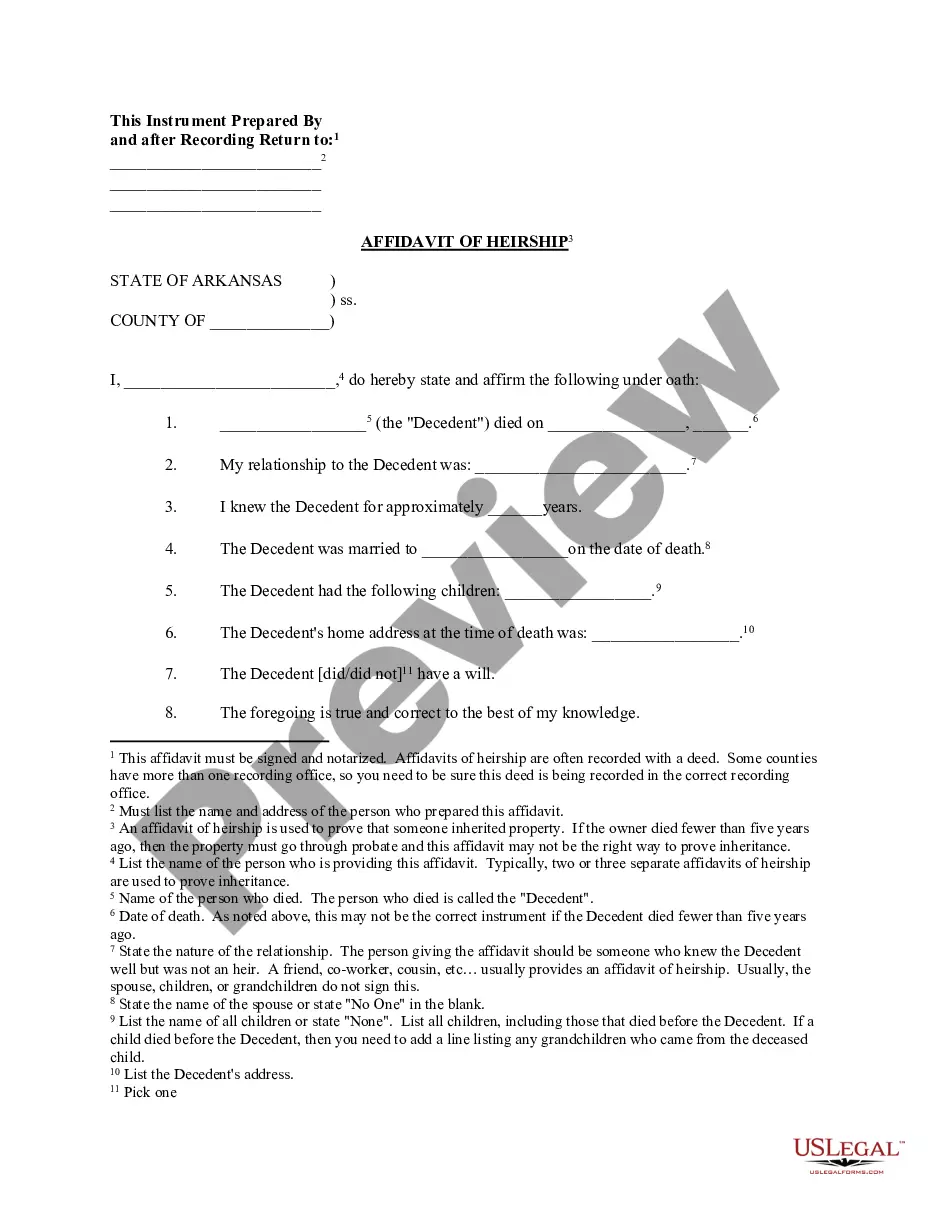
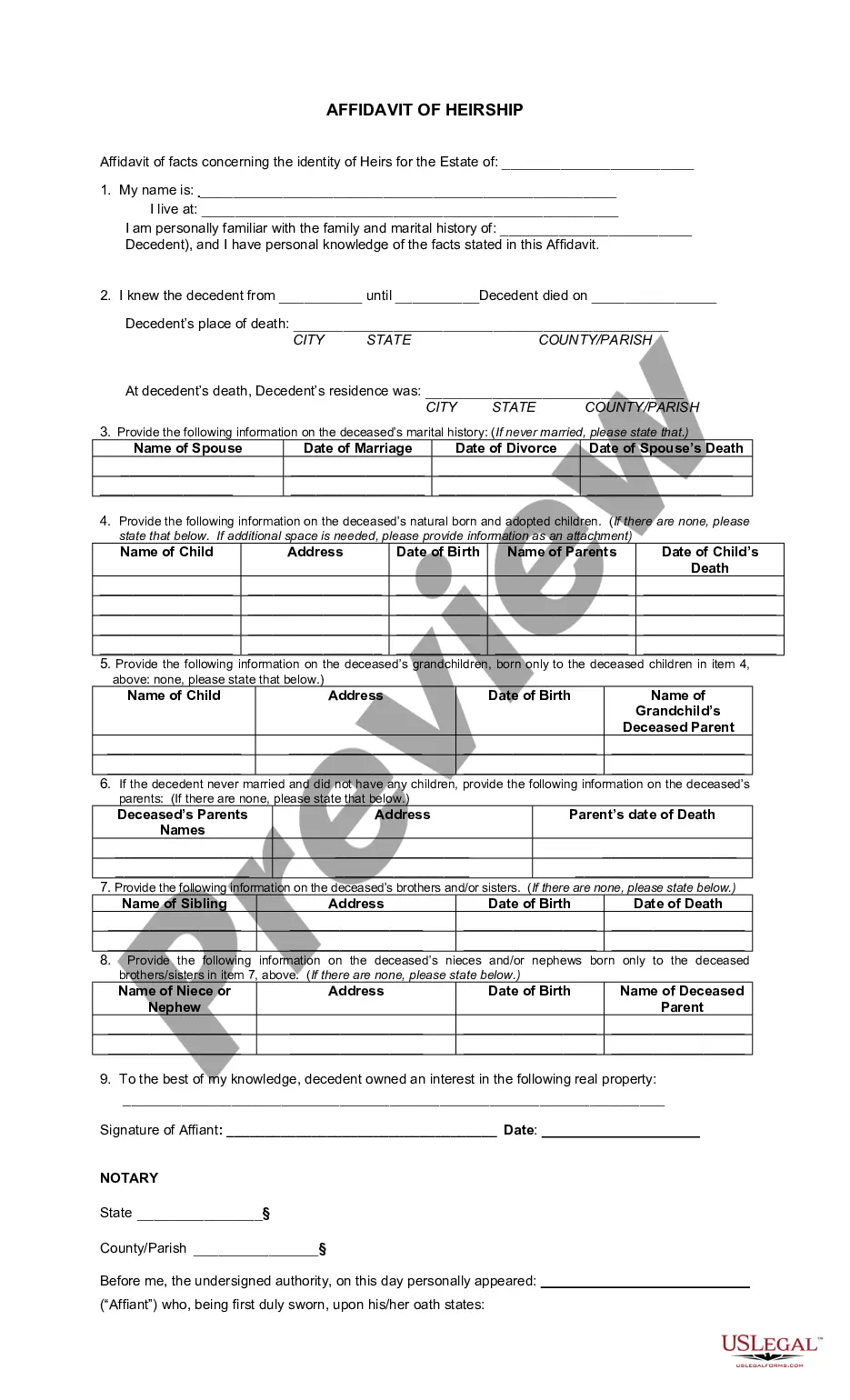
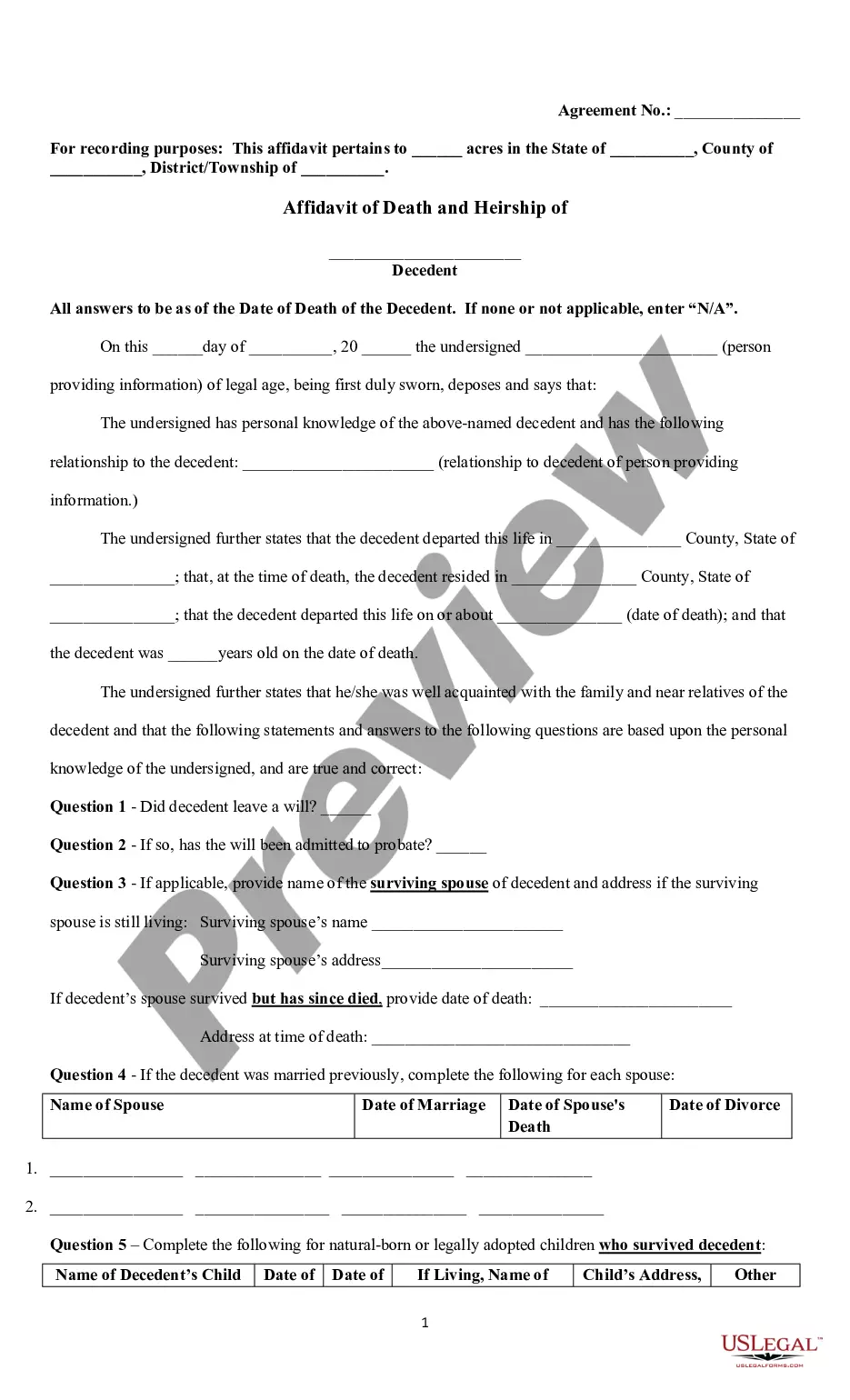
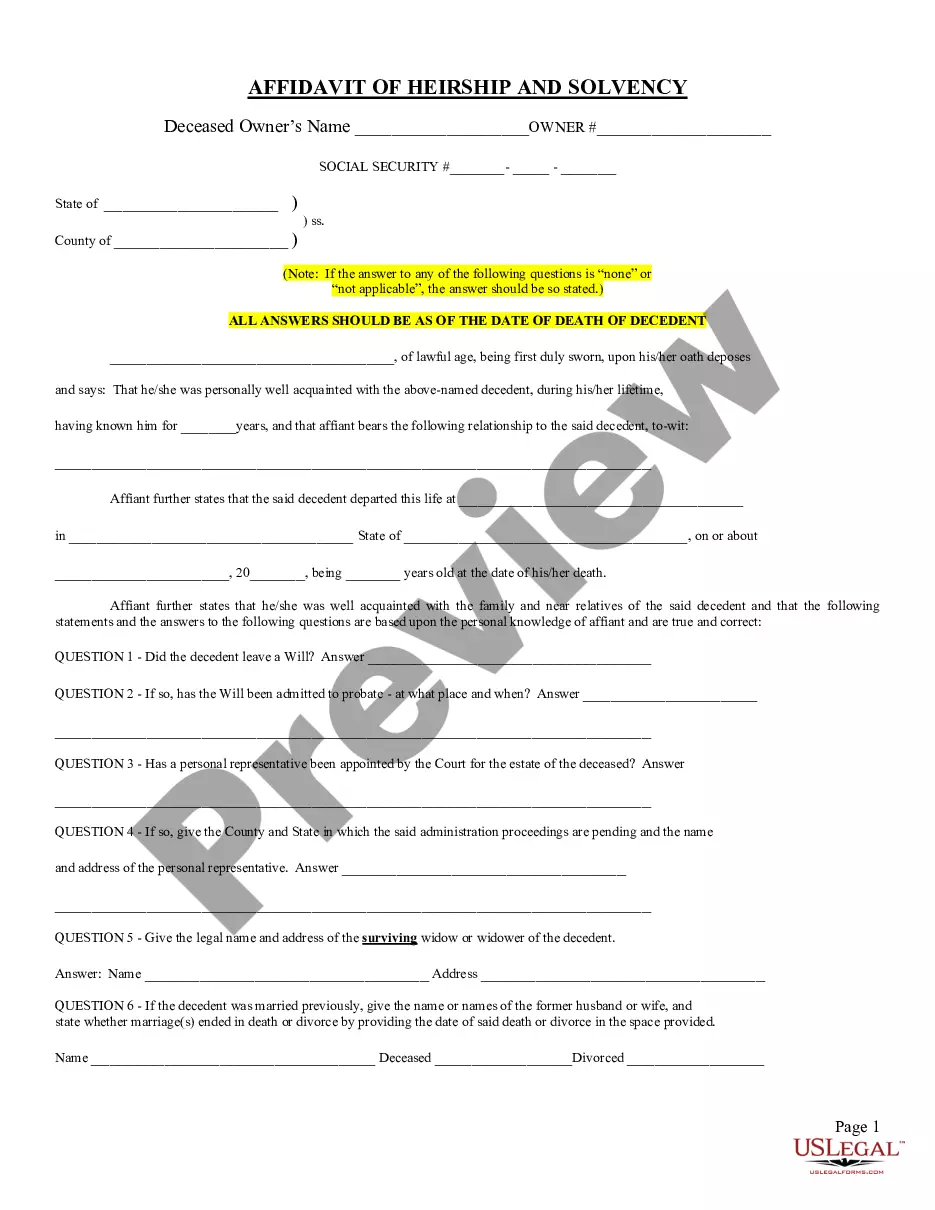
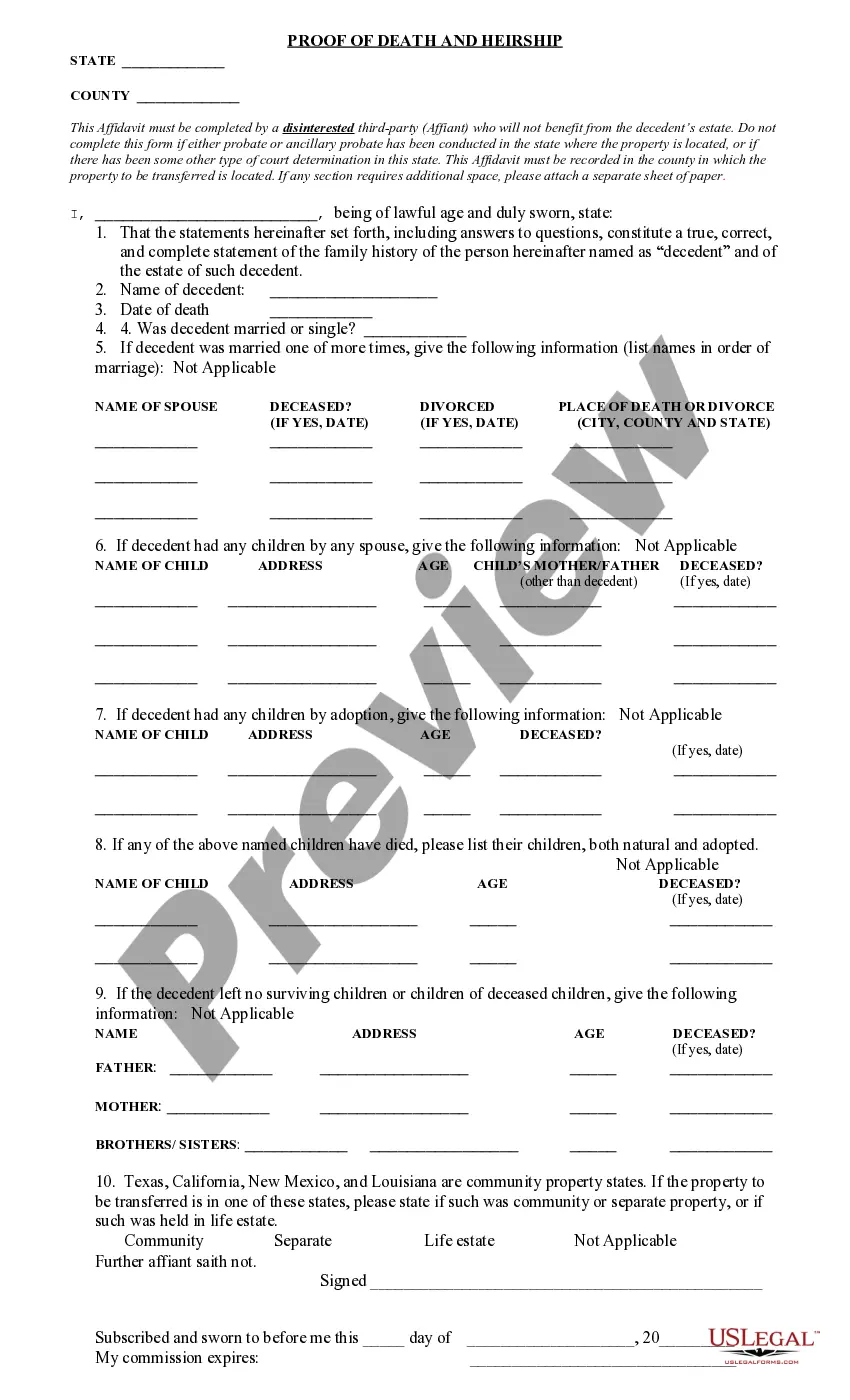
The Affidavit of Heirship is a legal document that allows individuals to declare the heirs of a deceased person. This form is essential for establishing ownership of both personal and real property when there is no will, or if the will does not outline the distribution of assets. Unlike other inheritance documents, an affidavit of heirship is often used when probate is not required, or when the decedent died more than five years ago.
Main sections of this form
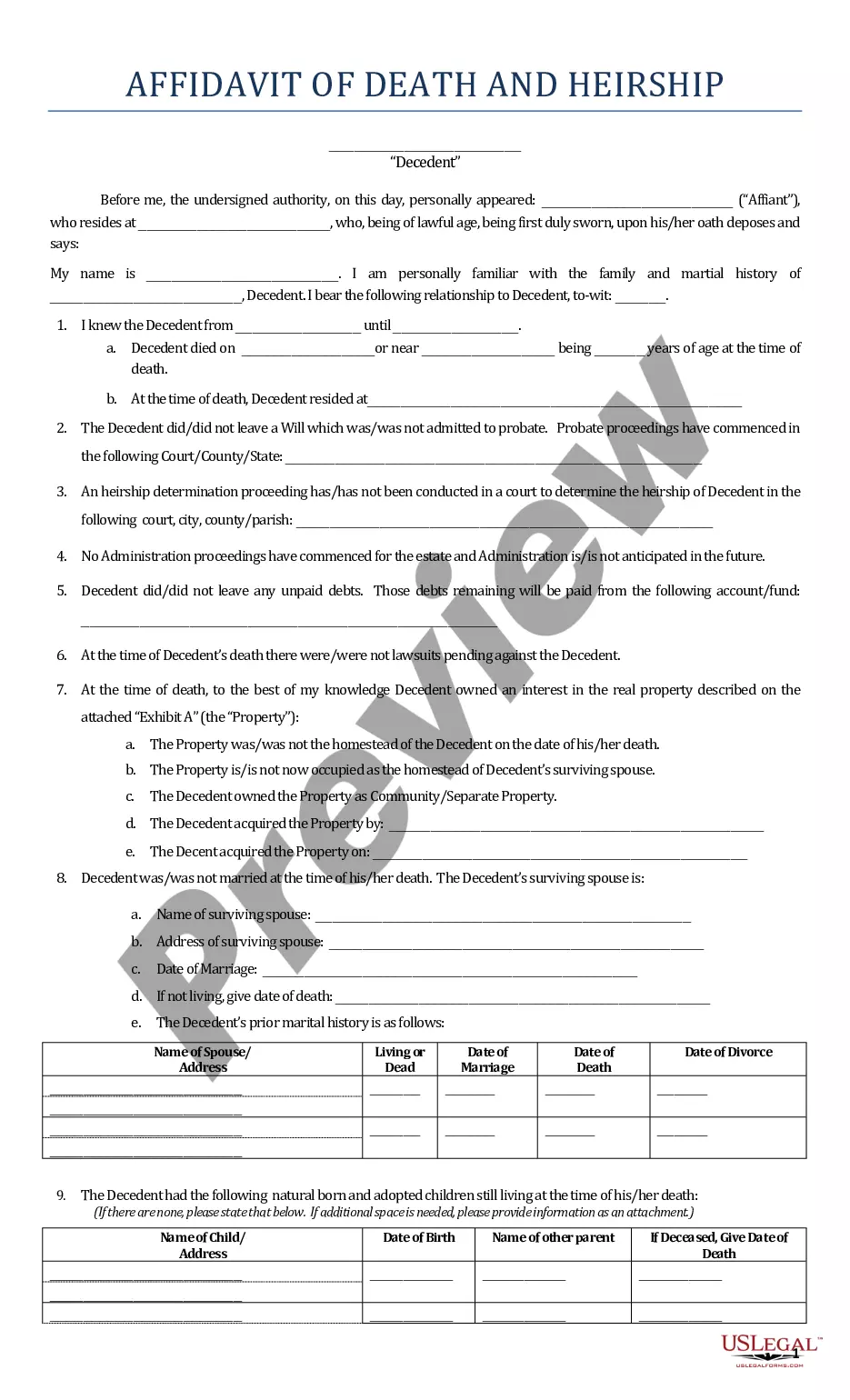
- Identification of the decedent, including date of death and relationship to the affiant.
- Details about the decedent's marital status and surviving heirs.
- Signatures of the affiant and a notary public.
- Attachment of the decedent's death certificate as Exhibit A.


When to use this form
This form should be used when a deceased individualâs heirs need to be legally recognized to establish ownership of their property. It is particularly useful when the owner died without a will or has been deceased for over five years, reducing the need for a lengthy probate process. The affidavit serves as proof of inheritance in situations such as transferring property titles or settling the decedent's affairs.
Intended users of this form
This affidavit is typically prepared by:
- Friends or distant relatives of the decedent who can attest to the decedent's family situation.
- Individuals who are familiar with the decedentâs life and family but are not direct heirs themselves (e.g., cousins, co-workers).
- Anyone needing to establish the relationship of heirs for legal and property matters.
How to complete this form
- Identify the decedent by entering their full name and date of death.
- Explain your relationship to the decedent, and provide details about their family structure, including spouse and children.
- Attach a copy of the decedentâs death certificate as Exhibit A.
- Sign the affidavit in front of a notary public and confirm the validity of your statement under oath.
- Have the notary complete their acknowledgment to certify the affidavit.
Notarization guidance
Yes, this form must be notarized to be legally valid. Signing the affidavit in the presence of a notary public ensures the authenticity of the document and helps prevent fraud. US Legal Forms offers integrated online notarization services, allowing you to complete this step securely and conveniently from anywhere, 24/7.
Get your form ready online
Our built-in tools help you complete, sign, share, and store your documents in one place.
Make edits, fill in missing information, and update formatting in US Legal Forms—just like you would in MS Word.
Download a copy, print it, send it by email, or mail it via USPS—whatever works best for your next step.
Sign and collect signatures with our SignNow integration. Send to multiple recipients, set reminders, and more. Go Premium to unlock E-Sign.
If this form requires notarization, complete it online through a secure video call—no need to meet a notary in person or wait for an appointment.
We protect your documents and personal data by following strict security and privacy standards.

Make edits, fill in missing information, and update formatting in US Legal Forms—just like you would in MS Word.

Download a copy, print it, send it by email, or mail it via USPS—whatever works best for your next step.

Sign and collect signatures with our SignNow integration. Send to multiple recipients, set reminders, and more. Go Premium to unlock E-Sign.

If this form requires notarization, complete it online through a secure video call—no need to meet a notary in person or wait for an appointment.

We protect your documents and personal data by following strict security and privacy standards.
Common mistakes
- Failing to include complete information about the decedent and their heirs.
- Not attaching the death certificate or forgetting to label it as Exhibit A.
- Having the affidavit signed without a notary present.
- Recording the affidavit in the wrong office or failing to record it entirely.
Benefits of completing this form online
- Conveniently downloadable legal forms created by licensed attorneys.
- Editable templates that allow for customization to fit your specific needs.
- Quick access to legal documentation without the need for an in-person visit to a lawyer.
Quick recap
- The Affidavit of Heirship is crucial for establishing inheritance in absence of a will.
- Eligibility typically involves individuals who are familiar with the decedent but are not direct heirs.
- This form must be completed accurately and notarized for legal use.
- Common pitfalls include incomplete information and incorrect recording procedures.
Looking for another form?
Form popularity
FAQ
The small estate limit in Arkansas allows for simplified probate procedures when a person dies with a limited amount of assets. As of now, this limit is $100,000, excluding certain types of property. Utilizing an Arkansas Affidavit of Heirship is advantageous here, as it provides a way to claim the decedent’s property without going through full probate. This legal tool ensures that heirs can quickly access their inheritance, avoiding lengthy and costly legal processes.
In Arkansas, the order of heirship determines how a deceased person's estate will be distributed among surviving relatives. Generally, the order starts with the spouse and children, followed by parents, siblings, and other relatives. If a person passes without a will, an Arkansas Affidavit of Heirship can help establish the rightful heirs. This legal document simplifies the process of transferring property by validating the heirs based on their relationship to the deceased.
To file a small estate affidavit in Arkansas, you need to ensure that the estate qualifies under state law, which typically means the estate's value does not exceed a certain threshold. You can complete the affidavit according to the state's form, listing the assets and heirs involved. After filling out the affidavit, you must file it with the probate court in the county where the deceased resided. Utilizing the Arkansas Affidavit of Heirship can simplify the process by providing essential evidence of heirship.
To file a claim against an estate in Arkansas, you must first determine if the estate is being probated. If so, you can submit your claim to the executor or personal representative of the estate. It's best to present your claim in writing, detailing the amount owed and any supporting documentation. If you need more guidance on this process, consider using the Arkansas Affidavit of Heirship to clarify your position as a rightful heir.
Not having an Arkansas Affidavit of Heirship can lead to disputes over inheritance and complicate property transfers. Without it, heirs may struggle to prove their rights to the decedent's assets. This could result in prolonged legal battles and increased costs. Utilizing services like uslegalforms can simplify the process and provide peace of mind.
To file a small estate affidavit in Arkansas, you must complete the necessary forms, including an Arkansas Affidavit of Heirship. Gather essential documents such as the decedent's death certificate and property titles. Once everything is in order, file the affidavit with the probate court in the county where the decedent resided. This process helps in settling smaller estates efficiently.
Yes, an Arkansas Affidavit of Heirship can facilitate the transfer of title to property. It serves as a formal declaration identifying heirs, establishing their ownership rights. However, it is important to follow local laws and procedures to ensure the transfer is recognized. Consulting with a legal expert can prevent potential issues.
Witnesses for the Arkansas Affidavit of Heirship must be individuals who can attest to the accuracy of the document's contents. Typically, you need two disinterested witnesses who are not beneficiaries of the estate. Their signatures help validate the affidavit, adding credibility to the claims made within it.
Filling out an Arkansas Affidavit of Heirship requires basic information about the deceased and the heirs. Start by identifying the decedent's full name, date of death, and last address. Next, list the names, relationships, and addresses of all potential heirs. Lastly, ensure to complete any notarization requirements.
In Arkansas, anyone with knowledge of the estate's heirs can prepare an Arkansas Affidavit of Heirship. This often includes relatives, friends, or legal representatives. However, it is wise to consult with an attorney to ensure all requirements are met and the affidavit is accurate. Using a professional service can also help to streamline the process.