Arizona Easement for Ingress and Egress over Private Driveway
What this document covers
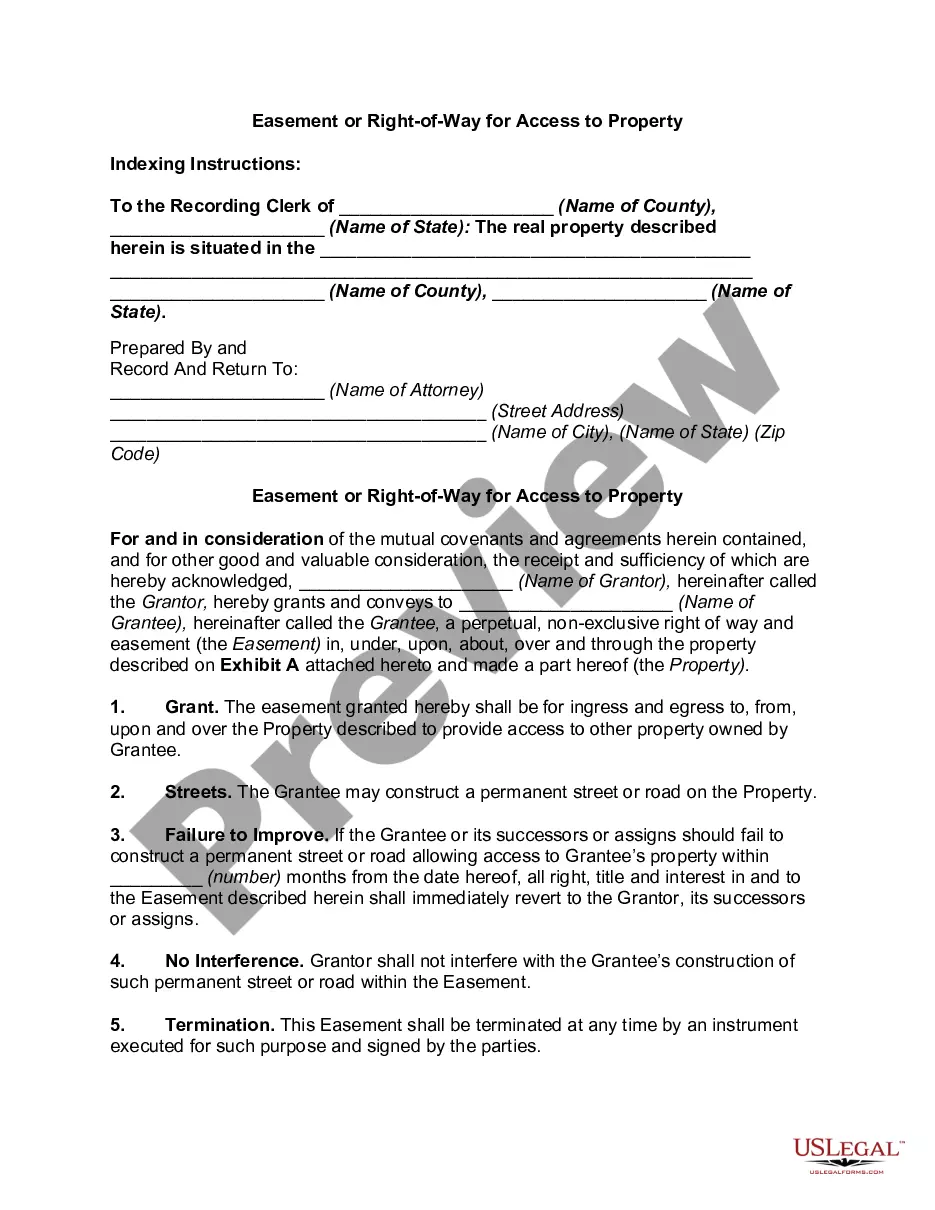
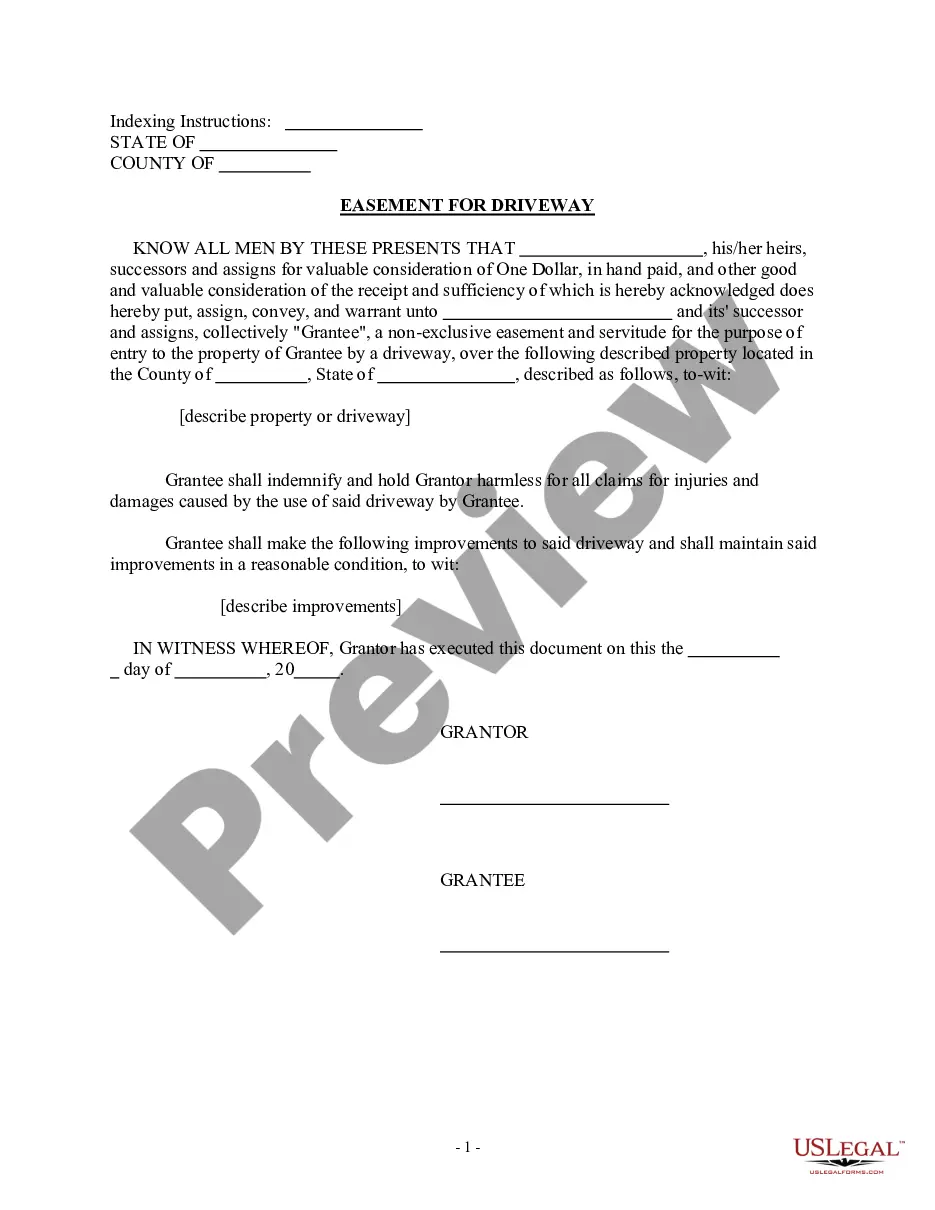
The Easement for Ingress and Egress over Private Driveway is a legal document that grants one party the right to pass through another party's property for specific purposes, typically involving access via a shared driveway. This form distinguishes itself from other easements by focusing on the right to travel over private driveways rather than utilities or other common land uses.
What’s included in this form
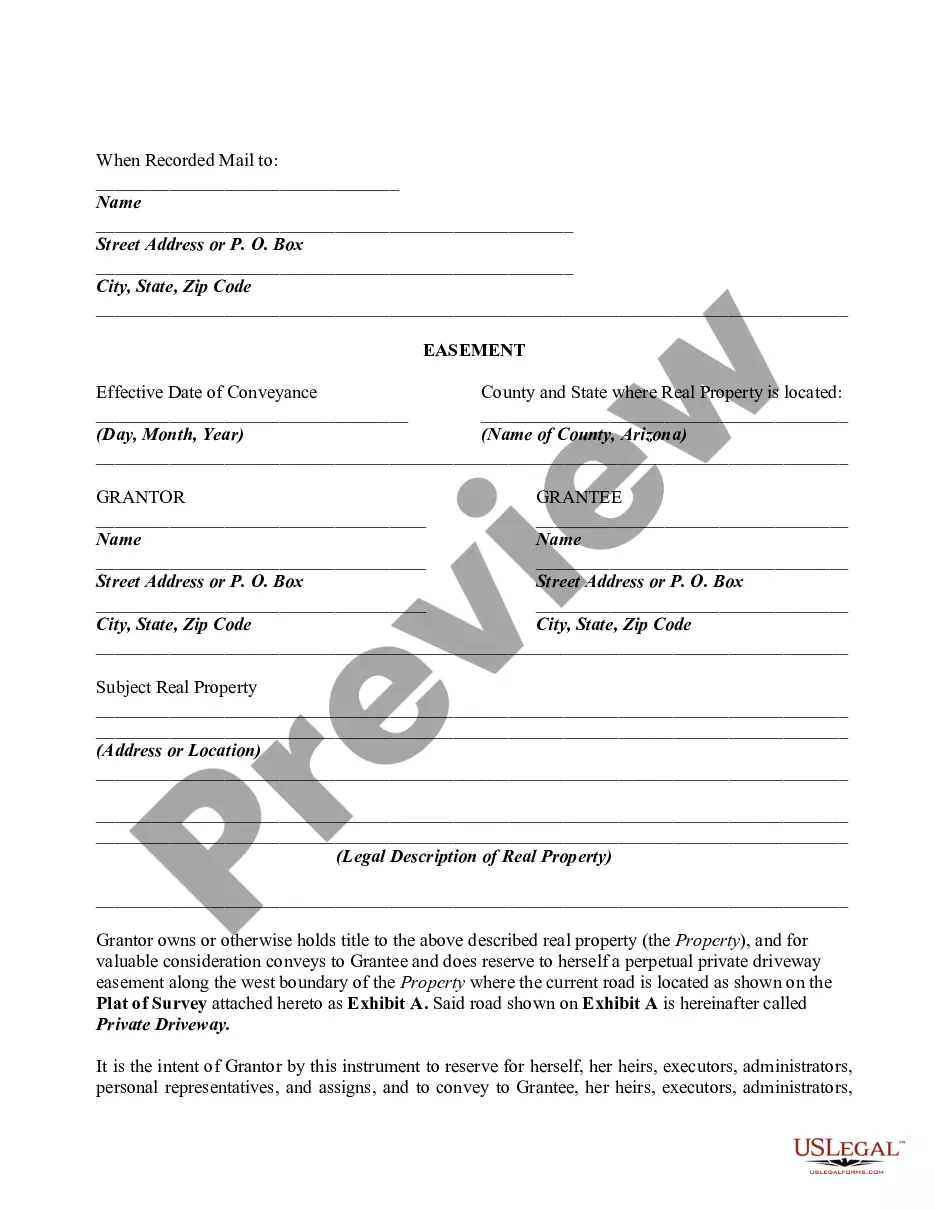
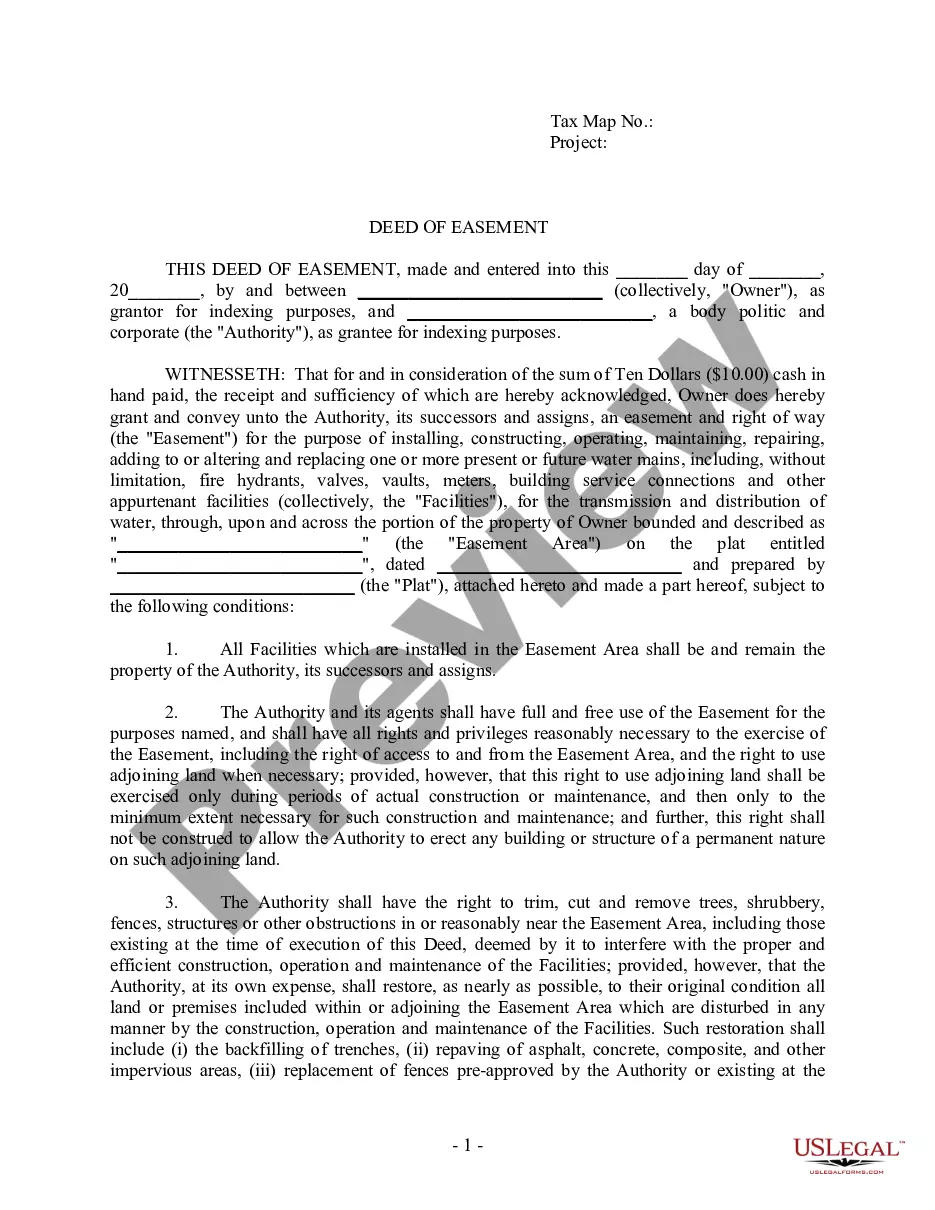
- Identifying information for Grantor and Grantee, including names and contact details.
- Description of the subject real property involved in the easement.
- Effective date of the easement conveyance.
- Detailed legal description of the property, ensuring clear demarcation of the easement area.
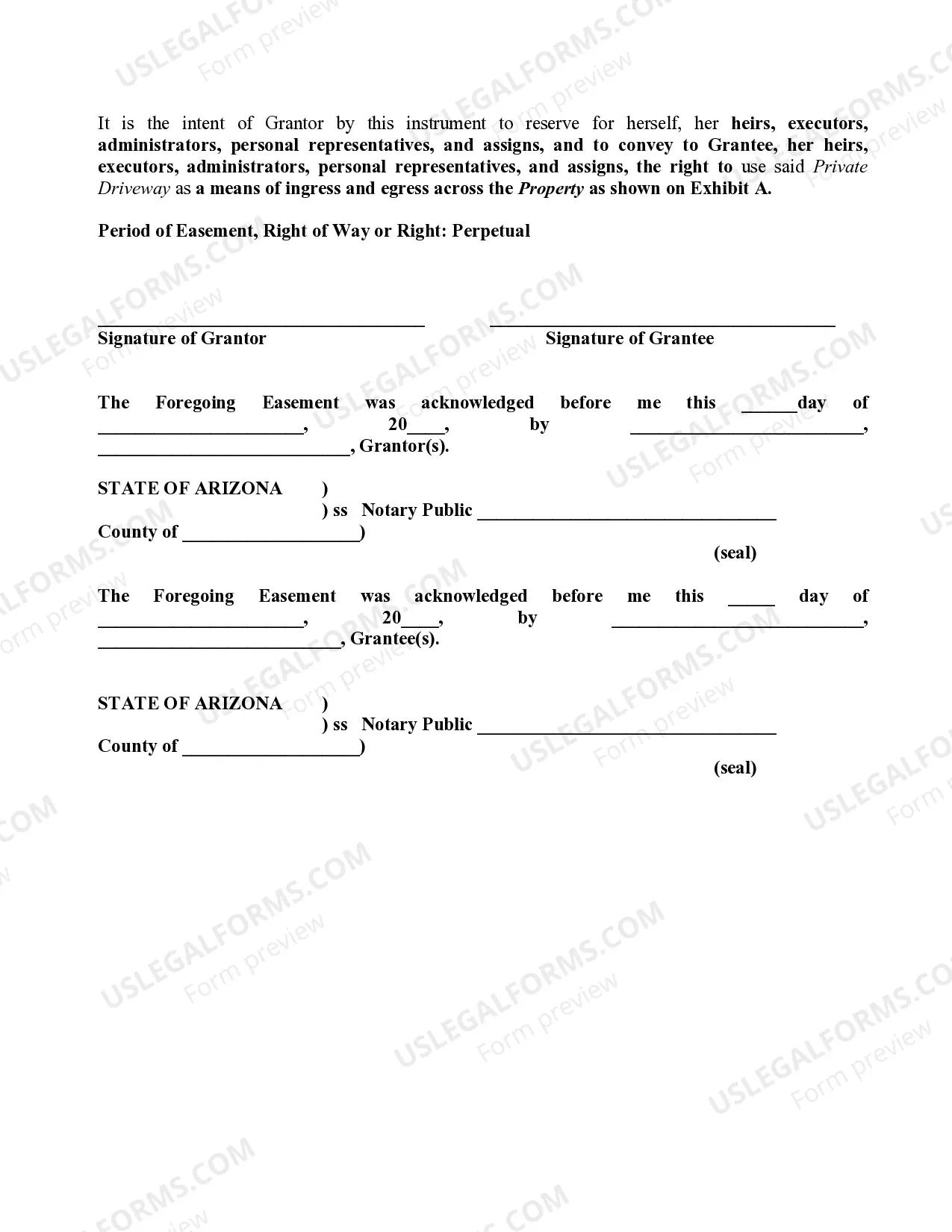
- Signatures of both Grantor and Grantee, as well as notarization sections for legal validation.
- Reference to an attached plat of survey illustrating the easement area.
Common use cases
This form is commonly used in situations where a homeowner needs to grant a neighbor access to a private driveway to ensure safe passage to and from their property. It may arise in cases of landlocked properties or when a shared access route is essential for neighboring properties.
Who needs this form
- Property owners who wish to grant access to another party for driveway use.
- Neighbors involved in shared access arrangements for private driveways.
- Real estate professionals assisting clients in creating legal agreements for easements.
- Individuals buying or selling property needing to secure access rights for ingress and egress.
Steps to complete this form
- Identify the Grantor and Grantee by entering their names and addresses.
- Specify the effective date of the easement and the county where the property is located.
- Provide a clear description of the subject real property.
- Include the legal description of the property, referring to the attached survey if necessary.
- Ensure both parties sign the form and have it notarized to validate the agreement.
Does this form need to be notarized?
This form must be notarized to be legally valid. US Legal Forms provides secure online notarization powered by Notarize, allowing you to complete the process through a verified video call.
Get your form ready online
Our built-in tools help you complete, sign, share, and store your documents in one place.
Make edits, fill in missing information, and update formatting in US Legal Forms—just like you would in MS Word.
Download a copy, print it, send it by email, or mail it via USPS—whatever works best for your next step.
Sign and collect signatures with our SignNow integration. Send to multiple recipients, set reminders, and more. Go Premium to unlock E-Sign.
If this form requires notarization, complete it online through a secure video call—no need to meet a notary in person or wait for an appointment.
We protect your documents and personal data by following strict security and privacy standards.

Make edits, fill in missing information, and update formatting in US Legal Forms—just like you would in MS Word.

Download a copy, print it, send it by email, or mail it via USPS—whatever works best for your next step.

Sign and collect signatures with our SignNow integration. Send to multiple recipients, set reminders, and more. Go Premium to unlock E-Sign.

If this form requires notarization, complete it online through a secure video call—no need to meet a notary in person or wait for an appointment.

We protect your documents and personal data by following strict security and privacy standards.
Typical mistakes to avoid
- Failing to include a complete legal description of the property.
- Not notarizing the document, which may lead to invalidation.
- Leaving out any party's complete name or address for clarity.
- Ignoring local requirements or regulations that may impact the easement.
Why use this form online
- Convenience: Download the form instantly from anywhere at any time.
- Editability: Customize the form easily to meet specific needs without hassle.
- Reliability: Access templates drafted by licensed attorneys to ensure compliance with legal standards.
Looking for another form?
Form popularity
FAQ
An easement granted by law to allow ingress and egress enables individuals to legally access their property through another's land. This is vital in situations where a property is landlocked or otherwise inaccessible. Understanding the nuances of Arizona Easements for Ingress and Egress over Private Driveway can help property owners ensure their access rights are respected. You can find more assistance related to these laws on our platform.
Yes, a driveway can serve as an easement if it allows access to a property. Often, this occurs when a landlocked property requires a pathway for ingress and egress. In cases of Arizona Easements for Ingress and Egress over Private Driveway, the driveway must be clearly defined within the easement agreement. Clarity in such configurations ensures all parties understand their rights and responsibilities.
Arizona easement laws dictate how easements are created, enforced, and terminated. Typically, easements can be established through written agreements, necessity, or prescription. In cases of Arizona Easements for Ingress and Egress over Private Driveway, understanding these laws helps protect your access rights. For detailed information or legal assistance, consider exploring resources on our platform.
The ingress and egress rule refers to the legal rights of individuals to enter and exit their property. This rule ensures that property owners have the ability to access their land without obstruction. When it comes to Arizona Easements for Ingress and Egress over Private Driveway, property owners can establish pathways to facilitate these rights. Understanding this rule is essential for maintaining property accessibility.
In Washington state, you generally cannot build a fence on an easement that is meant for ingress and egress without consent from the easement holder. Since these easements usually allow for access over private property, any obstruction could hinder the property rights of others. Always consult legal advice to understand easement specifics before making modifications. If you have questions about Arizona Easements for Ingress and Egress over Private Driveway, our platform can provide valuable resources.
In Arizona, you can refuse a utility easement, but there are considerations. If the utility company provides a legitimate public service, they may pursue the easement through legal channels. Understanding the implications of refusal is crucial, as it may affect services to your property. Consulting with legal advisers can help you navigate these decisions effectively.
Easement rights in Arizona allow the easement holder to access a property for specific purposes, such as ingress and egress over a private driveway. These rights often come with limitations, detailing how the easement may be used and maintained. It's important to understand these rights to avoid potential conflicts. Engaging with legal resources can provide clarity.
Obtaining an Arizona easement for ingress and egress over a private driveway typically involves legal steps. Start by negotiating with the property owner to gain their consent. If an agreement cannot be reached, you may need to file a petition in court to establish the easement based on necessity. This process can be complex, and legal advice is beneficial.
To terminate an Arizona easement for ingress and egress over private driveway, you must follow certain legal procedures. Generally, you can terminate the easement by mutual agreement with the other party or through a formal court process. It's advisable to document the termination properly. Consulting with a legal expert will ensure you handle this correctly.
To claim adverse possession in Arizona, you must meet five specific requirements: you must possess the property continuously, openly, and notoriously for at least 10 years, use the property in a manner that is hostile to the true owner, and not have the permission of the owner. Additionally, you must ensure that your use does not interfere with any Arizona Easement for Ingress and Egress over Private Driveway. Understanding these requirements can protect your interests and help you navigate property rights effectively.