Arizona Inventory of Personal Property
Understanding this form
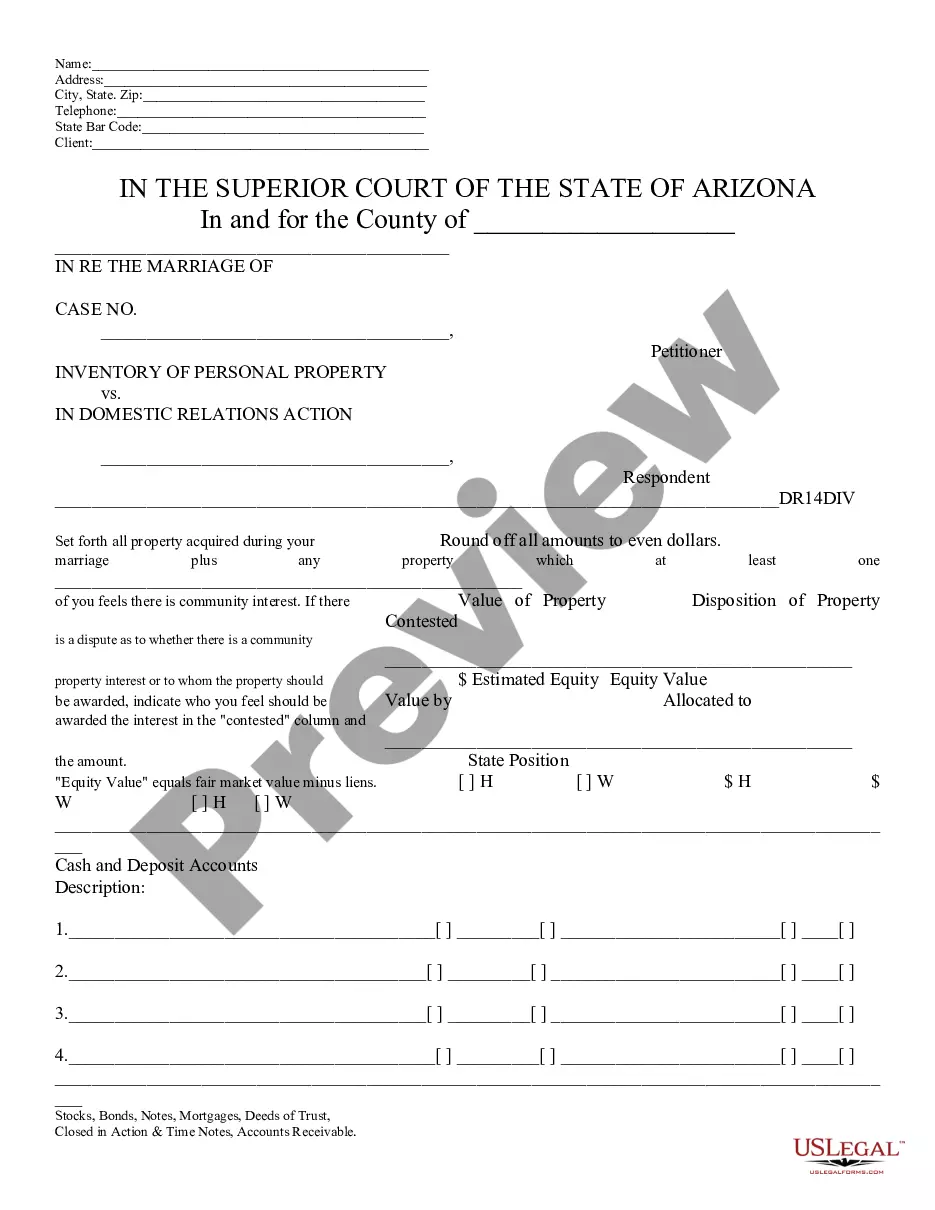
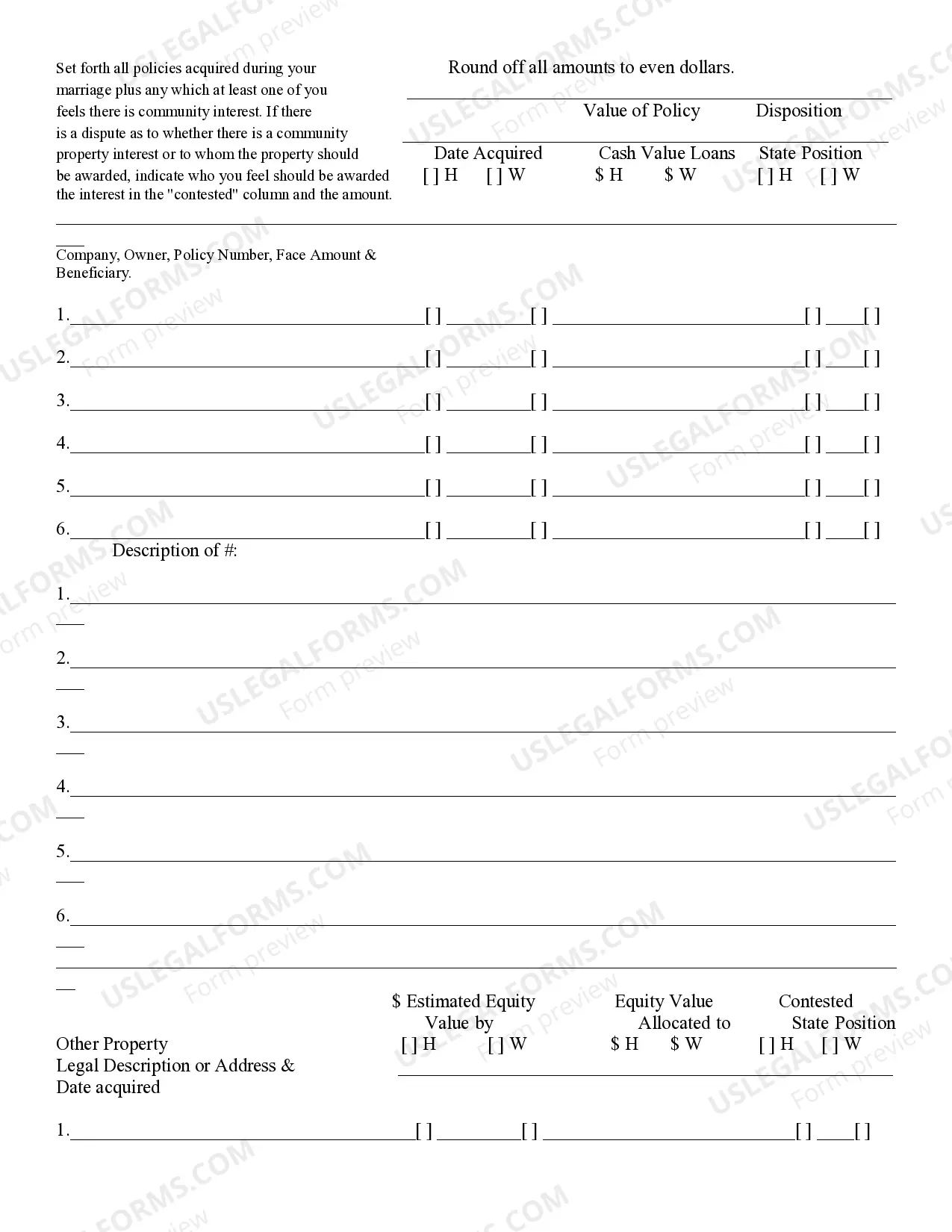
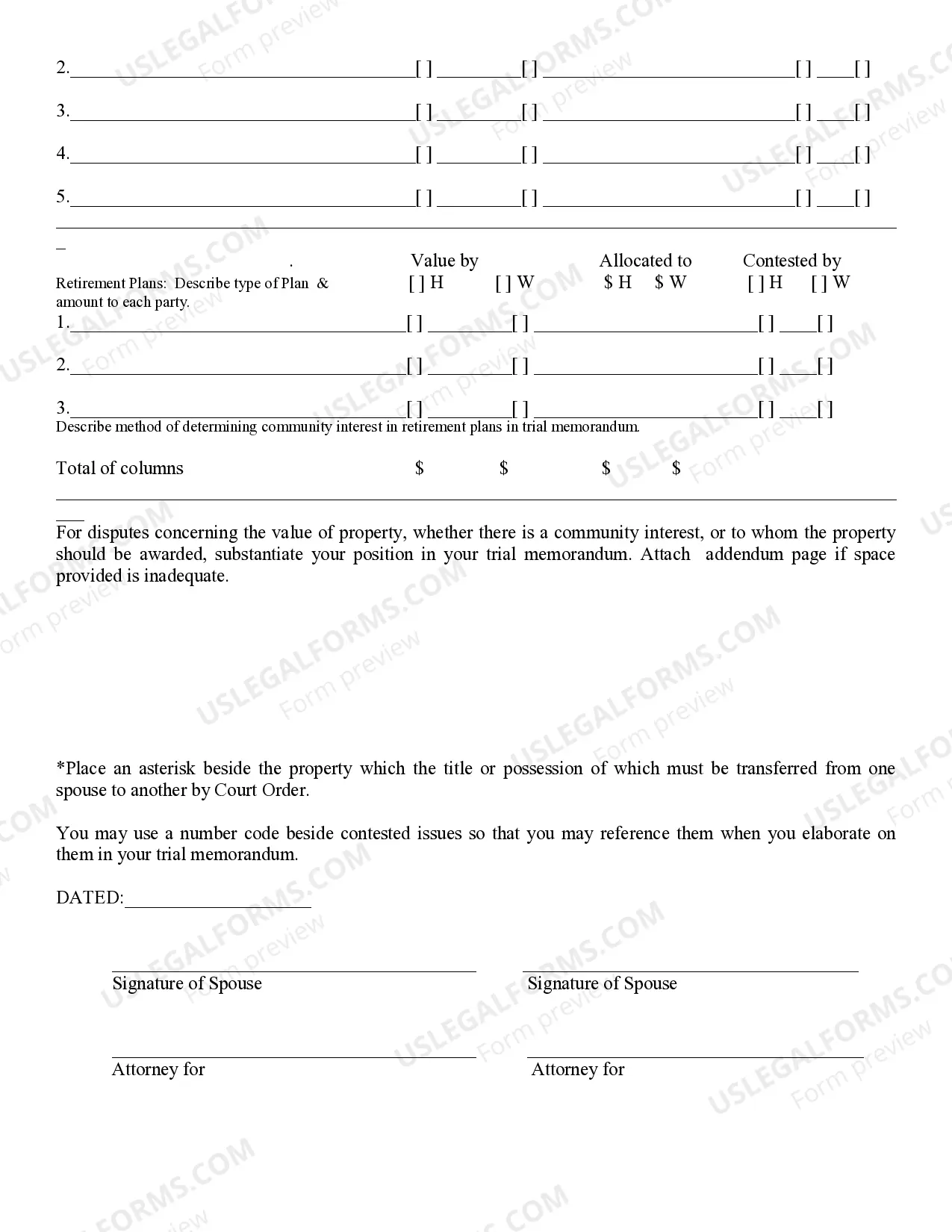
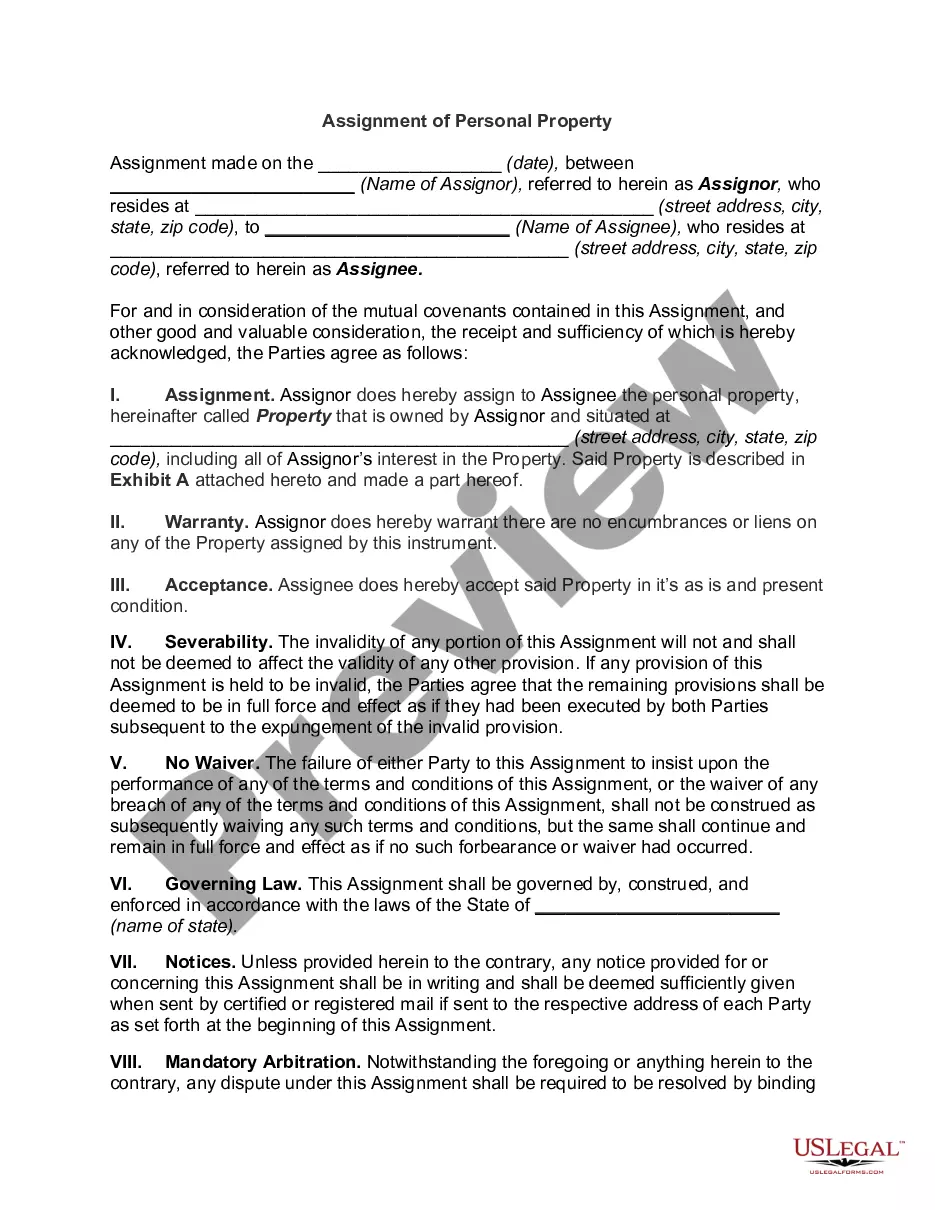
The Inventory of Personal Property is a legal document that lists all assets, debts, and property a couple has acquired during their marriage. This form is essential for identifying and dividing marital property in divorce or separation proceedings. Unlike similar forms, both spouses are required to sign this document, affirming the accuracy of the listed items and values.
What’s included in this form
- Identification of both spouses and their respective contact information.
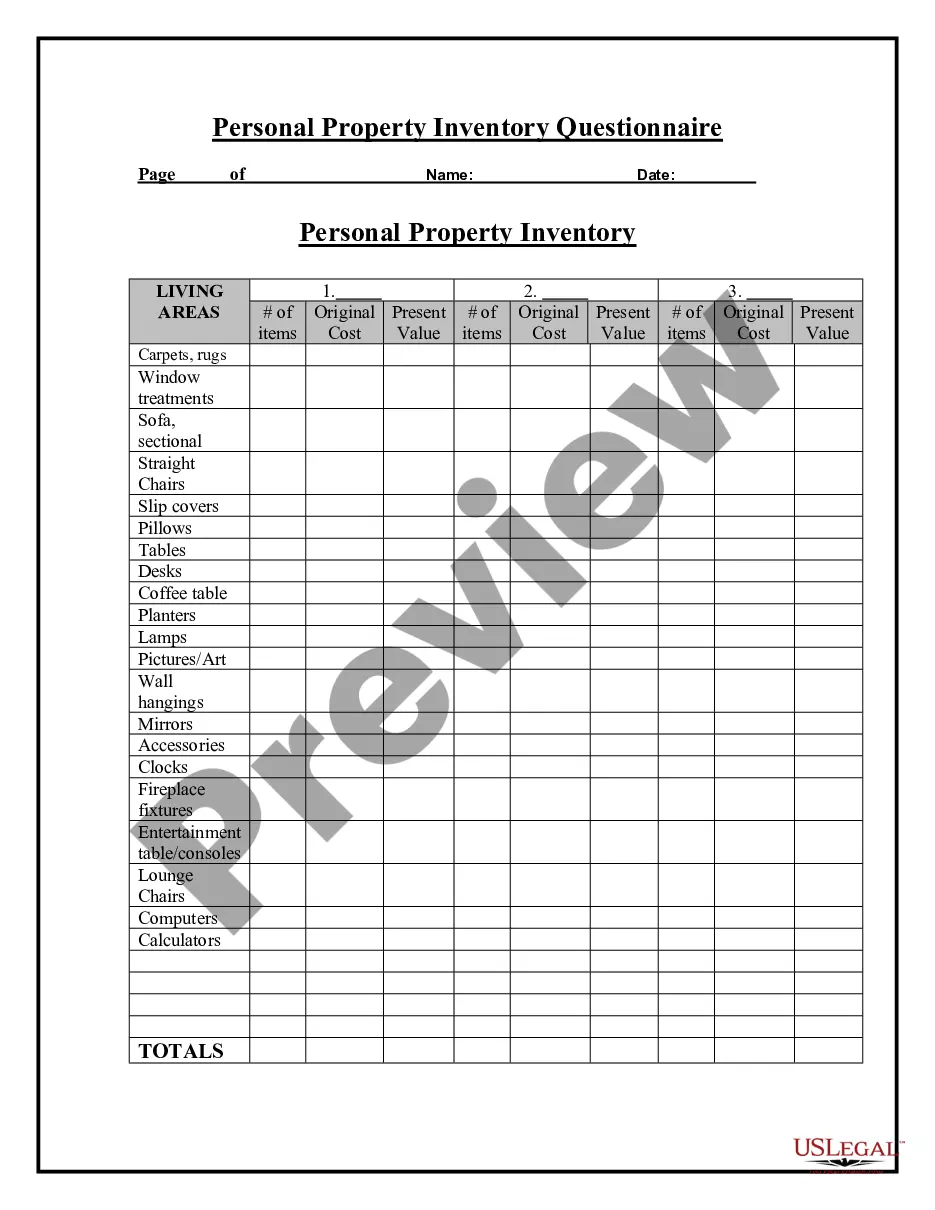
- Detailed list of all marital assets and their estimated equity.
- Sections for describing contested items and proposed distributions between spouses.
- Signatures of both spouses to verify the document's authenticity.
Common use cases
This form is used during divorce or legal separation proceedings when couples need to identify and categorize their shared property and debts. It helps ensure a fair division of assets and can be vital in resolving disputes regarding ownership or value of property. Utilizing this document accurately can lead to more amicable settlements without prolonged legal battles.
Who needs this form
- Couples who are in the process of divorce or legal separation.
- Individuals seeking to document their marital assets for court proceedings.
- Spouses wanting to ensure transparency and fairness in property division.
How to complete this form
- Identify both spouses by entering their full names and contact details at the top of the form.
- List all assets acquired during the marriage along with their estimated value in the designated sections.
- Clearly outline any contested items, specifying which spouse claims interest and the rationale behind the claim.
- Provide signatures for both spouses at the end of the form to confirm agreement on the listed assets and values.
- Attach any additional pages if necessary, especially for further explanations of contested items.
Notarization guidance
Notarization is generally not required for this form. However, certain states or situations might demand it. You can complete notarization online through US Legal Forms, powered by Notarize, using a verified video call available anytime.
Get your form ready online
Our built-in tools help you complete, sign, share, and store your documents in one place.
Make edits, fill in missing information, and update formatting in US Legal Forms—just like you would in MS Word.
Download a copy, print it, send it by email, or mail it via USPS—whatever works best for your next step.
Sign and collect signatures with our SignNow integration. Send to multiple recipients, set reminders, and more. Go Premium to unlock E-Sign.
If this form requires notarization, complete it online through a secure video call—no need to meet a notary in person or wait for an appointment.
We protect your documents and personal data by following strict security and privacy standards.

Make edits, fill in missing information, and update formatting in US Legal Forms—just like you would in MS Word.

Download a copy, print it, send it by email, or mail it via USPS—whatever works best for your next step.

Sign and collect signatures with our SignNow integration. Send to multiple recipients, set reminders, and more. Go Premium to unlock E-Sign.

If this form requires notarization, complete it online through a secure video call—no need to meet a notary in person or wait for an appointment.

We protect your documents and personal data by following strict security and privacy standards.
Common mistakes to avoid
- Failing to include all marital assets and debts, which can lead to disputes later.
- Neglecting to sign the form, resulting in non-validity.
- Leaving out details regarding contested items, which can complicate property division.
Why use this form online
- Convenient download and editing options allow you to customize the form to suit your situation.
- Access to legally vetted templates drafted by licensed attorneys, ensuring compliance with state laws.
- Immediate availability without the need to visit a law office, saving time and effort.
Looking for another form?
Form popularity
FAQ
You should include all relevant assets in your Arizona Inventory of Personal Property, such as real estate, vehicles, collectibles, art, and personal items of value. Additionally, financial accounts like stocks and bonds should also be included. This comprehensive listing ensures clarity in assessing your financial situation and helps in estate planning.
Inventory property in Arizona encompasses items held for sale, raw materials, and goods in production. This can include anything from clothes in a retail store to furniture at a warehouse. Maintaining a clear and detailed Arizona Inventory of Personal Property helps businesses and individuals assess their net worth and manage their assets effectively.
An Arizona Inventory of Personal Property typically includes all tangible and intangible assets. You should list real estate, vehicles, personal belongings, investments, and financial assets like bank accounts. It is important to document the condition and estimated value of each item, as this will aid in future planning and possible estate management.
Yes, Arizona taxes inventory as part of its personal property tax regulations. Businesses must accurately list inventory on their Arizona Inventory of Personal Property to comply with state tax laws. This tax applies to items held for resale or used in business operations. If you're unsure about inventory tax implications, USLegalForms can provide necessary documentation and guidance.
Yes, Arizona does impose personal property taxes on tangible items used in business operations. These taxes are determined based on the value of the items reported in your Arizona Inventory of Personal Property. Business owners should ensure proper assessment and payment to avoid penalties. For detailed guidance, USLegalForms offers a wealth of resources to aid in compliance.
In Arizona, most grocery food items are not subject to sales tax. This includes food for home consumption, aligning with the Arizona Inventory of Personal Property's intent to support residents. However, prepared foods or items sold for immediate consumption may attract sales tax. It's essential to distinguish between these categories for accurate tax reporting.
Yes, tangible personal property is generally taxable in Arizona. This includes items that are movable and can be touched, such as equipment and machinery. Business owners must accurately report this property in their Arizona Inventory of Personal Property. Additionally, utilizing platforms like USLegalForms can simplify your reporting process.
In Arizona, shop supplies are generally considered taxable under the Arizona Inventory of Personal Property provisions. This includes various items used in the business for maintenance or operations. However, exceptions may apply, so it's essential to review specific categories. For a comprehensive understanding, you may want to consult with a tax professional or use resources from USLegalForms.
In Arizona, there is no specific legal timeframe for how long personal belongings can remain on your property without consent. However, if the items are left unattended for more than 30 days, you may consider them abandoned. To proceed legally, you should notify the owner of the items and provide them with a chance to retrieve their belongings. Maintaining a clear Arizona Inventory of Personal Property helps manage these situations effectively.
Yes, you can claim abandoned property in Arizona, but you must follow the appropriate legal processes. Usually, you will need to report the found property to local law enforcement and wait for a specified period. If the owner does not reclaim the property, you may then be able to claim it legally. Proper documentation and an up-to-date Arizona Inventory of Personal Property can help facilitate this process.