Arizona Objection, Request and Notice of Hearing
About this form
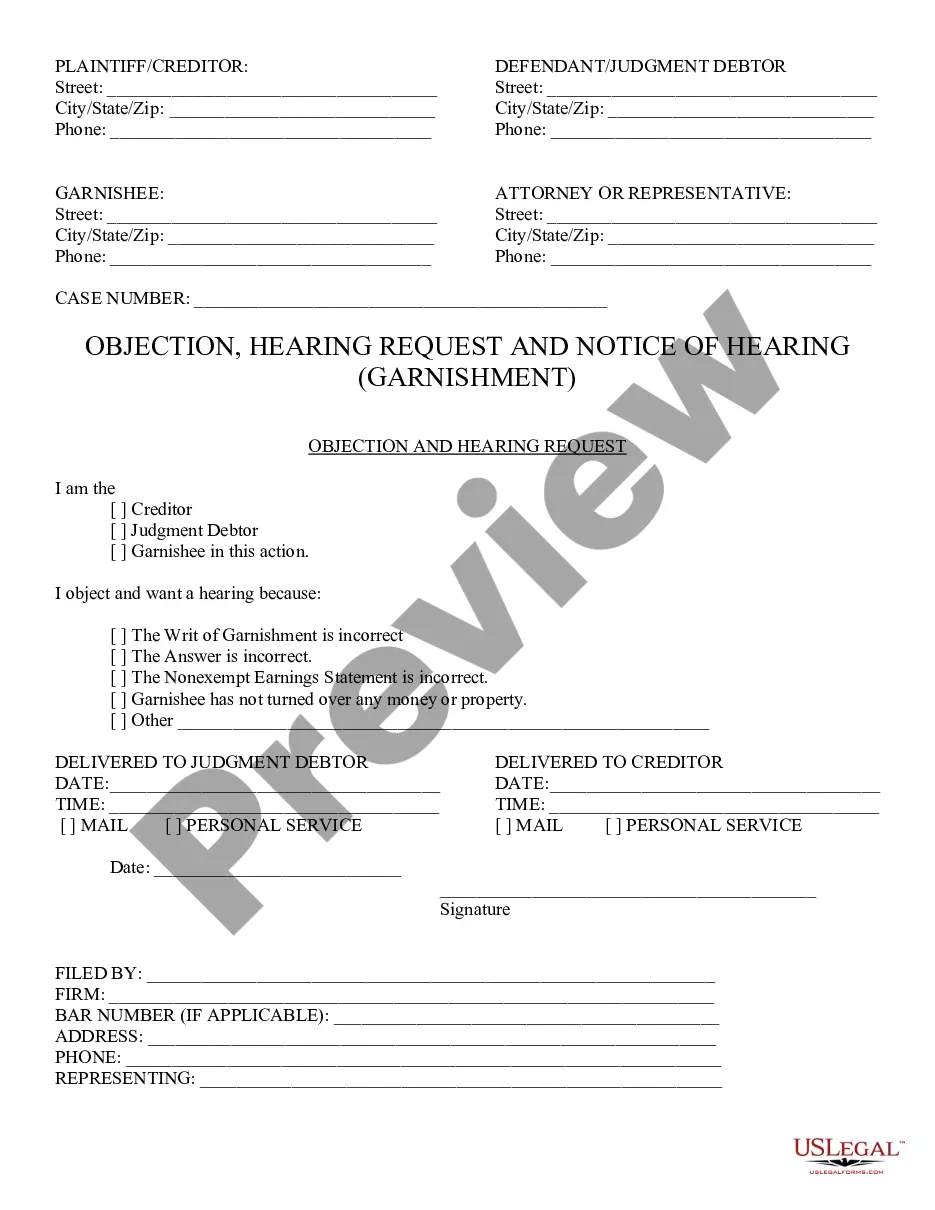
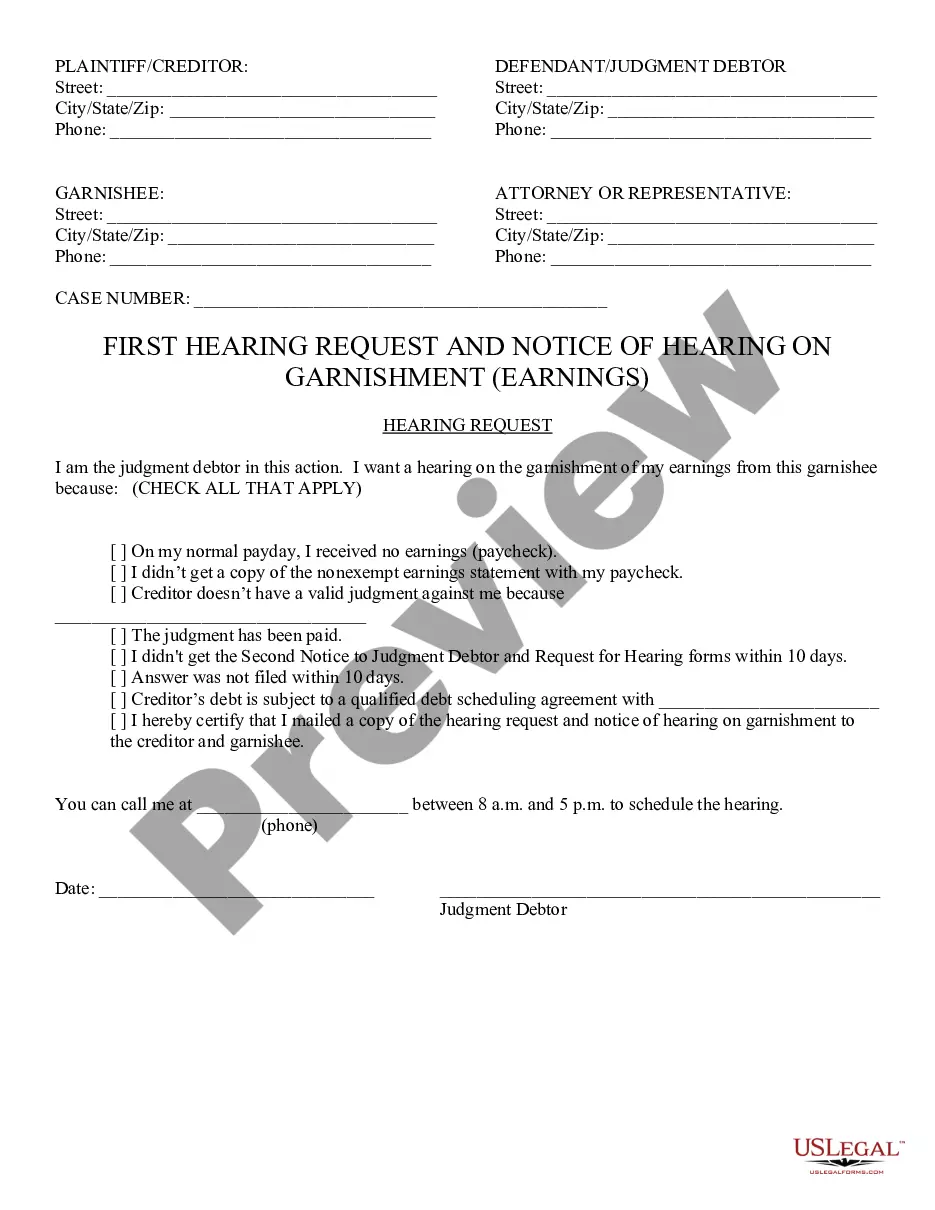
The Objection, Request and Notice of Hearing is a legal document used in cases of garnishment. This form allows either the debtor or creditor to formally object to the amount being garnished if they believe it is incorrect. It serves as both a notice of the objection and a request for a hearing to dispute the garnished amount, ensuring that both parties can present their arguments in a legal setting.
What’s included in this form
- Identification of parties involved: Creditor, Judgment Debtor, or Garnishee.
- Detail the specific objection regarding the garnishment amount.
- Fields for recording delivery methods and dates for both parties.
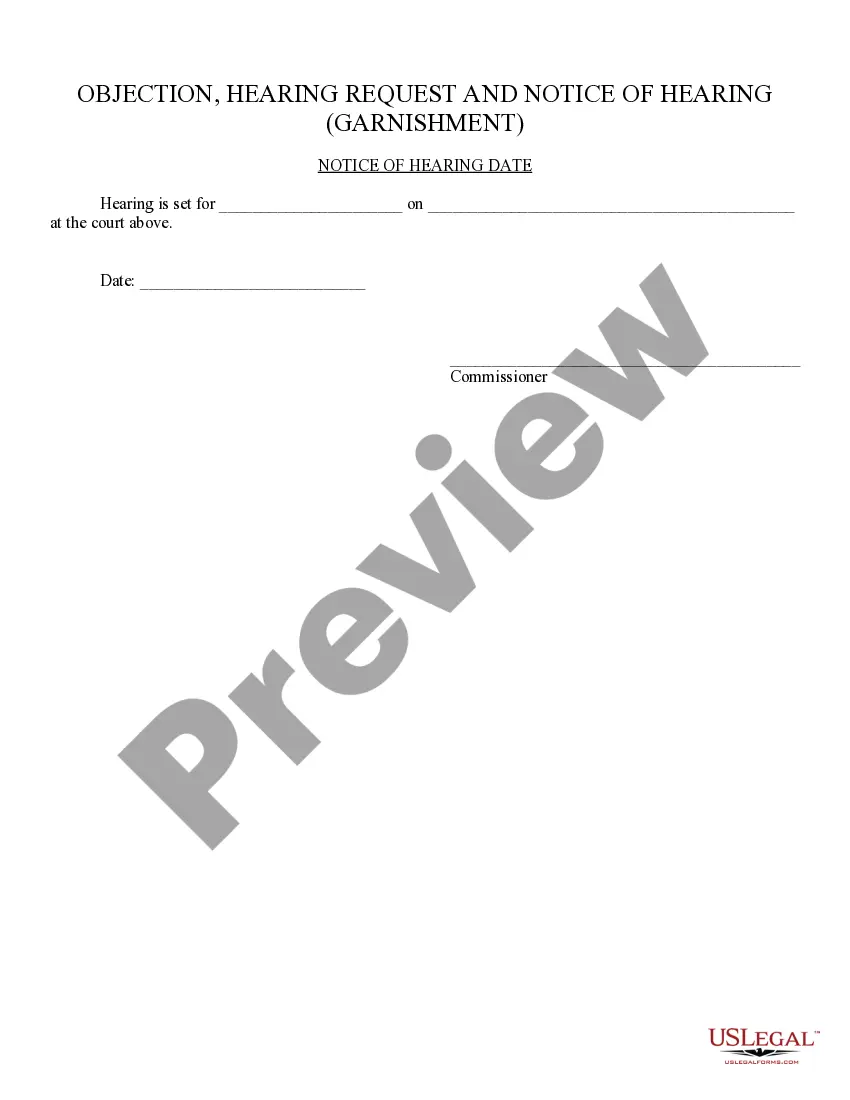
- Notice of hearing date and details for the scheduled hearing.
- Signature blocks for the parties involved and any legal representatives.

When to use this form
This form should be used when a debtor or creditor believes that the garnishment amount is inaccurate or unfair. Situations may include discrepancies in reported earnings, failure to receive property due, or other specific objections to the garnishment notice. Filing this form allows the parties to seek a resolution through a court hearing.
Who can use this document
- Creditors who believe that the amount garnished from a debtor is incorrect.
- Debtors who wish to contest the garnishment and seek a court review.
- Garnishees who are responsible for withholding funds and want to clarify their obligations.
How to prepare this document
- Identify the parties involved by filling out their names and contact details.
- Choose your role in the proceeding: Creditor, Judgment Debtor, or Garnishee.
- State your specific objections to the garnishment amount clearly.
- Indicate the delivery method used to serve the objection to the other party.
- Enter the scheduled hearing date and details.
- Sign the document and have it filed appropriately with the court.
Notarization requirements for this form
Notarization is generally not required for this form. However, certain states or situations might demand it. You can complete notarization online through US Legal Forms, powered by Notarize, using a verified video call available anytime.
Get your form ready online
Our built-in tools help you complete, sign, share, and store your documents in one place.
Make edits, fill in missing information, and update formatting in US Legal Forms—just like you would in MS Word.
Download a copy, print it, send it by email, or mail it via USPS—whatever works best for your next step.
Sign and collect signatures with our SignNow integration. Send to multiple recipients, set reminders, and more. Go Premium to unlock E-Sign.
If this form requires notarization, complete it online through a secure video call—no need to meet a notary in person or wait for an appointment.
We protect your documents and personal data by following strict security and privacy standards.

Make edits, fill in missing information, and update formatting in US Legal Forms—just like you would in MS Word.

Download a copy, print it, send it by email, or mail it via USPS—whatever works best for your next step.

Sign and collect signatures with our SignNow integration. Send to multiple recipients, set reminders, and more. Go Premium to unlock E-Sign.

If this form requires notarization, complete it online through a secure video call—no need to meet a notary in person or wait for an appointment.

We protect your documents and personal data by following strict security and privacy standards.
Avoid these common issues
- Failing to specify clear objections to the garnishment amount.
- Not providing complete contact information for all parties involved.
- Missing the deadline to file the objection and request for hearing.
- Not signing the form, which can render it invalid.
Why use this form online
- Convenience: Easily download and fill out the form at your own pace.
- Editability: Customize the document to fit your specific situation.
- Reliability: Access forms prepared by licensed attorneys ensuring legal compliance.
Legal use & context
- This form is used to legally challenge a garnishment, which is enforceable in court.
- It provides a structured way for parties to present their objections in a formal hearing.
- Filing this form may help avoid unfavorable consequences of wrongful garnishment.
Looking for another form?
Form popularity
FAQ
The 85% law in Arizona mandates that certain offenders must serve at least 85% of their sentence before being eligible for parole. This law is intended to ensure that individuals serve substantial portions of their sentences for serious crimes. Understanding this law is critical for navigating parole processes. To help clarify your situation or objections related to this law, the Arizona Objection, Request and Notice of Hearing can be indispensable.
A status hearing in Arizona is conducted to determine the progress of a case and to discuss any outstanding issues. These hearings provide an opportunity for the parties involved to present updates and address concerns. It's an essential part of ensuring that cases move forward in a timely manner. When preparing for these hearings, the Arizona Objection, Request and Notice of Hearing can aid in compiling relevant information.
Rule 76 in Arizona relates to the procedural guidelines for filing objections and requests during legal proceedings. It outlines the necessary steps a party must follow to formally object to a ruling. Familiarizing yourself with this rule is crucial for protecting your rights. You may want to look into the Arizona Objection, Request and Notice of Hearing for comprehensive guidance.
In Arizona, the standard response time to a motion is typically 10 days from the date the motion is served. Adhering to this timeline is vital to ensure your objections or responses are considered by the court. Failure to respond promptly may negatively impact your case. Utilizing the Arizona Objection, Request and Notice of Hearing can help ensure you meet all required deadlines.
Rule 7.2 in Arizona governs the motion practice and the filing of responses in civil proceedings. It offers a framework for how parties must communicate their intentions or objections related to court actions. Understanding Rule 7.2 is crucial to maintain compliance and avoid delays. The Arizona Objection, Request and Notice of Hearing serves as a valuable tool in this process.
The rule of civil appellate procedure 11 in Arizona governs the timing and process of appeals following civil cases. This rule defines how and when a party can file an appeal, ensuring transparency and fairness in judicial processes. It's important to adhere to these rules to avoid any procedural mistakes. If you need guidance, consider using the Arizona Objection, Request and Notice of Hearing for clarity.
An order to show cause hearing in Arizona requires a party to explain why a specific action should not take place. This type of hearing often arises in family law cases or when someone seeks to enforce a court order. Attending this hearing allows you to present your side and contest any issues raised. An Arizona Objection, Request and Notice of Hearing can help you prepare and present your argument effectively.
Rule 69 in Arizona governs the procedures for executing judgments and conducting discovery. It includes provisions for obtaining necessary documentation and information crucial for legal proceedings. Understanding this rule is vital for effectively pursuing a legal claim or defense. You can utilize the Arizona Objection, Request and Notice of Hearing to clarify any challenges you face in this area.
A Rule 11 hearing in Arizona focuses on determining a defendant’s competency to stand trial. This process evaluates whether the individual understands the legal proceedings and can assist in their defense. If competency is in question, filing an Arizona Objection, Request and Notice of Hearing ensures that your concerns are formally addressed in court.
Rule 76 in Arizona pertains to the procedures for filing objections and requests in specific legal contexts. This law is crucial for ensuring that parties can formally object to certain decisions made in legal proceedings. Understanding Rule 76 informs you of your rights and obligations during the hearing process. To navigate this effectively, the Arizona Objection, Request and Notice of Hearing is essential for proper communication.