Arizona Request for Protected Address
Description
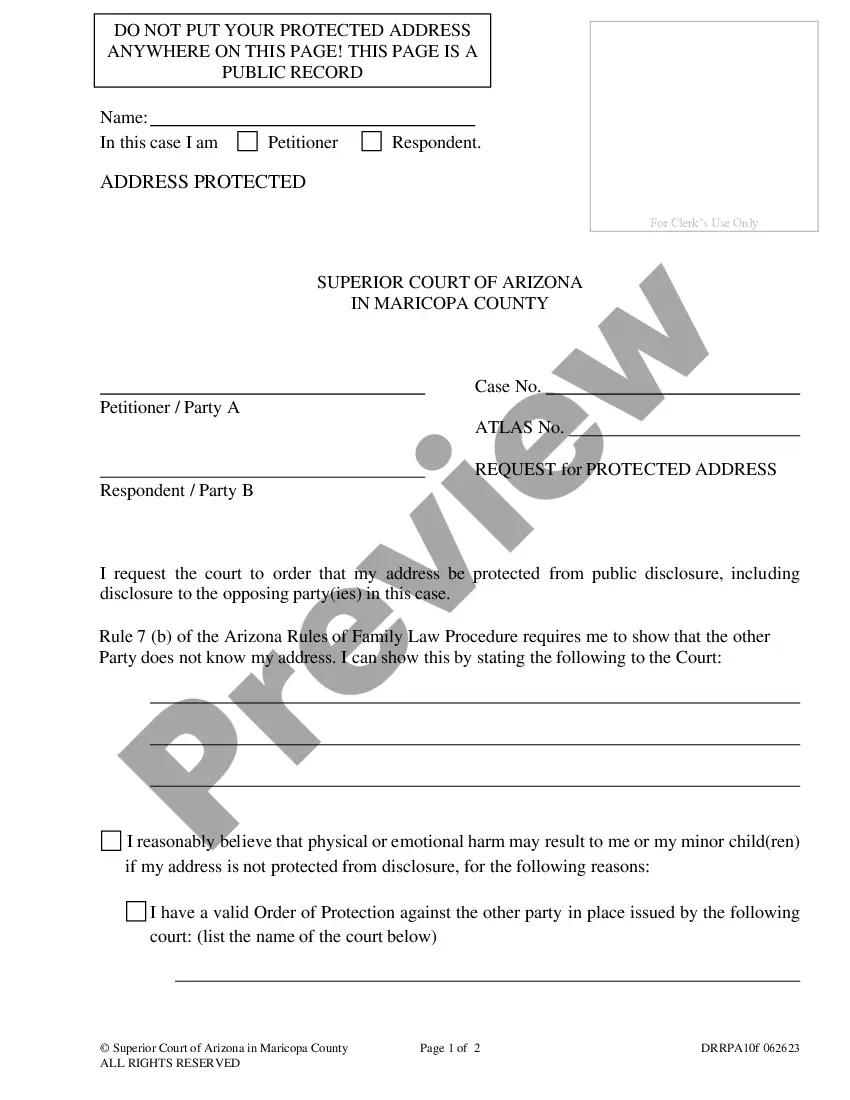
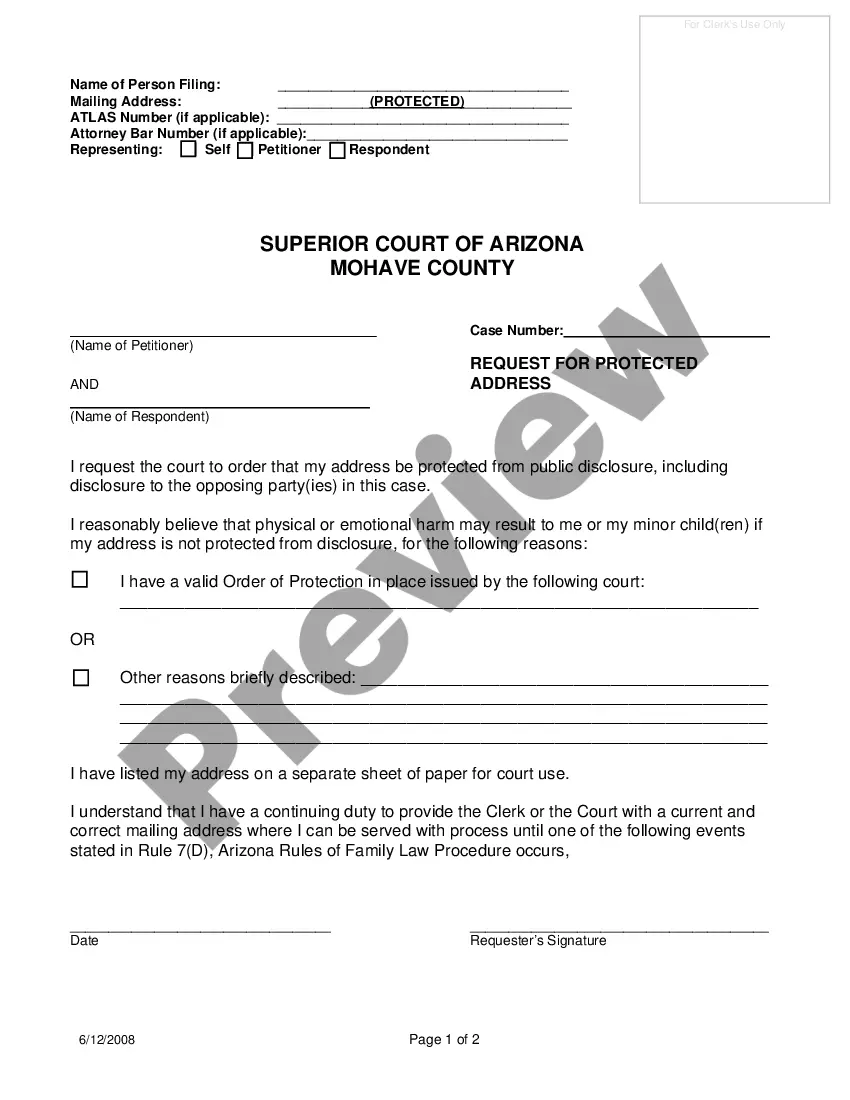
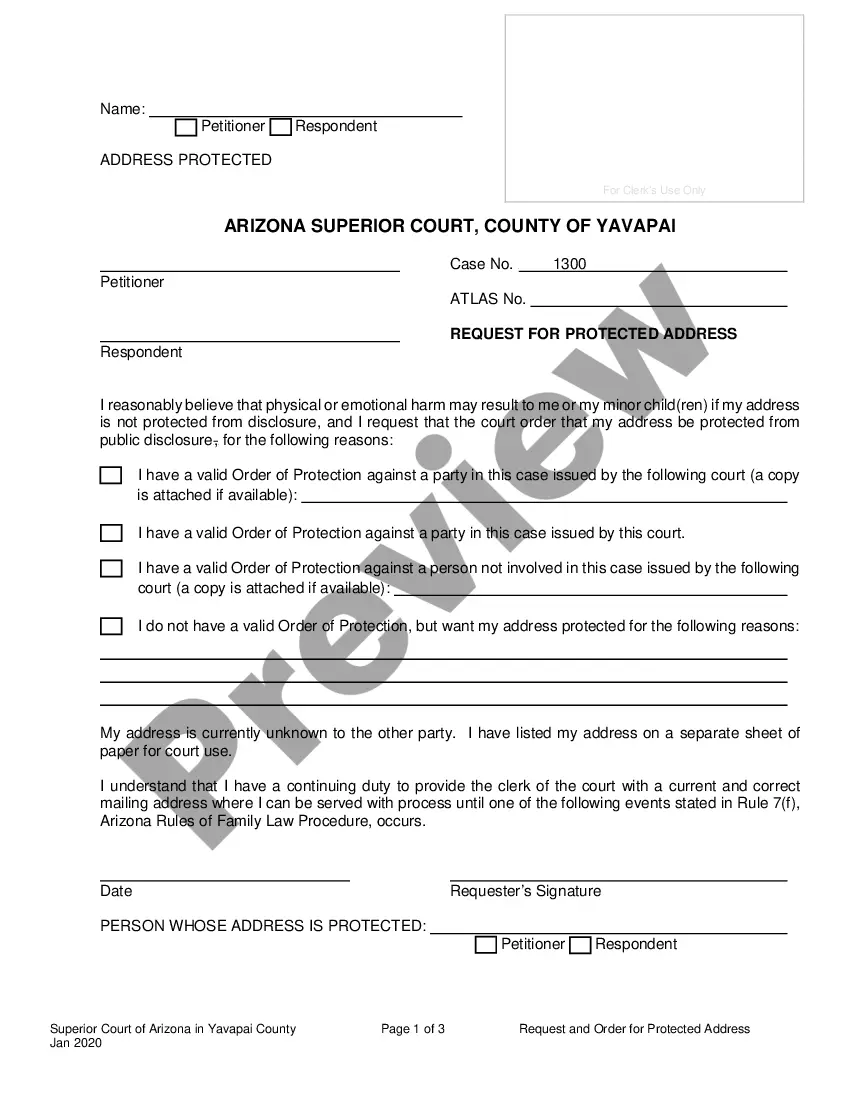
How to fill out Arizona Request For Protected Address?
How much duration and assets do you typically utilize for composing official documents.
There’s a better method to obtain such forms than employing legal professionals or wasting hours searching the internet for a suitable template.
Another benefit of our library is that you can access previously downloaded documents that you safely keep in your profile in the My documents section. Retrieve them at any time and redo your paperwork as often as necessary.
Save time and energy handling legal documentation with US Legal Forms, one of the most dependable online services. Join us today!
- Review the form details to ensure it aligns with your state regulations. For this, examine the form description or utilize the Preview option.
- If your legal document doesn’t satisfy your requirements, find an alternative using the search bar at the top.
- If you already possess an account with us, Log In and download the Arizona Request for Protected Address. If not, continue to the subsequent steps.
- Click Buy now once you identify the correct template. Choose the subscription plan that is most suitable for you to access the full capabilities of our library.
- Set up an account and process your subscription payment. You can complete your transaction using your credit card or via PayPal - our service is completely secure for this.
- Download your Arizona Request for Protected Address onto your device and fill it out on a printed hard copy or electronically.
Form popularity
FAQ
You can look up someone’s record in Arizona by accessing public records through state or county websites, or by visiting the appropriate courthouse. Various online services simplify this process, allowing you to search by name or case number. If you seek more privacy or specific guidance, platforms like US Legal can assist you with the Arizona Request for Protected Address, ensuring your queries are managed securely.
While the official deadline to submit your appeal document is typically 30 days, the time you take to write it can vary. It’s wise to allow ample time to thoughtfully prepare your arguments and gather necessary documents. Quality is essential, as a well-written appeal has a greater chance of success. For support in crafting an effective appeal, the US Legal platform offers specialized resources focused on the Arizona Request for Protected Address.
You generally have 30 days to appeal a case in Arizona, starting from the official filing date of the judgment. This timeline is critical for ensuring your appeal gets heard. Keep in mind that some cases may have different timelines, so it's important to verify the exact time limits. For more information on navigating appeals seamlessly, the US Legal platform offers helpful insights tailored to the Arizona Request for Protected Address.
The time limit to file an appeal in Arizona is generally 30 days from the judgment or order date. This period may change depending on certain circumstances or the nature of the case. Being aware of these deadlines is vital for preserving your legal options. For assistance navigating these time limits, check out resources on the US Legal platform related to the Arizona Request for Protected Address.
In Arizona, you typically have 30 days from the date of a decision to file an appeal. This timeframe can differ based on the specific court and type of case. It is crucial to act promptly to ensure your rights are protected. If you need assistance, consider the US Legal platform for guidance on the Arizona Request for Protected Address.
To motion to dismiss an order of protection in Arizona, you must file the motion with the court and provide valid grounds for dismissal. Attend the hearing to present your argument and evidence. Utilizing an Arizona Request for Protected Address can be beneficial if privacy is a concern while navigating the dismissal process.
To quash an order of protection in Arizona, file a motion in the court that issued the order. You should clearly state your reasons and provide any evidence supporting your case. Be prepared to discuss your situation at the hearing, and remember that requesting an Arizona Request for Protected Address can ensure your safety during this process.
To modify an order of protection in Arizona, you need to file a motion with the court. Explain the reasons for your modification and bring any supporting evidence to the hearing. If you are concerned about your safety or privacy, you may also consider submitting an Arizona Request for Protected Address.
You can file a civil lawsuit without a lawyer in Arizona by completing the appropriate forms available from the court or online resources. Ensure you include all necessary documents and evidence with your filing. If you require assistance, platforms like USLegalForms provide guidance on navigating the legal process and may help you understand the Arizona Request for Protected Address.
To obtain a subpoena in Arizona, you must file a request with the court, specifying the documents or testimony you need. The clerk will then issue the subpoena, which you must serve to the witness or party involved. Consider using resources like USLegalForms to better understand the process of filing a subpoena in Arizona.