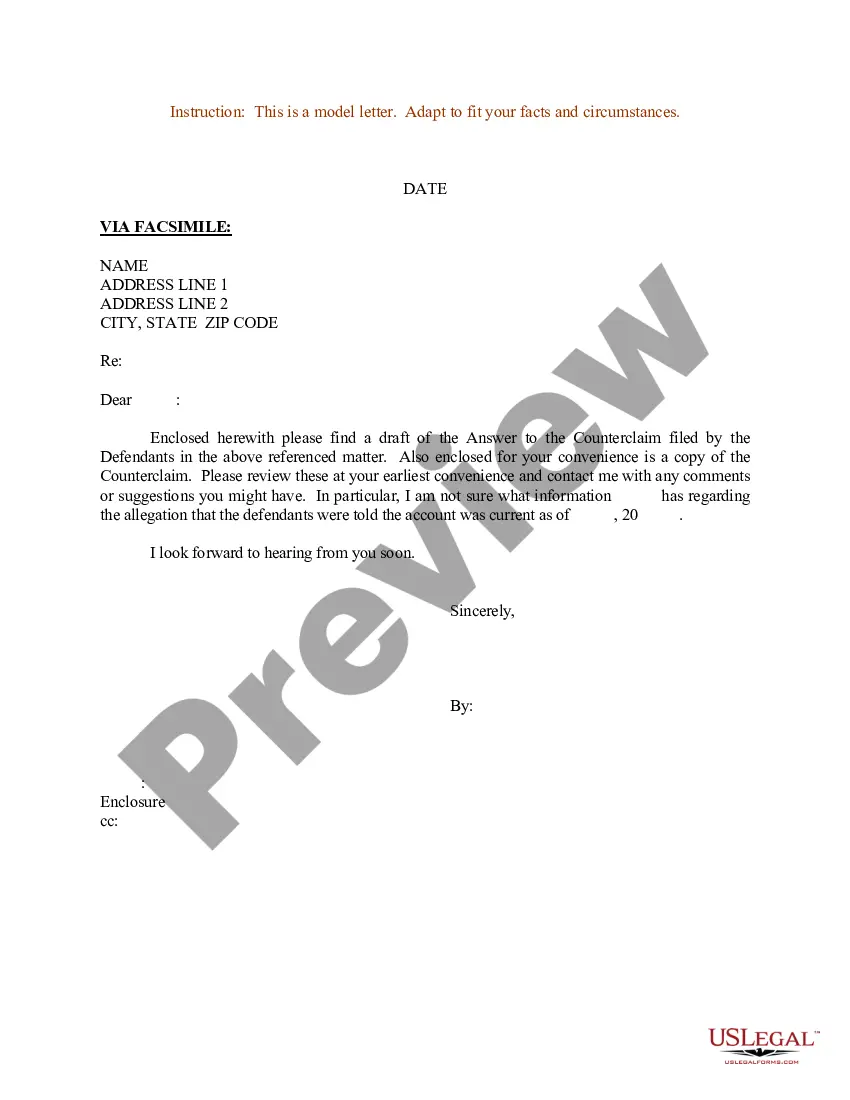
Arizona Sample Letter regarding Answer to a Counterclaim
Description
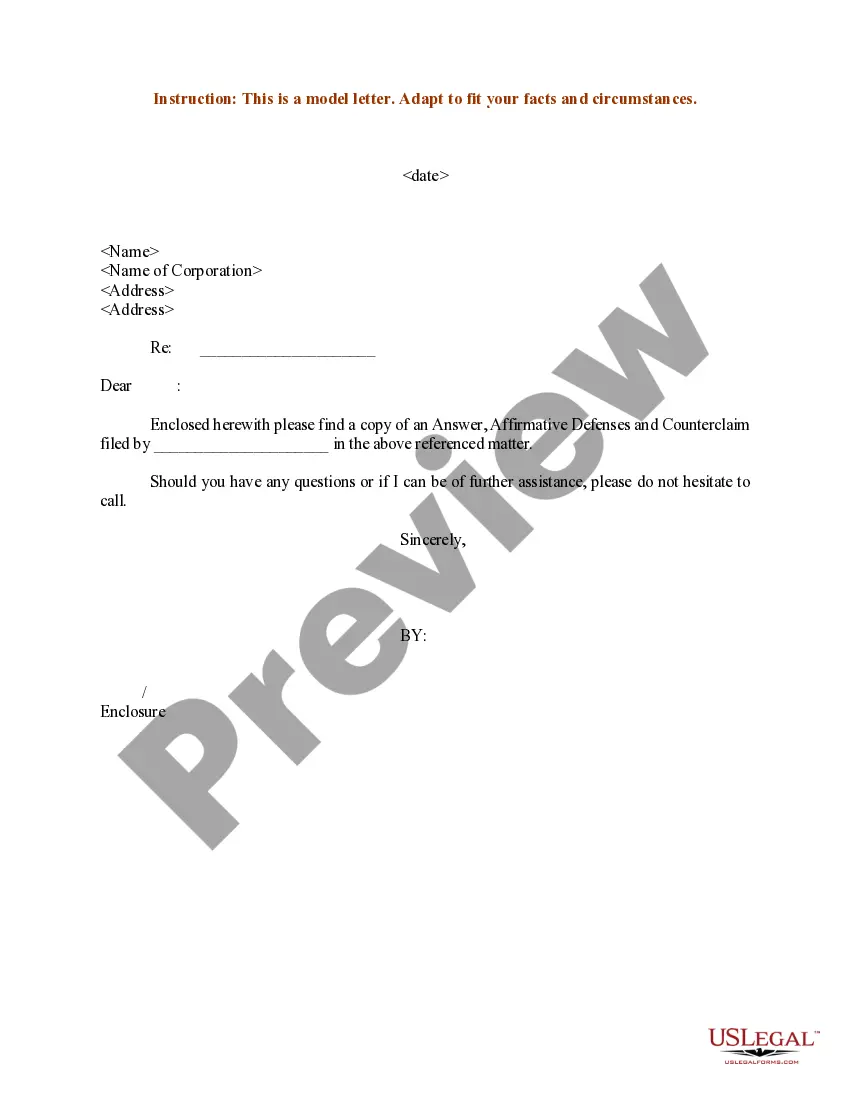
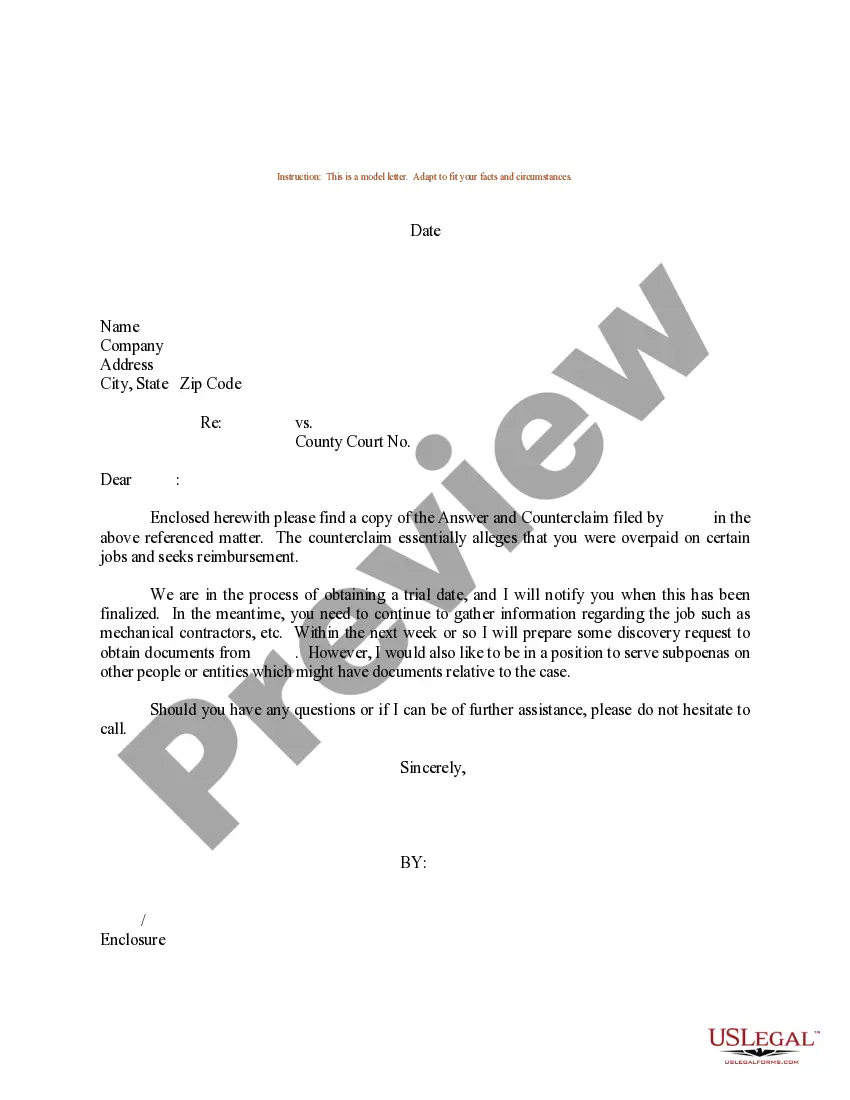
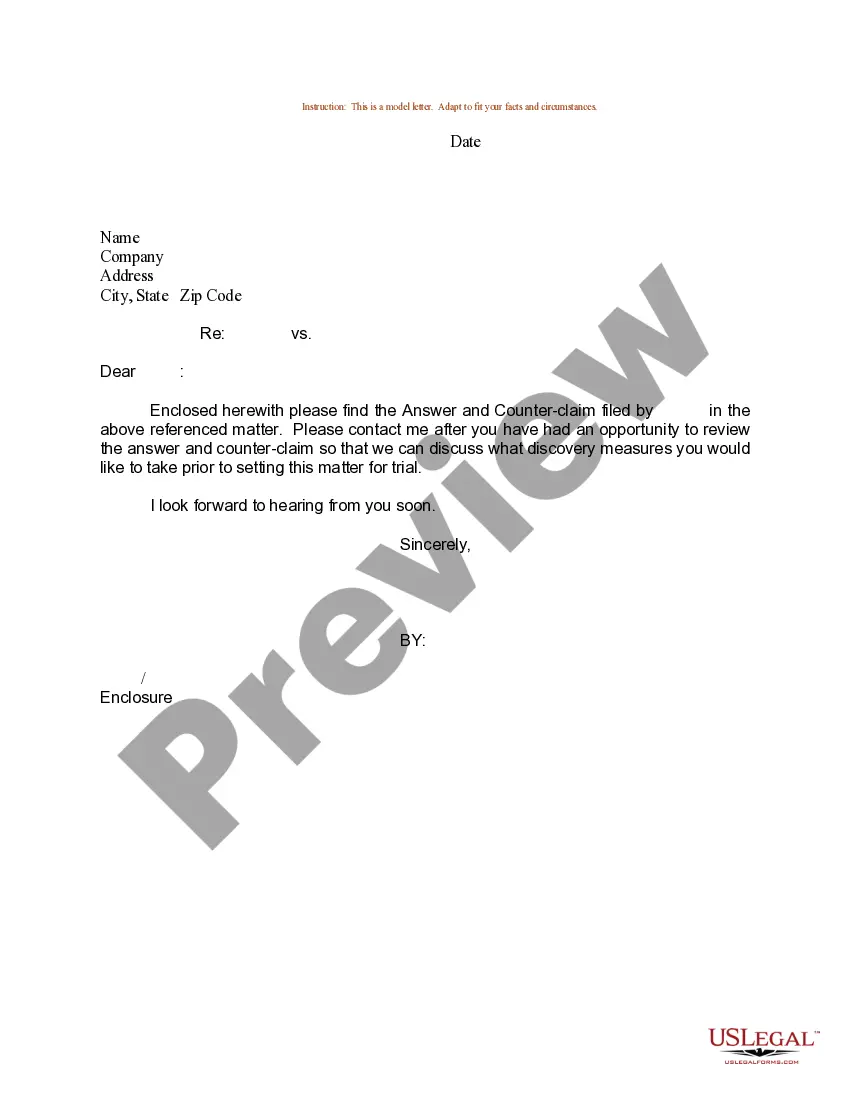







How to fill out Sample Letter Regarding Answer To A Counterclaim?
US Legal Forms - one of the largest collections of official templates in the United States - offers a broad selection of legal document formats that you can download or print.
While using the website, you can access numerous templates for commercial and personal purposes, organized by type, state, or keywords. You can find the most recent versions of documents such as the Arizona Sample Letter for Response to a Counterclaim in moments.
If you already have a monthly subscription, Log In and download the Arizona Sample Letter for Response to a Counterclaim from the US Legal Forms library. The Download option will be available on every document you view. You can access all previously saved templates in the My documents section of your account.
Then, select the pricing plan you desire and provide your details to register for an account. Complete the purchase. Use your credit card or PayPal account to finalize the transaction.
Choose the format and download the document to your device. Make changes. Fill out, edit, and print or sign the saved Arizona Sample Letter for Response to a Counterclaim. Every format you added to your account has no expiration date and is yours indefinitely. So, if you want to download or print another version, simply go to the My documents section and click on the document you need. Access the Arizona Sample Letter for Response to a Counterclaim with US Legal Forms, the most extensive collection of legal document templates. Utilize a wide range of professional and state-specific templates that meet your business or personal needs and requirements.
- If you are using US Legal Forms for the first time, here are simple steps to get started:
- Make sure you have selected the correct document for your area/county.
- Click the Preview option to review the document's content.
- Read the description of the document to ensure you have selected the right one.
- If the document does not fit your requirements, use the Search section at the top of the screen to find one that does.
- If you are satisfied with the document, confirm your choice by clicking the Get now option.
Form popularity
FAQ
When drafting an answer, one must: (1) follow the local, state, and federal court rules; (2) research the legal claims in the adversary's complaint; (3) respond to the adversary's factual allegations; and (4) assert affirmative defenses, counterclaims, cross-claims, or third-party claims, if applicable.
Be brief. Answer the allegations in the complaint with one or two sentences. Again remember that the statements you make in your answer can be used as admissions against you. Your response to the allegations in the complaint may admit part of the statement in the specific paragraph and deny part.
Counterclaim. The defendant may file a counterclaim, which asserts that the plaintiff has injured the defendant in some way, and should pay damages. ("You're suing me? Well then, I'm suing you.") It may be filed separately or as part of the answer.
Your response should cover every paragraph in the complaint and whether you admit or deny each point raised. If you can't remember whether part of the complaint is correct, it may be safer to deny it and avoid relying on your memory. For each point that you admit or deny, include a brief reason why.
It is a formal written statement that addresses the allegations made by the plaintiff and either admits or denies them. Example: If a person is sued for breach of contract, they would file a responsive pleading that either admits to breaching the contract or denies the allegations made by the plaintiff.
If you are not able (or do not want) to settle the counterclaim, you do not need to file anything with the court if you have been served with a counterclaim. You simply attend the scheduled court date to defend yourself. The date and time of the mediation or hearing should be stated on the counterclaim you received.
Answer: a defendant's response to a plaintiff's initial court filing (called a complaint or petition). An answer normally denies some or all of the facts in the complaint and sometimes includes allegations or charges against a plaintiff, called a cross-complaint.
You should respond to the counterclaim as though it were a Statement of Claim and you were drafting a Defence: respond to every paragraph ? you can do this paragraph by paragraph if necessary; deny any allegations of fact that you do not admit ? you will be deemed to admit facts that you forget to plead to; and.