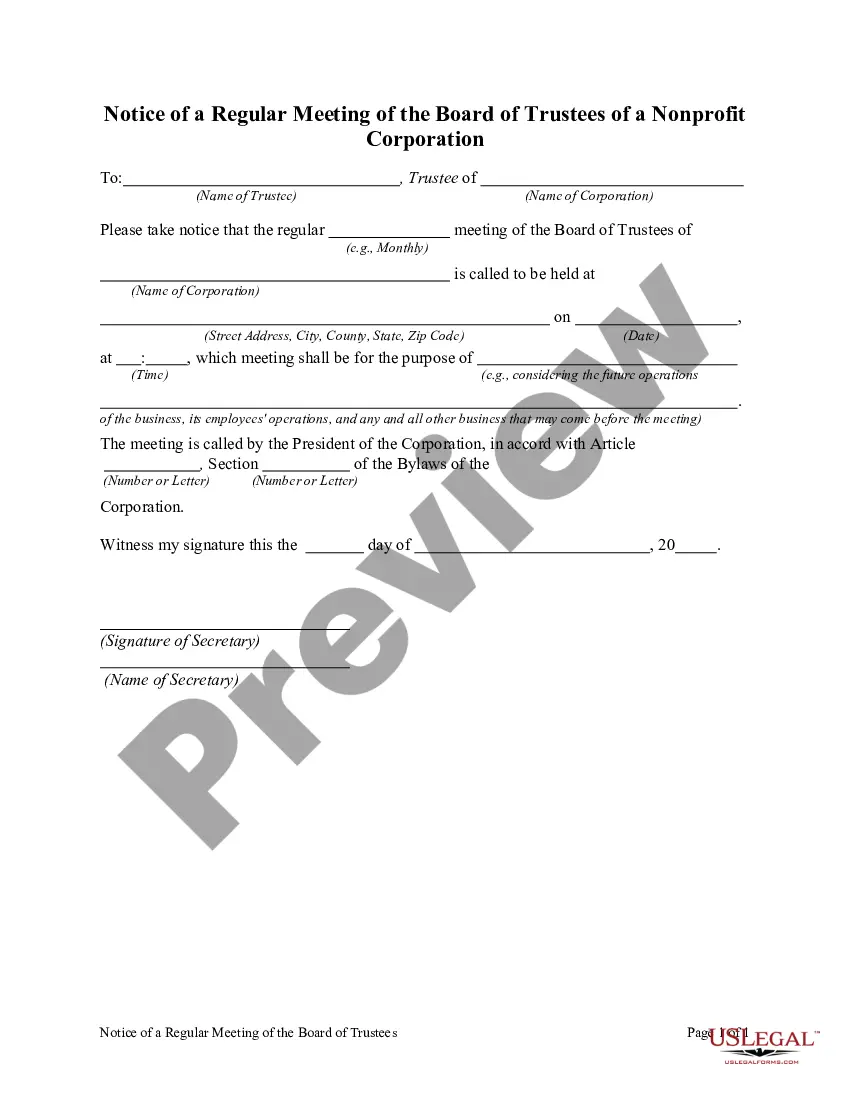
Arizona Testamentary Provisions for Charitable Remainder Annuity Trust for Term of Years
Description
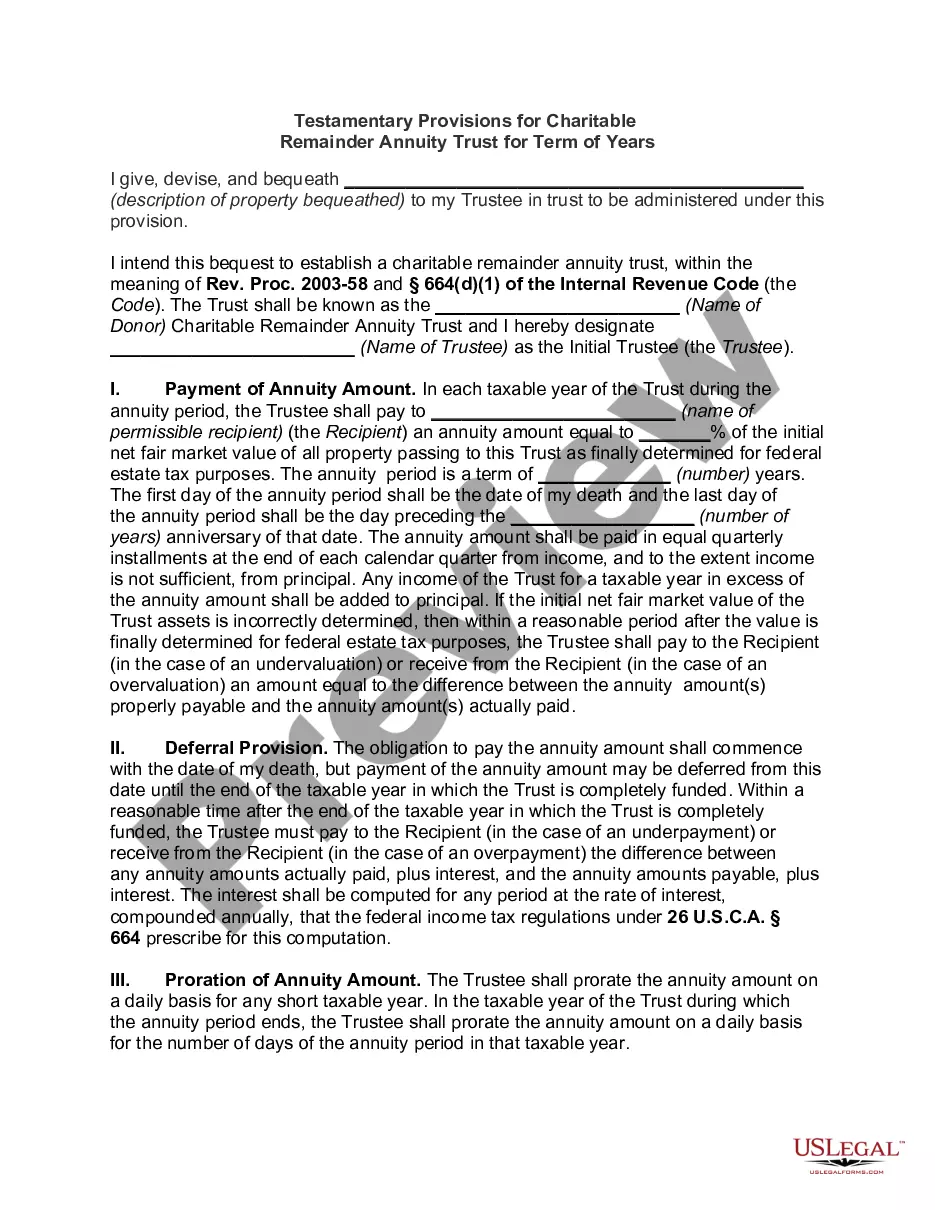
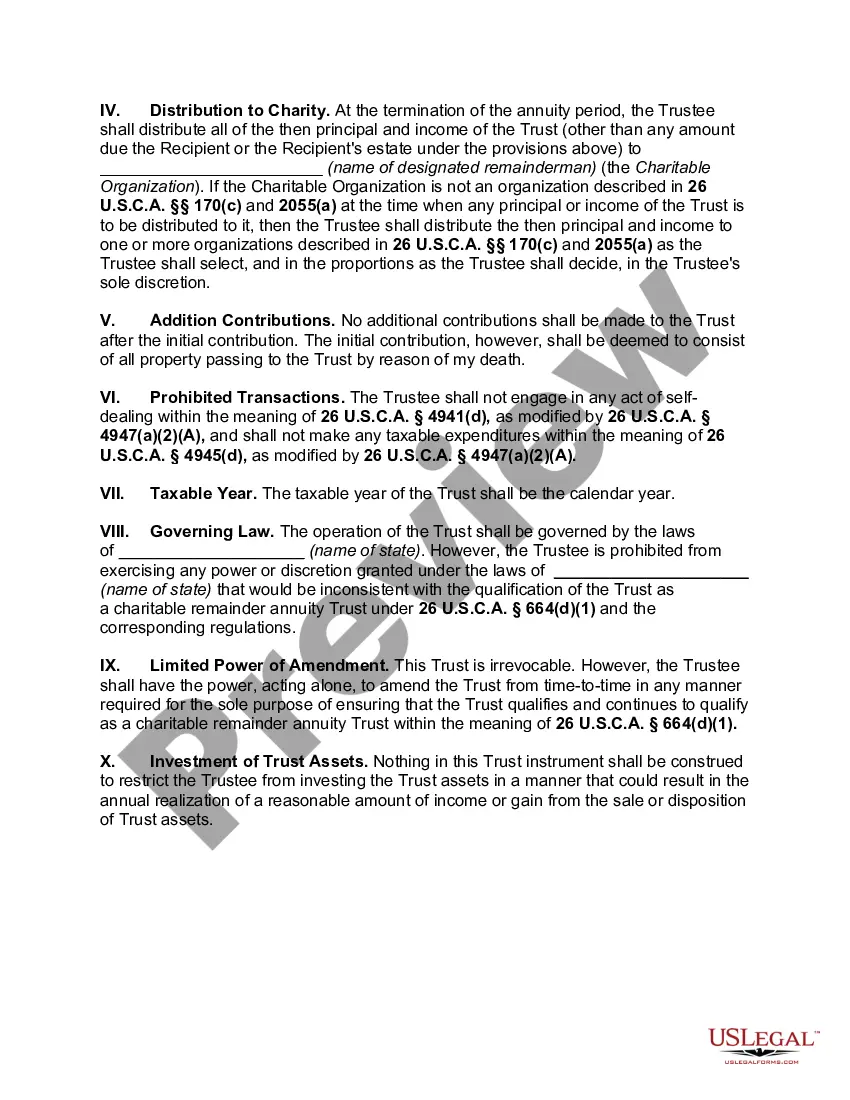
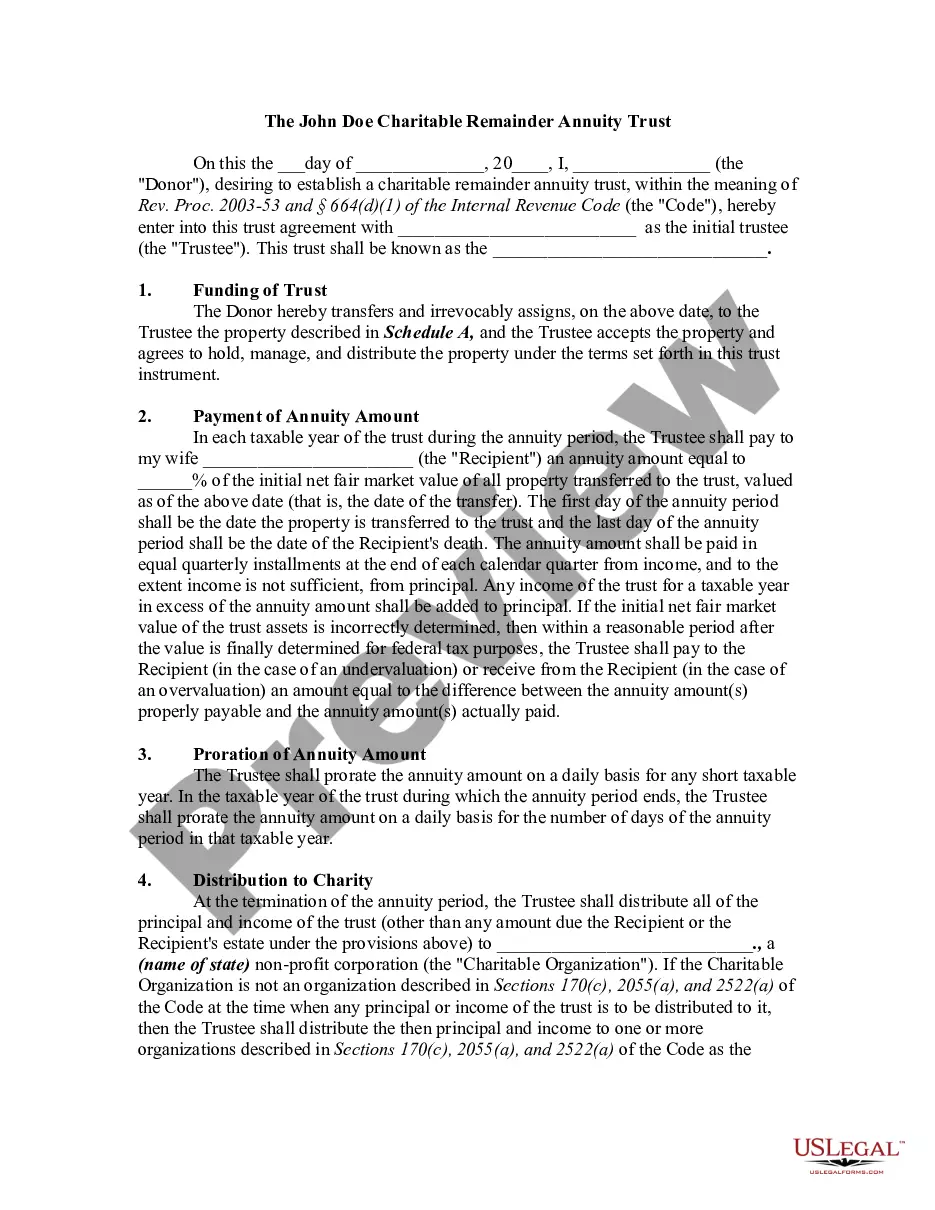
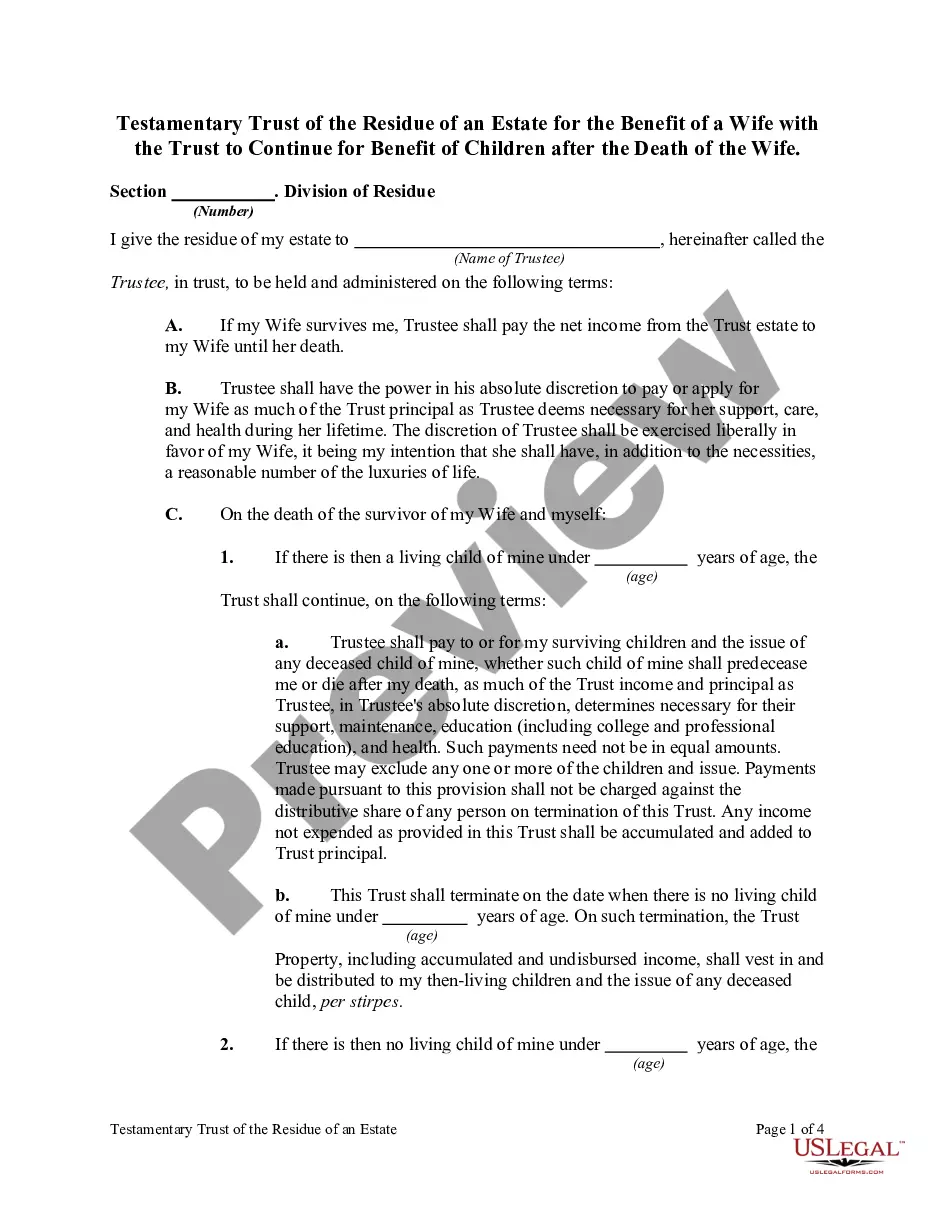
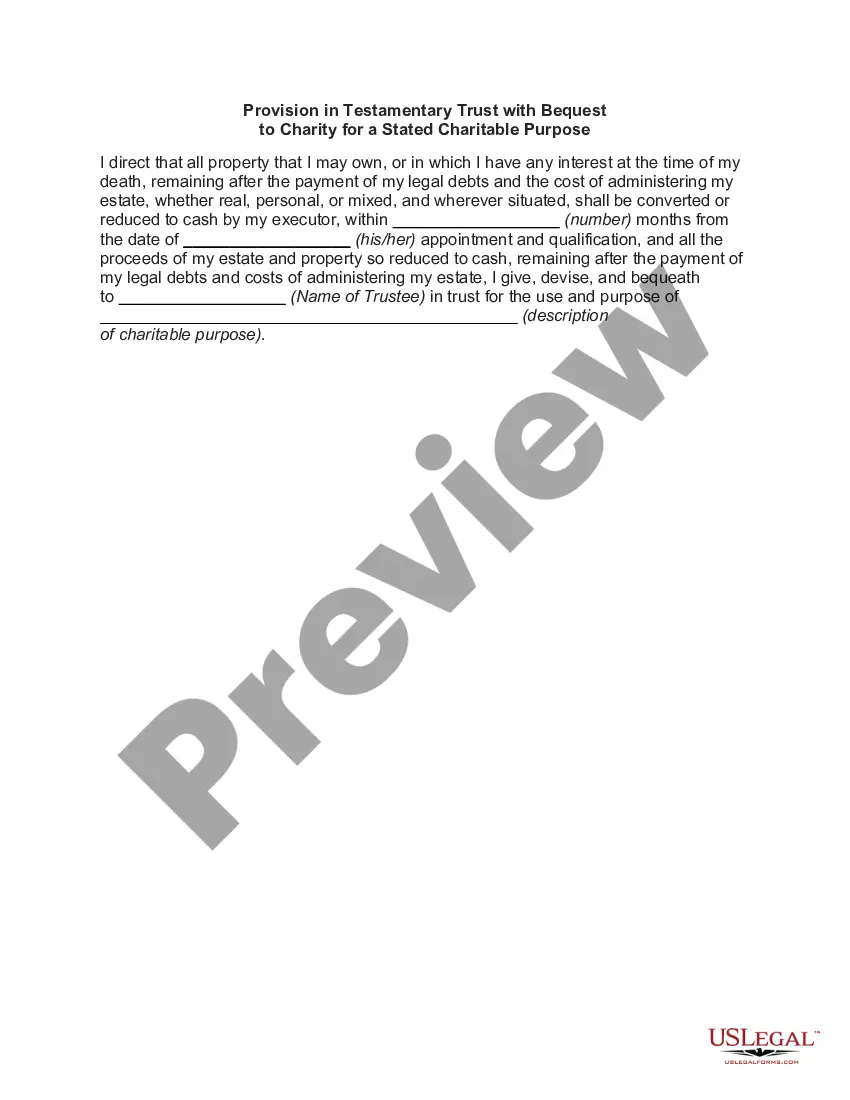
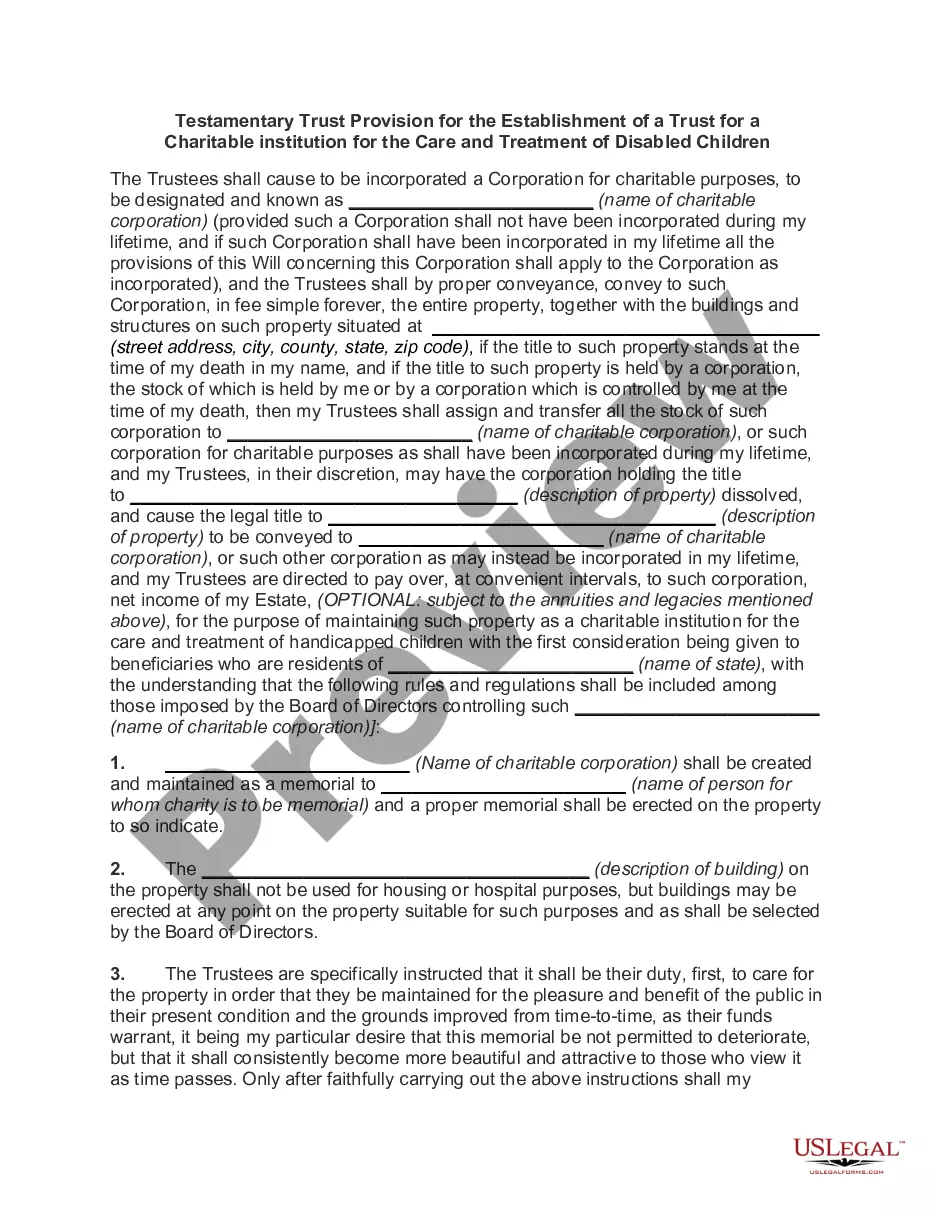
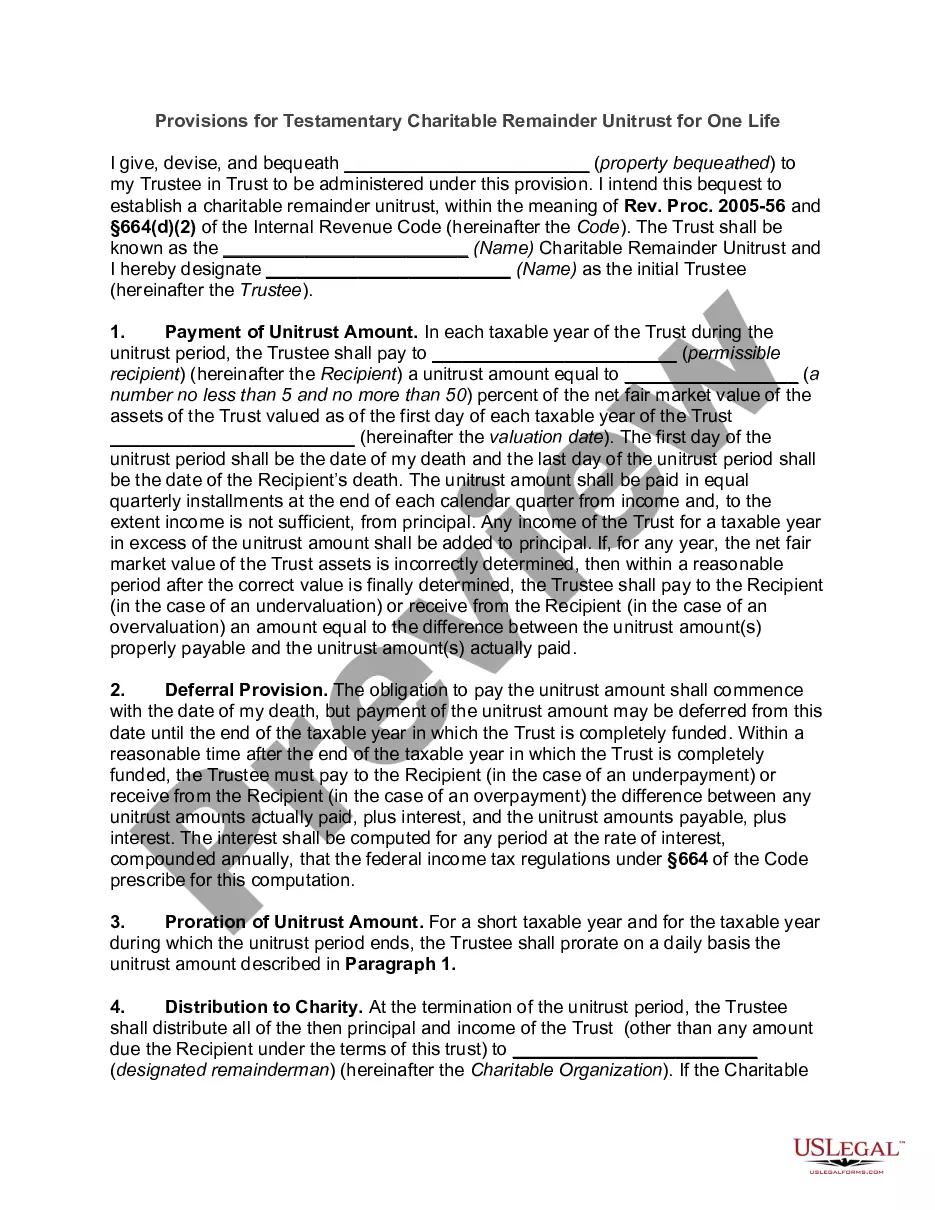




How to fill out Testamentary Provisions For Charitable Remainder Annuity Trust For Term Of Years?
Have you ever found yourself in a situation where you require documentation for either business or personal purposes nearly every day.
There are numerous legal document templates available online, but locating reliable ones is not straightforward.
US Legal Forms offers thousands of form templates, such as the Arizona Testamentary Provisions for Charitable Remainder Annuity Trust for Term of Years, designed to comply with state and federal regulations.
Select the pricing plan you prefer, provide the necessary information to create your account, and complete the payment using your PayPal or credit card.
Choose a convenient file format and download your copy.
- If you are already acquainted with the US Legal Forms site and have an account, simply sign in.
- Then, you can download the Arizona Testamentary Provisions for Charitable Remainder Annuity Trust for Term of Years template.
- If you do not have an account and wish to start using US Legal Forms, follow these instructions.
- Find the form you need and verify that it is for the correct jurisdiction.
- Utilize the Review button to inspect the document.
- Read the description to confirm that you have chosen the right form.
- If the form is not what you are looking for, use the Search box to find the document that suits your needs and specifications.
- Once you have the correct form, click Get now.
Form popularity
FAQ
Charitable trusts are created in the same manner as private express trusts, with several key exceptions: the trust must be created for a charitable purpose, the beneficiaries to the trust must be indefinite, and the trust may be perpetual.
How Long Can a Charitable Trust Last? Charitable Remainder Trusts can either last the lifetime of another beneficiary, or for a specified term (usually 20 years). At that point, any remaining value would go to your designated charitable organization. Learn more about Charitable Trust tax rules.
Any income that you receive from your charitable trust could reduce the total contribution that you end up leaving to your charity. You may risk leaving nothing to your charity if you plan to receive high payments from the trust while you're alive.
How Long Can a Charitable Trust Last? Charitable Remainder Trusts can either last the lifetime of another beneficiary, or for a specified term (usually 20 years). At that point, any remaining value would go to your designated charitable organization. Learn more about Charitable Trust tax rules.
Year Trust, also known as a Legacy Trust or Medicaid Asset Protection Trust, can be established to protect assets from being spent down on long term care in a nursing home. The assets you place in the Legacy Trust will become exempt from the Medicaid spend down requirements after a 5 year look back period.
Testamentary trusts are discretionary trusts established in Wills, that allow the trustees of each trust to decide, from time to time, which of the nominated beneficiaries (if any) may receive the benefit of the distributions from that trust for any given period.
A trust can remain open for up to 21 years after the death of anyone living at the time the trust is created, but most trusts end when the trustor dies and the assets are distributed immediately.
Charitable remainder unit trust (CRUT) pays the beneficiary a fixed percentage of the trust at least annually, often for life or a period up to 20 years. 2. Charitable remainder annuity trust (CRAT) pays the beneficiary a fixed amount, or annuity, for the term of the trust.
Key Takeaways. A 5 by 5 Power in Trust is a clause that lets the beneficiary make withdrawals from the trust on a yearly basis. The beneficiary can cash out $5,000 or 5% of the trust's fair market value each year, whichever is a higher amount.