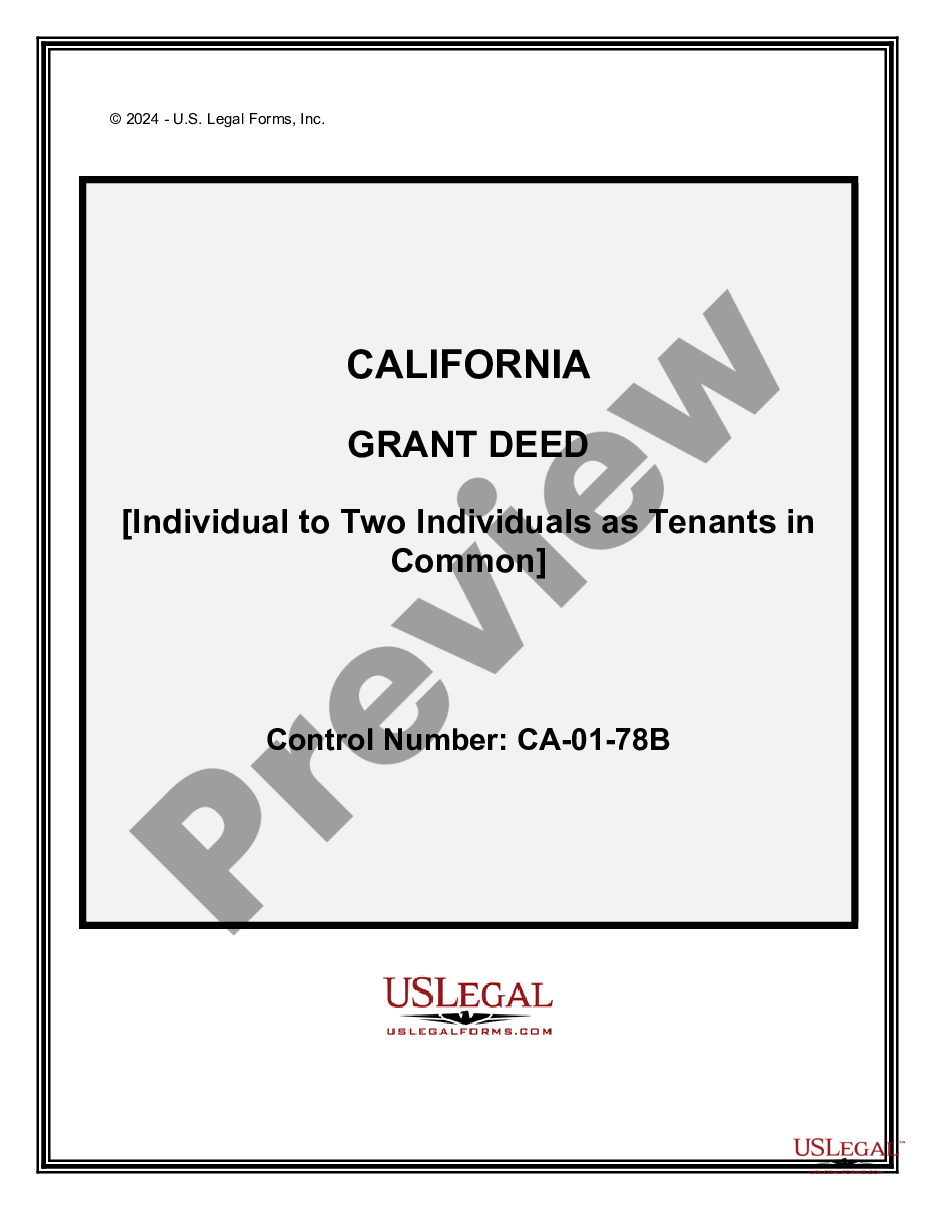
California Grant Deed From Individual to Two Individuals as Tenants in Common
Overview of this form
The Grant Deed From Individual to Two Individuals as Tenants in Common is a legal document used to transfer property ownership from one person to two others, ensuring that each individual holds a share of the property as tenants in common. Unlike joint tenancy, this arrangement allows for separate ownership interests which can be bequeathed independently. This warranty deed protects both the grantor and grantees by providing legal assurances related to property title and rights.
Main sections of this form
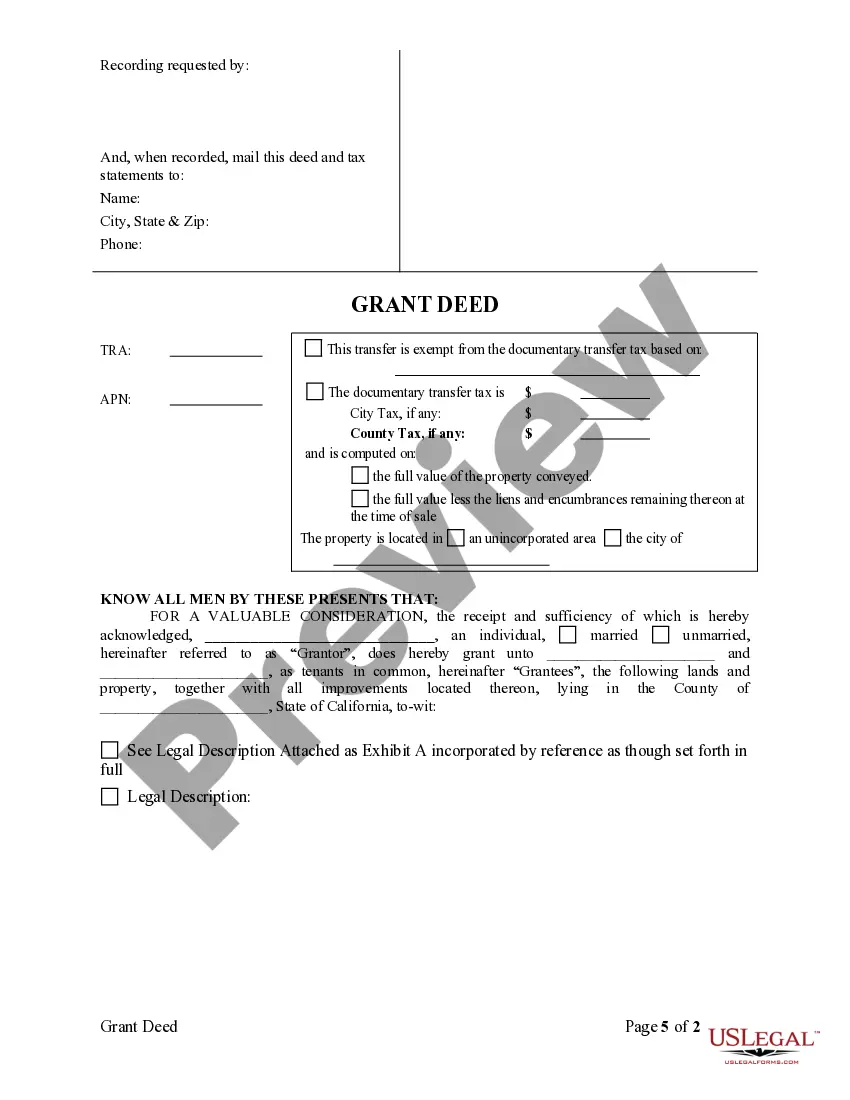
- Identification of the grantor (individual transferring the property).
- Identification of the grantees (the two individuals receiving the property).
- Description of the property being transferred.
- Legal warranty by the grantor regarding the title of the property.
- Reservation clause regarding oil, gas, and mineral rights, if applicable.
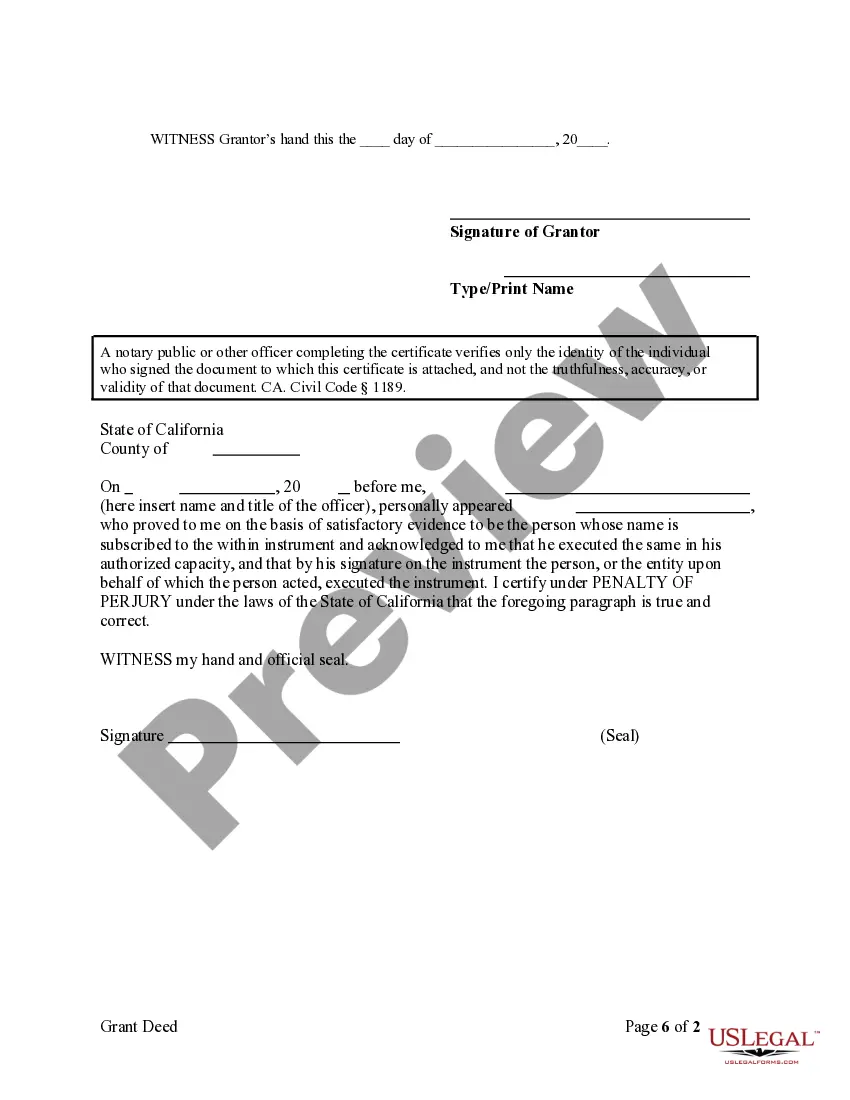
- Notarization and recording instructions to ensure the deed is legally effective.


When to use this form
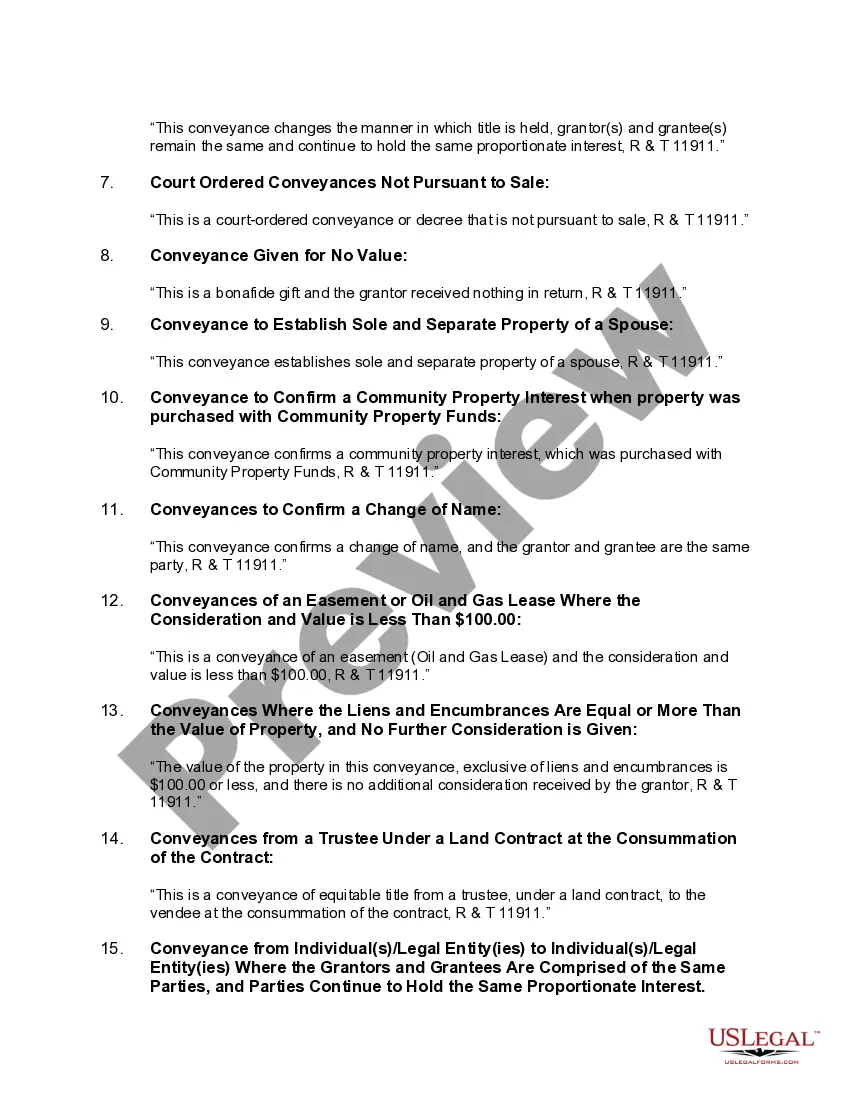
This form is essential when an individual wishes to convey property ownership to two other individuals who will share the ownership as tenants in common. It is commonly used in situations involving inheritance, property division among family members, and transfers between friends or business partners wanting to co-own a property while maintaining separate interests.
Intended users of this form
- Property owners looking to transfer ownership to two individuals.
- Individuals managing inheritance or estate matters.
- Business partners proposing to co-own real property.
- Family members who want to share ownership of a property.
Steps to complete this form
- Identify and enter the name of the grantor.
- Clearly state the names of the two grantees.
- Provide a detailed legal description of the property being conveyed.
- Include any reservations related to oil, gas, and minerals, if applicable.
- Sign the deed in the presence of a notary public.
- File the completed deed with the appropriate state or county office to record the transfer.
Does this document require notarization?
Yes, this form must be notarized to be legally valid. U.S. Legal Forms offers integrated online notarization services available 24/7, ensuring secure video calls that meet legal standards without the need for travel.
Get your form ready online
Our built-in tools help you complete, sign, share, and store your documents in one place.
Make edits, fill in missing information, and update formatting in US Legal Forms—just like you would in MS Word.
Download a copy, print it, send it by email, or mail it via USPS—whatever works best for your next step.
Sign and collect signatures with our SignNow integration. Send to multiple recipients, set reminders, and more. Go Premium to unlock E-Sign.
If this form requires notarization, complete it online through a secure video call—no need to meet a notary in person or wait for an appointment.
We protect your documents and personal data by following strict security and privacy standards.

Make edits, fill in missing information, and update formatting in US Legal Forms—just like you would in MS Word.

Download a copy, print it, send it by email, or mail it via USPS—whatever works best for your next step.

Sign and collect signatures with our SignNow integration. Send to multiple recipients, set reminders, and more. Go Premium to unlock E-Sign.

If this form requires notarization, complete it online through a secure video call—no need to meet a notary in person or wait for an appointment.

We protect your documents and personal data by following strict security and privacy standards.
Common mistakes to avoid
- Failing to include a clear legal description of the property.
- Not including the right names of the grantees or misspelling their names.
- Omitting the reservation clause for oil, gas, and minerals when applicable.
- Neglecting to sign or notarize the deed before submission.
Why use this form online
- Convenient access to legal forms from any location.
- Editability allows you to customize the form to fit your specific needs.
- You can complete the process efficiently without the need for an attorney.
- Instant download ensures quick access during your property transactions.
What to keep in mind
- The Grant Deed From Individual to Two Individuals as Tenants in Common is essential for transferring property ownership.
- Properly completing and recording the deed is necessary to ensure legal validity.
- Notarization is required to finalize the transfer in most jurisdictions.
Looking for another form?
Form popularity
FAQ
California law allows for multiple individuals to possess a property as tenants in common, each owning a defined share. This arrangement provides flexibility for co-ownership but also requires cooperation among the co-owners. Understanding the implications of a California Grant Deed From Individual to Two Individuals as Tenants in Common is essential for ensuring compliance with the law, as it sets forth the terms of ownership and can prevent disputes.
Tenants in common in California hold individual rights to their share of the property, which means they can sell or transfer their interest independently. Each tenant is entitled to use the entire property, but no tenant can exclude others without mutual consent. A California Grant Deed From Individual to Two Individuals as Tenants in Common can reinforce these rights, clarifying ownership stakes and responsibilities among owners.
For married couples, holding property as joint tenants often proves beneficial, as it provides the right of survivorship. However, in some instances, a California Grant Deed From Individual to Two Individuals as Tenants in Common may be preferable. This allows each spouse to retain control over their individual share of the property, which can be advantageous in estate planning. Each couple should consider their unique financial and familial situations when deciding.
When a tenant in common dies in California, their share of the property passes to their estate rather than to the surviving co-owners. This means that the deceased's interest will be distributed according to their will or state intestacy laws if no will exists. Thus, it is crucial to understand the implications of a California Grant Deed From Individual to Two Individuals as Tenants in Common, as it allows for clear ownership delineation among surviving co-owners.
Terminating a tenancy in common in California can be accomplished through several methods, including mutual agreement among co-owners or by selling the property. If the co-owners cannot agree, a court may be petitioned to partition the property. This process can be complex, and using a California Grant Deed From Individual to Two Individuals as Tenants in Common may help clarify ownership post-termination.
To change a deed from joint tenants to tenants in common, a California Grant Deed From Individual to Two Individuals as Tenants in Common must be executed. This involves preparing a new deed that clearly states the intention to convert the ownership type. It’s important to ensure that all parties involved agree to this change. Once the new deed is signed, it must be recorded with the county recorder's office to finalize the change.
Transferring property in California involves executing a grant deed that outlines the transfer of ownership. If you want to change ownership to a California Grant Deed From Individual to Two Individuals as Tenants in Common, you'll need to prepare and sign the necessary documentation. Afterward, file the grant deed with the county recorder's office to officially record the transfer and protect your ownership rights.
While tenancy in common allows multiple owners to share in property ownership, there are some disadvantages to consider. For example, each individual has the right to sell their share independently, which may lead to complications among co-owners. Additionally, a California Grant Deed From Individual to Two Individuals as Tenants in Common may expose you to liability, as each owner is responsible for any debts related to the property.
To change a grant deed in California, you must complete a new grant deed form that specifies the changes. This process may involve transferring property interests among individuals, such as changing from one owner to a California Grant Deed From Individual to Two Individuals as Tenants in Common. Once completed, you'll need to sign the new deed and record it with the county clerk to finalize the change.
Yes, a grant deed serves as proof of ownership in California. By transferring property through a California Grant Deed From Individual to Two Individuals as Tenants in Common, you establish legal ownership that is recognized by the state. This document must be signed and recorded to provide clear title and protect the rights of the owners.