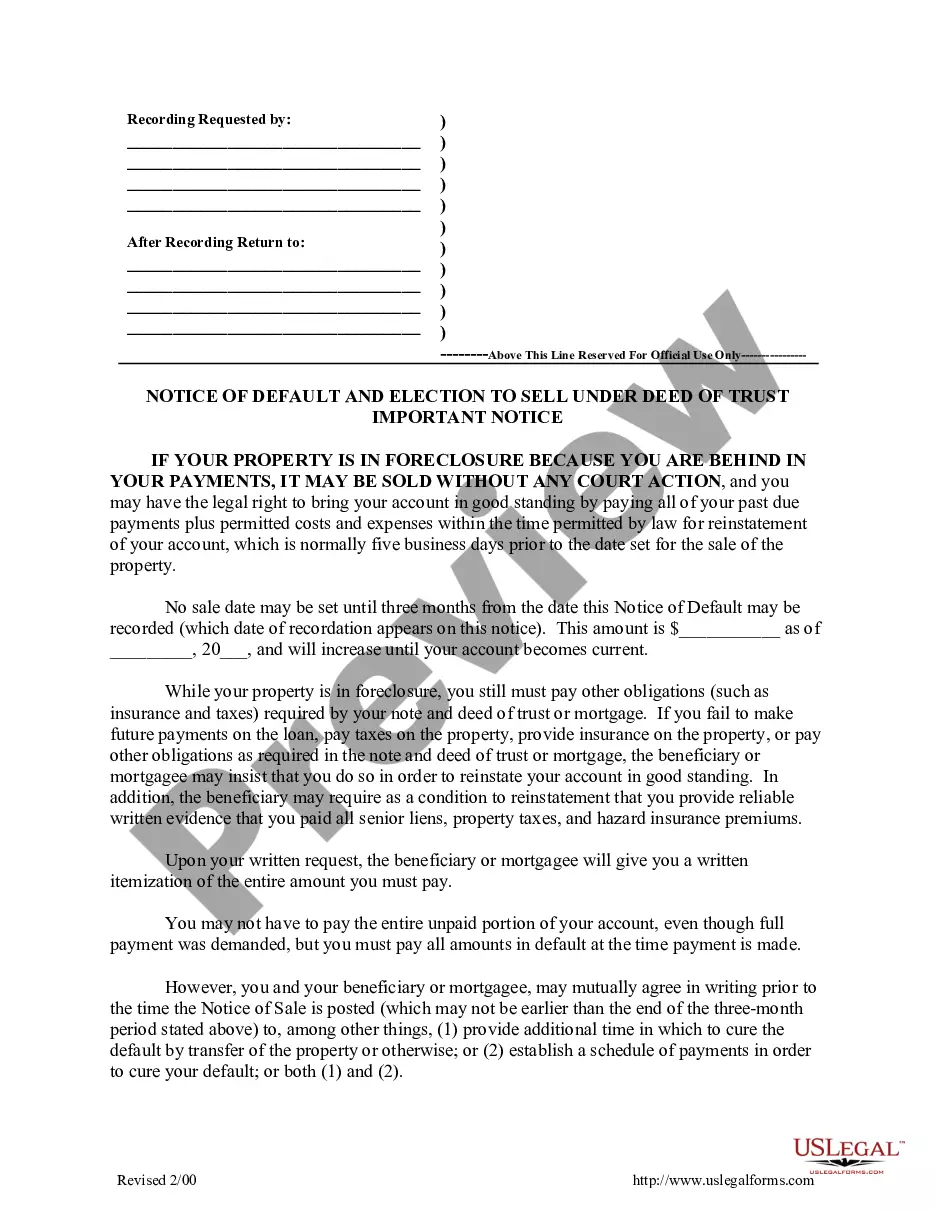
California Notice of Default And Election to Sell Under Deed of Trust
What is this form?
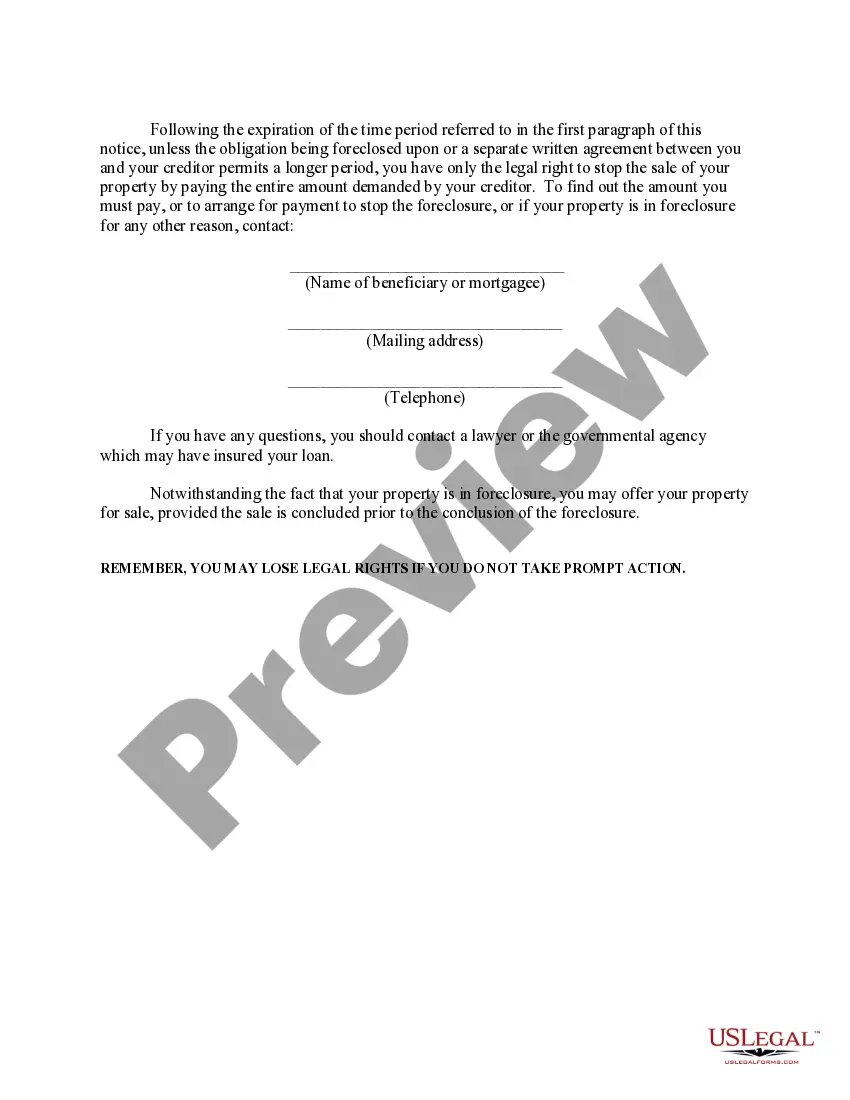
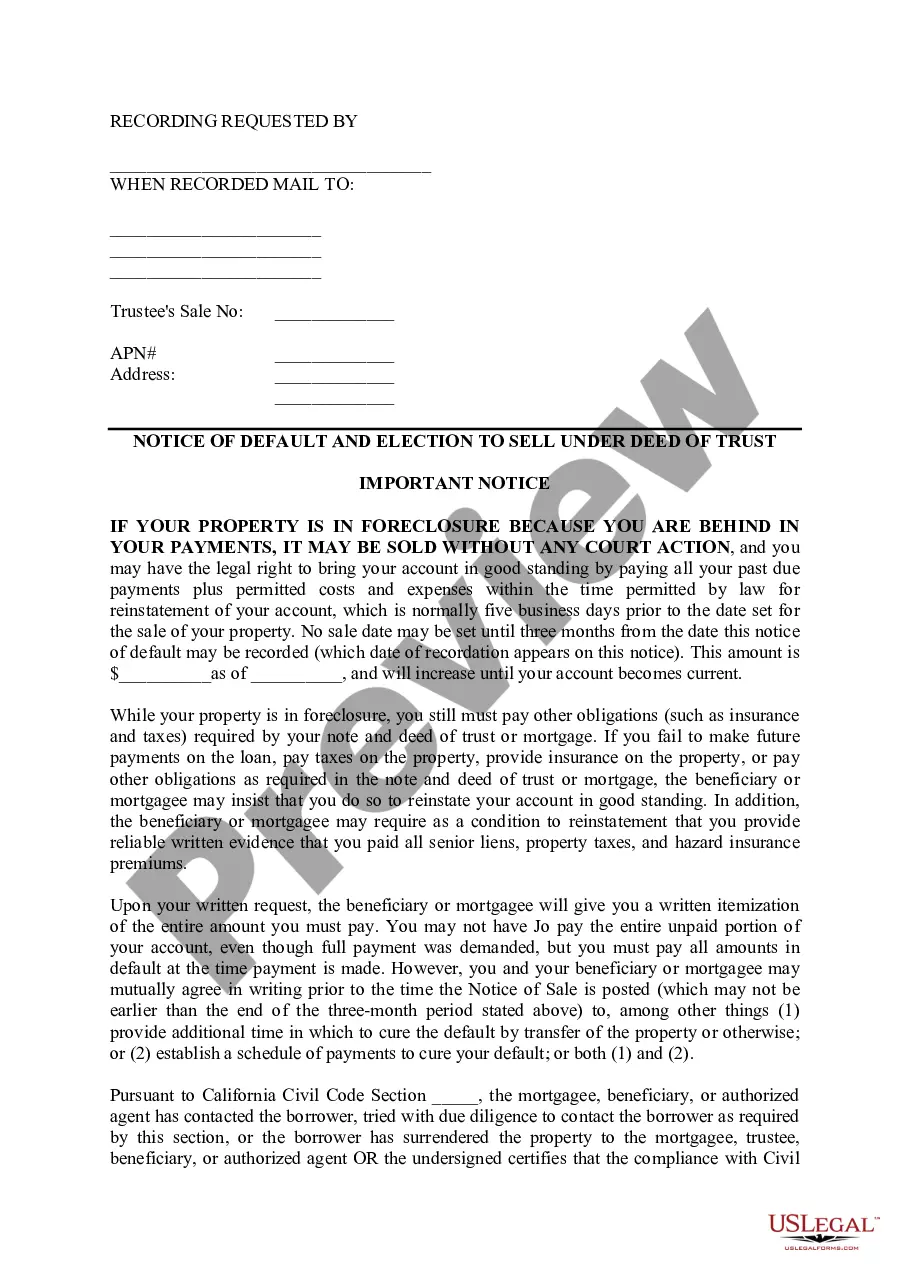
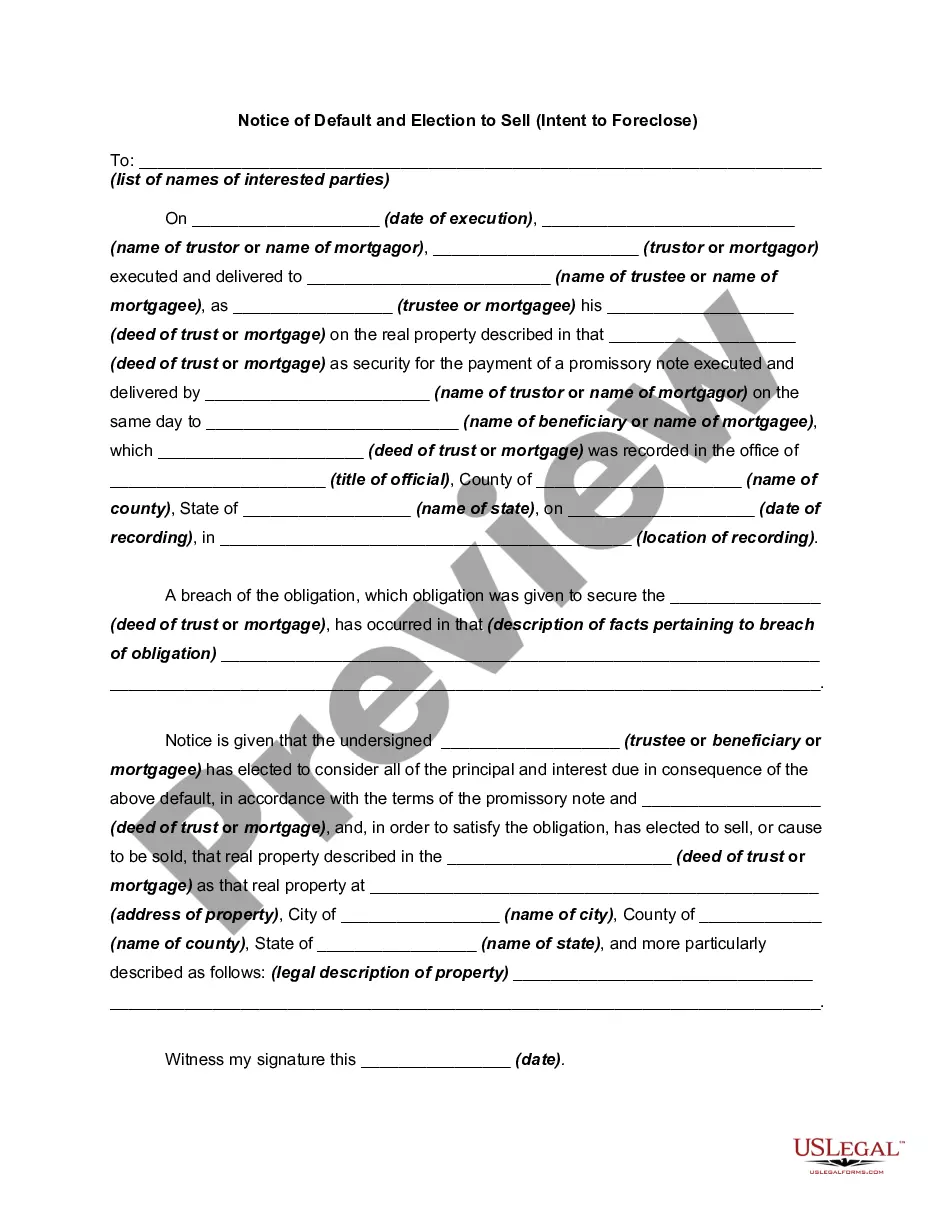
The Notice of Default and Election to Sell Under Deed of Trust is a legal document that serves as a notification to the mortgagor about overdue payments. This form highlights the consequences of defaulting on a mortgage, including the risk of foreclosure without court intervention. Unlike other forms that may address similar issues, this notice specifically outlines the mortgagor's obligations during the foreclosure process and the potential loss of property rights if actions are not taken promptly.
What’s included in this form
- Notice of past due payments and total outstanding amount.
- Obligation for the mortgagor to continue paying other debts, like taxes and insurance.
- Instructions on how to reinstate the mortgage account.
- Contact information for the beneficiary or mortgagee.
- Legal implications of failing to act promptly.
When to use this document
This form should be used when a mortgagor has fallen behind on mortgage payments, leading to the initiation of foreclosure proceedings. It serves as a formal notice that the property is at risk of being sold. Use this form when you receive a notification of default from your lender and need to understand your rights and obligations to remedy the situation.
Who can use this document
This form is intended for:
- Homeowners who have defaulted on their mortgage payments.
- Individuals facing foreclosure on their property.
- Lenders needing to notify borrowers of defaults.
- Legal representatives assisting mortgagors in distress.
How to prepare this document
- Identify the mortgagor's name and address.
- Specify the property address and details related to the deed of trust.
- Enter the total amount due and the date of the recorded notice.
- Fill in the contact information for the beneficiary or mortgagee.
- Sign and date the form as required.
Does this form need to be notarized?
Notarization is required for this form to take effect. Our online notarization service, powered by Notarize, lets you verify and sign documents remotely through an encrypted video session, available 24/7.
Get your form ready online
Our built-in tools help you complete, sign, share, and store your documents in one place.
Make edits, fill in missing information, and update formatting in US Legal Forms—just like you would in MS Word.
Download a copy, print it, send it by email, or mail it via USPS—whatever works best for your next step.
Sign and collect signatures with our SignNow integration. Send to multiple recipients, set reminders, and more. Go Premium to unlock E-Sign.
If this form requires notarization, complete it online through a secure video call—no need to meet a notary in person or wait for an appointment.
We protect your documents and personal data by following strict security and privacy standards.

Make edits, fill in missing information, and update formatting in US Legal Forms—just like you would in MS Word.

Download a copy, print it, send it by email, or mail it via USPS—whatever works best for your next step.

Sign and collect signatures with our SignNow integration. Send to multiple recipients, set reminders, and more. Go Premium to unlock E-Sign.

If this form requires notarization, complete it online through a secure video call—no need to meet a notary in person or wait for an appointment.

We protect your documents and personal data by following strict security and privacy standards.
Mistakes to watch out for
- Failing to provide accurate and complete information about the property and mortgagor.
- Not entering the correct amount due, leading to confusion.
- Missing the required signatures or dates.
- Overlooking the deadline to cure the default.
Advantages of online completion
- Convenience of downloading and filling it out at your own pace.
- Editable format allows you to easily adjust details.
- Reliability of attorney-drafted content ensures legal validity.
Legal use & context
- This form serves as an essential legal document in the foreclosure process.
- Filing this notice creates a formal record of the mortgage default.
- It protects the rights of both the mortgagor and mortgagee during the foreclosure process.
What to keep in mind
- The Notice of Default and Election to Sell Under Deed of Trust is crucial for mortgagors in default.
- Timely actions are essential to avoid losing property rights during foreclosure.
- Consult with a legal professional if you have questions about the process or your obligations.
Looking for another form?
Form popularity
FAQ
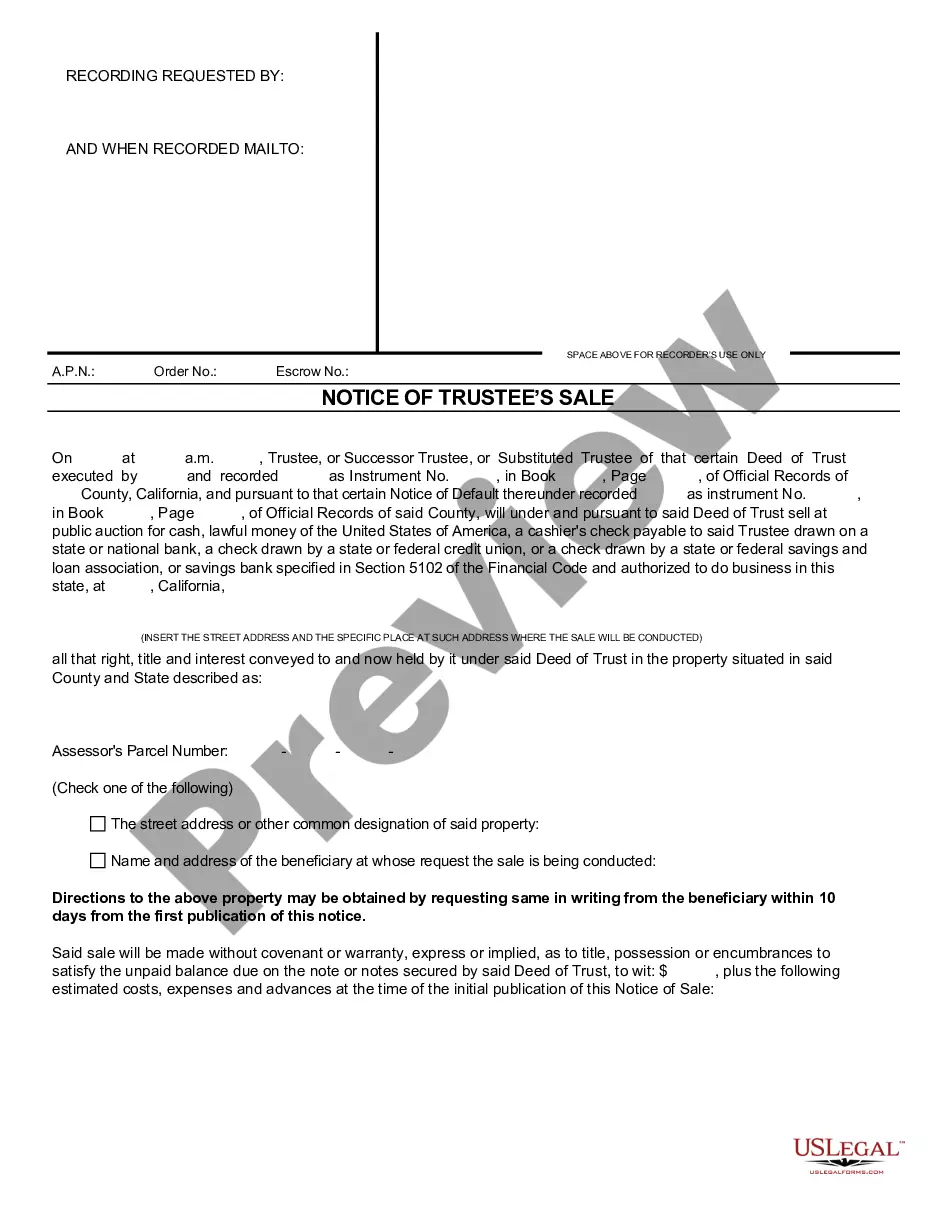
After the lender files the Notice of Default, you get 90 days to bring your past-due bill current. After the 90 days pass, the lender files a Notice of Sale with the clerk. The Notice of Sale displays the location, date and time of the sale. It lists the trustee's name and contact information.
You can stop the foreclosure process by informing your lender that you will pay off the default amount and extra fees. Your lender would prefer to have the money much more than they would have your home, so unless there are extenuating circumstances, this should work.
In CA a Notice of Default does not expire.
A notice of default is the first step to a bank or mortgage lender's foreclosure process.If the mortgage is not paid up to date, the lender will seize the home. A notice of default is also known as a reinstatement period, notice of public auction, or notice of foreclosure.
It takes several months for a lender to foreclose on a California property. If everything goes according to schedule, the process typically takes approximately 120 days about four months but the process can take as long as 200 or more days to conclude.
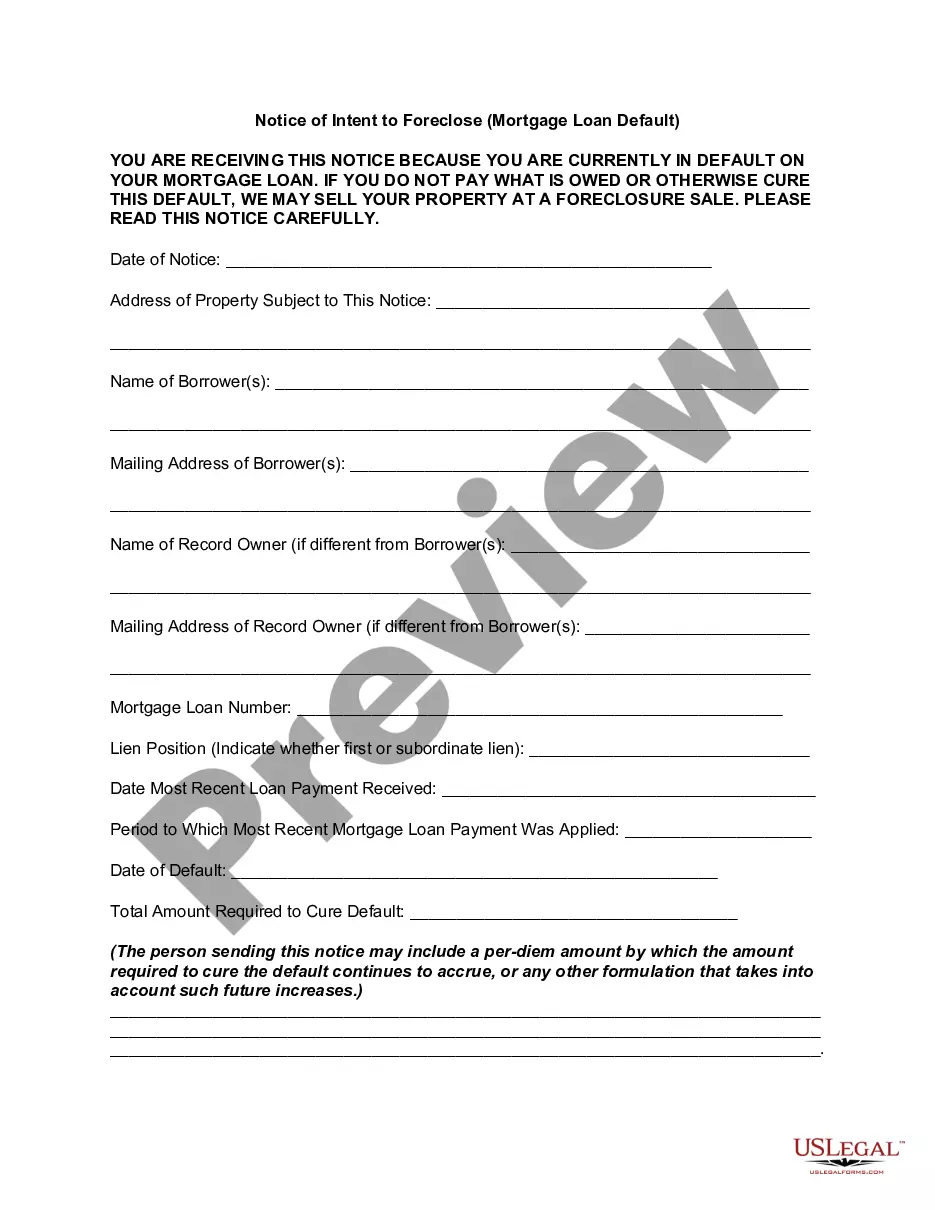
If a borrower falls behind on his mortgage payments, the mortgage lender might file a notice of default, which is an official public notice that the borrower is in arrears. It is one of the initial steps in the foreclosure process.
The term notice of default refers to a public notice filed with a court that states that the borrower of a mortgage is in default on a loan. The lender may file a notice of default when a mortgagor falls behind on their mortgage payments.
After you've received a Notice of Default, you have 3 months in which to attempt to get your loan current. As mentioned above, that means paying all back payments, interest, fees, property taxes, and insurance. After 3 months, the bank can officially set a date for the auction of your home.