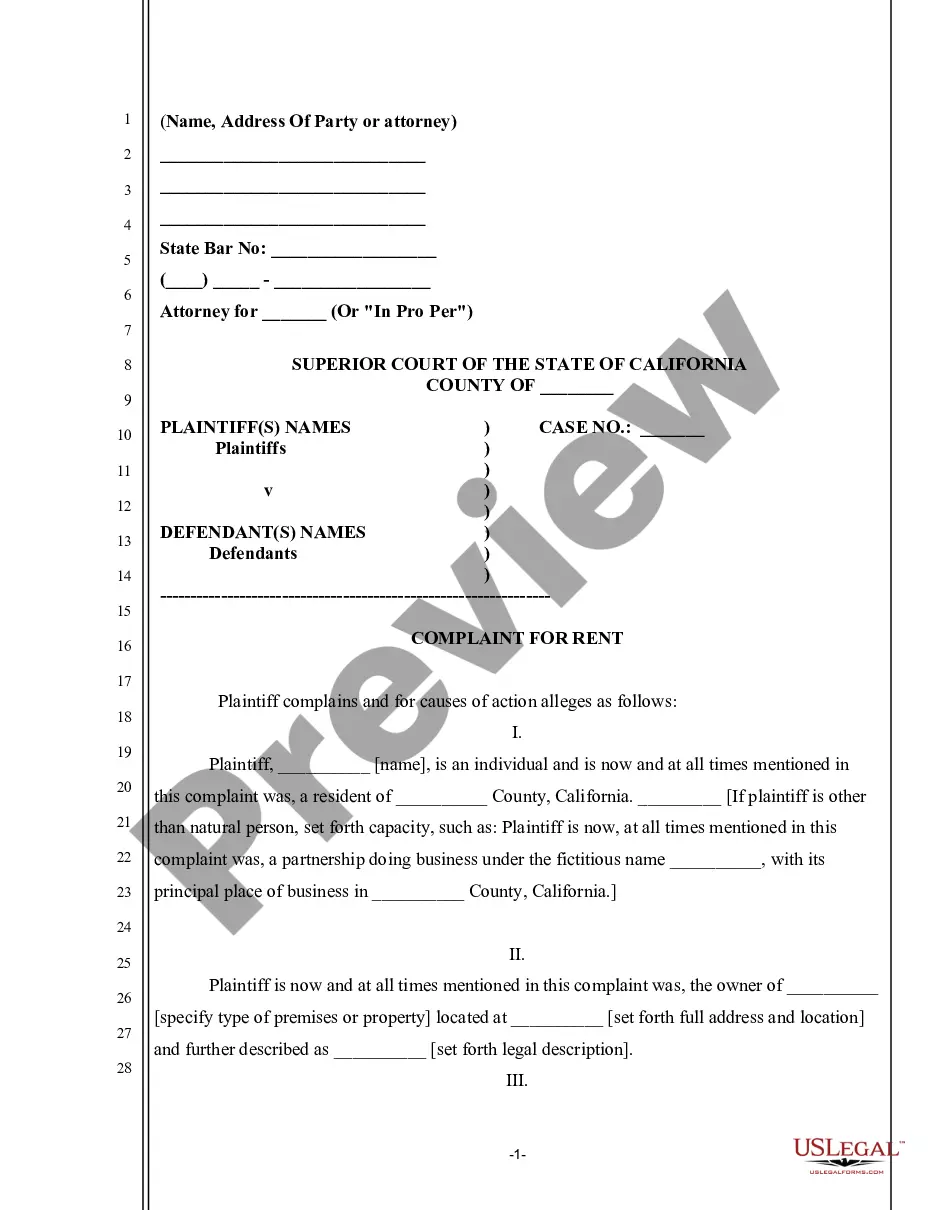
California Complaint for Rent Due to Landlord
Understanding this form
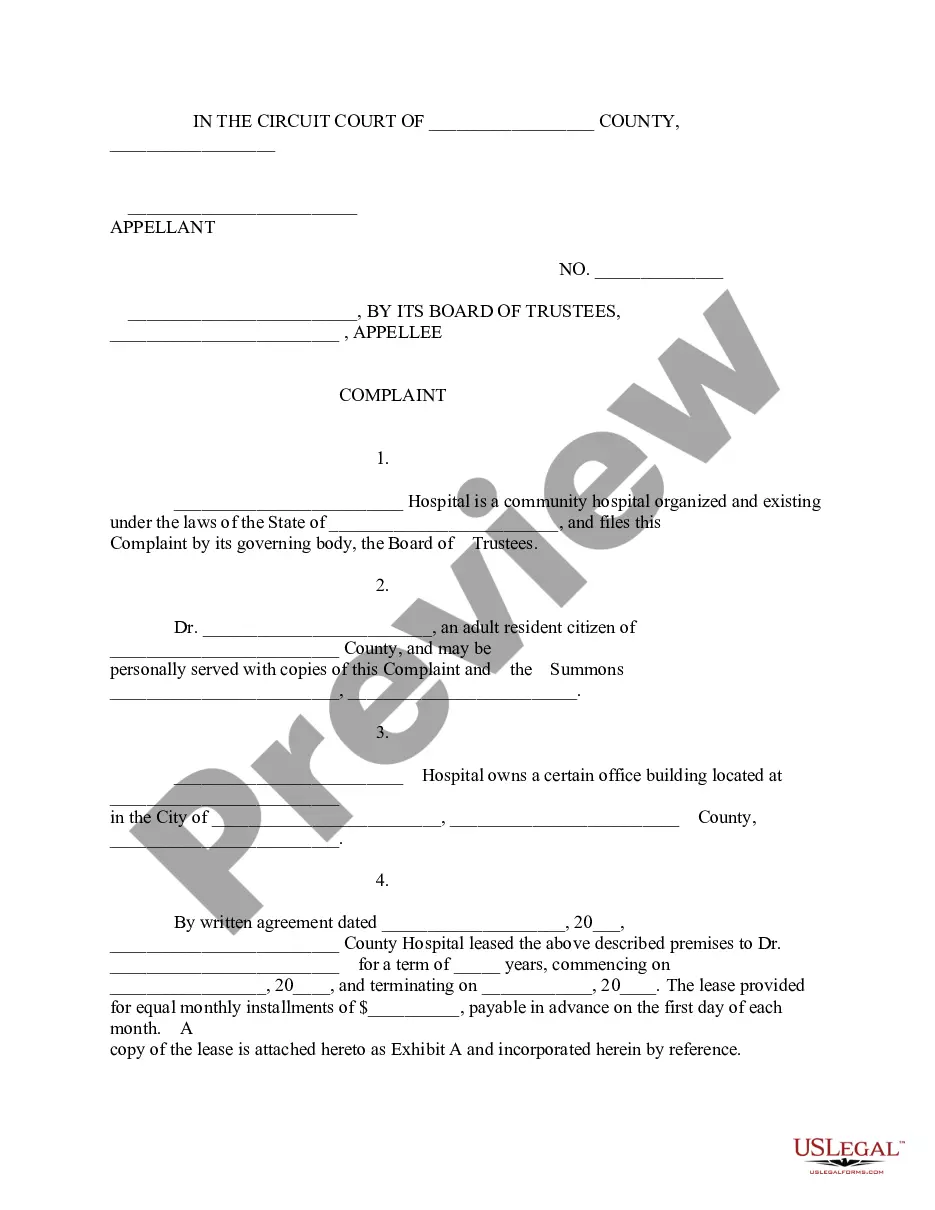
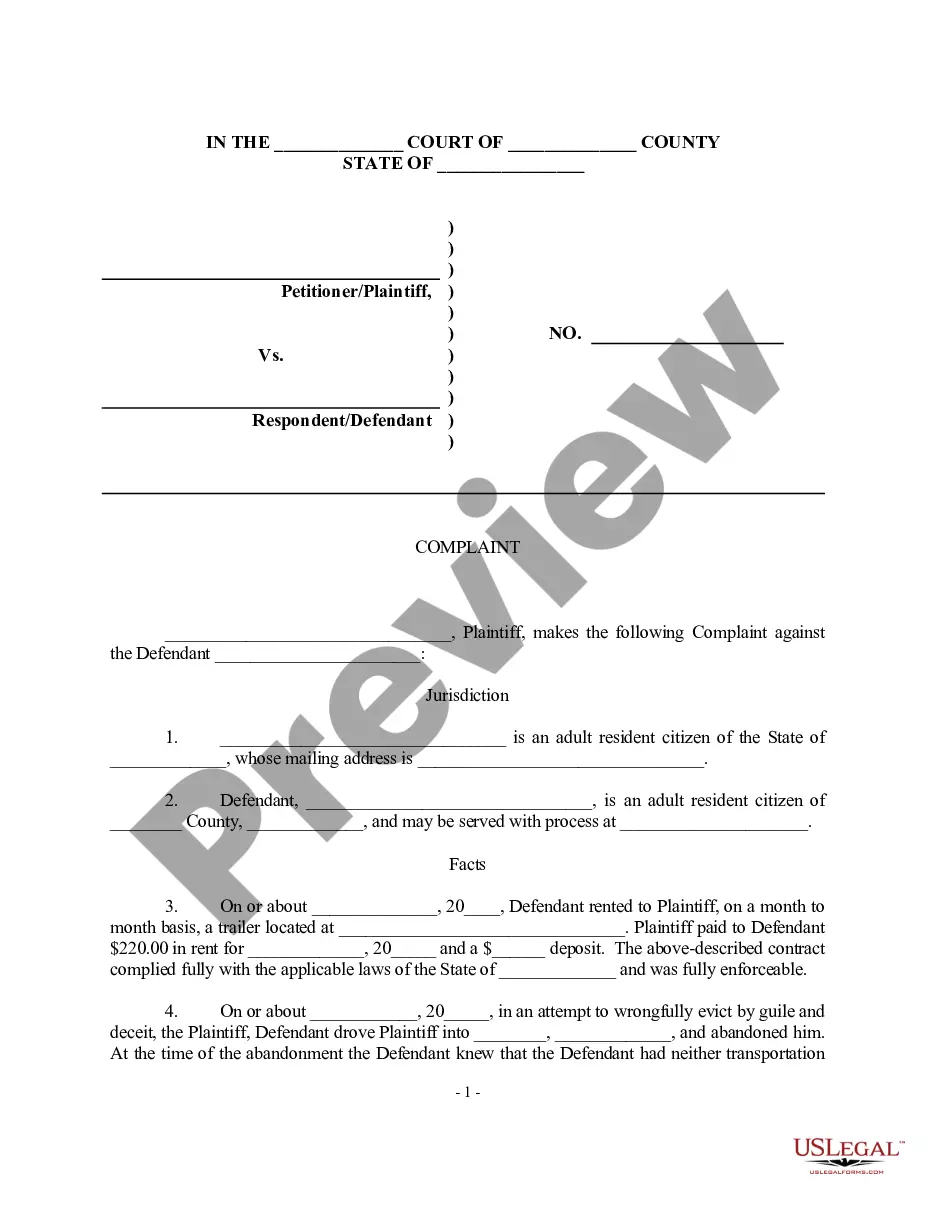
The Complaint for Rent Due to Landlord is a legal document that allows a property owner (plaintiff) to seek a judgment against tenants (defendants) for unpaid rent. This form is specifically designed for landlords who are pursuing legal action to recover rent owed, setting it apart from general eviction notices or lease agreements. It outlines the details of the tenancy, the amount due, and the basis for the claim, ensuring that the landlord has a formal means to enforce their payment rights.
Main sections of this form
- Identification of the parties involved, including the plaintiff (landlord) and defendants (tenants).
- Details regarding the rental property, including address and legal description.
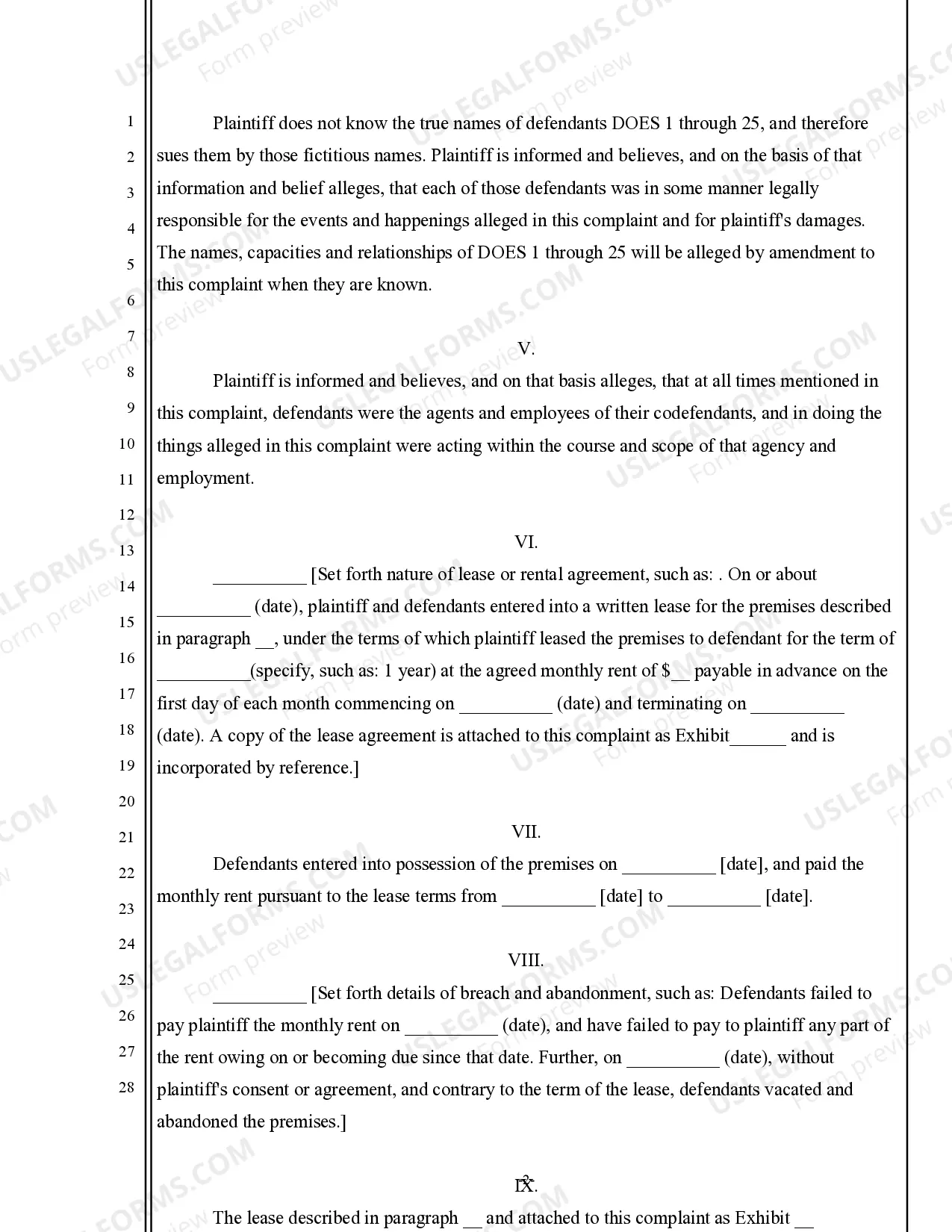
- Description of the lease agreement, including terms and payment timeline.
- Allegations of breach of contract, specifying missed payments and tenant abandonment.
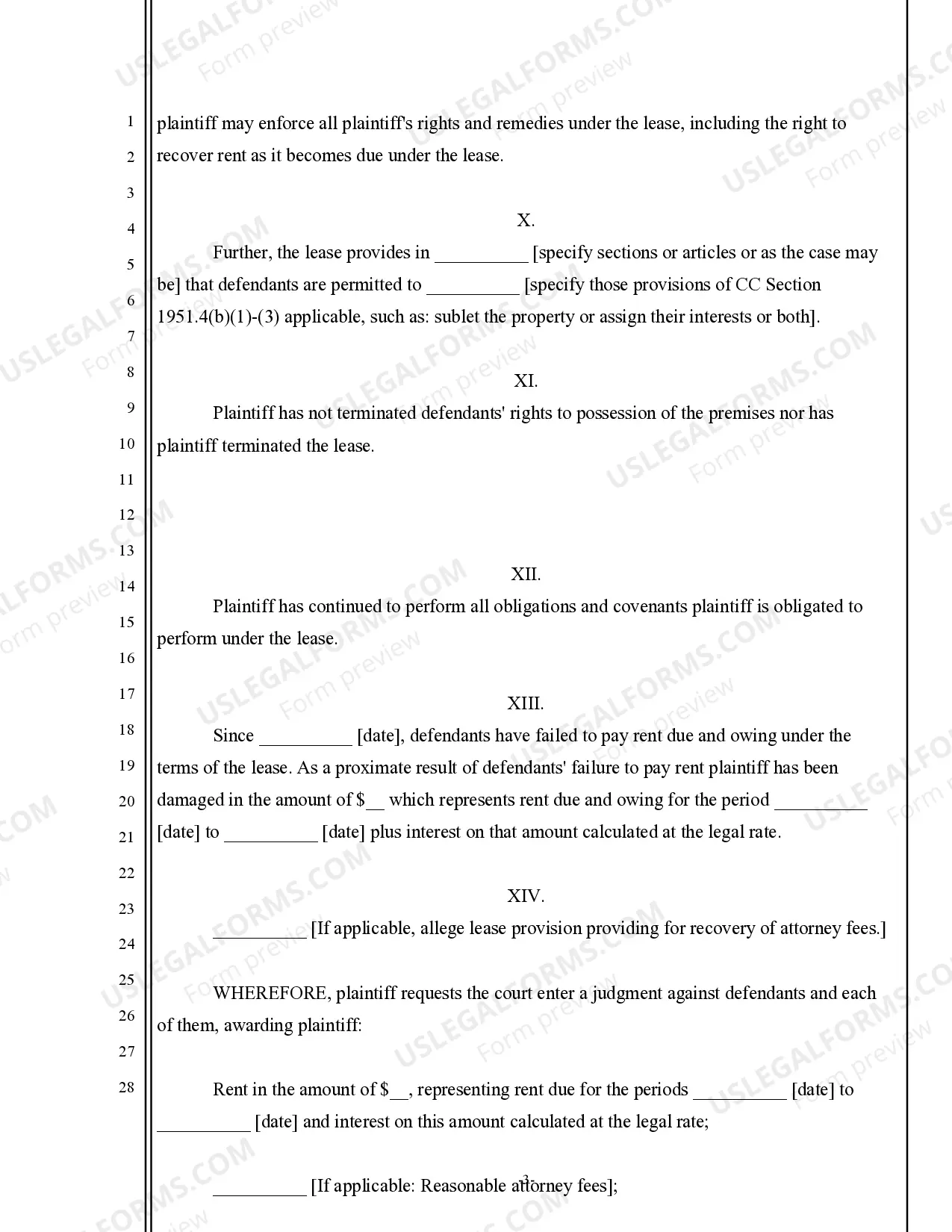
- Request for judgment, including the total amount owed and potential attorney fees.
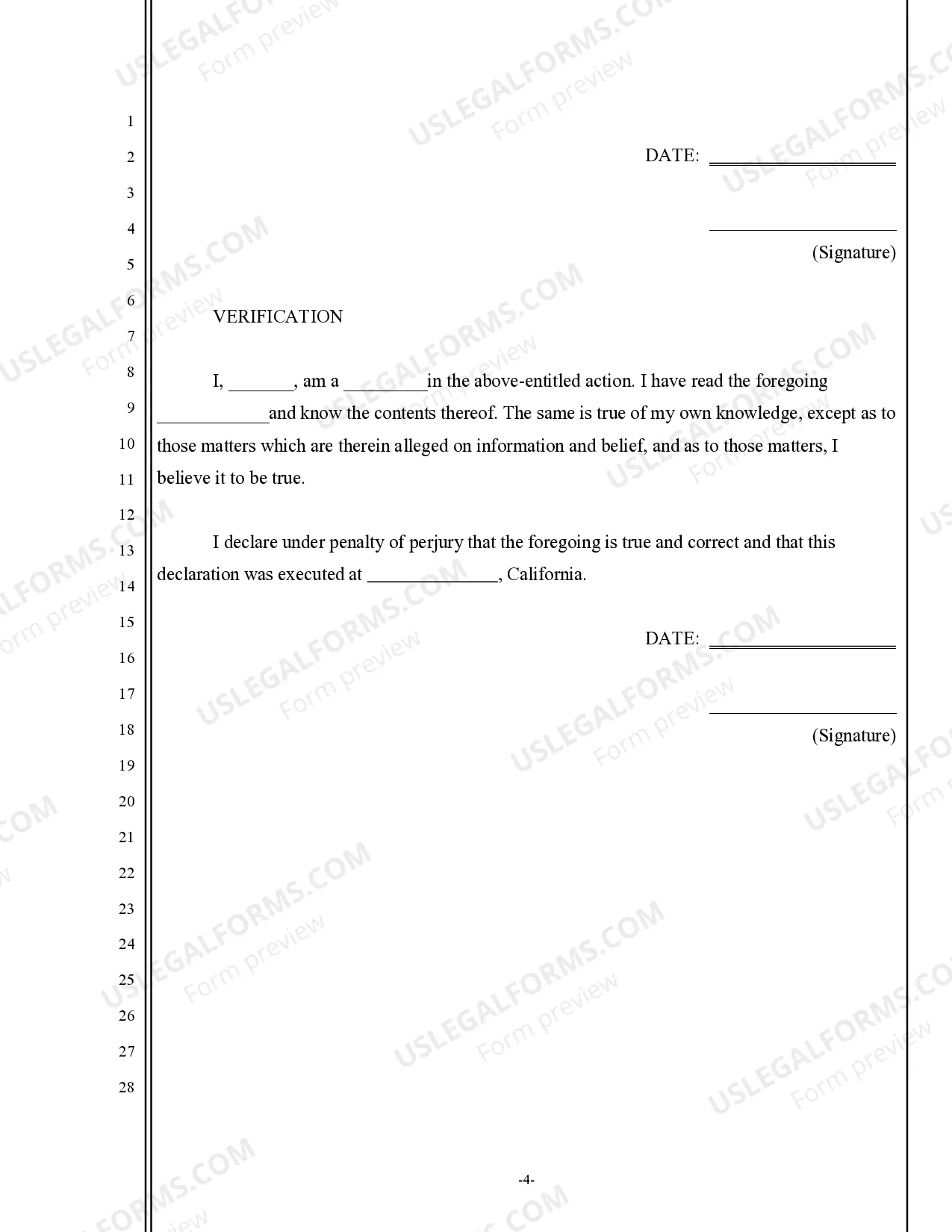
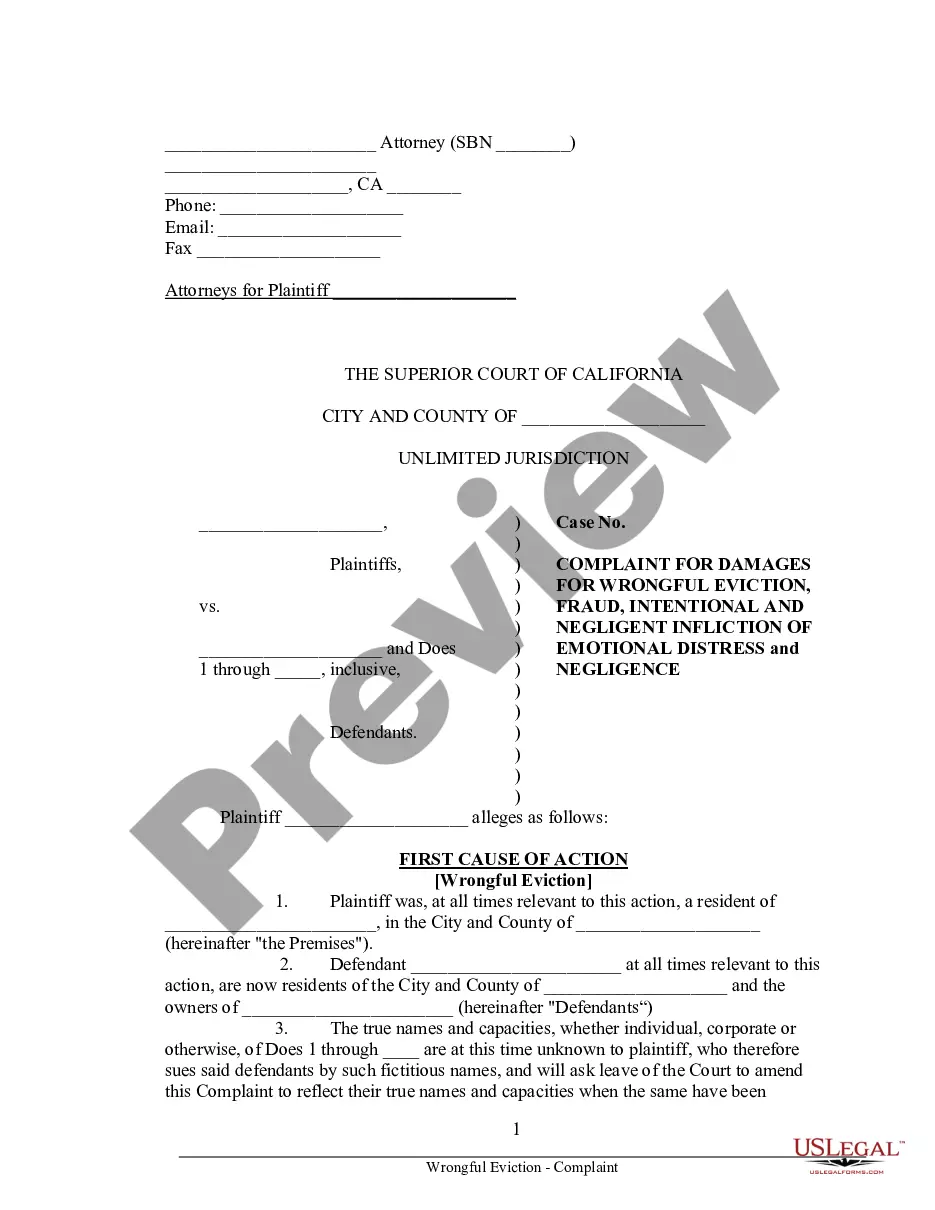
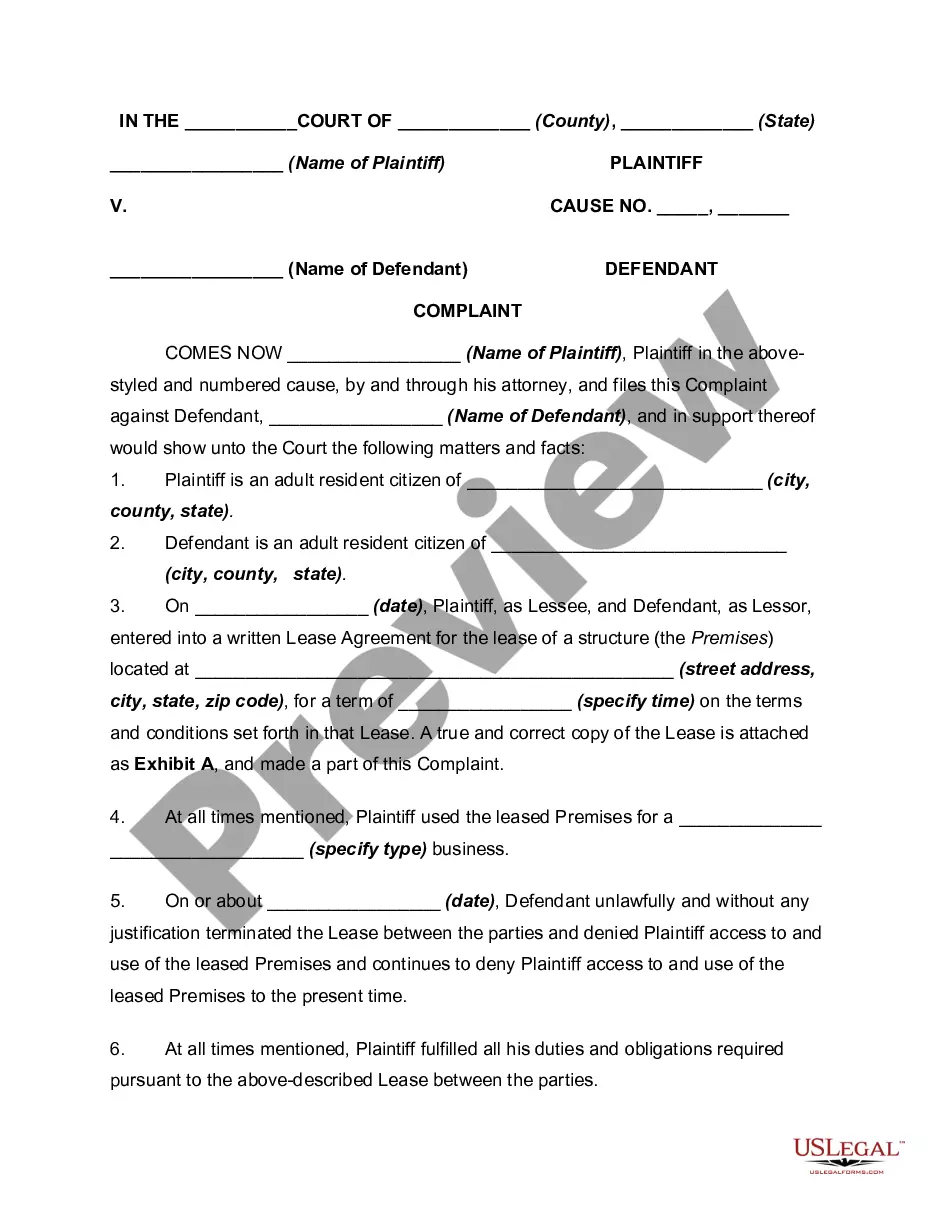
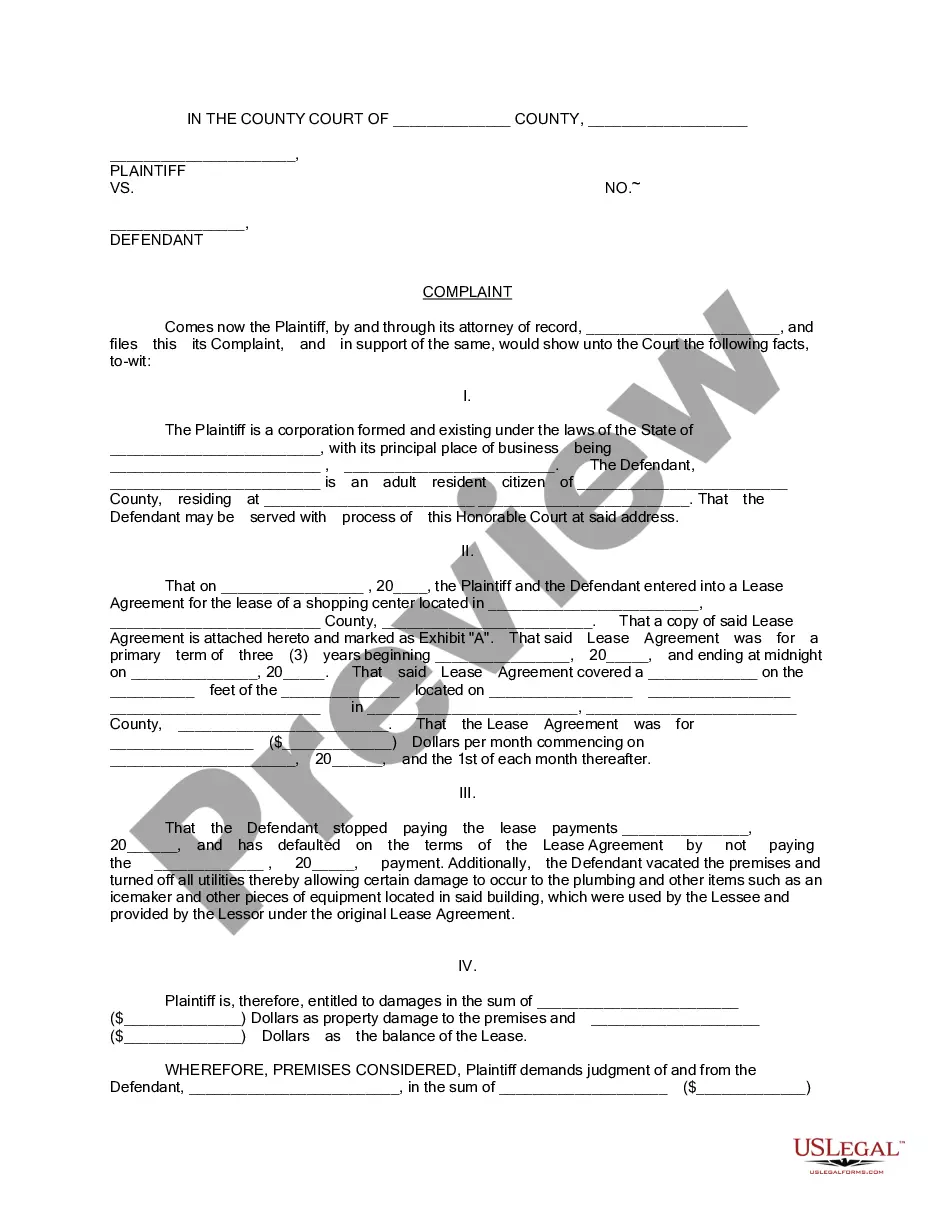
When to use this form
This form should be used when a landlord has not received rent payments from their tenants and wants to take legal action. It is appropriate in situations where tenants have abandoned the property or have consistently failed to meet their rent obligations, making it necessary for the landlord to seek a court order for recovery of the owed amounts.
Who can use this document
This form is intended for:
- Landlords seeking to recover unpaid rent from tenants.
- Property owners who have entered into a lease agreement and have experienced breaches of that agreement.
- Individuals or entities operating in California who require a legal means to pursue unpaid rent through the court system.
How to prepare this document
- Identify the plaintiff and defendants by entering their names and addresses in the appropriate sections.
- Specify the rental property details, including its address and legal description.
- Provide information about the lease agreement, including rental terms, payment dates, and amounts due.
- Detail the circumstances of the breach, including missed payment dates and any abandonment of the property by the tenants.
- Sign and date the form, ensuring all required parties verify and acknowledge the information provided.
Notarization guidance
Notarization is not commonly needed for this form. However, certain documents or local rules may make it necessary. Our notarization service, powered by Notarize, allows you to finalize it securely online anytime, day or night.
Get your form ready online
Our built-in tools help you complete, sign, share, and store your documents in one place.
Make edits, fill in missing information, and update formatting in US Legal Forms—just like you would in MS Word.
Download a copy, print it, send it by email, or mail it via USPS—whatever works best for your next step.
Sign and collect signatures with our SignNow integration. Send to multiple recipients, set reminders, and more. Go Premium to unlock E-Sign.
If this form requires notarization, complete it online through a secure video call—no need to meet a notary in person or wait for an appointment.
We protect your documents and personal data by following strict security and privacy standards.

Make edits, fill in missing information, and update formatting in US Legal Forms—just like you would in MS Word.

Download a copy, print it, send it by email, or mail it via USPS—whatever works best for your next step.

Sign and collect signatures with our SignNow integration. Send to multiple recipients, set reminders, and more. Go Premium to unlock E-Sign.

If this form requires notarization, complete it online through a secure video call—no need to meet a notary in person or wait for an appointment.

We protect your documents and personal data by following strict security and privacy standards.
Typical mistakes to avoid
- Failing to accurately identify all parties involved in the lease agreement.
- Omitting important lease details, such as specific terms or dates of the rental agreement.
- Not providing sufficient evidence of the breach, like missed payment documentation.
- Neglecting to sign the form or complete verification details.
Benefits of completing this form online
- Convenient access to a legally vetted form that meets state requirements.
- Editability allows landlords to customize the form based on their specific situations.
- Cuts down on paper handling and manual processes, streamlining the legal filing procedure.
Key takeaways
- The Complaint for Rent Due to Landlord is essential for landlords seeking to recover unpaid rent legally.
- Accurate and detailed documentation within the form is crucial for a successful claim.
- It is tailored for California law, accommodating state-specific legal standards.
Looking for another form?
Form popularity
FAQ
The California Complaint for Rent Due to Landlord is a legal document landlords file with the court to obtain a money judgment for unpaid rent. It targets tenants who owe rent or have abandoned the property. Use it in California when rent is unpaid and the landlord wants a court order for the amount due (and related fees).
The form requires identification of the parties, the rental property's address and description, a description of the lease terms and payment timeline, and the allegations of breach (missed payments or abandonment), plus the total amount owed. Including these details follows the form's main sections to support a monetary claim.
Core sections include Identification of the parties, Details about the rental property, Description of the lease agreement, Allegations of breach of contract (missed payments and abandonment), and a Request for judgment (total amount owed and potential attorney fees). These sections organize the claim and support the requested relief.
Yes. The form’s 'Request for judgment' element allows you to specify the total amount owed and potential attorney fees. This lets you seek recovery of unpaid rent plus related fees. For accuracy and compliance with California rules, consult a licensed attorney about fee requests and filing requirements.
Yes. The form covers unpaid rent even if tenants have abandoned the property, allowing a monetary judgment for the owed amounts. It’s applicable when rent remains unpaid and a court order is needed to recover what is due.
California Complaint for Rent Due to Landlord focuses on recovering unpaid rent through a money judgment, including the amount owed and potential attorney fees. A standard eviction filing (unlawful detainer) seeks possession of the property. This form does not alone request immediate eviction relief, but instead aims to recover owed rent.