California Release, Waiver, Assumption of Risk and Indemnity Agreement
Overview of this form
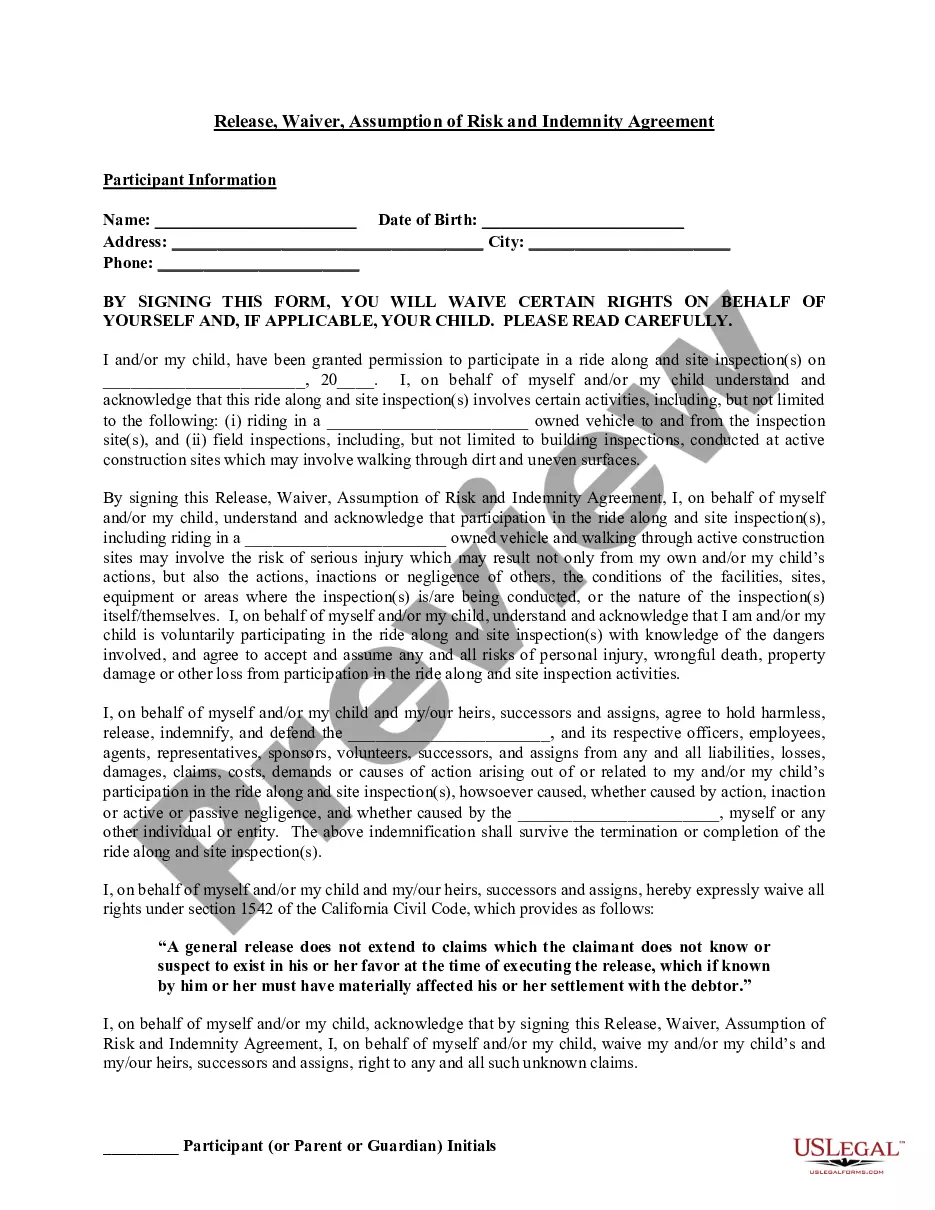
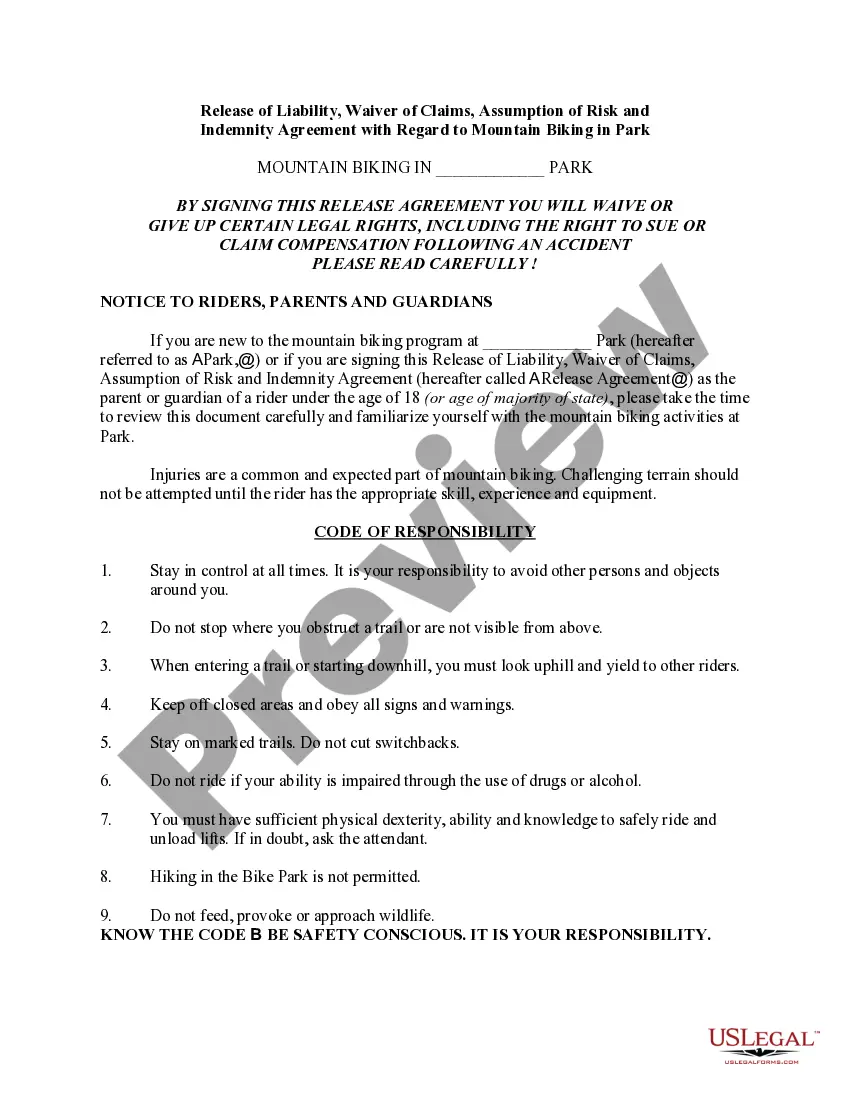
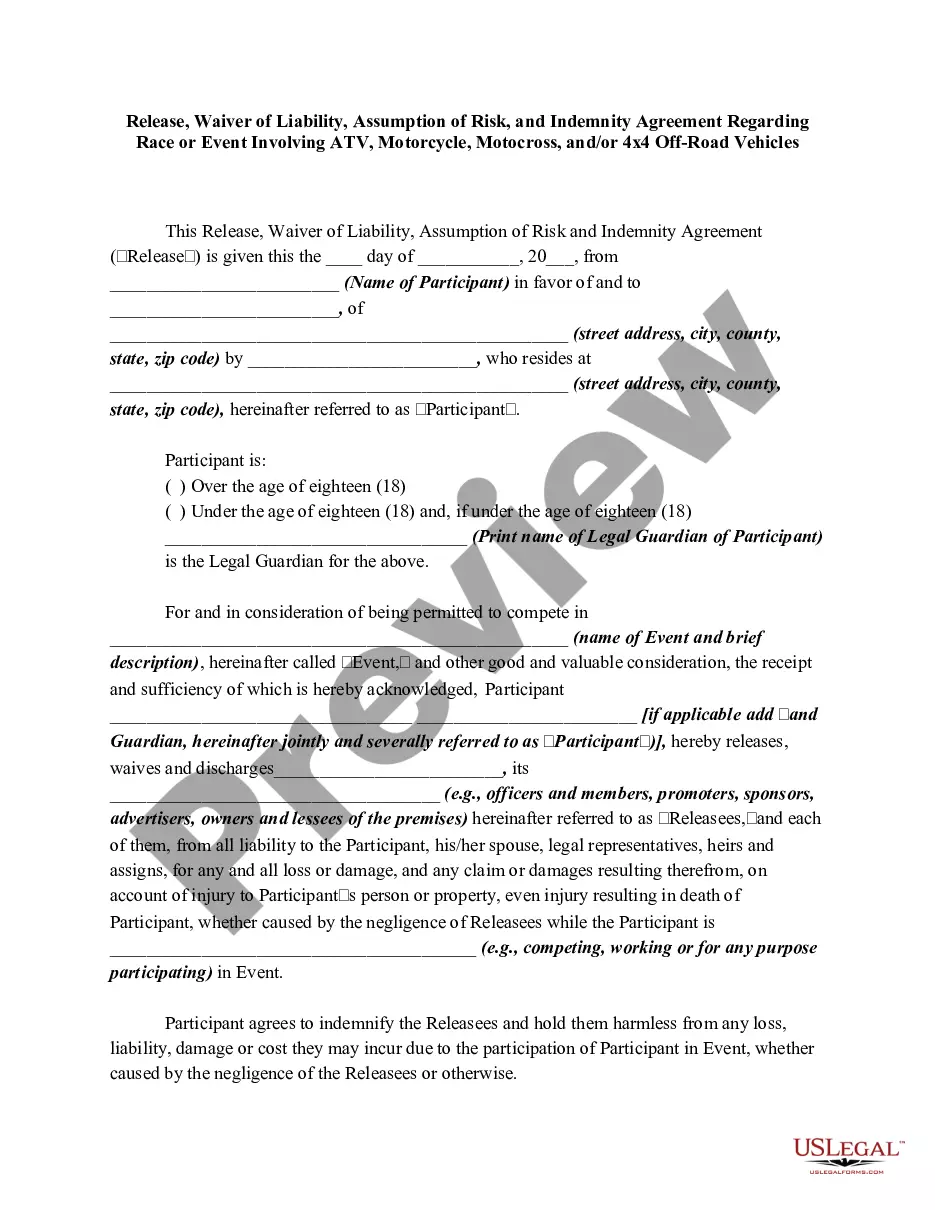
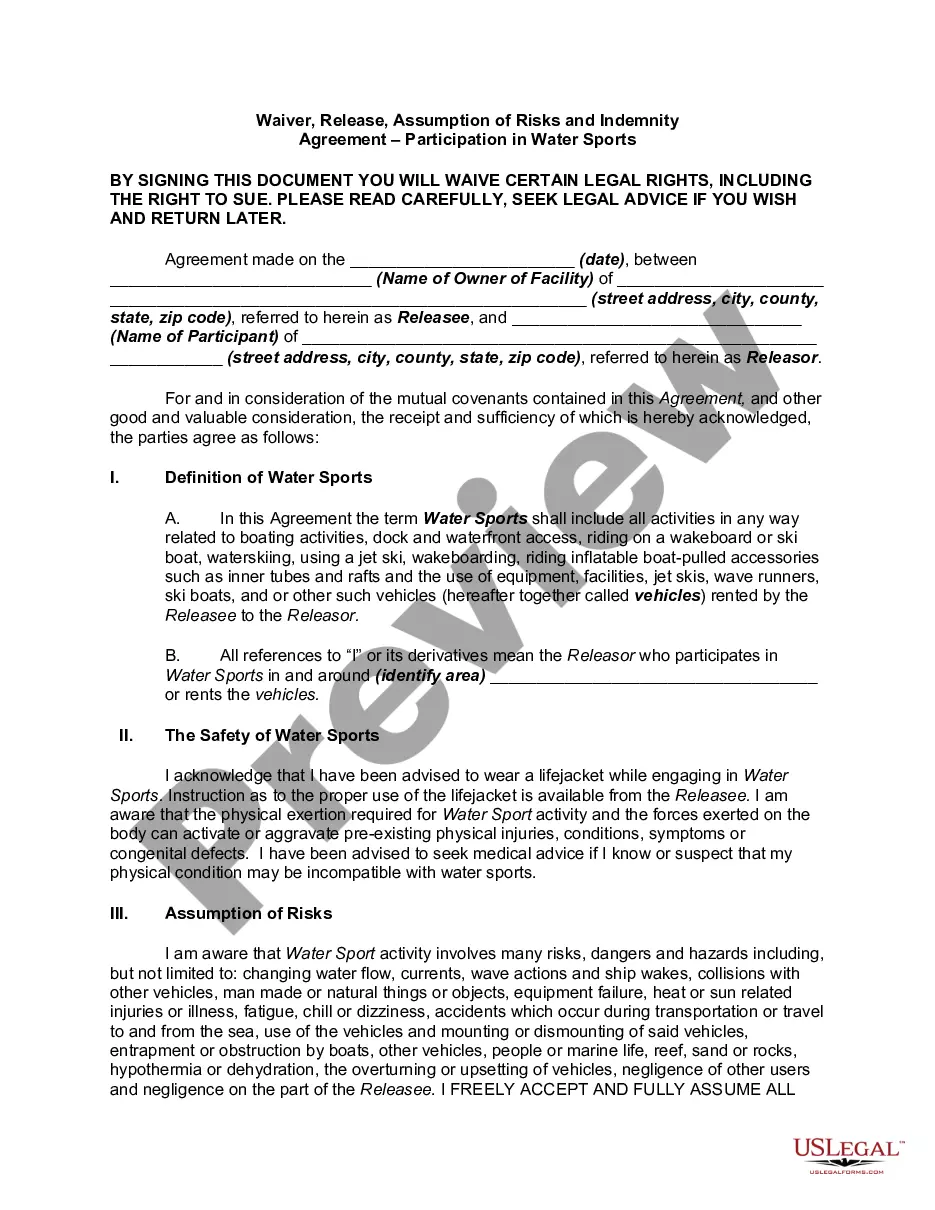
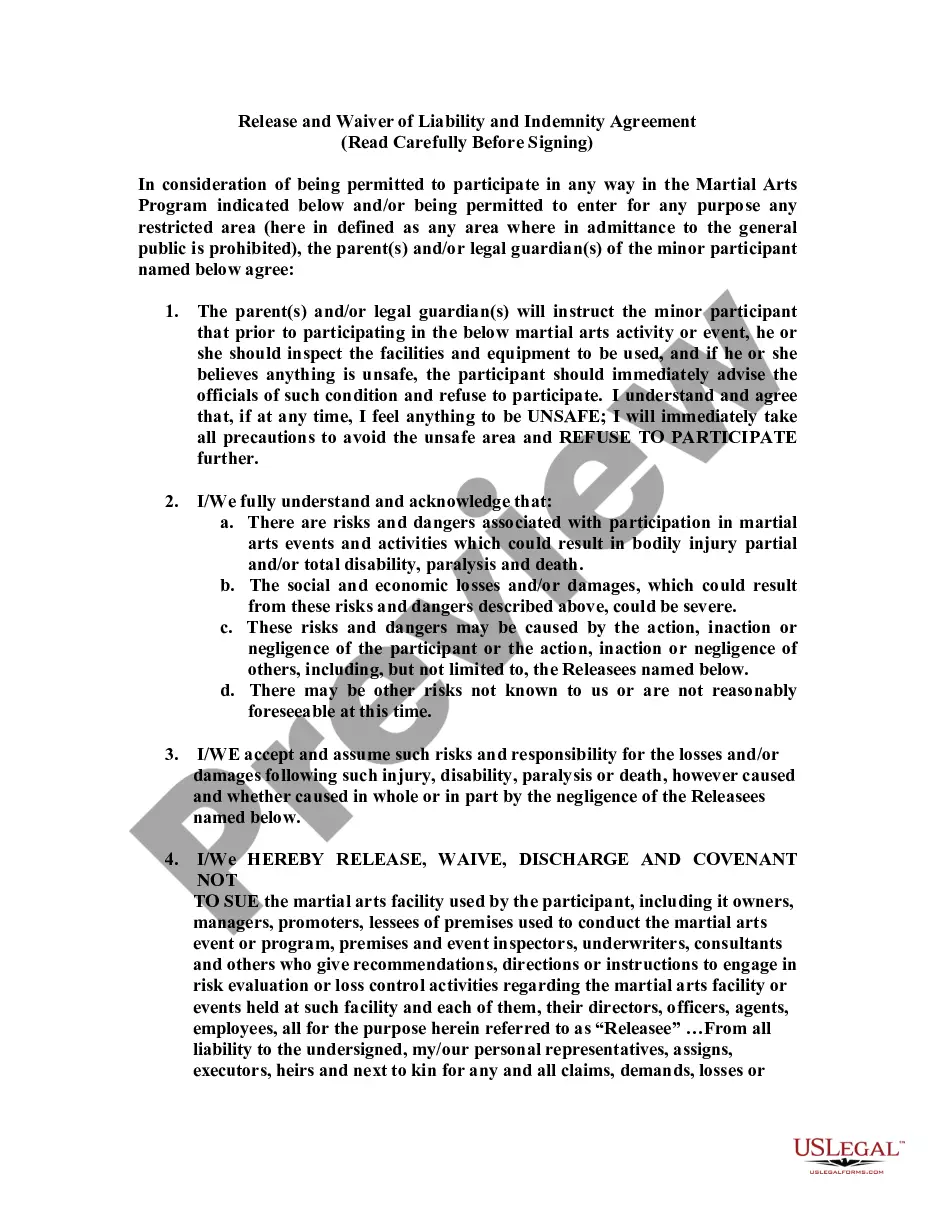
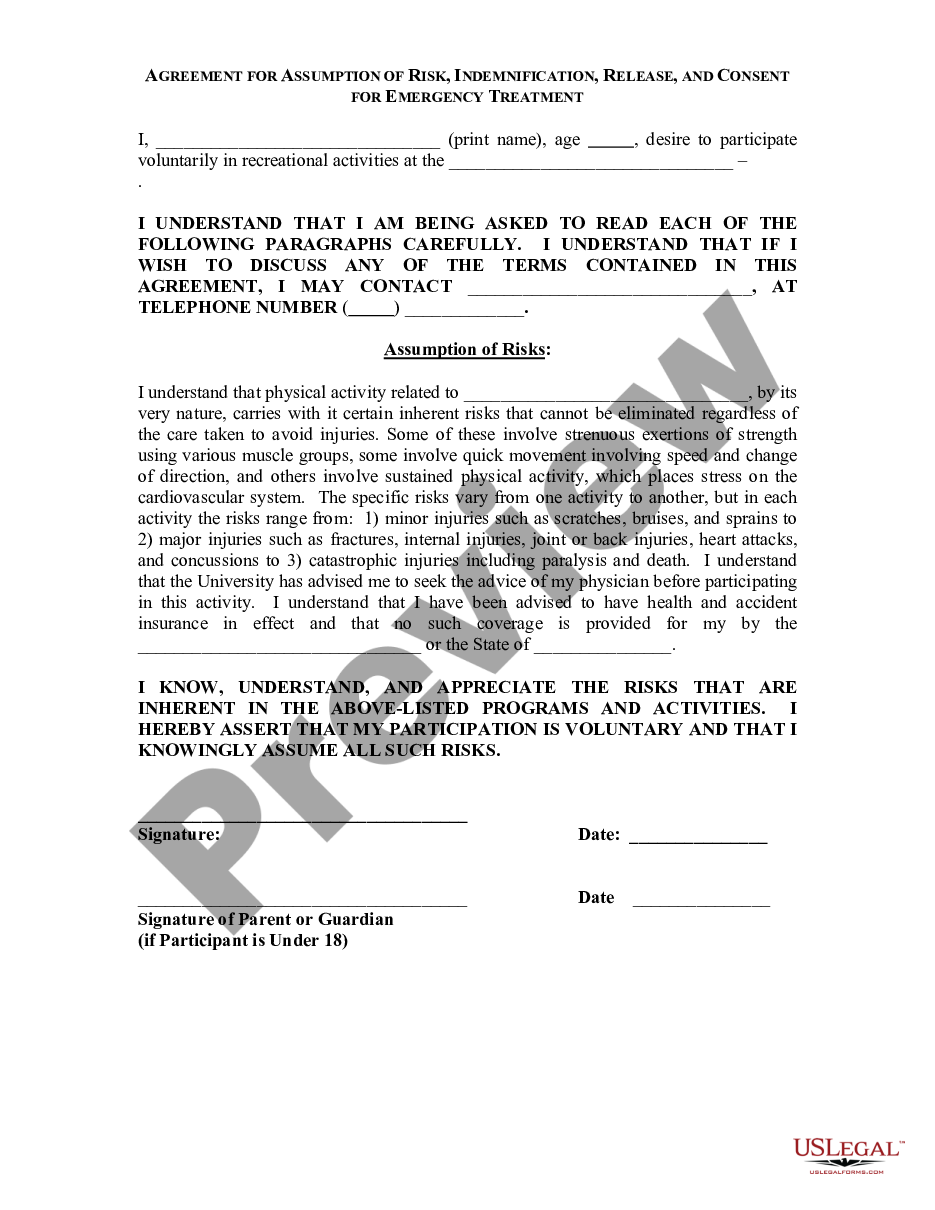
The Release, Waiver, Assumption of Risk and Indemnity Agreement is a legal document designed for parents or guardians to acknowledge and assume the risks associated with their minor child's participation in activities such as ride-alongs in vehicles or site inspections at active construction sites. This form protects organizations and individuals from liability by obtaining the consent of the parent or guardian, ensuring they understand the potential risks involved. It is important to differentiate this form from other waiver templates, as it specifically addresses both the role of parents and the specific contexts in which a minor may be involved.
Form components explained
- Participant Information: Sections for the child's name, date of birth, address, and contact details.
- Acknowledgment of Risks: A detailed statement allowing the participant and parent to understand potential dangers related to the activities.
- Hold Harmless Clause: Language that releases the organization from any liability related to injuries or damages incurred during participation.
- Waiver of Unknown Claims: A release of claims that the parent or guardian may not be aware of at the time of signing.
- Signatures: Signature lines for both the participant (if over 18) and a parent or legal guardian (if under 18).

When to use this form
This form should be used whenever a minor is participating in a ride-along in a vehicle owned by an organization or during an inspection of active construction sites. Common scenarios include school-organized field trips, educational programs, or community service initiatives where minors will engage in activities that may involve potential risks, such as navigating uneven ground or riding in vehicles.
Who this form is for
- Parents or legal guardians of minors participating in ride-alongs or inspections.
- Schools and organizations facilitating activities involving minors.
- Entities operating construction sites where minors may be present for educational purposes.
How to complete this form
- Gather participant information: Fill out the name, date of birth, address, and phone number of the child.
- Acknowledge risks: Read and understand the risks involved in the activities described in the form.
- Sign the form: If the participant is over 18, they should sign; if not, a parent or guardian must sign on their behalf.
- Provide details: Fill in the date of the ride along or inspection and any specifics about the vehicle or site involved.
- Have the form witnessed: Ensure that the signatures are witnessed, if necessary, as per the requirements outlined in the form.
Is notarization required?
This form does not typically require notarization unless specified by local law. While notarization can add an extra layer of authenticity, the signed form is generally valid with the proper signatures from the participant and their guardian.
Get your form ready online
Our built-in tools help you complete, sign, share, and store your documents in one place.
Make edits, fill in missing information, and update formatting in US Legal Forms—just like you would in MS Word.
Download a copy, print it, send it by email, or mail it via USPS—whatever works best for your next step.
Sign and collect signatures with our SignNow integration. Send to multiple recipients, set reminders, and more. Go Premium to unlock E-Sign.
If this form requires notarization, complete it online through a secure video call—no need to meet a notary in person or wait for an appointment.
We protect your documents and personal data by following strict security and privacy standards.

Make edits, fill in missing information, and update formatting in US Legal Forms—just like you would in MS Word.

Download a copy, print it, send it by email, or mail it via USPS—whatever works best for your next step.

Sign and collect signatures with our SignNow integration. Send to multiple recipients, set reminders, and more. Go Premium to unlock E-Sign.

If this form requires notarization, complete it online through a secure video call—no need to meet a notary in person or wait for an appointment.

We protect your documents and personal data by following strict security and privacy standards.
Avoid these common issues
- Failing to include all required participant information.
- Not fully understanding the risks before signing the waiver.
- Overlooking the signature of the parent or guardian for participants under 18.
- Not having the form witnessed when required.
Why complete this form online
- Convenience of completing and downloading from home without the need for appointments.
- Editability allows users to customize the form for specific situations.
- Reliable access to forms drafted by licensed attorneys, ensuring legal enforceability.
Looking for another form?
Form popularity
FAQ
For the most part, the signing of a waiver is going to hold up in court as a binding document. That does not mean, however, that you are out of options if you sign a release of liability waiver and then sustain an injury while participating in the activity the business offered.
Primary assumption of risk is when someone is injured in an inherently risky activity, but due to no specific fault of you or your business. This is where the Assumption of Risk waiver fully protects your business as these risks are fully outlined and accepted by a participant.
In a legal sense, an indemnity clause is simply something that's part of a liability waiver. It helps clarify that the person signing the clause (the indemnifier) is agreeing to remove liability from the business so they can participate in the related activity, event, or service.
Even if you've signed a waiver in advance you can still pursue legal action for an injury suffered due to the negligence of another party.
Under such an ?assumption of the risk? agreement, the plaintiff expressly agrees to assume the risk of injury. These contracts ? often called a ?waiver of liability and assumption of the risk agreement? ? are enforceable in California to the extent they require someone to assume the risk of ordinary negligence.
Are Waivers of Liability Enforceable in California? In the state of California, waivers of liability will be considered enforceable so long as they have been drafted properly and the language is explicit as to the scope of coverage.
Under California law, waivers of liability may not prevent people from suing for injuries resulting from gross negligence, recklessness, intentional torts, or illegal acts. California law defines ?negligence? (ordinary negligence) as the failure to use reasonable care to prevent harm to oneself or to others.