California Notice of Default and Election to Sell Under Deed of Trust
What this document covers
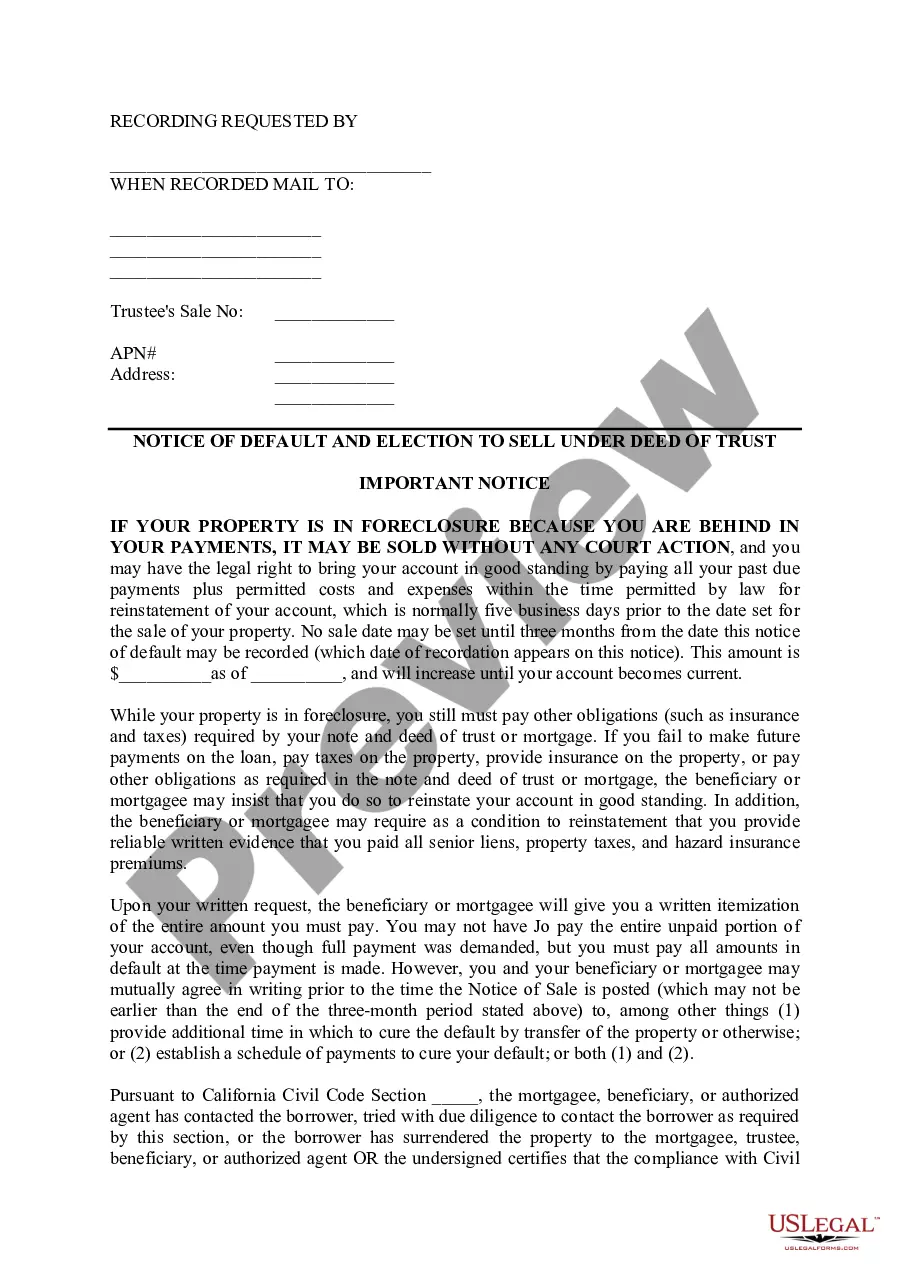
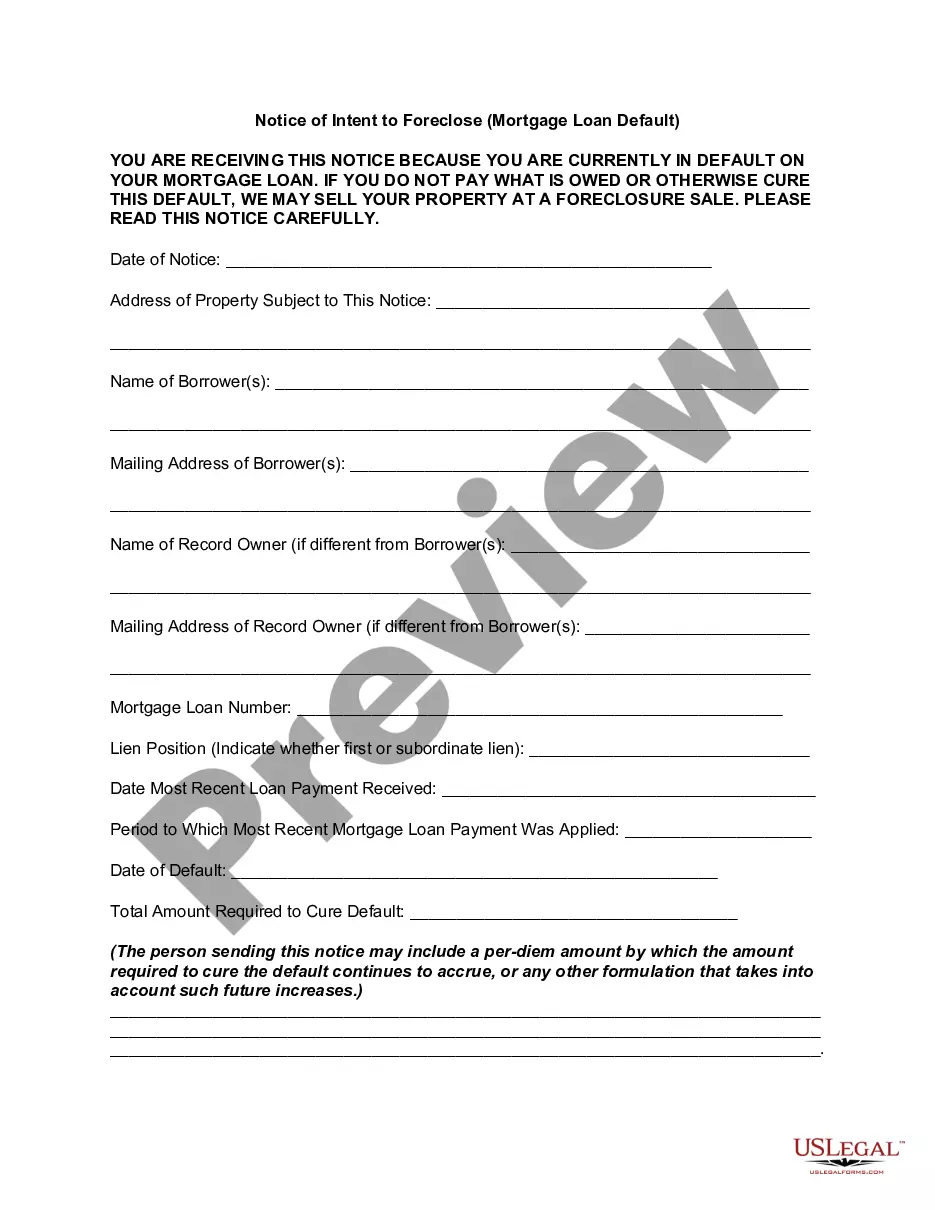
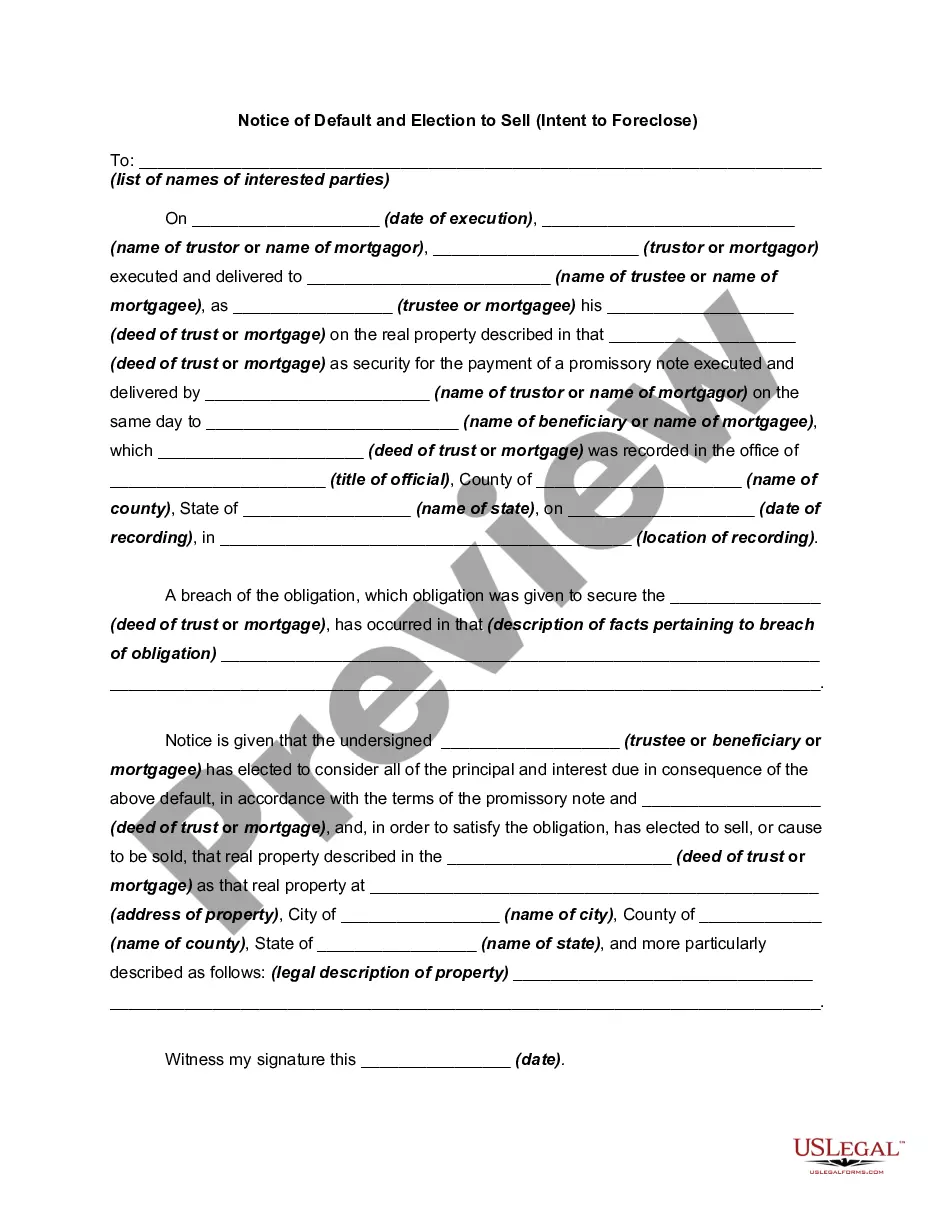
The Notice of Default and Election to Sell Under Deed of Trust is a legal document used to inform a property owner (the mortgagor) that they are in default on their mortgage payments. This form serves as a formal notice that indicates the mortgagee's intention to sell the property if the delinquent payments are not rectified. Unlike other mortgage-related forms, this notice specifically outlines the obligations of the mortgagor and the consequences of foreclosure, functioning as a critical step before any potential sale of the property can occur.
Main sections of this form
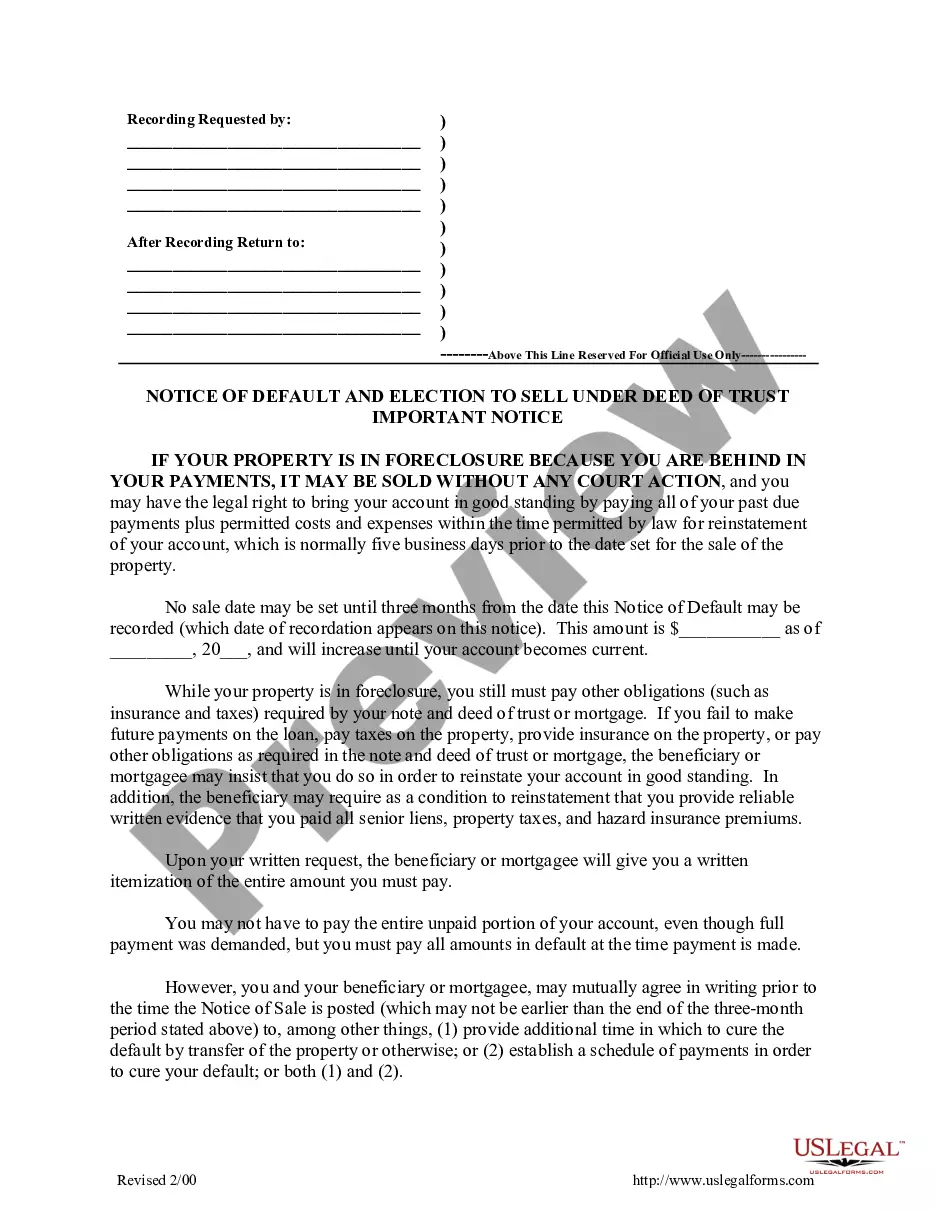
- Recording request and address details.
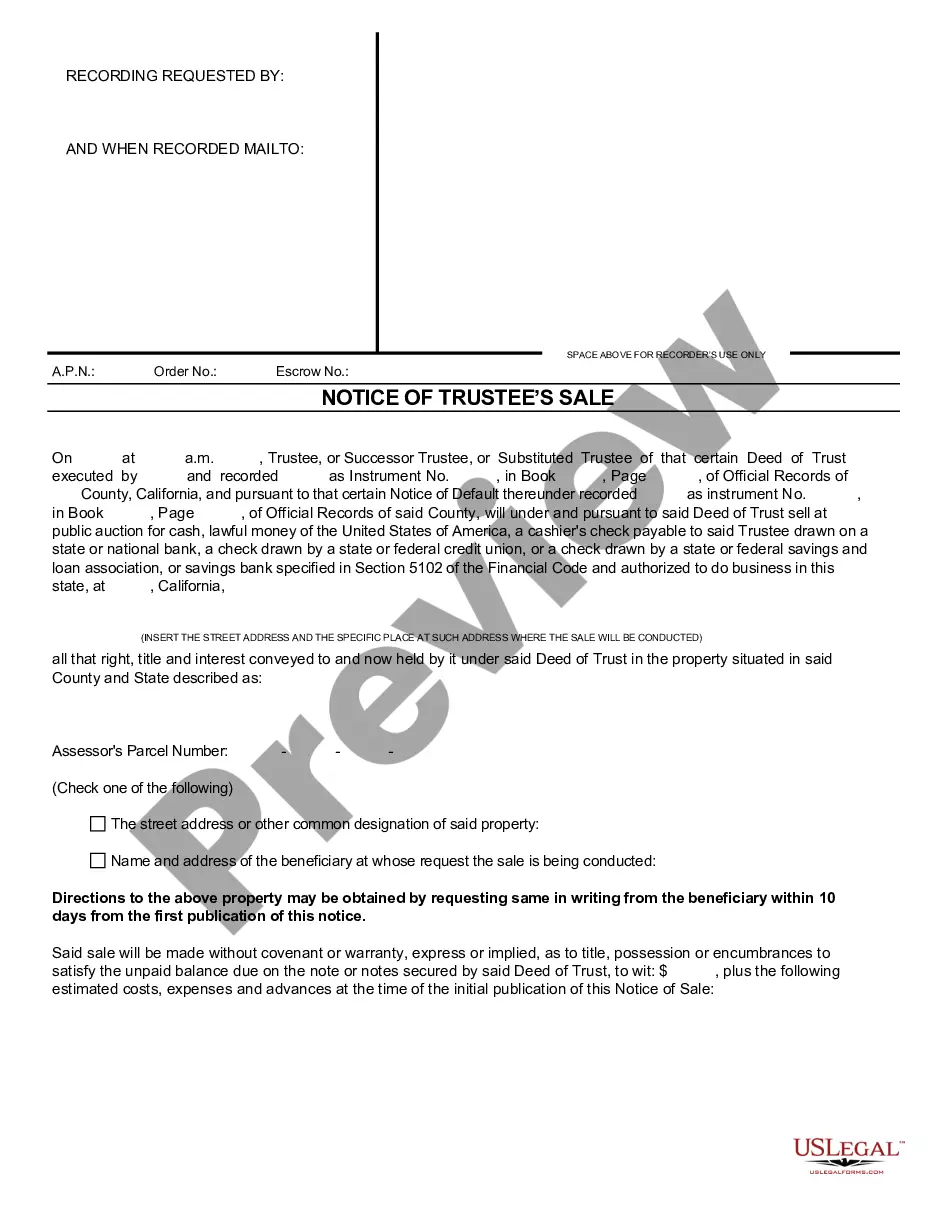
- Trustee's sale number and property APN number.
- Notice of default and election to sell section specifying the legal rights of the mortgagor.
- Details regarding payments due and the opportunity for reinstatement of the mortgage account.
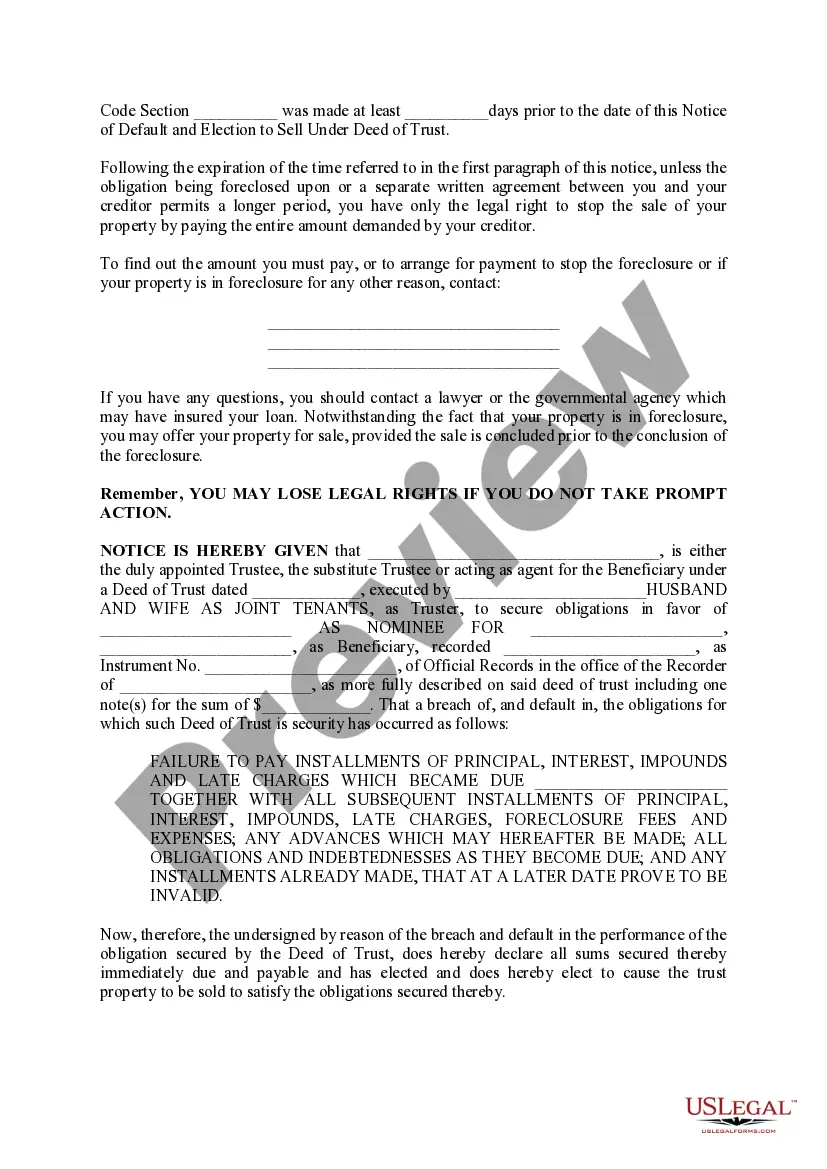
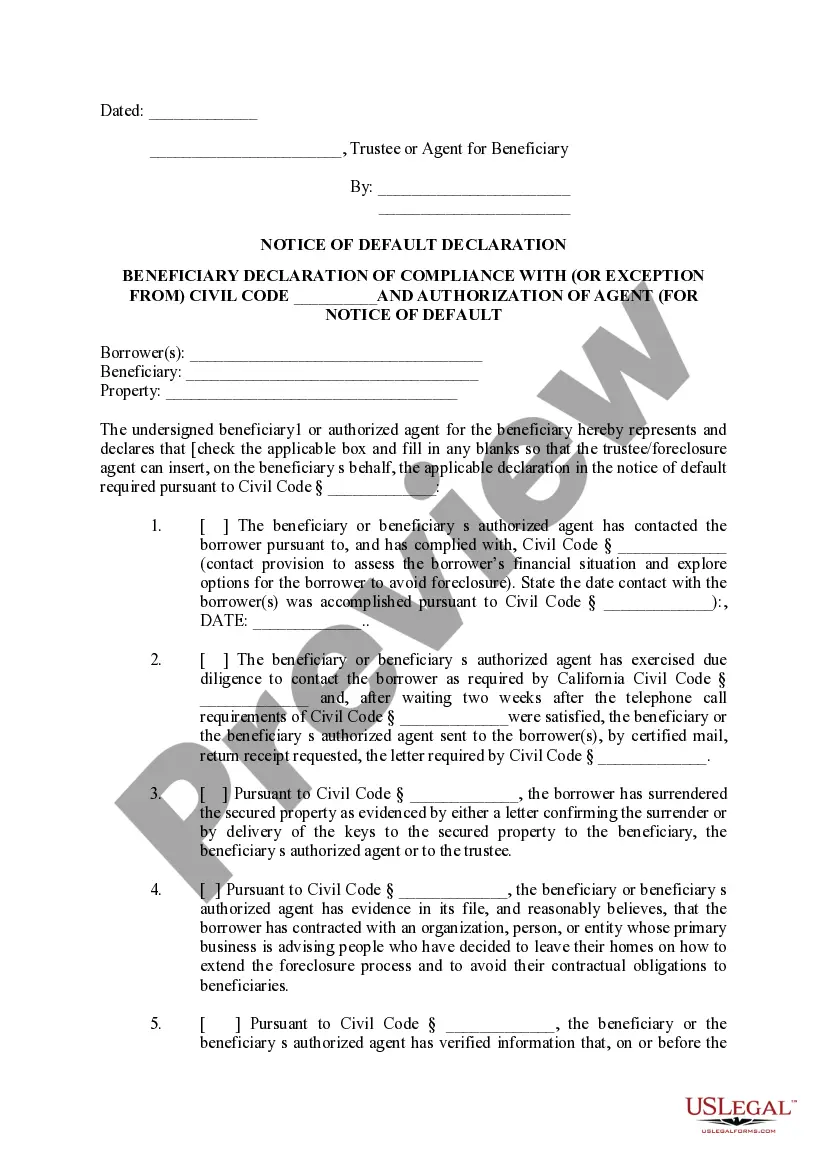
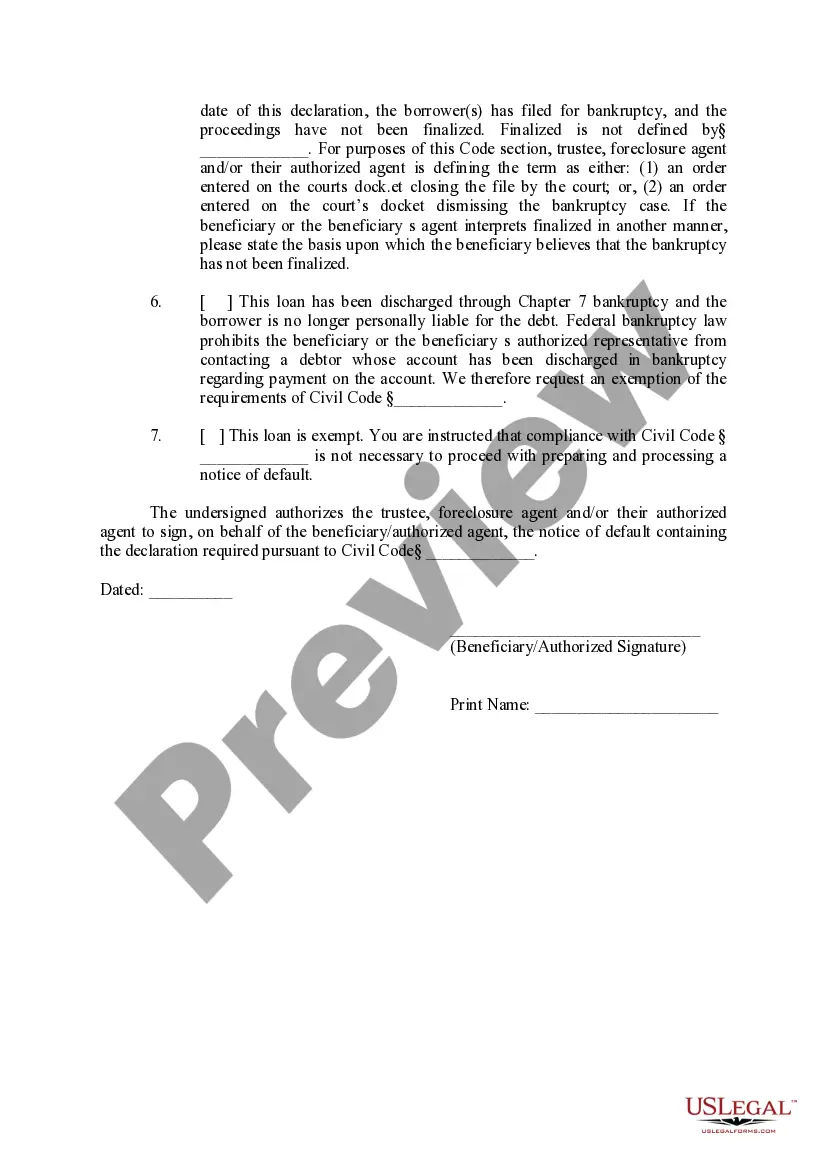
- Declaration of compliance with California Civil Code requirements.
- Declaration of the beneficiary or authorized agent regarding efforts to contact the borrower.
When this form is needed
This form should be used when a property is in foreclosure due to the mortgagor failing to make timely mortgage payments. It is legally required to notify the mortgagor that they may lose their property and outlines options for curing the default before any legal action leads to a sale. It is a proactive measure for both lenders and mortgagors to clarify the situation regarding past due payments.
Who needs this form
- Property owners who are behind on their mortgage payments.
- Mortgage lenders or beneficiaries who need to formally notify a borrower of default.
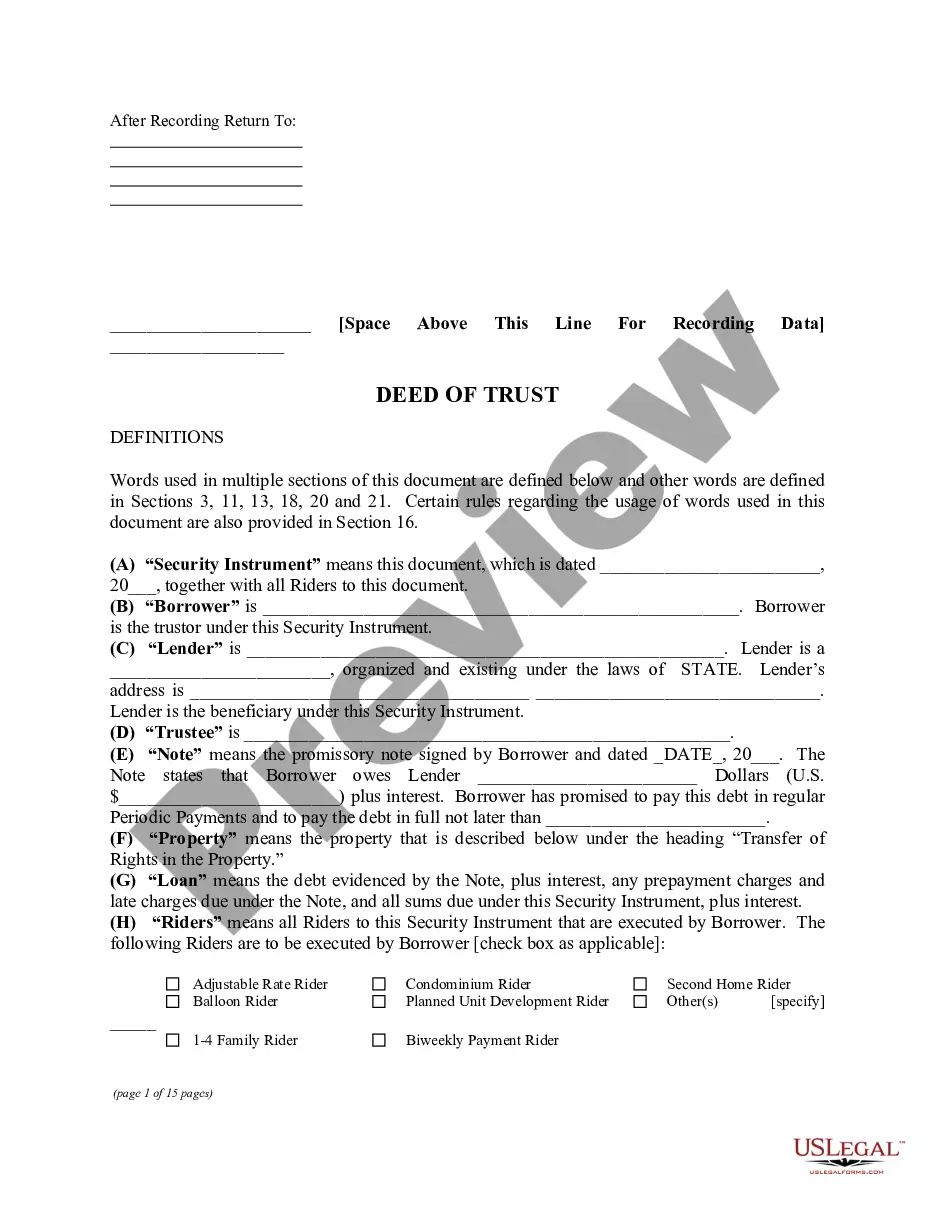
- Trustees who are managing the sale of a property under a deed of trust.
How to complete this form
- Fill in the recording requester's details and where the form should be mailed.
- Insert the trustee's sale number and property APN number.
- Specify the amount due and relevant dates as of the notice.
- Provide a declaration of compliance with California Civil Code and specify attempts to contact the borrower.
- Sign and date the form as the Trustee or authorized agent for the Beneficiary.
Notarization guidance
This form does not typically require notarization unless specified by local law. It is important to review state-specific regulations related to foreclosure notices to ensure compliance.
Get your form ready online
Our built-in tools help you complete, sign, share, and store your documents in one place.
Make edits, fill in missing information, and update formatting in US Legal Forms—just like you would in MS Word.
Download a copy, print it, send it by email, or mail it via USPS—whatever works best for your next step.
Sign and collect signatures with our SignNow integration. Send to multiple recipients, set reminders, and more. Go Premium to unlock E-Sign.
If this form requires notarization, complete it online through a secure video call—no need to meet a notary in person or wait for an appointment.
We protect your documents and personal data by following strict security and privacy standards.

Make edits, fill in missing information, and update formatting in US Legal Forms—just like you would in MS Word.

Download a copy, print it, send it by email, or mail it via USPS—whatever works best for your next step.

Sign and collect signatures with our SignNow integration. Send to multiple recipients, set reminders, and more. Go Premium to unlock E-Sign.

If this form requires notarization, complete it online through a secure video call—no need to meet a notary in person or wait for an appointment.

We protect your documents and personal data by following strict security and privacy standards.
Mistakes to watch out for
- Failing to provide accurate property information, such as the APN number.
- Not updating the amount due, leading to incorrect or insufficient payment requirements.
- Missing authorized signatures, which can invalidate the notice.
Why use this form online
- Convenient access to form templates that comply with legal standards.
- Easy editing features that allow users to customize the form as needed.
- Reliable resources drafted by licensed attorneys ensuring the notice meets legal requirements.
Looking for another form?
Form popularity
FAQ
After you've received a Notice of Default, you have 3 months in which to attempt to get your loan current. As mentioned above, that means paying all back payments, interest, fees, property taxes, and insurance. After 3 months, the bank can officially set a date for the auction of your home.
The term notice of default refers to a public notice filed with a court that states that the borrower of a mortgage is in default on a loan. The lender may file a notice of default when a mortgagor falls behind on their mortgage payments.
A notice of default is the first step to a bank or mortgage lender's foreclosure process.If the mortgage is not paid up to date, the lender will seize the home. A notice of default is also known as a reinstatement period, notice of public auction, or notice of foreclosure.
The notice of default doesn't affect your credit file, but when the account defaults this will be recorded.If the debt is regulated by the Consumer Credit Act, you must be sent a default notice warning letter and have time to act on it before the default is recorded on your credit file.
It takes several months for a lender to foreclose on a California property. If everything goes according to schedule, the process typically takes approximately 120 days about four months but the process can take as long as 200 or more days to conclude.
Pre-foreclosure in California is as short as 111 days, consisting of a 90-day default notice period followed by a 21-day foreclosure sale notice period.
After you've received a Notice of Default, you have 3 months in which to attempt to get your loan current. As mentioned above, that means paying all back payments, interest, fees, property taxes, and insurance. After 3 months, the bank can officially set a date for the auction of your home.
Step 1 Notice of Default. Record a Notice of Default with the county recorder. Step 2 Notice of Sale. If the borrower does not pay the balance stated in the Notice of Default within the deadline, the lender can go ahead with recording a Notice of Sale. Step 3 Auction. Step 4 Obtain Possession of Property.
In CA a Notice of Default does not expire.