California Personal Injury Release By Individual From Responsibility for Participation in Inherently Dangerous Activity
Description
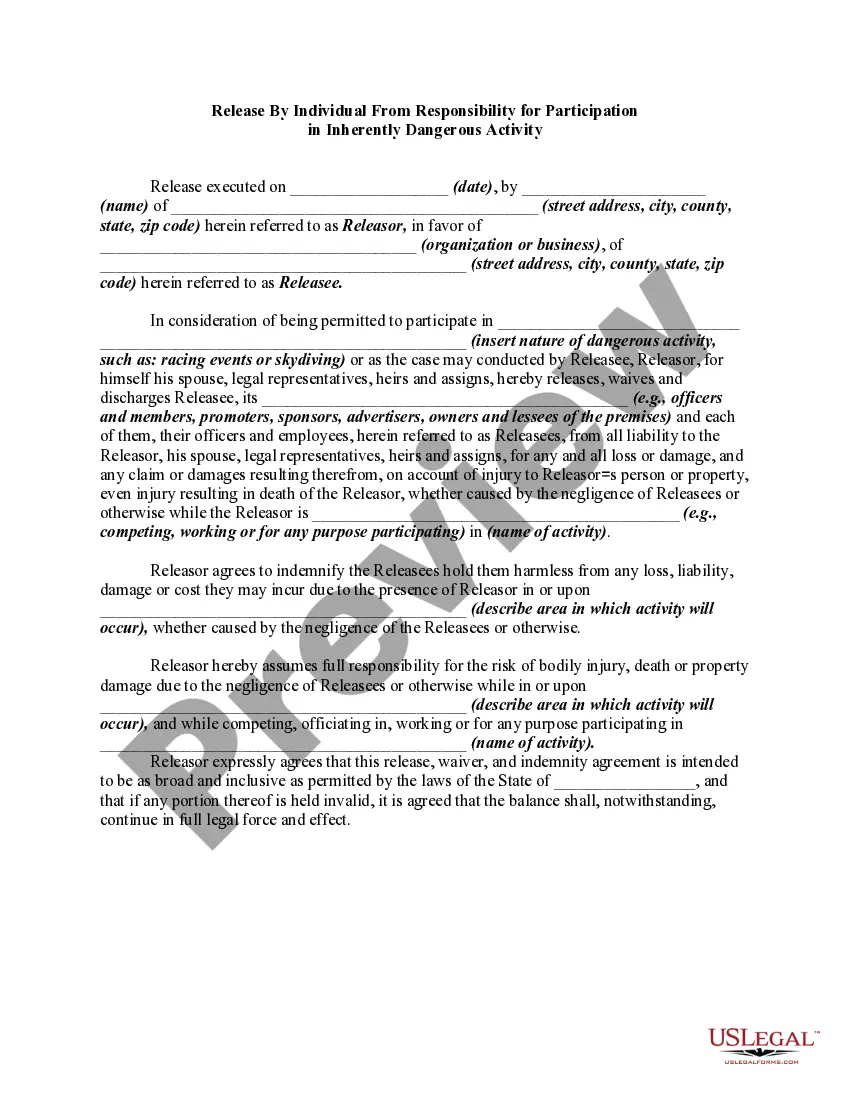
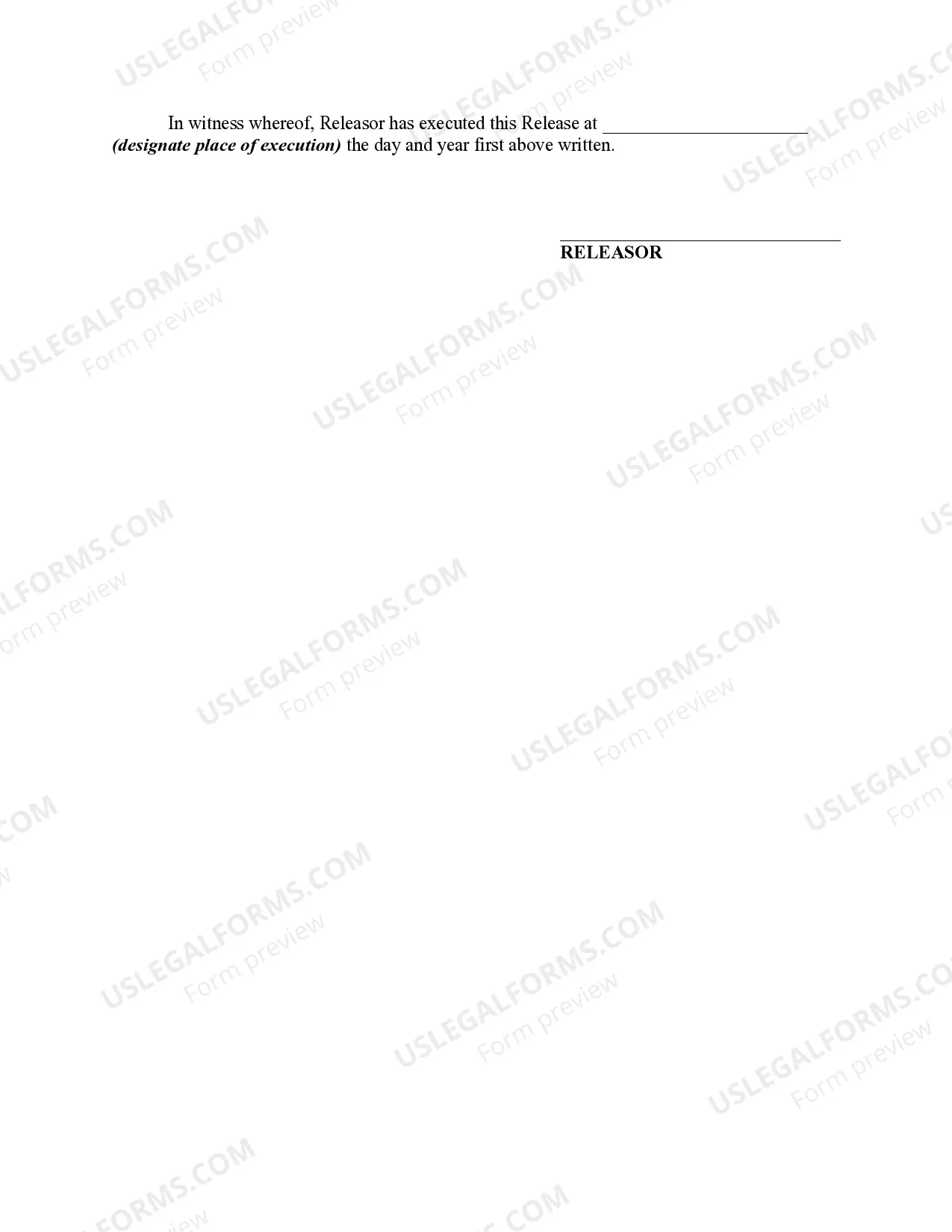
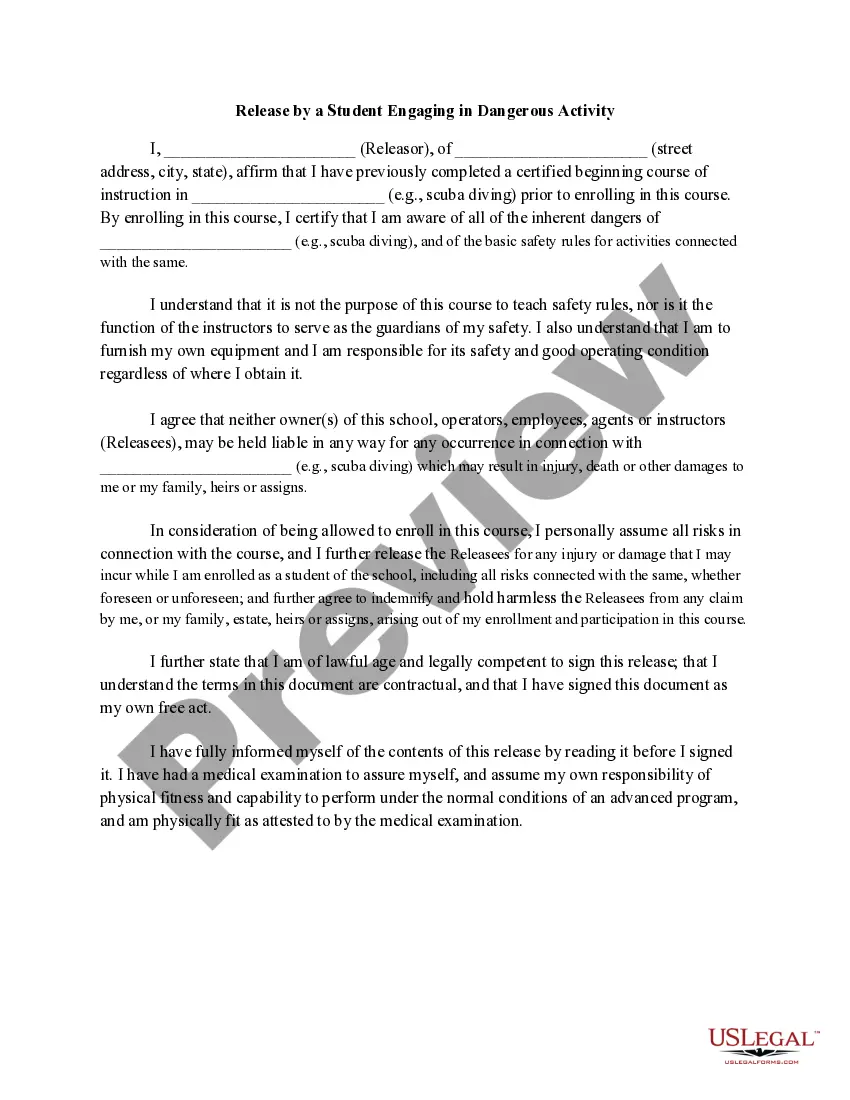
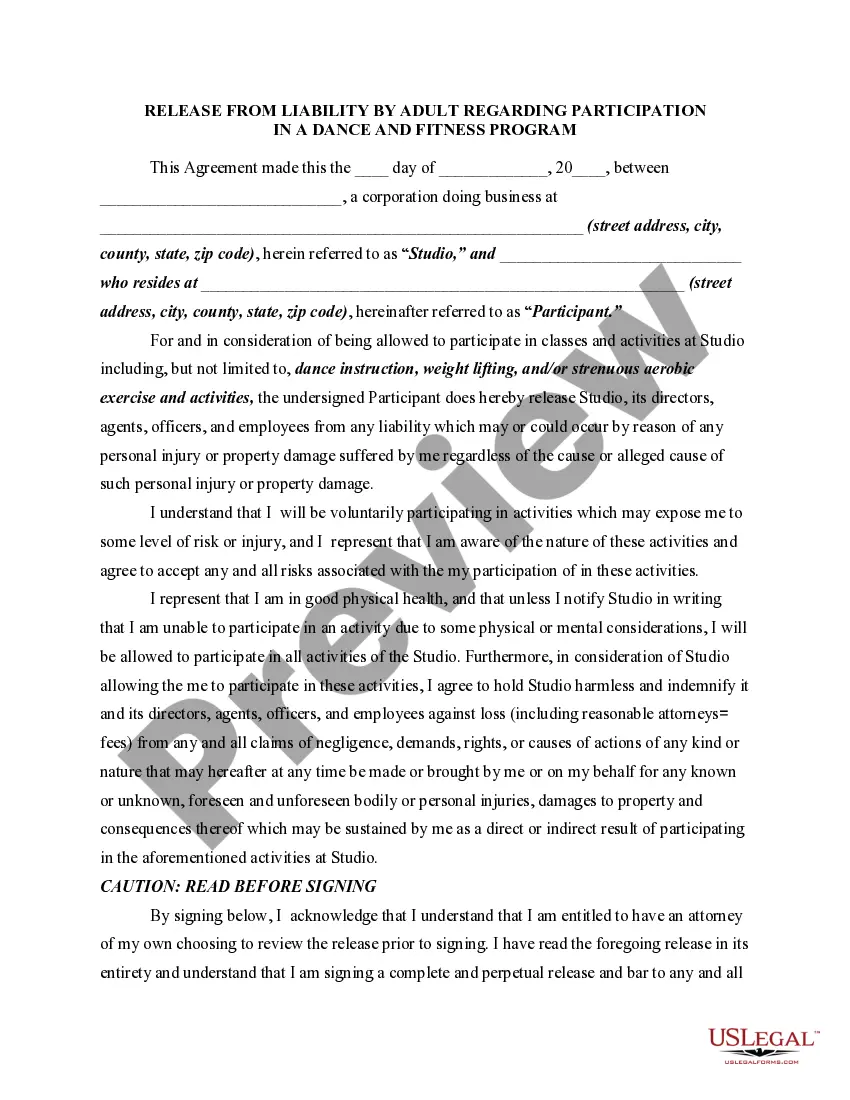
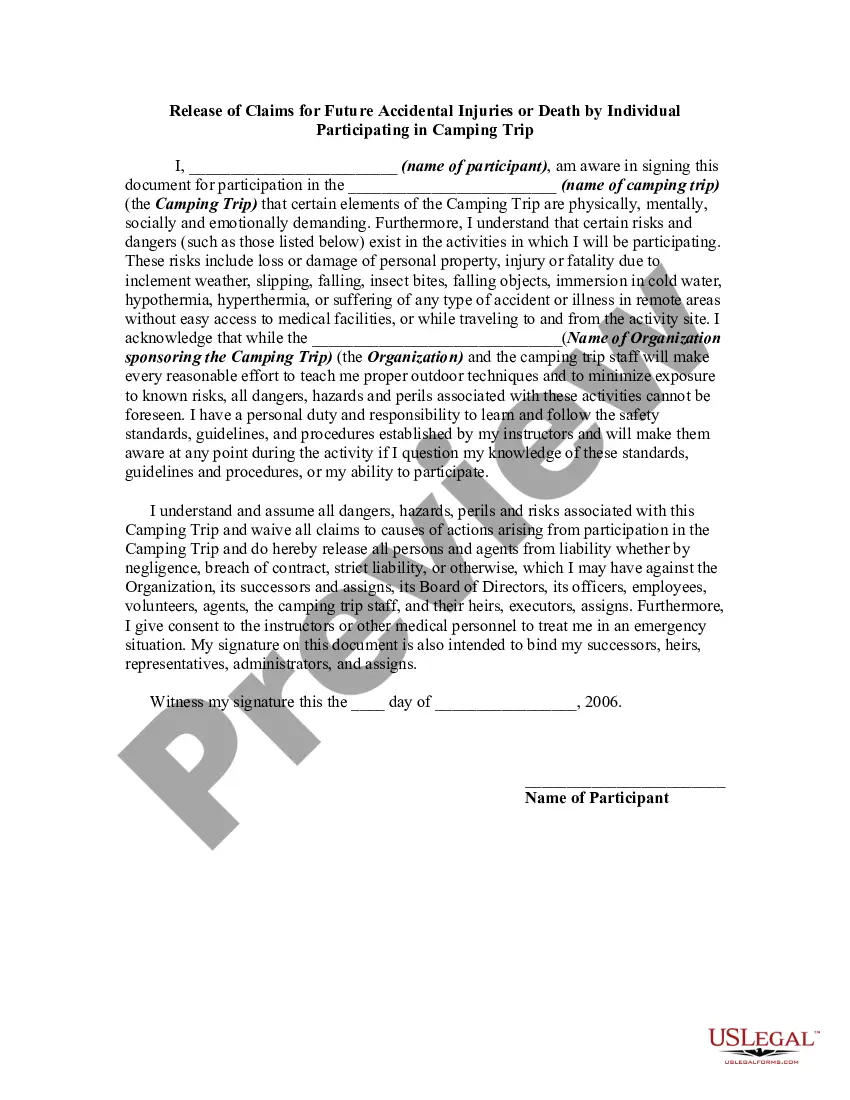
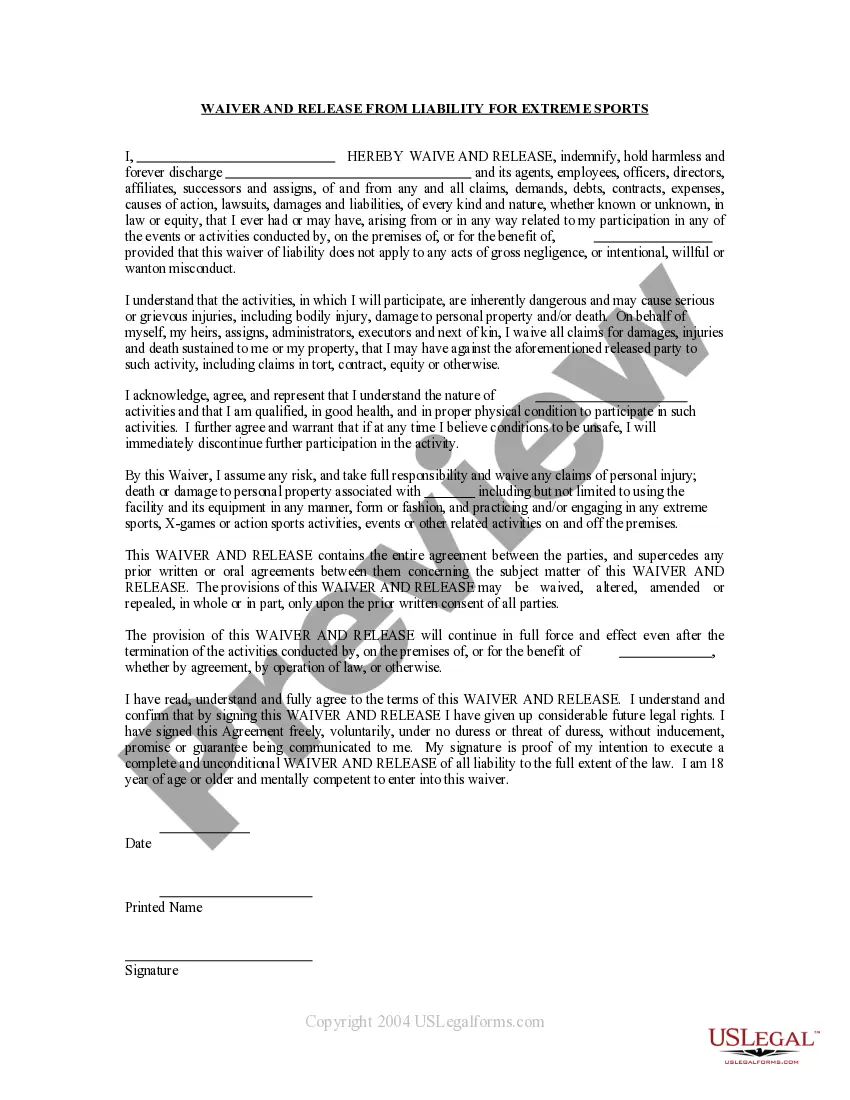
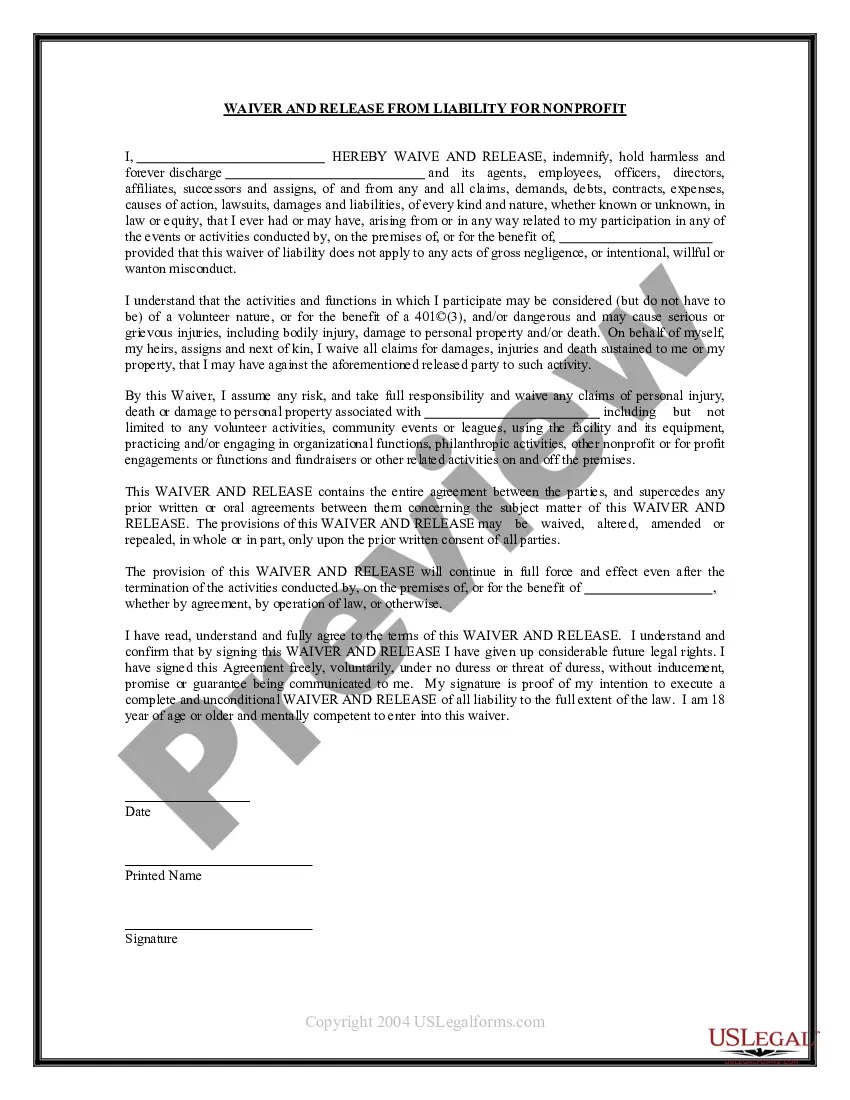
How to fill out Personal Injury Release By Individual From Responsibility For Participation In Inherently Dangerous Activity?
Are you in a scenario where you require documents for both business or personal purposes nearly every day.
There are numerous legal document templates available online, but locating reliable ones can be challenging.
US Legal Forms offers thousands of document templates, such as the California Personal Injury Release By Individual From Liability for Participation in Inherently Dangerous Activity, which can be tailored to meet federal and state regulations.
Once you locate the appropriate form, click Get now.
Choose the payment plan you want, fill in the required information to create your account, and pay for the transaction using your PayPal or Visa or Mastercard. Select a convenient file format and download your copy. Access all the document templates you have purchased in the My documents menu. You can obtain another copy of the California Personal Injury Release By Individual From Liability for Participation in Inherently Dangerous Activity anytime, if needed. Just click the desired form to download or print the document template. Utilize US Legal Forms, one of the largest collections of legal documents, to save time and avoid mistakes. The service provides professionally crafted legal document templates that can be utilized for diverse purposes. Create your account on US Legal Forms and start simplifying your life.
- If you are already acquainted with the US Legal Forms website and have an account, simply Log In.
- After that, you can download the California Personal Injury Release By Individual From Liability for Participation in Inherently Dangerous Activity template.
- If you do not have an account and wish to start using US Legal Forms, follow these instructions.
- Find the form you need and ensure it is for your correct region/state.
- Use the Preview button to review the form.
- Check the summary to confirm that you have selected the correct form.
- If the form does not match your requirements, utilize the Search field to find the form that meets your specifications.
Form popularity
FAQ
A waiver of responsibility for damage is a legal document in which an individual agrees to relinquish their right to claim compensation for injuries sustained during specific activities. In California, such waivers often accompany a Personal Injury Release By Individual From Responsibility for Participation in Inherently Dangerous Activity. This means that by signing, you acknowledge the risks associated with the activity and agree not to hold the organizers or facilitators liable for any resulting harm. Knowing the terms of this waiver can help protect your legal interests and clarify your responsibilities.
The inherently dangerous activity doctrine refers to the principle that certain activities carry inherent risks, which can affect liability in personal injury cases. When participating in these activities, participants often acknowledge the potential dangers involved. This legal concept is particularly relevant in California, where a Personal Injury Release By Individual From Responsibility for Participation in Inherently Dangerous Activity may limit the liability of service providers. Understanding this doctrine is crucial for anyone engaged in risky activities, as it impacts your rights and responsibilities.
To ensure a liability release is enforceable in California, it must satisfy three fundamental requirements. First, the release must be clear and unequivocal in its language. Second, the release must involve a voluntary agreement, where the signer is of sound mind and not coerced. Lastly, it must not violate public interest or involve gross negligence. Crafting a comprehensive California Personal Injury Release By Individual From Responsibility for Participation in Inherently Dangerous Activity can help fulfill these requirements effectively.
In California, a waiver of liability must meet specific requirements to be valid. It must be written in clear, understandable language, avoiding any jargon that could mislead the signer. Additionally, it should specifically describe the activity and the risks involved. This clarity is crucial, especially when drafting a California Personal Injury Release By Individual From Responsibility for Participation in Inherently Dangerous Activity to ensure participants know their rights.
Proposition 51 addresses how damages are allocated in personal injury cases in California. It establishes a proportional liability system, meaning that defendants are only responsible for their share of the damages. This reform helps ensure fairness in cases where multiple parties are involved. Understanding Prop 51 is vital when considering a California Personal Injury Release By Individual From Responsibility for Participation in Inherently Dangerous Activity, particularly in cases involving shared responsibility.
A waiver and a release of liability serve similar but distinct purposes. A waiver typically refers to the relinquishment of a right to sue for future claims, while a release of liability indicates the individual agrees to forgo claims that arise from past incidents. Both are crucial in scenarios involving risky activities, such as sporting events, where a California Personal Injury Release By Individual From Responsibility for Participation in Inherently Dangerous Activity is necessary for participant safety.
For a release to be enforceable in California, it must contain specific components. The language used should clearly indicate the scope of the release and must be voluntarily signed by the individual. Furthermore, it cannot cover intentional acts or gross negligence. A solid California Personal Injury Release By Individual From Responsibility for Participation in Inherently Dangerous Activity provides clarity on these points, ensuring the release holds up in court.
A liability waiver becomes enforceable when it meets several legal standards. It must be clear and unambiguous, outlining the rights being waived. Additionally, the waiver must not violate public policy, and the person signing it must fully understand its terms. When participants engage in inherently dangerous activities, a California Personal Injury Release By Individual From Responsibility for Participation in Inherently Dangerous Activity can protect organizers from liability.
In California, the tort of conversion requires three key elements. First, there must be an ownership or right to possession of the property in question. Second, the defendant must have intentionally interfered with that property, either by taking it or controlling it. Lastly, the interference must have caused a significant change in the condition of the property, thereby depriving the owner of its use. A California Personal Injury Release By Individual From Responsibility for Participation in Inherently Dangerous Activity does not typically apply in conversion cases, but understanding this tort can be important.