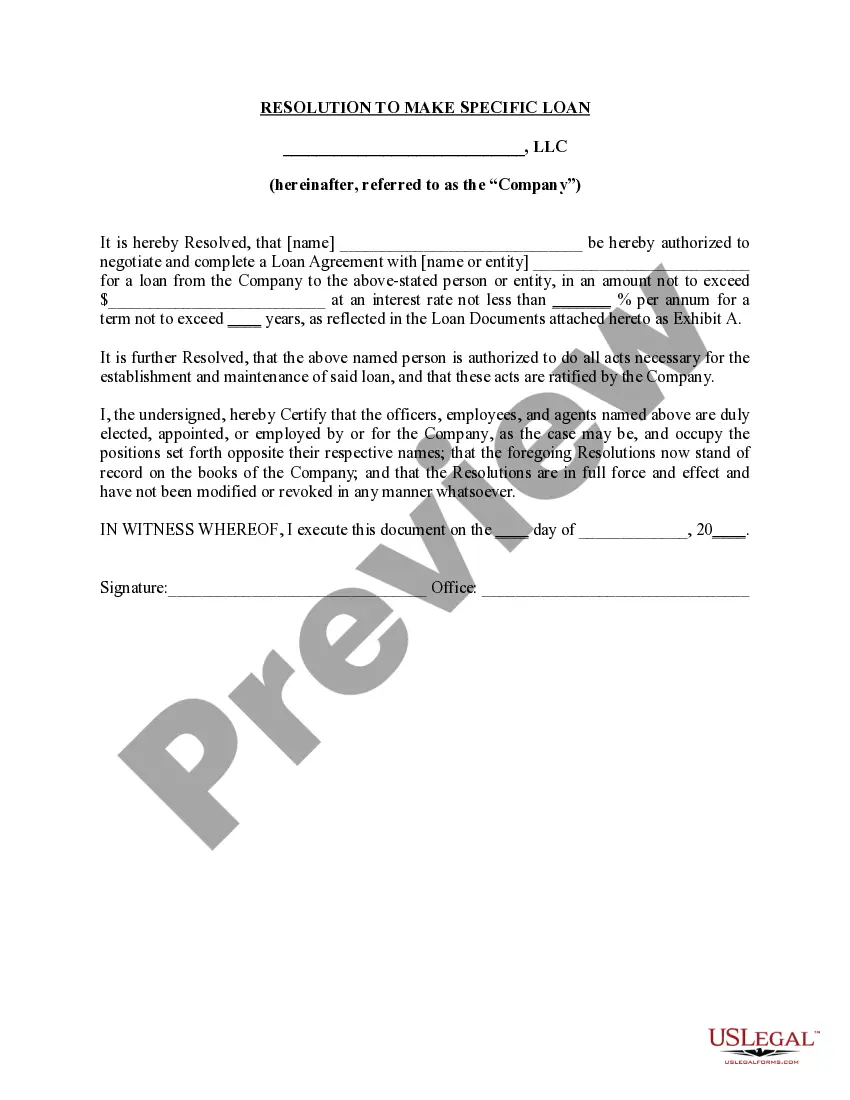
California Written Warning/Discharge Notice
Description
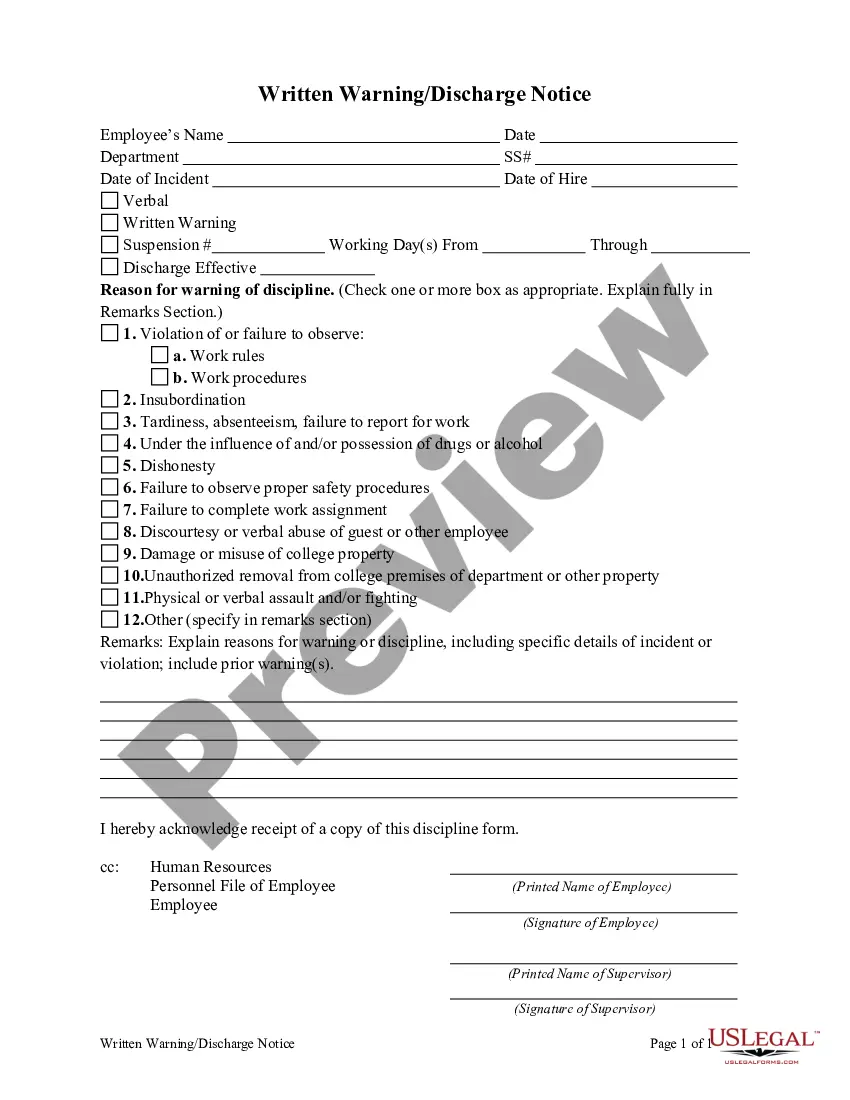
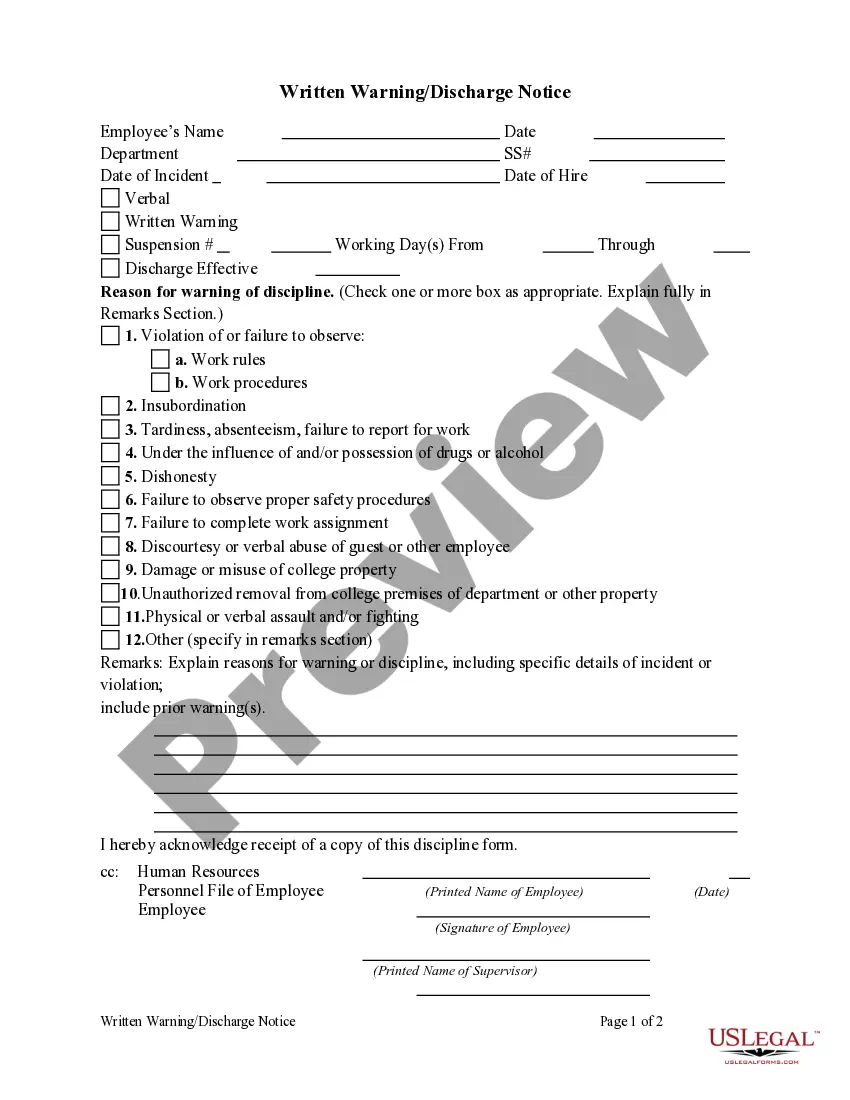
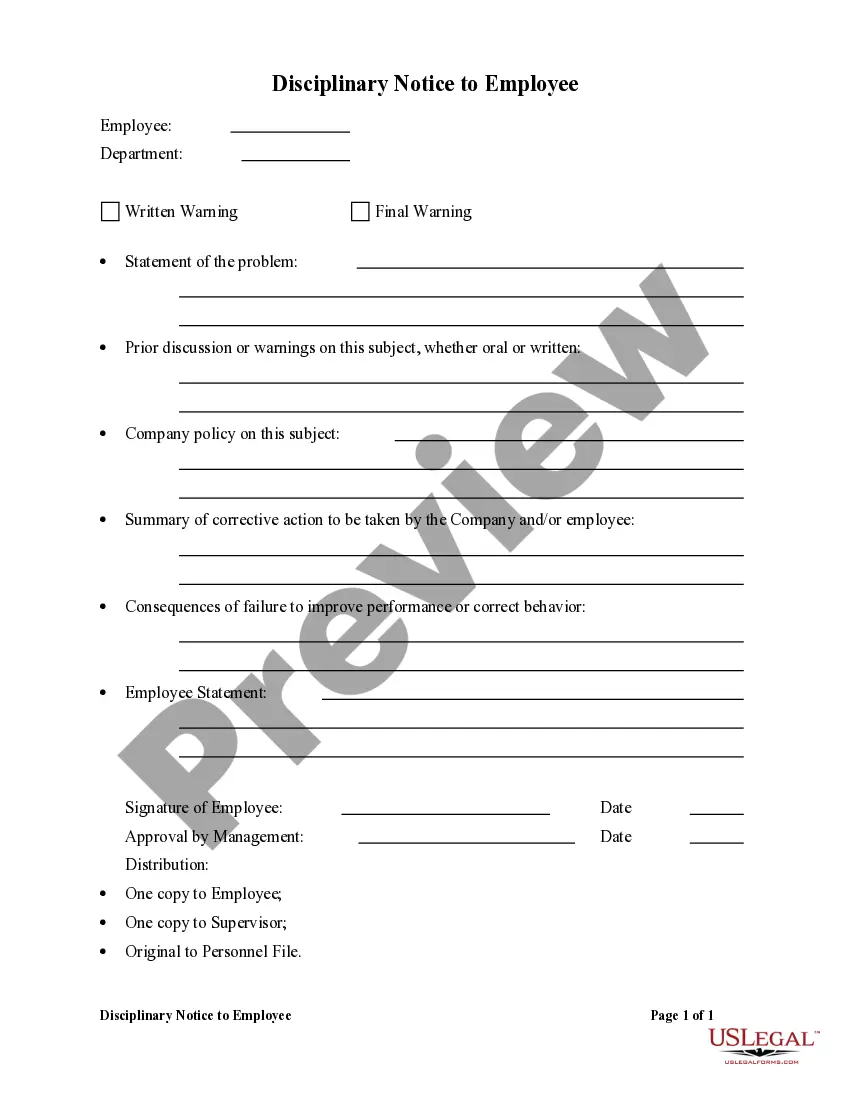
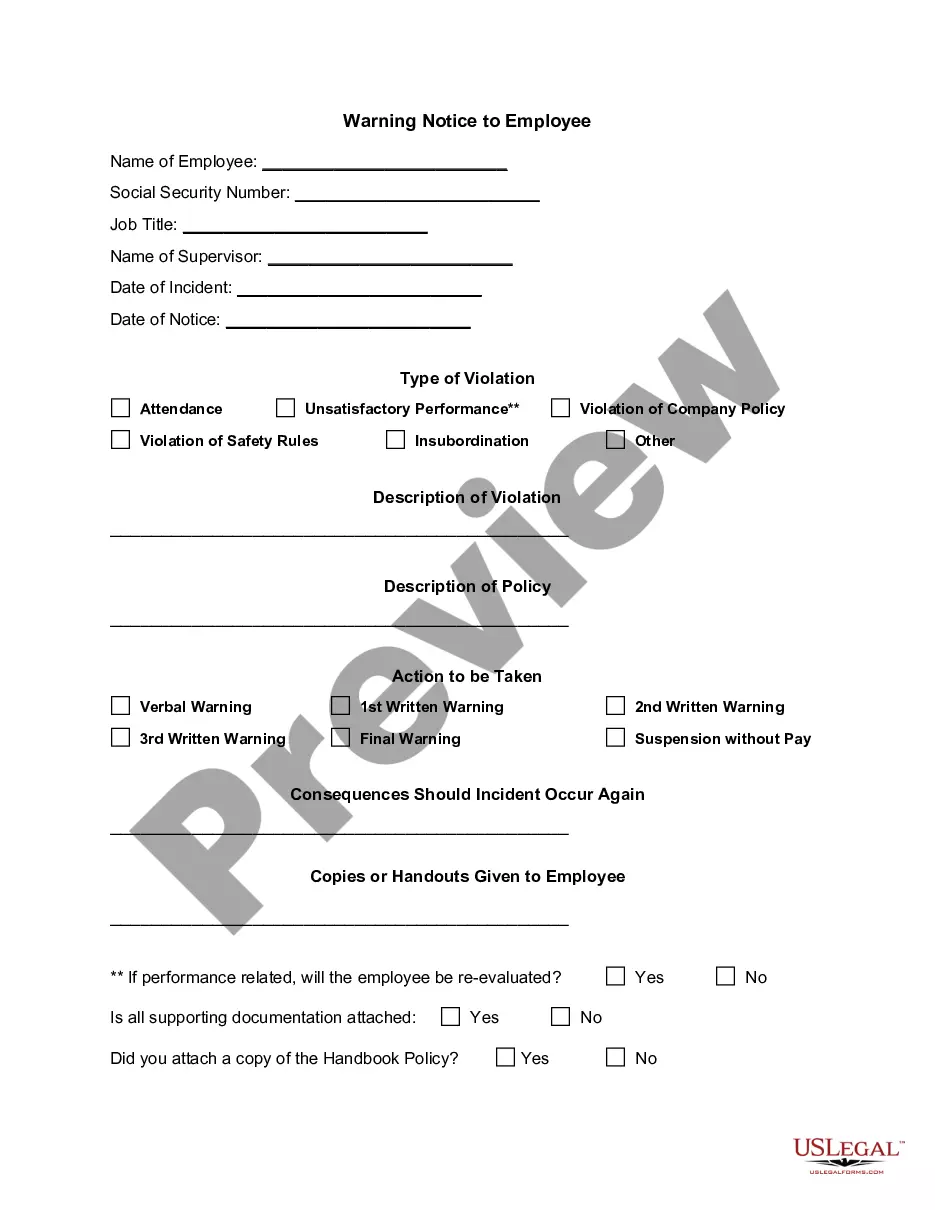
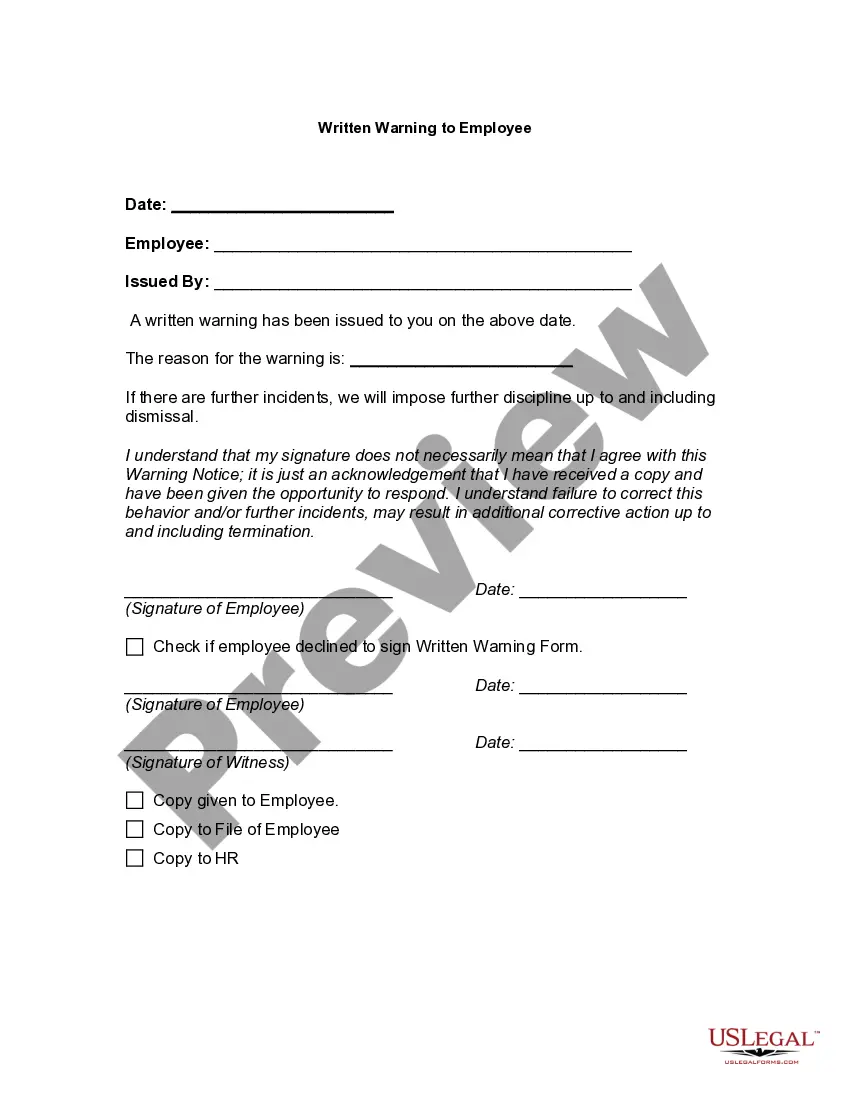
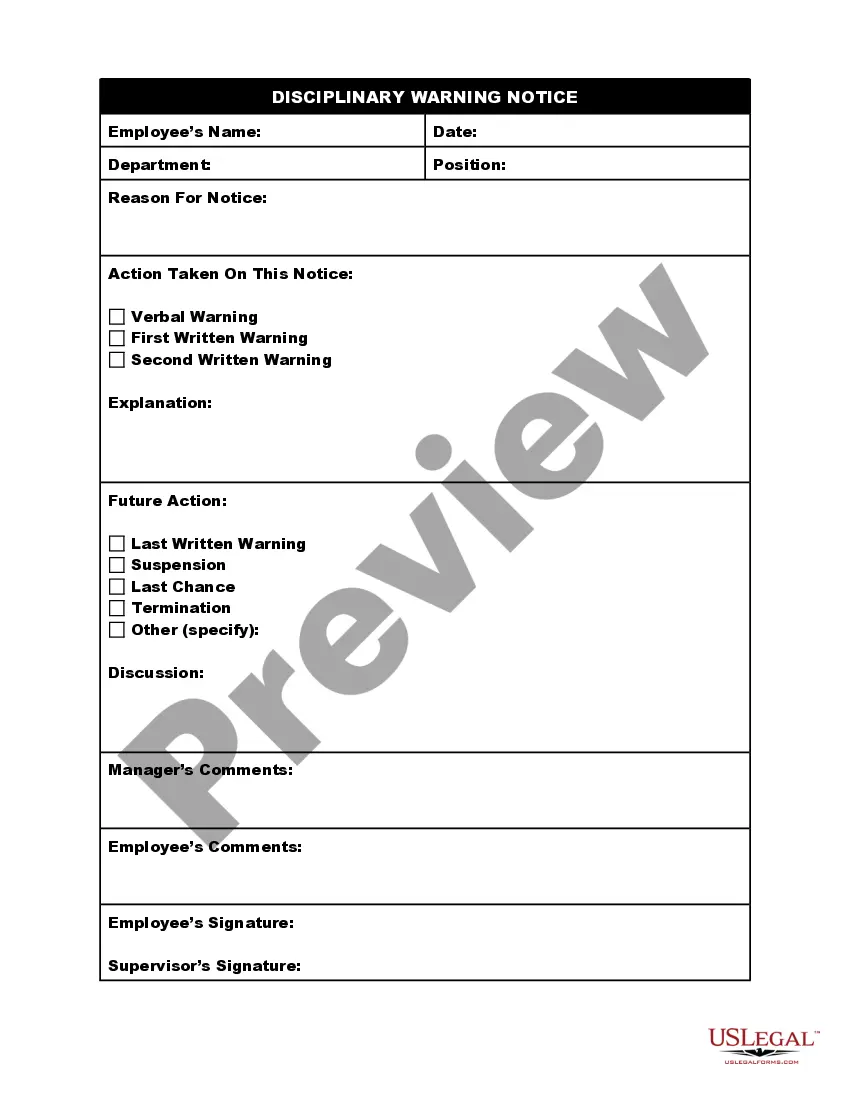
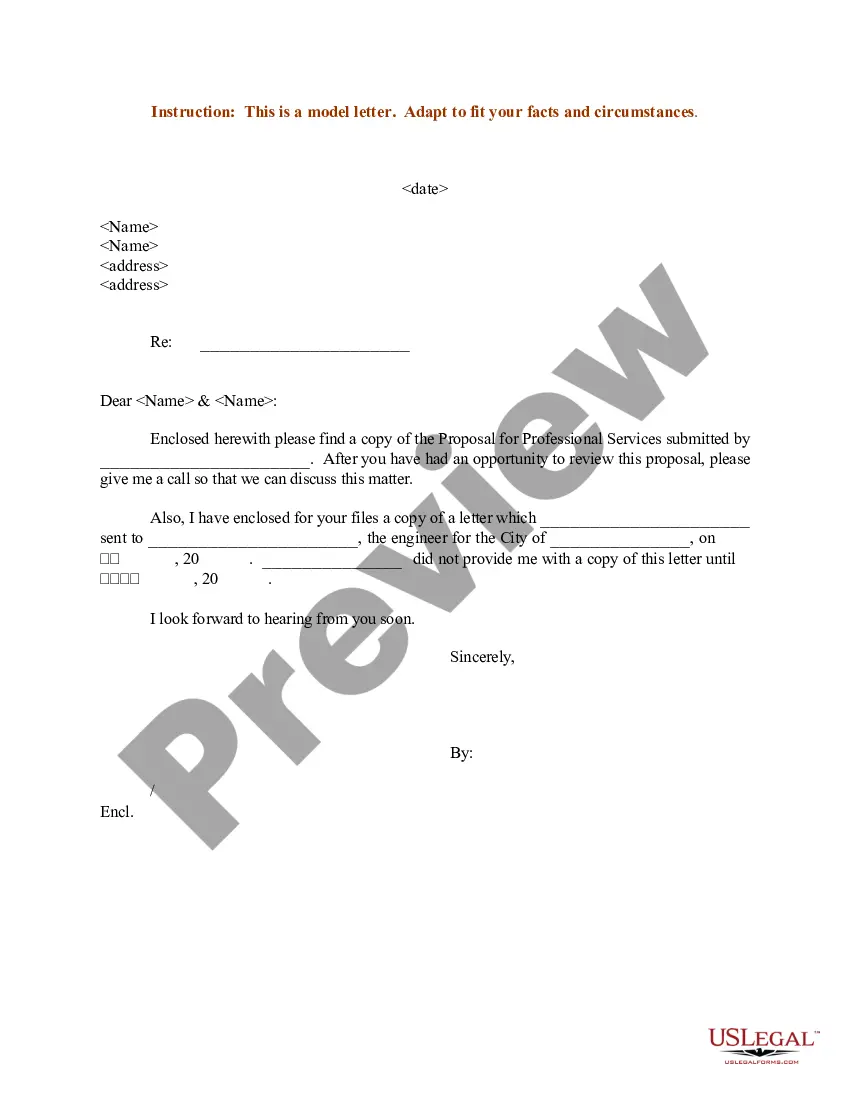
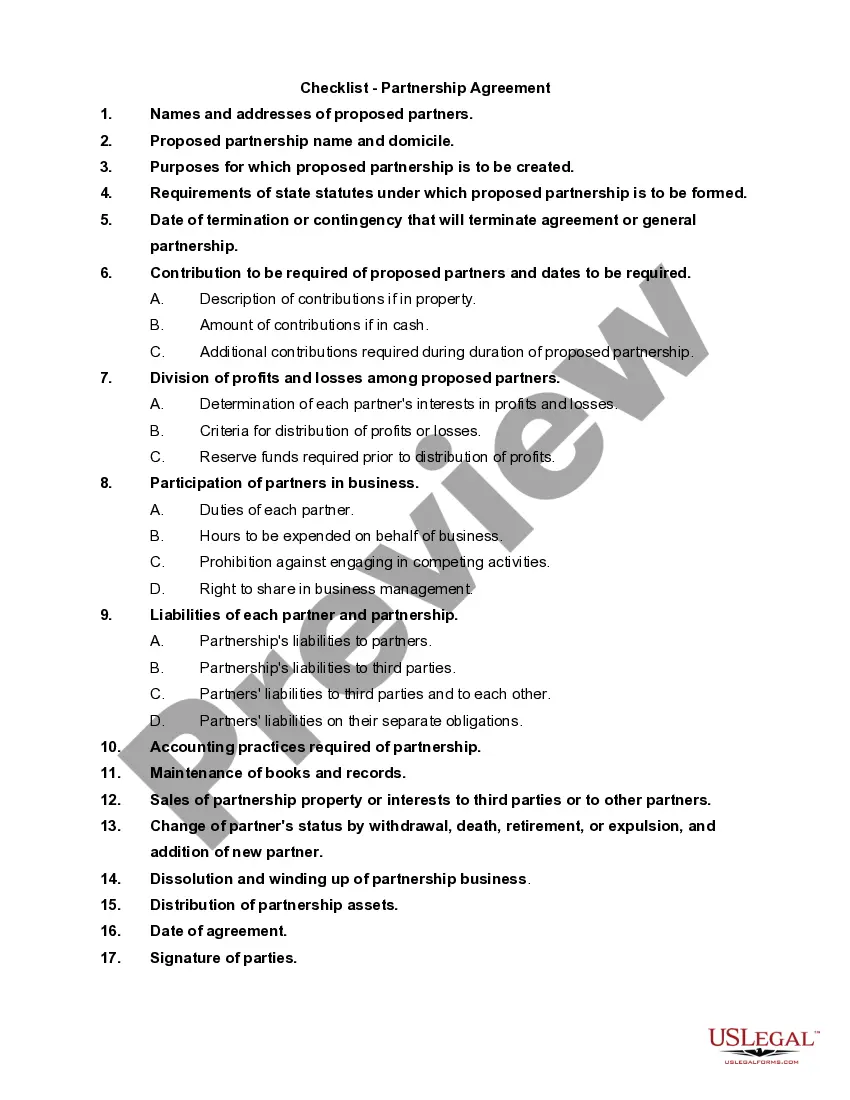




How to fill out Written Warning/Discharge Notice?
Selecting the optimal legal document format can be quite challenging.
Clearly, there are numerous templates available online, but how do you locate the legal type you require.
Utilize the US Legal Forms website. The platform offers a vast array of templates, such as the California Written Warning/Discharge Notice, which can be utilized for both business and personal purposes.
You can review the form using the Review button and examine the form details to confirm it is suitable for you.
- All templates are examined by experts and meet state and federal regulations.
- If you are already registered, Log In to your account and then click the Download button to access the California Written Warning/Discharge Notice.
- Use your account to browse through the legal forms you have previously purchased.
- Navigate to the My documents tab of your account and obtain another copy of the document you need.
- For new users of US Legal Forms, here are simple instructions to follow.
- First, ensure you have selected the correct form for your city/state.
Form popularity
FAQ
A written warning should be issued when an employee fails to meet specific performance standards or violates company policies. It serves as a crucial step in the disciplinary process, offering a clear opportunity for improvement. If you receive a California Written Warning/Discharge Notice, it is meant to foster communication about expectations and provide guidance on how to avoid further issues. Always take these warnings as a chance for growth.
An unfair written warning may occur when an employer issues a notice without valid grounds or evidence to support it. Factors such as personal bias, retaliation, or insufficient documentation can contribute to an unfair warning. If you believe you received a California Written Warning/Discharge Notice unjustly, it is advisable to consult resources or legal assistance to evaluate your options and protect your rights.
Yes, it is possible to receive a written warning without a prior verbal warning in California. Although most employers prefer a stepped approach to discipline, they have the discretion to skip verbal warnings if they choose. If you find yourself in receipt of a California Written Warning/Discharge Notice, reviewing the notice carefully can help you understand your employer's perspective and expectations.
A written warning is a serious document that serves as a formal notice of performance issues. It indicates that your employer has documented concerns and may set the stage for potential disciplinary action. Receiving a California Written Warning/Discharge Notice signifies that improvements are necessary to avoid further consequences. It's a good idea to take it seriously and address the issues raised.
A verbal warning is not the same as a written warning. A verbal warning involves spoken communication about performance or behavior issues, while a written warning is a documented statement that outlines specific concerns and the consequences of not improving. This distinction is important because a California Written Warning/Discharge Notice can have significant effects on your employment status. Always keep an eye on any notices you receive.
Yes, in California, an employer can issue a written warning before providing a verbal warning. While it is common to use verbal warnings first, it is not a legal requirement. Employers have the freedom to address issues in a manner they deem appropriate. If you receive a California Written Warning/Discharge Notice, it is essential to understand the context and implications of that notice.
Yes, in California, an employer can lay off an employee without notice due to at-will employment laws. However, when laying off employees, issuing a California Written Warning/Discharge Notice may be advisable to ensure that employees are aware of their status and any benefits they may be entitled to. Clear communication during a layoff can foster goodwill and reduce potential disputes.
California law does not specifically require a termination letter. Nevertheless, providing a formal California Written Warning/Discharge Notice can help clarify the reasons for termination and protect the employer's interests. Such a letter can also help the employee understand their rights and any applicable benefits.
While California employers are not legally required to provide written notice of termination, issuing a California Written Warning/Discharge Notice can help enhance communication and prevent misunderstandings. This documentation serves as a formal record of the termination reasons, which can be beneficial during potential legal issues. It is always good practice to clarify the termination process for both parties.
California does not mandate a specific notice period for at-will employment termination. However, providing notice can maintain a positive relationship and might benefit the employer in certain situations. Utilizing a California Written Warning/Discharge Notice can help clarify expectations and responsibilities leading up to termination.