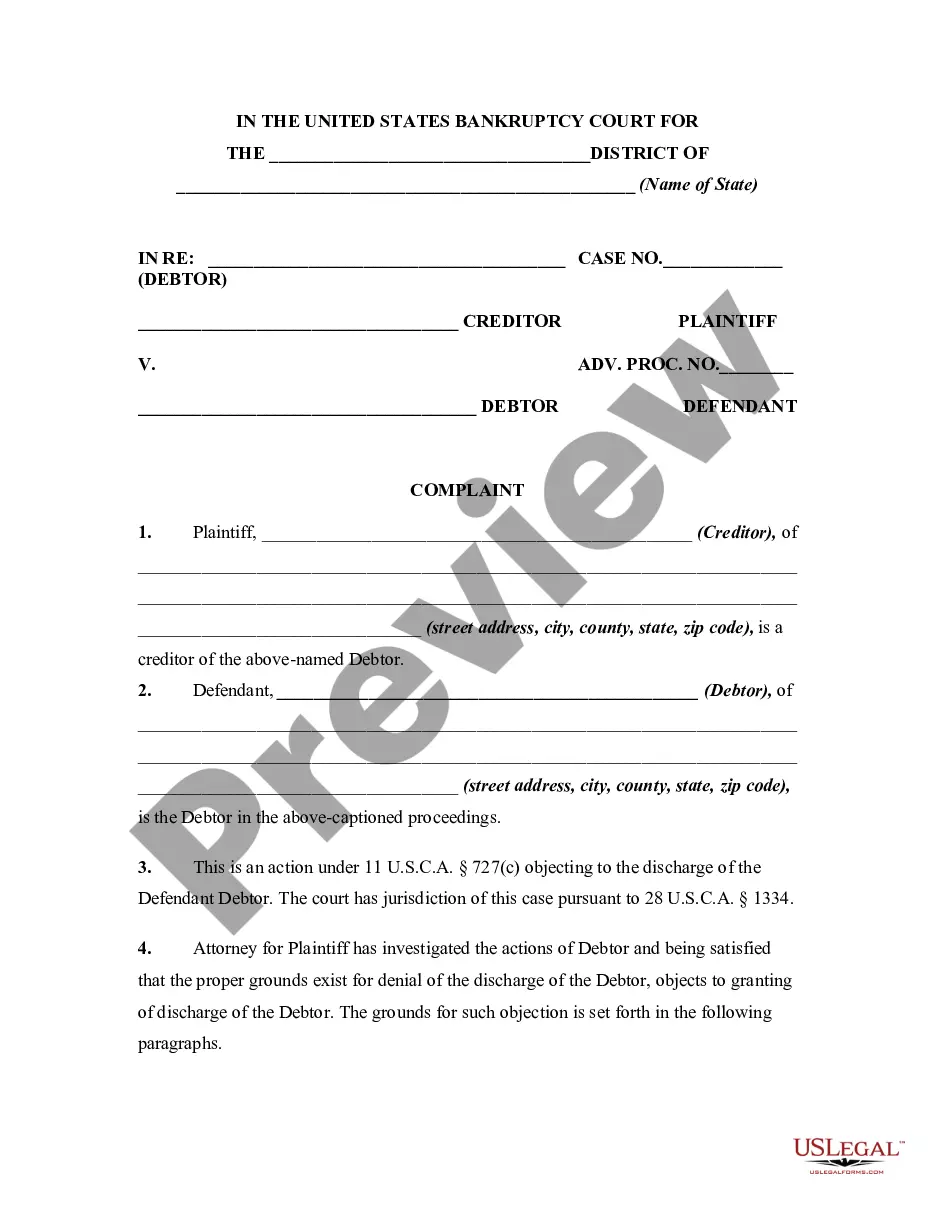
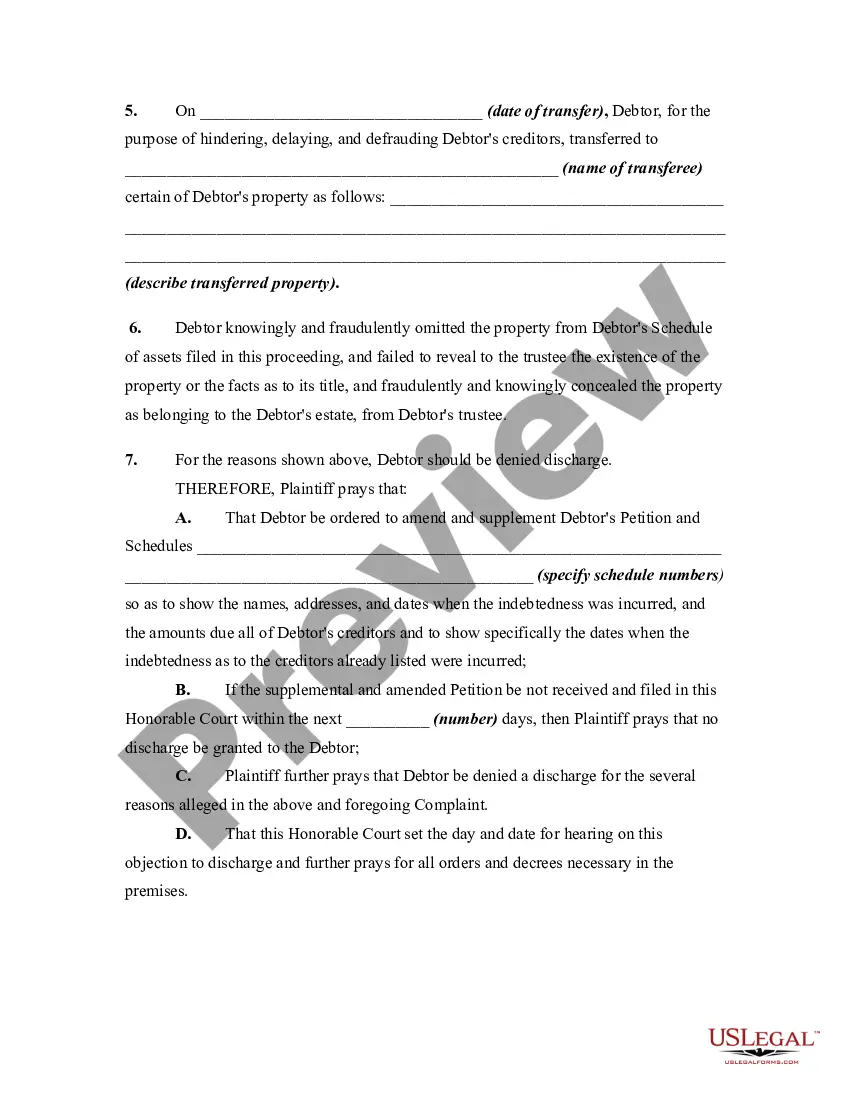
The decree of the bankruptcy court which terminates the bankruptcy proceedings is generally a discharge that releases the debtor from most debts. A bankruptcy court may refuse to grant a discharge under certain conditions.
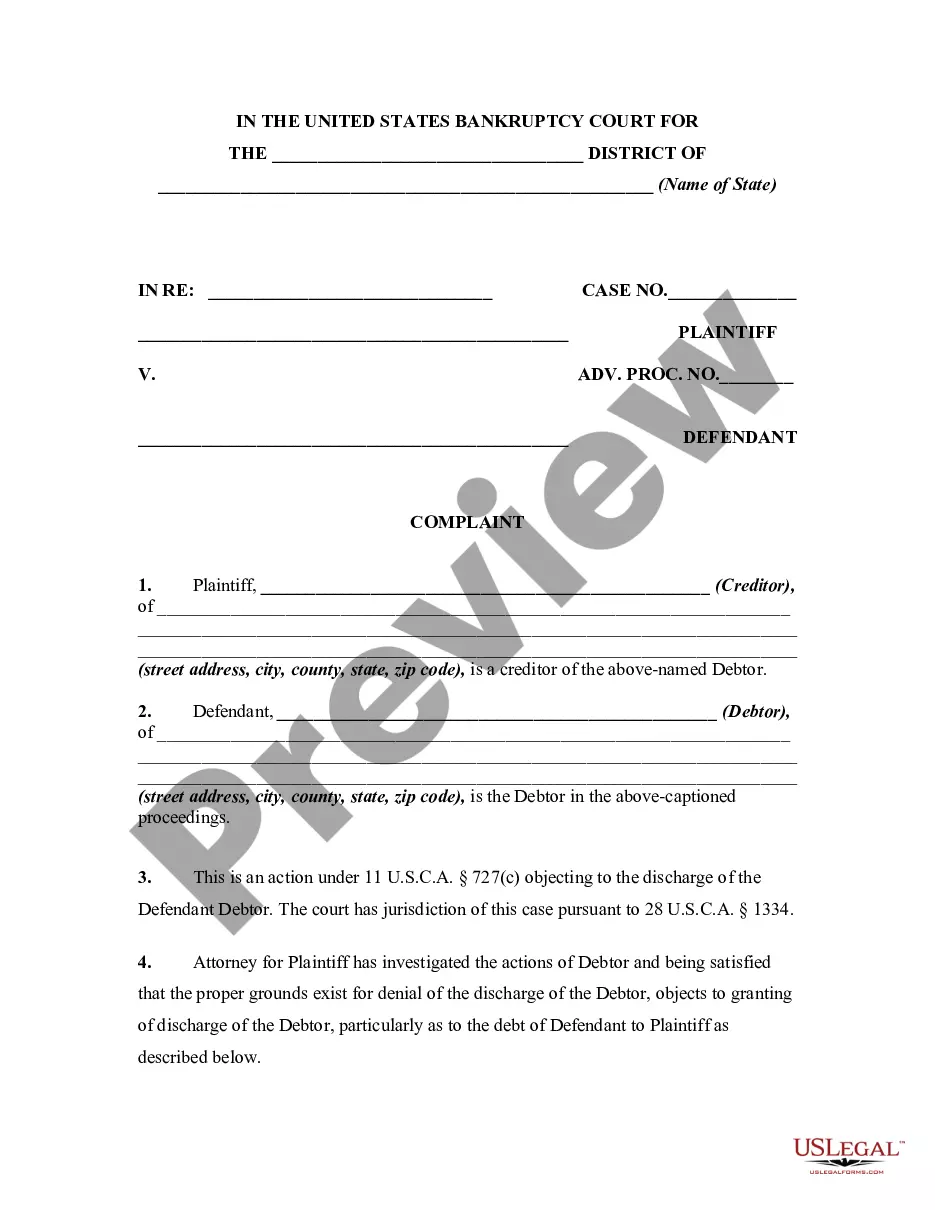
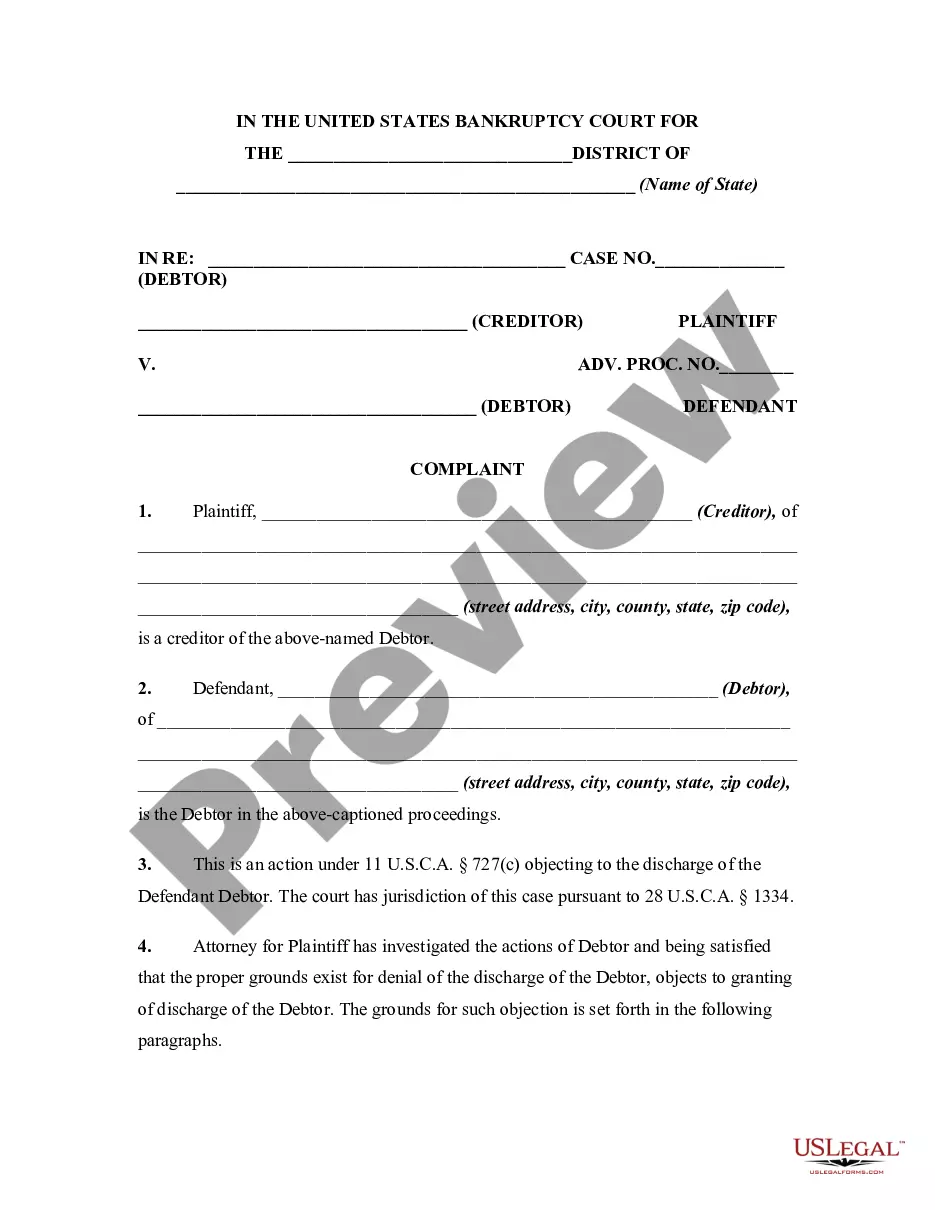
California Complaint Objecting to Discharge in Bankruptcy Proceedings for Concealment by Debtor and Omitting from Schedules Fraudulently Transferred Property
State:
Multi-State
Control #:
US-01087BG
Format:
Word;
Rich Text
Instant download
Description
Free preview
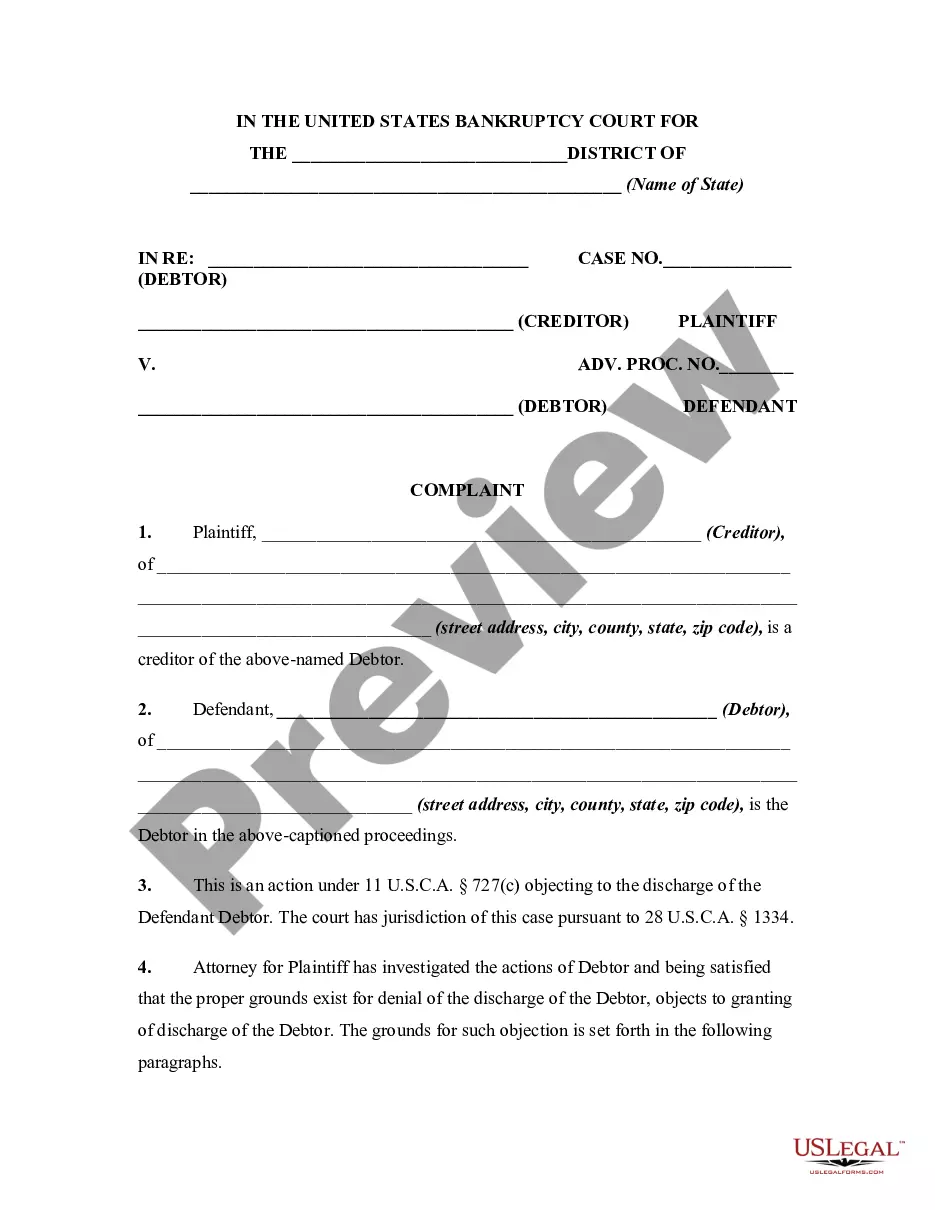
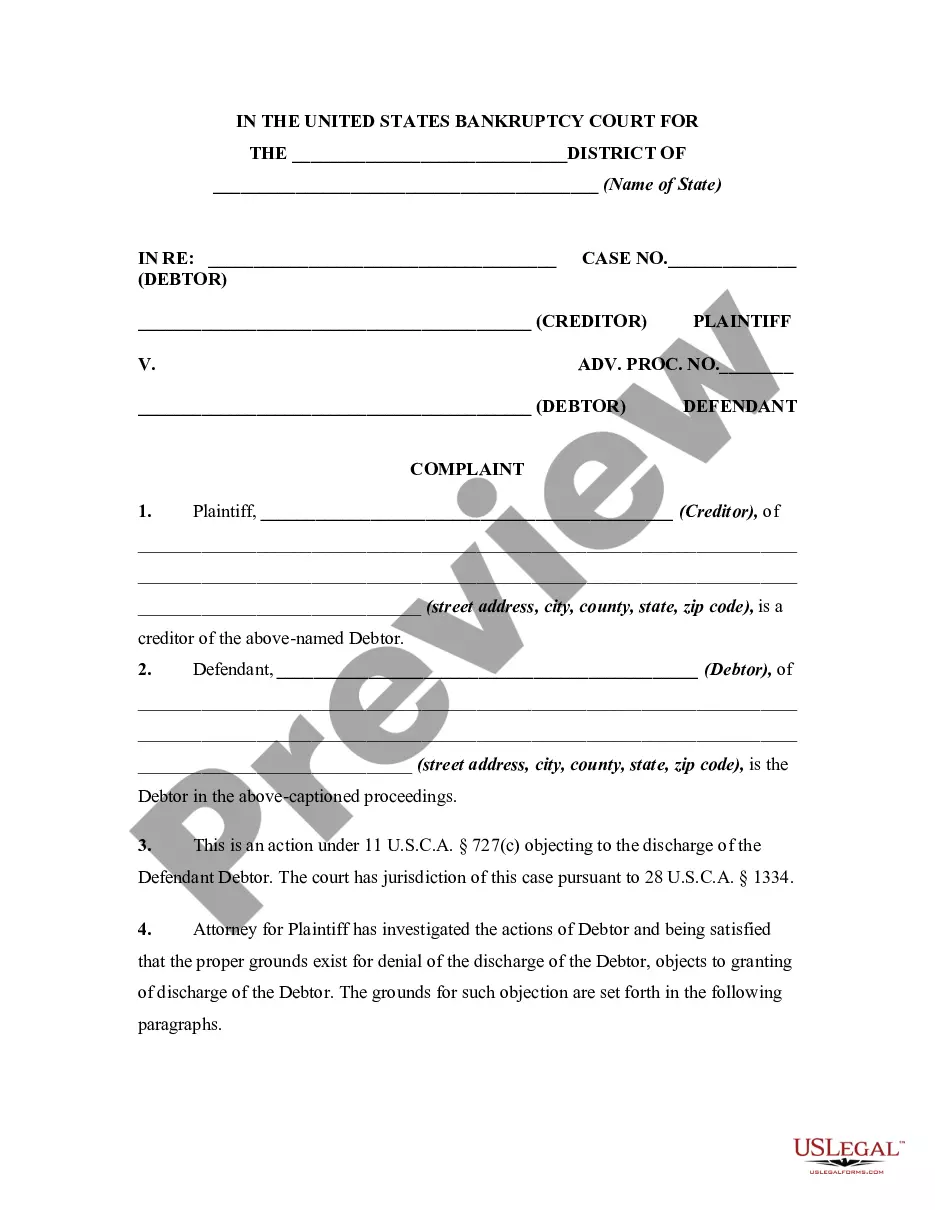


How to fill out Complaint Objecting To Discharge In Bankruptcy Proceedings For Concealment By Debtor And Omitting From Schedules Fraudulently Transferred Property?
If you want to finish, download, or print valid document templates, utilize US Legal Forms, the largest collection of legal forms, available online.
Leverage the site's straightforward and user-friendly search to locate the documents you need. Various templates for business and personal use are organized by categories and states, or keywords.
Use US Legal Forms to find the California Complaint Objecting to Discharge in Bankruptcy Proceedings for Concealment by Debtor and Omitting from Schedules with just a few clicks.
Step 5. Complete the transaction. You can use your credit card or PayPal account to finalize the transaction.
Step 6. Select the format of the legal form and download it to your device. Step 7. Complete, modify, print, or sign the California Complaint Objecting to Discharge in Bankruptcy Proceedings for Concealment by Debtor and Omitting from Schedules. Every legal document template you obtain is yours indefinitely. You will have access to each form you saved in your account. Click on the My documents section and select a form to print or download again. Finish and download, and print the California Complaint Objecting to Discharge in Bankruptcy Proceedings for Concealment by Debtor and Omitting from Schedules with US Legal Forms. There are numerous professional and state-specific forms available for your business or personal needs.
- If you are already a US Legal Forms user, Log In to your account and click the Download button to retrieve the California Complaint Objecting to Discharge in Bankruptcy Proceedings for Concealment by Debtor and Omitting from Schedules.
- You can also access forms you have previously saved in the My documents tab of your account.
- If you are using US Legal Forms for the first time, follow the steps below.
- Step 1. Ensure you have selected the form for the correct city/state.
- Step 2. Use the Preview option to review the form's content. Be sure to read the description.
- Step 3. If you are dissatisfied with the form, utilize the Search area at the top of the screen to find alternative versions of the legal form template.
- Step 4. After you have found the form you need, click the Purchase now button. Choose the pricing plan you prefer and enter your details to register for the account.
Form popularity
FAQ
Among the grounds for denying a discharge to a chapter 7 debtor are that the debtor failed to keep or produce adequate books or financial records; the debtor failed to explain satisfactorily any loss of assets; the debtor committed a bankruptcy crime such as perjury; the debtor failed to obey a lawful order of the ...
Debts not discharged include debts for alimony and child support, certain taxes, debts for certain educational benefit overpayments or loans made or guaranteed by a governmental unit, debts for willful and malicious injury by the debtor to another entity or to the property of another entity, debts for death or personal ...
If a debt arose from the debtor's intentional wrongdoing, the creditor can object to discharging it. This might involve damages related to a drunk driving accident, for example, or costs caused by intentional damage to an apartment or other property.
The debtor knowingly made a false oath or account, presented a false claim, etc. Failure to comply with a bankruptcy court order.
5 Reasons Your Bankruptcy Case Could Be Denied The debtor failed to attend credit counseling. Their income, expenses, and debt would allow for a Chapter 13 filing. The debtor attempted to defraud creditors or the bankruptcy court. A previous debt was discharged within the past eight years under Chapter 7.
In fact, the federal courts (which handle bankruptcy cases) list 19 different types of debt that are not eligible for discharge. 2 The most common ones are child support, alimony payments, and debts for willful and malicious injuries to a person or property.