California Qualified Personal Residence Trust One Term Holder
Description
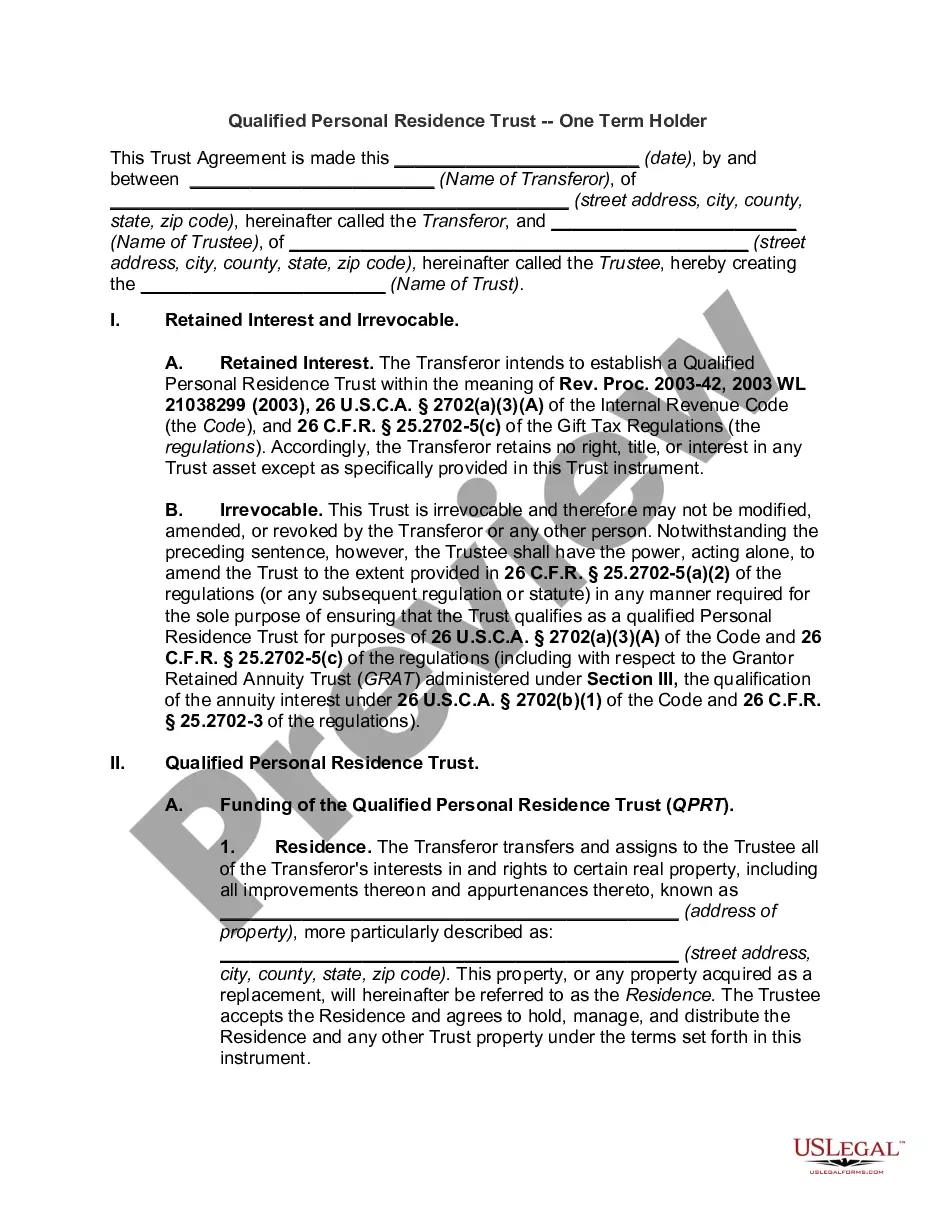
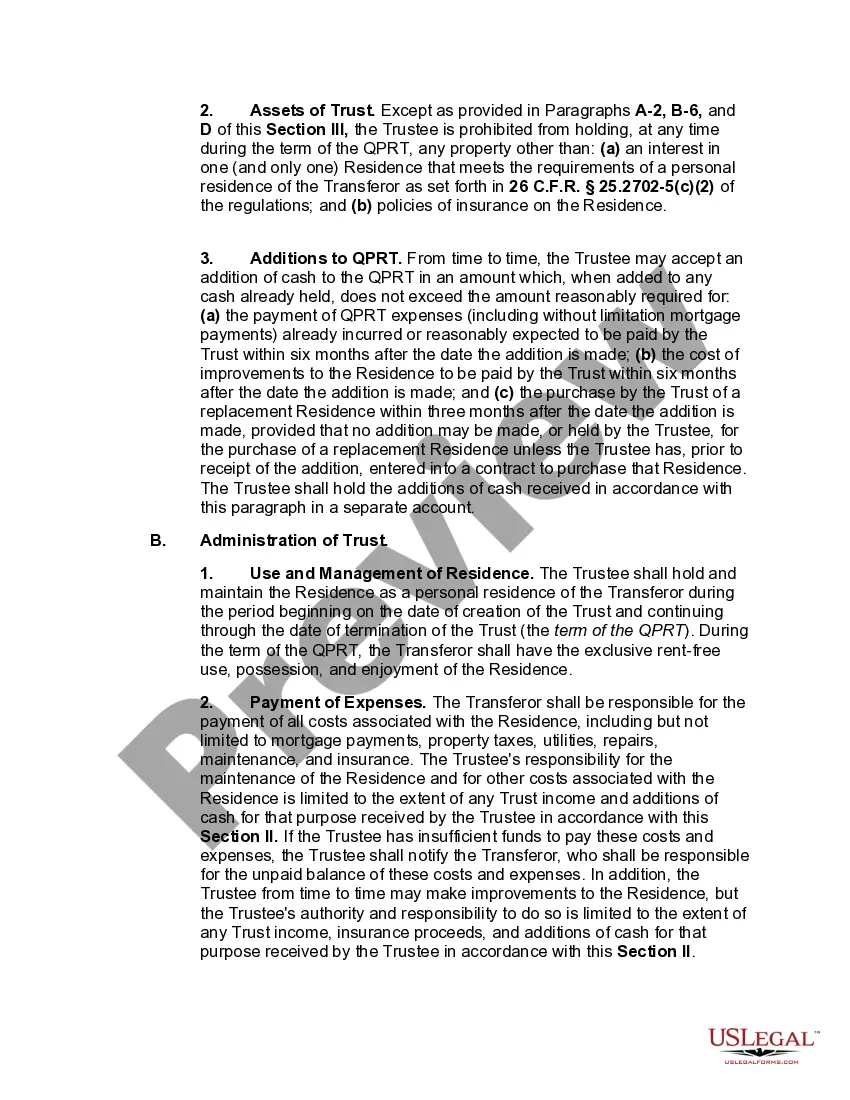
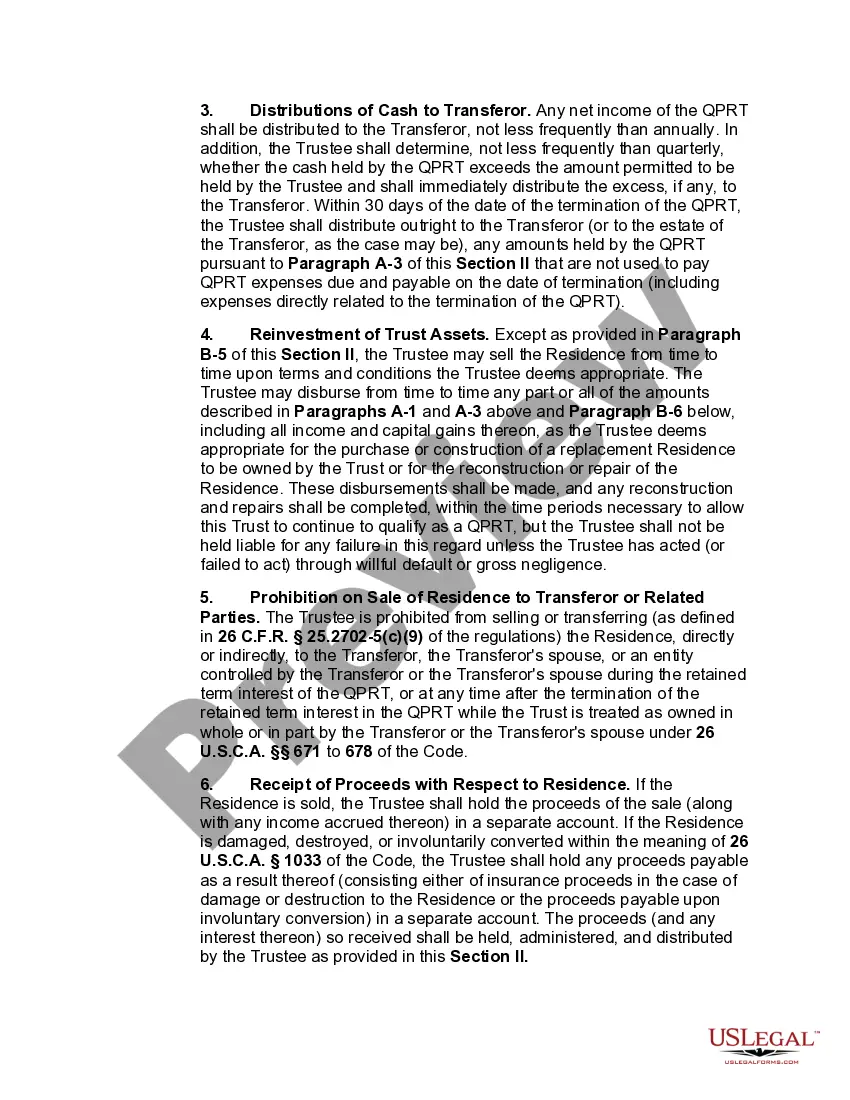
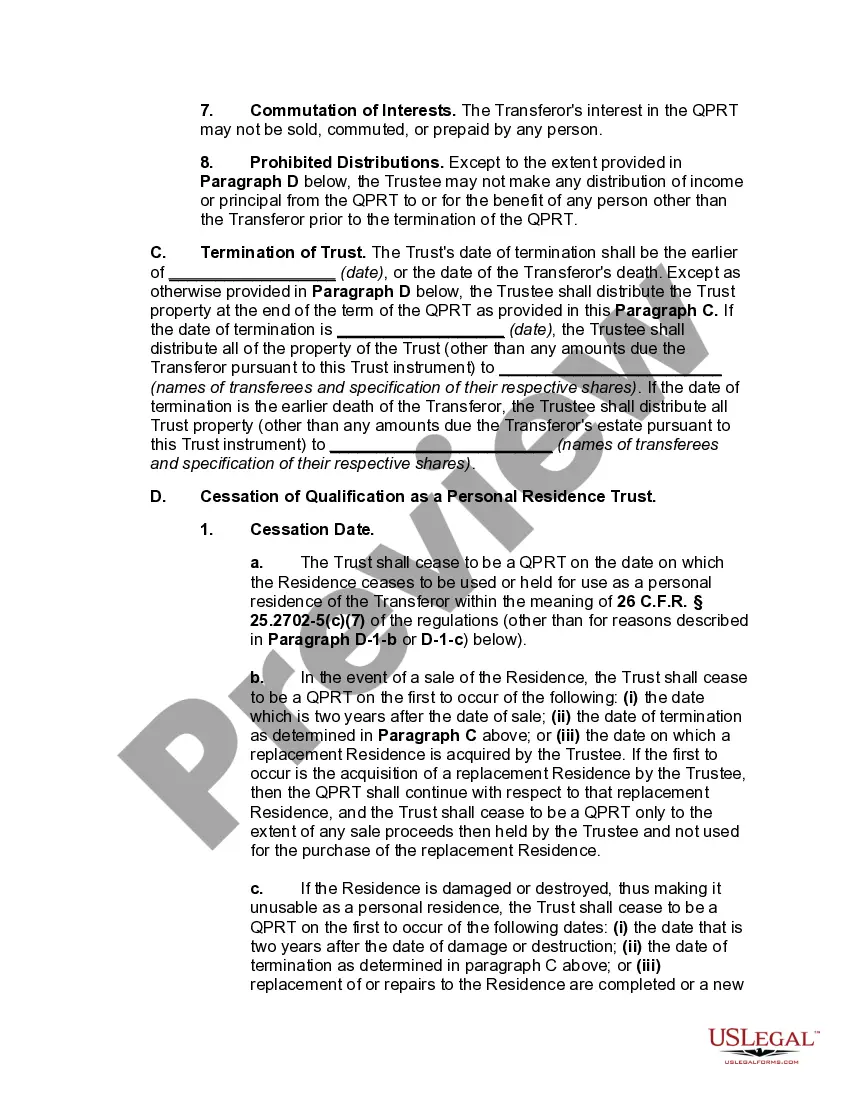
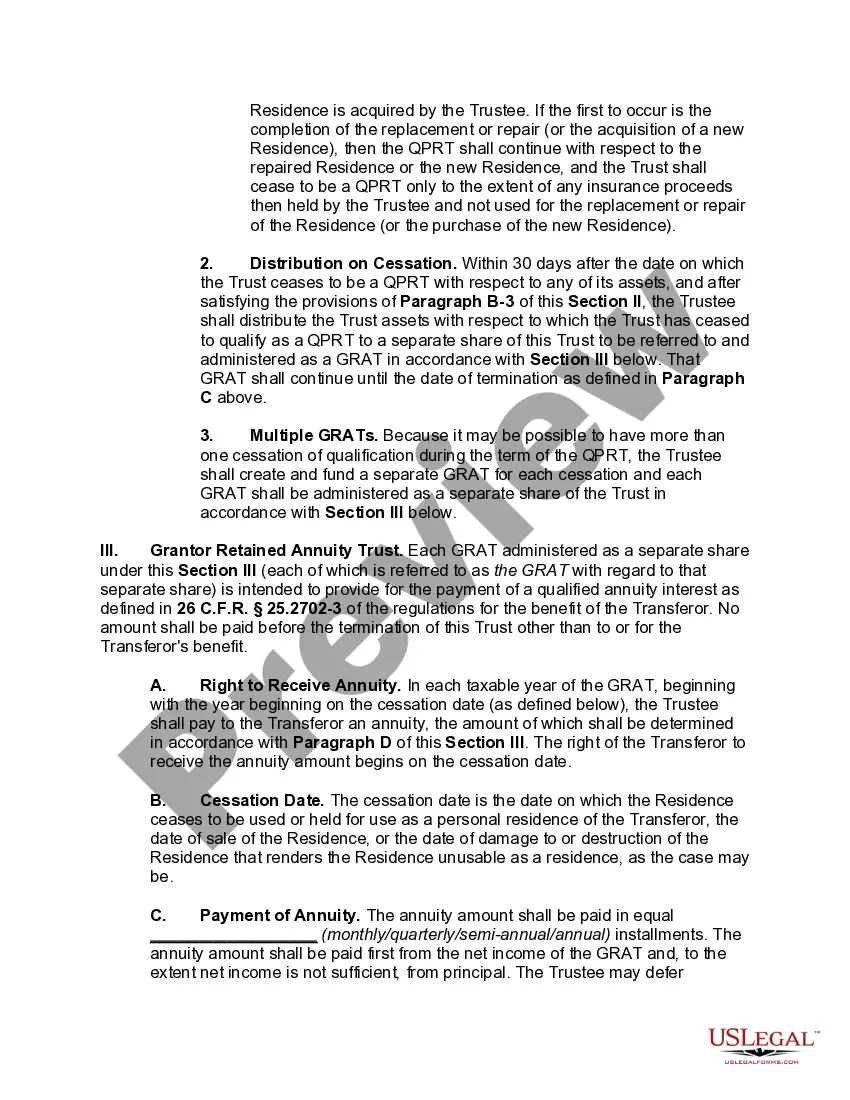
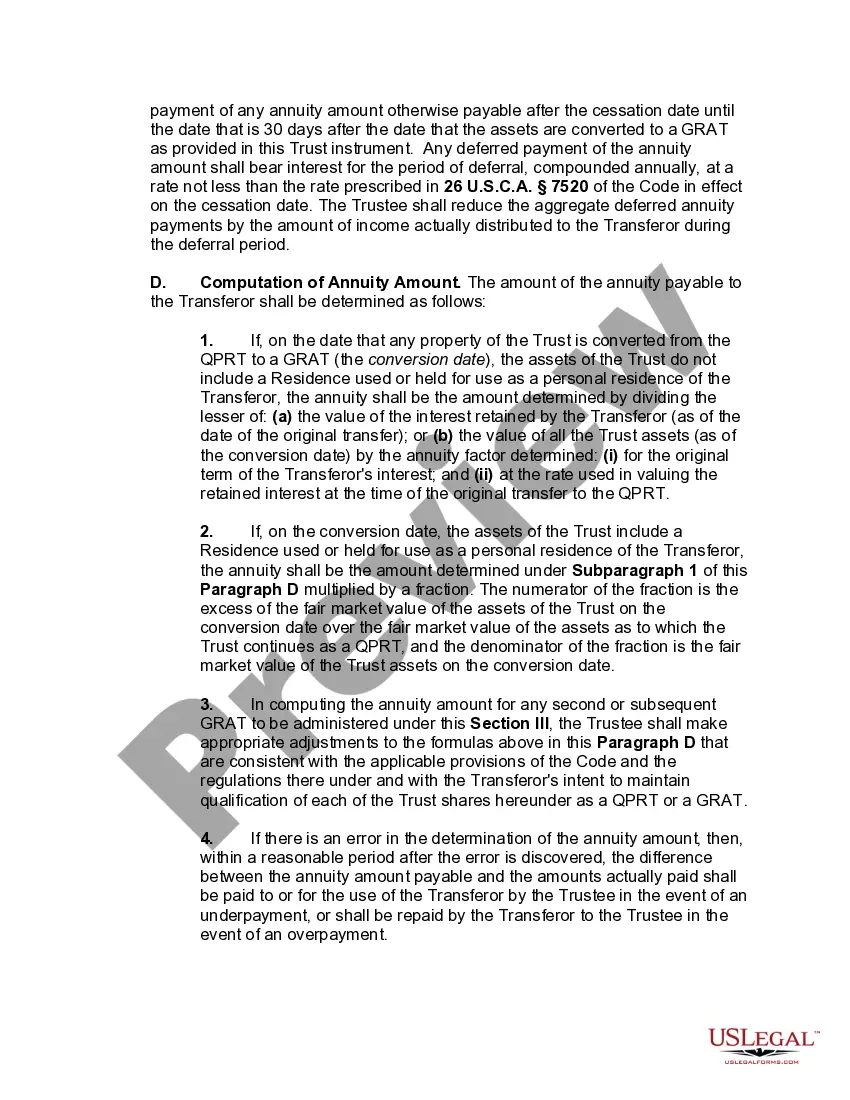
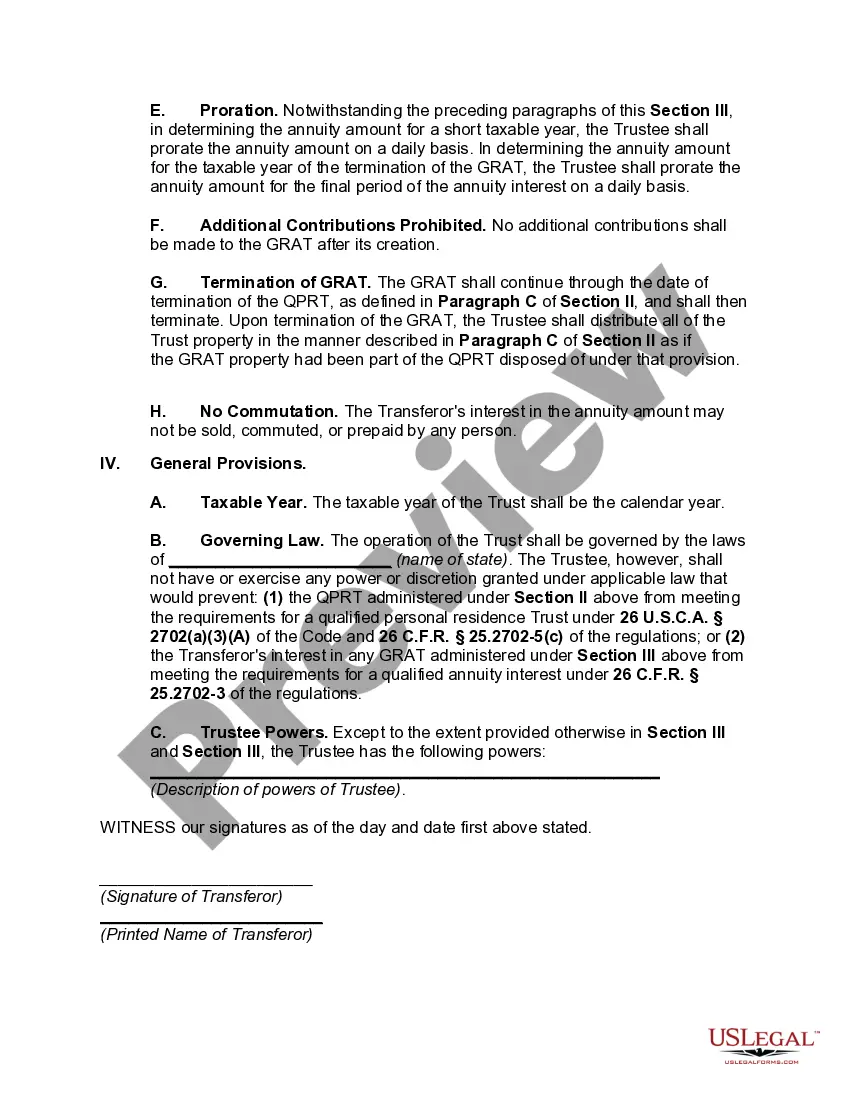

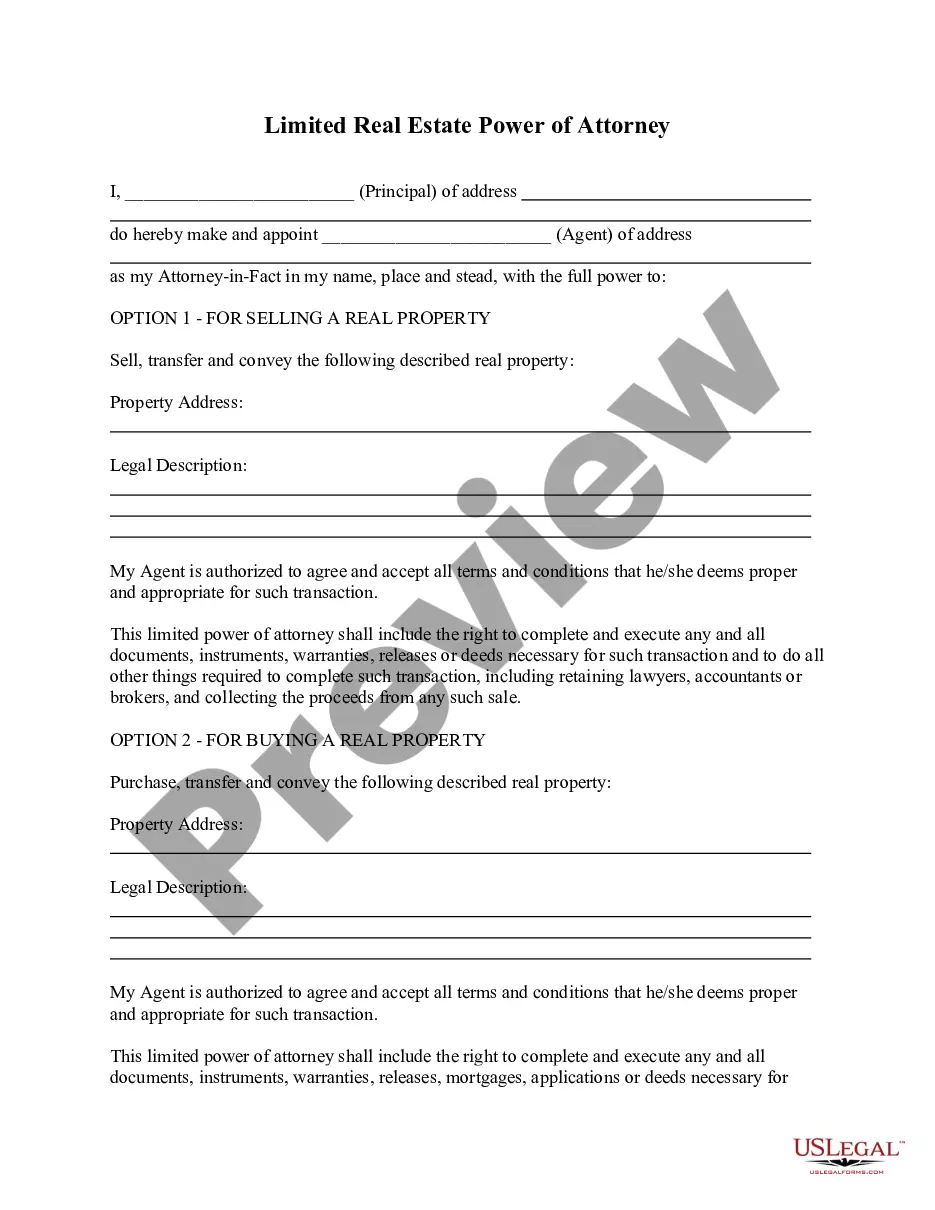
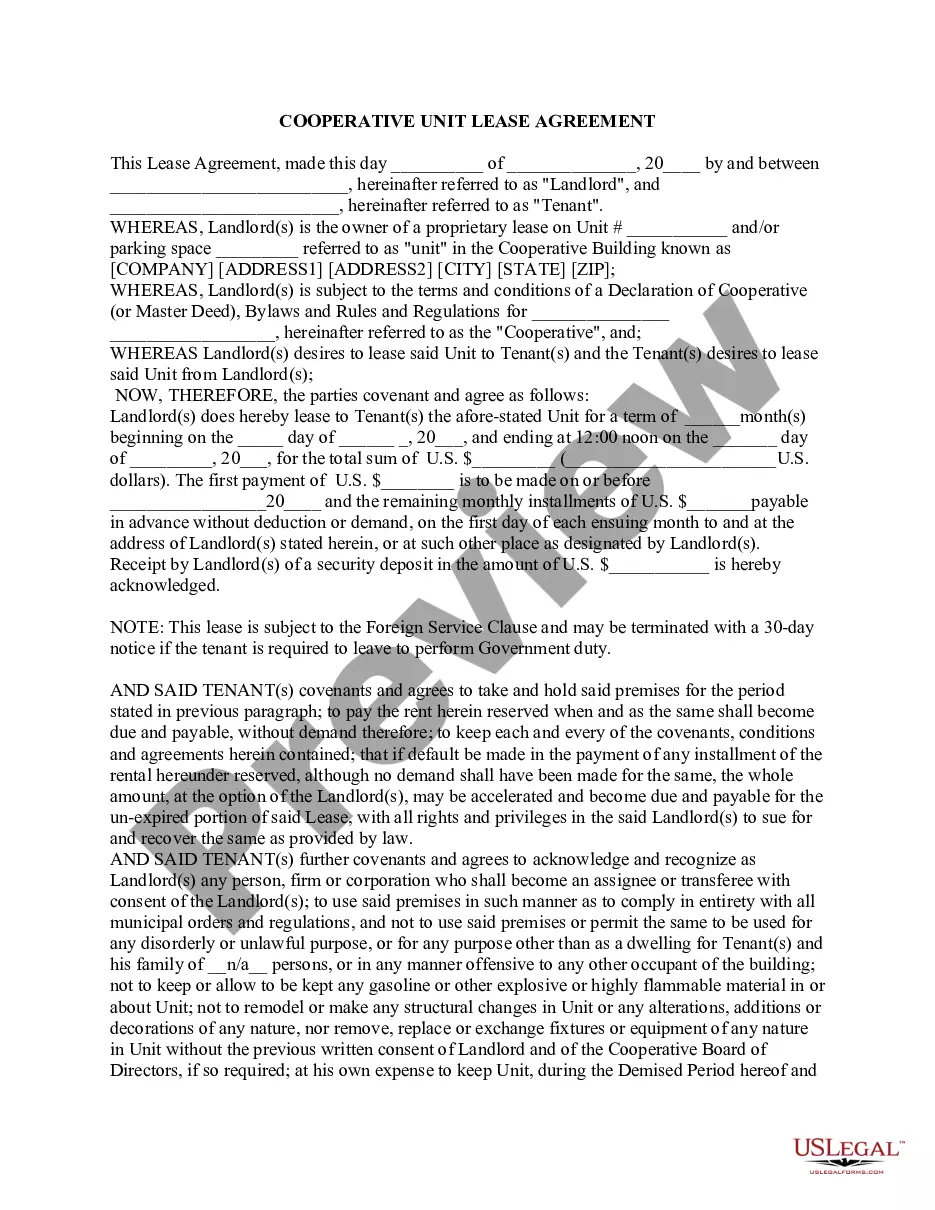

How to fill out Qualified Personal Residence Trust One Term Holder?
It is feasible to spend time online searching for the legal document template that satisfies the federal and state requirements you need.
US Legal Forms offers numerous legal templates that are examined by experts.
You can conveniently obtain or print the California Qualified Personal Residence Trust One Term Holder through my service.
If available, use the Preview button to review the document template as well.
- If you possess a US Legal Forms account, you can Log In and then click the Obtain button.
- Then, you can complete, modify, print, or sign the California Qualified Personal Residence Trust One Term Holder.
- Each legal document template you obtain is yours indefinitely.
- To obtain another copy of a purchased form, navigate to the My documents tab and click the corresponding button.
- If you are using the US Legal Forms website for the first time, follow the simple instructions below.
- First, ensure that you have selected the correct document template for your preferred region/city.
- Check the form description to confirm you have chosen the appropriate form.
Form popularity
FAQ
Unwinding a QPRT All you have to do is enter into a lease agreement that pays fair market rent. After the QPRT expiration term, the grantor must pay rent if they continue to reside in the property.
The biggest benefit of a QPRT is that it removes the value of your primary or second home and its appreciation from your taxable estate. Continued use of the property. With your home in a QPRT, you can still live in the property rent-free and enjoy any income tax deductions associated with it. Gift tax benefits.
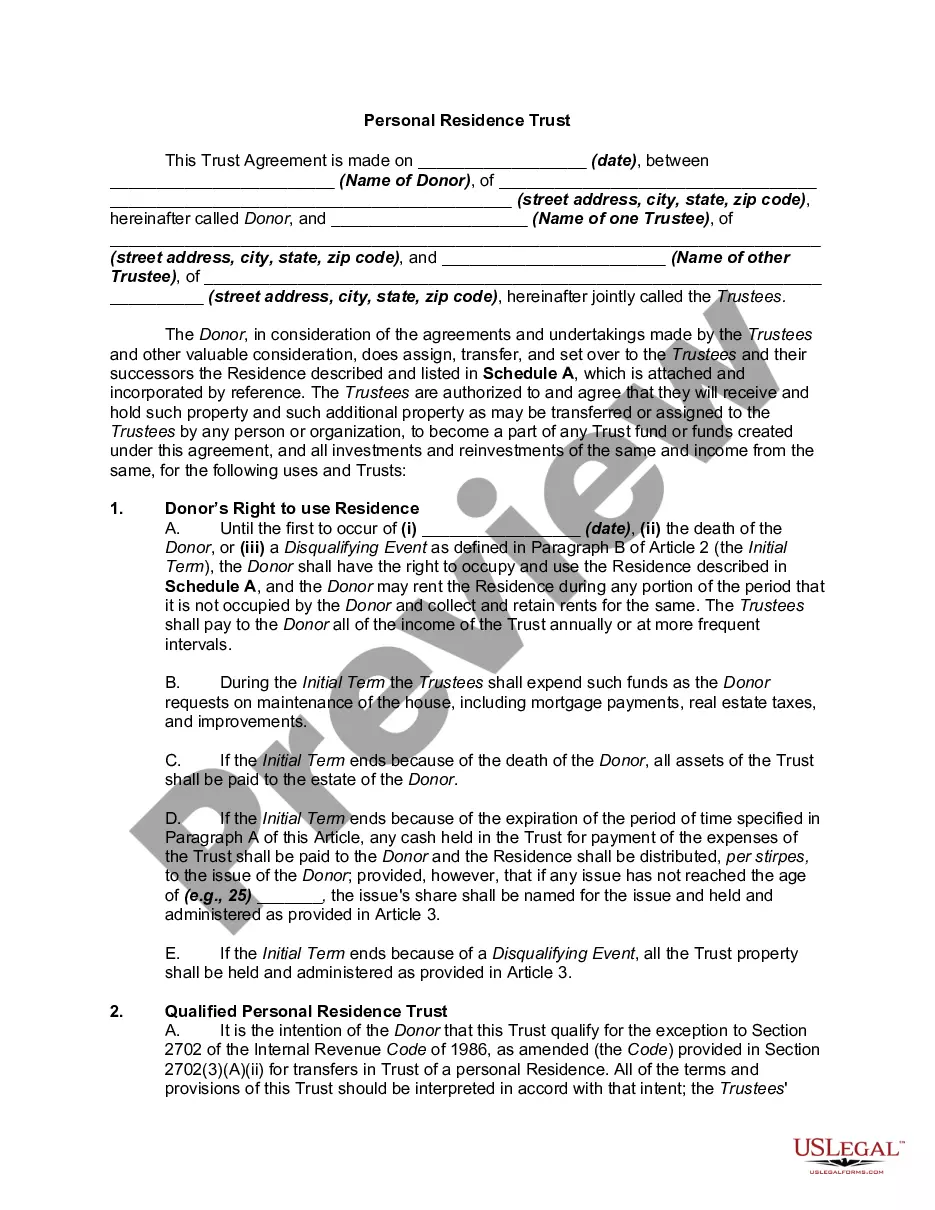
A qualified personal residence trust (QPRT) is a specific type of irrevocable trust that allows its creator to remove a personal home from their estate for the purpose of reducing the amount of gift tax that is incurred when transferring assets to a beneficiary.
In a recent decision TVA obtained for the Chapter 7 bankruptcy trustee, the U.S. Bankruptcy Court held that a QPRT - generally irrevocable and commonly used in estate planning to hold personal residences - may nonetheless be revoked when the debtor retains an right to reacquire ownership of the residence.
There are two options upon early termination. The trust agreement may allow that the trust will terminate and the property or its sales proceeds be given back to you.
When the period ends, the property is transferred to stated beneficiaries by recording a new deed from the title of the Trust to the beneficiaries' names. If the owner wishes to continue living in the home after the trust term's expiry, they are required to pay fair market rent.
The sale of the residence without any reinvestment of the proceeds in a new residence will cause the QPRT status to terminate as to all of the assets.
One of the most important steps for the trustee to follow at the end of the QPRT term is to transfer title and ownership of the residence into the names of the remainder beneficiaries to ensure the correct titling and insuring of the asset.
Because there's no limit on how long the QPRT must run, it's not uncommon to see QPRTs that were created 10 to 15 years ago finally expire today.
A life estate with remainder to charity is normally created for one or two lives. However, it may be created for a term of years. Alternatively, it is possible to create a qualified personal residence trust (QPRT) and to create a life estate agreement for a term of years with a remainder to family.