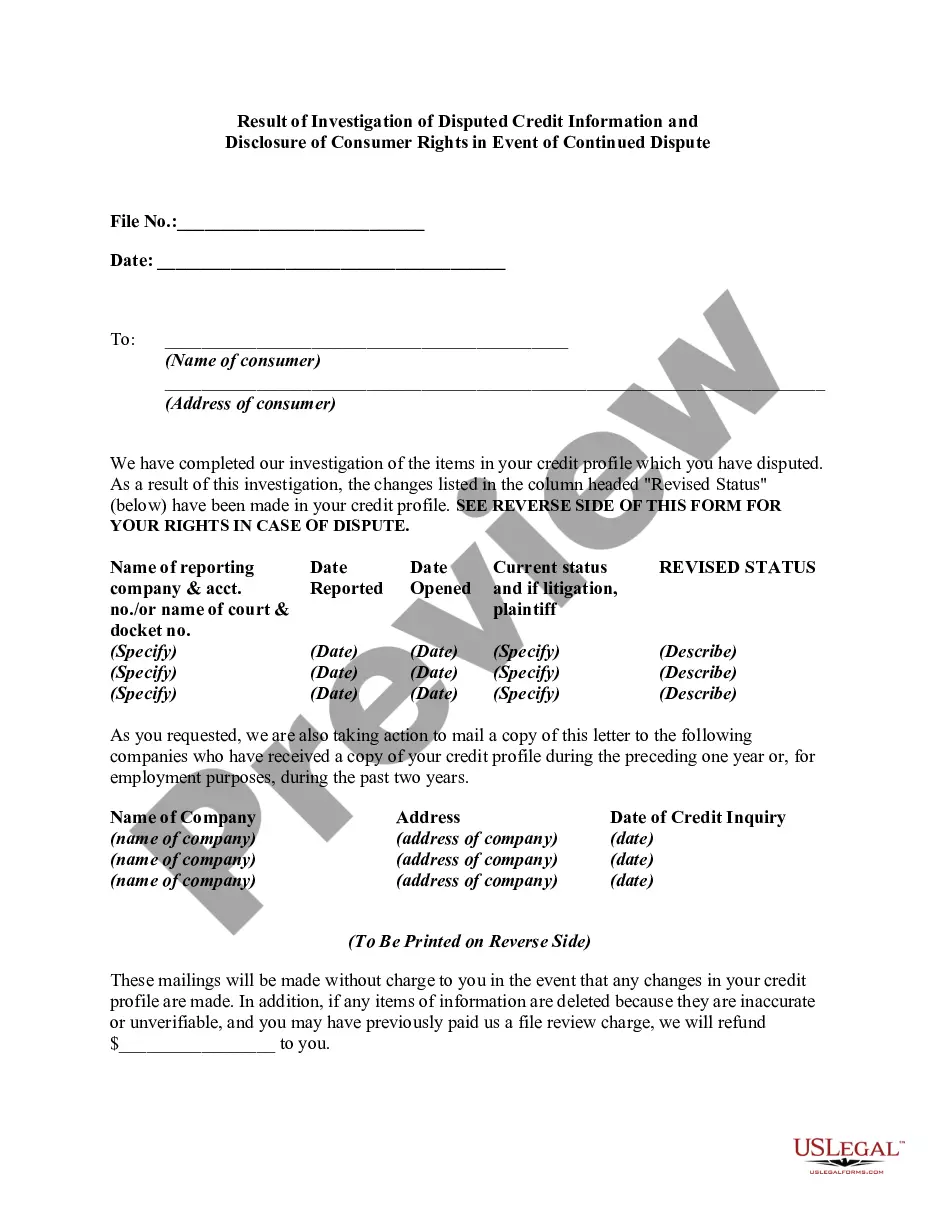
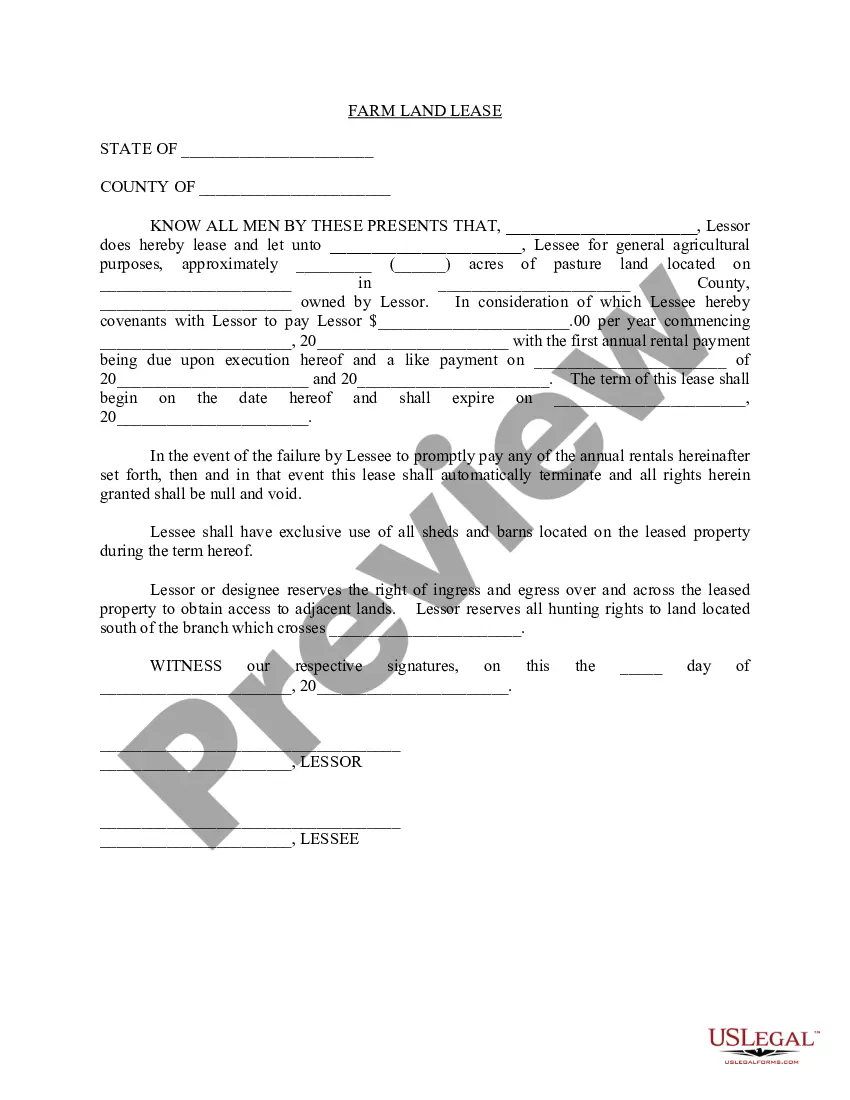
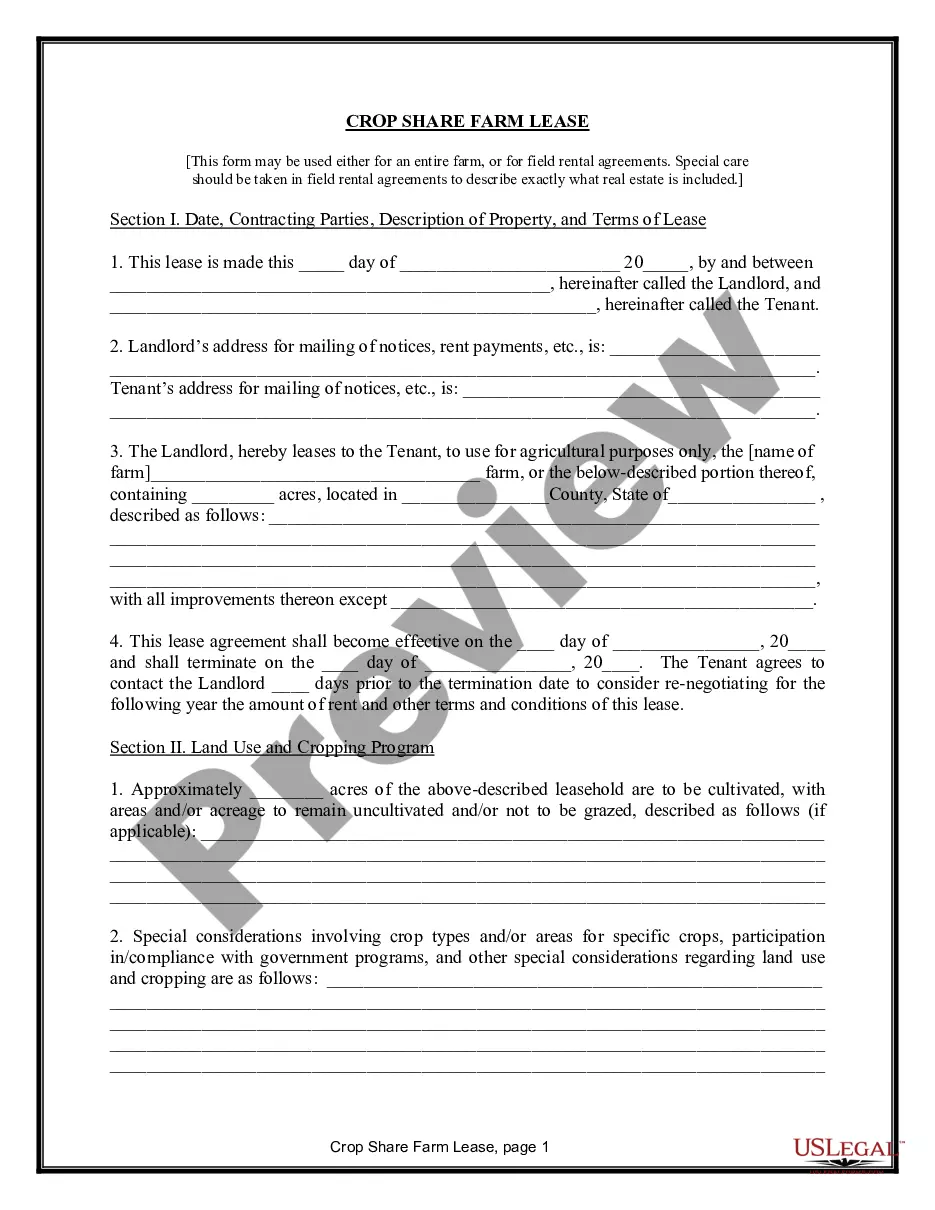
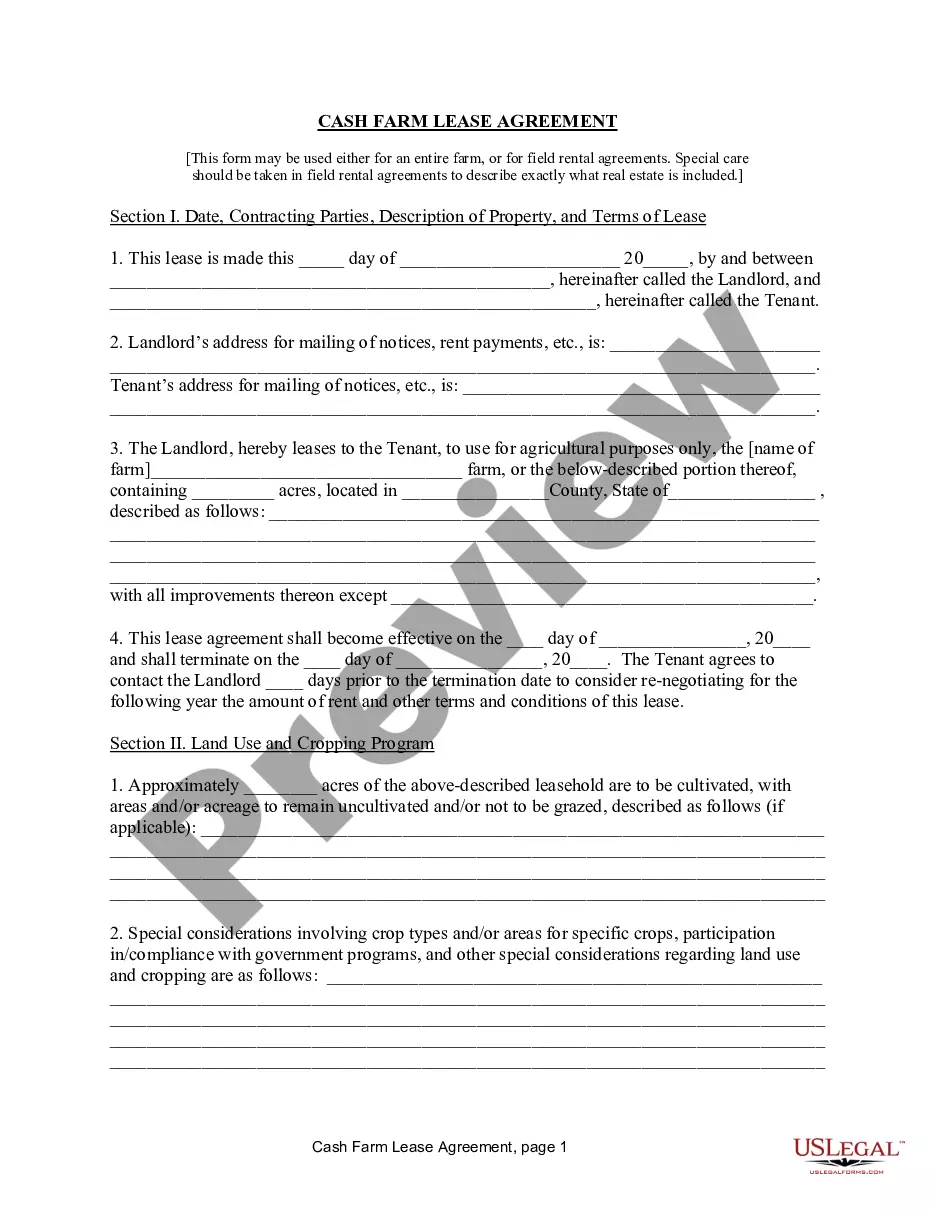
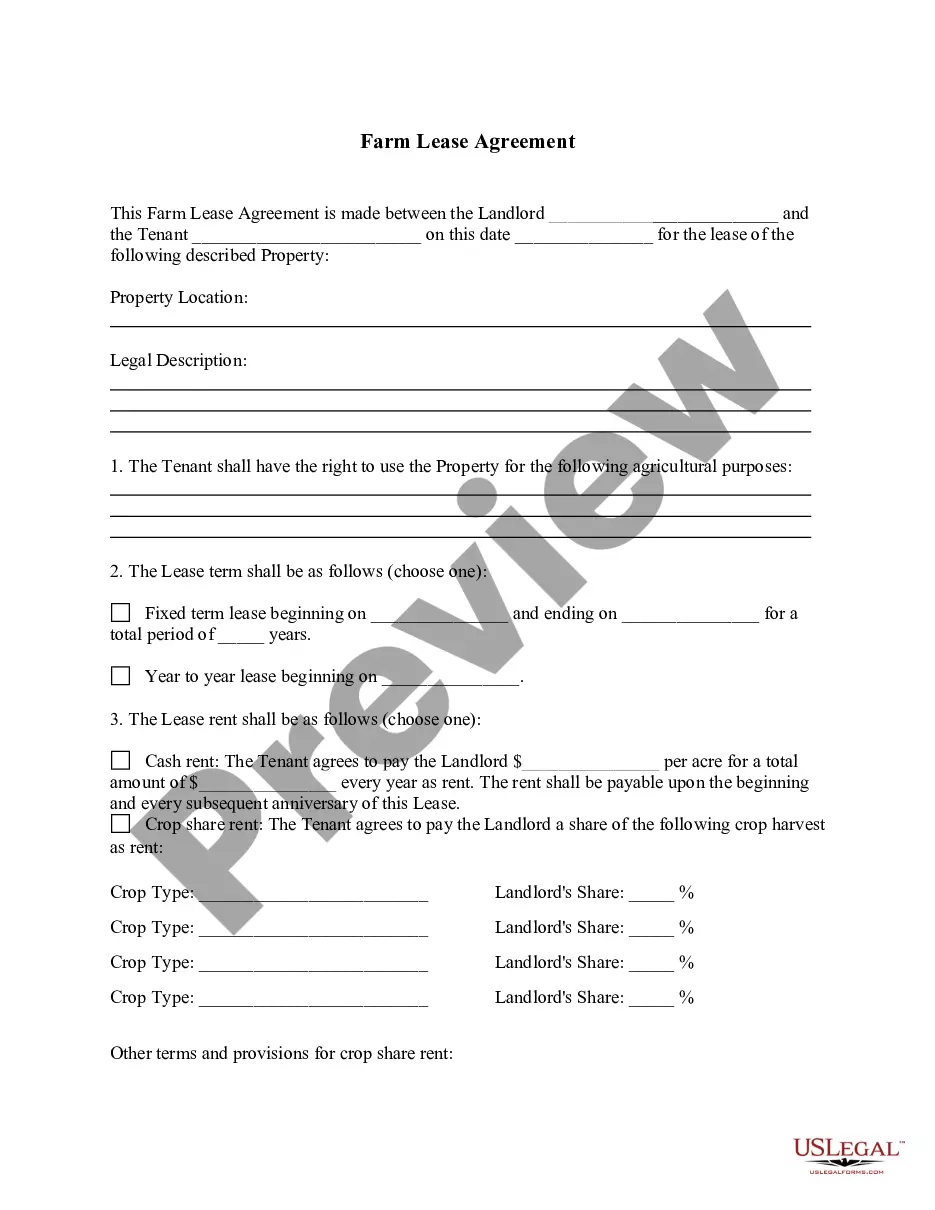
This form is a farm land lease. In the event of the failure by the lessee to promptly pay any of the annual rentals, then and in that event this lease will automatically terminate and all rights granted will be null and void. The lessee will have exclusive use of all sheds and barns located on the leased property during the term of the lease.
California Farm Lease or Rental - Short
Category:
State:
Multi-State
Control #:
US-60960
Format:
Word;
Rich Text
Instant download
Description


How to fill out Farm Lease Or Rental - Short?
Are you in a situation where you require documents for both business or personal purposes almost every day.
There are numerous legal document templates available online, but discovering ones you can rely on is not simple.
US Legal Forms offers a vast collection of document templates, such as the California Farm Lease or Rental - Short, designed to meet state and federal requirements.
Once you find the correct form, click Buy now.
Select the payment plan you want, fill out the required information to process your payment, and finalize your purchase with either PayPal or a credit card.
- If you are already acquainted with the US Legal Forms website and have a free account, simply Log In.
- Then, you can download the California Farm Lease or Rental - Short template.
- If you do not possess an account and wish to start using US Legal Forms, follow these steps.
- Find the template you need and ensure it corresponds to the correct city/state.
- Use the Review button to examine the form.
- Check the outline to make sure you have selected the right template.
- If the template isn’t what you are looking for, use the Search field to find the form that fits your needs.
Form popularity
FAQ
Renting 25 acres of farmland in California typically ranges from $100 to $400 per acre annually, depending on location and land quality. Urban areas often command higher prices due to demand, while rural options might be more affordable. For precise rates tailored to your budget, check listings that specifically mention California Farm Lease or Rental - Short.
Farmland has historically been a good investment. Unfortunately, not many investors have been able to benefit from this asset class, given the high upfront costs of buying farmland.
Today, about 40% of U.S. farmland is rented out, and retired farmers account for about 38% of landlords.
Most farmers find that a combination of both ownership and leasing is desirable, especially when capital is limited. For many new farmers, especially in areas where land is quite expensive, leasing land is often the best option.
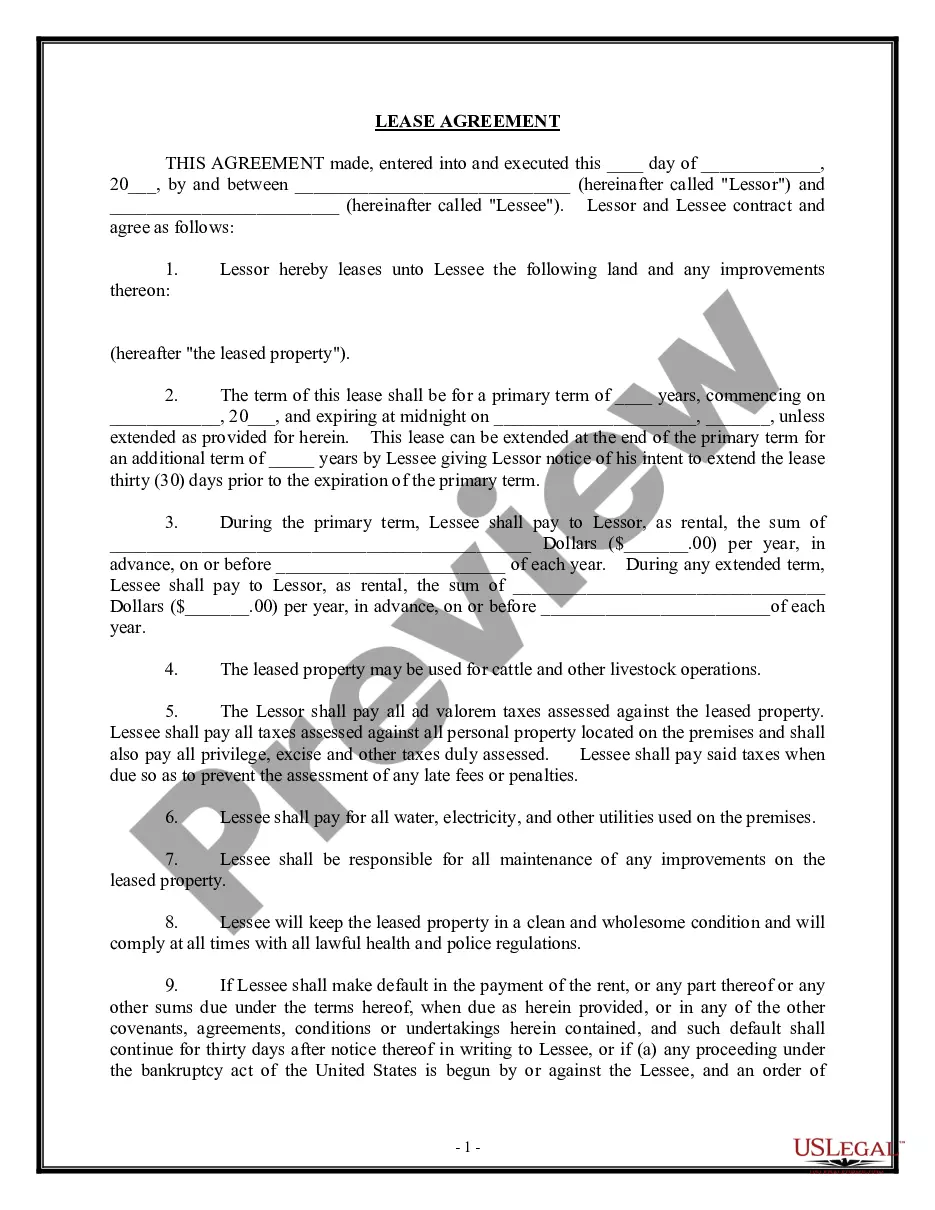
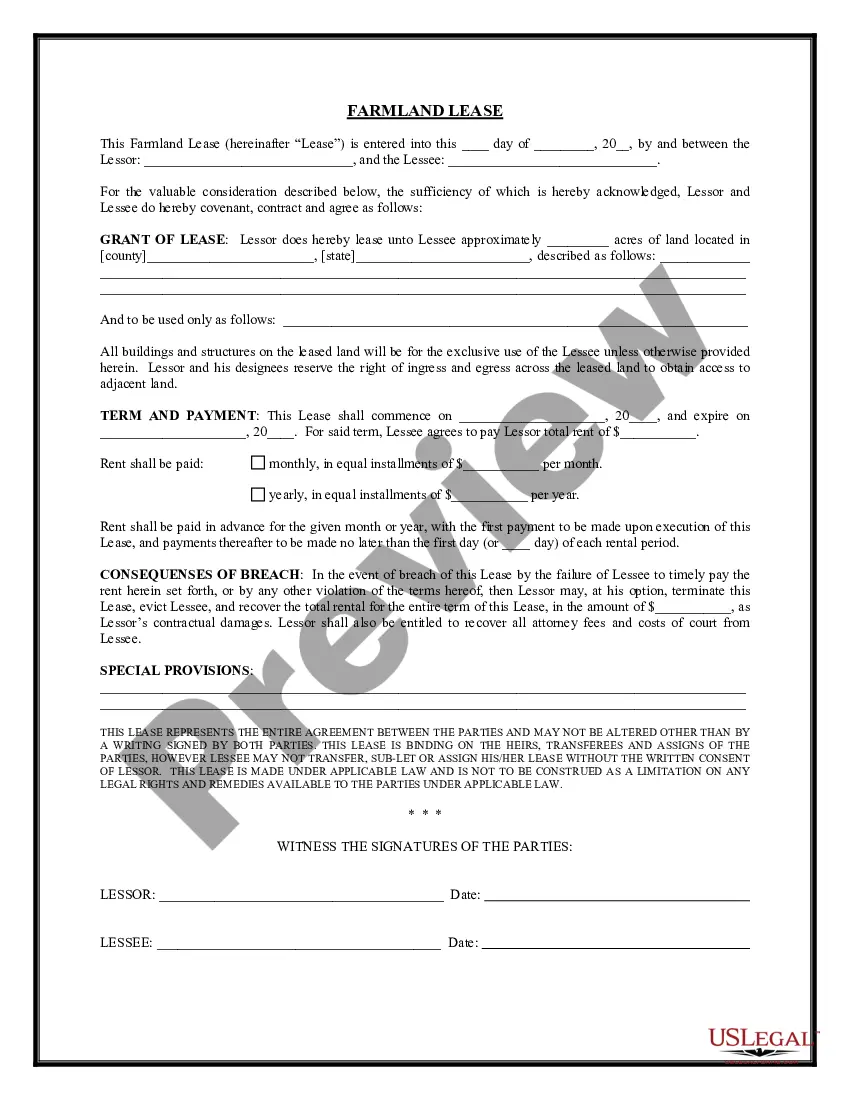
A farm lease is a written agreement between a landowner and a tenant farmer. Through a farm lease, the landowner grants the tenant farmer the right to use the farm property. Key terms of basic leases include the length of the lease, rent amounts and frequency of payment, how to renew or end the lease, and more.
So, how long is a long term tenancy agreement? In short, a long-term let is anywhere from 6 months onwards. While long term tenancies don't offer the same flexibility or increased rates as short term agreements, they do perform better in several ways.
For pastureland, the average rental rate per acre remained unchanged at $12.50. Source: USDA NASS. Rates ranged from $72 in Oklahoma to $528 in California for irrigated cropland; from $26.50 in Montana to $231 in Iowa for non-irrigated cropland; and from $6.30 in Montana to $54 in Iowa for pastureland.
The advantages of the first are that the tenant in many cases is free to manage the farm as he pleases, and as a long-time proposition he may pay less rent than under crop-sharing arrangements. The chief disadvantage is that the tenant agrees to pay a definite sum before he knows what his income will be.
Across a variety of categories, California's value holds about two or three times higher than the national average. Land classified in cropland nationwide is valued at an average of $4,100 per acre. In California, that figure shoots up to $12,830.
With a land lease agreement (also known as a ground lease), you purchase the home but rent the land. One of the main advantages is the lower price of this unique arrangement. One of the main disadvantages is that you will not be able to build valuable equity in the land on which you live.