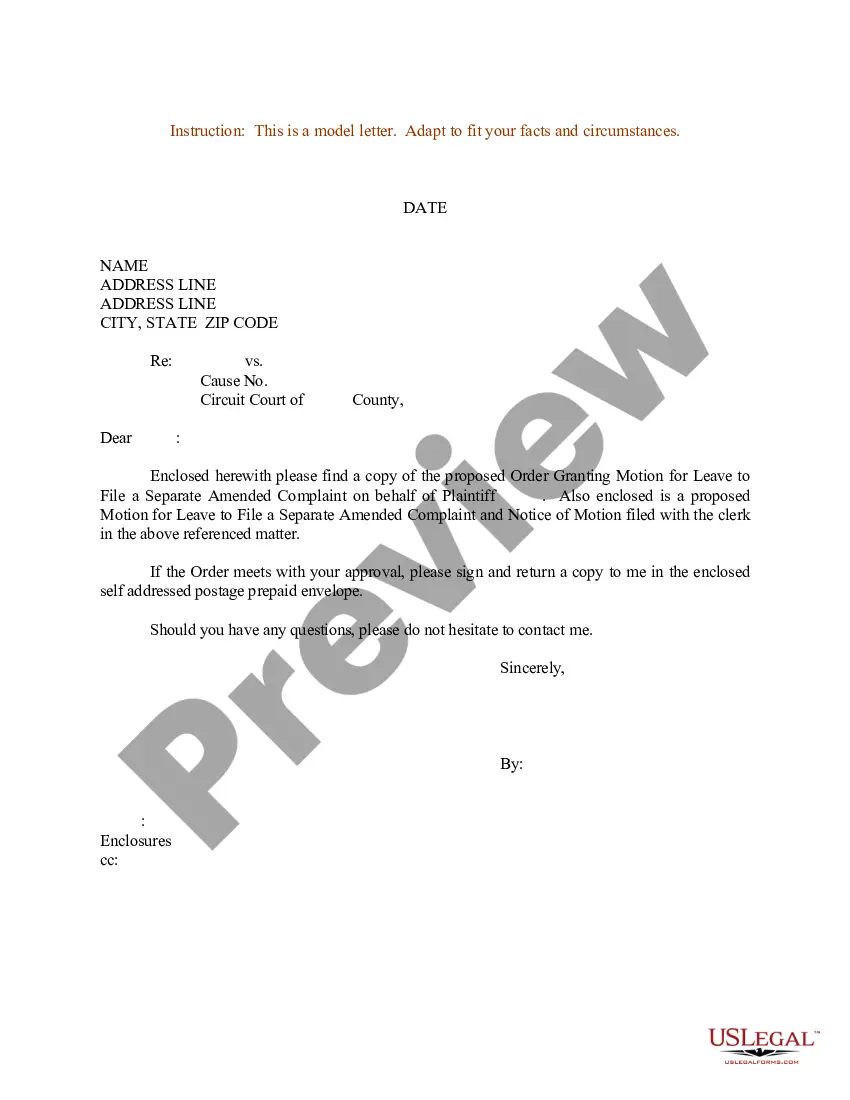
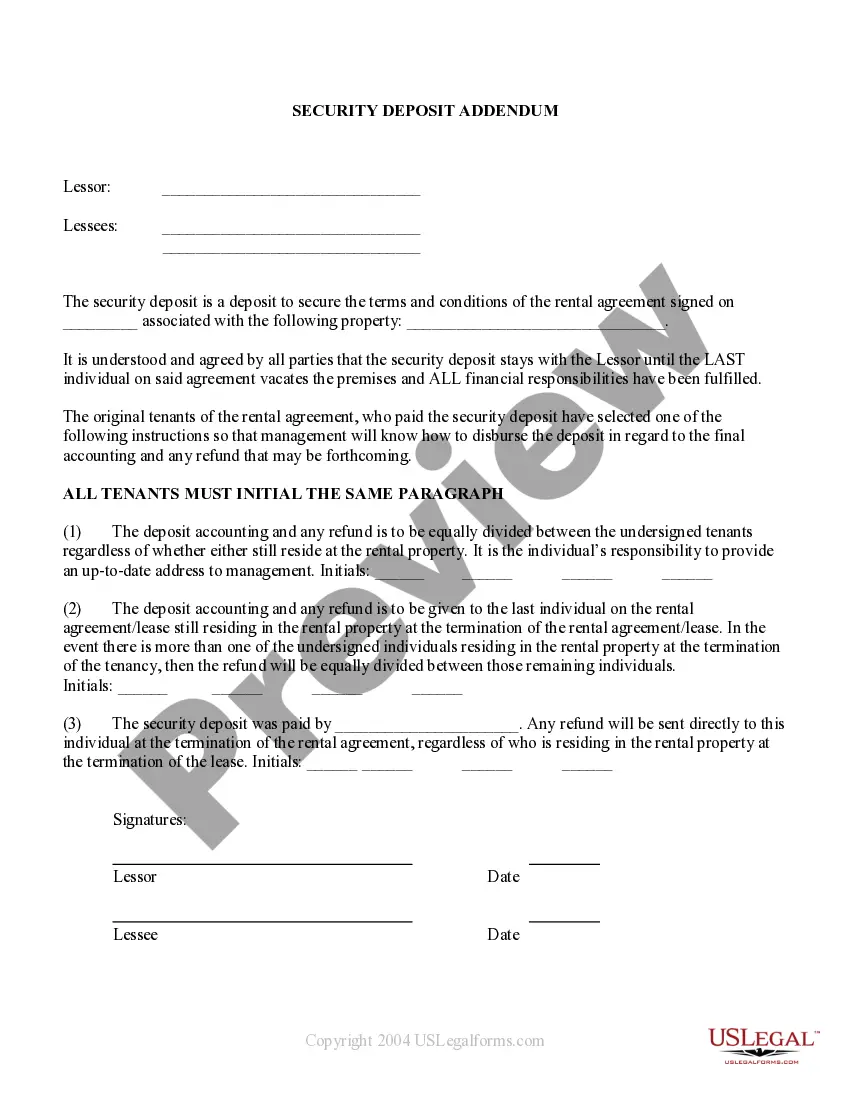
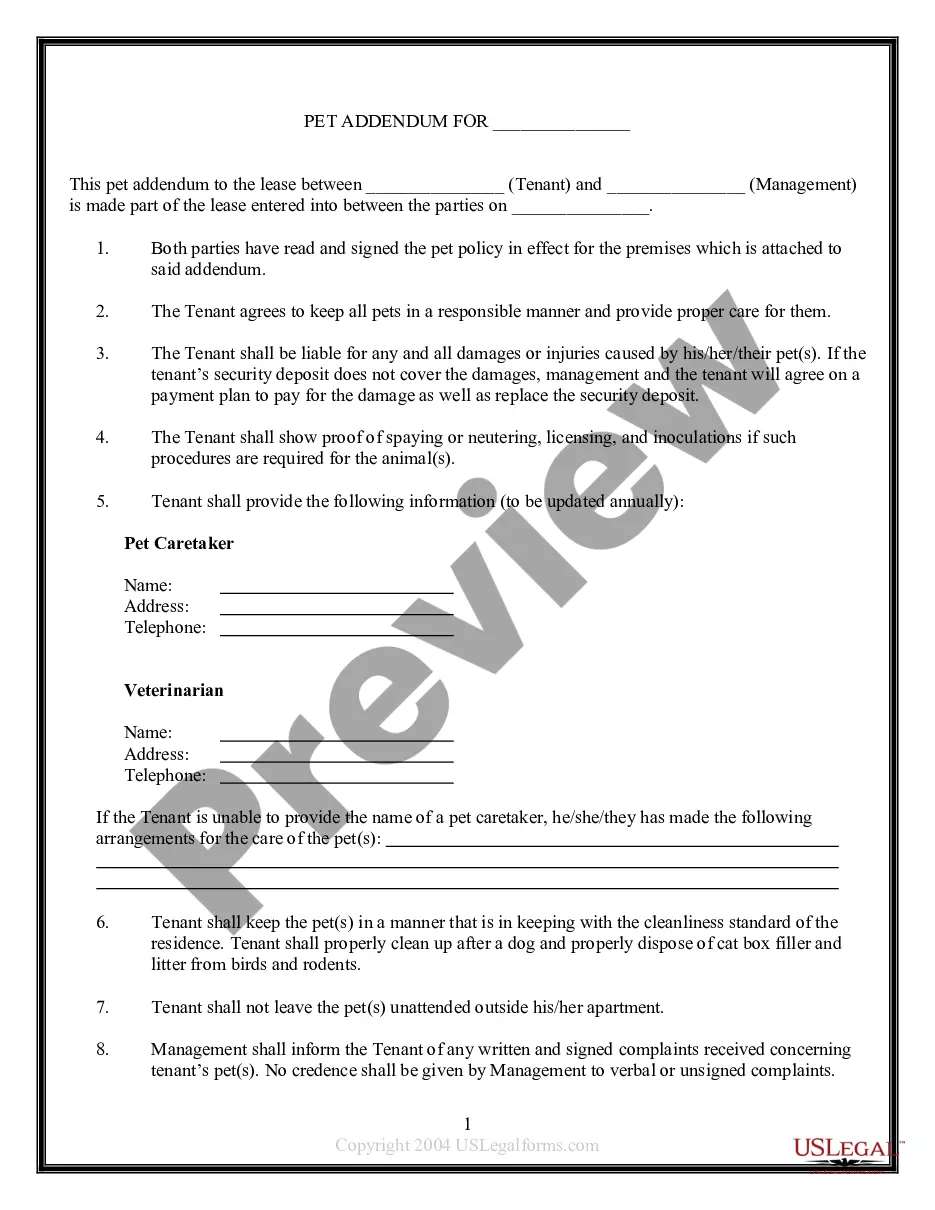
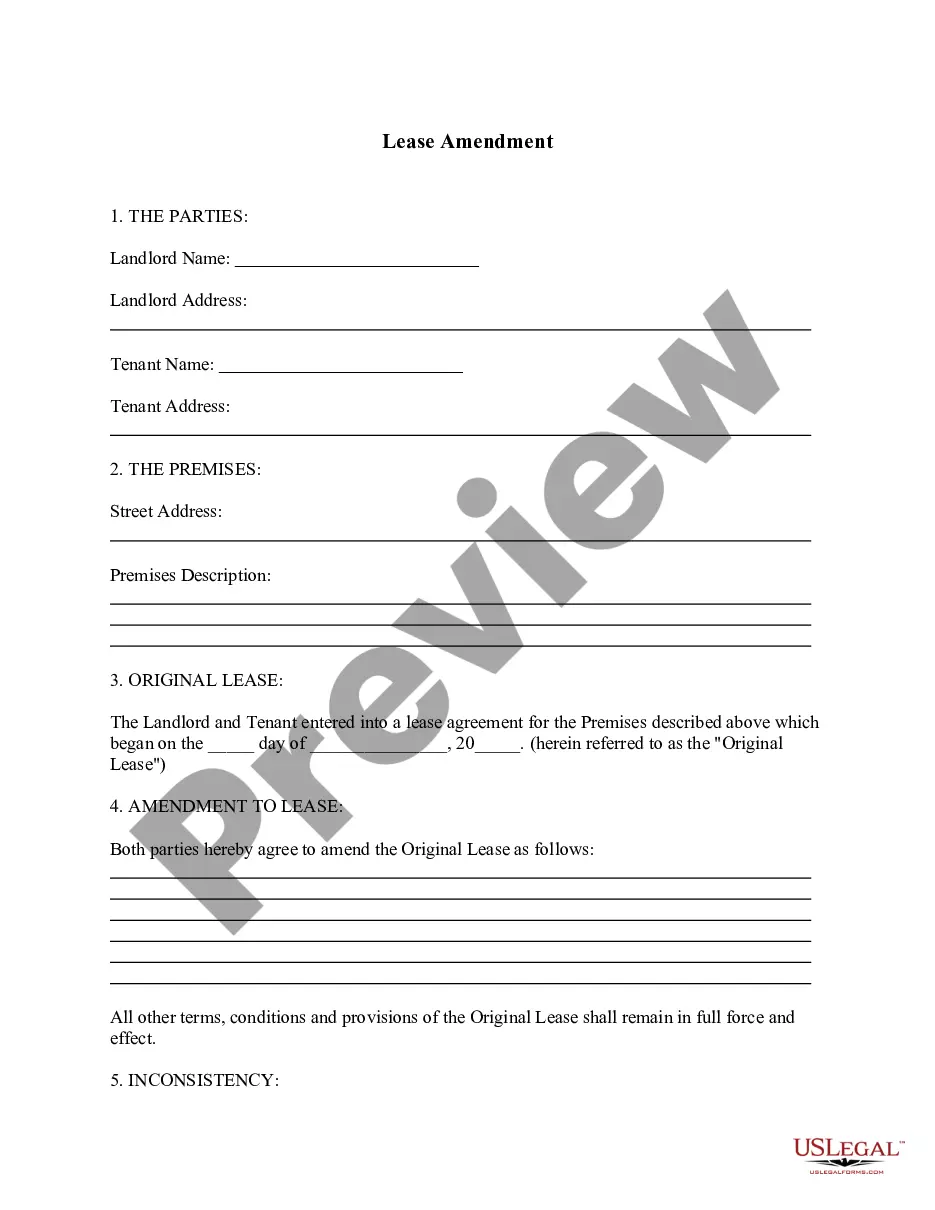
Addendum to apartment lease concerning security deposit.
California Addendum To Apartment Lease regarding Security Deposit
State:
Multi-State
Control #:
US-895LT
Format:
Word;
Rich Text
Instant download
Description
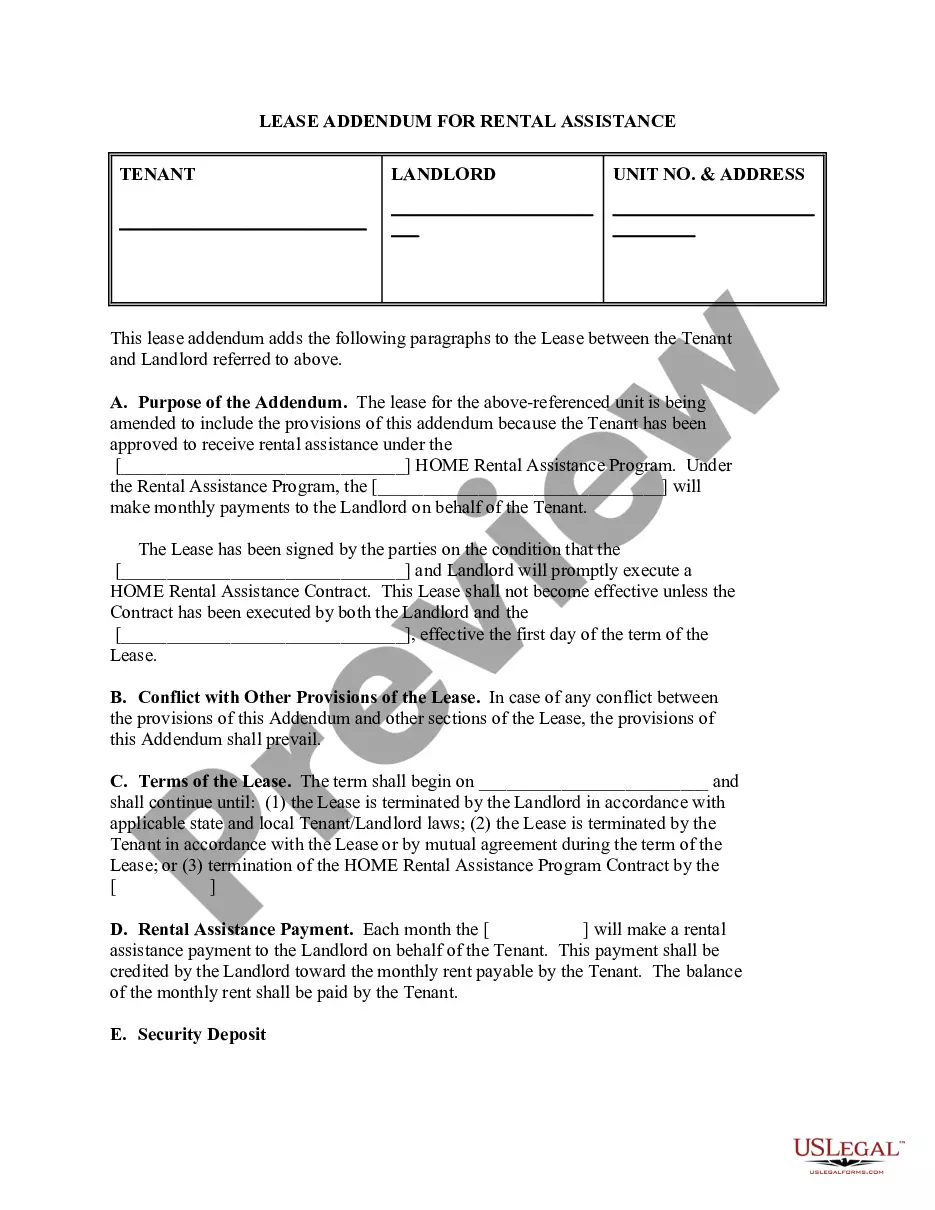
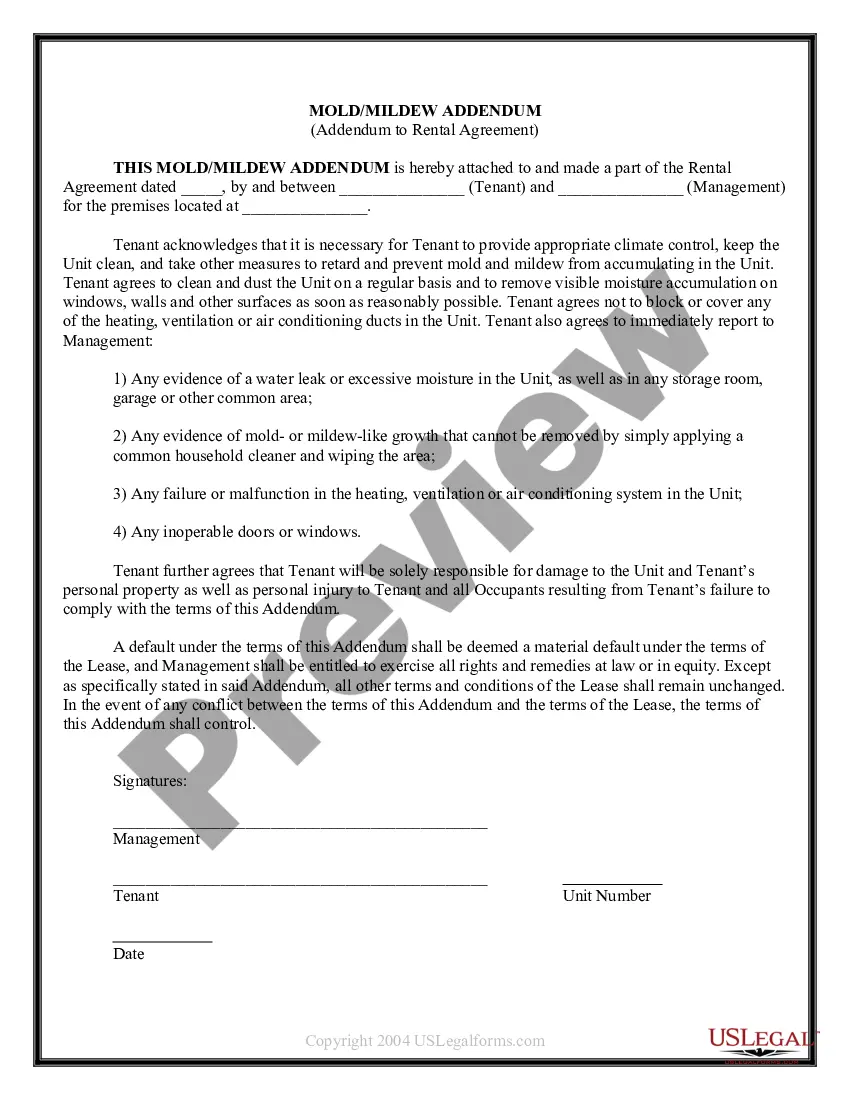
How to fill out Addendum To Apartment Lease Regarding Security Deposit?
Are you located in a place where you require documentation for possibly business or personal purposes nearly every workday.
There is a range of legal document templates available online, but locating ones you can trust is challenging.
US Legal Forms offers thousands of document templates, including the California Addendum To Apartment Lease related to Security Deposit, which are designed to comply with state and federal regulations.
Once you find the right form, click Purchase now.
Choose the pricing plan you require, complete the necessary information to create your account, and purchase the order using your PayPal or credit card. Select a convenient document format and download your copy.
- If you are already familiar with the US Legal Forms website and possess an account, simply Log In.
- After that, you can download the California Addendum To Apartment Lease regarding Security Deposit template.
- If you don’t have an account and want to start using US Legal Forms, follow these instructions.
- Locate the form you need and make sure it is for the correct area/region.
- Utilize the Review button to inspect the form.
- Read the details to confirm that you have selected the proper form.
- If the form doesn't match your needs, use the Search field to find the form that meets your requirements.
Form popularity
FAQ
It is not illegal for your landlord to increase your security deposit and ask for a second payment, but if you have a lease, your landlord cannot ask for a second payment unless it is expressly provided for in the lease. Without a lease, your landlord must first give you written notice of the security deposit increase.
The expenses of cleaning must also be reasonable. Generally, a professional cleaning company can clean an empty unit for $200, including shampooing the carpet. Deductions for damage are only permitted if you caused them and they are beyond normal wear and tear.
According to California security deposit laws, after a tenancy is terminated, a landlord has 21 days to return the tenant's deposit in full.
It is not illegal for your landlord to increase your security deposit and ask for a second payment, but if you have a lease, your landlord cannot ask for a second payment unless it is expressly provided for in the lease. Without a lease, your landlord must first give you written notice of the security deposit increase.
What Can a Landlord Deduct From The Security Deposits in California? From the security deposit, a landlord may deduct any rent payments, like last month's rent or this month's rent, that are owed, the utility cost owed, their late fees and unpaid rent payments, and any cleaning fees that are required.
The landlord can adjust the security deposit against any arrears of rents or other charges as agreed under the tenancy agreement.
If the residence is furnished, the landlord may charge up to 3 times the rent. There is no restriction on the amount of the security deposit for the rental of a commercial property.
If a landlord does not return the entire amount of the tenant's security deposit within the 21 days required by law, and the tenant disputes the deductions from the deposit: The tenant can write a letter to the landlord explaining why he or she believes he or she is entitled to a larger refund.
In California, there is no such thing as a nonrefundable holding deposit. If a landlord asks for a fee to hold a unit, this is illegal, especially if the landlord states that it is nonrefundable. Excessive security deposits are illegal.
California laws do not require you to pay interest to your tenant earned with the security deposit. Yet, 15 rent control cities require landlords to pay interest on security deposits to their tenants.