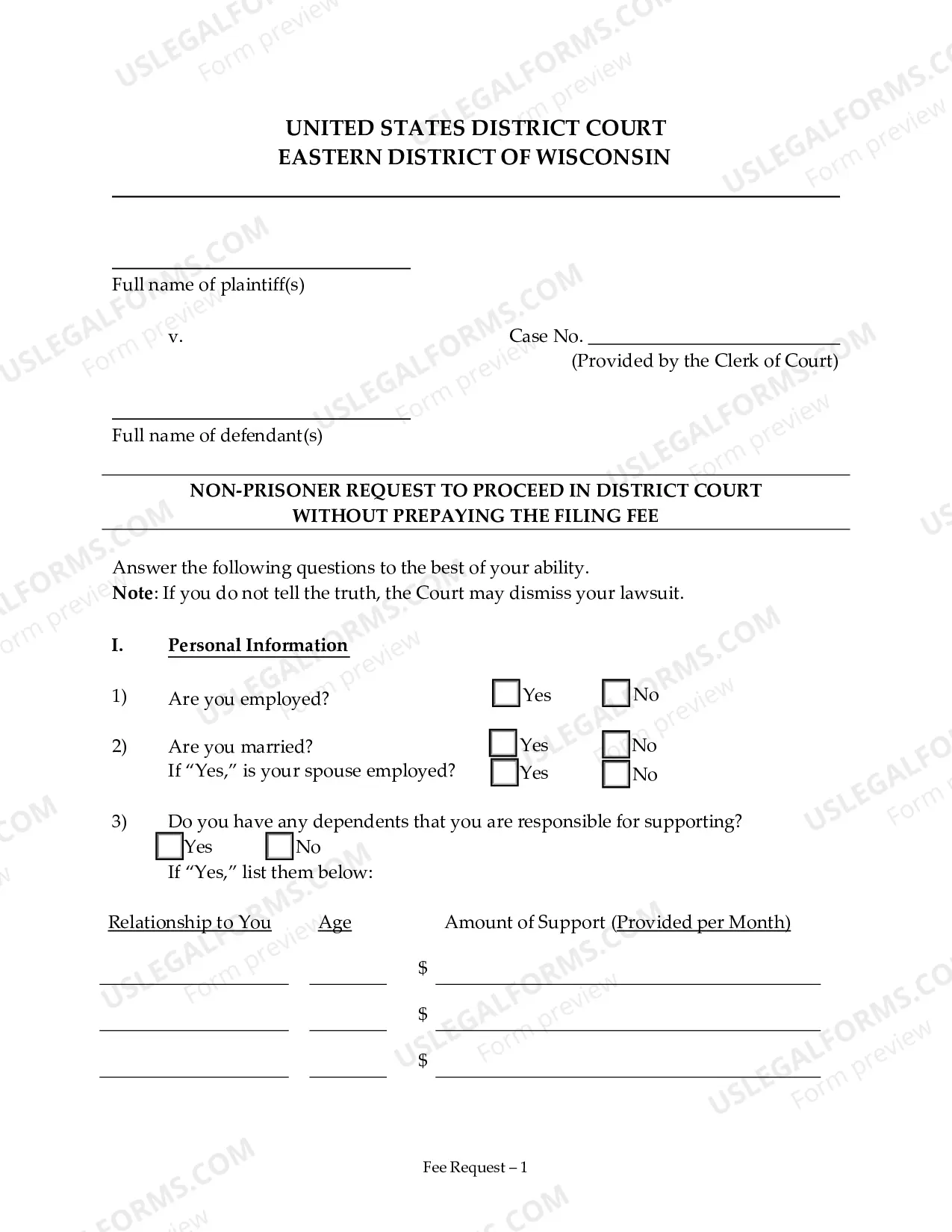
Colorado Beneficiary Deed - Husband and Wife / Two Individuals to Two Individual Beneficiaries Without Successor Beneficiaries
What this document covers
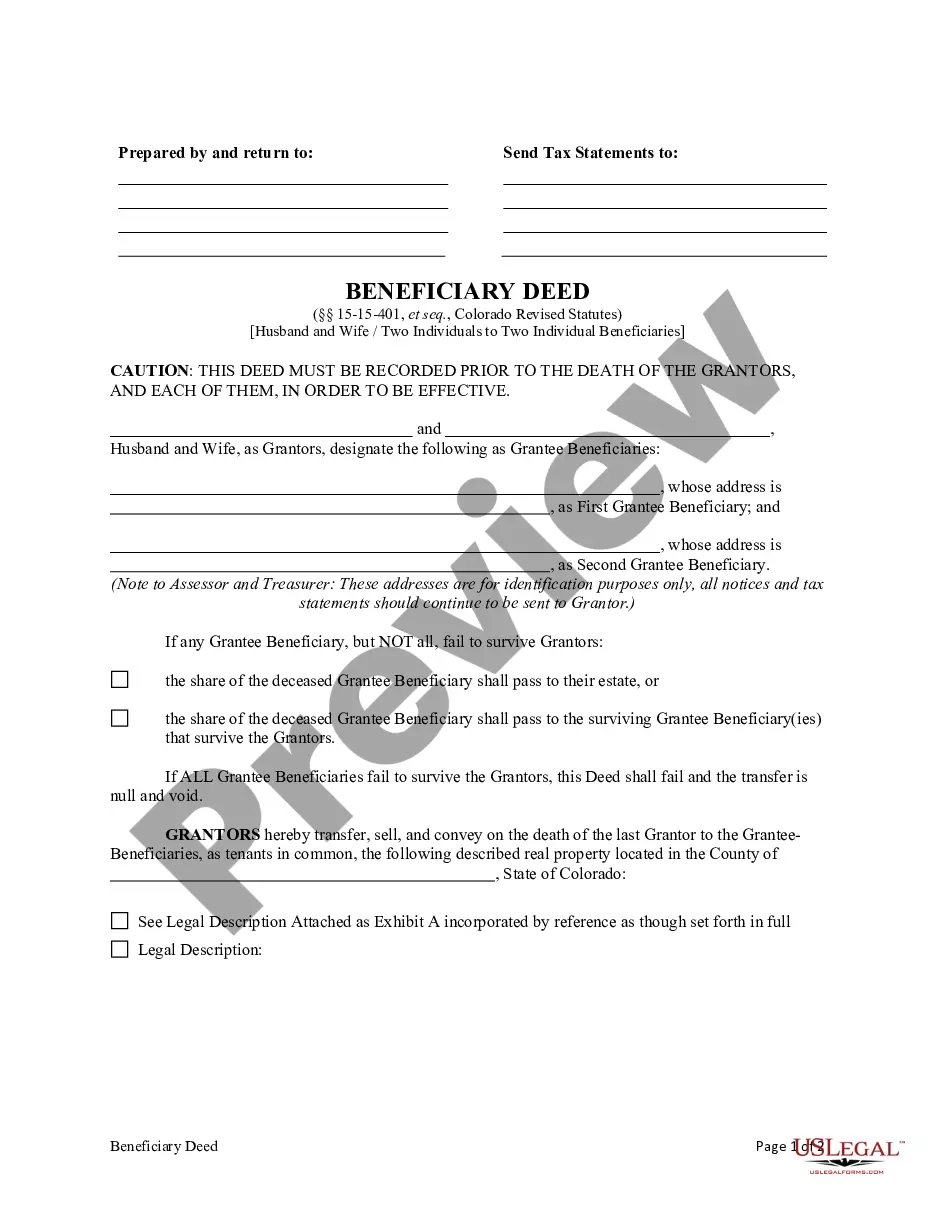
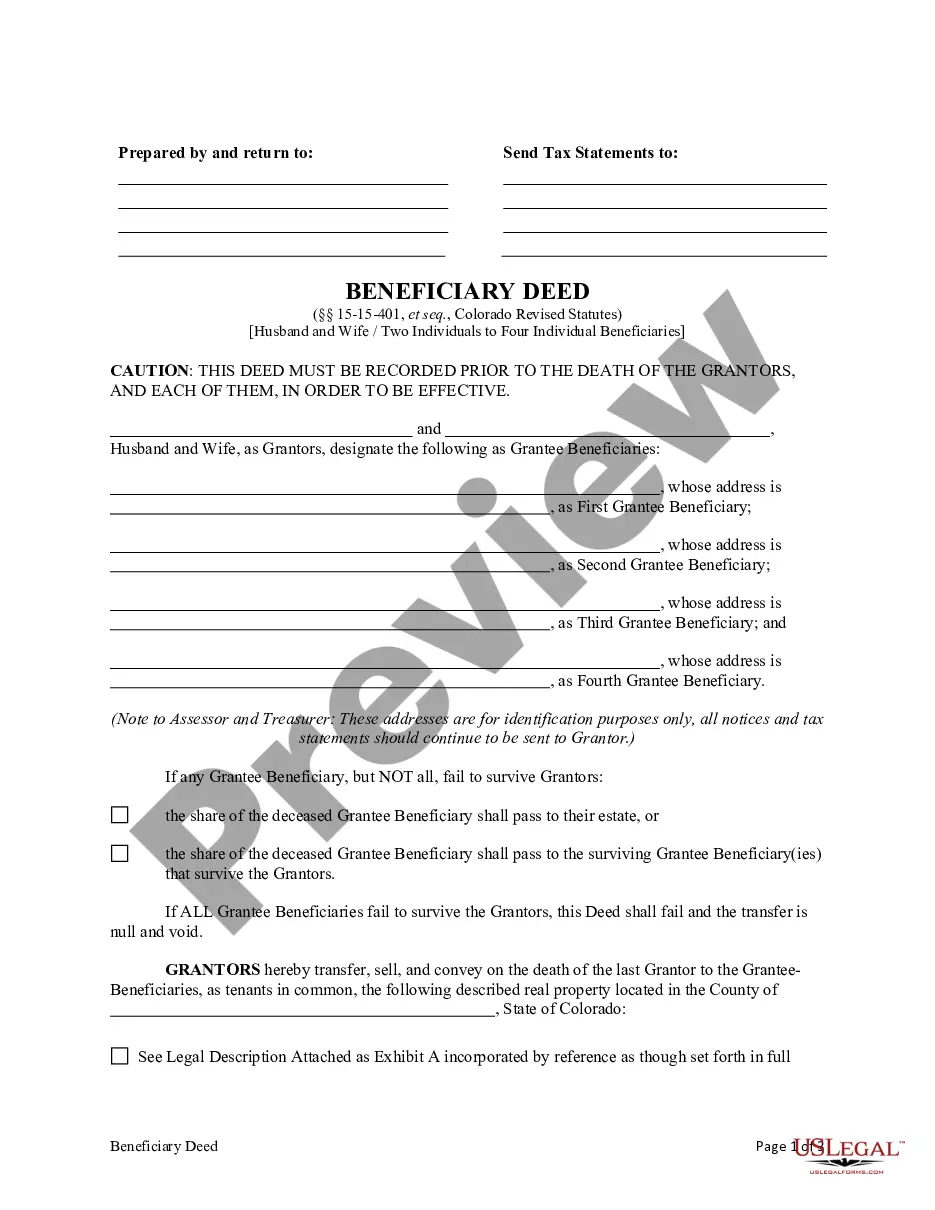
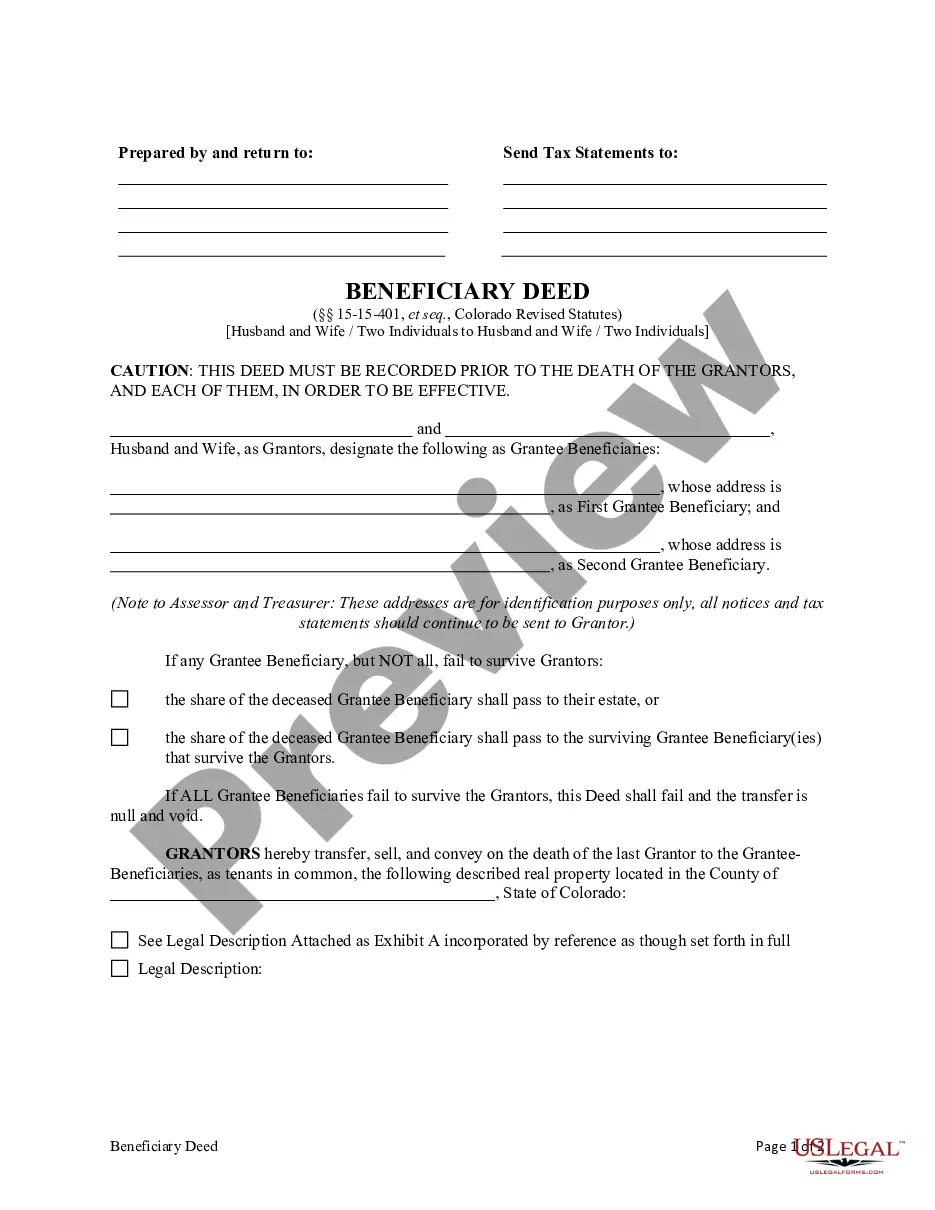
The Beneficiary Deed is a legal document used by two individuals, such as a husband and wife, designed to transfer property to two individual beneficiaries upon the death of the surviving grantor. This form allows the grantors to convey property without it undergoing probate when recorded before their deaths. Unlike other deeds, this Beneficiary Deed does not include successor beneficiaries, making it essential for the grantors to understand the implications of their choices carefully.
Key parts of this document
- Names and addresses of the grantors (the individuals transferring the property).
- Names and addresses of the grantee beneficiaries (individuals receiving the property).
- Details of the property being transferred (legal description).
- Conditions about the transfer upon the death of the surviving grantor.
- Note that no successor grantees can be named.
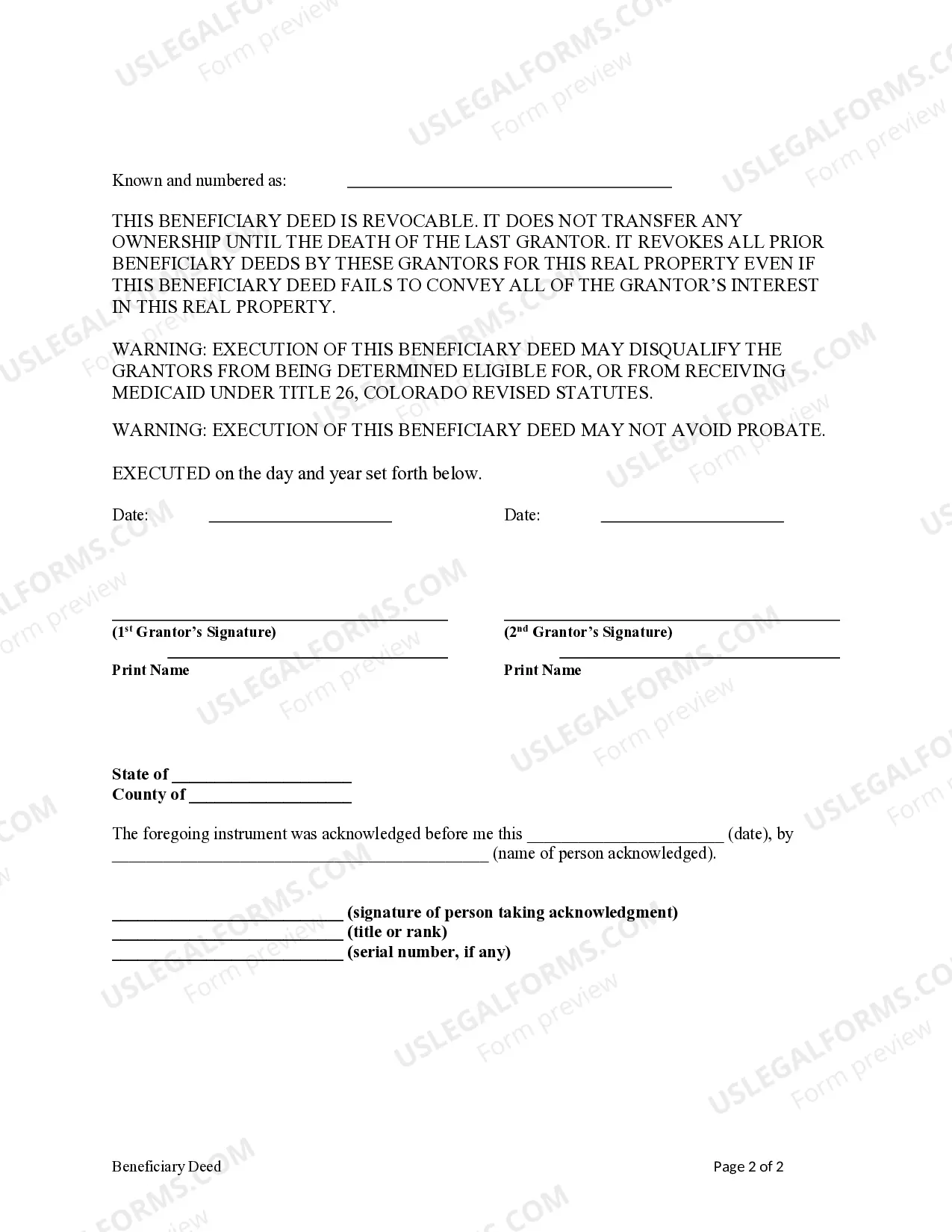
- Signature lines for the grantors.



Situations where this form applies
This form is particularly useful in estate planning for married couples or individuals who wish to ensure their property passes directly to specific beneficiaries upon their death. It can also be employed when there is an intention to avoid probate, providing a straightforward method for property transfer and designating beneficiaries clearly. It is crucial to use this form if no successor beneficiaries are desired.
Who should use this form
- Married couples looking to designate specific beneficiaries for their property.
- Individuals wanting to transfer property to two individual beneficiaries without involving probate.
- Those knowledgeable about the implications of not naming successor beneficiaries.
- Homeowners aiming to simplify the process of property transfer upon their death.
Completing this form step by step
- Identify and provide the full names and addresses of both grantors.
- State the full names and addresses of the two grantee beneficiaries.
- Clearly describe the property intended for transfer, including legal descriptions.
- Sign the document in the presence of a witness, if necessary.
- Record the deed with the appropriate local government office prior to the death of the grantors.
Is notarization required?
This document requires notarization to meet legal standards. US Legal Forms provides secure online notarization powered by Notarize, allowing you to complete the process through a verified video call, available 24/7.
Get your form ready online
Our built-in tools help you complete, sign, share, and store your documents in one place.
Make edits, fill in missing information, and update formatting in US Legal Forms—just like you would in MS Word.
Download a copy, print it, send it by email, or mail it via USPS—whatever works best for your next step.
Sign and collect signatures with our SignNow integration. Send to multiple recipients, set reminders, and more. Go Premium to unlock E-Sign.
If this form requires notarization, complete it online through a secure video call—no need to meet a notary in person or wait for an appointment.
We protect your documents and personal data by following strict security and privacy standards.

Make edits, fill in missing information, and update formatting in US Legal Forms—just like you would in MS Word.

Download a copy, print it, send it by email, or mail it via USPS—whatever works best for your next step.

Sign and collect signatures with our SignNow integration. Send to multiple recipients, set reminders, and more. Go Premium to unlock E-Sign.

If this form requires notarization, complete it online through a secure video call—no need to meet a notary in person or wait for an appointment.

We protect your documents and personal data by following strict security and privacy standards.
Common mistakes to avoid
- Failing to record the deed before the death of the grantors.
- Not providing complete legal descriptions of the property.
- Omitting the names of grantee beneficiaries.
- Assuming the deed avoids probate without understanding its limitations.
Benefits of completing this form online
- Access easy-to-understand templates created by licensed attorneys.
- Edit forms easily to fit your specific situation.
- Download and print your completed forms instantly.
- Save time and ensure compliance with state requirements without needing in-person consultations.
Quick recap
- The Beneficiary Deed allows property transfer without probate upon the grantors' deaths.
- It is essential to record the deed before any grantor passes away for it to be effective.
- Understanding the implications of not naming successor beneficiaries is crucial.
- This form is tailored for married couples or individuals with specific beneficiaries in mind.
Looking for another form?
Form popularity
FAQ
While a Colorado Beneficiary Deed - Husband and Wife / Two Individuals to Two Individual Beneficiaries Without Successor Beneficiaries offers significant advantages, such as avoiding probate, there are also disadvantages. For instance, it may not protect your assets from creditors, and the beneficiaries may not receive property if the grantor passes away before recording the deed. Furthermore, it brings challenges in certain situations like divorce. Understanding these factors can help you make informed decisions.
Filing a Colorado Beneficiary Deed - Husband and Wife / Two Individuals to Two Individual Beneficiaries Without Successor Beneficiaries requires you to prepare the deed according to state laws. Once your deed is drafted, you can file it with the county clerk's office in the county where the property is located. It’s advisable to keep a copy for your records. Using US Legal Forms can help streamline this filing process, as they provide resources and templates.
To record a Colorado Beneficiary Deed - Husband and Wife / Two Individuals to Two Individual Beneficiaries Without Successor Beneficiaries, you need to visit your local county clerk and recorder's office. Bring the completed deed along with any required fees. After the recording, your deed will officially document the transfer of your property to the designated beneficiaries. This step is crucial for ensuring that your wishes are recognized.
You can obtain a Colorado Beneficiary Deed - Husband and Wife / Two Individuals to Two Individual Beneficiaries Without Successor Beneficiaries from online legal services, local county offices, or law firms. Many people find that using platforms like US Legal Forms simplifies the process. They offer downloadable templates that you can easily fill out and customize. This makes acquiring the deed more accessible for everyone.
While it is not legally required to hire a lawyer for a Colorado Beneficiary Deed - Husband and Wife / Two Individuals to Two Individual Beneficiaries Without Successor Beneficiaries, consulting one can provide you with peace of mind. A lawyer can help ensure that the deed is completed correctly and complies with Colorado laws. Additionally, they can offer guidance on how the deed may affect your estate planning. If you prefer a straightforward approach, using USLegalForms can simplify the process and ensure you meet all legal requirements.
While it is not legally required to hire a lawyer for a transfer on death deed in Colorado, consulting with one can be beneficial. A legal professional can help ensure that all necessary information is included and that the document complies with state law. Using platforms like uslegalforms can also guide you through the process efficiently.
A Colorado Beneficiary Deed can include multiple individuals as beneficiaries, allowing for flexibility in your estate planning. In fact, you can add two individuals or more, as long as their names and shares are clearly detailed in the deed. This ensures a smoother transfer of property according to your wishes.
While a transfer on death deed can streamline property transfer, it has some disadvantages. For instance, it does not protect the property from creditors or claims against the estate. Additionally, it may complicate relationships if beneficiaries have differing views on property use or distribution later.
To create a transfer on death deed for two beneficiaries, you need to complete the deed form with both beneficiaries' names and specify their shares. Once you have signed the document, you should file it with the appropriate county office. This process allows the property to pass directly to the beneficiaries upon your death.
Yes, you can designate two beneficiaries on a transfer on death deed in Colorado. This arrangement allows for a smooth transfer of property to both individuals without the need for probate court involvement. Be sure to outline each beneficiary's rights clearly to avoid future disputes.