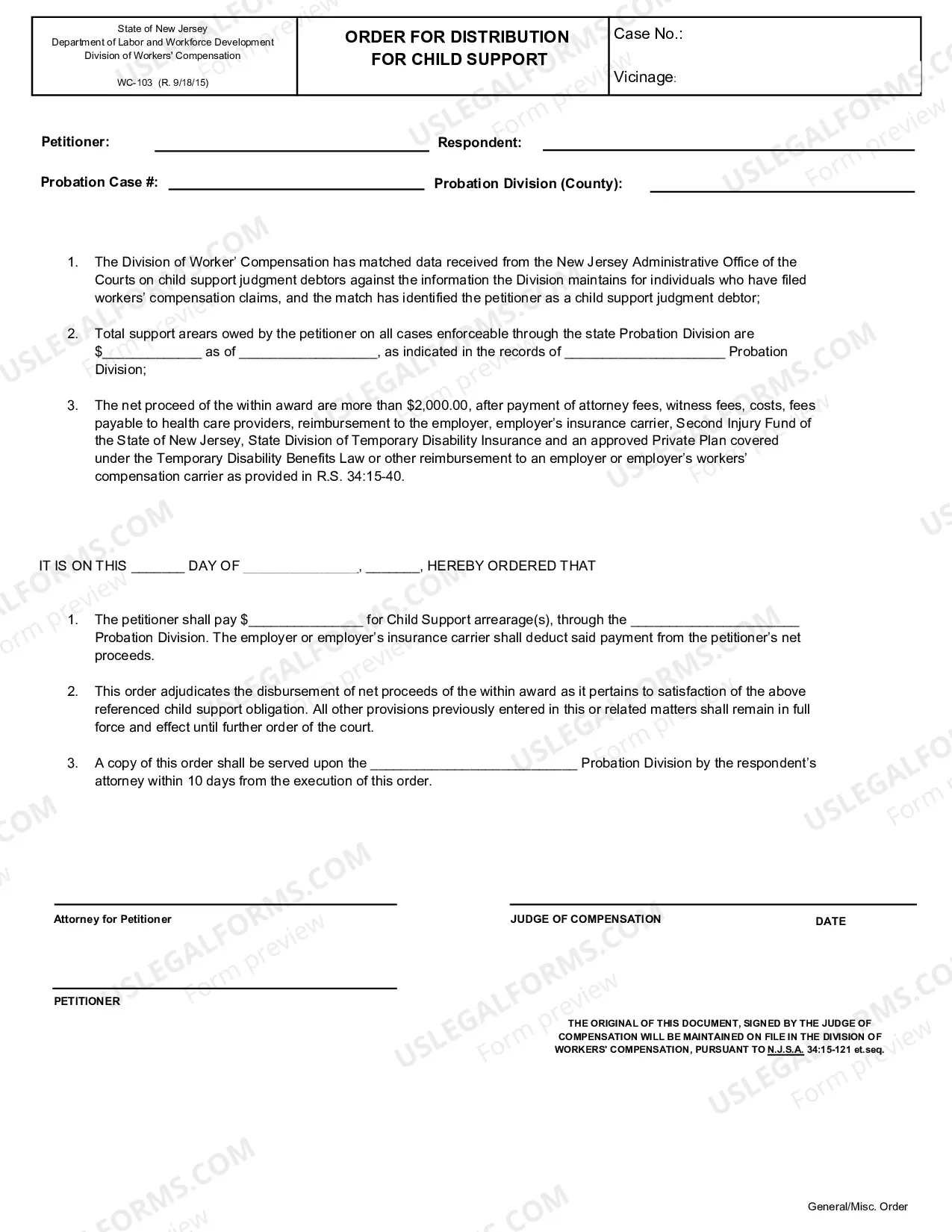
Colorado Grant of Emergency Access Easement
Understanding this form
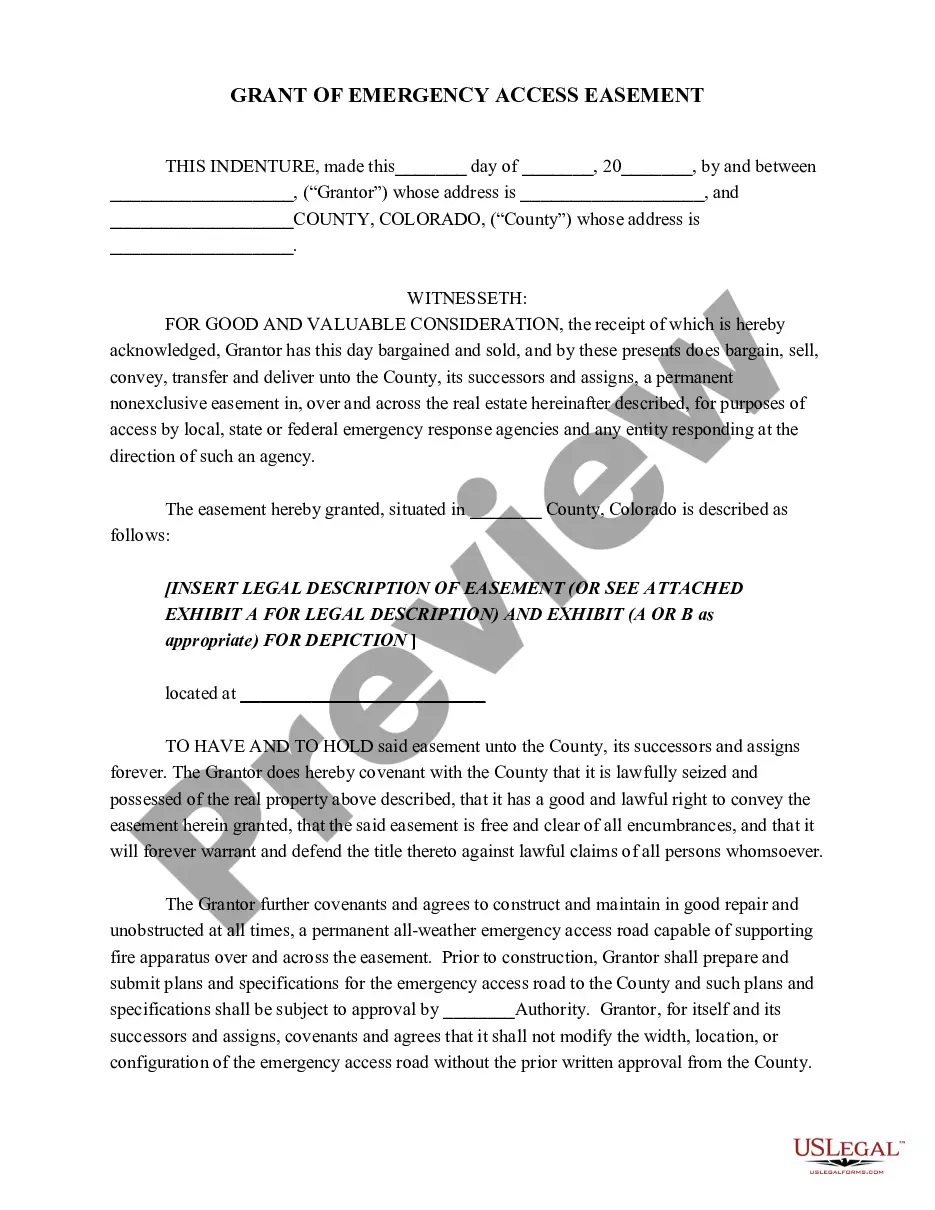
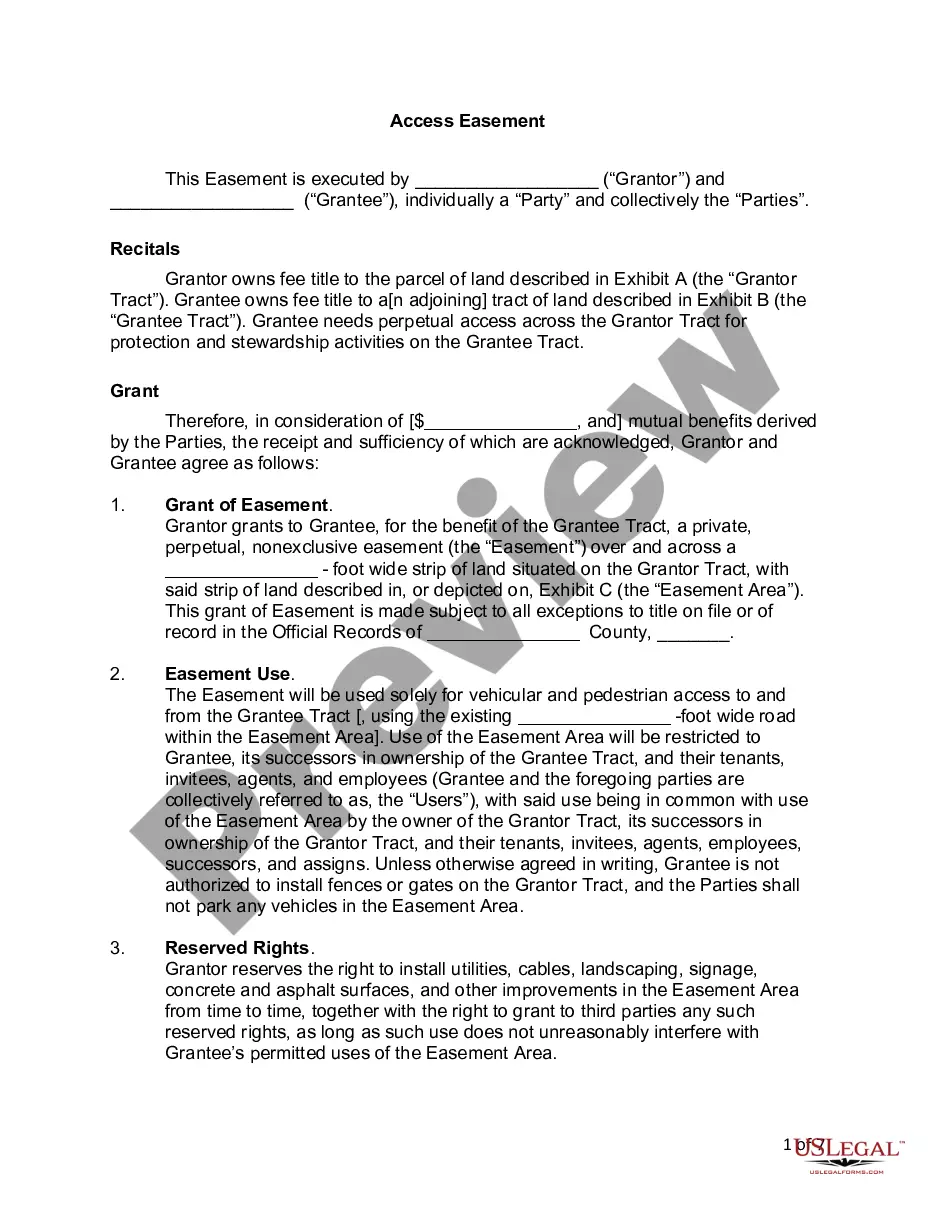
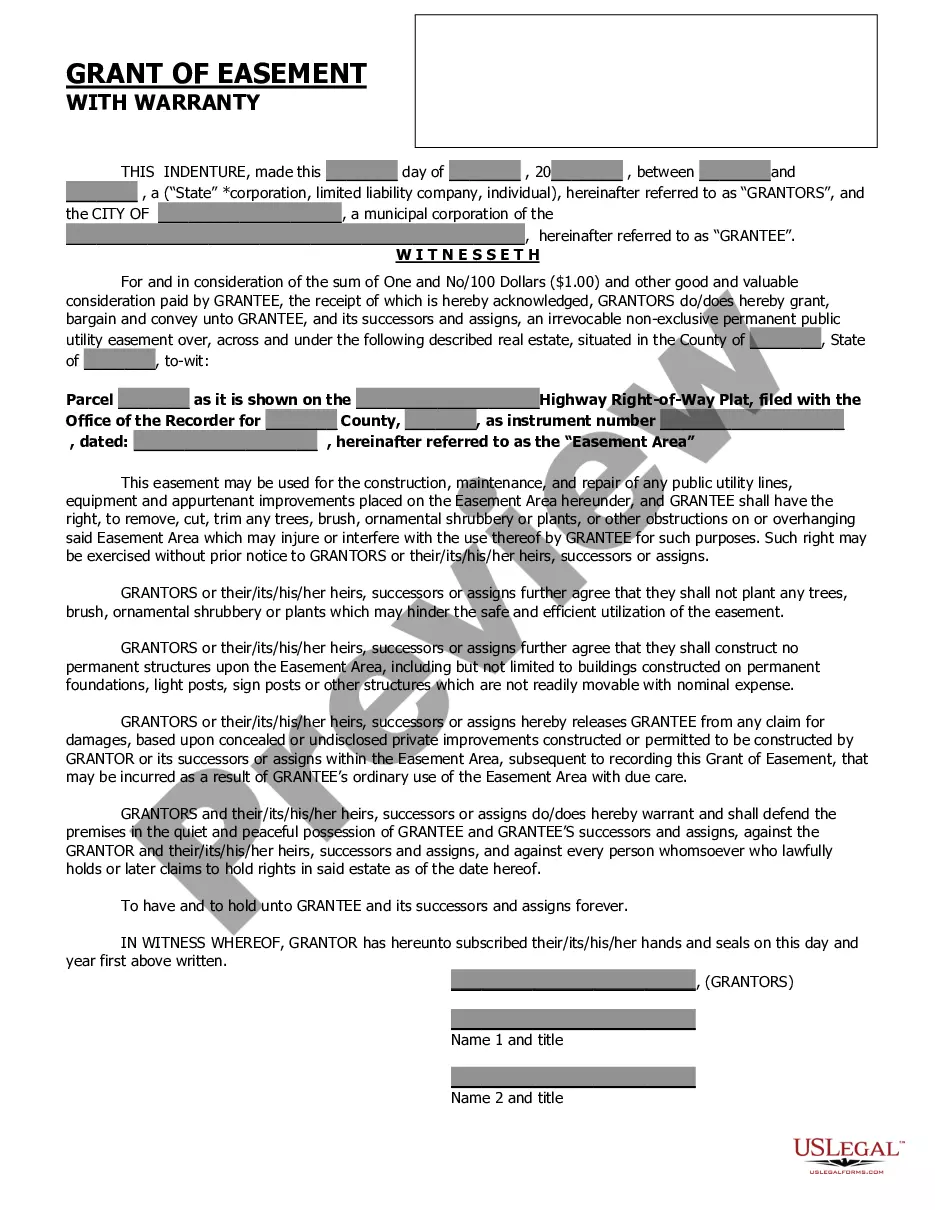
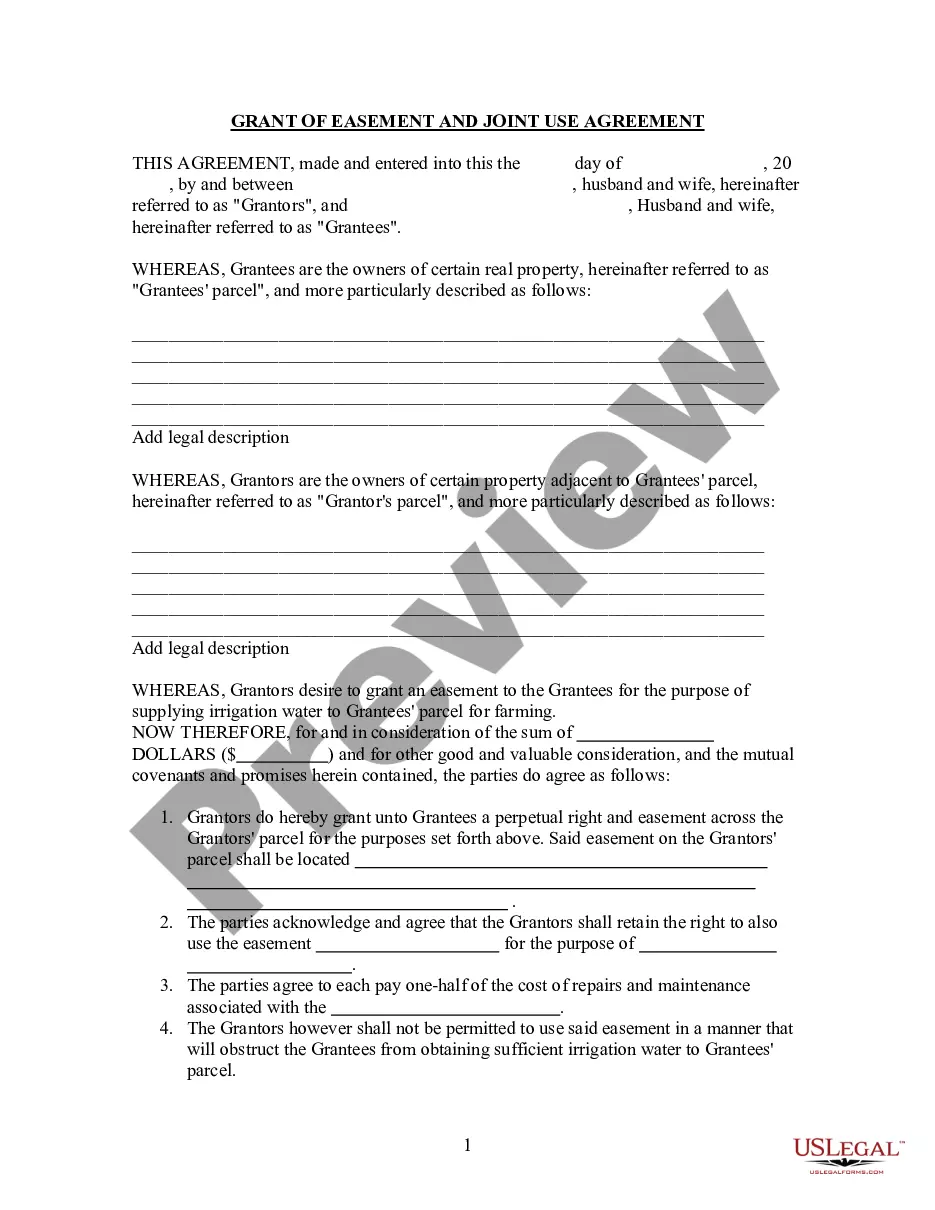
The Grant of Emergency Access Easement is a legal document that allows a specific party, usually a local government or emergency response agency, to access a tract of land for emergency purposes. Unlike a standard land lease, this easement does not grant possession or rights to improve or sell the land. Instead, it ensures crucial emergency access without altering ownership rights, making it essential for scenarios requiring rapid response to emergencies such as fires or natural disasters.
Key components of this form
- Identification of the Grantor and the County receiving the easement.
- Description of the specific property where the easement is granted.
- Clear definition of the easement's purpose for emergency access.
- Covenants regarding the maintenance and construction of access roads.
- Provisions for obtaining necessary approvals prior to construction.
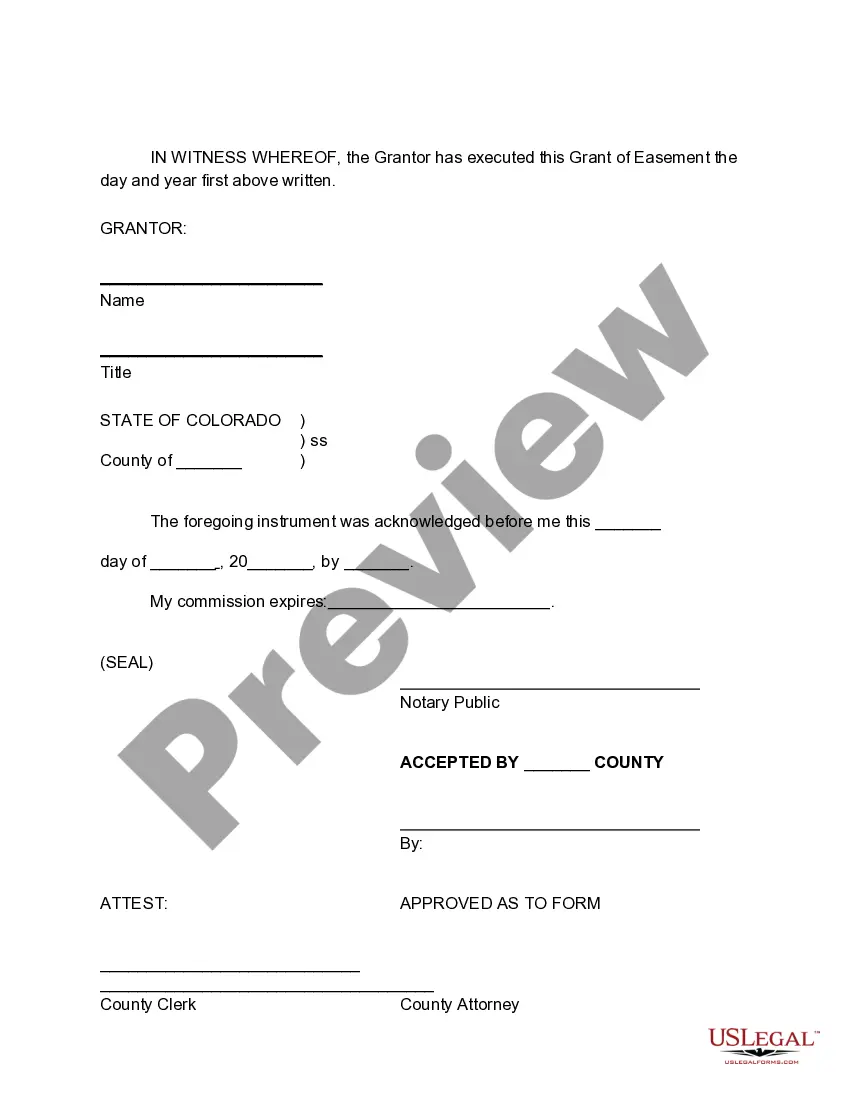
- Notarization and acceptance clauses for formal execution.
When to use this document
This form is commonly used when a local government or emergency response agency needs to establish a right of access to privately owned land for urgent situations. Whether itâs for fire trucks to reach a property during a wildfire or emergency vehicles needing a route to aid in disaster recovery, this easement ensures that responders can reach critical areas without hindrance.
Who can use this document
- Landowners wanting to grant access to emergency response teams on their property.
- Municipalities or counties seeking easements for emergency access purposes.
- Emergency response agencies that require legal permission to access private lands.
Steps to complete this form
- Identify the parties involved by filling in the Grantor's name and address, as well as the County name.
- Provide the legal description of the property where the easement is granted.
- Specify the purpose of the easement clearly, ensuring it reflects emergency access needs.
- Enter the agreement date and the necessary signatures from the Grantor and relevant County officials.
- Have the document notarized to ensure its legal validity.
Does this form need to be notarized?
Yes, this form must be notarized to be legally valid. US Legal Forms offers integrated online notarization, which is available 24/7 through secure video calls, ensuring that you can complete the process conveniently from anywhere.
Get your form ready online
Our built-in tools help you complete, sign, share, and store your documents in one place.
Make edits, fill in missing information, and update formatting in US Legal Forms—just like you would in MS Word.
Download a copy, print it, send it by email, or mail it via USPS—whatever works best for your next step.
Sign and collect signatures with our SignNow integration. Send to multiple recipients, set reminders, and more. Go Premium to unlock E-Sign.
If this form requires notarization, complete it online through a secure video call—no need to meet a notary in person or wait for an appointment.
We protect your documents and personal data by following strict security and privacy standards.

Make edits, fill in missing information, and update formatting in US Legal Forms—just like you would in MS Word.

Download a copy, print it, send it by email, or mail it via USPS—whatever works best for your next step.

Sign and collect signatures with our SignNow integration. Send to multiple recipients, set reminders, and more. Go Premium to unlock E-Sign.

If this form requires notarization, complete it online through a secure video call—no need to meet a notary in person or wait for an appointment.

We protect your documents and personal data by following strict security and privacy standards.
Typical mistakes to avoid
- Failing to provide a clear legal description of the property.
- Not obtaining the necessary approvals before construction of access roads.
- Omitting signatures or date from the document, leading to invalidity.
Why use this form online
- Convenience of instant download allows for quick access when emergencies arise.
- Editability enables users to customize the form easily to fit specific needs.
- Reliability of professionally drafted templates ensures legal compliance.
Looking for another form?
Form popularity
FAQ
Easements operate under specific rules that vary by state, including the Colorado Grant of Emergency Access Easement. Generally, easements must be established in writing and recorded to be legally enforceable. Additionally, easements typically have defined terms regarding their use and scope. For detailed information and templates, platforms like uslegalforms provide valuable resources to guide you through the easement process.
Deciding whether to grant an easement, such as the Colorado Grant of Emergency Access Easement, requires careful consideration of your property's needs and your community's safety. Granting an easement can foster goodwill and trust among neighbors while enhancing emergency response capabilities. Evaluating the potential benefits, such as increased safety, can aid your decision-making process.
Easements in Minnesota operate similarly to those in other states, including the Colorado Grant of Emergency Access Easement. An easement allows a specific person or group to use a portion of your property while retaining ownership. In Minnesota, easements must be clearly defined in writing and can be limited in time and scope. Often, consulting legal resources like uslegalforms can help you navigate these complexities.
You are not legally obligated to grant an easement, like the Colorado Grant of Emergency Access Easement, unless mandated by law or a prior agreement. However, granting such an easement may provide significant benefits, such as improved safety for your community. It is crucial to weigh the pros and cons and determine what best aligns with your property needs and neighborly relationships.
Yes, you can refuse to grant an easement, including a Colorado Grant of Emergency Access Easement. However, it is essential to consider the implications of denial. Refusing an easement may hinder emergency responders' ability to reach critical areas swiftly. Evaluating your options and consulting with professionals can guide you through this decision.
In Colorado, the utility easement law allows utility companies access to private property for installation, maintenance, and operation of essential services. This includes electricity, water, and telecommunications. Specifically, a Colorado Grant of Emergency Access Easement enables emergency personnel to enter a property during urgent situations to ensure public safety. Understanding this law can help property owners navigate their rights and responsibilities while using platforms like US Legal Forms to create necessary legal documents.
In the case of a Colorado Grant of Emergency Access Easement, property owners cannot generally block an easement designated for emergency access. Doing so can lead to legal consequences, as easements are established to ensure safe and timely access for emergency services. It's essential for property owners to respect these rights to foster community safety and compliance. For more tailored advice on easement laws and their implications, you can reach out to uslegalforms.
In Colorado, a right of way is a type of easement that allows passage through another's property, typically for transportation or utilities. Conversely, an easement can grant broader usage rights, such as access to a specific area without necessarily permitting passage. It's essential to understand this distinction, especially when dealing with a Colorado Grant of Emergency Access Easement, as it outlines specific rights and responsibilities.
An access easement is a legal right that allows one party to enter and use a portion of another party’s property for specific purposes. In the case of a Colorado Grant of Emergency Access Easement, the focus is often on ensuring access in times of crisis. This type of easement is vital for public safety and can significantly influence property values and neighborhood dynamics.
A classic example of an easement is a utility easement, where a utility company has the right to install and maintain power lines on private property. Similar to a Colorado Grant of Emergency Access Easement, this arrangement allows for necessary access while respecting property rights. Such easements often play a crucial role in providing essential services to communities.