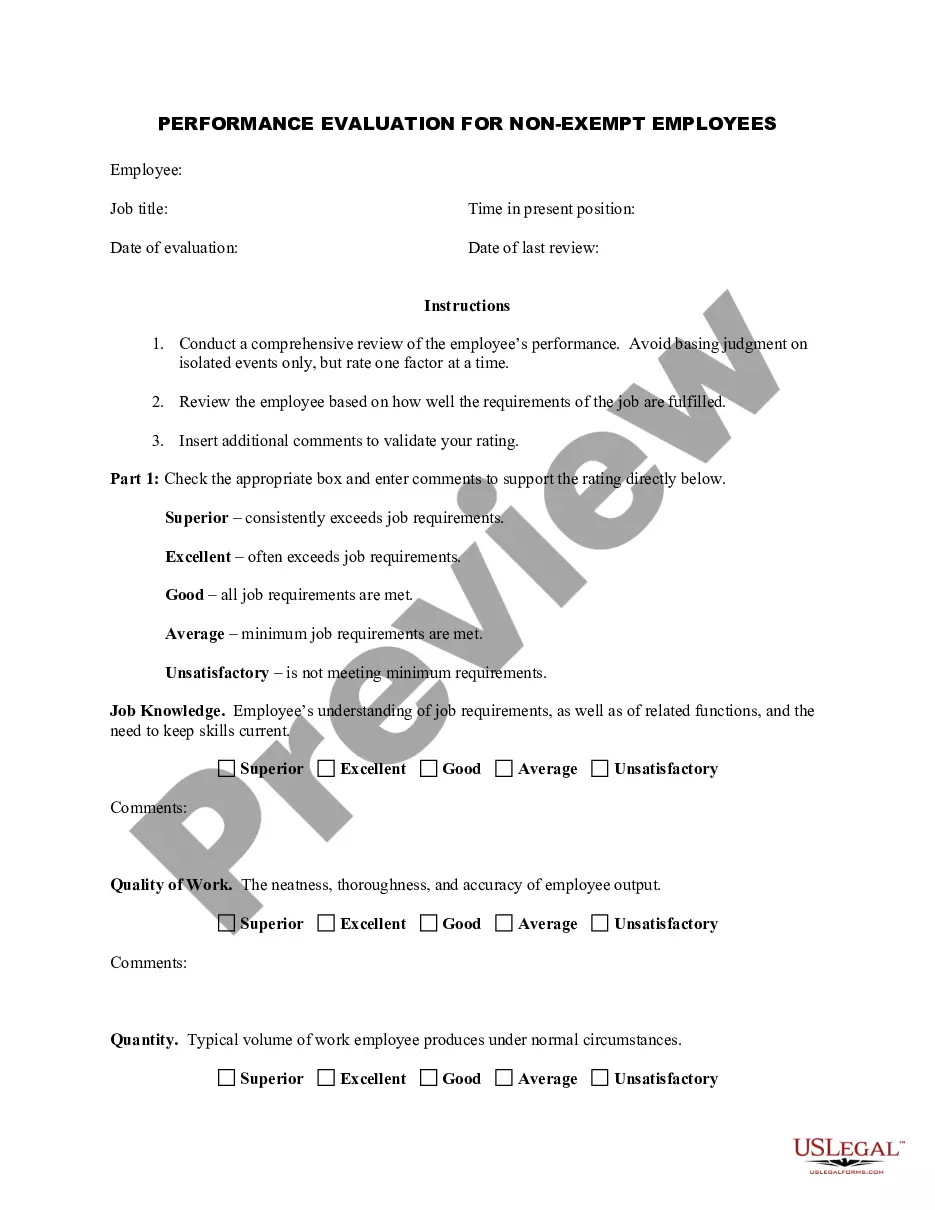
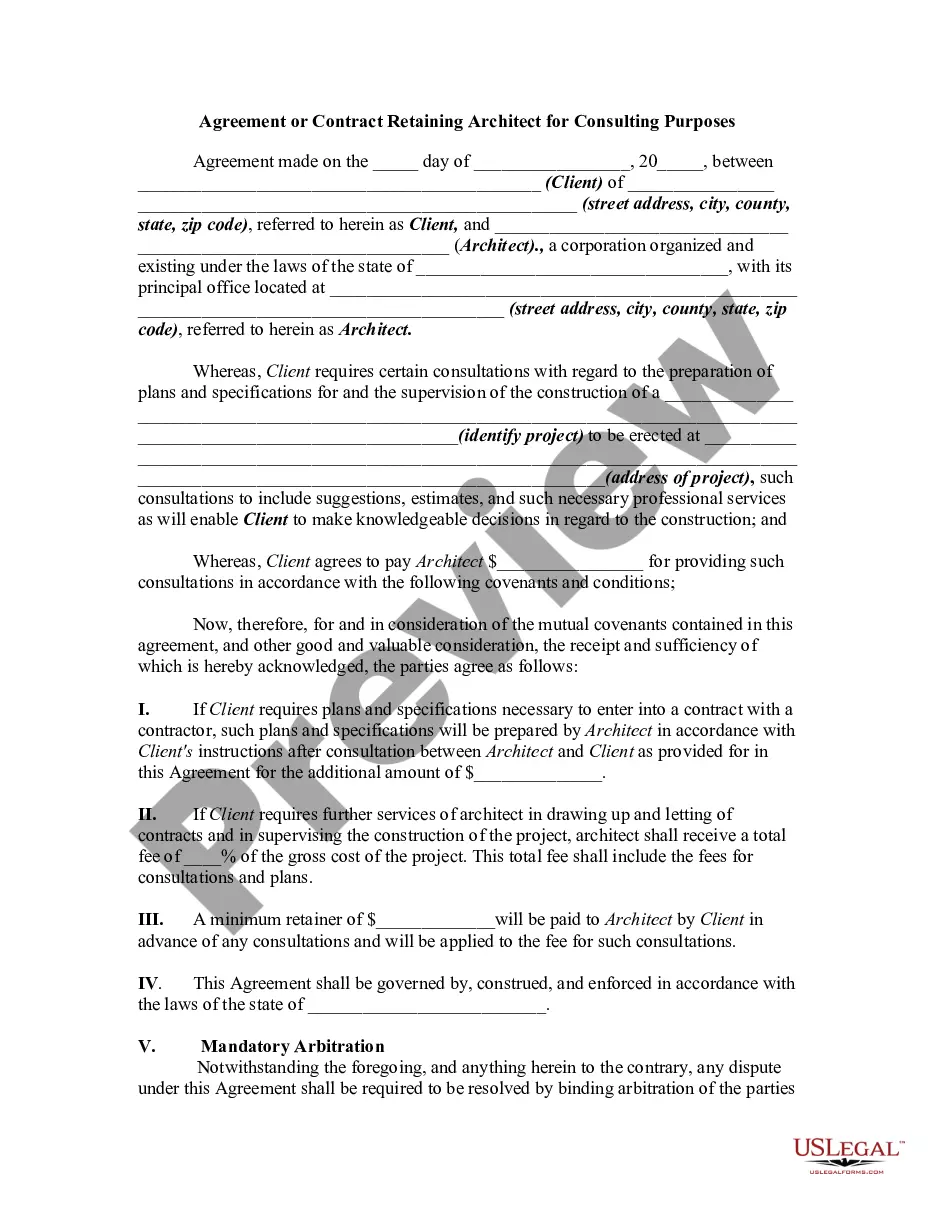
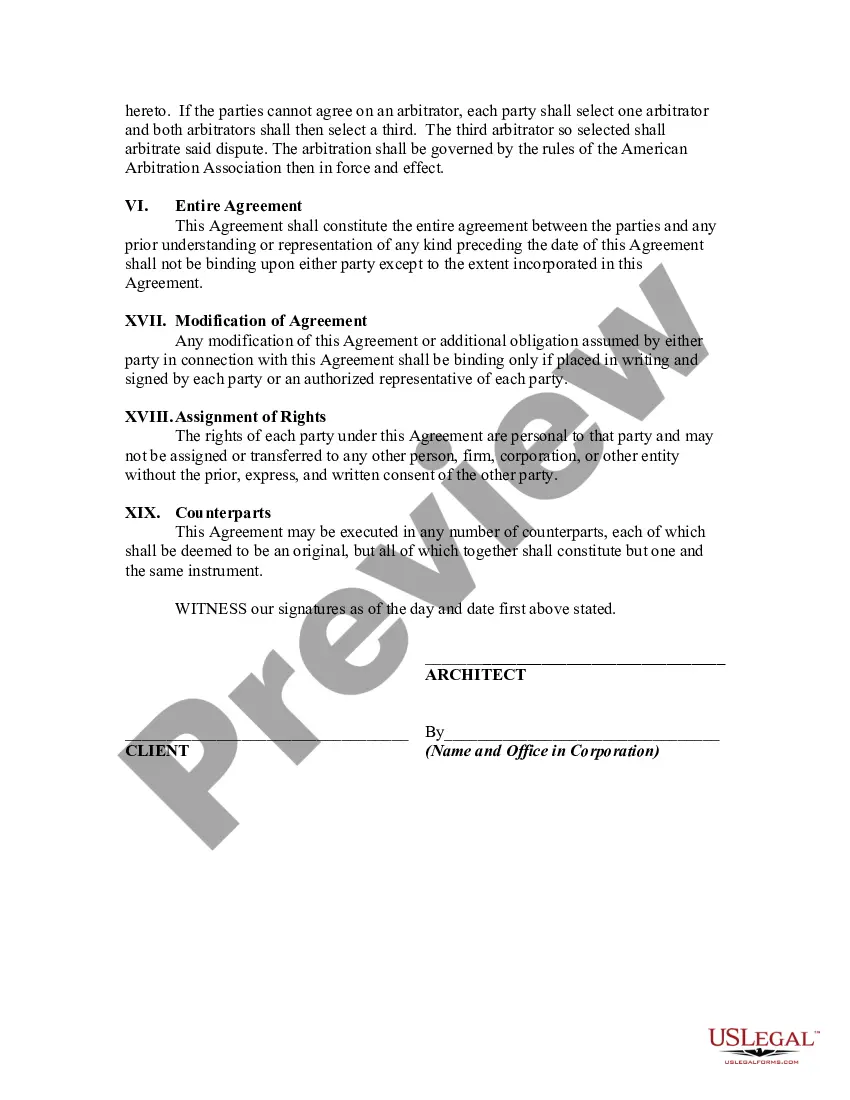
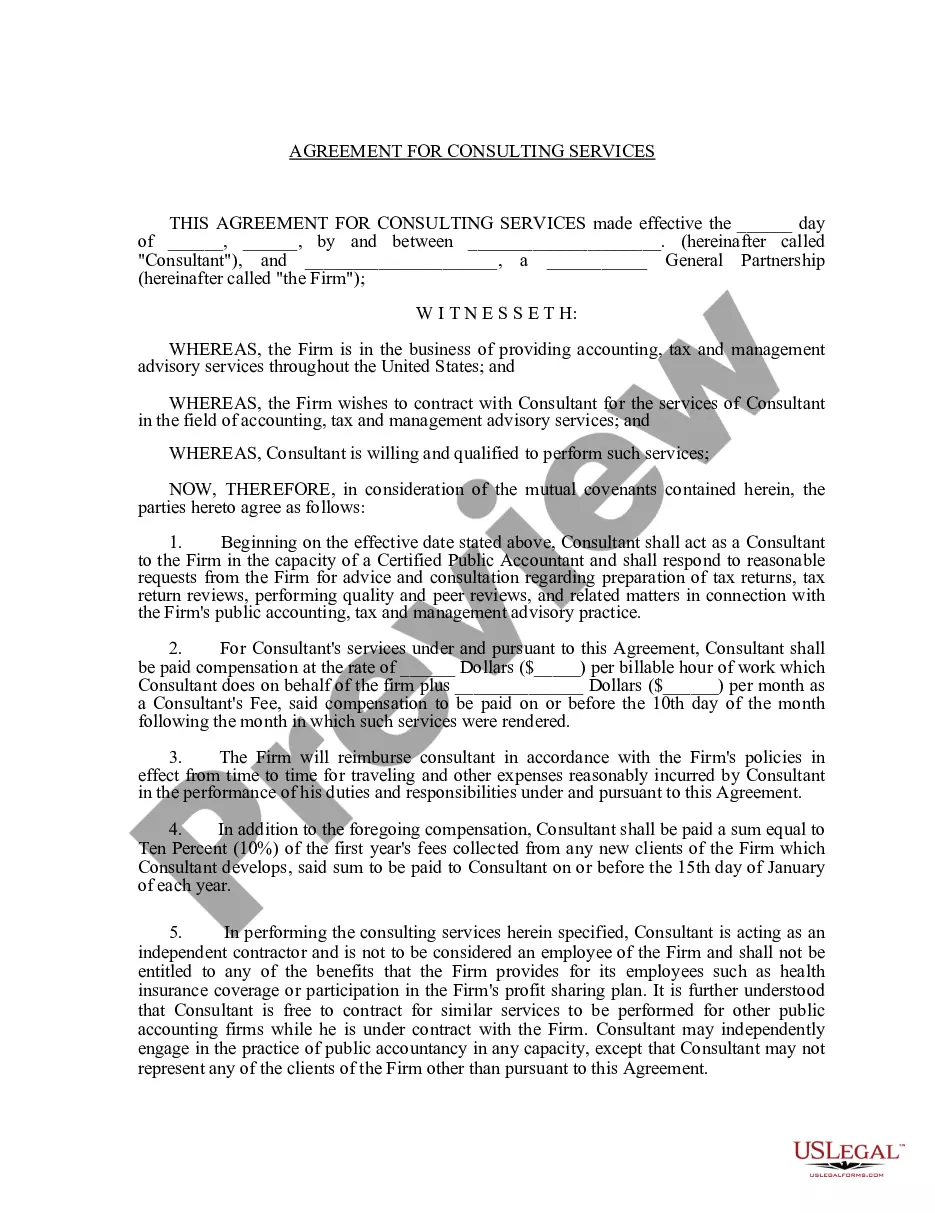
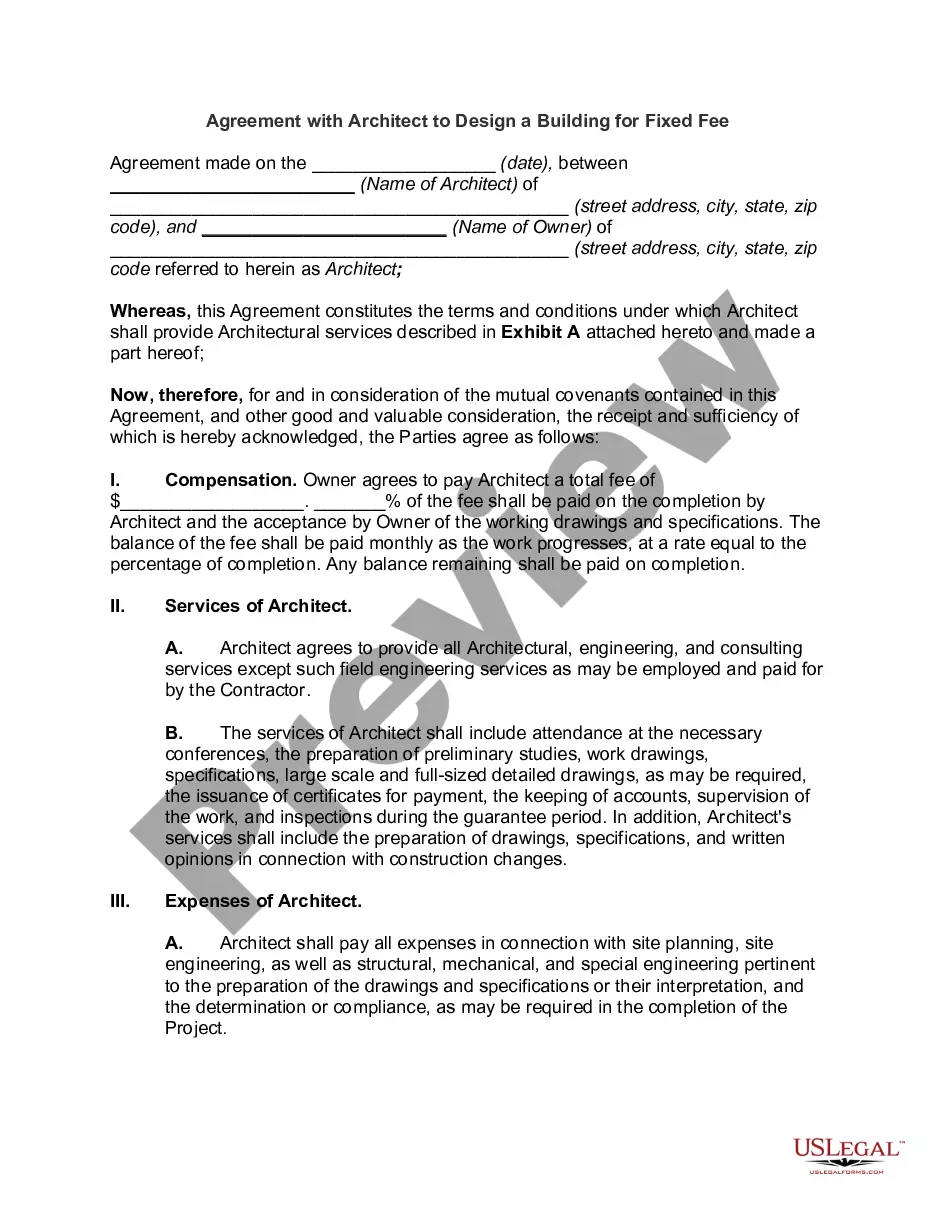
This is a generic form whereby an architect and a client enter into an agreement to consult with each other with regard to the preparation of plans and specifications for the construction of a certain project.
Colorado Agreement or Contract Retaining Architect for Consulting Purposes
Instant download
Description
Free preview

Get your form ready online
Our built-in tools help you complete, sign, share, and store your documents in one place.
Built-in online Word editor
Make edits, fill in missing information, and update formatting in US Legal Forms—just like you would in MS Word.
Export easily
Download a copy, print it, send it by email, or mail it via USPS—whatever works best for your next step.
E-sign your document
Sign and collect signatures with our SignNow integration. Send to multiple recipients, set reminders, and more. Go Premium to unlock E-Sign.
Notarize online 24/7
If this form requires notarization, complete it online through a secure video call—no need to meet a notary in person or wait for an appointment.
Store your document securely
We protect your documents and personal data by following strict security and privacy standards.

Make edits, fill in missing information, and update formatting in US Legal Forms—just like you would in MS Word.

Download a copy, print it, send it by email, or mail it via USPS—whatever works best for your next step.

Sign and collect signatures with our SignNow integration. Send to multiple recipients, set reminders, and more. Go Premium to unlock E-Sign.

If this form requires notarization, complete it online through a secure video call—no need to meet a notary in person or wait for an appointment.

We protect your documents and personal data by following strict security and privacy standards.
Looking for another form?







How to fill out Agreement Or Contract Retaining Architect For Consulting Purposes?
If you wish to fulfill, acquire, or print legal document templates, utilize US Legal Forms, the largest assortment of legal forms available online.
Employ the site’s straightforward and convenient search to locate the documents you require.
Various templates for business and personal purposes are organized by categories and states, or keywords.
Step 4. Once you have found the form you need, click the Purchase now button. Choose the pricing plan you prefer and enter your details to register for an account.
Step 5. Process the payment. You can use your credit card or PayPal account to complete the transaction.
- Utilize US Legal Forms to find the Colorado Agreement or Contract Retaining Architect for Consulting Purposes with just a few clicks.
- If you are already a US Legal Forms user, Log In to your account and then click the Download button to obtain the Colorado Agreement or Contract Retaining Architect for Consulting Purposes.
- You can also access forms you previously obtained in the My documents tab of your account.
- If you are using US Legal Forms for the first time, follow the instructions below.
- Step 1. Ensure you have chosen the form for the correct city/state.
- Step 2. Use the Preview button to review the form's content. Do not forget to read through the summary.
- Step 3. If you are not satisfied with the form, use the Search box at the top of the screen to find alternative versions of the legal form template.
Form popularity
FAQ
A contract in architecture is a formal agreement that defines the relationship between architects and their clients. It outlines responsibilities, deliverables, and compensation. Understanding how to create a solid Colorado Agreement or Contract Retaining Architect for Consulting Purposes safeguards the interests of all parties involved.
To write a simple contract, ensure it includes the names of the parties involved, a clear description of the agreement, and essential terms such as payment and deadlines. Each party should sign the document to indicate acceptance of the terms. For those drafting a Colorado Agreement or Contract Retaining Architect for Consulting Purposes, clarity and completeness are vital.
Writing a consulting contract agreement involves detailing the services to be provided and setting clear expectations. You should include payment structures, deadlines, and additional provisions like dispute resolution. Utilizing a reliable platform like USLegalForms can simplify the creation of a thorough Colorado Agreement or Contract Retaining Architect for Consulting Purposes.
A consultancy agreement should outline the services offered and the duration of the consultancy. Additionally, it should specify compensation, confidentiality clauses, and conditions for termination. This ensures that both parties understand their obligations under the Colorado Agreement or Contract Retaining Architect for Consulting Purposes.
To write an architectural contract, start by clearly defining the scope of work. Include essential elements such as project timelines, payment terms, and responsibilities of both parties. It's crucial to ensure that the document adheres to local laws, especially in Colorado, to make it a valid Agreement or Contract Retaining Architect for Consulting Purposes.
Yes, having a contract with an architect is essential for any significant project. It ensures that both parties understand their roles and responsibilities clearly. A Colorado Agreement or Contract Retaining Architect for Consulting Purposes outlines expectations and helps mitigate risks. By utilizing a well-drafted contract, clients can feel secure in their investment and articulate their vision confidently.
Architects engage in various types of writing, including project proposals, reports, and technical specifications. They need concise, clear communication to convey design ideas and project requirements effectively. A Colorado Agreement or Contract Retaining Architect for Consulting Purposes showcases their professionalism and understanding of contractual obligations. This writing also serves to document decisions and maintain project clarity.
Architects often write contracts, especially when detailing the specifics of a project. They create documents that align with legal standards and their clients' needs. In using a Colorado Agreement or Contract Retaining Architect for Consulting Purposes, architects can utilize templates available on platforms like USLegalForms for efficiency. This practice ensures that key components are not overlooked and protects both parties involved.
Yes, architects handle a significant amount of paperwork throughout the design and construction process. This includes contracts, project proposals, and compliance documents. A Colorado Agreement or Contract Retaining Architect for Consulting Purposes is a vital part of this paperwork, as it establishes essential project details. Organized documentation helps ensure projects proceed smoothly and meet all legal requirements.
A contract agreement in architecture is a formal document that defines the relationship between the architect and the client. It specifies the scope of work, project timelines, and compensation terms. In a Colorado Agreement or Contract Retaining Architect for Consulting Purposes, both parties commit to the project's expectations, which minimizes potential conflicts. Such agreements establish a framework for collaboration and accountability.