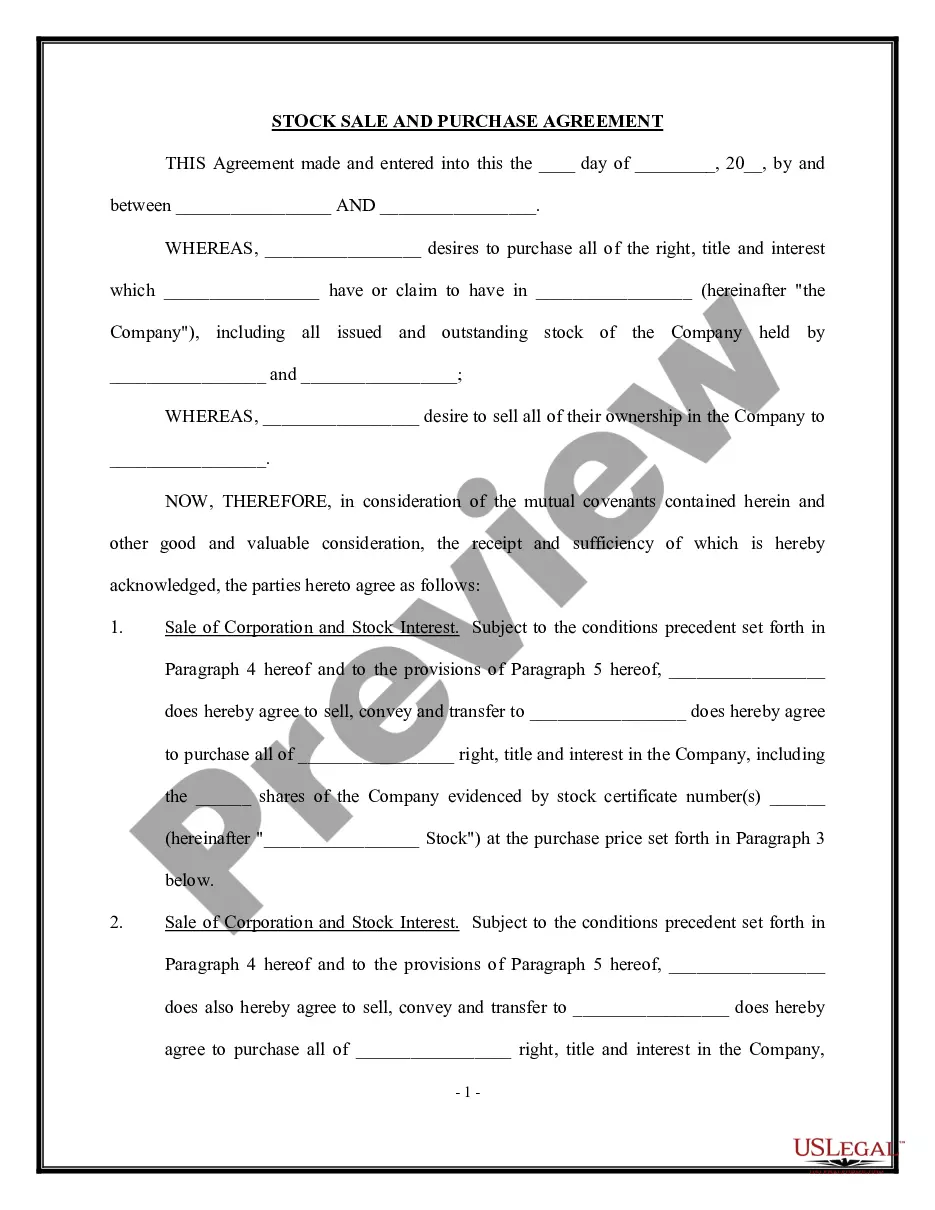
Colorado Accredited Investor Representation Letter
Description

How to fill out Accredited Investor Representation Letter?
You can dedicate numerous hours on the internet searching for the legal document template that complies with the state and federal standards you require.
US Legal Forms provides thousands of legal templates that have been assessed by professionals.
You can conveniently obtain or print the Colorado Accredited Investor Representation Letter from the service.
To find another version of the document, use the Search section to locate the template that meets your needs and preferences. Once you find the template you want, click Buy now to proceed. Choose the pricing plan you prefer, enter your details, and register for an account on US Legal Forms. Complete the purchase using your credit card or PayPal account to pay for the legal document. Select the format of the document and download it to your system. Make modifications to the document if necessary. You can complete, modify, sign, and print the Colorado Accredited Investor Representation Letter. Obtain and print thousands of document templates using the US Legal Forms website, which boasts the largest collection of legal templates. Utilize professional and state-specific templates to address your business or personal needs.
- If you already have a US Legal Forms account, you can Log In and click on the Acquire button.
- Afterward, you can complete, modify, print, or sign the Colorado Accredited Investor Representation Letter.
- Every legal document template you purchase is yours to keep forever.
- To get a new copy of the acquired template, navigate to the My documents tab and click on the corresponding button.
- If it's your first time using the US Legal Forms site, follow the simple instructions below.
- First, ensure you have selected the correct document template for the county/city of your choice.
- Review the template description to ensure you have chosen the right document.
Form popularity
FAQ
Syndication offering documents may require the investor to indemnify the Syndicator if they lie about their qualifications and it causes liability for the Syndicator later (ours do), so there could be repercussions against investors in those cases.
A qualified institutional buyer (QIB) representation letter for an unlegended Rule 144A offering of securities by a Canadian issuer. The QIB representation letter relates to a concurrent public offering in Canada and an offering in the United States conducted in reliance on Rule 144A under the Securities Act.
The Applicant's most recent publicly available information appearing in a recognized securities manual, provided that such information is as of a date within 16 months preceding the date of this Application in the case of a U.S. Applicant and within 18 months preceding such date for a non-U.S. Applicant.
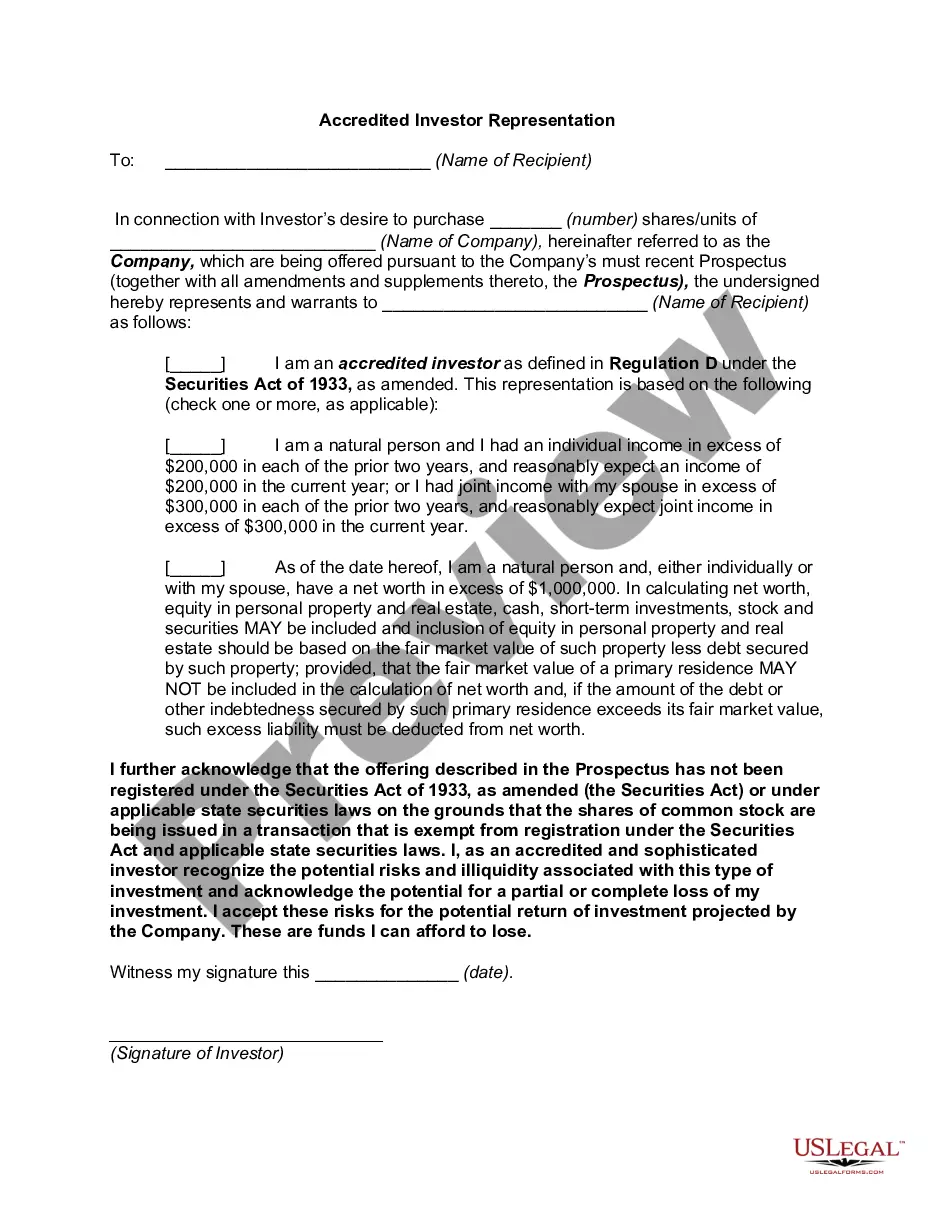
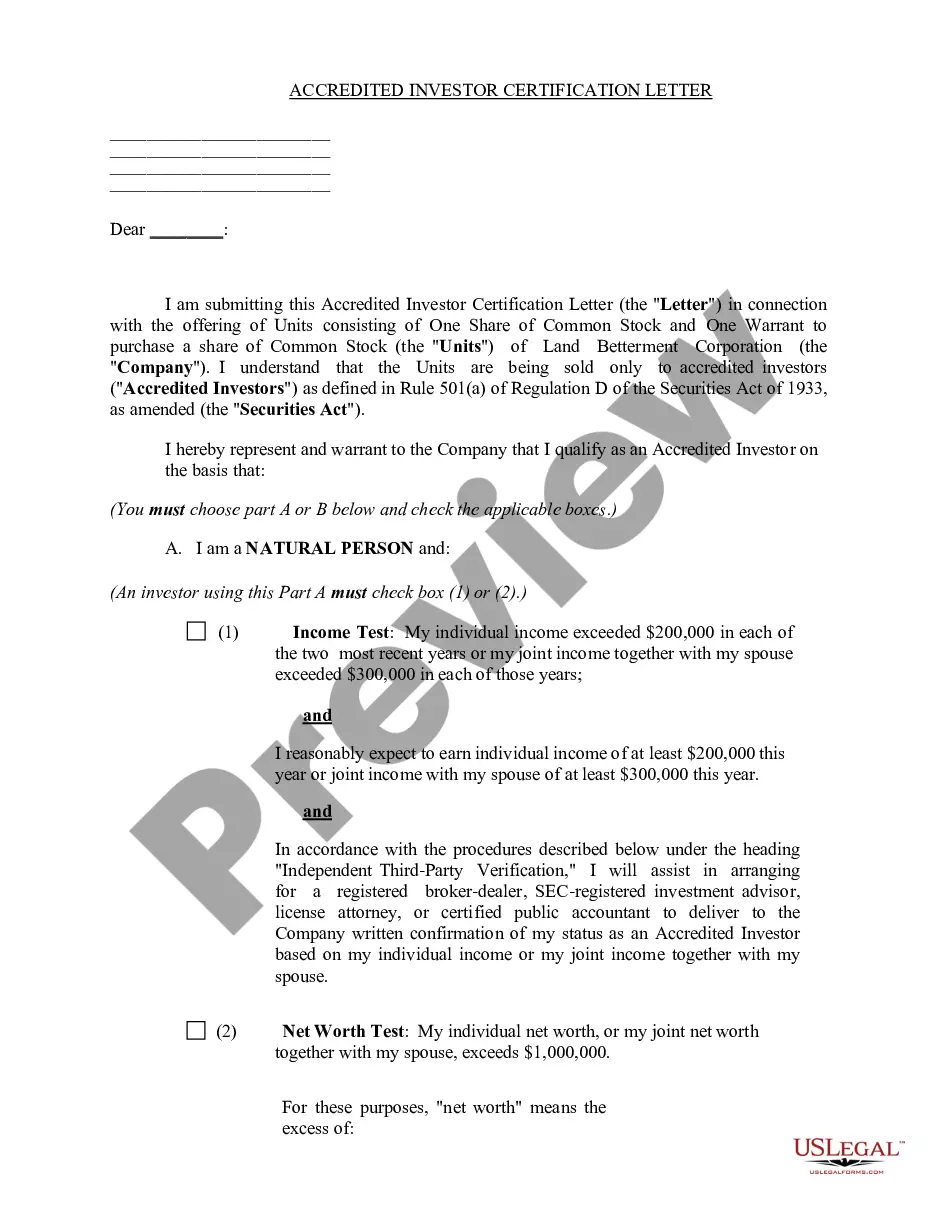
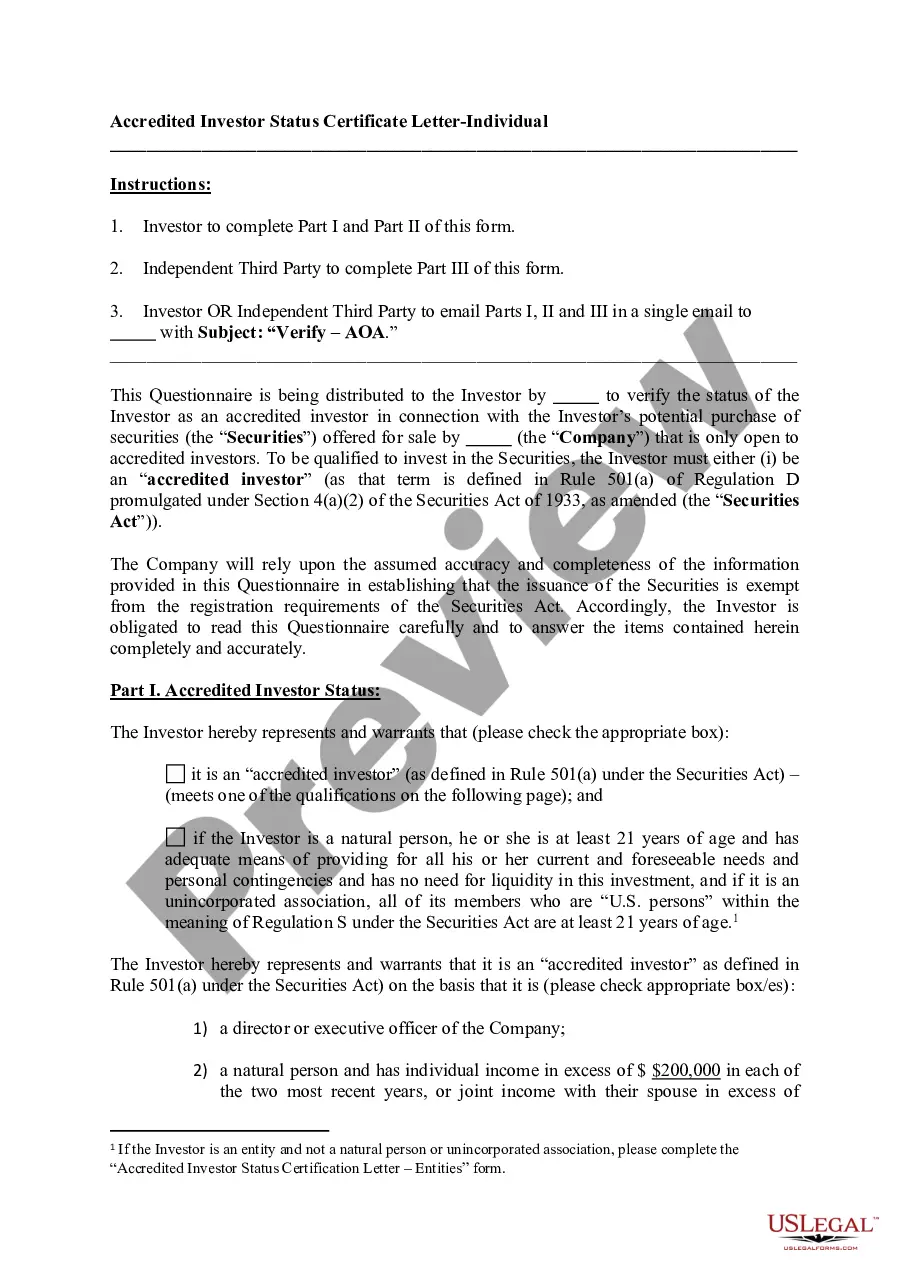
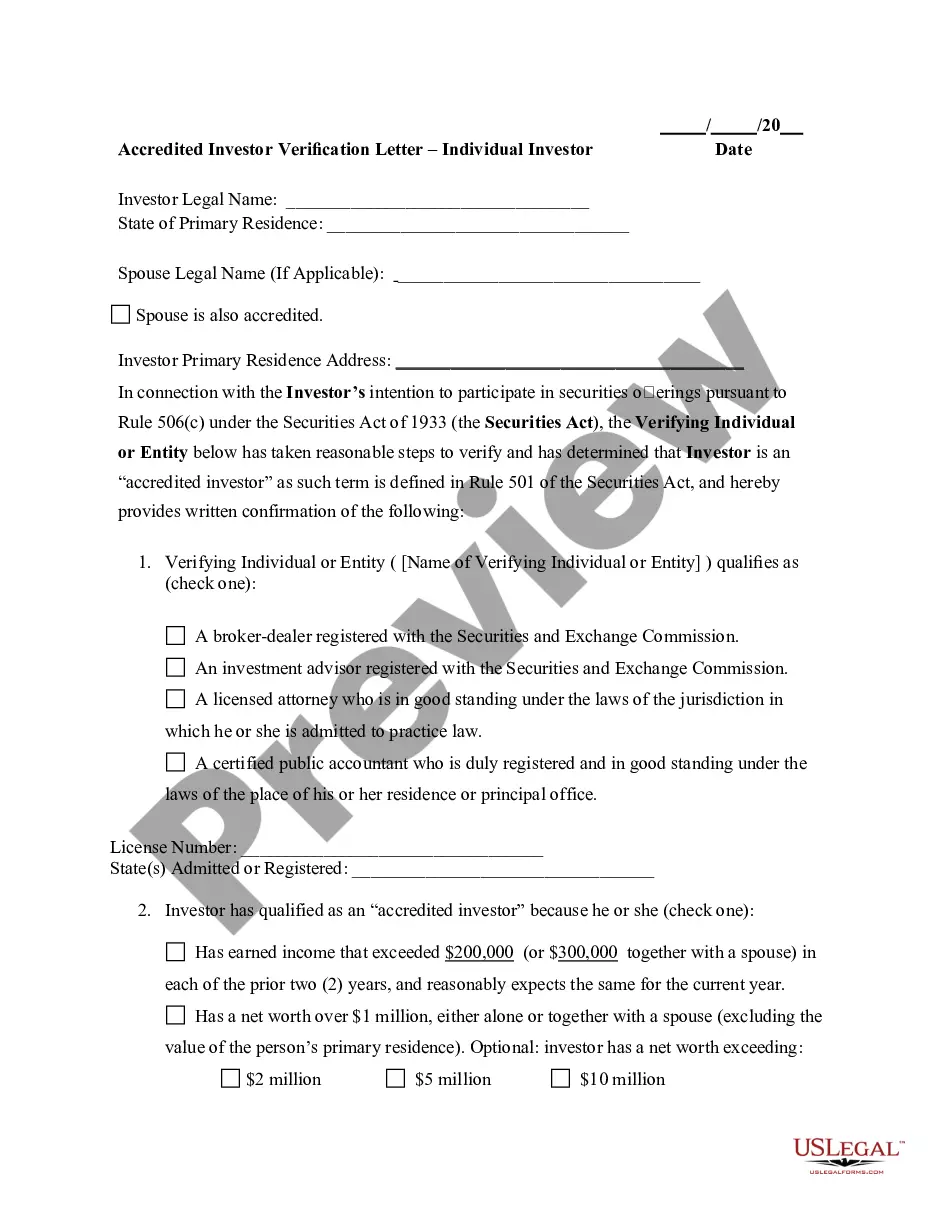
In the U.S., an accredited investor is anyone who meets one of the below criteria: Individuals who have an income greater than $200,000 in each of the past two years or whose joint income with a spouse is greater than $300,000 for those years, and a reasonable expectation of the same income level in the current year.
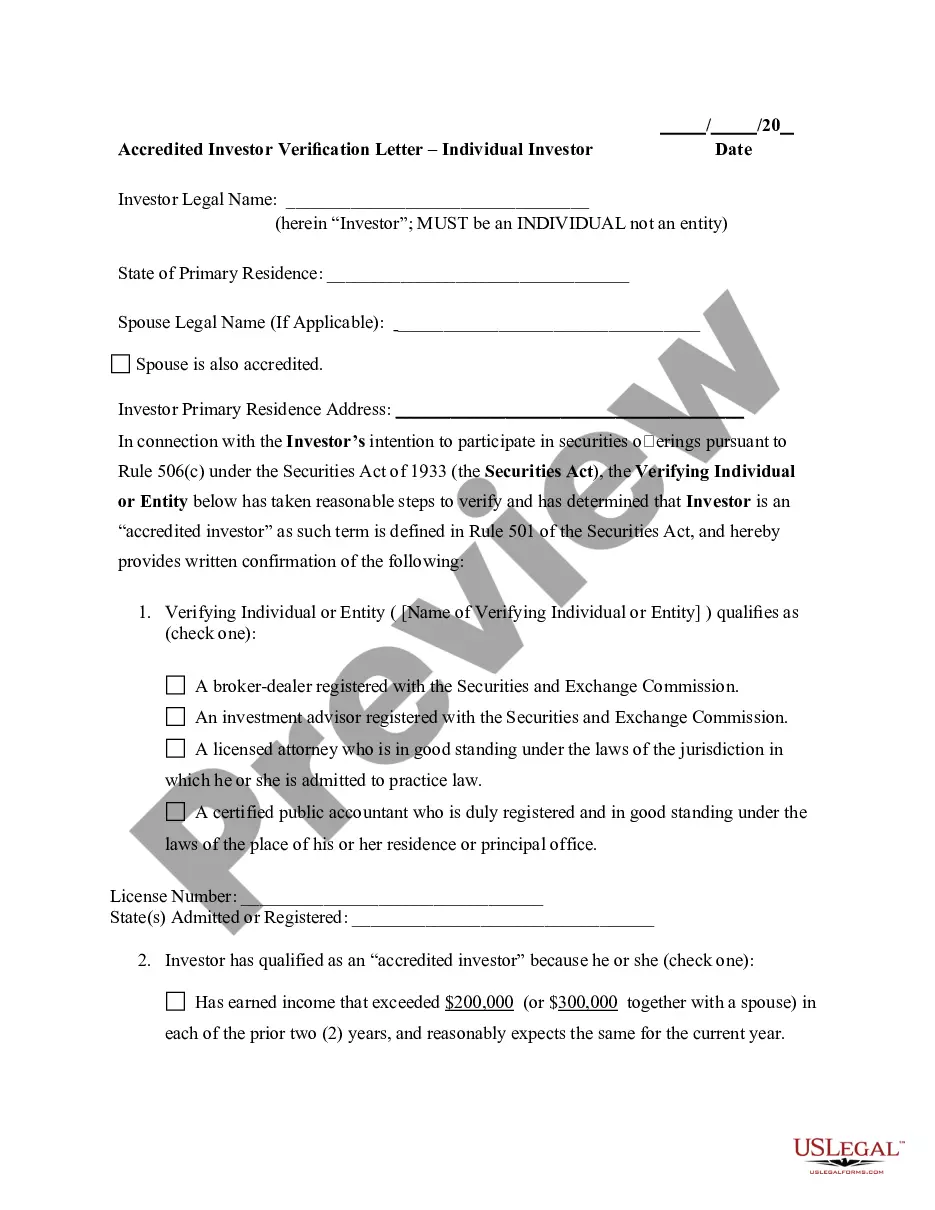
Individuals who base their qualifications on annual income will need to submit tax and financial documents and will likely also be asked by the investment fund to provide an accredited investor verification letter from either a CPA, attorney, investment broker or other professional advisor.
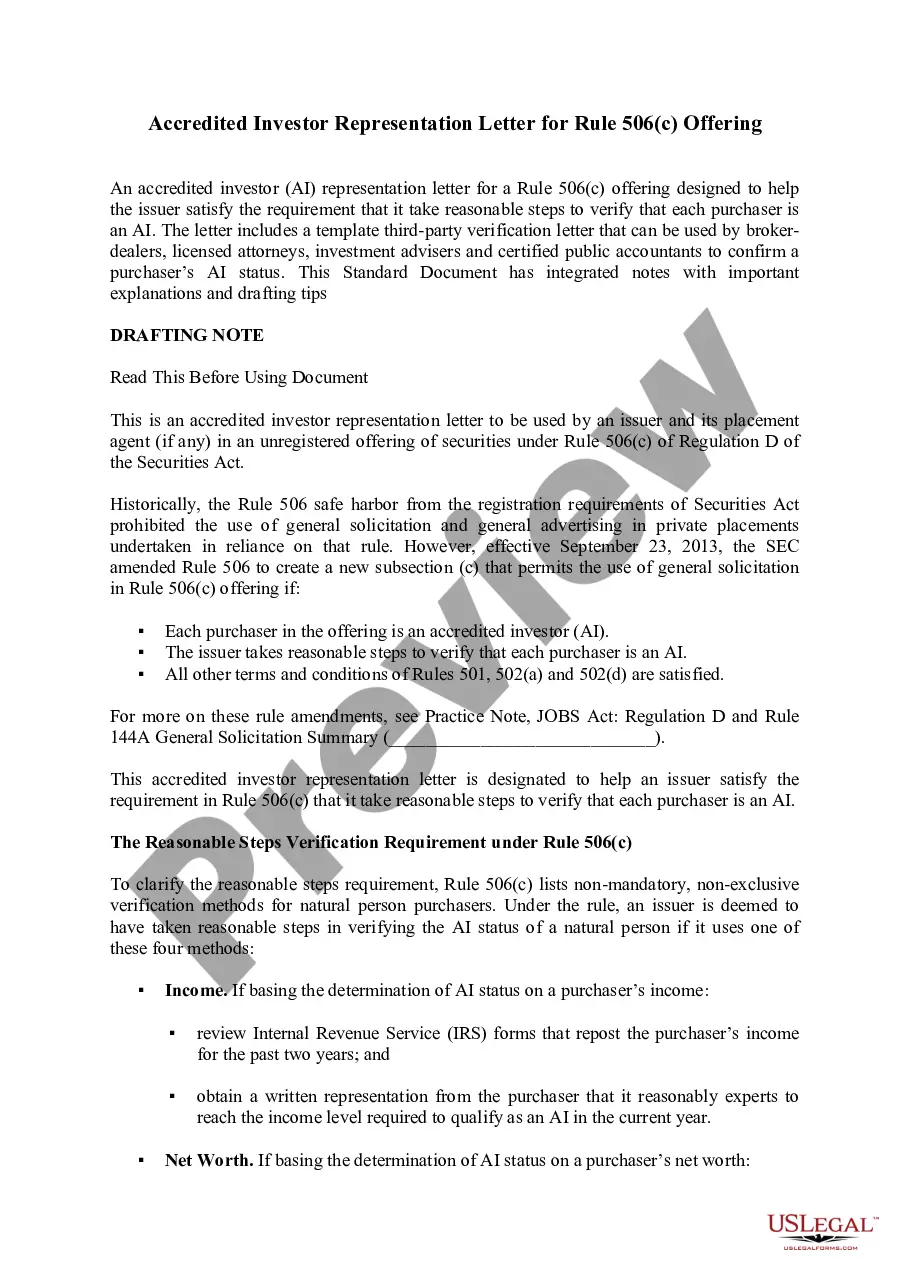
In a Rule 506(b) offering, investors can self-certify, so this is where the opportunity for an investor to falsify their qualifications comes in. In a Rule 506(c) offering, investors must provide reasonable assurance to the Syndicator that they are accredited, which must be dated within 90 days of the investment.
Investor Representation Letter means a letter from initial investors of a Bond offering that includes but is not limited to a certification that they reasonably meet the standards of a Sophisticated Investor or Qualified Institutional Buyer, that they are purchasing Bonds for their own account, that they have the
Some documents that can prove an investor's accredited status include: Tax filings or pay stubs; A letter from an accountant or employer confirming their actual and expected annual income; or. IRS Forms like W-2s, 1040s, 1099s, K-1s or other tax documentation that report income.
In lieu of providing income or net assets information, you may provide a professional letter from a licensed CPA, attorney, investment advisor or registered broker-dealer. The letter should state that the professional service provider has a reasonable belief that you are an Accredited Investor.