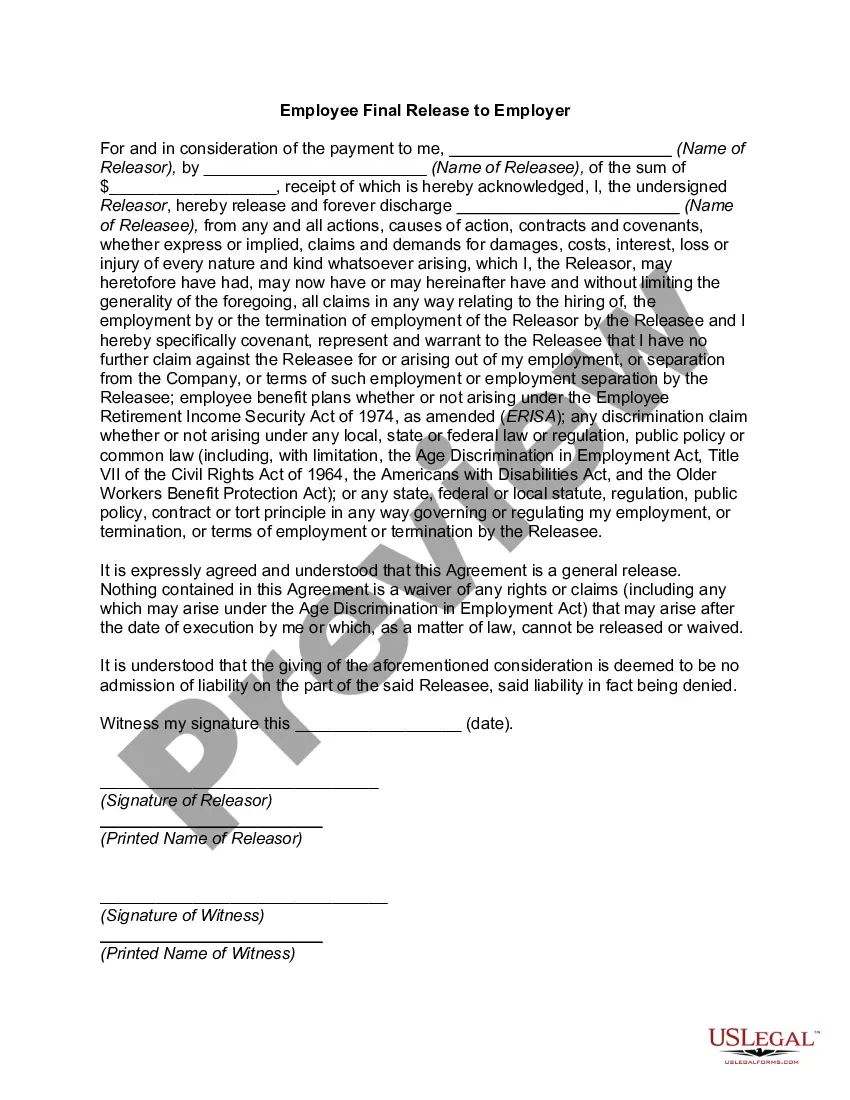
Colorado Employee Final Release to Employer
Description
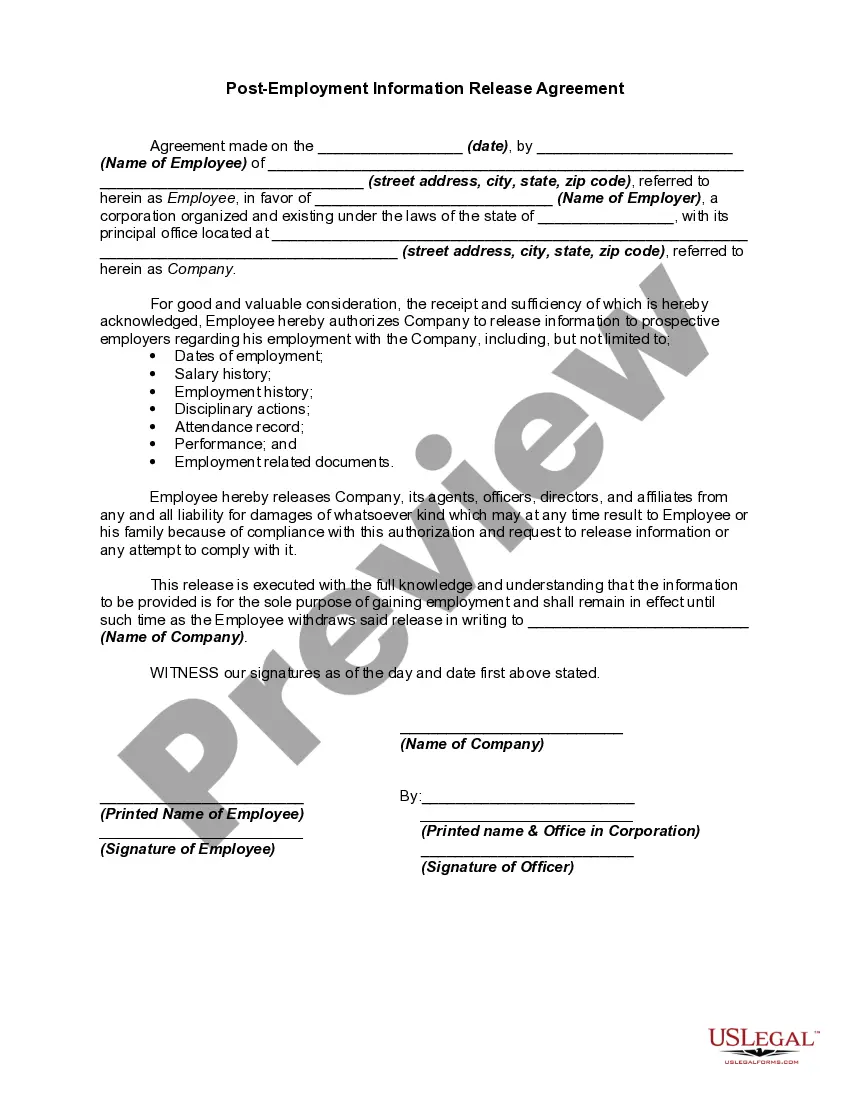
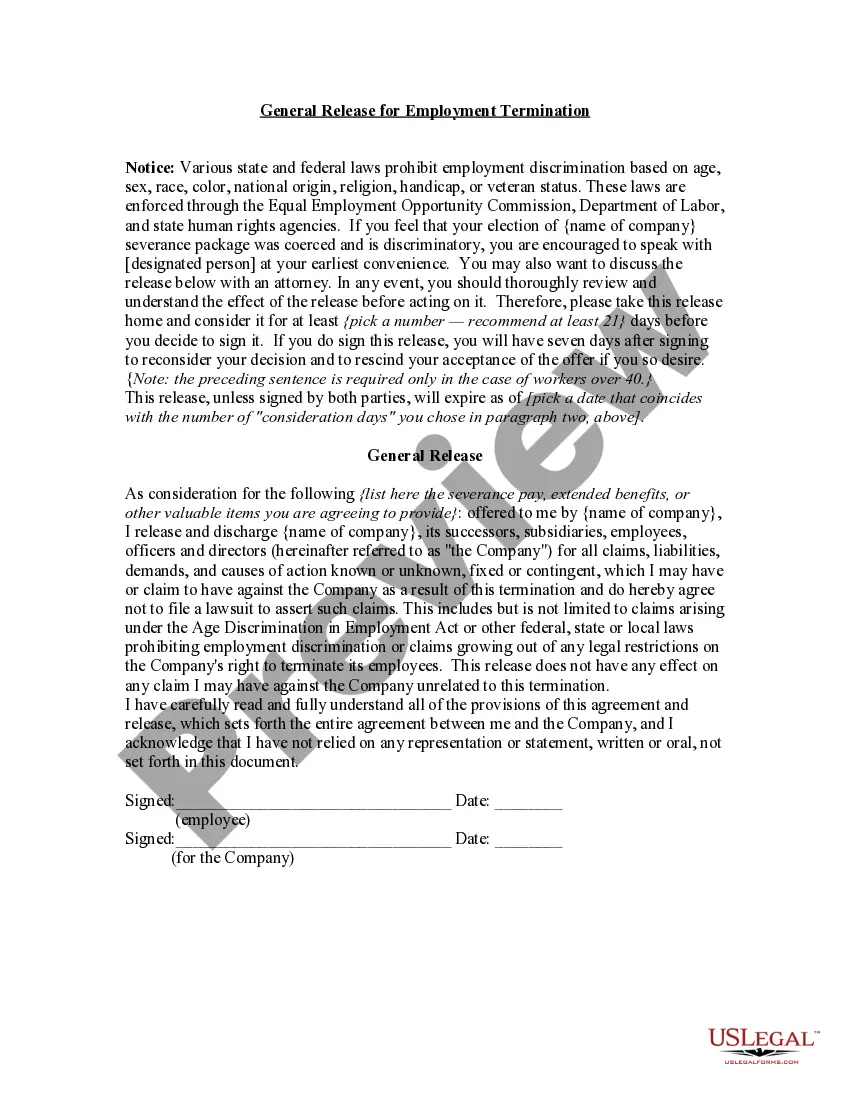
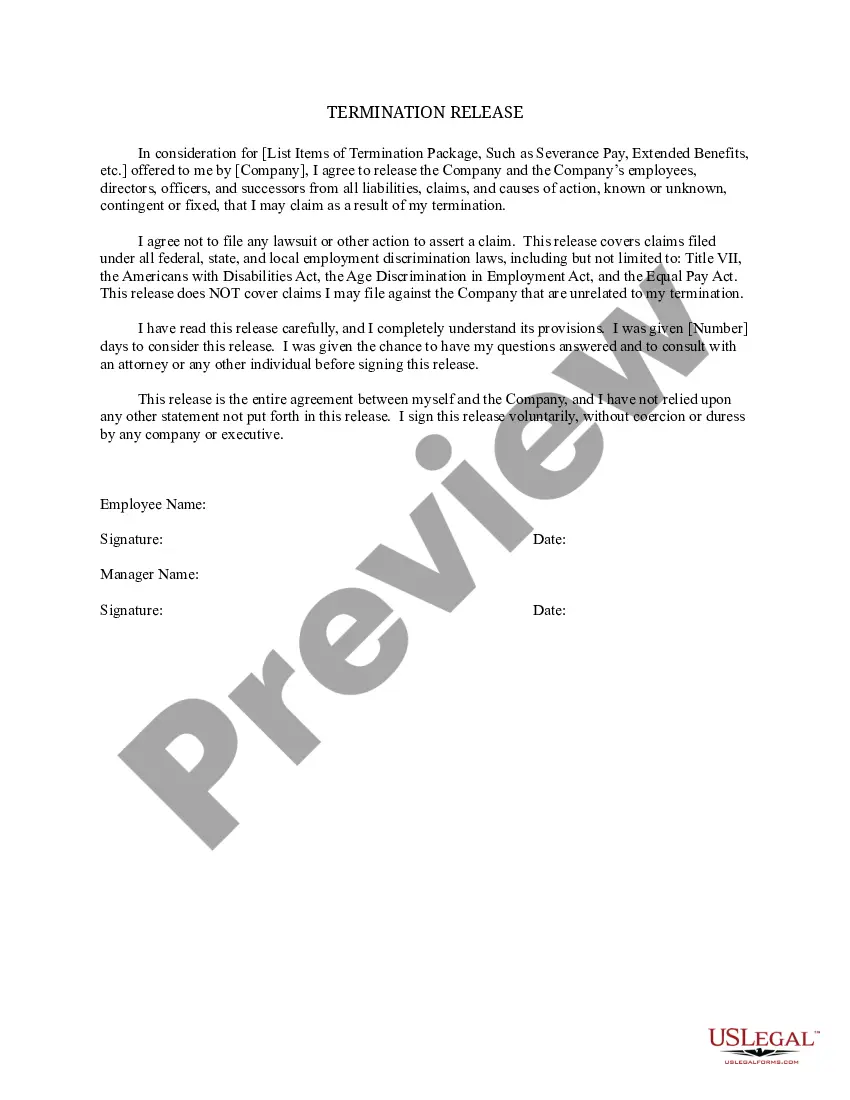



How to fill out Employee Final Release To Employer?
If you desire to finish, retrieve, or print endorsed document templates, take advantage of US Legal Forms, the largest assortment of legal forms, available online.
Utilize the site's user-friendly search to find the documents you require.
A selection of templates for business and individual use are organized by categories and jurisdictions, or keywords.
Every legal document template you purchase is yours permanently. You have access to every form you downloaded in your account. Click on the My documents section and select a form to print or download again.
Be proactive and download, and print the Colorado Employee Final Release to Employer with US Legal Forms. There are countless professional and state-specific forms available for your business or personal needs.
- Leverage US Legal Forms to obtain the Colorado Employee Final Release to Employer in just a few clicks.
- If you are currently a US Legal Forms subscriber, Log In to your account and select the Get option to obtain the Colorado Employee Final Release to Employer.
- You can also access forms you previously downloaded from the My documents tab of your account.
- If this is your first experience with US Legal Forms, follow the instructions below.
- Step 1. Ensure you have selected the form for the correct region/state.
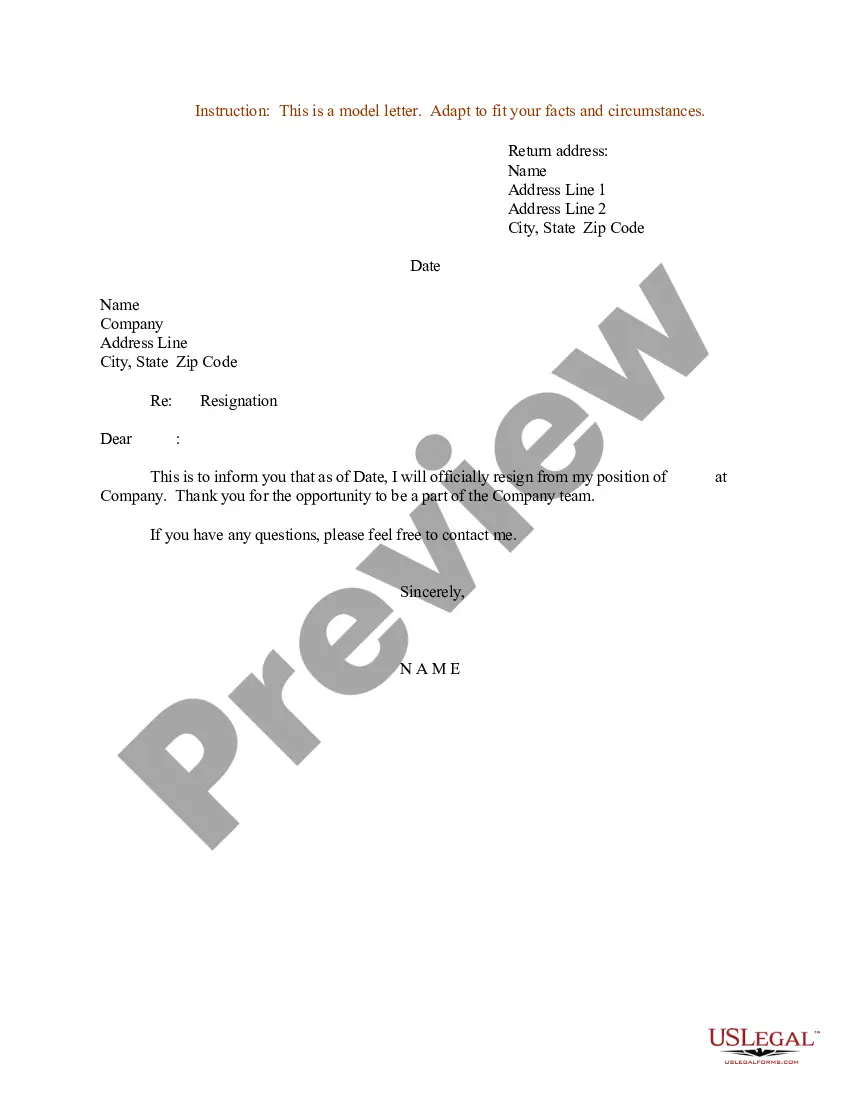
- Step 2. Use the Preview feature to review the form's content. Don't forget to check the description.
- Step 3. If you are not satisfied with the form, utilize the Search area at the top of the screen to find alternative versions of the legal form template.
- Step 4. Once you have located the form you need, click the Get now button. Choose the pricing plan that suits you and enter your details to register for an account.
- Step 5. Complete the transaction. You can use your credit card or PayPal account to finalize the payment.
- Step 6. Choose the format of the legal form and download it to your device.
- Step 7. Fill out, modify, and print or sign the Colorado Employee Final Release to Employer.
Form popularity
FAQ
Are termination letters required? Most companies are not required by law to give employees letters of termination. The exceptions are those located in Arizona, California, Illinois and New Jersey. Most employers, however, do provide termination letters as a professional courtesy and a legal record.
If you are fired or laid off, your employer must provide your final paycheck immediately, or if your payroll office is already closed, within six hours after the start of the next work day (if the payroll office is on-site) or within 24 hours ( if the payroll office is off-site).
As per Colorado Rev. Stat. Ann. § 8-4-109, when an employee is fired, the employer must give him or her a final paycheck immediately, or within six (6) hours of start of the next business day if the payroll office is closed, or within twenty-four (24) hours if the payroll office is offsite.
Final Paychecks If you are fired or laid off, your employer must provide your final paycheck immediately, or if your payroll office is already closed, within six hours after the start of the next work day (if the payroll office is on-site) or within 24 hours ( if the payroll office is off-site).
Colorado follows the legal doctrine of "employment-at-will" which provides that in the absence of a contract to the contrary, neither an employer nor an employee is required to give notice or advance notice of termination or resignation.
If the employer does not pay within 14 days, an employee can commence a civil action to recover the final paycheck funds. An employer that fails to pay the final paycheck could, in addition to the wages owed, be ordered to pay a penalty to the employee.
Employers must pay employees within 10 consecutive days from the end of the pay period, unless employment is terminated. An employee isn't considered paid until they've received the funds.
Here's what to do after you let go of an employee to ensure a smooth transition.Keep an employee termination checklist.Acknowledge and address the firing decision.Communicate future plans and goals.Refresh everyone on rules and responsibilities.Praise remaining employees.Lighten the office environment.
If the employer fails to pay the wages to the employee as required by the Act, the employee has the right to file a written demand. If the employer does pay the wages within 14 days of the demand, the employee may be able to recover a significant penalty by filing a civil lawsuit.
In Colorado, as in most states, the employer-employee relationship is generally considered at will. This means the employer can fire or demote the employee for any reason.